
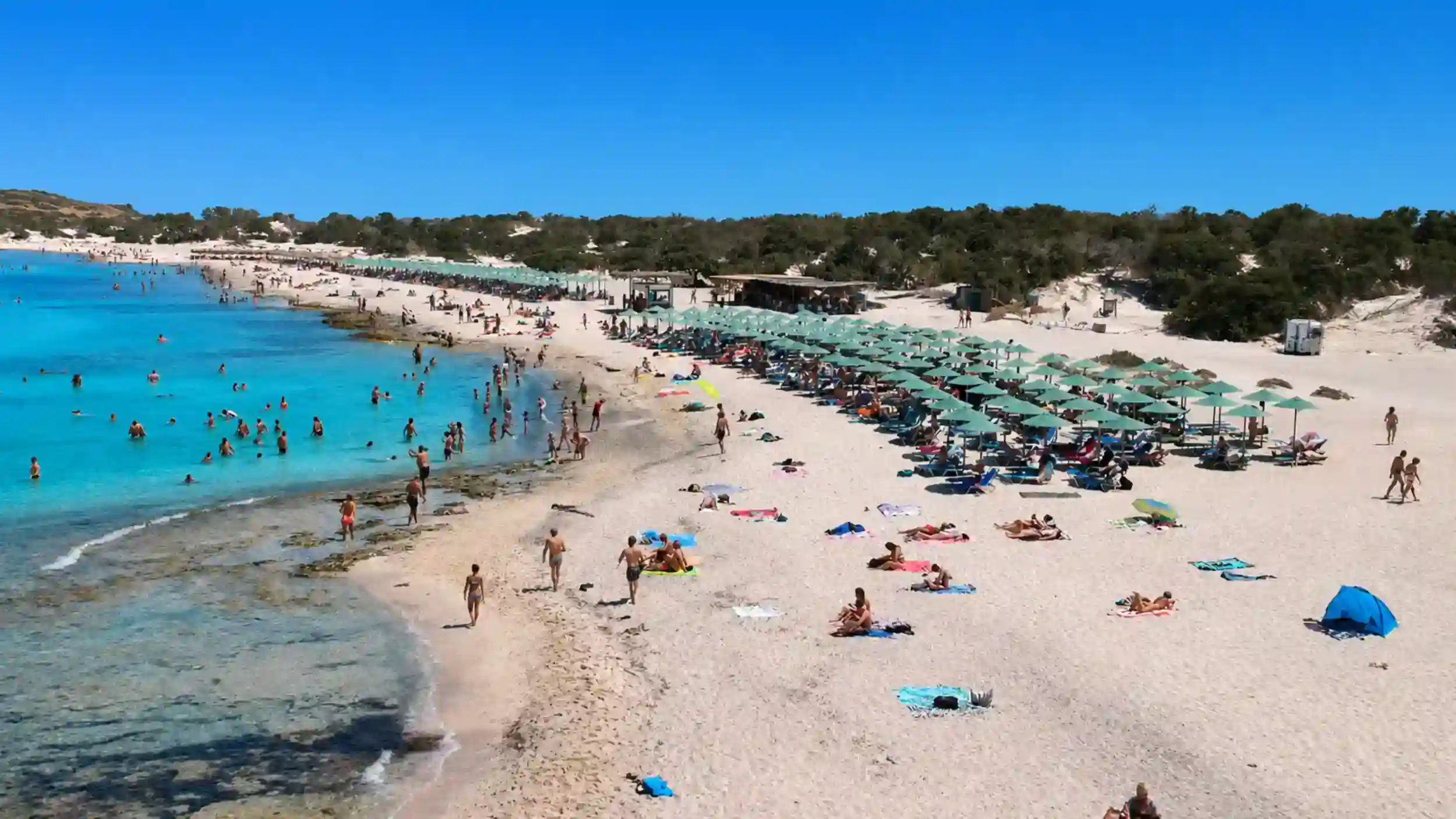
Chrissi Island from Ierapetra can be one of the best beach trips in East Crete, but only when the weather, sea conditions and current access rules work in your favour. This isn’t an excursion I would book automatically without checking what you’ll actually be able to do when you arrive.
On a calm day with proper swim access, Chrissi offers exceptionally clear water and an isolated island setting unlike the mainland coast. When access is restricted or the wind gets up, however, you can spend most of the day on boat logistics for very little time actually enjoying the island.
🚤 Boats to Chrissi Island from Ierapetra
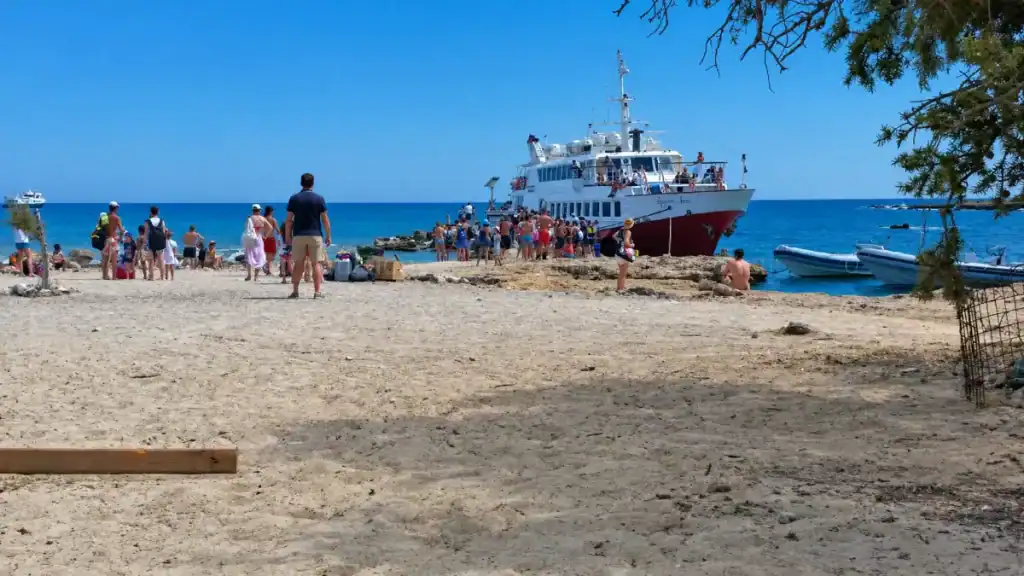
Boats to Chrissi Island from Ierapetra leave from the excursion harbour on the seafront rather than the larger commercial port. Several operators normally run during the main season, with tickets sold from kiosks facing the water.
🎟️ Tickets and Departures
Services generally operate from May into October, with fares starting at around €40 depending on the operator and season. Outside the August peak, advance booking is usually unnecessary, but it’s worth checking at the harbour the evening before to confirm the next day’s departures.
⏱️ How Long Does the Boat Take?
Most boats leave between 10:30am and 11:30am and return from Chrissi in the late afternoon, usually between 4:15pm and 5:30pm. Faster boats can make the crossing in around 25 to 30 minutes, while slower services may take close to an hour.
This means Chrissi effectively takes up the whole middle of the day. Check exactly what access you’ll get on the island before buying your ticket, rather than choosing purely by departure time or price.
💨 Chrissi Island Weather, Wind and Access
Weather matters enormously when taking a trip to Chrissi Island from Ierapetra. The island is low, exposed and surrounded by open water, so strong winds can affect both the crossing and the experience once you arrive.
🌬️ Check the Wind Before Booking
Operators cancel crossings when conditions become rough, sometimes making the final decision on the morning itself. Even when boats are running, strong gusts can make the exposed north shore far less enjoyable for swimming.
If conditions look poor, the south coast between Myrtos and Makry Gialos provides an easy alternative day from Ierapetra.
⚠️ Check the Current Access Rules
Access is just as important as the weather. Restrictions have changed in recent seasons to protect Chrissi’s environment, and the experience advertised by individual boat operators may not always reflect what visitors are actually permitted to do that day.
Before paying, ask specifically whether you will be able to land, swim near shore and spend meaningful time at the island. If the trip only provides an offshore stop or brief supervised swim, it becomes a very different excursion.
🏝️ What Chrissi Island Is Actually Like
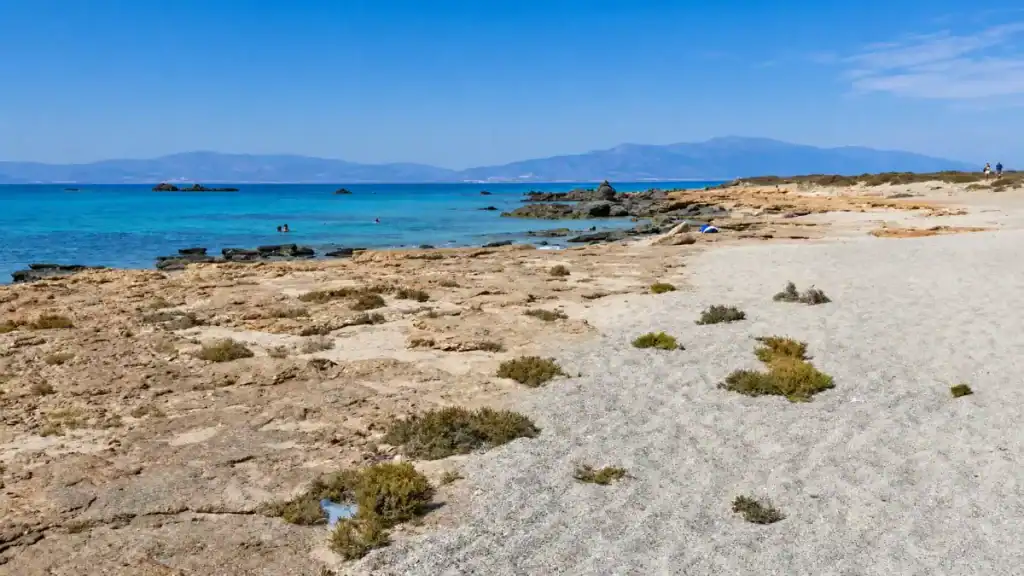
Chrissi Island is a narrow, low strip of land around seven kilometres long and two kilometres wide. There are no roads, villages or resort developments, just pale sand, scrub and protected juniper and cedar vegetation.
🩵 Belegrina Is the Main Attraction
Belegrina, also known as Golden Beach, is the reason to make the trip. Its sand has a subtle pink-gold colour from crushed shells, while the shallow water can be exceptionally clear and bright when conditions are calm.
For swimming, it’s among the strongest beaches in East Crete, particularly when compared with the beaches immediately around Ierapetra.
🌿 Expect a Fragile, Undeveloped Island
Chrissi isn’t somewhere you visit for attractions or sightseeing. Its appeal comes from the isolation, clear water and largely undeveloped landscape. Under previous normal access conditions, visitors could cross the short path through the protected vegetation towards Belegrina, although current access restrictions may prevent this.
That distinction matters. The experience is really about having access to the island’s coastline and water, rather than simply seeing Chrissi from a boat.
🧭 Is Chrissi Island from Ierapetra Worth It?
Chrissi Island from Ierapetra is worth doing when the conditions are right, but it shouldn’t be treated as an automatic must-do. The quality of the trip depends heavily on the weather and, crucially, what access is actually permitted on the day.
✅ Go When the Conditions Line Up
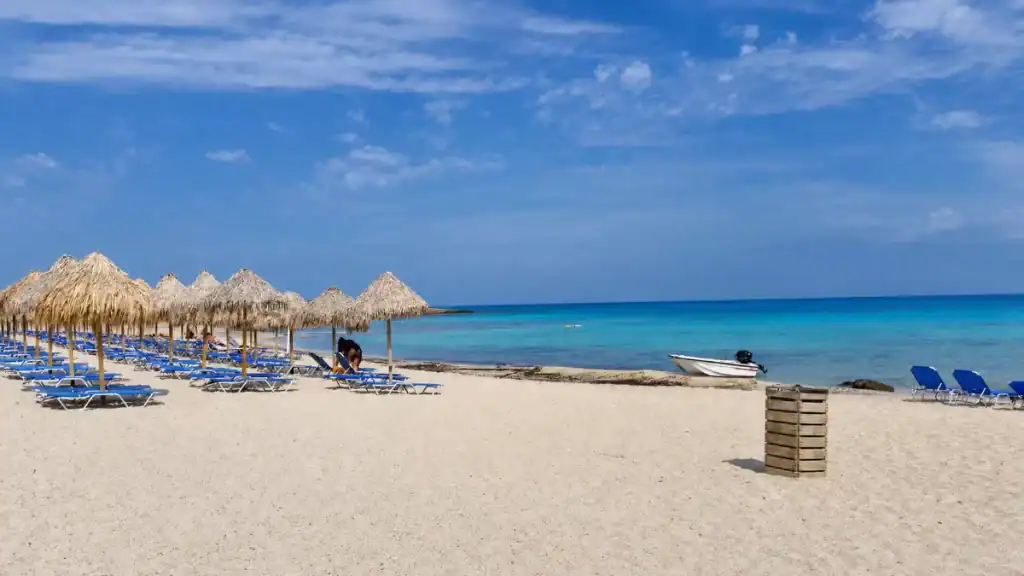
If the operator confirms good swimming conditions, meaningful time at the island and workable access to the water, go. Bring your own food and plenty of water, and expect little or nothing in the way of facilities or reliable shade.
❌ Skip It When Access Is Restricted
If you’re offered only an offshore anchorage, restricted access or a short supervised swim, the value drops considerably. You’re committing most of a day to the excursion, so a brief glimpse of Chrissi isn’t enough to justify it.
📅 Choose Your Timing Carefully
Late May to mid-June and September offer a better balance, with warm enough water and fewer passengers than the main summer peak. Boats tend to arrive in batches rather than gradually, so the main swimming areas can become busy surprisingly quickly.
Keep Chrissi as a flexible option while staying in Ierapetra. Check the wind a couple of days before, check again that morning and ask at the harbour exactly what access is operating. If the sea is calm and the trip gives you proper time at the island, it’s worth going. If not, skip it.