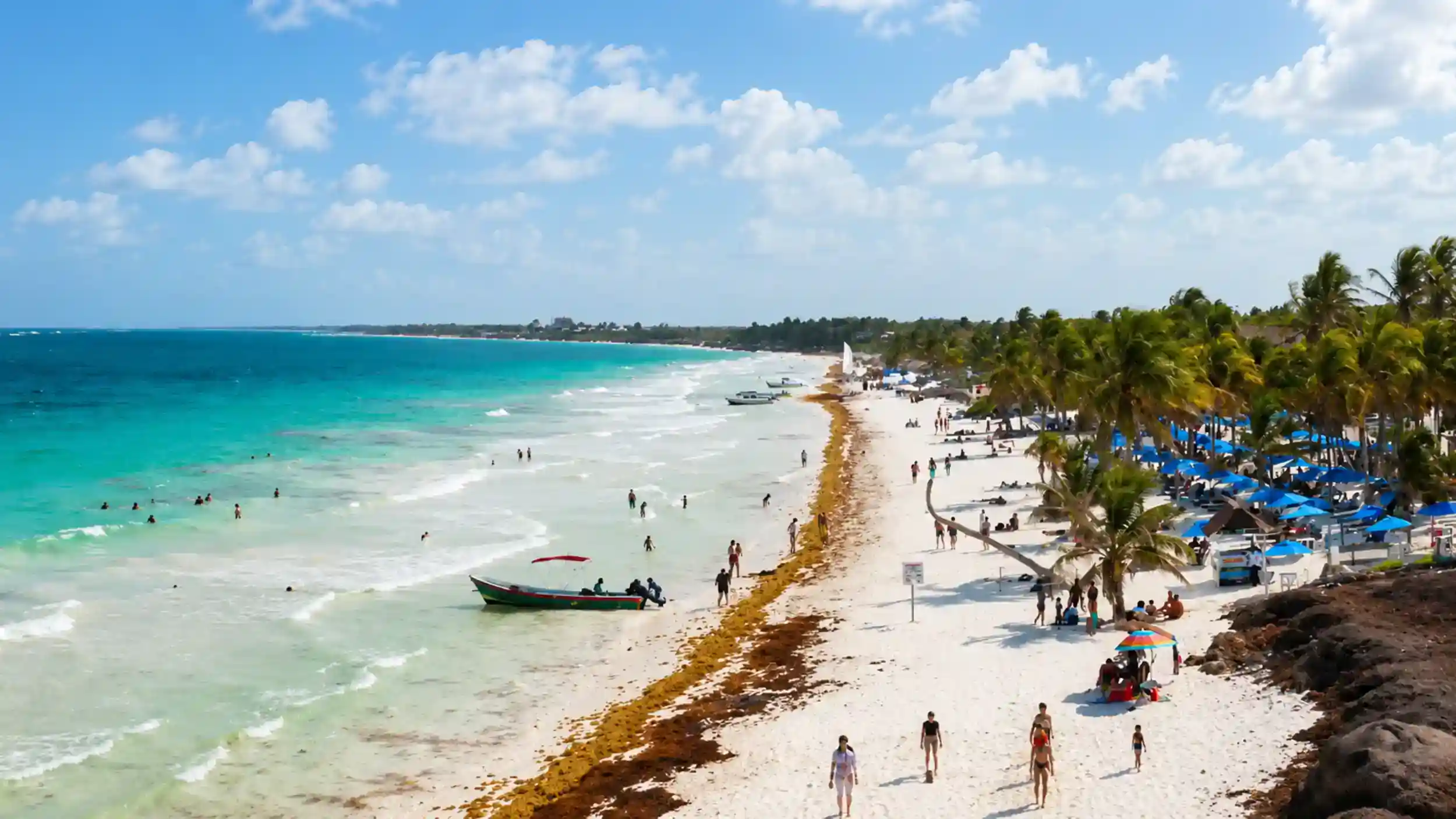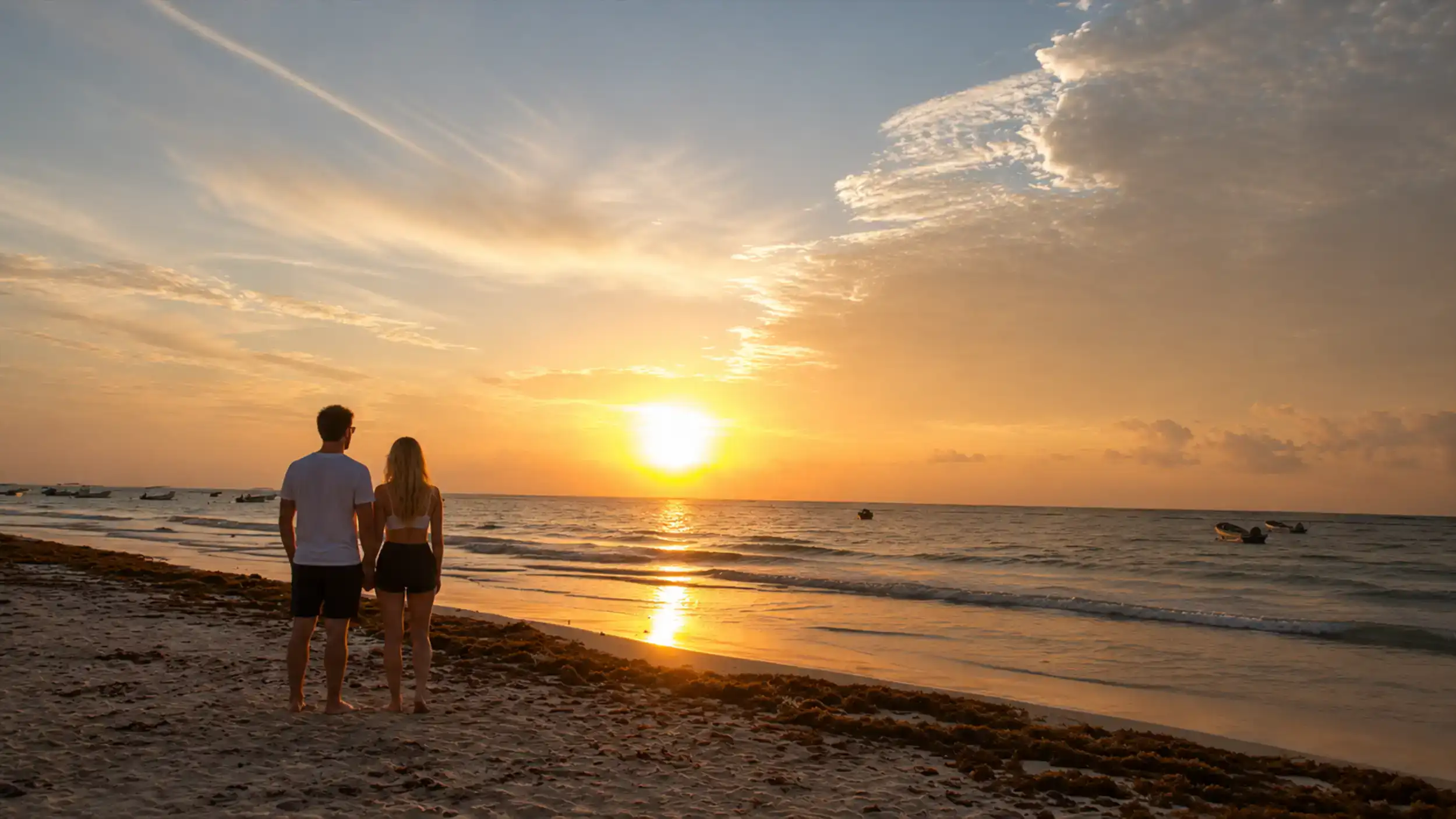
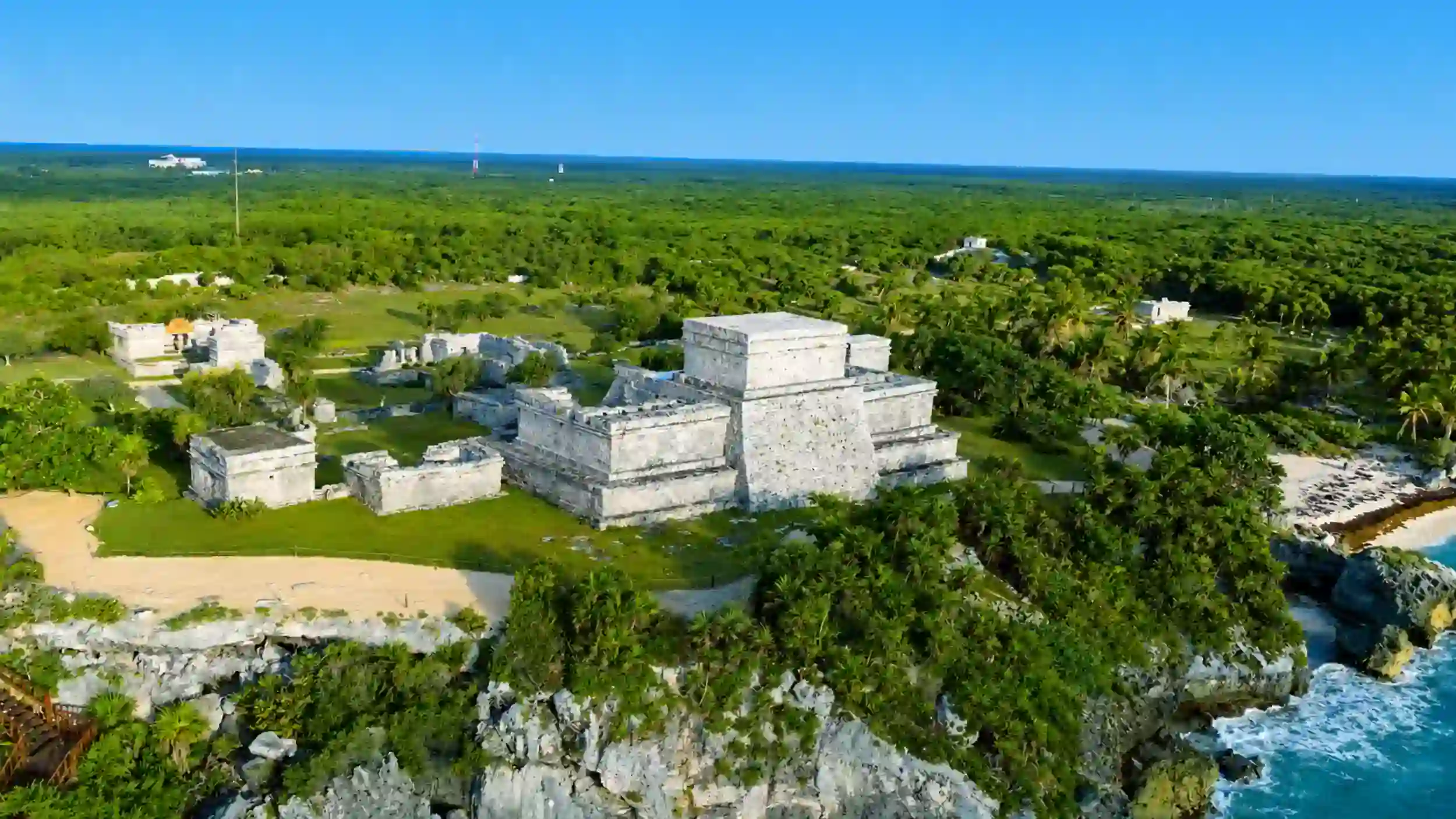
Is Tulum worth visiting? Yes, but the answer became clearer once Tulum stopped behaving like the simple beach destination I had pictured. Caribbean beaches were only one part of the trip. Cenotes, Mayan ruins and the town kept pulling the day in different directions, and the distances between them mattered more than expected. That variety is a large part of Tulum’s appeal, but it also explains why an inexpensive, effortless resort holiday is not what it does best.
The first surprise was how quickly transport became part of the day. The beach, Tulum Pueblo, ruins and cenotes do not collapse into one neat resort centre. Once we started moving between them, staying entirely around the Hotel Zone began to look less like convenience and more like seeing only one version of Tulum.

🌴 Is Tulum Worth Visiting Beyond the Beach?
Yes. Tulum is most worth visiting when the beach is only part of the plan. What won us over was how much variety fitted into a few days: coastline, freshwater cenotes, ruins, jungle and nature reserves without turning the trip into a long-distance tour of the Yucatán.
The beach alone never really explained why Tulum had such a hold on people. A morning at the Mayan ruins, followed by freshwater swimming in a cenote and an evening back in Tulum Pueblo, did a much better job. By then the destination felt less like one resort and more like several quite different experiences sharing the same base.
Are the Cenotes One of Tulum’s Biggest Attractions?
Yes. The cenotes were one of the experiences that made Tulum feel more substantial than a beach stop. After time on the coast, dropping into freshwater and shade changed the rhythm of our trip completely. They did not feel like a decorative extra; they gave us a genuinely different kind of day.
Tulum works particularly well as a base for cenotes because they can be combined with the ruins, beaches and other inland experiences rather than requiring a separate holiday around them.
💦 WHEN TULUM MAKES SENSE TO ME
🌴 Variety matters: I want beaches, cenotes and ruins rather than one resort experience.
🚲 Exploring matters: I am happy moving around instead of expecting everything outside the hotel door.
💰 Value matters differently: I care more about memorable days than finding the cheapest Riviera Maya base.
| 💚 I Would Choose Tulum If… | ❌ I Would Look Elsewhere If… |
|---|---|
| 🌴 You love beaches, nature and wildlife | 🏨 You only stay in all-inclusive resorts |
| 🚲 You enjoy exploring independently | 💰 You’re looking for the cheapest holiday |
| 💦 Swimming in cenotes excites you | 🚶 You want everything within walking distance |
| 📸 Beautiful scenery matters to you | 🎉 Your trip revolves around nightlife |
| 🌿 You prefer unique experiences over convenience | 🛍️ Shopping and entertainment are your priorities |
💰 Is Tulum Too Expensive to Be Worth Visiting?
Tulum can feel too expensive if most of the trip is built around the Hotel Zone, but that is not the only way to experience it. Prices are difficult to ignore there. Boutique hotels, beach clubs and eco-style accommodation can push the budget up quickly, and Tulum’s higher costs are part of the trade-off. The irritation is not simply paying more. It is paying more while still needing to think about how to get between the places you came to see.
The budget felt less one-dimensional once the days moved beyond the beach strip. Tulum Pueblo, simpler beach time and days built around one paid attraction rather than several changed the calculation. The Hotel Zone may be the expensive face people remember, but it does not have to dictate every day.
An All-Inclusive Holiday Misses Much of What I Like About Tulum
Tulum can work for an all-inclusive holiday, but staying inside the resort most of the time would remove much of what made the trip interesting to us. The strongest days happened after leaving the hotel environment behind for beaches, cenotes, ruins and restaurants elsewhere.
If I wanted a self-contained resort with easy entertainment and minimal transport, nearby alternatives would suit that trip better. Tulum makes more sense when the hotel is a base rather than the entire holiday.
| 👍 When Tulum Works Best for Me… | 👎 When Tulum Would Frustrate Me… |
|---|---|
| 🚲 Explore beyond the Hotel Zone | 🏖️ Stay only around the busiest beaches |
| 🌅 Spend 3 to 4 nights there | ⏰ Visit on a rushed day trip |
| 🌮 Eat in Tulum Pueblo as well as the beach | 💸 Only experience the most expensive areas |
| 🌴 Mix beaches with cenotes and ruins | 📍 Treat it as just another beach resort |
| 📅 Visit with realistic expectations | ❓ Expect Cancún at lower prices |
⏰ Is Tulum Worth Visiting on a Day Trip?
Yes, a Tulum day trip is worth doing if that is the only time available, especially when the ruins are the priority. I would treat it as a taster rather than a complete Tulum experience. Once the ruins, beach, cenotes and town all enter the same plan, something has to become hurried or disappear.
The difficulty is abundance rather than a shortage of things to do. With the ruins, beach, cenotes and town competing for the same daylight, a one-day visit quickly becomes a decision about what matters most and what can be left for another trip.
⏱️ HOW MUCH TULUM I WOULD TRY TO FIT
Day trip: choose one main experience and accept that the visit is a taster.
2 nights: enough for a useful introduction without trying to cover everything.
3 to 4 nights: the balance I would choose for beaches, cenotes, ruins and time to slow down.
| 💭 Expectation | ✅ Reality |
|---|---|
| 💸 Cheap beach town | 💰 One of Mexico’s pricier coastal destinations |
| 🏖️ Quiet tropical paradise | 👥 Busy hotspots mixed with peaceful escapes |
| 🚶 Easy to explore on foot | 🚲 Bikes and scooters make life much easier |
| 🌊 Just another beach resort | 🏛️ Beaches, cenotes, ruins and jungle together |
| ⏰ Best visited in one day | 🌅 Much more rewarding over 3 to 4 nights |
🌅 How Many Nights Do You Need in Tulum?
I would allow three to four nights in Tulum for a first visit. That is where our trip started to breathe. With less time, two or three major experiences keep competing for the same day; with another night, a cenote can run long, the beach can keep us there, or an evening in town can simply remain an evening rather than the final item on a schedule.
Three nights in Tulum gives the trip much more breathing room. One day can lean towards the coast and ruins, another towards cenotes, while the remaining time can absorb the town, beaches and whatever changed once I arrived.

🚲 Do You Need a Bike or Scooter in Tulum?
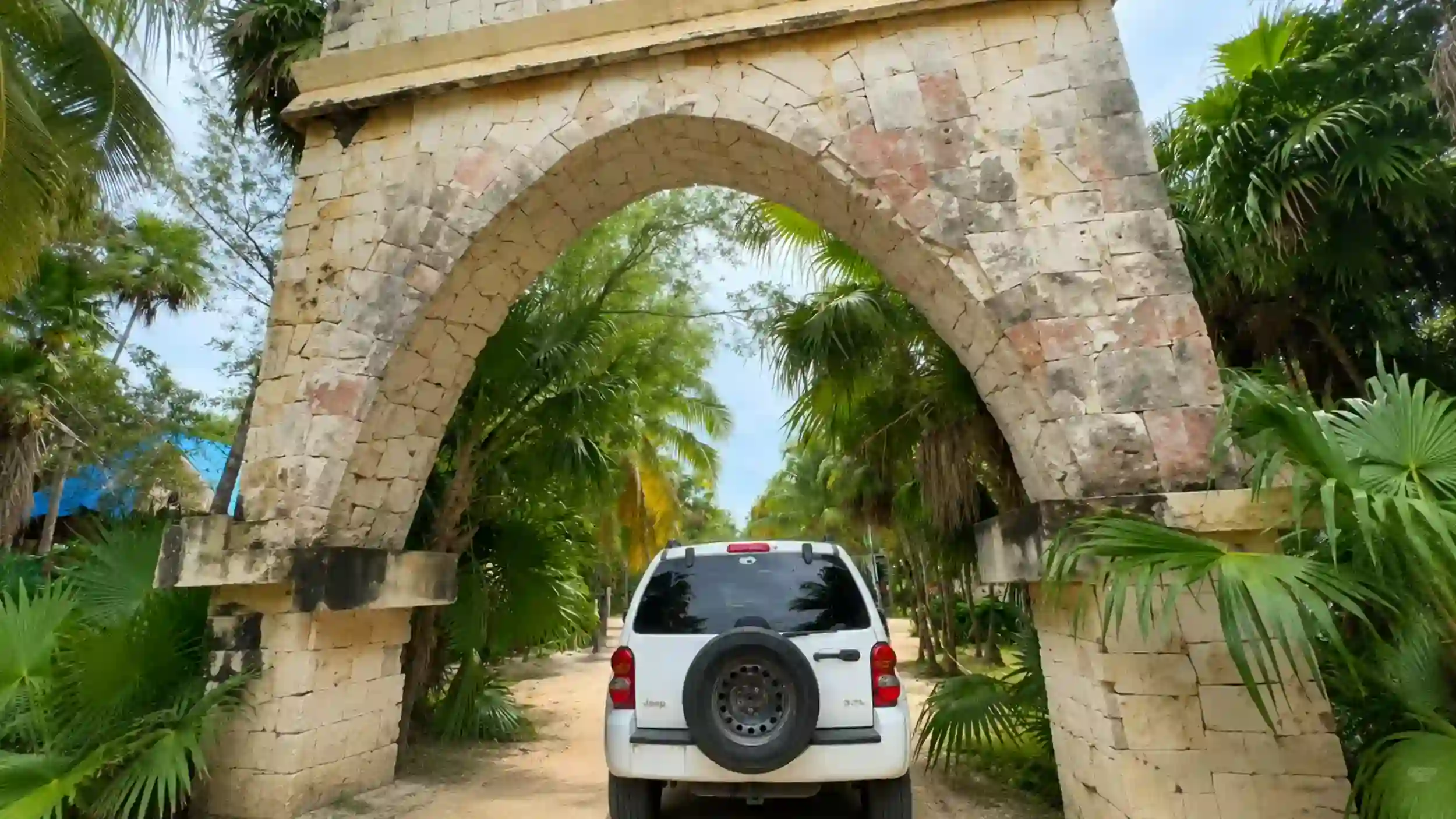
You do not need a bike or scooter for every Tulum trip, but independent transport becomes useful as soon as the itinerary stretches beyond one immediate area. On foot, the distances quickly decide what can realistically be combined. For us, having our own transport changed that calculation: places that had looked awkward to join became plausible without building the day around transfers.
For shorter journeys, a bike keeps the pace pleasantly slow. Once the distances grow, a scooter becomes the more practical tool for someone comfortable riding one. The important part is not hiring either by default; it is noticing when transport has started dictating the itinerary.
🚲 HOW I WOULD THINK ABOUT GETTING AROUND
🚶 Walking: fine when the day’s plans are genuinely local.
🚲 Bike: best when I want short independent journeys at a slower pace.
🛵 Scooter: more useful when the itinerary spreads further and I am comfortable riding.
🏝️ Is Tulum or Playa del Carmen Better?
I would choose Tulum for nature, cenotes, ruins and days built around exploring; Playa del Carmen is the easier choice for restaurants, nightlife, shopping and ordinary day-to-day movement. That difference became much clearer after dealing with Tulum’s spread-out geography.
Neither is simply better. Tulum asked us to work a little harder for the variety we came for; Playa del Carmen removes more of that friction.

| 🏝️ Destination | ⭐ Best for | ✅ I’d Choose It If… |
|---|---|---|
| 🌴 Tulum | Nature & adventure | You want beaches, cenotes, ruins and outdoor experiences |
| 🎉 Playa del Carmen | Convenience | You enjoy restaurants, nightlife, shopping and easy transport |
| 🏖️ Isla Mujeres | Relaxation | You want beautiful beaches and a laid-back island atmosphere |
| 🌅 Holbox | Escaping the crowds | You value peace, wildlife and a slower pace |
| 🏛️ Valladolid | Culture & history | You prefer colonial towns, local food and historic attractions |
That is why who Tulum is really for matters more than whether it wins a generic Riviera Maya ranking.
⭐ How Can You Get More From a Tulum Trip?
The best way to get more from Tulum is to stay long enough to explore beyond the Hotel Zone and resist squeezing every attraction into one day. Two versions of the trip would have given me a much poorer impression: rushing everything into a frantic visit, or barely leaving the most expensive tourist zone. Both magnify Tulum’s weaknesses.
| ⏰ Length of stay | ⭐ My Recommendation | 💡 Why |
|---|---|---|
| Day trip | ⭐⭐☆☆☆ | Enough for a quick look, but you’ll miss much of what makes Tulum special. |
| 2 nights | ⭐⭐⭐⭐☆ | A good introduction with time for beaches and a cenote. |
| 3 to 4 nights | ⭐⭐⭐⭐⭐ | The ideal balance for most visitors. |
| 5+ nights | ⭐⭐⭐⭐☆ | Great if you want a slower pace or plan day trips nearby. |
The rhythm that worked better for us was simpler: stay long enough that every attraction is not competing for the same afternoon, get beyond the hotel, use transport when it genuinely saves effort, and leave room for a cenote or beach to take longer than planned.
| ✅ What I’d Do | ⭐ Why It Matters to Me |
|---|---|
| 🌅 Stay for 3 to 4 nights | Experience far more than just the beach |
| 🚲 Hire a bike or scooter | The easiest and most enjoyable way to explore |
| 💦 Visit cenotes early | Fewer crowds and cooler temperatures |
| 🌮 Eat in Tulum Pueblo | Better value and more authentic local food |
| 🌴 Mix beaches with inland attractions | Discover what makes Tulum unique |
🎯 Is Tulum Worth Visiting?
Yes, Tulum is worth visiting for travellers who value beaches, cenotes, ruins and independent exploring more than convenience or low prices. It made the most sense to me once I stopped expecting an effortless resort holiday. The compromises are real, particularly transport, timing and the cost of the beach areas.
Yet the combination of Caribbean beaches, freshwater cenotes, Mayan ruins and tropical surroundings kept winning the argument back. Three to four nights gives those contrasts enough room to emerge. Staying beyond a single day, getting outside the Hotel Zone and treating the cenotes as part of the reason for coming is the version of Tulum that worked best.