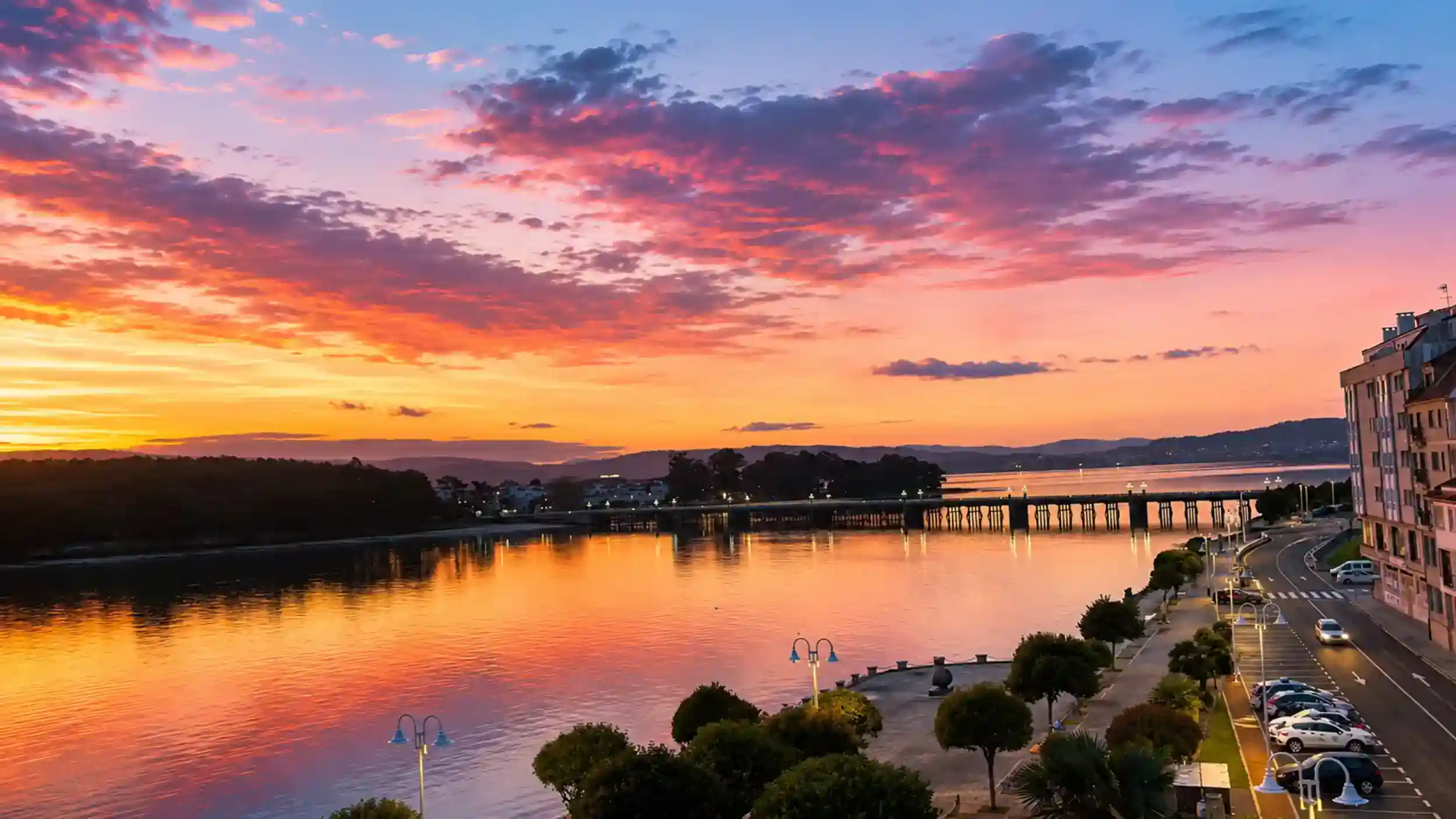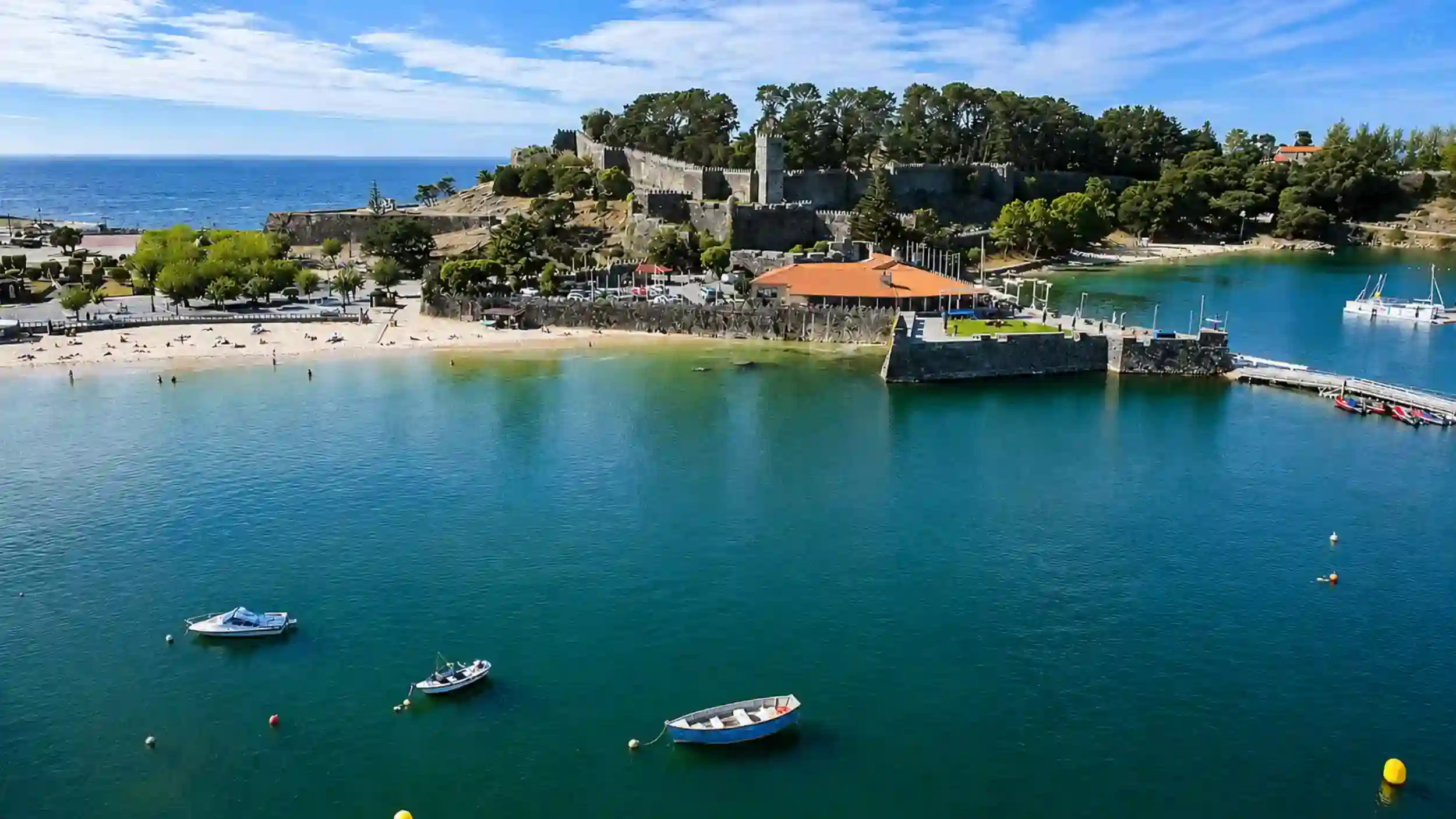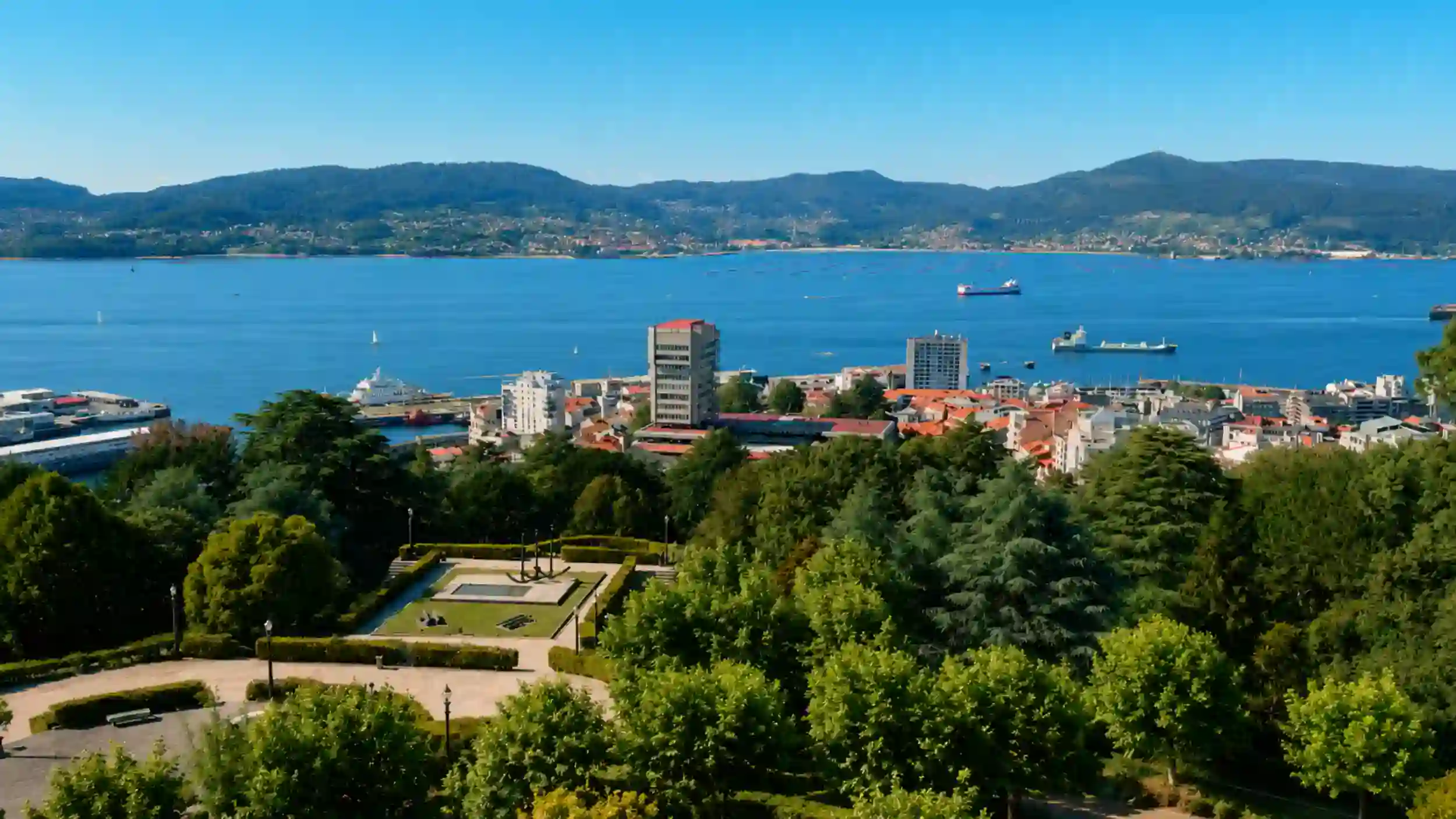
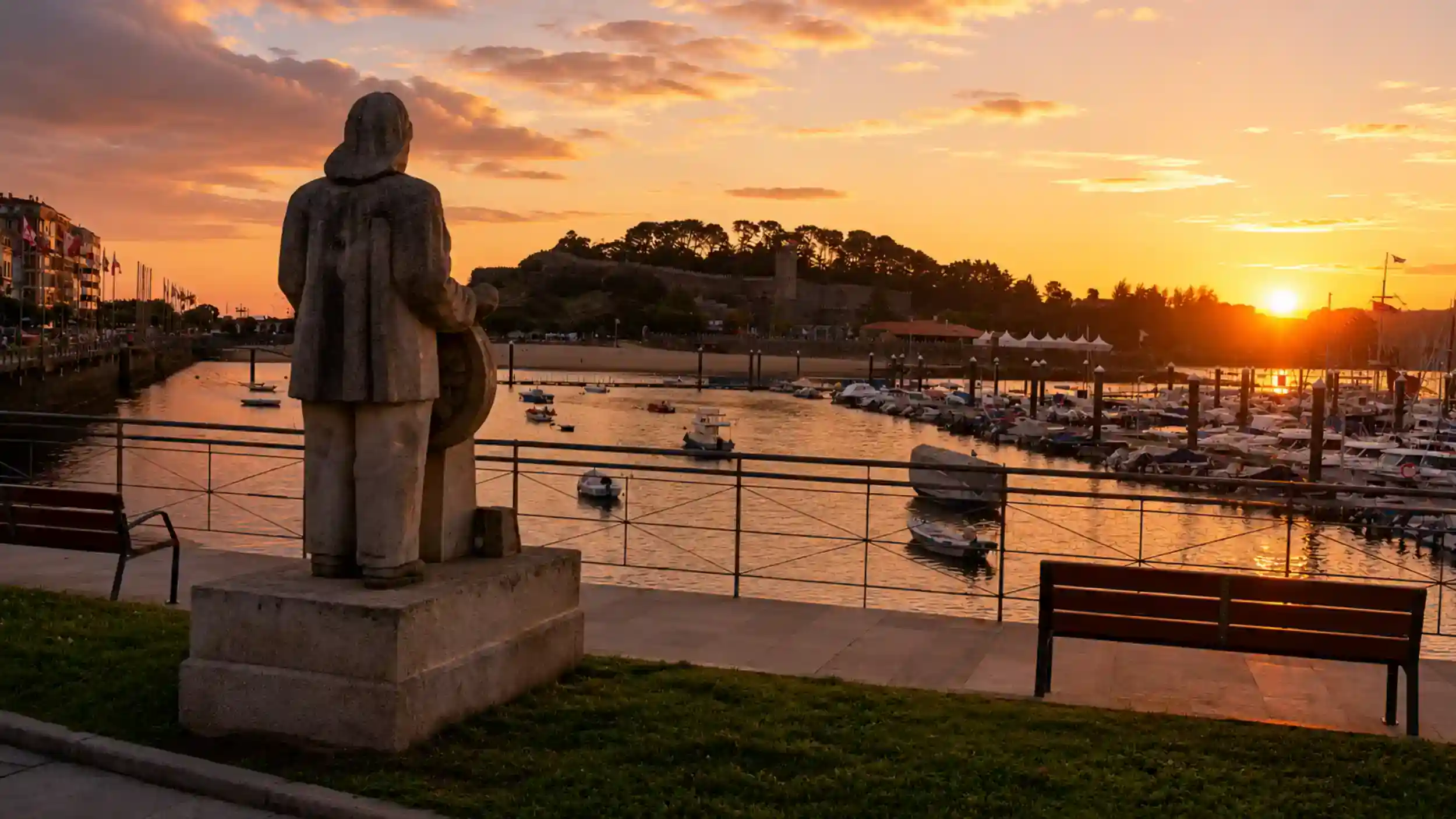
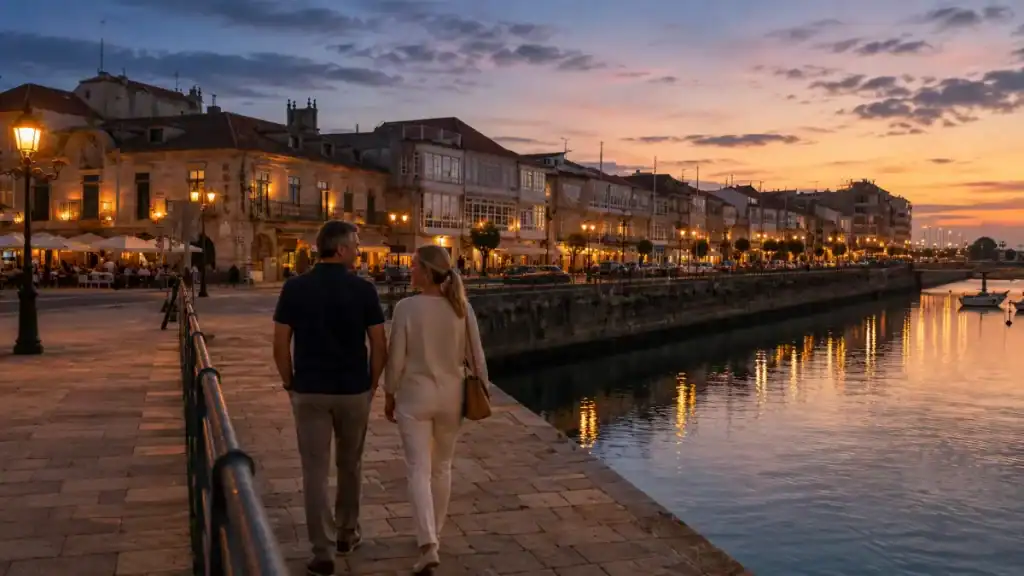
I think evenings are when Baiona works best. The harbour, fortress peninsula and compact old town can fill several relaxed hours without another sightseeing plan. I would return to the waterfront around sunset, walk beside the marina, stop for dinner and let the weather decide how long I stayed outside.
Once I was back in town, I never felt much need to go anywhere else. The light changed across the harbour and Baiona itself became the evening.
⚓ The Harbour Was Where My Evenings Naturally Began
However I spent the day, the harbour pulled me back towards the centre by early evening.
During the day I could be on beaches, around the fortress or following driving routes. Later, that movement reversed. Cars returned towards town, parking filled again and walkers gathered along the promenade.
By then, I was in no hurry either. I would stroll beside the marina and pause near the fortress walls. Another stop overlooking the bay usually followed as the light softened.
The evening stopped feeling like sightseeing and became more about lingering. Baiona felt strongest once I settled into the slower rhythm of the waterfront.
⚓ Easy evening: harbour walk → sunset around Monte Boi → dinner near the marina or old town → final waterfront stroll.
🌅 Monte Boi Was My Natural Place for Sunset
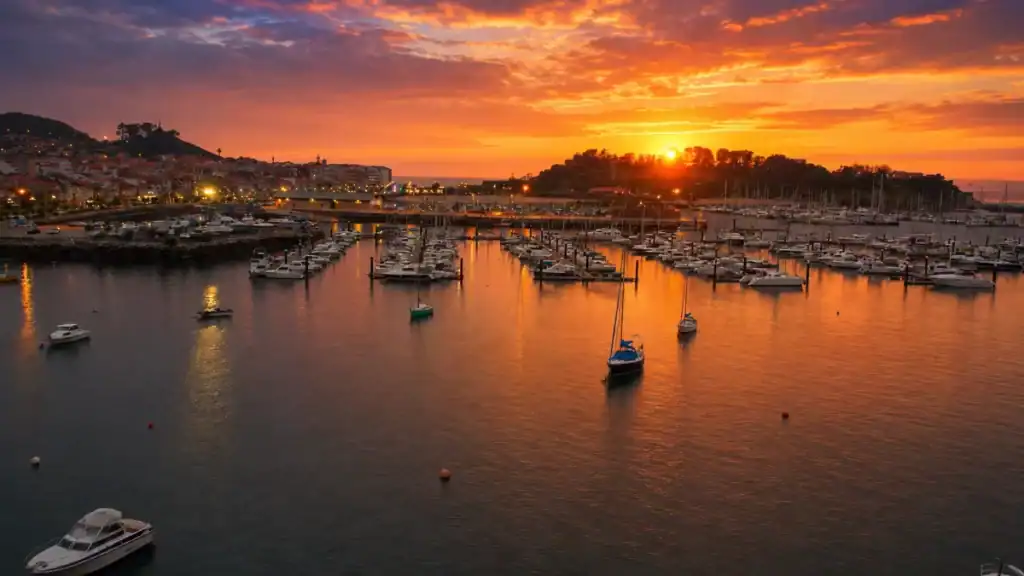
Monte Boi became my natural sunset stop because it combined the wider harbour view with the changing Atlantic light. Earlier, people were spread more evenly across town. Towards sunset, the harbour edge and waterfront around the fortress peninsula drew much more attention.
The Fortress Side Gave Me the Wider View
From around Monte Boi I could look back towards the marina and watch boats crossing farther out. The Atlantic light flattened across the water. People stopped repeatedly for photographs, yet the atmosphere remained calmer than I would expect in a busier coastal resort.
Once the sun started dropping, the change came quickly. Reflections softened across the harbour and boats rocked against the evening tide, while the hills behind town darkened and the waterfront held the light a little longer.
The whole promenade seemed to slow with it.
🚶 The Harbour Walk Worked Better Without a Plan
The harbour walk worked best when I stopped trying to turn it into a route. My evenings naturally alternated between walking and stopping: a section of harbour would lead to a drink, then another short walk towards the fortress walls before the temperature or view gave me another reason to pause.
I rarely felt any reason to keep moving continuously for long.
The waterfront stayed visible from almost everywhere near the centre. The evening developed in small fragments rather than around one structured route. That suited me after a busier beach day or coastal drive.
🚶 Best for: a slow post-beach walk, a drink beside the water and an evening without another itinerary.
🌬️ The Weather Decided How Long the Waterfront Lasted
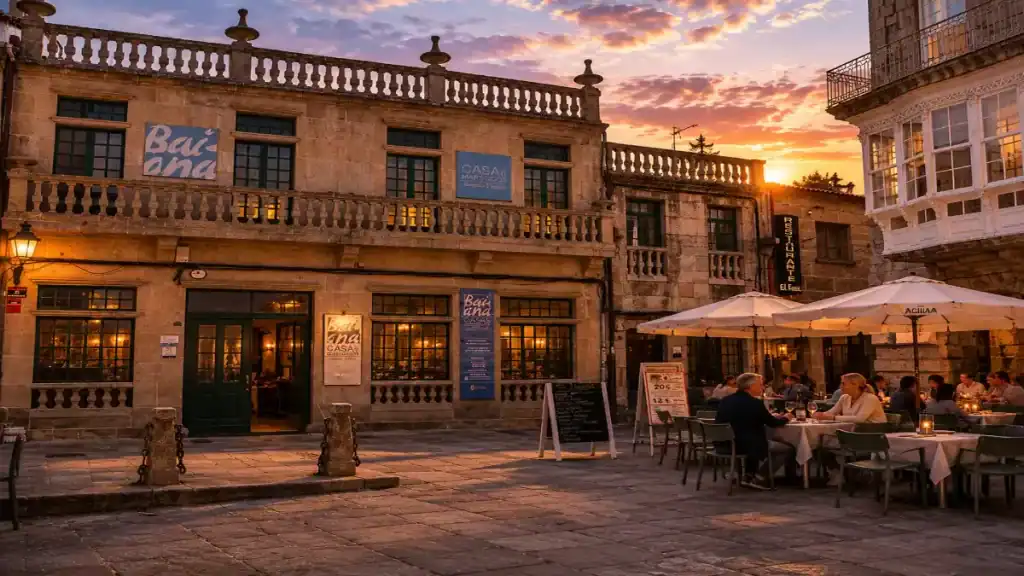
The weather decided whether the waterfront lasted for hours or pushed me inland much sooner. On warm, calm evenings, terrace tables remained full and waterfront benches stayed occupied after sunset, with people continuing to walk slowly around the marina well into the evening.
Wind Changed My Route Before Rain Did
A stronger Atlantic breeze was usually the first thing to alter the plan. The exposed outer promenade thinned noticeably. I moved inward too, towards sheltered terraces, bars and narrower streets behind the waterfront.
Rain compressed the evening further. Activity shifted beneath awnings, into cafés and around covered areas near the marina. Baiona was compact enough that going indoors never felt like abandoning the evening completely.
🌦️ Useful rule: keep the harbour as the starting point, not a fixed route. Wind or rain can push you inland within minutes without ruining the evening.
🍽️ Dinner Belonged Near the Harbour or Old Town
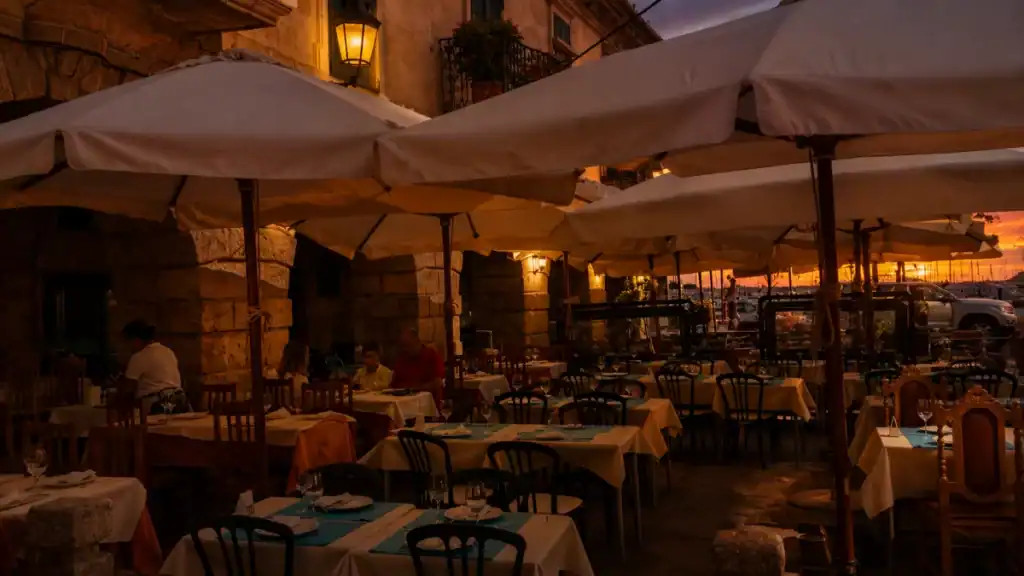
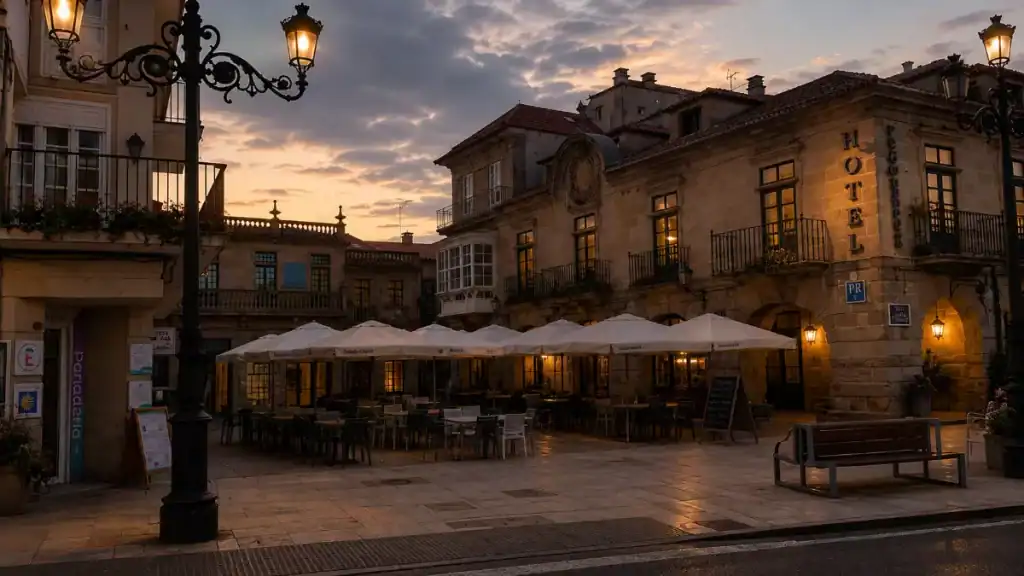
Dinner worked best as part of the harbour or old-town evening rather than as a separate event. Seafood restaurants filled gradually, and tables stayed occupied for long stretches once food and wine arrived.
From many terraces the marina was still close enough to remain part of the atmosphere. Fishing boats returned and reflections shifted across the water as the promenade changed again when people finished eating elsewhere.
I Would Choose the Area Before the Restaurant
For a waterfront evening, I would stay around the marina and harbour-facing streets. If wind or rain made the water less appealing, the old town offered an easy alternative. Its sheltered streets and squares meant there was no reason to use the car again.
That flexibility mattered more to me than chasing one particular dinner address.
🏰 The Fortress Area Still Works After the Main Sightseeing Ends
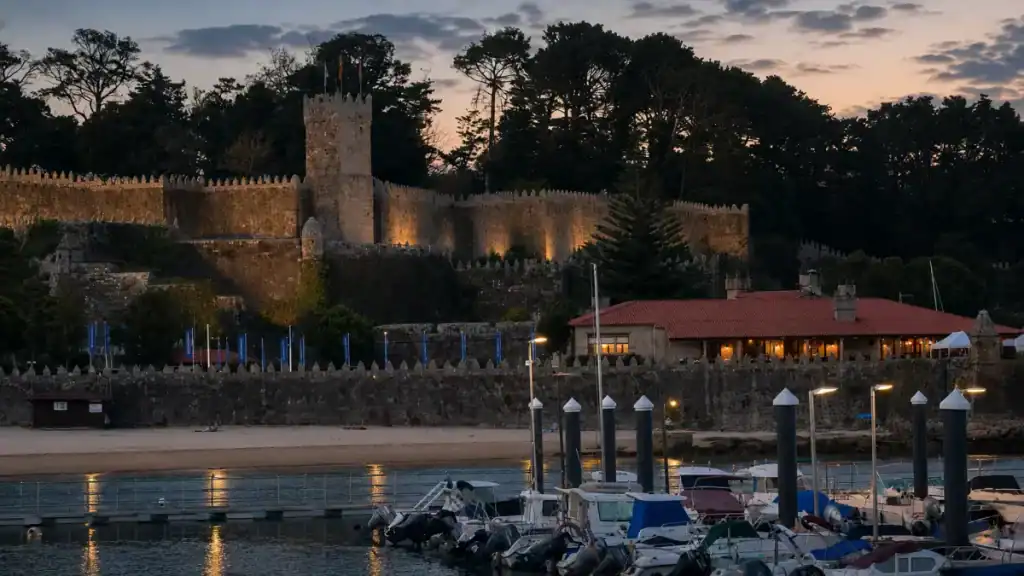
The fortress area was still worth using after the main sightseeing part of the day had finished. During the afternoon I mainly treated the walls as viewpoints and photo stops. Later, the same area became quieter and more reflective without feeling empty.
After dark, the sea became easier to hear. Wind moved across the stone walls and harbour sounds carried farther over the water. Town lights reflected across the marina below.
Check Fortress Access Rather Than Assuming
The fortress complex contains the Parador, while the public Monte Boi promenade runs around the base of the walls. For an evening walk, the outer route is the simpler plan because access arrangements inside the fortress can change.
If entering the fortress itself matters, check the current opening times that day. Do not assume every daytime visitor area remains accessible throughout the evening.
🌙 My choice: use sunset for Monte Boi and the harbour, then let dinner and a final waterfront walk finish the evening. That slower sequence became the real attraction after the day-trippers began disappearing.