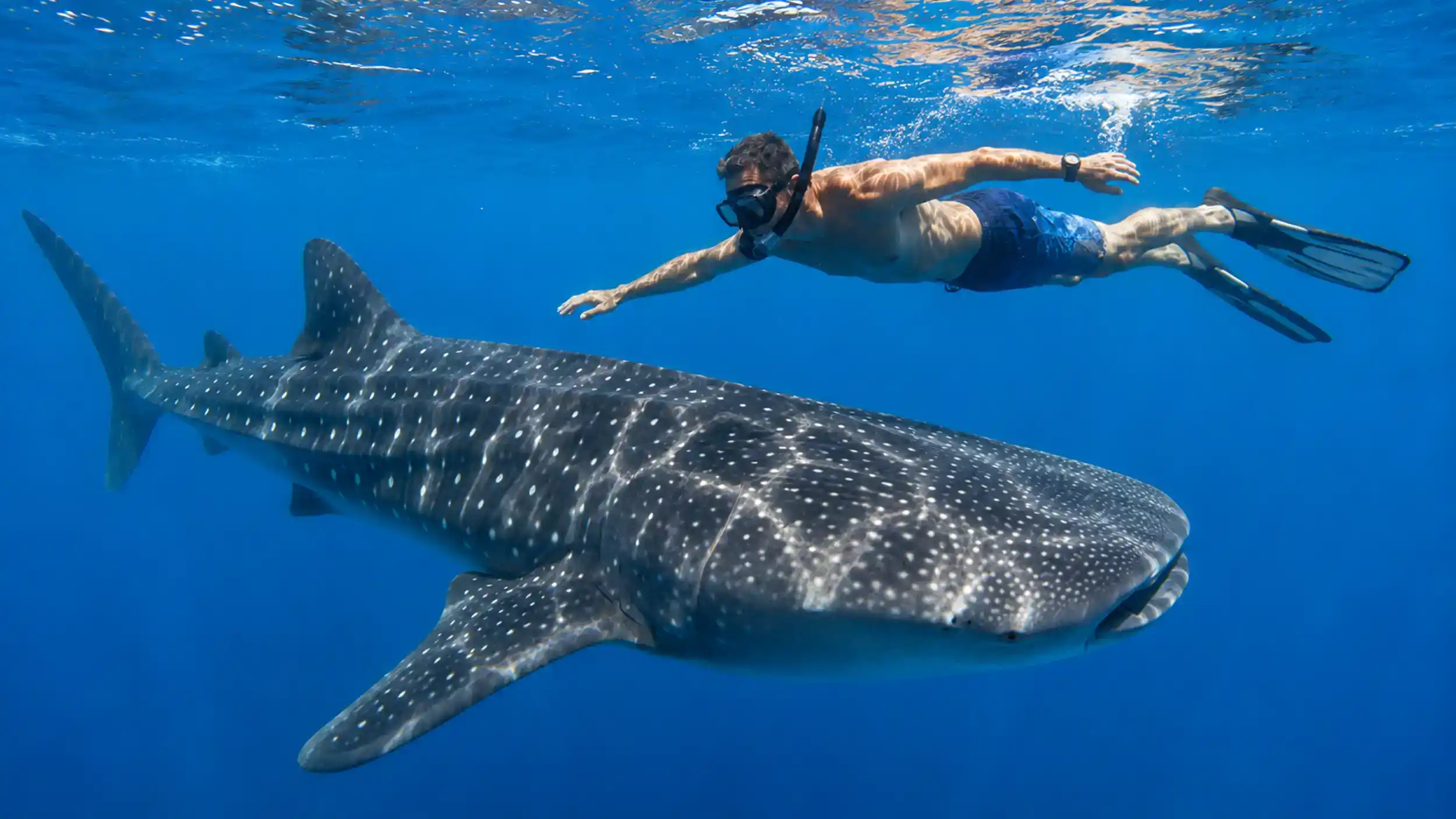
The whale shark was the part I had pictured: clear water, that enormous spotted body beneath us and a few extraordinary minutes alongside it. What I had underestimated was everything around it: the early start, hours on the boat, rough seas and no guarantee we would find one.
That changed how I judged the tour. If seeing a whale shark was a major reason for coming to Holbox, I would accept the effort. If it was simply another attraction on the list, I wouldn’t. The experience can be extraordinary, but you have to want it enough to accept the long, uncertain day around it.
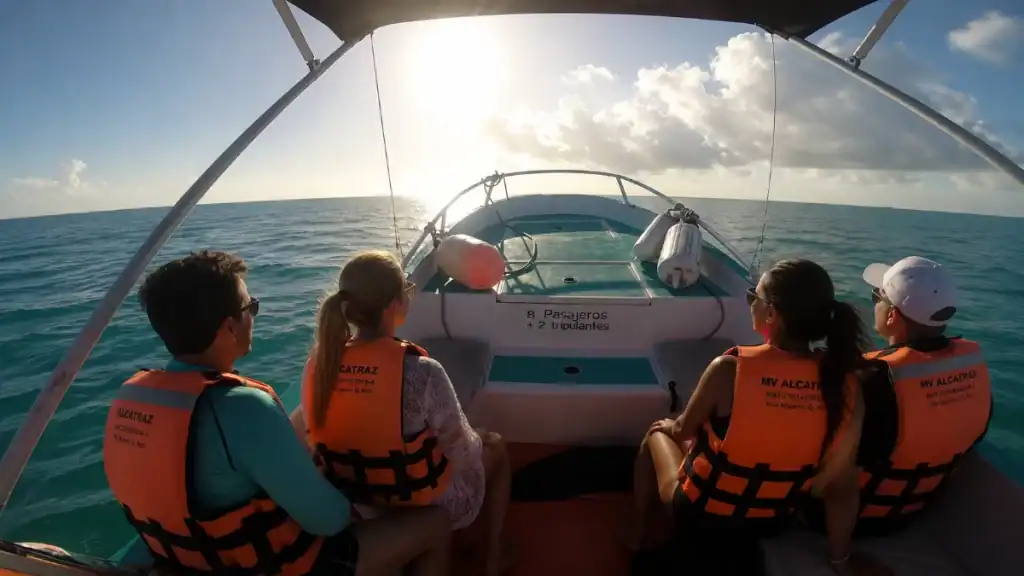
🐋 When I Think a Holbox Whale Shark Tour Is Worth It
My answer is yes, but the word possibility matters. I had to be comfortable with the idea that the day could still be worthwhile even if the wildlife did not cooperate.
Seeing a whale shark in open water is very different from visiting a conventional attraction. There is no enclosure, timetable or guaranteed performance.
The uncertainty actually became part of the appeal once I accepted it properly. We would be going out to look for a wild animal, not arriving somewhere that had arranged one for us.
It also made the price harder to judge. I was not buying an encounter. I was paying for the boat, crew, search and the chance that everything might come together.
Who is a Holbox whale shark tour really worth it for?
| You care most about… | Verdict |
|---|---|
| 🐋 Seeing whale sharks is a bucket-list experience | Book it |
| 🌿 Wildlife is a major reason for visiting | Strong yes |
| 💰 You’re already stretching the budget | Think carefully |
| 🤢 You struggle badly with seasickness | Think very carefully |
| 🏊 You’re uncomfortable in open water | Probably skip |
| 📸 You expect prolonged close encounters | Reset expectations |
| 🎯 You need a guaranteed sighting | Don’t book |
The more I broke the excursion down, the less useful it felt to judge the price by the minutes spent in the water. Much of what I would be paying for is the boat, crew, guide, fuel, searching and controlled access needed to reach a wild animal responsibly.
That is the bargain I would make with myself before handing over the money: I am paying for the opportunity, not buying a guaranteed encounter.
🌊 Why the Wild Nature of the Encounter Matters to Me
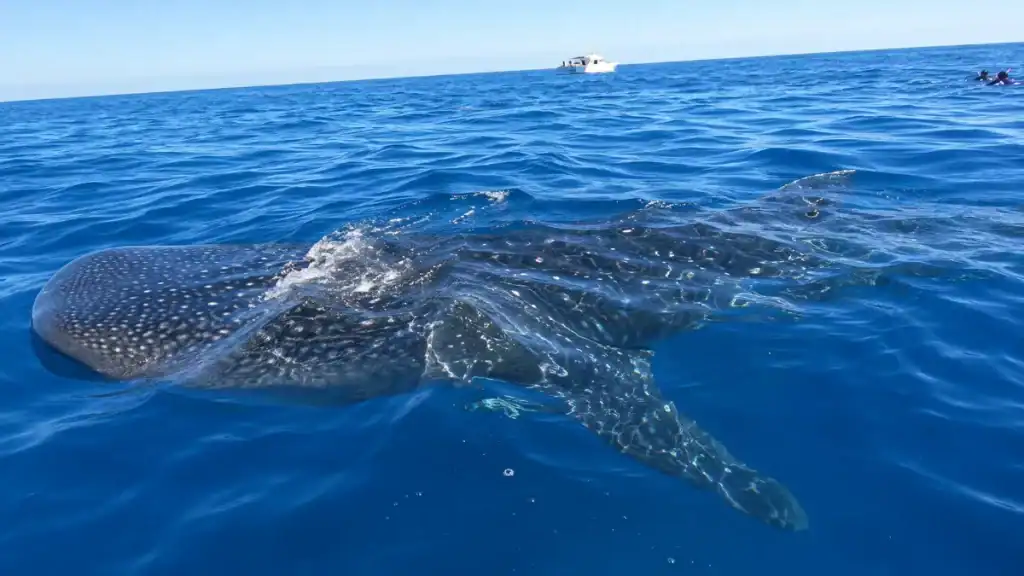
Whale sharks gather seasonally in the waters around the northeastern Yucatán region because productive waters provide feeding opportunities.
Their presence is natural rather than manufactured for tourism.
That distinction matters to me.
Boats have to travel to where animals are being encountered rather than bringing the animals to a fixed tourist site.
The whale sharks, of course, do not care what the excursion cost me.
Numbers and locations can vary with natural conditions, which is why one traveller can have an extraordinary encounter while another travelling at a similar time has a much less dramatic experience.
Wildlife has to remain wildlife.
📅 How I Would Plan Around Whale Shark Season
The whale shark experience is seasonal.
That means the timing of my Holbox holiday would matter enormously if seeing them were one of my priorities.
Whale shark trips operate seasonally, and the exact authorised dates can change. I would check the current season and restrictions immediately before booking rather than assume last year’s dates still apply.
This is one part of the trip where I would not rely on an old itinerary.
I would only let whale shark season dictate my Holbox dates if seeing one was a major reason for the trip. If it were one priority among several, I would balance the authorised season against weather and the kind of island stay I wanted. If it were merely a nice bonus, I would not compromise the whole holiday around it.
Remember that whale shark season overlaps with a different weather profile from Holbox’s classic drier beach period.
Our best time to visit Holbox guide makes that wider seasonal comparison.
🚤 What I Would Realistically Expect From the Tour
I would not expect a quick boat ride followed by hours swimming with whale sharks.
I would expect a substantial part of the experience to involve travelling and searching.
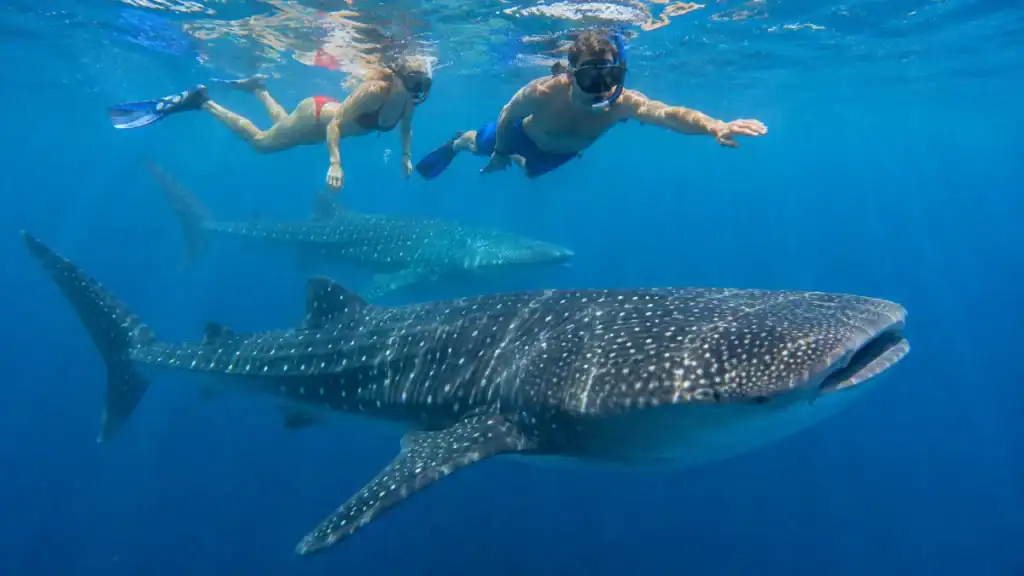
You leave by boat, head towards the areas where whale sharks are being encountered and wait for an appropriate opportunity to enter the water under the rules operating at the time.
Conditions and animal locations affect how the day unfolds.
My expectation would be far more travelling and searching than swimming. The whale sharks are wild animals, not waiting beside the island, and any water entry is controlled. The right expectation is a potentially substantial boat journey for the chance of a short, regulated encounter rather than hours swimming beside them.
If that reality made the experience sound more exciting to me rather than less, I would probably be the target audience.
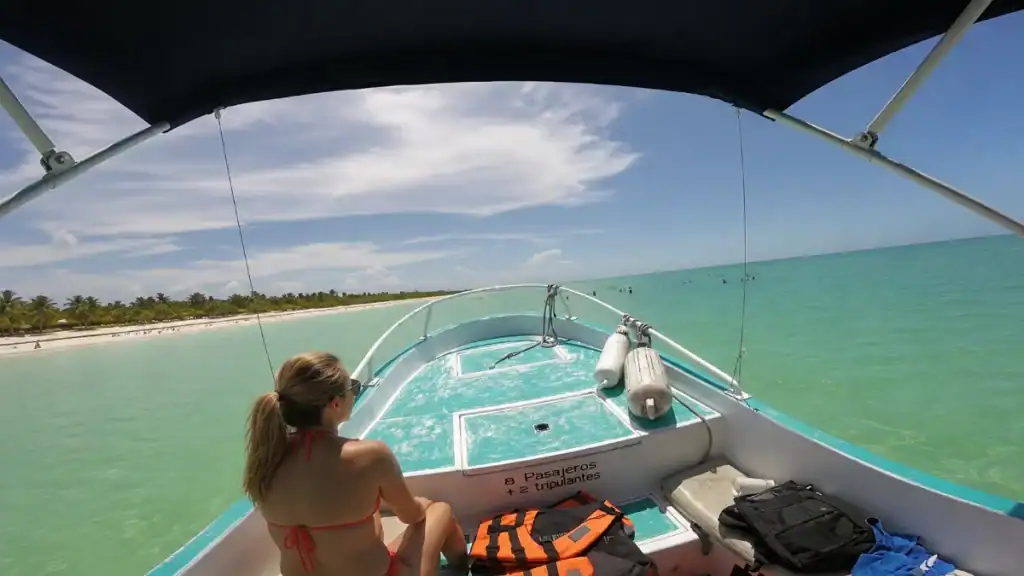
⏱️ Why I Would Budget for a Long Boat Journey
Potentially a lot, and I would plan on that basis.
This was the biggest expectation-versus-reality correction for me. In my head, the boat journey had been the bit before the experience. Once I looked at the timings properly, I realised the boat journey and the search were most of the experience. The swim could be startlingly brief by comparison.
The whale sharks aren’t permanently stationed just outside Holbox waiting for the first excursion boats to arrive.
Their location varies.
That means the journey can be a significant part of the day, particularly when animals are farther away or conditions make progress less comfortable.
What does a Holbox whale shark tour really cost you?
I would also be spending:
Time + boat travel + physical energy + part of your Holbox stay
That is why I would think carefully before squeezing a whale shark excursion into an extremely short visit.
If you’re only staying briefly, the tour can consume a substantial proportion of your island time.
Our how many days in Holbox guide helps with that wider calculation.
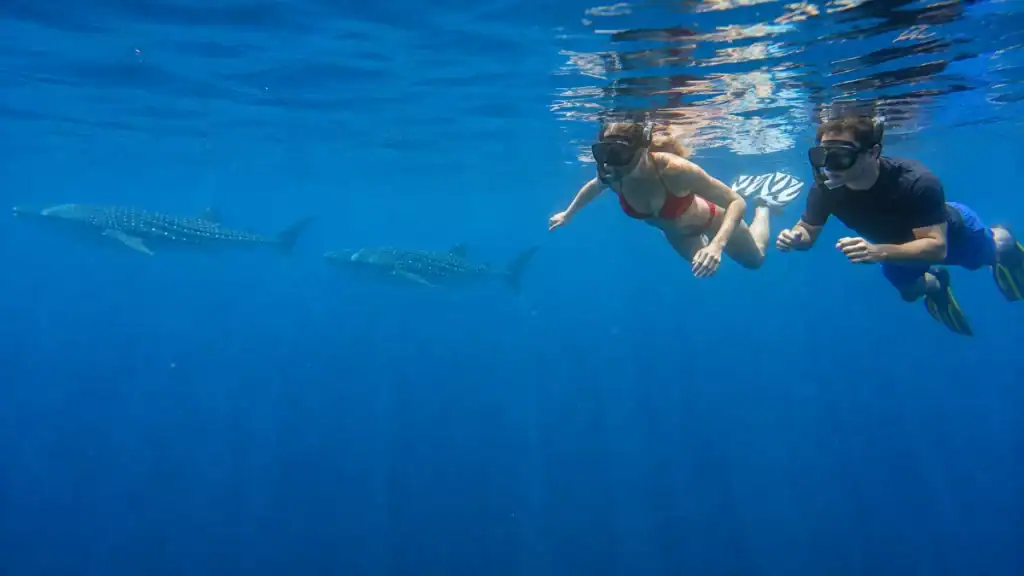
🏊 Why I Would Expect the Actual Swim to Be Short
I had to reset what I thought counted as enough time in the water. After hours devoted to reaching and searching the area, a short turn can look poor value when reduced to minutes. I came to see it differently. If the encounter is being controlled properly, I would rather climb back aboard wishing it had lasted longer than watch a whale shark surrounded simply so everyone can maximise their swimming time.
That changed how I judged value. The encounter does not have to occupy most of the excursion to be the reason for taking it.
Swimming access is controlled to reduce disturbance to the animals, and responsible wildlife tourism should never involve dozens of people piling into the water around one whale shark.
The actual encounter can therefore feel surprisingly short compared with the journey required to reach it.
Why is swimming time much shorter than the tour?
Length of tour ≠ time swimming with whale sharks
I would be paying for the entire operation required to locate and responsibly approach a wild animal.
For some travellers, a short encounter is enough to make the entire day worthwhile.
Others may question the value.
I would decide which of those reactions sounded more like me before booking.
🎲 Why I Would Never Treat a Sighting as Guaranteed
Any suggestion that a wild whale shark sighting could be guaranteed would make me wary.
Even during the recognised season.
This doesn’t mean sightings are necessarily unusual during appropriate periods. It means nature doesn’t provide guarantees.
Weather, sea conditions and animal movements can all influence the day.
Are you comfortable paying without a guaranteed sighting?
If I spend the money, take the boat trip and don’t get the encounter I imagined, will I still accept that as the risk of wildlife tourism?
If my answer were no, I would not book the excursion.
Operator claims about sightings are not something I would ever treat as contractual guarantees.
They aren’t.
📏 The Swimming Rules I Would Expect to Respect
Whale shark tourism is regulated to protect the animals.
Rules can govern issues such as how swimmers enter the water, numbers entering at once, permitted distances and behaviour around the animals.
The principle is simple:
Observe. I would not interfere.
Touching a whale shark would be out of the question.
So would chasing one.
Its path should never be deliberately blocked.
I would not choose an operator because it promised closer access than everyone else.
I would also check the current swimming rules and operator requirements shortly before travelling because wildlife regulations can change.
If regulations become stricter, that’s not a reason to look for an operator willing to ignore them.
It is a reason to respect them.
🤢 Why I Would Take Seasickness Seriously
The part I would be most wary of is seasickness. None of the photographs that sold me the idea showed the long stretches in a small boat, and that omission matters. If I knew open water regularly made me ill, I would not dismiss that as a minor inconvenience. It could dominate the day long before a whale shark appeared.
A small boat on open water feels very different from a large ferry.
If conditions are lively, the journey can be uncomfortable for anyone prone to motion sickness.
And remember: you still have to get into the water.
How demanding can the sea conditions be?
| Issue | Why it matters |
|---|---|
| 🤢 Seasickness | Long boat journey can become miserable |
| 🌊 Choppy water | Swimming becomes more demanding |
| ☀️ Sun exposure | Much of the day is outdoors |
| 🏊 Open-water confidence | Very different from swimming off a beach |
| ⏱️ Long excursion | Can be tiring |
| 🎲 Wildlife uncertainty | No guaranteed payoff |
If I knew I was highly susceptible to seasickness, I would not dismiss it as something I could simply endure.
It can turn a bucket-list experience into a very long day.
🌿 What I Would Look for in a Responsible Operator
I ended up caring more about the operator than about shaving a little off the price. Once we are on the water, the guide and captain control the things I cannot: how the search is handled, how closely the boat approaches, how people enter the water and whether the animal is treated as wildlife rather than a prop for the tour.
That is not only about getting a better experience.
It is about the whale sharks too.
Responsible wildlife tourism should put animal welfare ahead of giving customers the closest possible photograph.
How do you choose a responsible whale shark tour operator?
I would look for an operator that:
- 🌿 Clearly explains current conservation rules.
- 🛟 Gives a proper safety and wildlife briefing.
- 👥 Controls water entry responsibly.
- ↔️ Maintains required distances.
- 🚫 Does not encourage touching or chasing.
- 🎯 Is realistic about sighting uncertainty.
- 📋 Operates with the permissions required at the time.
Anyone selling the experience as guaranteed, unrestricted or exceptionally close would make me wary.
The whale shark should never have a worse day because I wanted a better photograph.
❤️ Who I Think Will Get the Most From the Experience
This is where I think traveller fit becomes decisive. If wildlife was one of the reasons I had chosen Holbox, I could imagine the long boat ride becoming irrelevant the moment that huge spotted body appeared beneath the surface. If I mainly wanted an easy beach holiday, I suspect I would resent how much of a precious island day the excursion consumed.
There’s something extraordinary about entering open water knowing that the enormous shape approaching you is completely wild.
I think this experience suits wildlife lovers and confident open-water swimmers far better than travellers who primarily want comfort or predictable value. If seeing a whale shark were a genuine bucket-list goal, I could accept the long journey and uncertainty. If I were badly affected by boats or nervous in open water, those compromises would dominate the day.
If I were the right traveller for it, I think the inconveniences would become background noise.
If I were the wrong one, they would become most of the experience.
🤔 When I Would Think Twice Before Booking
A place on every Holbox must-do list would not be enough to make me book.
I do not think they are.
Think twice if you’re nervous in deep water, badly affected by boats, uncomfortable with wildlife uncertainty or already worried about the cost of your trip.
Also reconsider if your Holbox stay is extremely short.
You may discover that you’ve travelled all the way to a slow island destination only to spend one of your few days on another long journey.
And if you’re expecting an extended private swim beside a whale shark, adjust that expectation before spending anything.
This is a regulated wildlife encounter.
Not an underwater theme-park attraction.
🏝️ When I Would Choose Holbox as My Whale Shark Base
Holbox makes sense as my whale shark base when I already want the island as part of the trip. That feels very different from building the whole Yucatán itinerary around one wildlife encounter that nature may not provide.
That distinction matters because the excursion can consume a large part of a short stay.
Wanting to see whale sharks does not automatically mean Holbox has to become the centre of my Yucatán itinerary.
For travellers who already want Holbox’s beaches, nature and slower atmosphere, the whale shark opportunity can become a spectacular seasonal bonus.
I would choose Holbox as my whale shark base when I already wanted Holbox for its beaches, nature and slower atmosphere. If whale sharks alone were driving the trip, I would not automatically assume Holbox had to become the centre of my Yucatán itinerary. For me, the wildlife opportunity should strengthen the destination decision rather than make it by itself.
If you’re still deciding whether the island itself deserves a place in the trip, start with is Isla Holbox worth visiting?
The whale sharks should enhance the destination decision, not automatically make it.
🧭 My Final Verdict on a Holbox Whale Shark Tour
By the end, I had stopped romanticising the excursion and, strangely, that made me like the idea more. I was no longer picturing a guaranteed wildlife spectacle. I was picturing a long, uncertain day at sea with the chance of one exceptional encounter in the middle of it.
🐋 WHAT THE TOUR REALLY ASKS OF YOU
💰 Money: the excursion is a meaningful trip cost.
⏱️ Time: much of a Holbox day can disappear into the tour.
🚤 Boat travel: the journey can be long.
🌊 Sea conditions: rough water can make the day physically demanding.
🎲 Uncertainty: the animal you’ve travelled to see might not cooperate.
Does a Holbox whale shark tour offer good value?
| What matters to you? | Verdict |
|---|---|
| 🐋 Seeing a whale shark is a dream | Worth the gamble |
| 🌿 Wild encounters matter more than comfort | Strong yes |
| 🏊 You love open-water experiences | Strong yes |
| 💰 You’re choosing between this and several other trip priorities | Think carefully |
| 🤢 Boats regularly make you ill | Probably not |
| 🎯 You expect certainty for the price | Not a good fit |
| 📸 You mainly want the famous photograph | Weak reason to book |
For a wildlife lover, a brief swim beside a whale shark can outweigh hours spent reaching it.
For someone who values comfort, certainty and predictable value, the same day can feel expensive and frustrating.
That is the decision I would make before booking, not afterwards when the boat was already heading across open water.
I would not book because a Holbox whale shark tour appears on every list of things to do. I would book only after doing what I had initially failed to do: picture the waiting as clearly as the whale shark, the boat as clearly as the swim and the possibility of seeing nothing as clearly as the photograph I wanted to come home with. If I still wanted the day after that, I would know I was booking it for the right reason.
I would book only if the possibility of seeing one of the world’s most extraordinary wild animals mattered enough to me that I would accept the journey, the rules, the cost and the uncertainty that come with it.