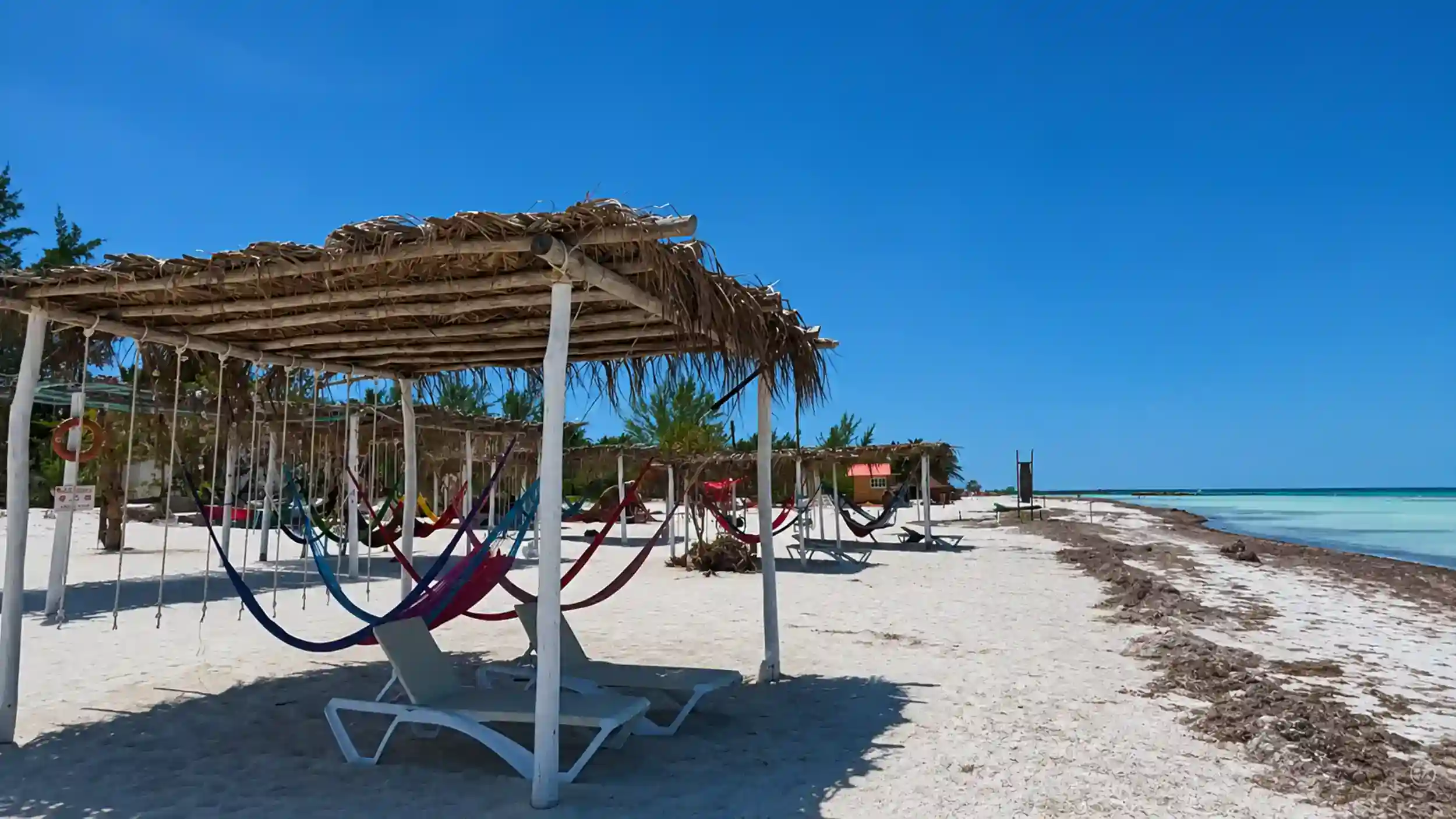
The best time to visit Holbox depends on what you actually want the island to give you. If we went back mainly for long beach days, I would choose January to March. If whale sharks were the reason for the trip, we would deliberately move into the hotter, wetter May-to-September season and accept the extra rain, humidity and mosquitoes that come with it.
That trade-off is what matters. Holbox is not a destination where the “best weather” automatically creates the best trip. The dry sandy streets, easier beach days and more comfortable humidity of winter are appealing, but summer unlocks experiences that winter simply cannot provide in the same way.
Once I started looking at the island through what actually changes on the ground, rather than through a generic weather chart, the choice became much clearer.
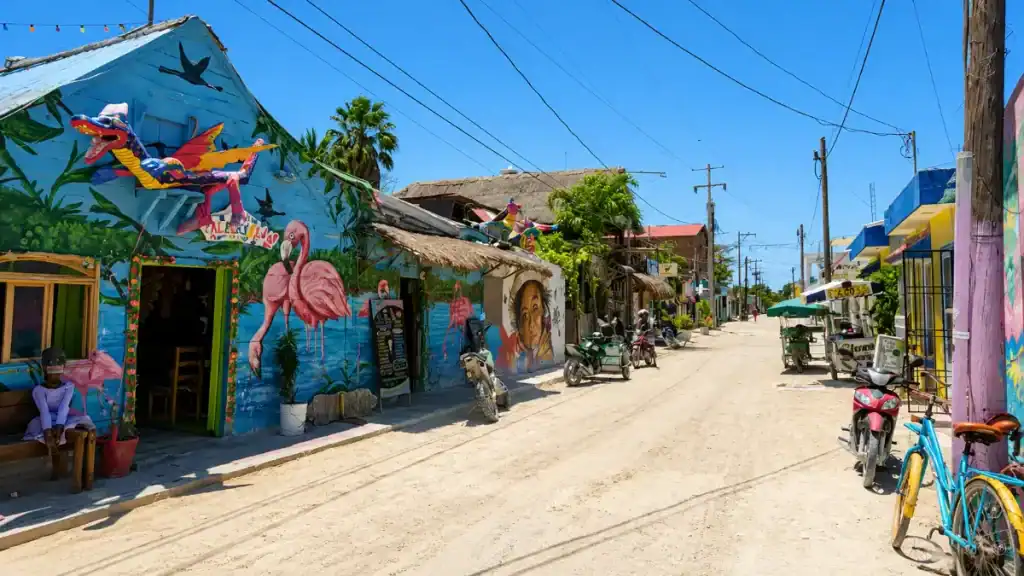
☀️ The Best Time Became a Trade-Off, Not a Date
My instinct with a Caribbean island is normally simple: find the driest months and start there. Holbox complicates that.
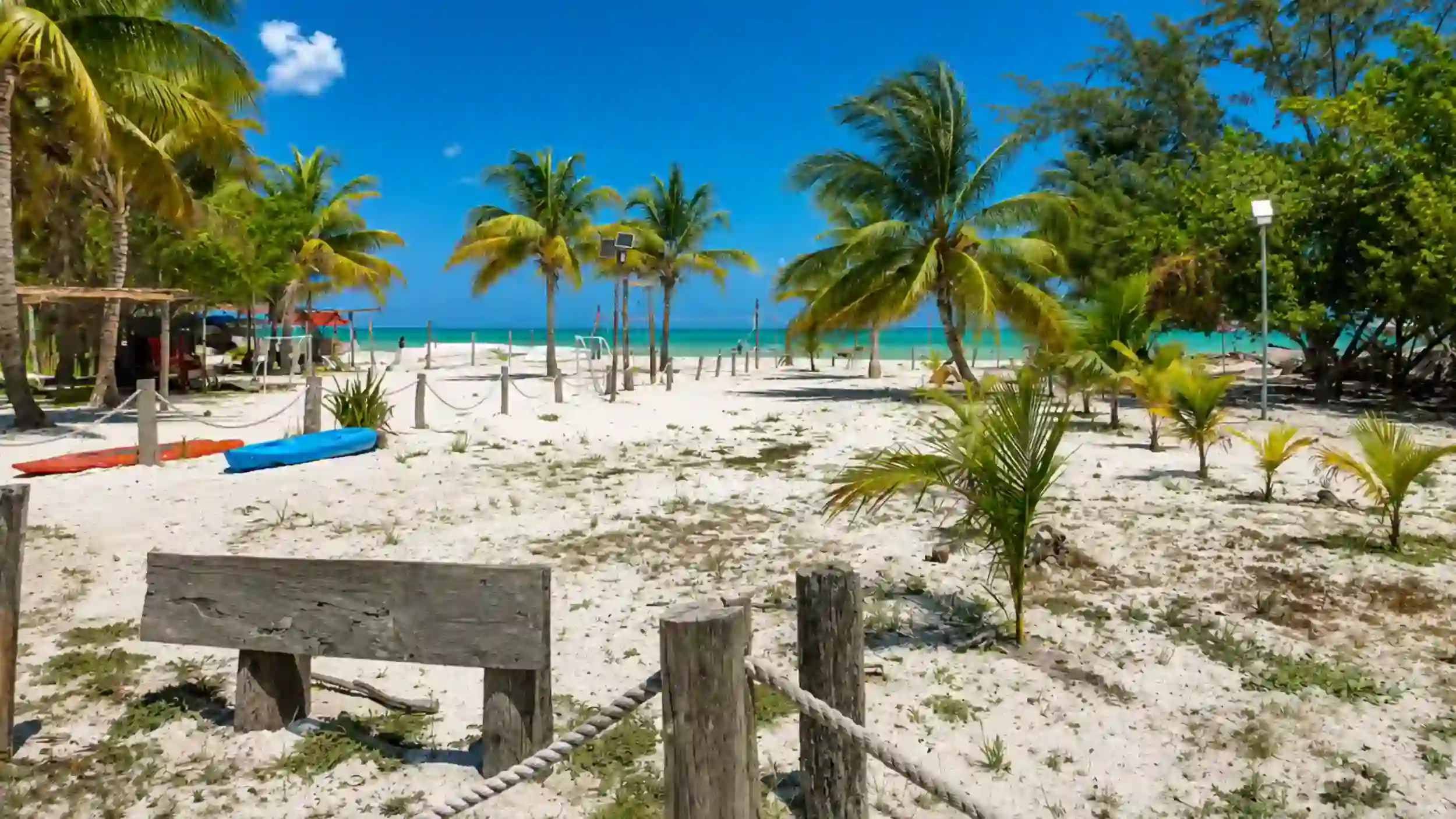
For straightforward beach weather, December to April still has the strongest case. We get a better chance of dry days, lower humidity and sandy roads that are easier to walk or cycle. January to March is the window I would investigate first if swimming, beach time and being outdoors were the priorities.
But choosing those conditions has consequences. We would be travelling during a more popular period, and we would miss the main whale shark season.
That is why I would decide what I most wanted to experience before choosing the month.
🧭 THE HOLBOX TIMING TRADE-OFF
☀️ Beach weather: I would start with January to March.
🐋 Whale sharks: we would look at May to September and accept less reliable weather.
✨ Bioluminescence: I would check darkness and the moon, not blindly choose a month.
🦟 Mosquitoes: the drier months would be my preference if bites seriously affected the trip.
🏖️ Dry Streets Changed How I Thought About Beach Weather
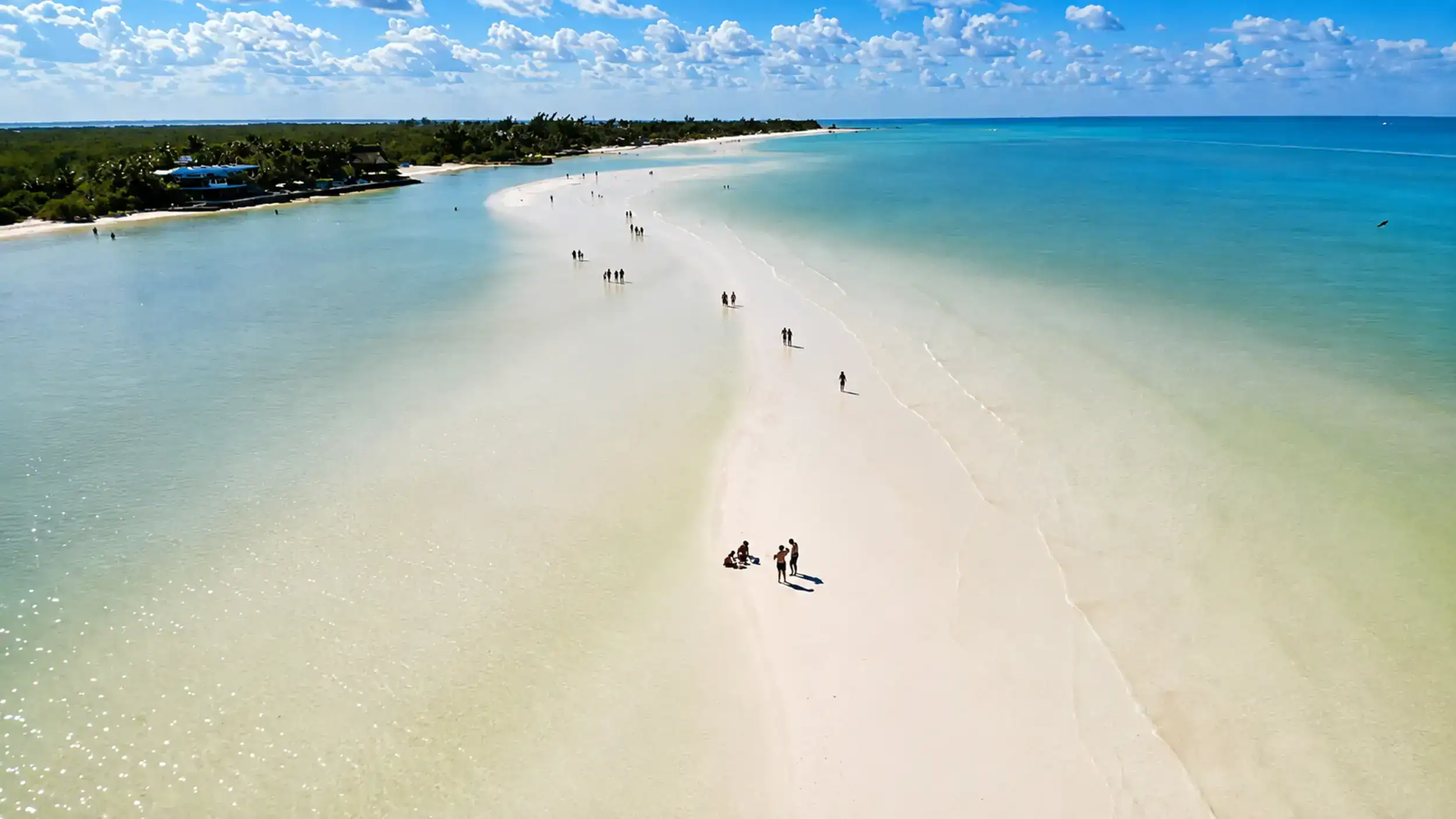
The obvious reason to favour the dry season is the beach. Warm days, shallow water and more dependable outdoor time are exactly what most of us picture when we book Holbox.
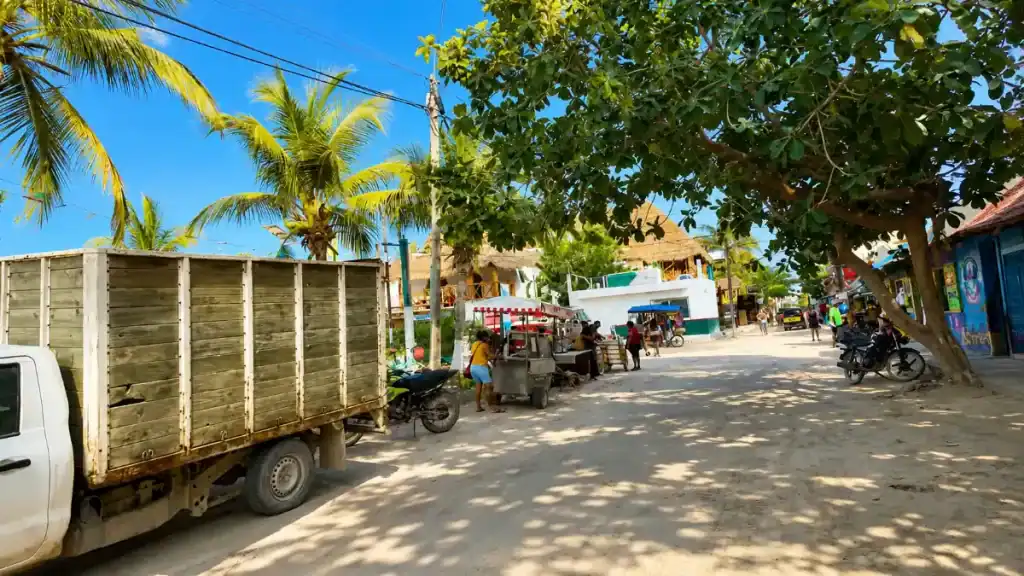
The less obvious advantage is under your feet.
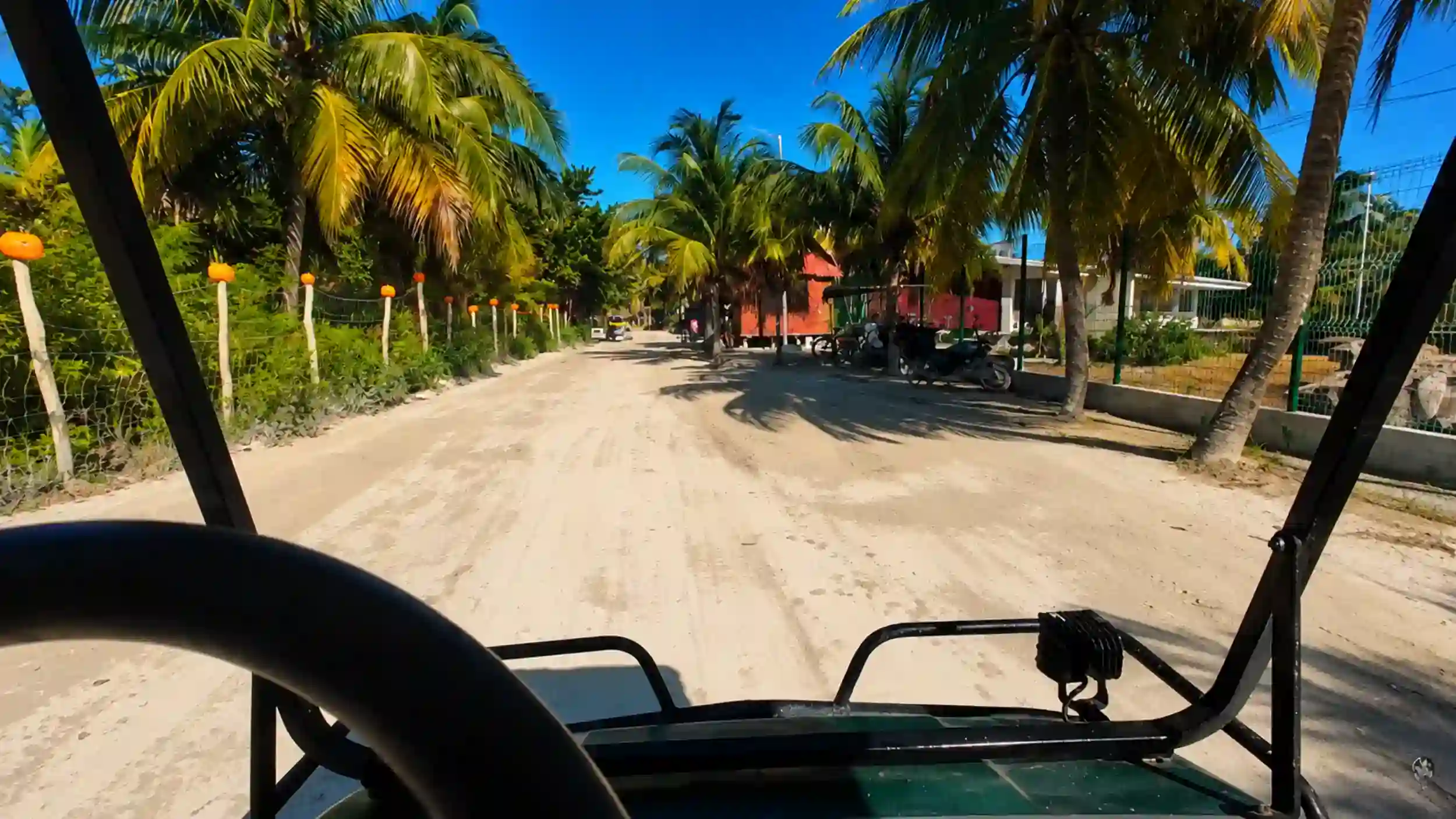
Dry streets sound like a tiny detail until you compare them with Holbox after substantial rain. The island’s sandy road network is not just scenery between the hotel and the beach; it is how we walk, cycle, reach restaurants and move luggage around. When those roads are dry, getting around barely needs thinking about.
That practical difference is one reason I would give January to March the edge for a first beach-focused visit. I am not simply buying a better chance of sunshine. I am also making the rest of the island easier to use.
I would still leave room for imperfect weather. Holbox is exposed, and wind, cloud or changing sea conditions can interfere even in a strong dry-season month. January is not a contract with the sky.
🌧️ Rainy Season Is Not the Problem I First Thought It Was
The phrase “rainy season” makes it easy to imagine a holiday disappearing beneath days of grey sky. That is too simplistic for Holbox. Tropical weather can move through sunshine, cloud, a sudden heavy downpour and sunshine again rather than settling into continuous rain.
What matters more to me is what happens after the rain.
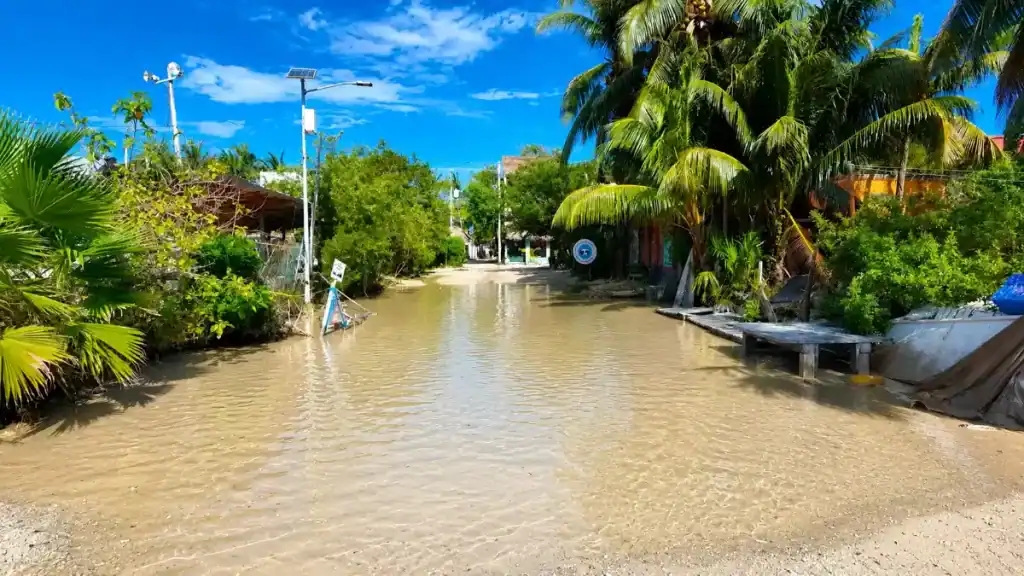
Standing water and large puddles can spread across the sandy roads. Suddenly cycling is less appealing, walking requires more thought and an outlying hotel that seemed pleasantly removed from town has acquired a practical disadvantage. The difference is visible immediately: the same rough island streets that feel easy and informal when dry can become awkward when waterlogged.
That is useful friction because it changes the recommendation. I would still travel in the rainy season for a strong enough reason, especially whale sharks, but I would not book it as though the only compromise were carrying an umbrella.
Boat trips are more vulnerable to conditions too. On a short stay, one disrupted outdoor day can remove a large part of what we came to Holbox to do. Give ourselves longer and the same weather interruption becomes easier to absorb.
Our guide to how many days in Holbox looks at how much buffer different trip lengths provide, while getting around Holbox covers how wet roads change walking, cycling and taxi choices.
🦟 Mosquitoes Are One of the Reasons I Would Think Twice About Summer
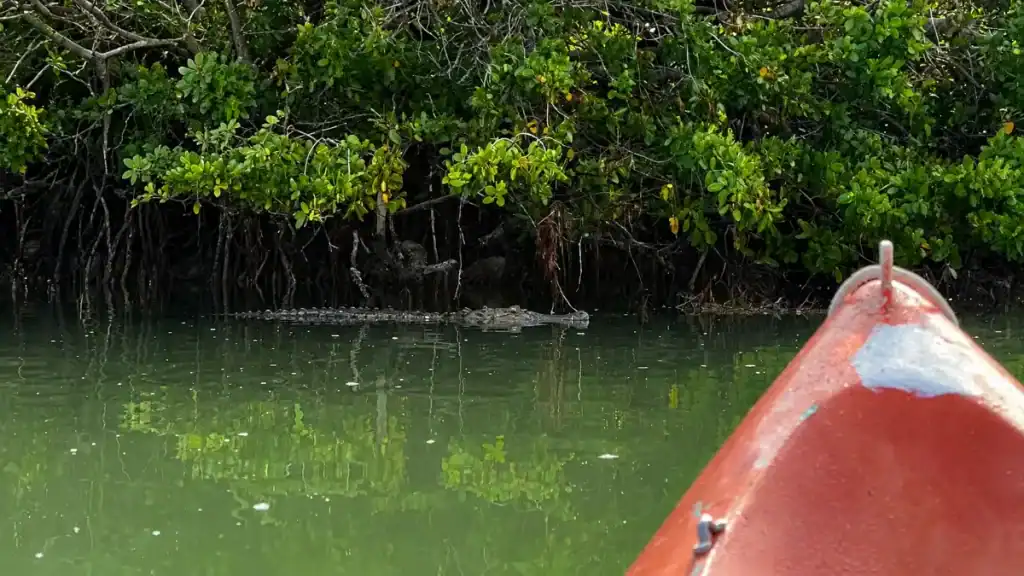
Mosquitoes are easy to dismiss as one of those complaints people exaggerate online. On Holbox, the environment explains why they deserve more attention.
Wetlands, shallow water, warmth and rain create much more favourable conditions for insects than the drier part of the year. They can become more noticeable around dusk and in greener, wetter areas, particularly after rain.
I would not cancel a Holbox trip because of that. But if bites tend to ruin evenings for us, I would not pretend the timing makes no difference either. The drier months would move higher up my list.
There is a slightly uncomfortable reality here too: paying more for accommodation does not buy a different ecosystem. Repellent, sensible evening clothing and where we stay can matter more than the number of stars attached to the hotel.
🐋 Whale Sharks Are the Reason I Would Choose the Wetter Months
This is where my dry-season preference falls apart.
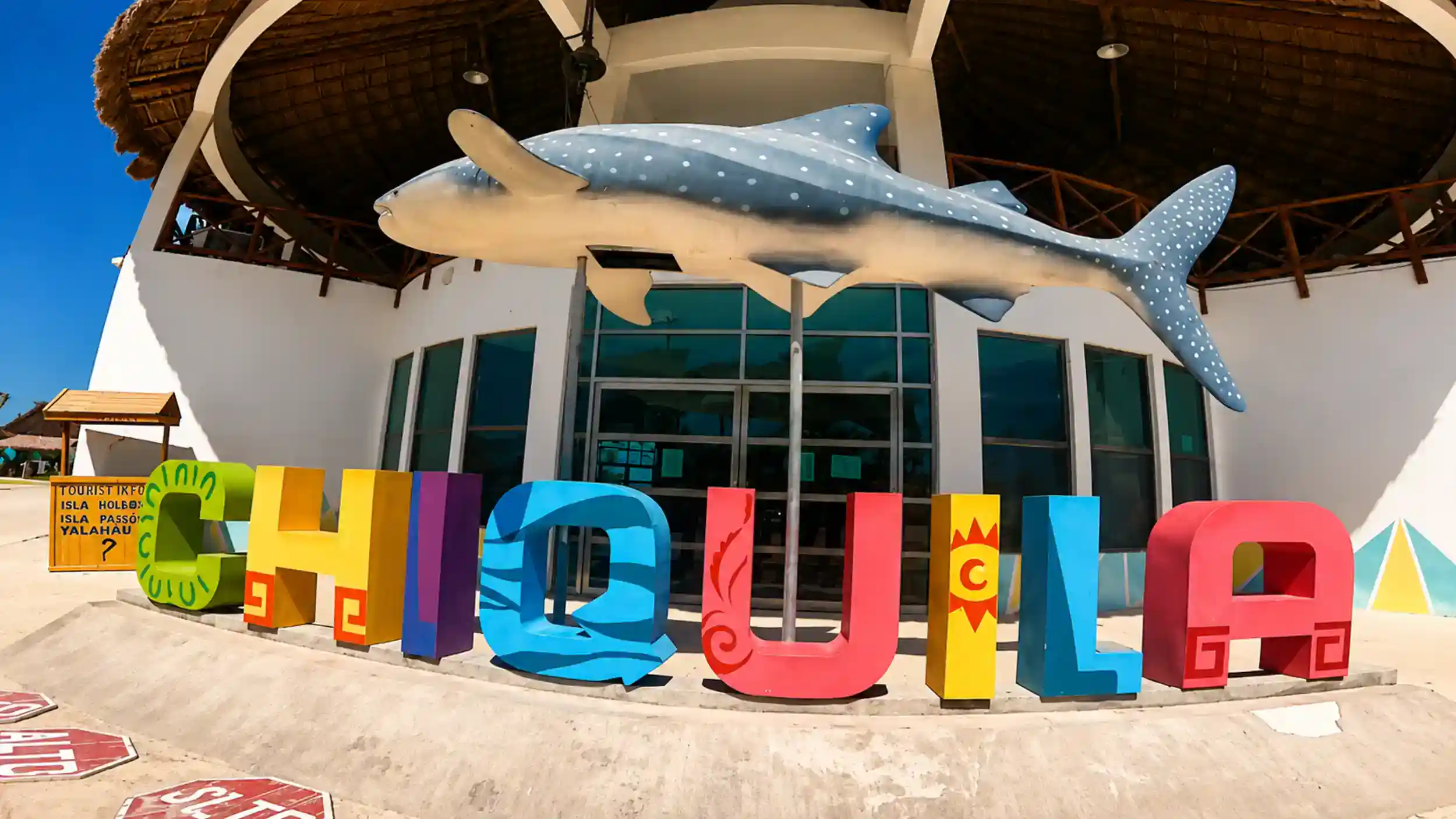
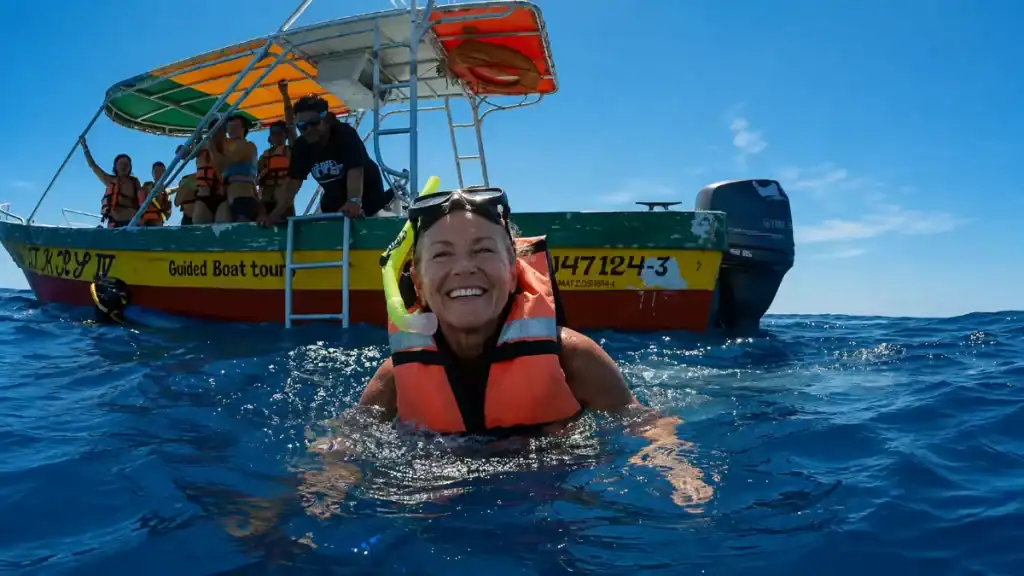
The recognised whale shark opportunity around Holbox runs from May through September. If swimming with a whale shark were one of the experiences we had built the trip around, booking January for easier beach weather would solve the wrong problem.
We would choose the wildlife window and take the weather compromise with it.
That means more heat, more humidity, a greater chance of rain and potentially more mosquitoes. I would rather know that before booking than arrive expecting the same conditions as February simply because both trips are going to the same island.
Does whale shark season guarantee a sighting?
No. A seasonal wildlife window is not a reservation with an animal.
That distinction matters to me because it changes how much of the holiday I would sacrifice for one excursion. I would choose the correct season, but I would still want enough from Holbox that the trip worked even if wildlife did not cooperate.
Dates, regulations and environmental restrictions can also change. Our Holbox whale shark tour guide looks more closely at whether the experience is worth planning around.
✨ Bioluminescence Made Me Look at the Moon, Not Just the Month
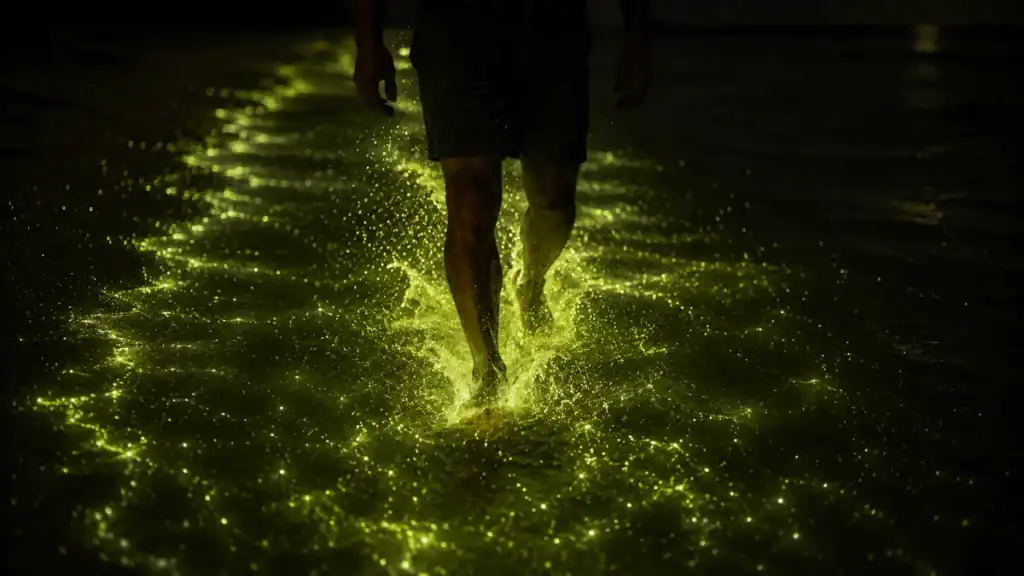
Bioluminescence is where a month-by-month travel guide can give us false confidence.
Darkness matters. Moonlight matters. Artificial light, water and weather conditions matter too.
That changes the planning completely. A supposedly excellent month under a bright full moon can be less useful than another date with a properly dark sky. Summer is often associated with stronger viewing, but I would not choose a week from the month name alone.
🌑 For bioluminescence, I would choose a dark night with suitable conditions over a supposedly perfect month with a bright moon.
If seeing the glow were important to us, we would check the lunar calendar alongside the travel dates and then look again at local conditions closer to the night itself.
👣 Fewer Crowds Usually Mean Giving Something Else Up
I would love to find the month with dry roads, empty beaches, lower hotel prices and perfect weather. Holbox does not really offer that bargain.
The attractive winter weather draws other travellers for exactly the same reason it attracts us. Christmas, New Year and other holiday periods can push demand higher still, affecting both the feel of the island and accommodation availability.
Move outside those periods and the equation changes. We may gain a quieter atmosphere or better value, but we are generally accepting more weather uncertainty in return. September and October can look attractive if avoiding crowds matters most, yet they sit in a wetter and more weather-sensitive part of the year.
That would suit me if I were flexible and prepared for the island to dictate some of our plans. It would suit me much less on a tightly scheduled two-night beach break where every outdoor day had a job.
If price is driving the decision, our guide to whether Holbox is expensive looks at the wider cost question.
🌀 Hurricane Season Would Change How We Book, Not Automatically Stop the Trip
I would not treat Atlantic hurricane season as six months when Holbox should be avoided. I would not shrug it off either.
The distinction that matters is possibility versus probability. Most trips during hurricane season will not encounter a hurricane, but a significant tropical system can affect sea conditions, ferries, excursions and travel plans even without a direct hit on the island.
That consequence matters more here than it might on a city break. Holbox depends on a ferry connection, and many of the experiences we travel for happen on or beside the water.
So our behaviour would change. We would favour flexible bookings, make sure the insurance suited the trip and pay much closer attention to official forecasts as departure approached.
What I would not do is make a firm decision months beforehand from a speculative long-range storm forecast.
📅 How I Would Actually Choose Our Holbox Dates
By this point, I would stop asking for the single best month. There is no date when Holbox promises us dry weather, low prices, empty beaches, no mosquitoes, whale sharks and ideal bioluminescence together.
We have to choose what gets priority.
| 📅 Period | ⭐ Why I Would Go | ⚠️ What We Would Accept |
|---|---|---|
| Jan–Feb | ☀️ Dry-season beach escape | Higher demand |
| Mar–Apr | 🏖️ Strong beach-weather potential | Busy holiday periods |
| May | 🐋 Whale shark season begins | Heat building |
| Jun–Aug | 🐋 Wildlife + summer experiences | 🌧️ Rain, humidity + insects |
| Sep–Oct | 👣 Potentially quieter period | 🌀 Greater weather uncertainty |
| Nov | 🌤️ Transition towards drier conditions | Variable weather |
| Dec | ☀️ Dry-season appeal | 🎄 Holiday demand |
For our uncomplicated beach trip, I would start with January to March. I like the combination of stronger beach-weather potential, lower humidity and the practical advantage of drier roads enough to accept that we will not have Holbox to ourselves.
For whale sharks, I would make the opposite decision. We would go between May and September, knowing before we arrived that heat, rain and mosquitoes were part of the bargain rather than evidence that we had chosen the wrong month.
For bioluminescence, the moon would get a say in our dates. For fewer mosquitoes, the dry season would pull us back again. If we wanted fewer crowds above everything else, I would consider a lower-demand period only if our plans could absorb less reliable weather.
That is the part of Holbox timing I find most useful. The island does not really have one perfect season. It has several very different versions of a good trip, and the best time is the one whose disadvantages we are happiest to live with for the experience we came to have.