Getting around Holbox turned out to be less about choosing one form of transport and more about knowing when each one stopped being useful. Central Holbox felt compact enough to walk, a bicycle made sense once I wanted more range, and golf-cart taxis became the practical answer for luggage, longer distances and difficult road conditions.
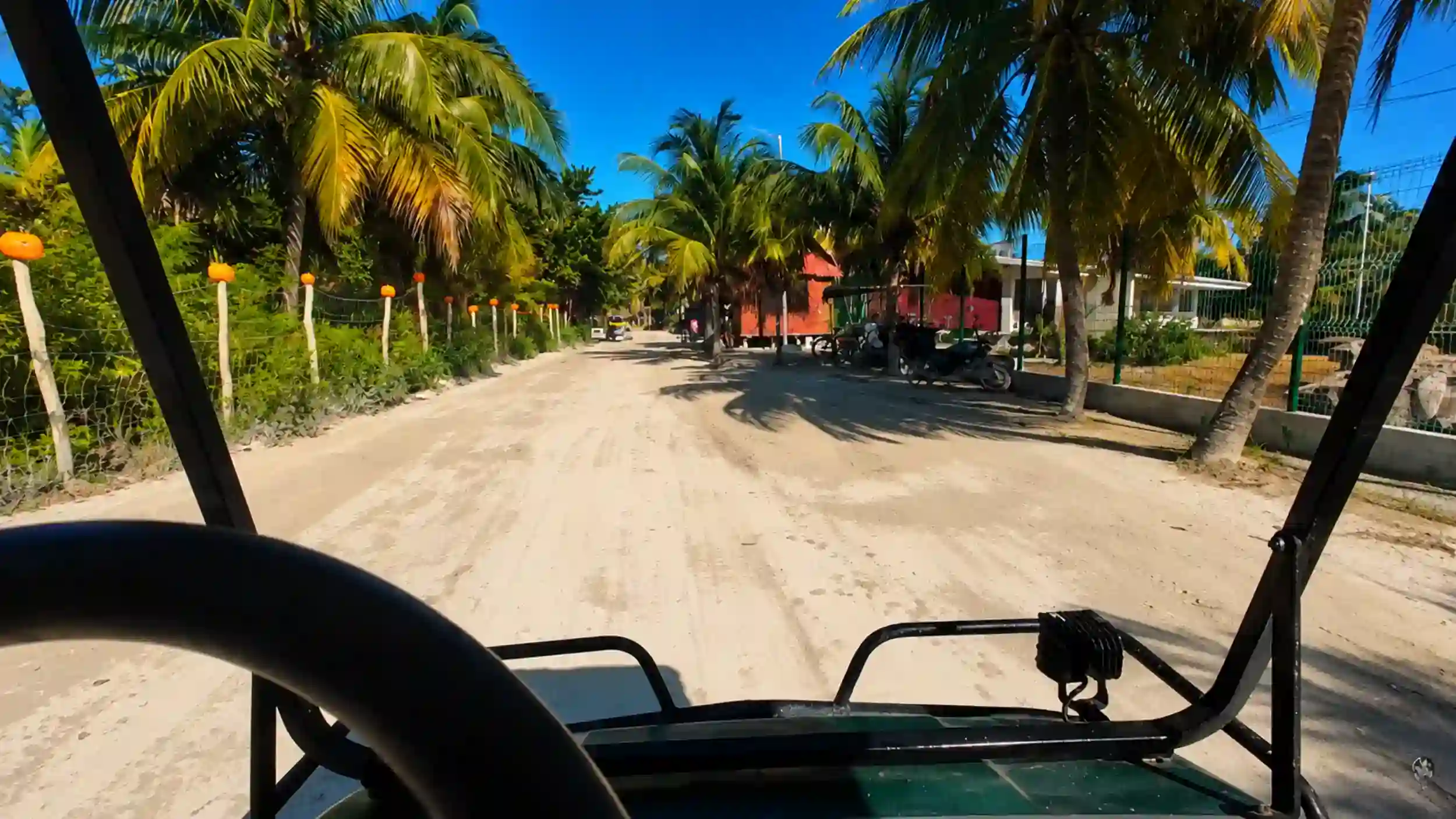
The sandy roads were the detail that changed how I judged everything else. In dry conditions, walking and cycling fit the island naturally. After heavy rain, that same informality becomes a weakness: waterlogged roads can make an easy-looking route awkward enough that I would switch plans rather than stubbornly stick with the bike.
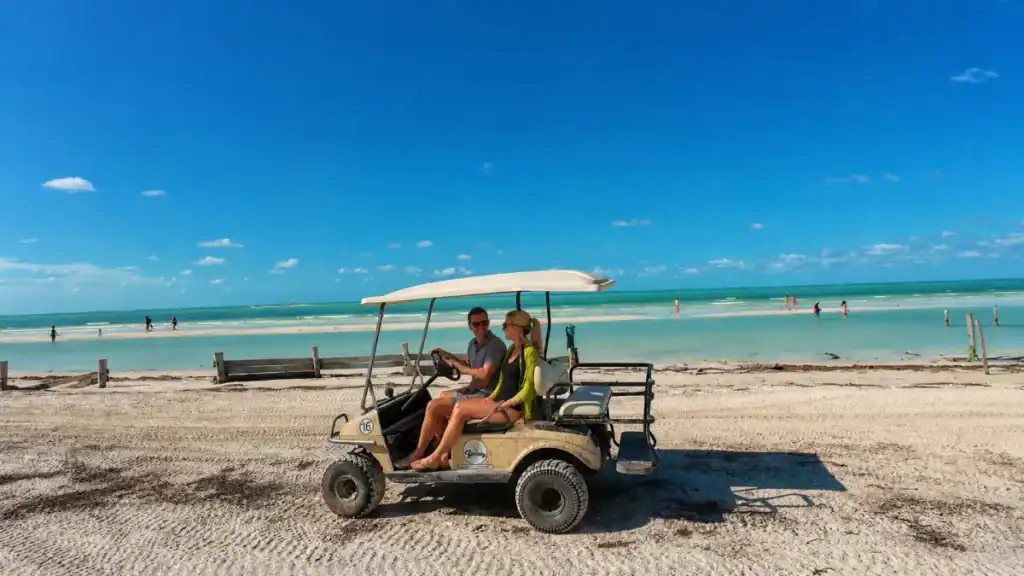
🚶 Getting Around Holbox Was Simpler Than I Expected
I had no reason to recreate the usual holiday routine of rental car, parking and driving between attractions. Holbox works differently. Walking covers the centre, bicycles extend that range, and golf-cart taxis fill the gaps.
What became apparent was that committing to one option for the whole stay would solve a problem I did not really have. A golf cart might look like the obvious island transport, but around the centre it can be more vehicle than you need.
🧭 THE TRANSPORT MIX THAT MADE MOST SENSE
🍹 Central Holbox: I would walk.
🏖️ More beach and greater range: a bicycle is the useful middle ground.
🧳 Luggage or awkward longer journeys: golf-cart taxis earn their keep.
🌧️ After heavy rain: I would rethink the whole order and lean much more heavily on taxis.
That flexibility is what I liked about the transport setup. I did not need one perfect answer, just the simplest option for the journey in front of me.
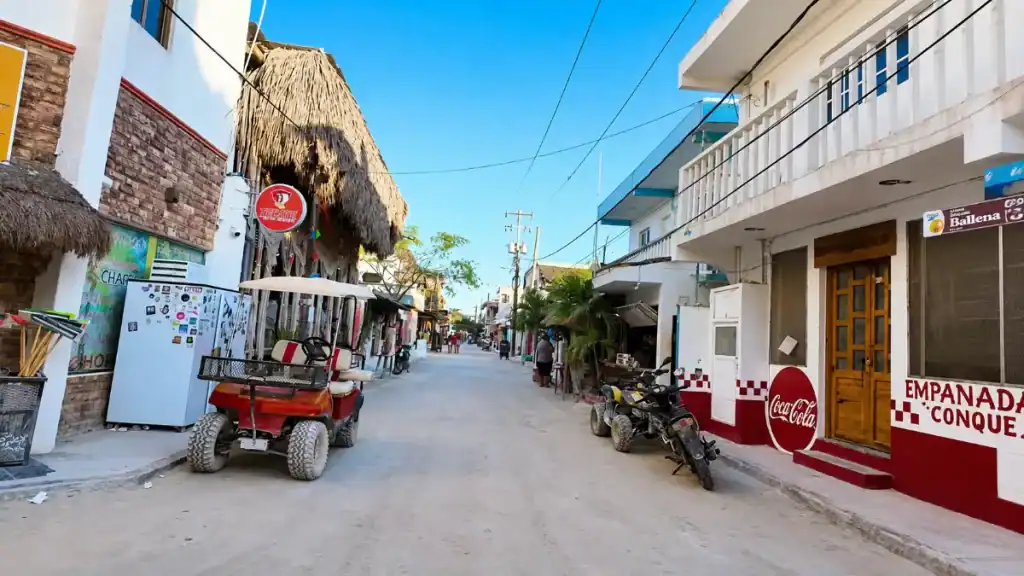
👣 Central Holbox Felt Made for Walking
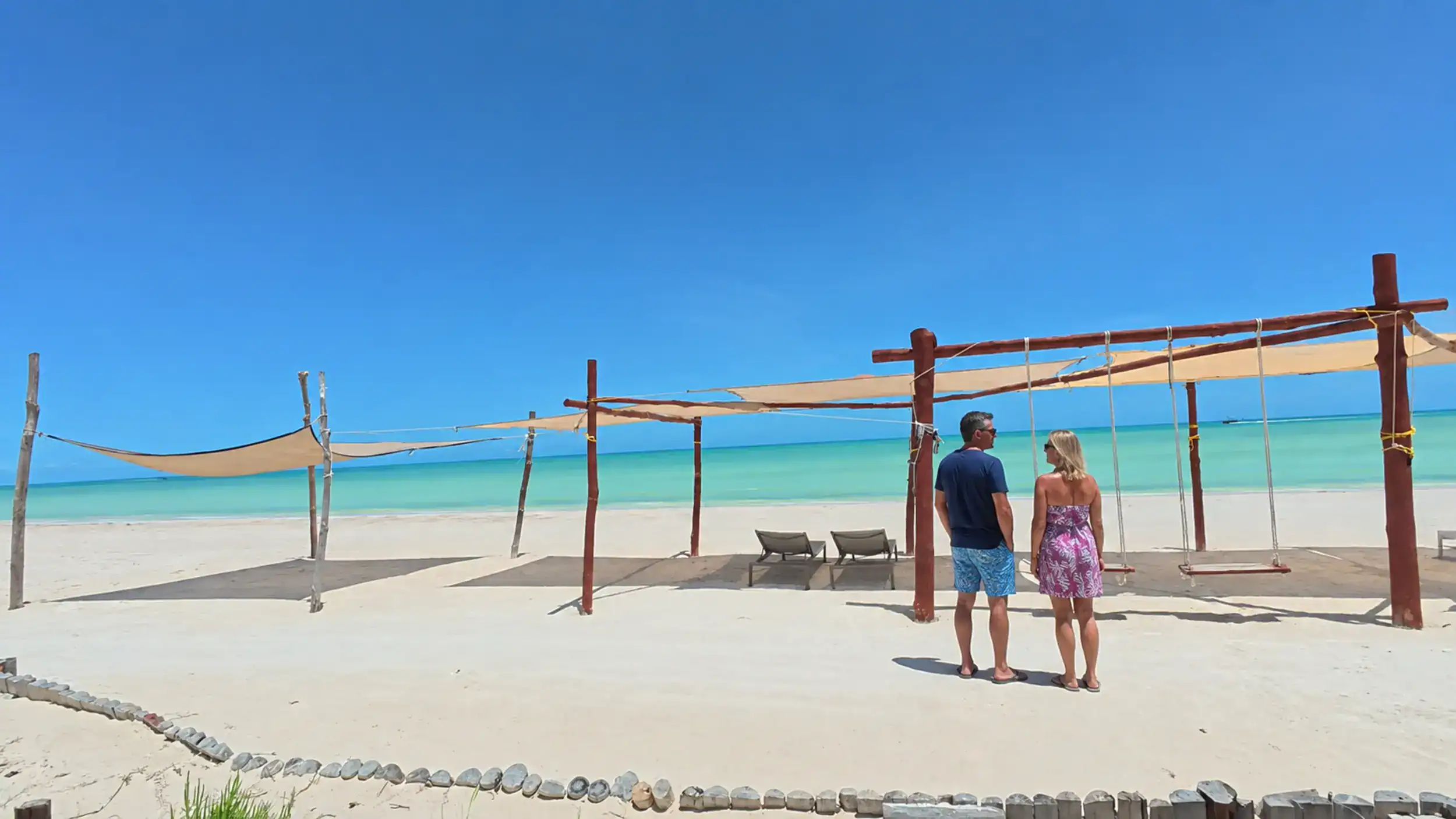
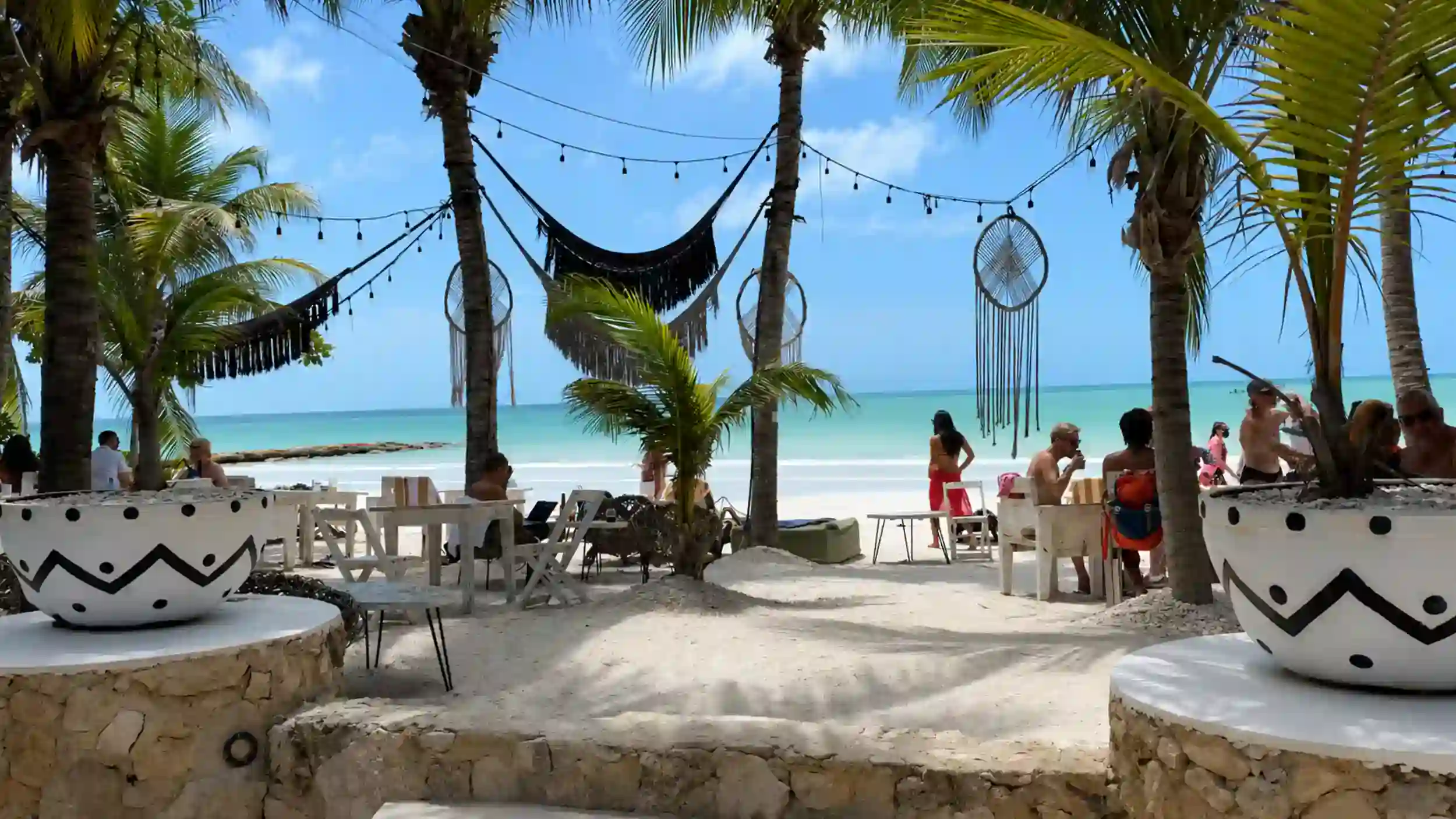
Central Holbox was where the scale of the island worked most strongly in our favour. Restaurants, shops, beach access and much of the town sit close enough together that walking does not feel like the cheap transport option. It feels like the obvious one.
That matters because it changes the rhythm of a stay. There is no need to organise a vehicle just to move between breakfast, the beach and dinner. We could treat those short journeys as part of being in Holbox rather than something that needed planning.
The catch is location. The farther accommodation spreads east or west, the less useful that central-Holbox judgement becomes. A walk that sounds insignificant on a map feels different when it has to be repeated for meals, after dark or when the roads are wet.
When does walking work best?
- 🏨 You’re staying centrally or just outside the centre.
- 🍽️ Most meals will be in town.
- 🏖️ You’re mainly using nearby beaches.
- 🩴 Sandy roads do not bother you.
- 🌤️ Conditions are reasonably dry.
That is why I would decide where to stay in Holbox alongside transport rather than as a separate choice. The attractive quiet hotel farther from town comes with a consequence: every trip back into the centre becomes longer.
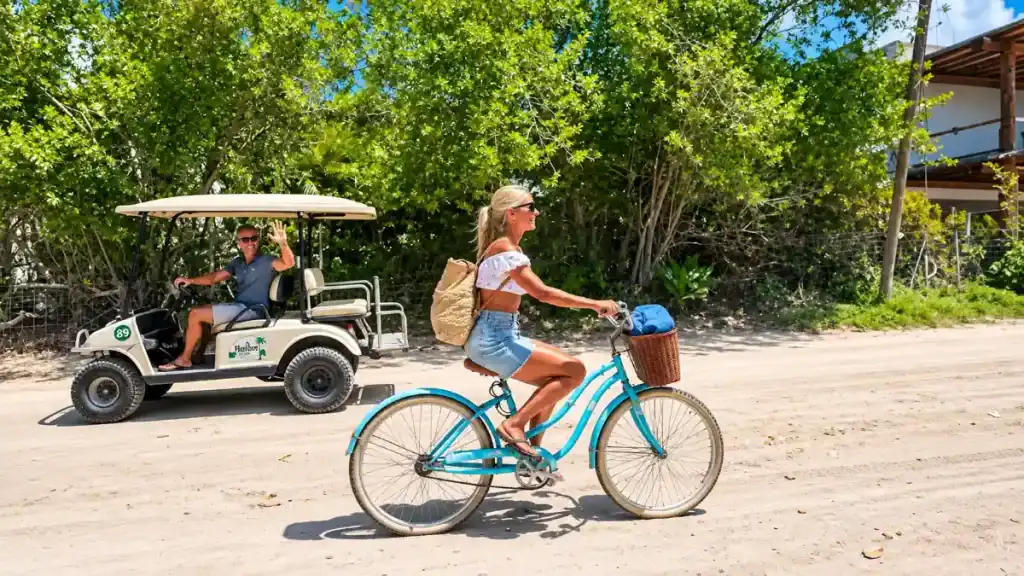
🚲 A Bicycle Gave Me the Best Middle Ground
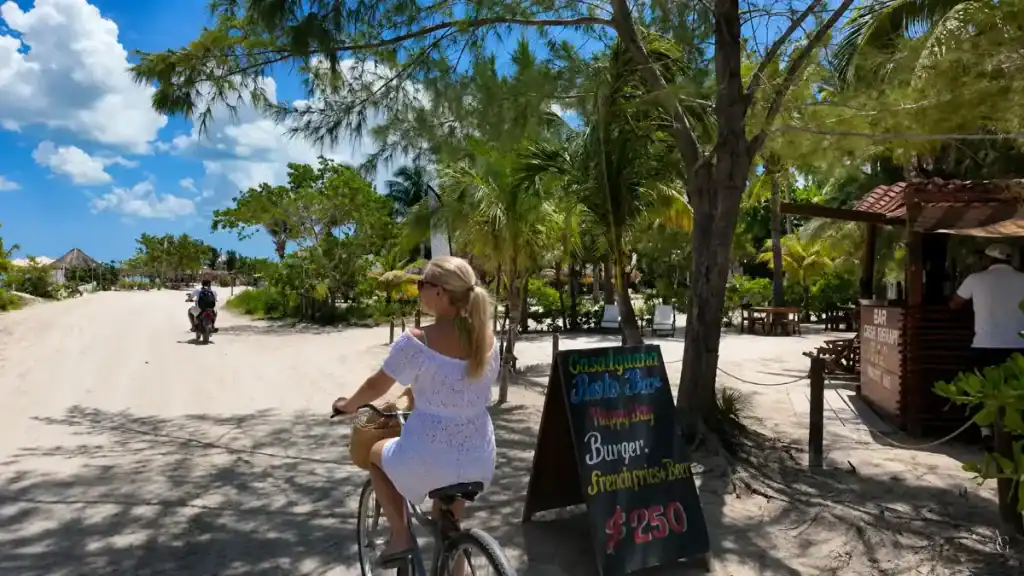
A bicycle made most sense once walking started to feel limiting but a golf cart still felt excessive. That is the point at which Holbox’s transport choices began to fall into place for me.
It gives enough range to move beyond the central streets, head farther along the beach or travel into town from accommodation just outside the centre without making every outing dependent on a taxi.
I particularly like the bike option for Punta Cocos. From central Holbox, the extra range is useful without turning the journey into an organised excursion. For a couple travelling independently in dry weather, it is probably the option I would choose most readily.
Then there is the sand.
That is the friction I would not gloss over. Holbox does not suddenly acquire smooth cycle lanes because bicycles are popular. When the roads are dry, cycling can work well. After significant rain, soft surfaces and standing water can take much of the pleasure out of it.
So I came away with a fairly simple judgement: a bike offers useful freedom, but I would never build the whole transport plan around having one regardless of the weather.
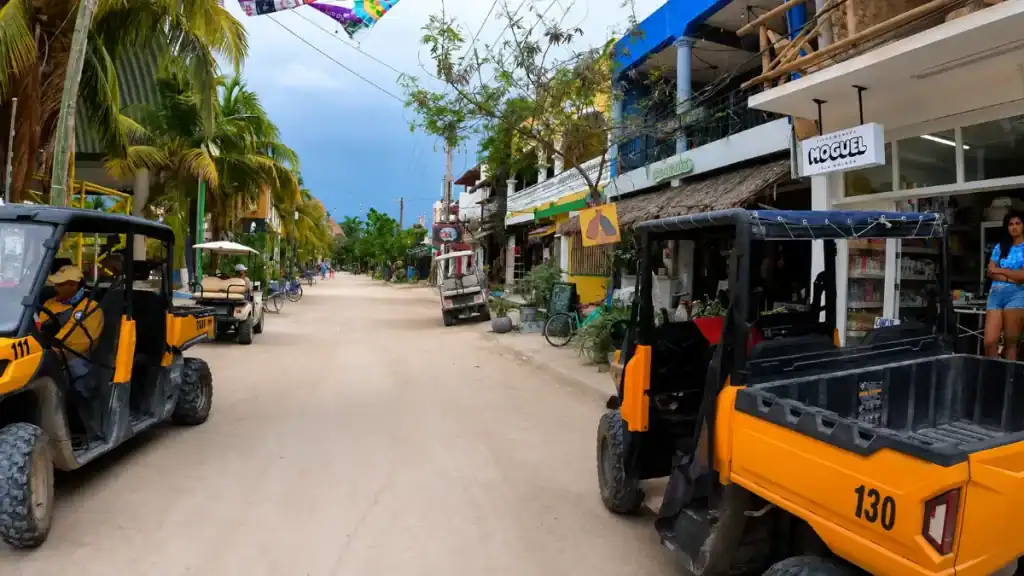
🛺 Golf-Cart Taxis Made Sense When Convenience Actually Mattered
I never saw much point in using a golf-cart taxi for every little journey around town. Their value becomes clearer when something changes: luggage appears, the distance grows, the weather turns or you have simply walked farther than you want to walk back.
The ferry arrival is the obvious example. Holbox may have been reached, but our journey was not necessarily finished when we stepped onto the island. With bags beside us and accommodation still to reach, the final transfer suddenly mattered in a way it had not on the map.
I would use the same logic later. Walk around the centre. Cycle when I wanted the journey to be part of the day. Take a taxi from farther west after a long outing, from an eastern hotel for dinner, or whenever wet roads made the other choices unnecessarily awkward.
Fares and operating arrangements can change, so current prices are something I would check locally rather than trust to an old screenshot or travel post.

🔑 Renting a Golf Cart Sounded Better Before I Asked What I Needed It For
A rental golf cart has obvious appeal. It looks fun, it feels very Holbox, and at first it seems to remove the need to think about transport again.
But once I matched it against the journeys we were actually likely to make, the case became weaker. Stay centrally and much of the day is already walkable. Add a bicycle or occasional taxi and I could easily end up paying for a cart that spent long periods parked.
I would judge it differently for a family or group sharing the cost, for someone with limited mobility, or if our hotel were well outside the centre. Several longer journeys in one day also give the rental a clearer purpose.
Who would I actually recommend a golf cart to?
- 👨👩👧👦 Families or groups who can make proper use of it together.
- 🏨 Travellers staying well away from central Holbox.
- 🚶 Anyone for whom longer walks are impractical.
- 🗺️ Travellers making several longer trips in the same day.
- ⏱️ Anyone who values convenience more than keeping transport costs down.
There was another assumption I would avoid: renting a golf cart does not turn Holbox into an unrestricted driving circuit. That becomes especially important around the island’s protected natural areas.
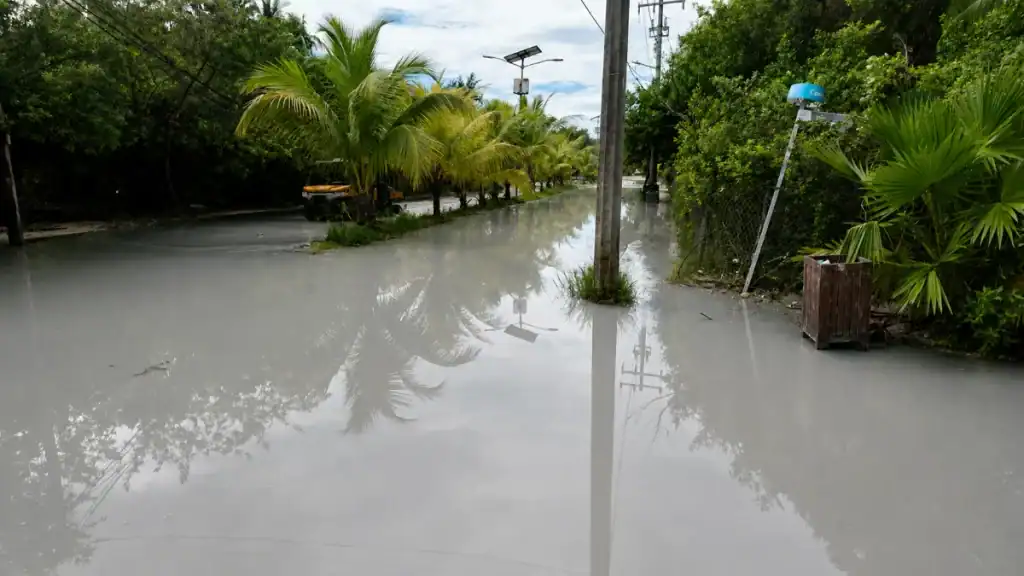
🌧️ Rain Was the Factor That Could Undo a Good Transport Plan
The dry-weather version of Holbox makes walking and cycling look almost too easy. Heavy rain changes the calculation because the roads themselves change.
Standing water can turn a straightforward sandy route into something far less inviting. That does not merely affect how the island looks. It changes whether I want to walk it, whether a bicycle still feels like freedom and how inconvenient a distant hotel suddenly becomes.
🌧️ MY TRANSPORT ORDER CHANGES WITH THE ROADS
☀️ In dry conditions: walk → bike → taxi.
🌧️ After heavy rain: taxi → walk where practical → bike.
The important part is not the order itself. It is being willing to abandon the dry-weather plan when the island stops cooperating with it.
That experience also changed how I would judge remote accommodation. A quiet setting can be a real advantage, but distance carries a larger penalty when every journey involves wet or difficult roads. Our best time to visit Holbox guide looks at how rainfall affects the wider holiday.
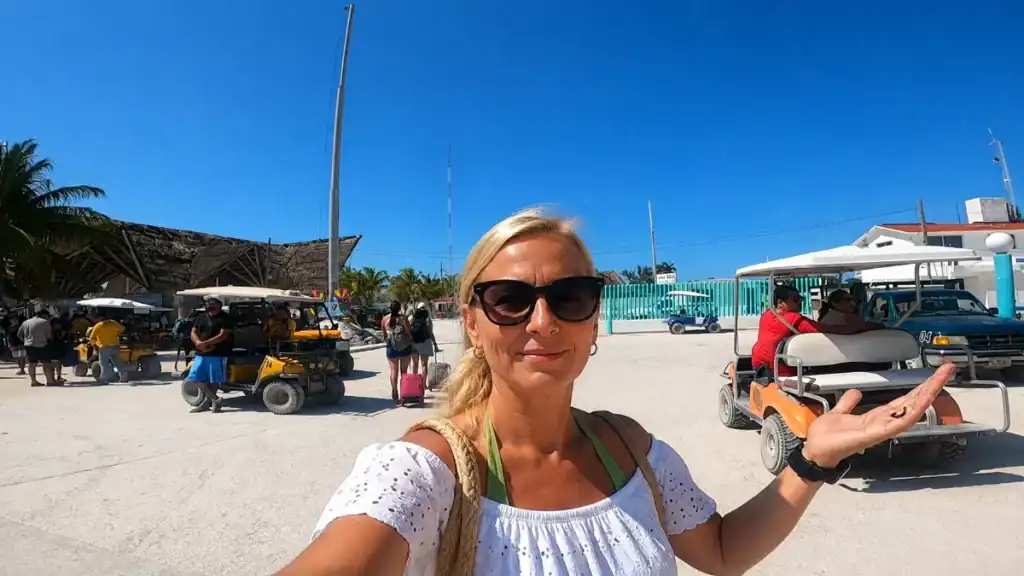
⛴️ The Ferry Dock Was Where Local Transport First Became Useful
There is a small psychological trap in arriving at the Holbox ferry dock: it feels as though the journey is over.
It may not be. The hotel can still be some distance away, and luggage makes that final stretch feel very different from the same walk later with nothing in your hands.
Travelling light to nearby accommodation, I would happily walk. With suitcases, children or a hotel farther east or west, I would take the golf-cart taxi rather than begin the stay by proving how far I could drag a bag along sandy roads.
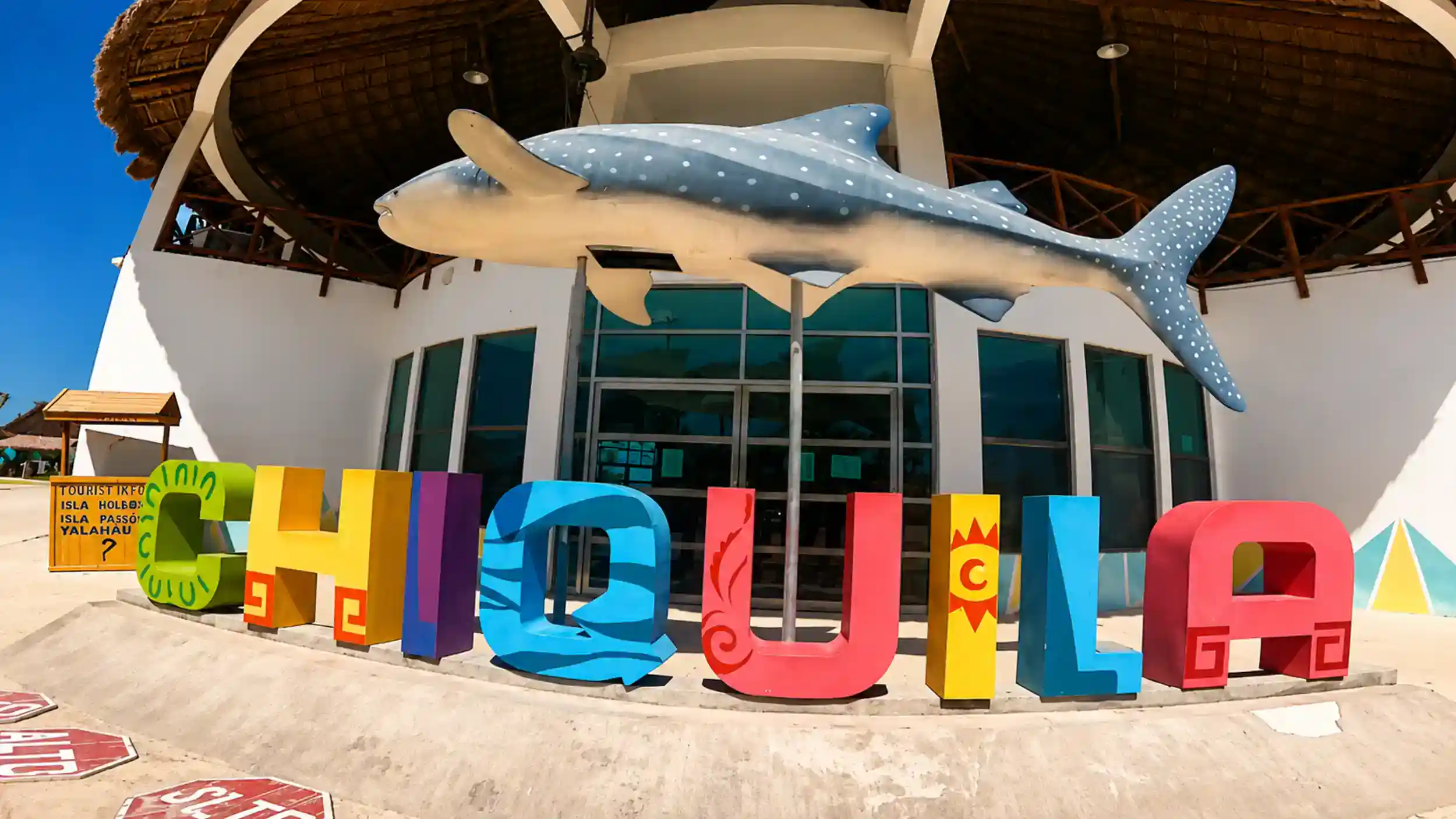
It is a useful reminder when planning how to get to Holbox from Cancun. I now think of the complete journey as Cancún → Chiquilá → ferry → Holbox dock → hotel. The ferry is not necessarily the finish line.

🌅 Punta Cocos Never Needed to Become a Transport Expedition
Punta Cocos sits on Holbox’s quieter western side, and this was one journey I did not think needed overplanning.
If we were already staying west of the centre, walking could be part of the day rather than dead travel time. From central Holbox, I would choose a bicycle when I wanted the ride itself and a taxi when I simply wanted to reach the beach.
Heat, children, limited mobility or poor road conditions all push me towards the taxi. So does travelling back after sunset.
The useful lesson was how little strategy Punta Cocos actually requires. Walk when nearby, cycle when the journey appeals, and take a taxi when convenience matters more.

🌿 Punta Mosquito Was the Journey I Had to Think About Differently
Punta Mosquito is where the idea of a golf cart solving every Holbox transport problem falls apart.
As the eastern side becomes increasingly natural, I could not treat it like another road journey and assume we would simply drive to whichever point looked interesting. Golf carts can only take you so far towards the protected area.
From there, the experience may involve a substantial walk, including beach or shallow-water walking rather than conventional road access. That distinction matters much more once you are thinking about heat, mobility or how much walking everyone in the group actually wants to do.
Protected-area restrictions and access conditions can change, so I would check current local guidance before setting out.
The practical lesson for me is simple: do not rent a golf cart believing it will take you all the way to Punta Mosquito. I would plan for walking and judge the outing on that basis from the start.
🧭 In the End, Where We Stayed Decided Most of It
By the time I had weighed up all the options, the most useful transport question was not “bike or golf cart?”. It was “where are we sleeping?”.
Stay centrally and walking can do almost everything. Move just outside the centre and a bicycle becomes much more attractive. Stay farther east or west and taxis become more valuable because those repeated journeys into town start adding up.
| 🏨 Where We Stay | 🚲 Main Choice | 🛺 Backup |
|---|---|---|
| 🍹 Central Holbox | Walk | Taxi |
| ⚖️ Just outside centre | Walk + bike | Taxi |
| 🌿 Farther east | Bike | Taxi |
| 🌅 Farther west | Bike | Taxi |
| 🏖️ Remote beachfront stay | Stay local + bike | Taxi |
| 🌧️ Poor road conditions | Taxi | Walk where practical |
Who I was travelling with would change it again. As a couple happy to walk, we could keep things simple. With a family, limited mobility or more luggage, I would use golf-cart taxis sooner rather than make every journey a test of patience.
I would still resist renting something for the entire stay unless our location or plans genuinely justified it. Holbox became easier to understand once I stopped looking for one transport winner.
Walk when walking is easiest. Cycle when the extra freedom is useful. Take a taxi when distance, luggage or rain changes the equation. That is the transport approach I would use again.