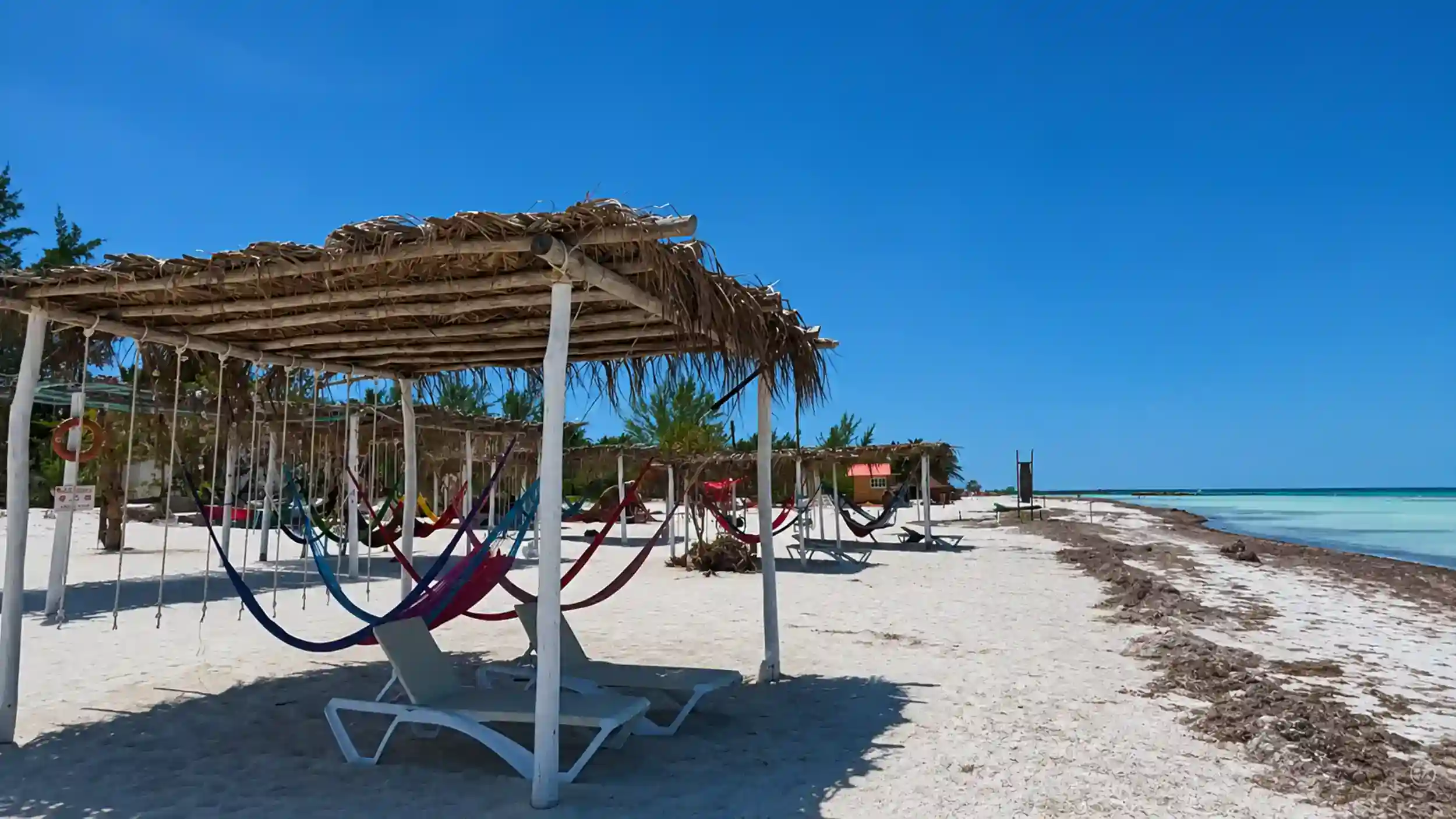

How do you get to Holbox from Cancún? The journey makes much more sense once you stop thinking of it as a single transfer. You travel overland to Chiquilá, cross to Holbox by passenger ferry, then make one final hop from the island dock to your accommodation.
Before we made the journey, I had mentally reduced it to a transfer and a short ferry ride. It did not feel like that on the ground. By the time we had dealt with the mainland journey, reached Chiquilá, crossed with our luggage and then faced the final trip to the hotel, I understood why getting to Holbox takes more out of a travel day than the map suggests.
What stayed with me was not the ferry itself but the number of handovers. Bags out, bags back in, wait, cross, unload again. After doing it, I stopped asking simply “bus or transfer?” and started judging each option by how much of that friction it removed.
🧭 The Journey Became Simpler Once We Broke It Into Stages
The first thing that changes the planning is simple: there is no road all the way to Holbox.
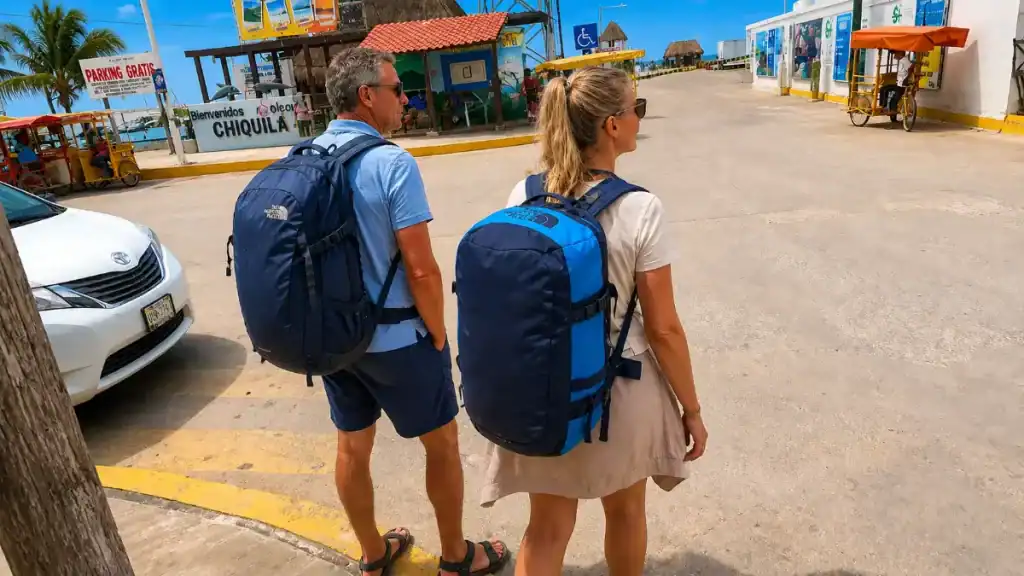
Everything on the mainland leads towards Chiquilá. The car, bus or transfer stops there. We then become ferry passengers, cross to Holbox and still have to get ourselves and our luggage from the dock to the hotel.
We had thought of the ferry as the key part. Once we were actually making the journey, I realised the whole chain mattered more:
Cancún or CUN → Chiquilá → ferry → Holbox dock → accommodation
What actually needs planning?
🧭 THE FIVE-STAGE JOURNEY
✈️ Cancún/CUN: start the mainland journey by bus, shared transfer or private transfer.
🚐 Chiquilá: reach the ferry port and leave sensible connection time.
⛴️ Ferry: cross to Holbox and check current departures before travelling.
🏝️ Holbox dock: arrive on the island, then walk or take a local taxi.
🏨 Accommodation: make the final short transfer; distance from the dock matters.
None of those stages is particularly intimidating. It is the handover between them that creates the friction.
📍 Chiquilá Is the Point We Plan the Whole Journey Around
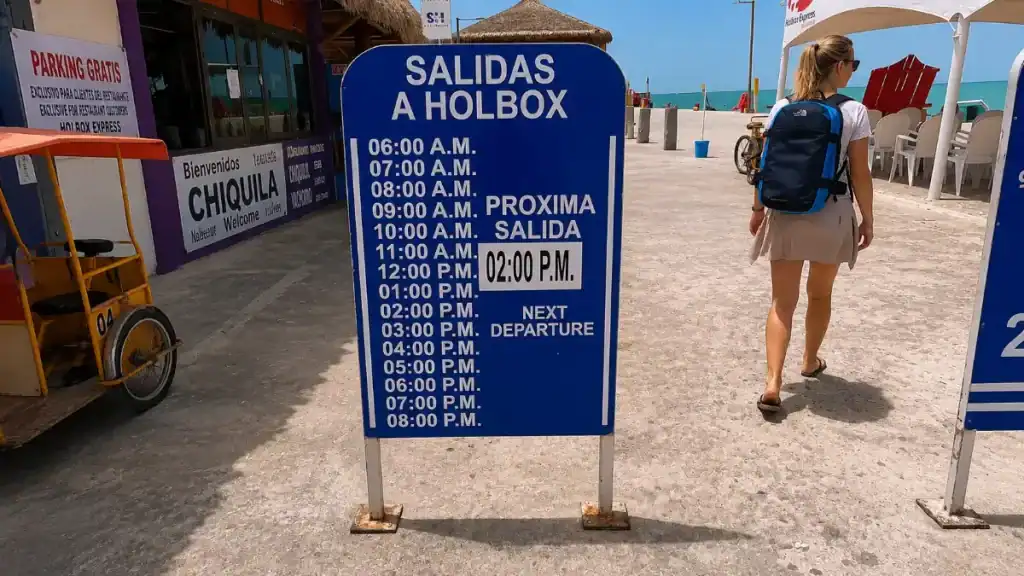
Chiquilá was where the journey finally clicked for me. Until then, Holbox had felt like the destination our road transport was taking us towards. Standing at the mainland ferry point with the road journey finished, it became obvious that Chiquilá was the real target for everything we did on land.
That changed how I would plan it next time. I would not look for road transport that vaguely promises to “get us to Holbox”. I want it to put us in Chiquilá early enough to unload the luggage, orient ourselves and board without turning the ferry connection into a race.
That sounds like a small distinction. In practice, it is the difference between planning one vague journey and planning two very straightforward ones.
If we use public transport, I would check the bus and ferry schedules together. If we book a transfer, I want to know where it leaves us in relation to the ferry departure point rather than assuming every “Holbox transfer” includes the same stages.
✈️ Cancún Airport Is Where I Value Convenience More
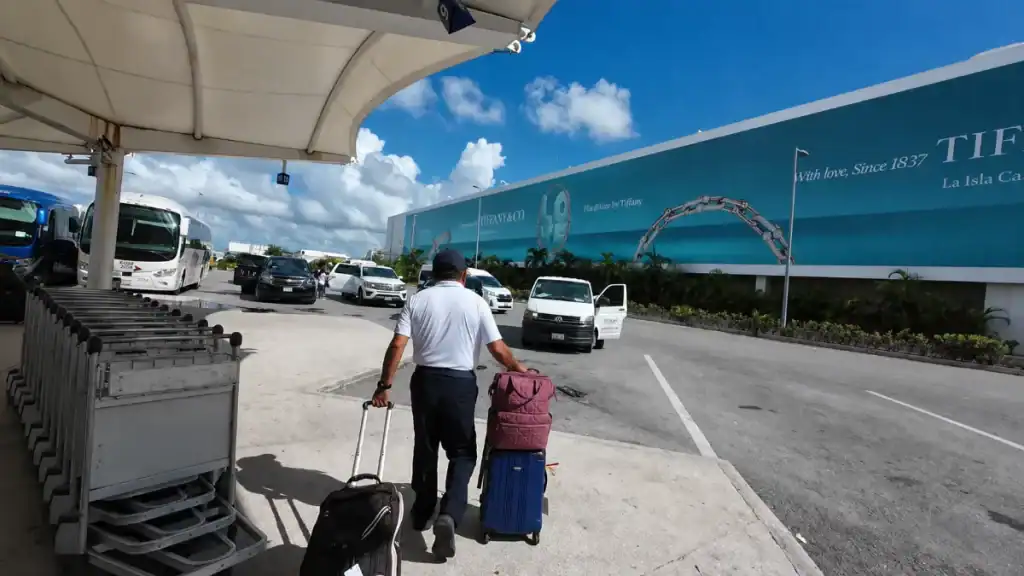
An airport arrival makes this journey less predictable than starting from a hotel in Cancún. The plane can be on time and we can still lose time to immigration, baggage collection and simply getting out of the terminal.
Coming out of an airport with luggage is one of those moments when my attitude to saving money changes. Before a trip I can happily compare fares on a screen; after a flight, with another road journey and a ferry ahead, I become much more interested in removing one awkward connection.
With bags beside us and another road journey plus a ferry still to come, removing an extra connection has genuine value. A shared transfer is the compromise I would look at first for one or two people. It keeps the journey focused on Chiquilá without paying for an entire vehicle.
A private transfer becomes more persuasive when there are several of us. The headline price looks high until it is divided across a family or group, and everyone benefits from having fewer moving parts.
✈️ THE AIRPORT TRADE-OFF
🎒 One or two travellers: I would compare a shared transfer with the cheapest practical public-transport route.
👨👩👧👦 Family or group: we would compare the total private-transfer cost, not one private fare with one bus ticket.
🌙 Late arrival: the final ferry matters more than squeezing every last hour out of the first day.
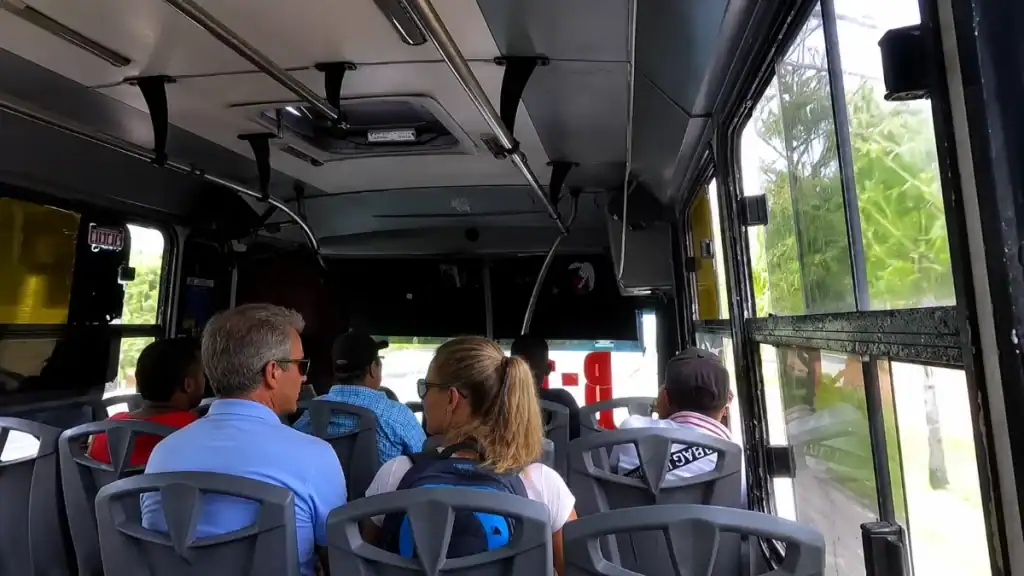
🚌 From Cancún City, the Bus Makes Much More Sense to Me
Once we were no longer dealing with an airport arrival, the calculation felt different. A fixed departure no longer seemed like a nuisance in the same way, because we could organise ourselves around it rather than wondering when immigration or baggage reclaim would release us.
If we are already in Cancún city, we can choose a departure, get ourselves to the bus station and work around a known schedule. There is no immigration queue unexpectedly eating into the connection and no baggage carousel deciding when the journey can begin.
For a solo traveller or couple, that makes the bus difficult for me to dismiss. We give up flexibility, but in return we avoid paying airport-transfer prices for convenience we may no longer need.
Bus or shared transfer?
This is the closest comparison because neither gives us the freedom of a private vehicle.
The bus wins on straightforward value, particularly from Cancún city. A shared transfer earns its place when the pickup point and route remove enough hassle to justify the extra cost, especially from the airport.
So I would not choose between them in isolation. I would choose according to where our journey actually begins.
🚐 A Private Transfer Stops Looking Extravagant With a Family or Group
My first reaction to the private-transfer price was that it looked extravagant. That judgement softened once I stopped comparing the whole vehicle with a single bus ticket.
That is the wrong comparison for four people.
Once several of us are travelling together, I would divide the cost across the group and then put a value on what disappears: reaching a bus departure point, managing children and luggage through another connection, and fitting ourselves around somebody else’s timetable.
For a family arriving after a long flight, that simplicity can matter more than the upgrade itself. We still have the ferry and the final hotel transfer ahead of us, so reducing friction on the longest stage has a practical consequence.
For two adults travelling light, I would be harder to persuade. For four people with cases, the calculation is much closer.

⛴️ The Ferry Is Shorter Than the Journey to Reach It
After giving so much thought to reaching Chiquilá, I remember the ferry feeling almost like the easy bit. We were finally committed to the island, the luggage was aboard and there was nothing else to coordinate for a while.
The passenger ferry from Chiquilá to Holbox takes roughly 25 minutes. That is why I think the ferry can receive too much attention when people estimate the journey from Cancún. The longer and more variable part happens before we board.
I would still leave sensible connection time. Arriving at Chiquilá with minutes to spare saves very little if one road delay leaves us watching the boat depart.
Current schedules and fares are exactly the kind of detail I would recheck before travelling rather than preserve from an old itinerary.
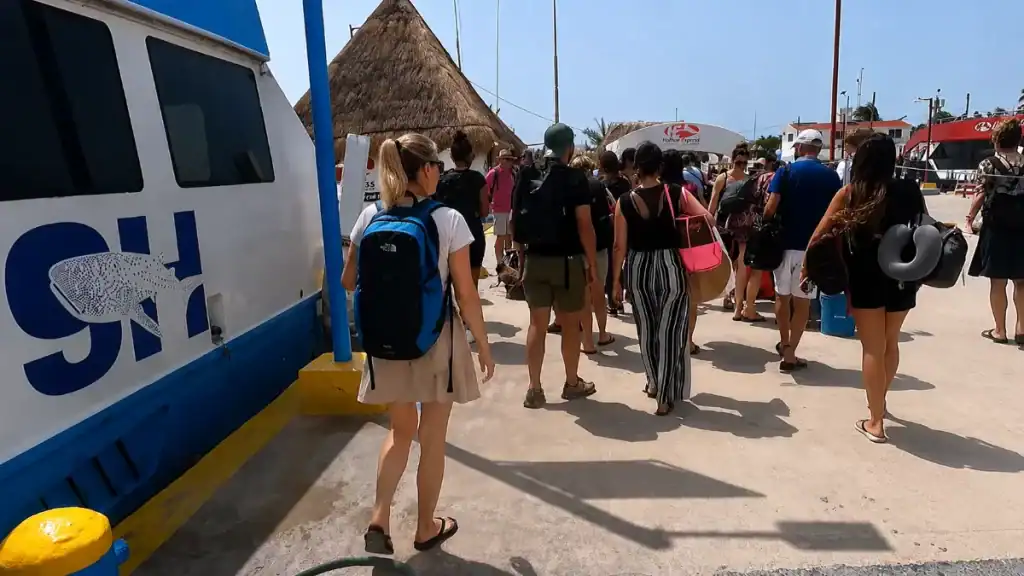
🛺 Reaching Holbox Is Not Quite the Same as Reaching Your Hotel
Stepping off the ferry gave me that brief sense that we had arrived. Technically we had. Practically, we still had our bags beside us and a hotel to reach, and that final little stage suddenly felt much more real than it had when I was looking at accommodation on a map.
Once we step off the ferry, accommodation can still be some distance away. If the hotel is close to the dock and our luggage is manageable, walking may be perfectly practical. Farther east or west, or with heavy cases in the heat, a local golf-cart-style taxi makes more sense.
The rougher side of Holbox matters here too. Sandy lanes are part of the island’s appeal when they are dry; after heavy rain, puddles and standing water make dragging luggage much less romantic. That is one of the moments when hotel location stops being an abstract dot on a booking map.
Our where to stay in Holbox guide helps judge that final distance, while getting around Holbox covers the island’s transport once the bags are down.
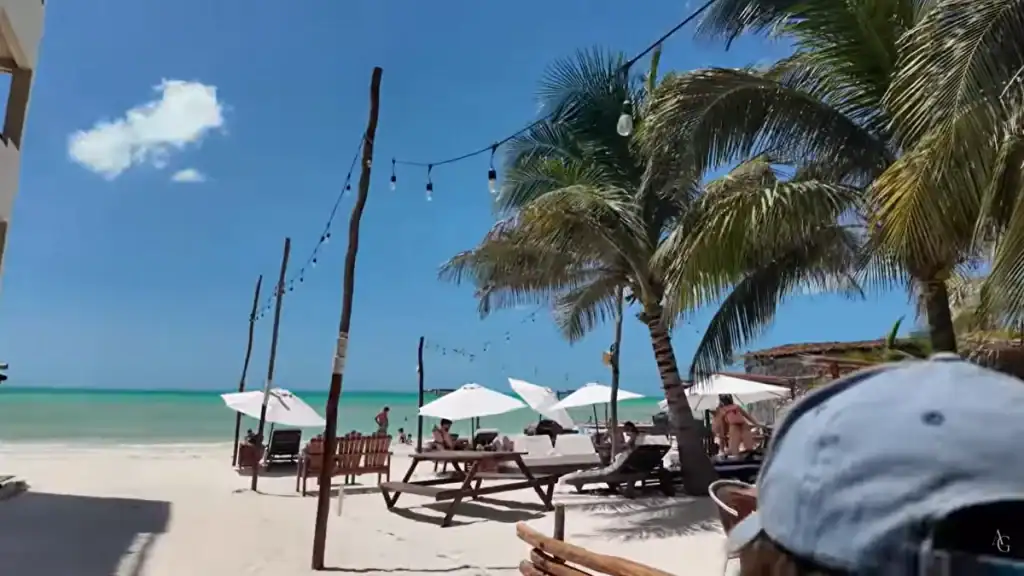
🚗 A Rental Car Gives Us Freedom Until Chiquilá, Then It Stays Behind
You cannot drive a rental car all the way to Holbox.
If we already have one for a wider Yucatán road trip, that is not a problem. We can drive to Chiquilá, park on the mainland, take what we need and continue as ferry passengers.
On a wider Yucatán road trip, that freedom is something I value. We can leave when we are ready, stop shaping the day around a bus departure and drive straight to Chiquilá. The slightly odd part is then parking the car and walking away from it with our bags because the vehicle that gave us all that freedom has no role on the island.
I would not, however, rent a car specifically to use on Holbox. It cannot do the job I would be renting it for. Once we reach Chiquilá, it becomes a parked vehicle we are paying to leave behind.

🌙 A Late Flight Is Where I Would Stop Forcing the Same-Day Arrival
I know the temptation here because I dislike giving away a holiday night to logistics. But this is one of those journeys where forcing the plan can make the first evening worse rather than better.
A morning flight gives us room for the airport exit, the drive to Chiquilá and the ferry. As the scheduled arrival moves later, every delay starts consuming margin we cannot recover. Immigration takes longer. A bag is slow. Traffic costs us time. Suddenly the final ferry matters far more than the optimistic itinerary we made at home.
I would work backwards from the current last ferry, not forwards from the scheduled landing time.
🌙 MY SAME-DAY ARRIVAL CHECK
☀️ Morning flight: plenty of useful margin.
🌤️ Early afternoon: usually workable with sensible planning.
🌇 Later afternoon: I would check the entire chain carefully.
🌙 Evening or very late arrival: a mainland overnight becomes much more attractive.
I used to see a mainland overnight as a night lost from Holbox. Looking at the chain properly changed that. I would rather sleep on the mainland, eat, reset and cross the next morning than spend a late flight checking the time and wondering whether one slow immigration queue had just wrecked the connection.
And if the journey is making you question whether a very short visit is worthwhile, our Holbox day trip or overnight stay guide looks at that decision separately.
🧭 The Cancún-to-Holbox Option I Would Choose
By the end of the planning, I had stopped looking for one ‘best’ way to reach Holbox. The choice that made sense changed with where we started, how many of us were travelling and how much hassle we were willing to absorb.
| Your situation | I would start with | Why |
|---|---|---|
| 🎒 Solo from Cancún city | Bus | Strong value |
| ❤️ Couple from Cancún city | Bus | Simple and economical |
| ✈️ Solo from airport | Shared transfer | Easier airport connection |
| ❤️ Couple from airport | Compare shared/private | Convenience may justify the upgrade |
| 👨👩👧👦 Family/group | Private transfer | Cost spreads across passengers |
| 👶 Travelling with children | Private transfer | Fewer moving parts |
| 🚗 Already on a road trip | Drive to Chiquilá | Maximum flexibility |
| 🌙 Late flight | Mainland overnight | Removes connection pressure |
From Cancún city, I would choose the bus when value mattered most. From Cancún Airport, a shared transfer earns its extra cost by simplifying the first connection. Once several of us are travelling together, I would compare a private transfer properly rather than dismiss it as the expensive option.
If we are already driving around the Yucatán, we keep the freedom of the car as far as Chiquilá and leave it there. If our flight lands late, we stop trying to make the calendar say we reached Holbox that day and choose the less fragile plan.
The route itself never really changes: Cancún → Chiquilá → ferry → Holbox → hotel.
What changes is how much friction we choose to carry through it.