

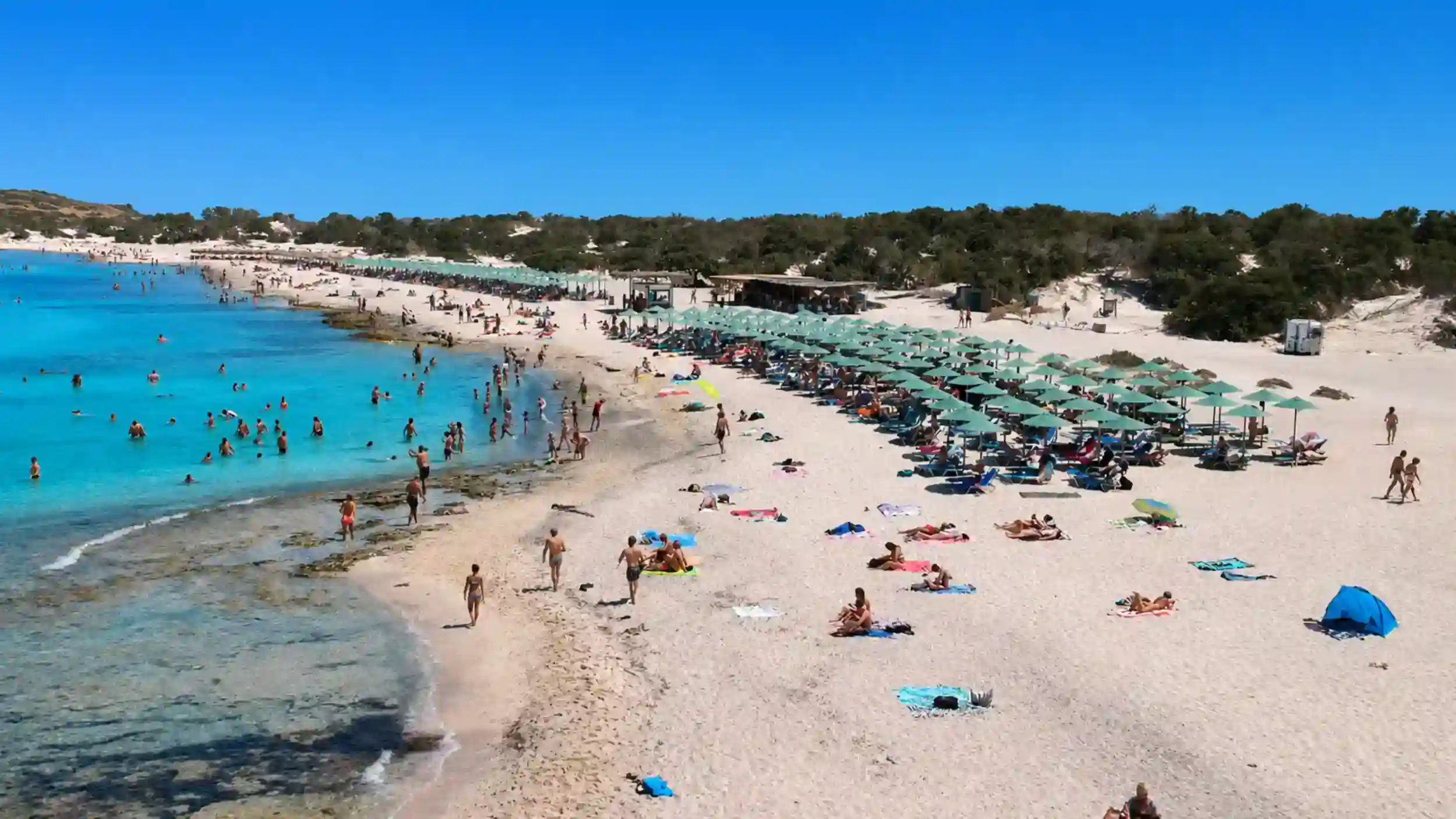
Boats from Ierapetra and How the Day Works
Chrissi Island is the main offshore excursion from Ierapetra, but it is not the automatic easy beach day some brochures make it sound. This trip works brilliantly when weather, sea conditions and access rules line up. When they do not, it can become an expensive boat ride with limited payoff. The key is treating it as a conditional outing, not something to lock into the itinerary without checking first.
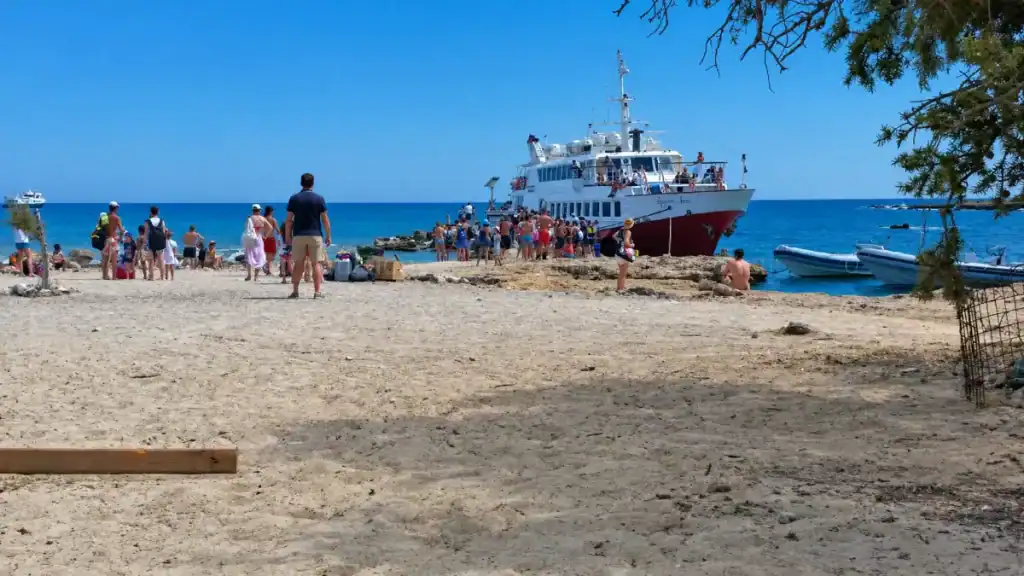
Boats leave from Ierapetra’s seafront excursion harbour area, not the larger commercial port further along the waterfront. You buy tickets from the kiosks facing the water. In normal season there are several operators running the crossing from May into October, with fares now generally starting around forty euros depending on operator and season. Outside the August rush, booking ahead is usually unnecessary. I would still walk down the evening before to confirm departures, because this is one of those excursions where the morning weather can quietly change everything.
Most boats leave between ten thirty and eleven thirty. Return sailings are generally fixed for late afternoon, usually somewhere between four fifteen and five thirty. That means the trip consumes the whole middle of the day whether conditions are ideal or not. Crossing time varies more than people expect. Some boats make it in around twenty five to thirty minutes, slower ones take close to an hour, and if the Libyan Sea is moving you feel every minute of it because this is open water, not a protected coastal shuttle.
Weather, Wind and Why Nothing Is Guaranteed
Wind matters more here than almost any other excursion in East Crete. Operators cancel when conditions turn rough, and they sometimes do not make the final call until the morning. Even if the boat sails, a breezy day can still spoil the island itself. Chrissi is low, exposed and almost completely at the mercy of whatever the sea is doing. Once gusts start climbing, the famous north shore becomes much less inviting than the photographs suggest. I would treat any forecast showing strong gusts as a reason to wait. If the trip falls through, the south coast villages between Myrtos and Makry Gialos give you an easy backup day from the same base.
The other variable is access, and this needs checking in person at the kiosk before you hand over money. Rules have shifted repeatedly in recent seasons because heavy visitor traffic damaged the island’s protected environment. Official restrictions currently ban walking inland and prevent normal beach landings. At the same time, some operators continue advertising the old version of the excursion as if nothing changed. Reports from visitors have ranged from supervised swim access near shore to no meaningful island time at all. Do not assume the glossy poster reflects the current reality.
That matters because the value of the trip depends entirely on what kind of stop you are actually getting.
What Chrissi Island Is Actually Like
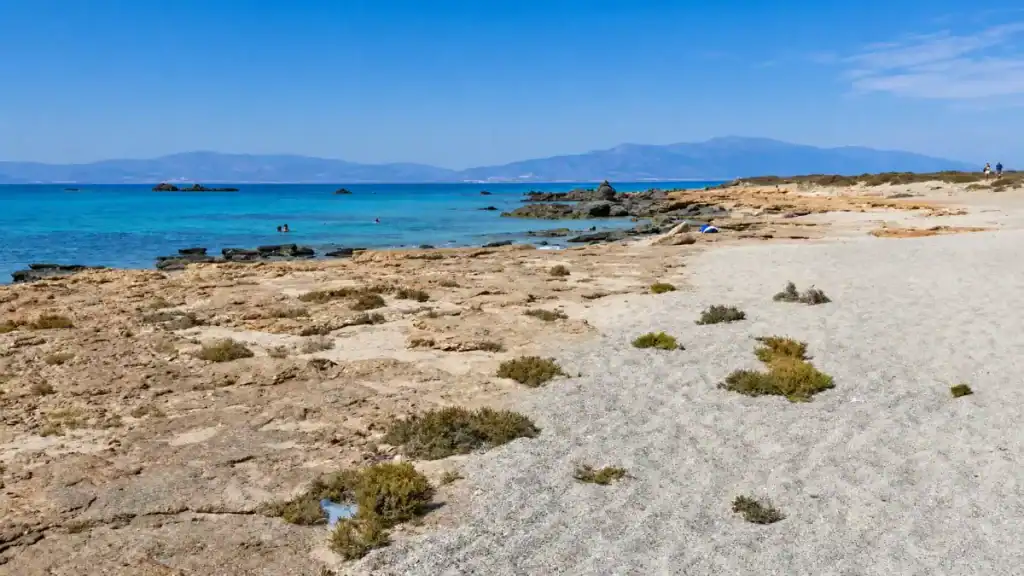
Chrissi itself is a narrow, low strip of land sitting well south of Ierapetra, about seven kilometres long and only two kilometres wide. No roads, no village, no traffic, no built resort infrastructure. As the boat approaches the island, Chrissi looks almost empty from the water, just pale sand, scrub and the dark line of juniper and cedar growth sitting low against the horizon. It feels isolated in a way that mainland Crete rarely does.
Under previous normal access conditions, visitors moved across a short flat path through the protected juniper forest toward Belegrina on the north shore. The walk is only a few minutes, roughly three hundred metres, but it gives you the clearest sense of what Chrissi really is: not a developed excursion island, just a fragile sandbar with trees. The forest is the only natural shade available and even that is patchy. Once boats unload, everyone funnels through the same corridor and ends up concentrated in the same section.
Belegrina, also called Golden Beach, is where the island earns its reputation. The sand has a faint pink-gold cast from crushed shell. The water is shallow, bright and unusually clear even by Cretan standards. On a calm day it is better than anything directly around Ierapetra itself, and it routinely turns up alongside Vai and Xerokampos in any honest list of the strongest beaches across this side of the island. This is the reason people go. There is no deeper hidden cultural attraction and no need to pretend otherwise. You are paying for that stretch of sea.
When the Trip Is Worth Doing and When to Skip It
But it only works if you can properly use it.
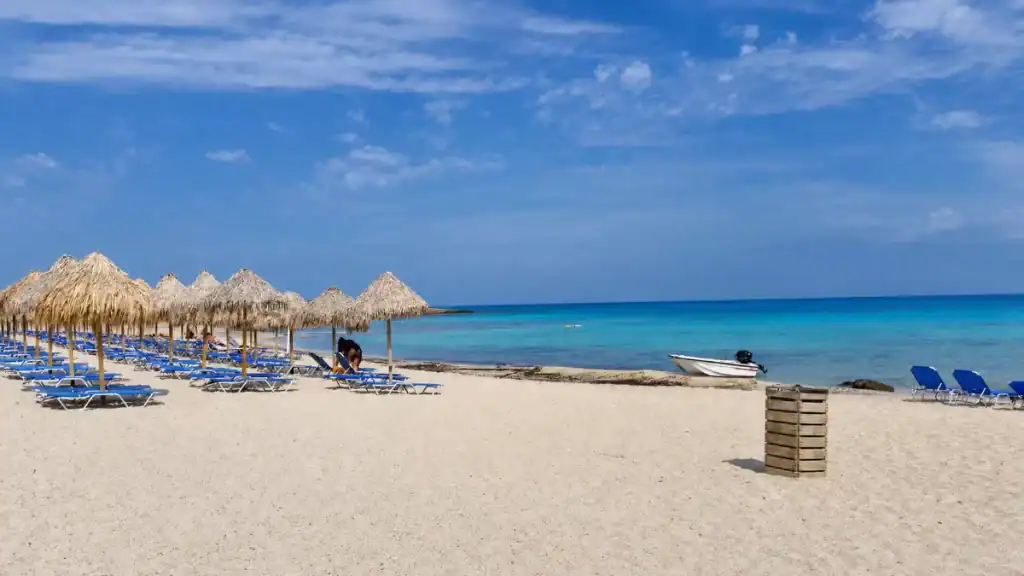
If the operator confirms workable swim access, enough time by the island, and conditions suitable for swimming, the excursion is worth doing. Bring water, bring food, bring shade expectations down to almost zero, and accept that facilities are minimal to nonexistent. There may be no useful toilets, no reliable service, and nowhere to buy anything once there. This is a self-contained beach day.
If, however, the operator describes a no-landing arrangement, a restricted offshore anchor, or a quick supervised swim stop, the value drops sharply. At that point you are spending most of a day on boat logistics for a controlled glimpse of the island rather than a real island stop.
Crowding is the final issue. All boats arrive in roughly the same late-morning window. Chrissi never receives visitors in a gentle trickle. It receives them in batches. That means the main swim area can feel suddenly busy despite the island’s remote image. The better timing is late May through mid June, or September, when the sea is still warm enough and the passenger numbers are lower.
My advice is simple. Keep Chrissi as a flexible option while staying in Ierapetra rather than a fixed must-do. Check wind two days before. Check again that morning. Walk to the kiosk and ask exactly what access is operating that day. If the answer is calm sea, workable swim conditions and enough island time, go. If the answer sounds vague, restricted or weather-dependent, skip it without regret. Chrissi is excellent under the right setup, but it is not an excursion that rewards forcing.