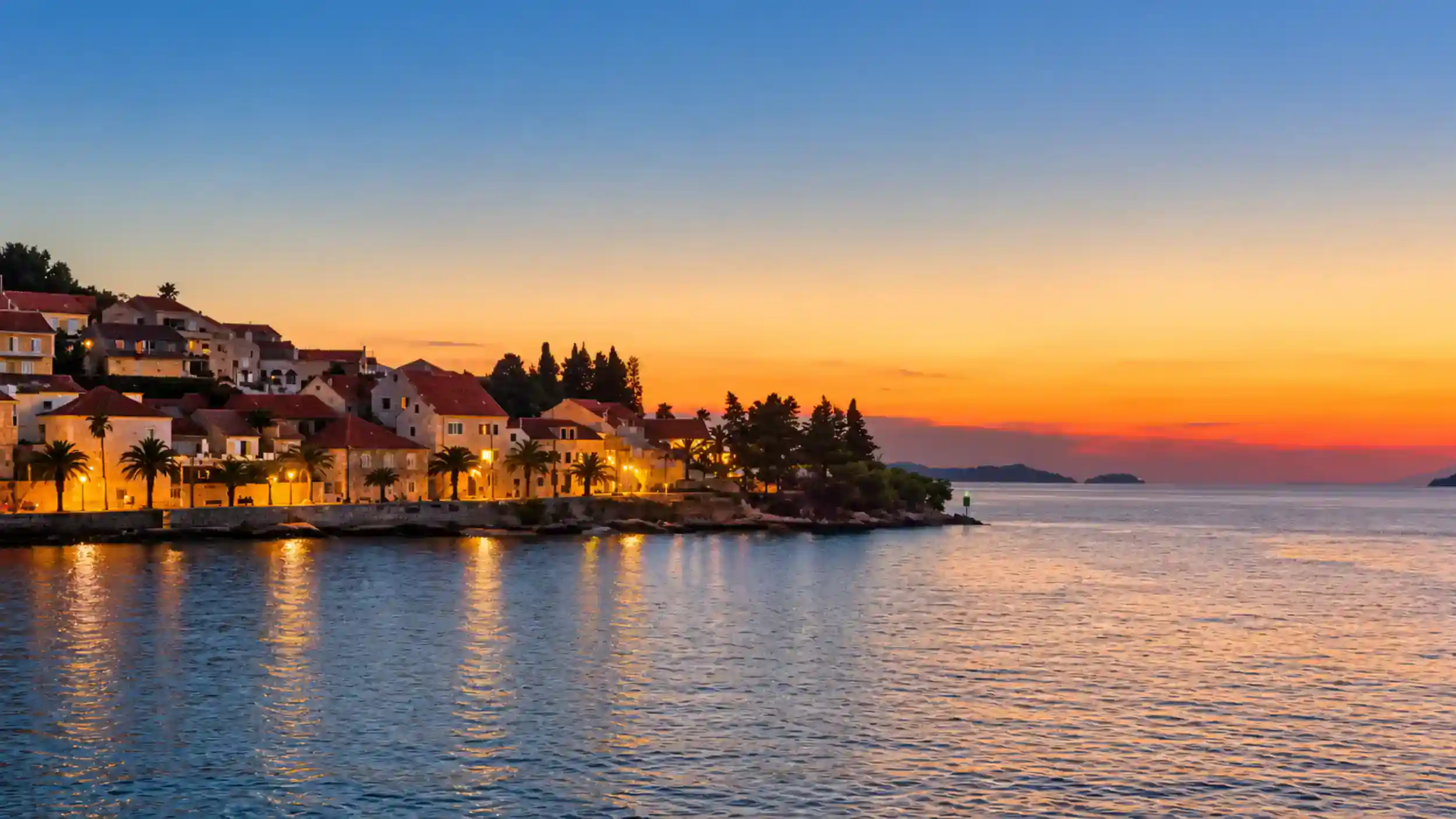
The best place to watch sunset in Korčula Town is the western and north-western edge of the Old Town peninsula, where the outer waterfront opens towards the Adriatic and Pelješac. I preferred walking the perimeter rather than choosing one fixed viewpoint, then finishing around Zakerjan Tower as the heat faded and the light softened.
I followed the path around the walls without needing a real destination. The pleasure came from watching the town change as I went.
It fits naturally into a day in Korčula Town, once the main sightseeing is finished and there’s no longer any reason to hurry.
🌅 What Is the Best Time to Head to the Waterfront for Sunset?
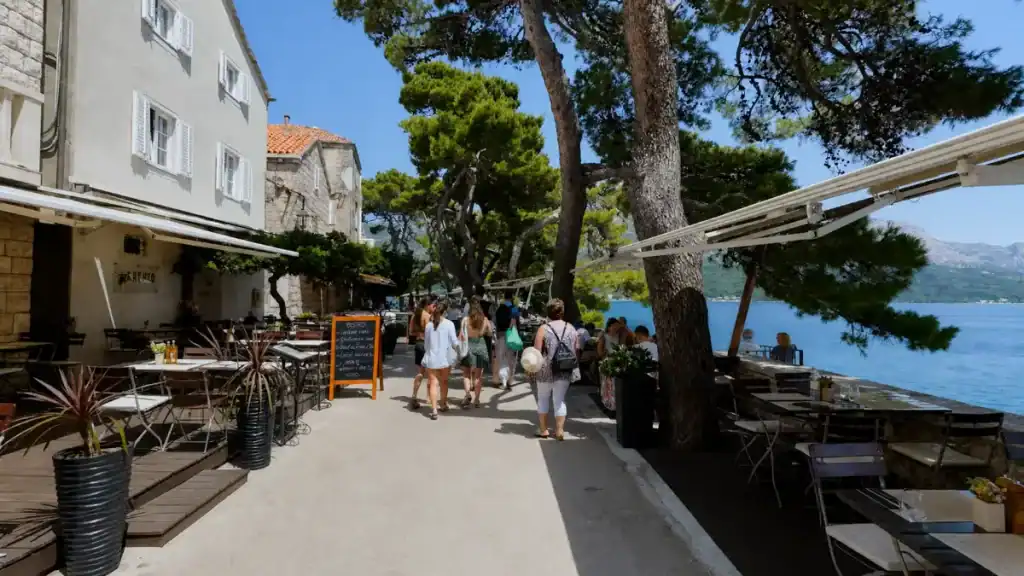
Korčula’s Old Town sits on a small peninsula with the Adriatic on three sides, and I found arriving on the waterfront 30 to 45 minutes before sunset gave me the best balance of cooler air, softer light and enough time to walk the perimeter. In summer, sunset is late: roughly 20:35 around the start of July, about 20:10 at the start of August and around 19:30 by the end of August, so I would still check the exact date.
As the sun dropped, I could feel the difference between the interior lanes and outer paths. The stone streets still held the day’s warmth while the first evening breeze reached the exposed waterfront.
🌊 I Followed the Breeze Towards the Sea
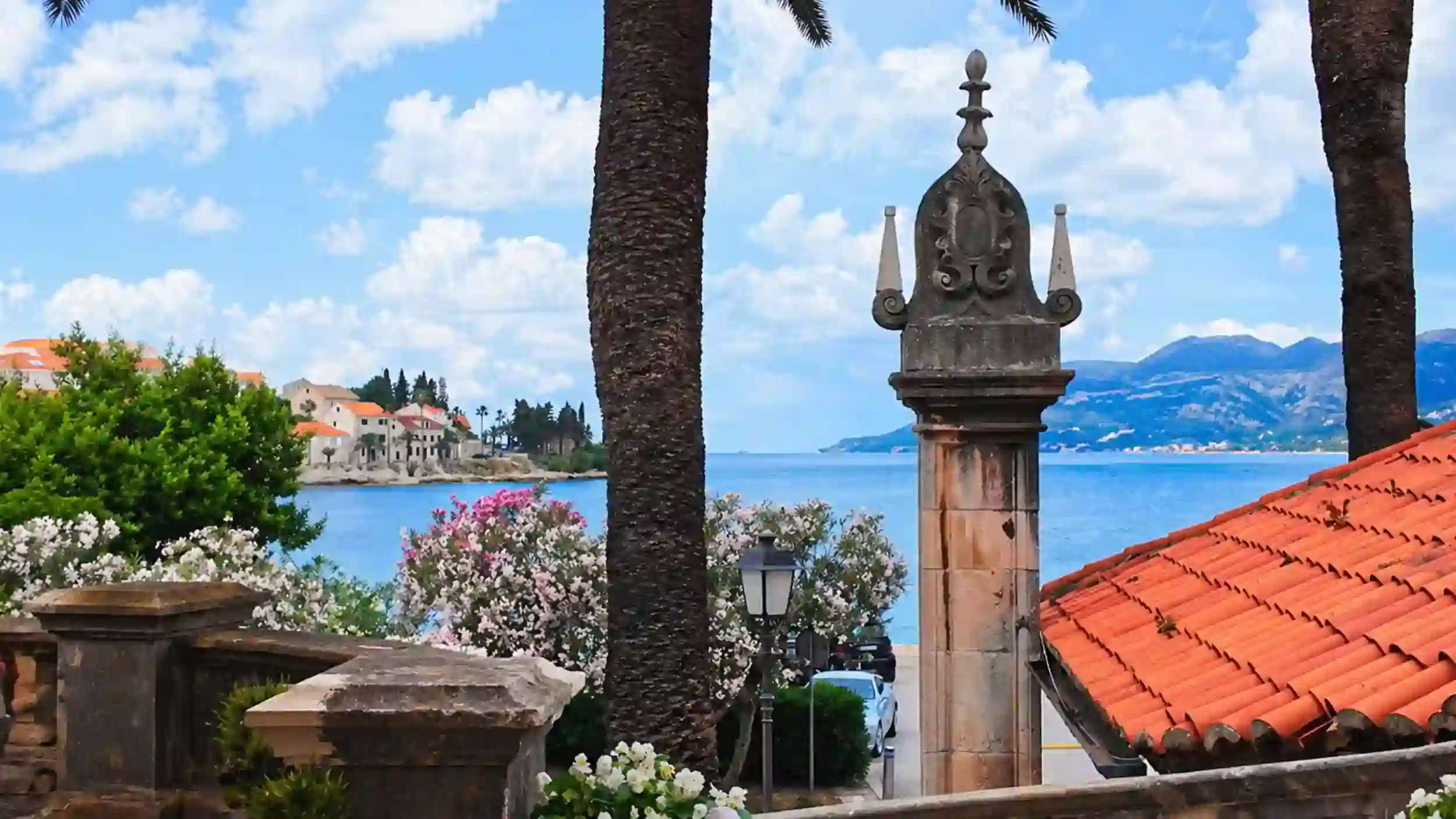
By early evening, I found myself drifting away from the centre towards the sea with everyone else. The outer walls gave me more space, moving air and uninterrupted views across the channel, while the interior streets still felt noticeably warmer.
🗺️ The Peninsula Made the Walk Work for Me
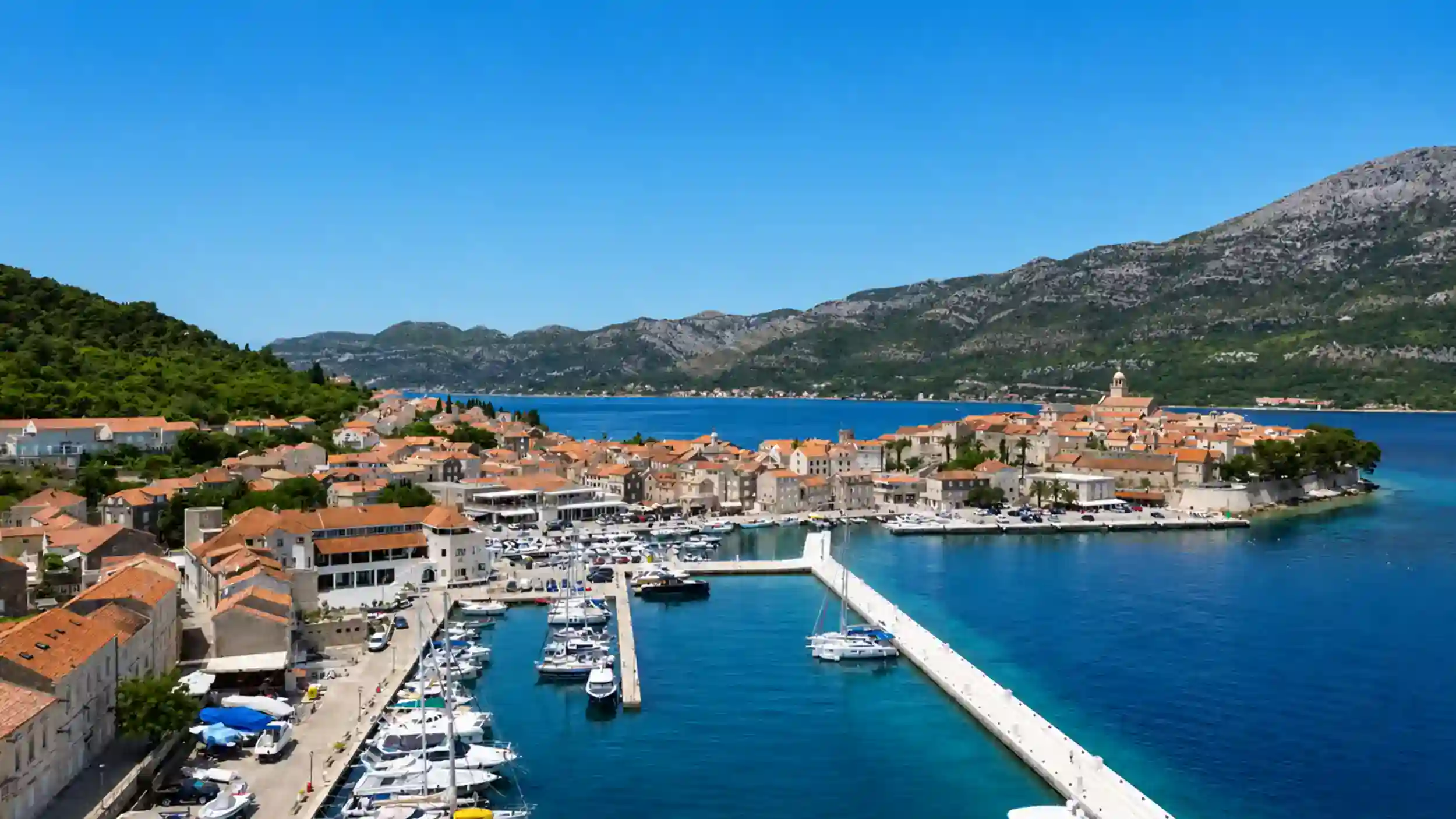
This is also where Korčula’s geography starts to make sense. From the outer edge you can see the harbour, the channel and the scattered islands beyond, while the sea wraps around much of the Old Town below you.
| Late afternoon | What changes |
|---|---|
| 🏘️ Interior lanes | Warmer and increasingly still |
| 🌊 Outer paths | Cooler with more breeze |
| 👥 Crowd movement | Shifts towards the waterfront |
| 🌅 Views | Improve as the light softens |
If you’ve spent the day navigating the busier centre, this movement towards the waterfront is also one of the easiest ways to escape Korčula Town crowds without actually leaving the Old Town.
🌅 MY SIMPLE TIMING RULE
Arrive on the outer waterfront 30–45 minutes before sunset. That leaves enough time for the 15–20 minute perimeter walk, a gelato stop and a second pass along whichever section catches the best light.
🚶 What Is the Best Sunset Walk Around Korčula Old Town?
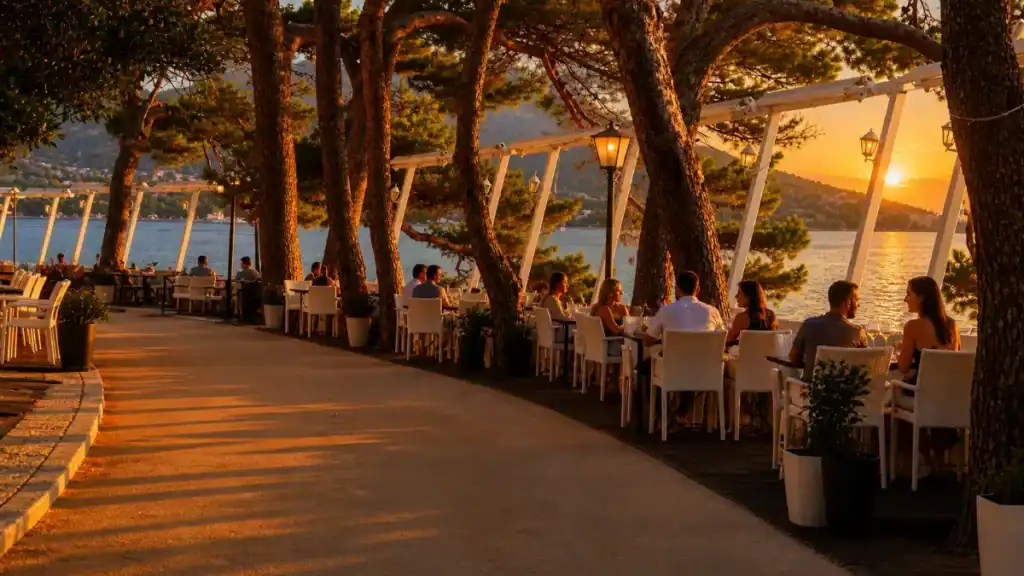
I would follow the outer edge of the peninsula from the harbour rather than cut through the centre. One relaxed circuit took me only 15 to 20 minutes, which left enough time to retrace whichever western or north-western sections caught the best light as the walls, harbour and rooftops changed around me.
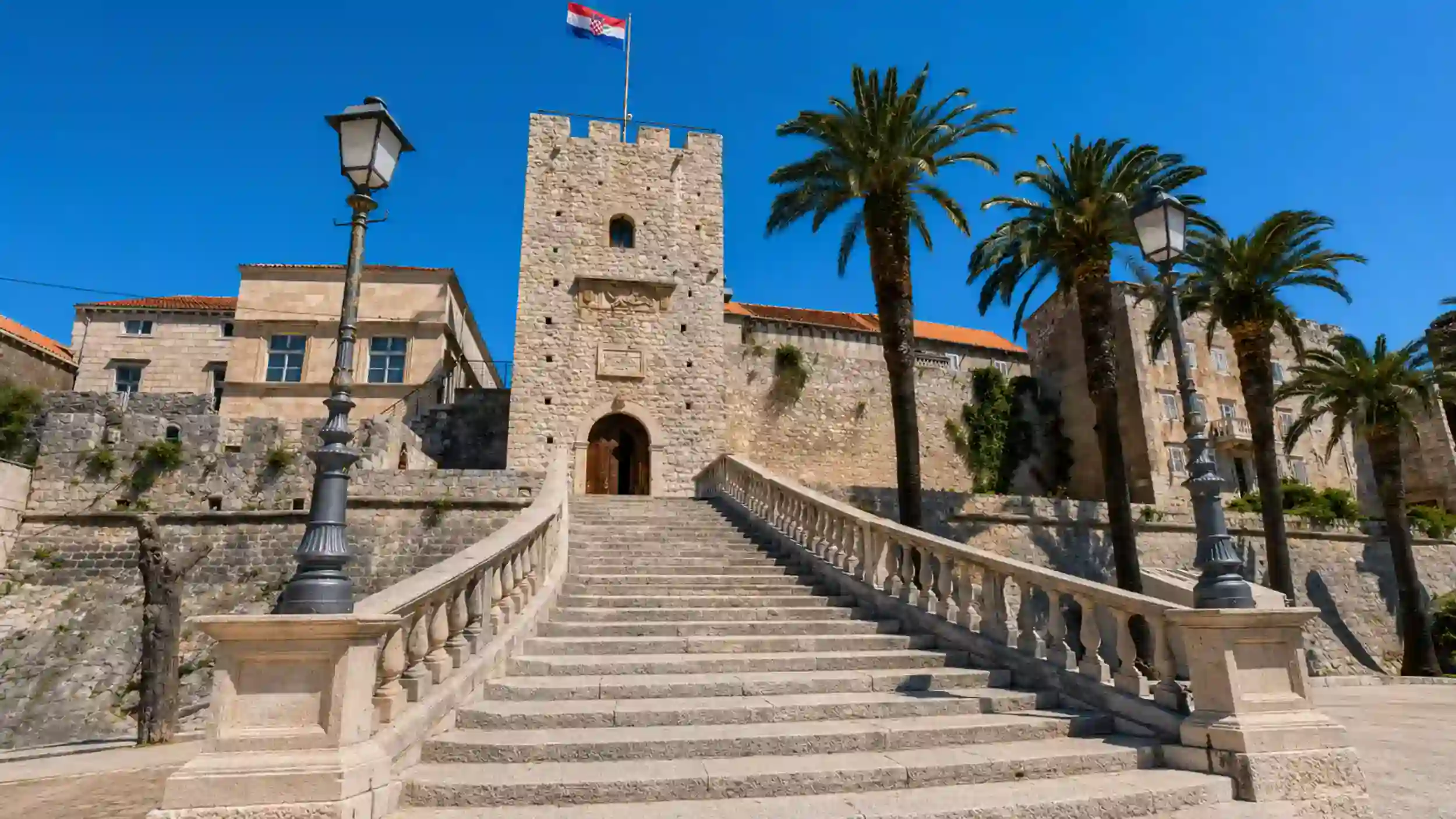
🏰 I Started Near the Great Governor’s Tower
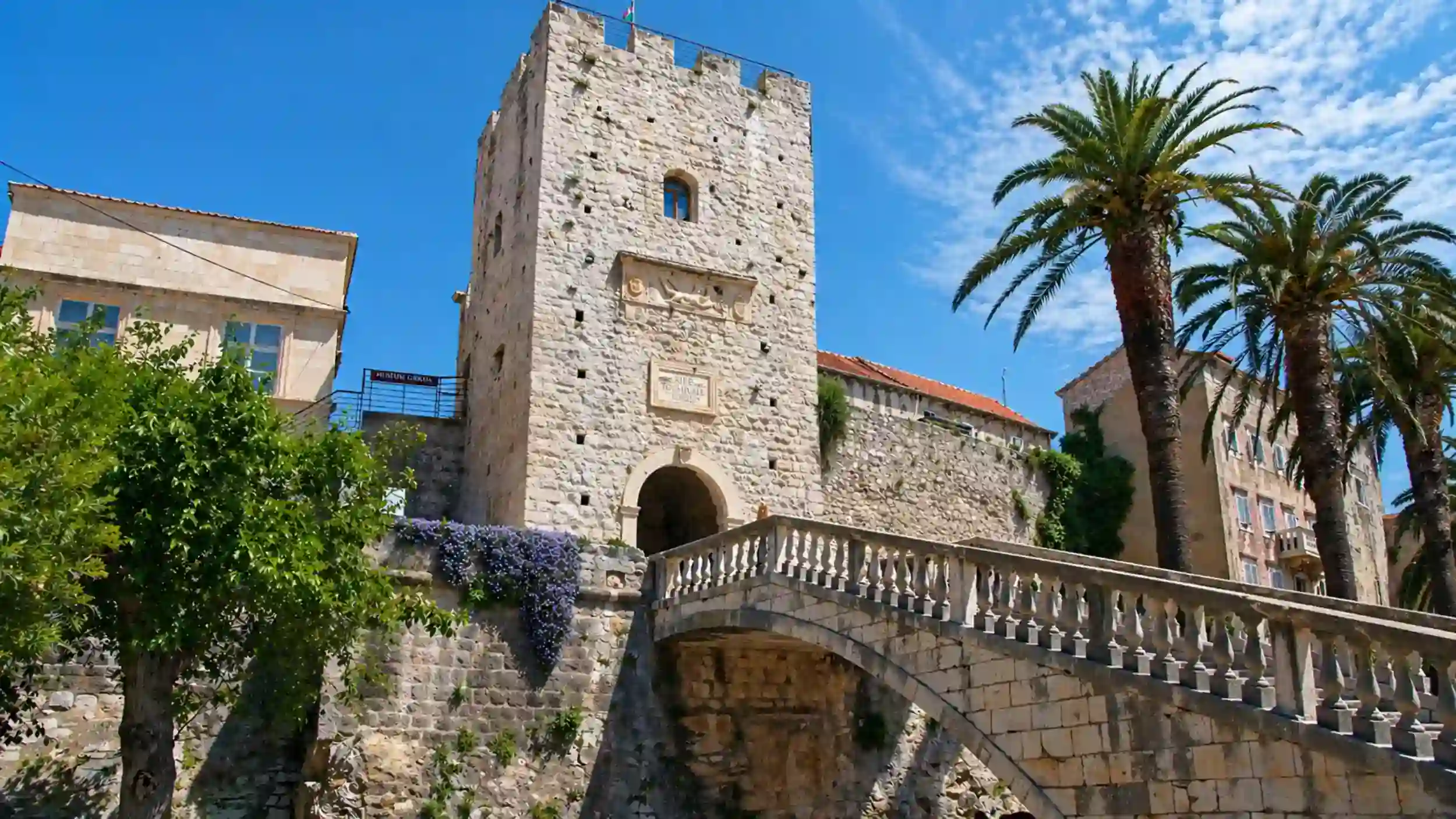
The Great Governor’s Tower makes an easy starting point beside the harbour. From here, follow the outer wall westwards rather than heading immediately back into the Old Town.
🔄 I Never Treated It as a One-Way Walk
One complete circuit took me roughly 15 to 20 minutes at a relaxed pace, so I never thought of it as a route to walk once. I turned around, retraced sections and stopped wherever the changing light looked best.
| The sunset loop | What to expect |
|---|---|
| 🚶 Walking time | Around 15–20 minutes |
| 🌊 Route | Outer edge of the Old Town |
| 🔄 Best approach | Repeat the sections you like |
| 🌅 Reason to linger | Light and views change as sunset approaches |
Korčula’s compact size makes this evening loop particularly easy. It’s also part of the reason how many days you need in Korčula Town can be surprisingly few before you start wanting to explore beyond the Old Town.
💭 Is Philosopher’s Street Worth Adding to the Sunset Walk?
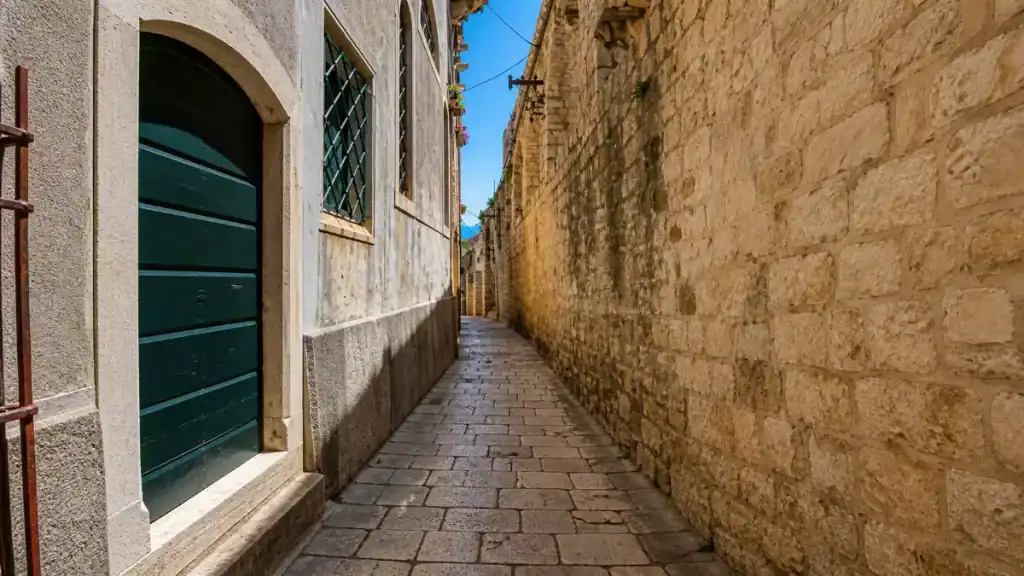
Yes, but I would treat it as a short detour rather than a sunset destination in its own right. Ulica Dobrohotnosti, just off Rampada on the eastern side of the Old Town, is often called the Street of Thoughts or Philosopher’s Street. Its lack of steps gave me an easier passage than Korčula’s more typical stepped lanes before I rejoined the waterfront.
🚶 This Was the Street Where I Slowed Down
The nickname made more sense once I walked it. I could stroll without constantly watching the stones beneath my feet, and after an afternoon climbing Korčula’s stepped lanes, that simplicity was surprisingly welcome.
🌬️ I Liked It Better in the Evening
I liked the street better later in the day. Sea air moved through more easily than in the enclosed interior lanes, while washing strung between the upper windows caught the same breeze. To me, it felt lived-in rather than arranged for visitors.
Use it as a short detour from the waterfront rather than a destination in itself, then rejoin the outer loop for the changing evening light.
📍 Where Are the Best Sunset Viewpoints in Korčula Town?
The western and north-western waterfront gave me the strongest sunset views overall, but I would not choose one fixed viewpoint. The harbour wall, places where St Mark’s bell tower rises above the rooftops and the approach to Zakerjan Tower each gave me a different reason to stop as the light changed.
⚓ I Stopped Where the Harbour Opened Up
The outer wall overlooking the harbour is one of the natural stopping points. From here, the view opens across the water rather than being framed by the narrow streets, making it particularly good as the sky begins to change.
🔔 The Bell Tower Gave Me Another Reason to Pause
Another good point comes where St Mark’s bell tower first appears above the Old Town rooftops. It’s an easy place to pause before continuing around the perimeter, particularly as the stone begins catching the warmer evening light.
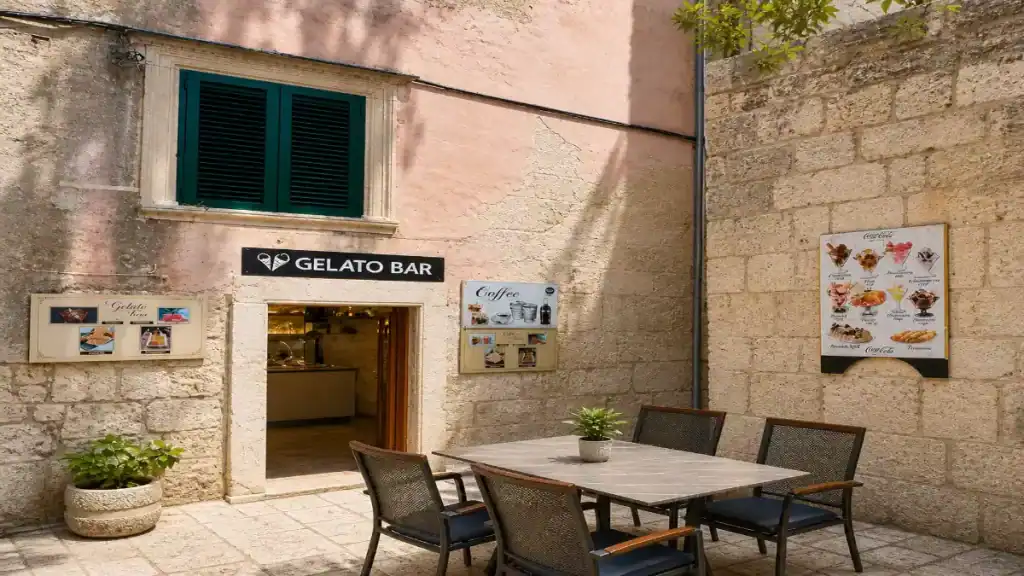
🍦 Gelato Became My Mid-Walk Break
The gelato bar near the Church of Our Lady gave me a natural mid-walk break. It sits conveniently enough to pause as you circle the Old Town, then rejoin the waterfront rather than treating sunset as something you need to watch from one fixed position.
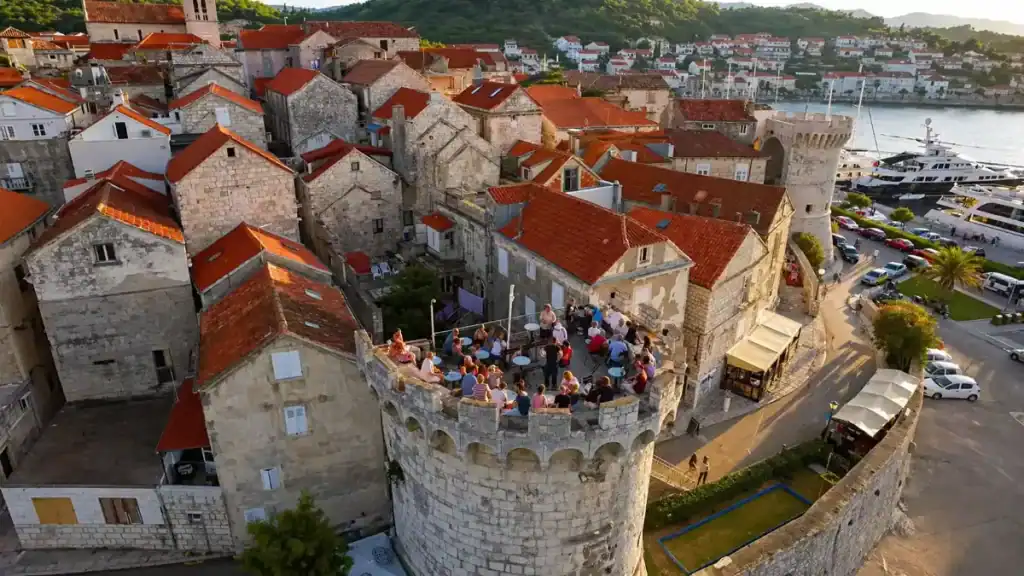
🍸 I Finished High Above the Water
Massimo Bar occupies the top of Zakerjan Tower on Šetalište Petra Kanavelića, at the northern end of the Old Town waterfront. You enter the tower from street level, climb stairs inside and finish on a steep wooden ladder to reach the rooftop. By early evening it was already attracting a crowd, so it felt more like the endpoint of my walk than another casual stop.
| Stop | Best for | When |
|---|---|---|
| ⚓ Harbour wall | Open water views | Early sunset |
| 🔔 Bell tower viewpoint | Old Town skyline | Golden hour |
| 🍦 Church of Our Lady area | Gelato break | Mid-walk |
| 🍸 Massimo Bar | Finishing the evening | Around sunset |
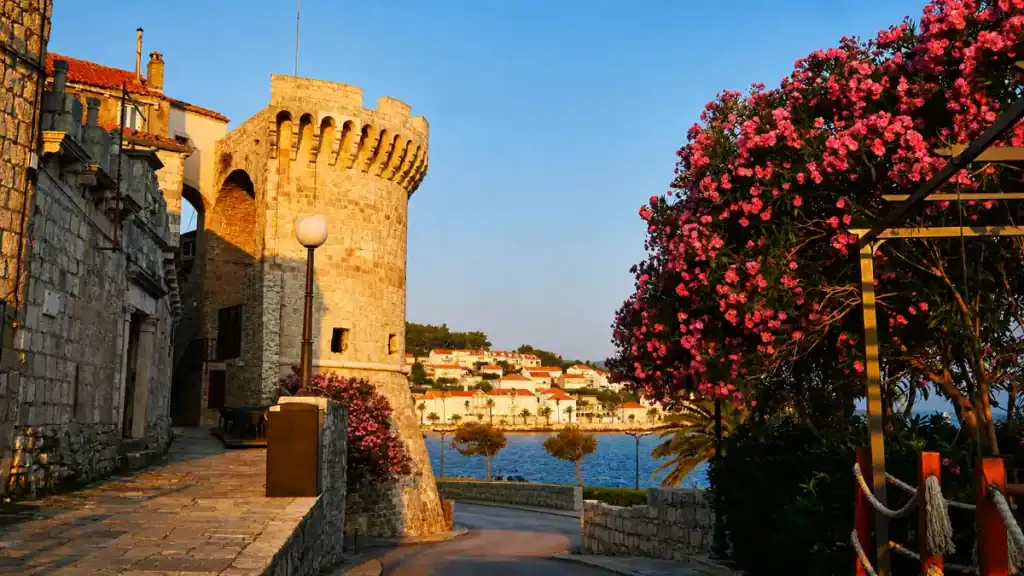
🌇 What Should You Do After Sunset in Korčula Town?
I would stay on the waterfront after the sun disappears rather than rush back into sightseeing mode. By the time I had walked the outer edge once or twice, the air had cooled, the light had shifted and familiar viewpoints looked slightly different each time I returned to them. That slower period after sunset became part of the experience rather than an endpoint.
🔔 I Let the Bells Set the Pace
The bells from St Mark’s became a useful signal for me. When they rang in the late afternoon, I moved towards the waterfront, found the cooler outer path and left enough time to walk favourite sections more than once before the sun disappeared.
🌅 I Wouldn’t Rush Away After Sunset
Korčula became familiar to me surprisingly quickly, and that was part of its appeal. Once I had found the corners I liked, the evening became less about sightseeing and more about returning to them as the light faded.
For anyone still wondering whether Korčula Town is worth visiting, this is arguably the part of the day that makes the strongest case for staying rather than simply passing through.