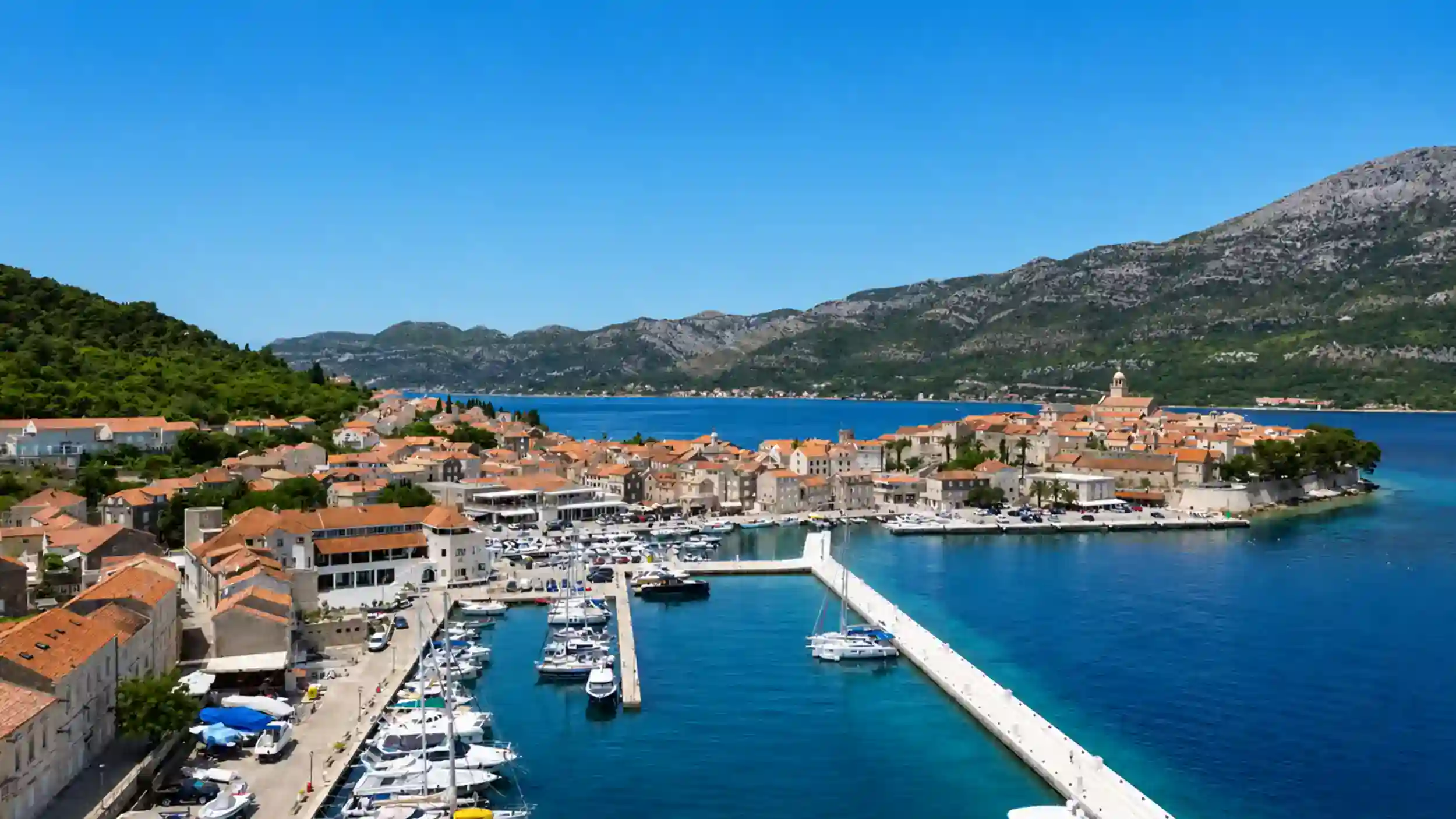
Korčula or Dubrovnik comes down less to architecture than to the kind of historic place you want to spend time in. Dubrovnik is the bigger spectacle, with monumental walls and more major sights; Korčula is smaller, easier to absorb and noticeably more intimate. I would choose Dubrovnik for scale, but Korčula for atmosphere and a shorter, less managed stay.
That difference became clearer the longer I walked. In Korčula, groceries still appeared in residents’ hands and washing moved between old stone buildings. Those ordinary details stopped the Old Town feeling preserved mainly for visitors.
After Dubrovnik, that mattered more to me than another grand façade.
🏰 Is Korčula or Dubrovnik Better for Atmosphere and Sights?
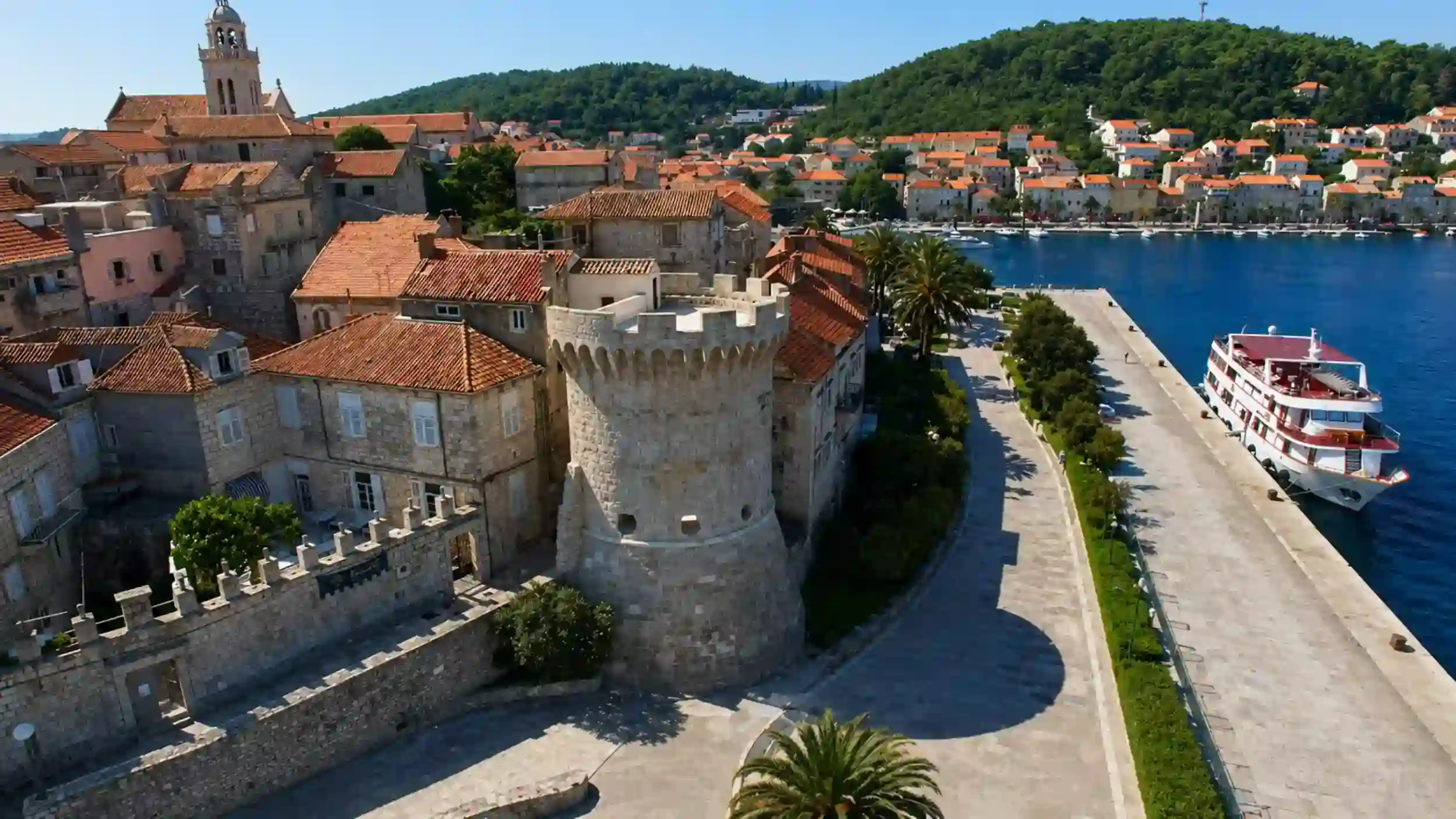
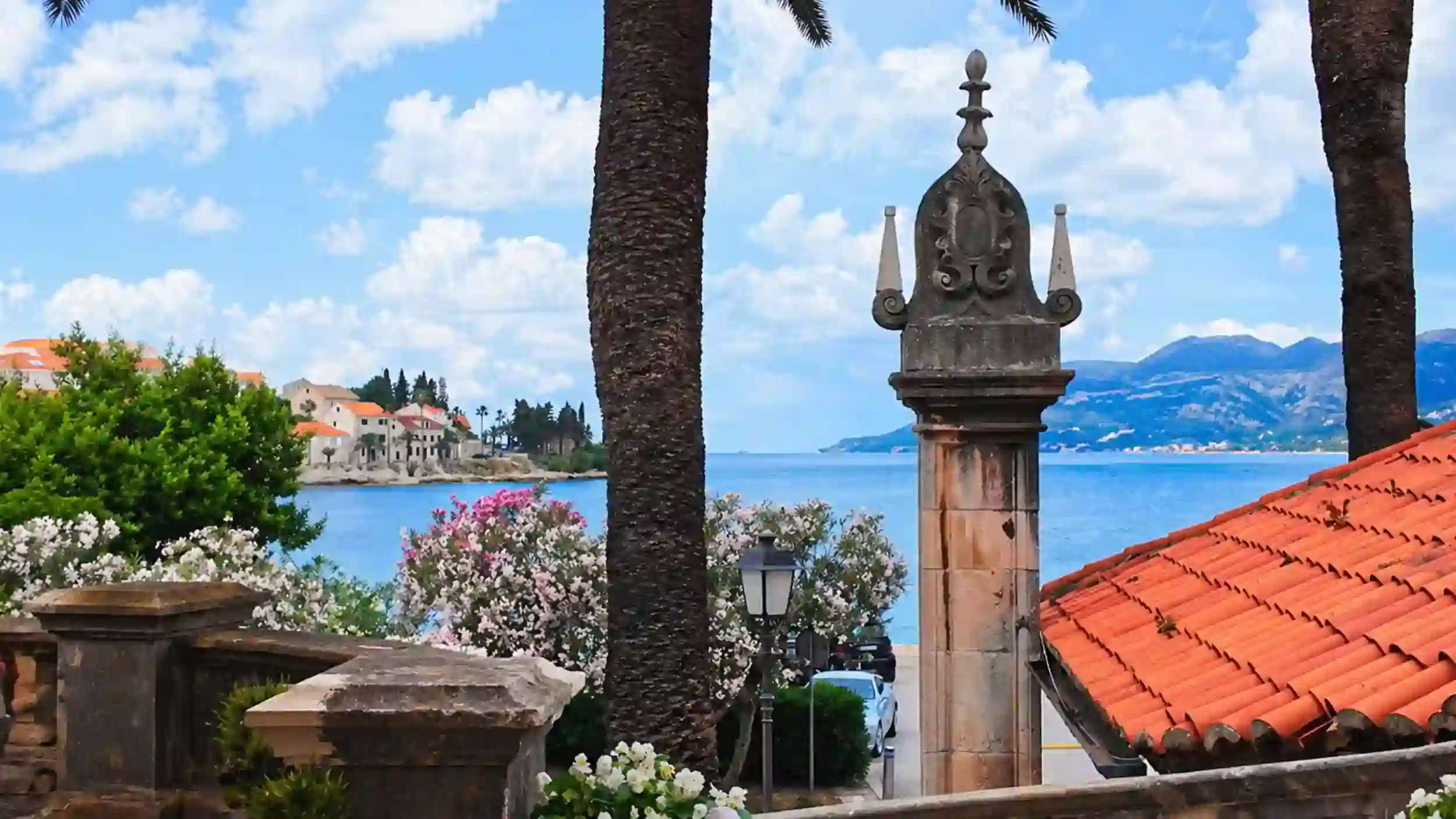
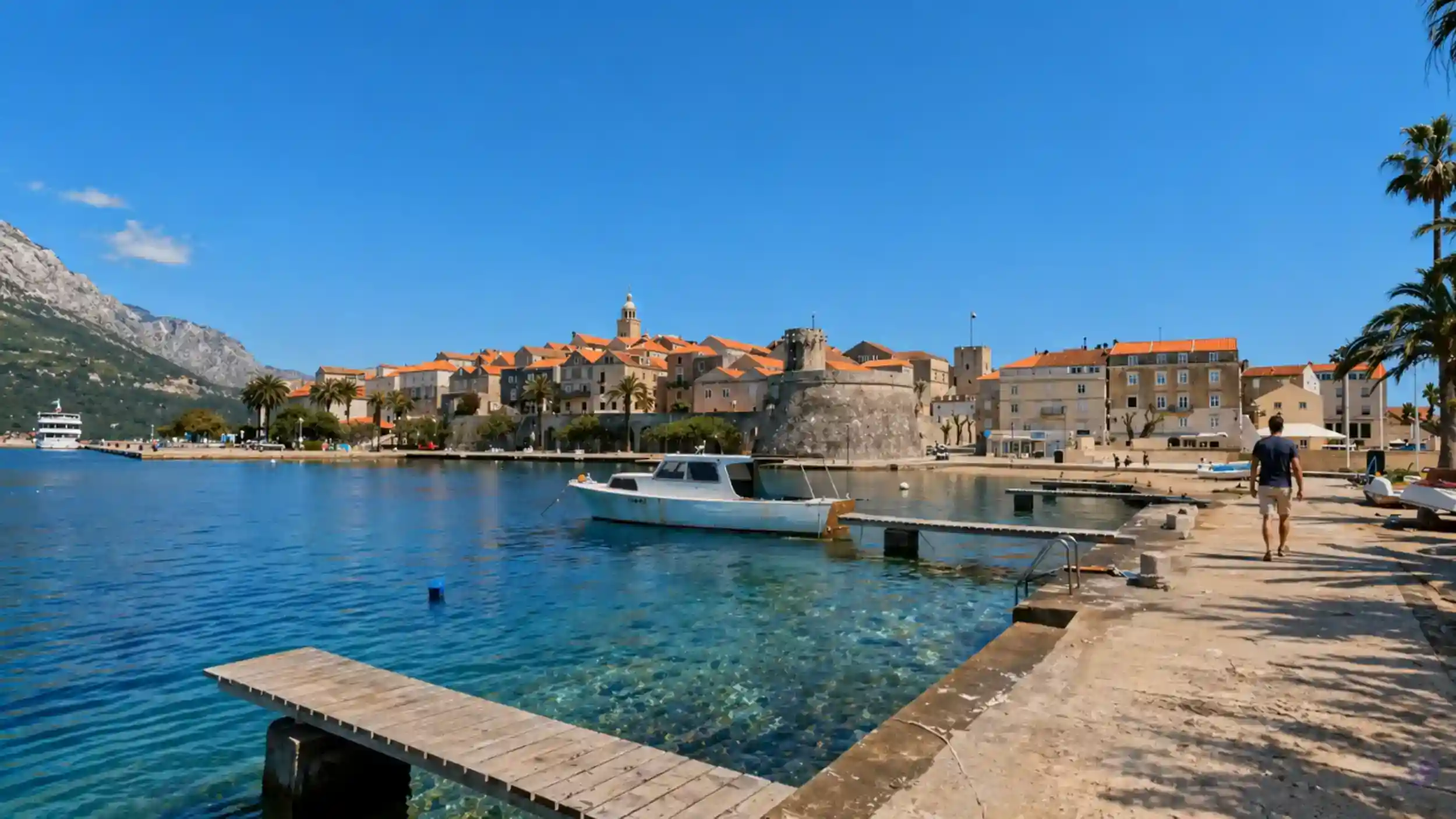
Dubrovnik gave me the bigger visual spectacle, but Korčula was the place I preferred for atmosphere. Its medieval centre occupies a narrow peninsula, with terracotta roofs, stone towers and defensive walls rising directly above the Adriatic, and everything felt close enough to understand almost immediately.
Dubrovnik had given me the greater visual impact. Its walls, gates and scale are harder to match. But Korčula felt less separated from the life continuing inside those defences, which changed the way I responded to it.
How Do the Two Old Towns Feel Different?
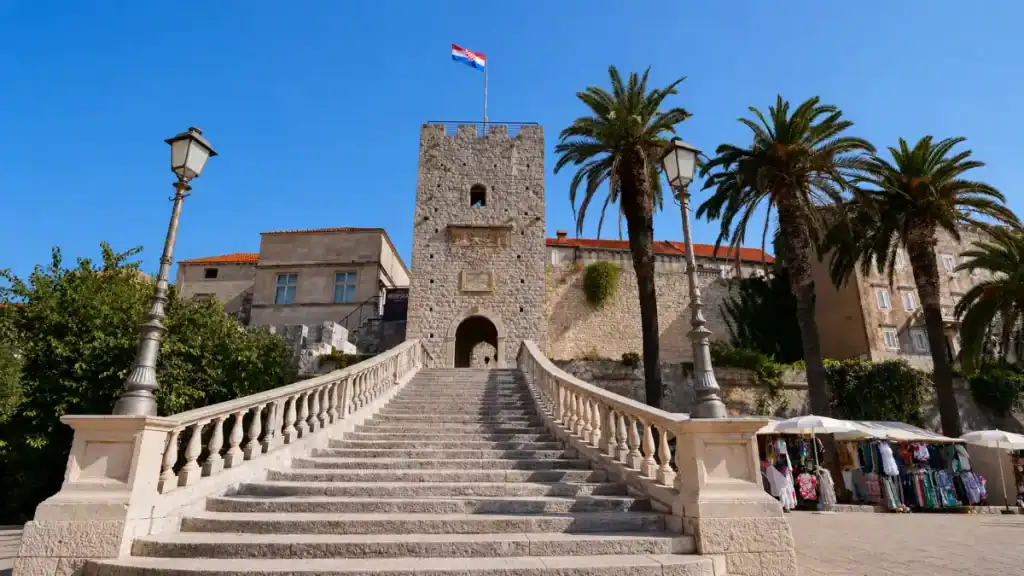
The main entrance forms part of the old Venetian defensive complex. Nearby, the Great Governor’s Tower once protected the harbour and Governor’s Palace, while Kanavelić Tower and the Town Gate still frame the approach.
I wasn’t simply arriving to inspect fortifications. They remained wrapped around a compact town that still functioned within them.
| If you want… | Better fit |
|---|---|
| 🏰 Monumental walls and major sights | Dubrovnik |
| 🏘️ A smaller lived-in Old Town | Korčula |
| 📸 Big-name spectacle | Dubrovnik |
| 🚶 Easy wandering without much planning | Korčula |
| 🌊 Sea always close to the streets | Korčula |
That was a large part of why I found Korčula Town worth visiting, particularly after wanting something smaller and less managed than Dubrovnik.
👥 Is Korčula Less Crowded Than Dubrovnik?
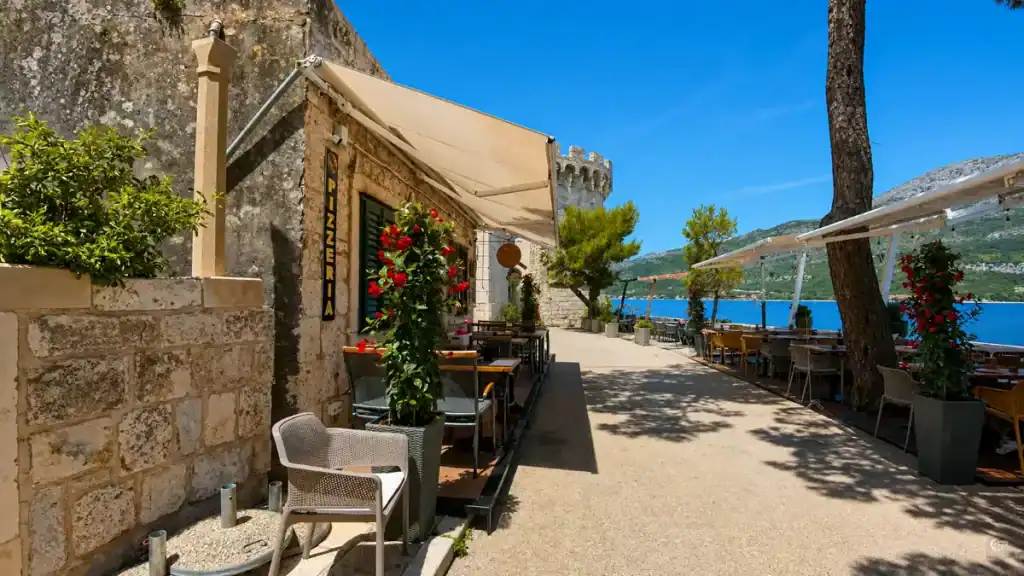
Korčula was easier for me to handle when both places were busy. Dubrovnik’s visitor numbers were harder to forget because so many people were moving between the same major sights. Korčula could also become crowded around its central streets, but a few turns often changed the atmosphere completely.
That was the practical difference for me.
Along Korčula’s main spine, groups gathered around St Mark’s Square and the obvious landmarks. Step into one of the branching lanes or continue towards the waterfront and the crowd thinned quickly. I rarely felt that I needed to abandon the Old Town altogether.
Does Korčula Feel More Lived-In Than Dubrovnik?
Washing moved in the sea breeze above the lanes. Residents carried shopping home. Centuries-old buildings were still functioning as houses rather than becoming only a backdrop for restaurants and photographs.
Even when Korčula Town gets busy, that lived-in side is surprisingly easy to find once you leave the most obvious visitor route.
🔔 Is St Mark’s Bell Tower Worth Climbing?
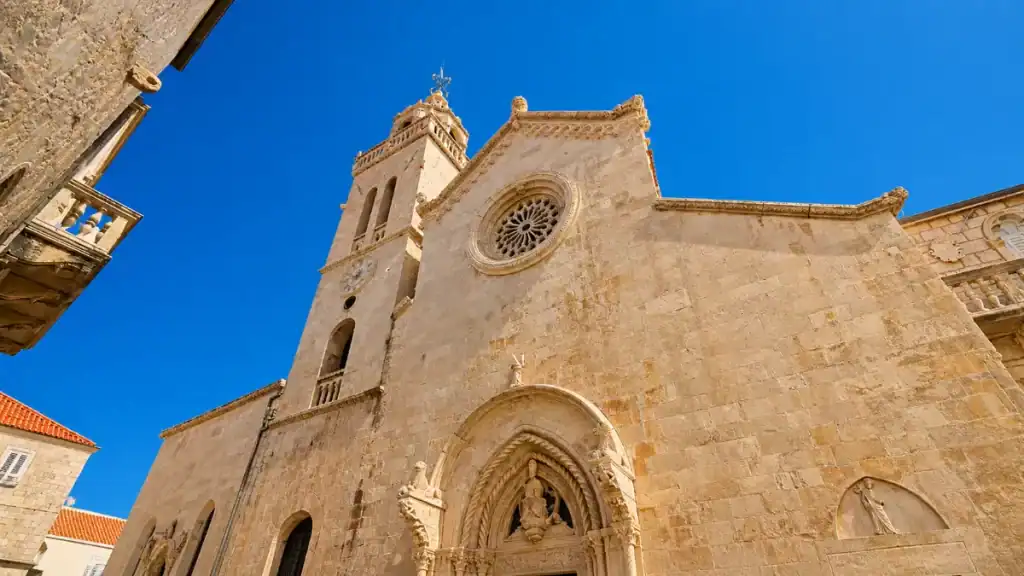
Yes. I would climb St Mark’s bell tower for the view, but the awkward ascent became almost as memorable as what I saw from the top. The staircase narrows dramatically inside the Gothic-Renaissance tower, and in places I had to turn sideways to keep moving.
Then someone started coming down.
One of us had to flatten against the stone and wait. It was a small inconvenience, but also exactly what made the tower feel different from an attraction designed to funnel a steady stream of visitors efficiently to a viewing platform.
What Is the View From St Mark’s Bell Tower Like?
At the top, Korčula’s roofs fell away beneath me and the Adriatic opened towards the surrounding islands and Pelješac. After the close stone staircase, that sudden space felt even larger.
🔔 One thing to remember: avoid being beside the bells on the half-hour. They are extremely loud at close range.
The tower fits easily into a day in Korčula Town. I would just avoid arriving with the largest group and give yourself enough time to let other people pass on the narrow stairs.
🍸 Is Massimo Bar Worth Visiting in Korčula?
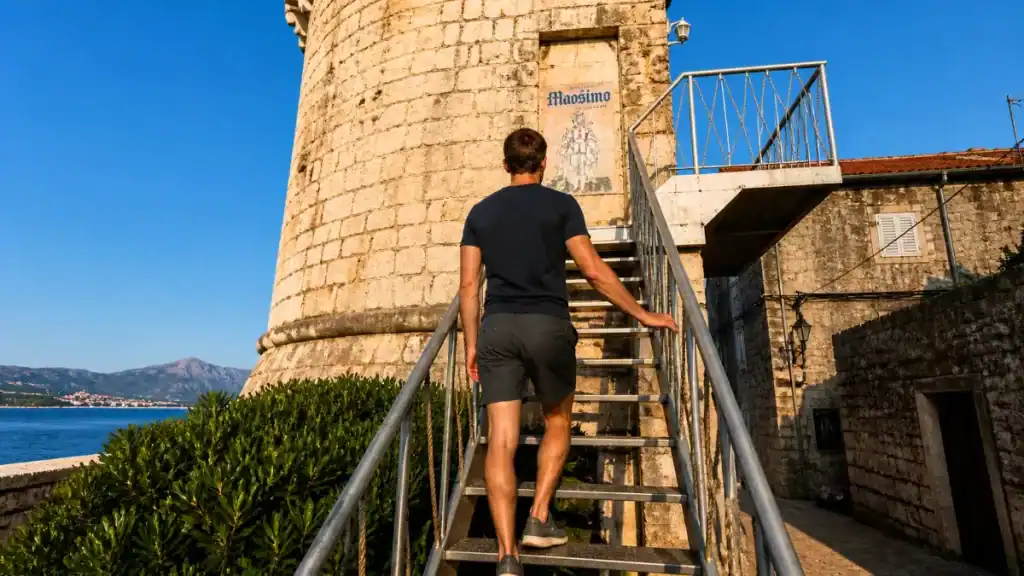
For me, yes, because Massimo made the old fortifications part of the evening rather than another sight to inspect. It occupies Zakerjan Tower in Korčula’s northern defences: stairs take you into the tower, then a ladder completes the climb to the rooftop terrace above the water.
There was nothing particularly polished about the ascent. I climbed through an old defensive structure, emerged above the roofs and ordered a drink with the channel spread around me. The architecture had not been separated from the evening; I was sitting inside it.
Why Did Massimo Make Korčula Feel Different?
Dubrovnik had given me spectacular rooftop settings too, but reaching them usually felt more organised and more obviously part of the visitor economy. Massimo was comparatively informal, even slightly awkward.
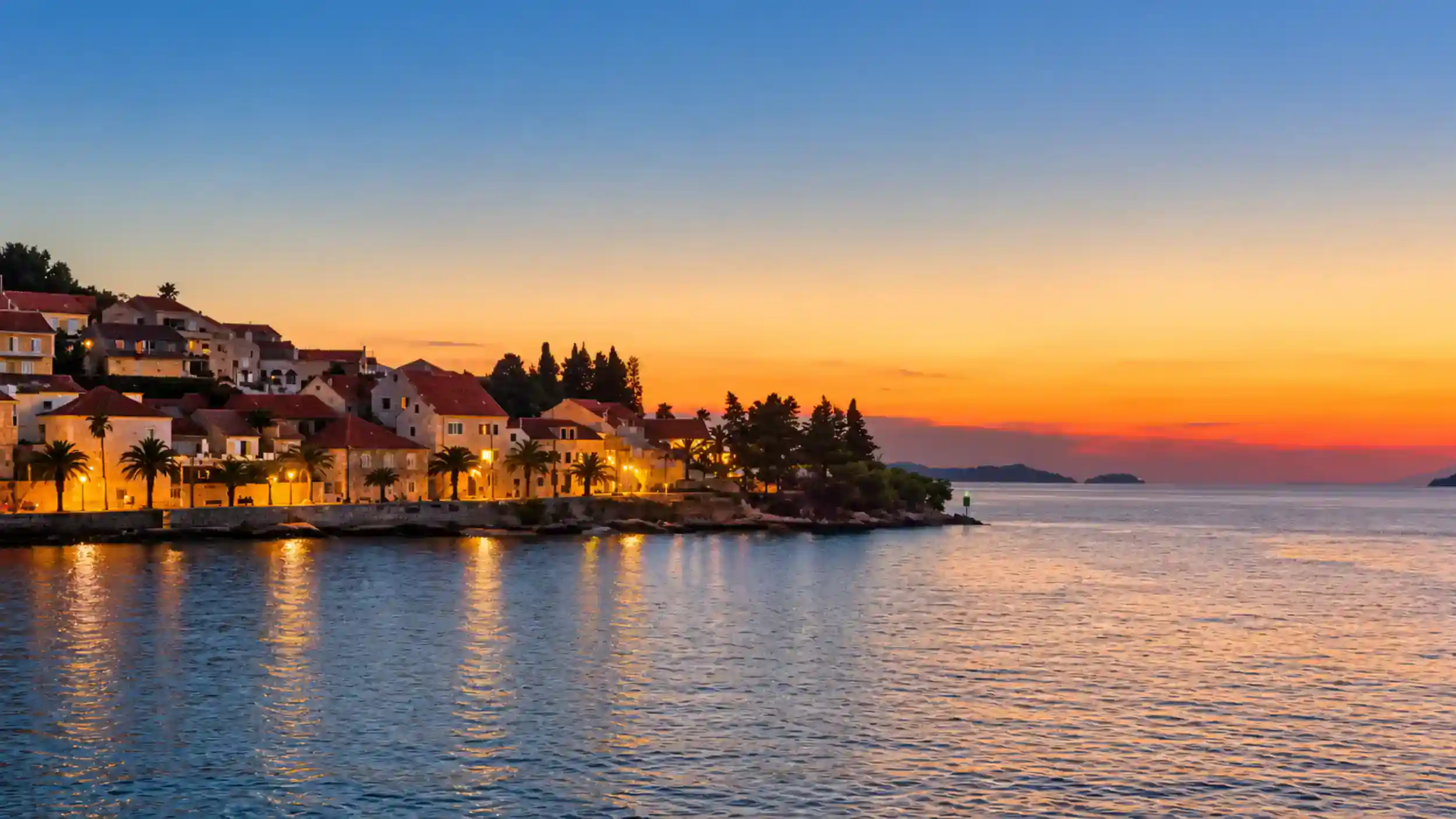
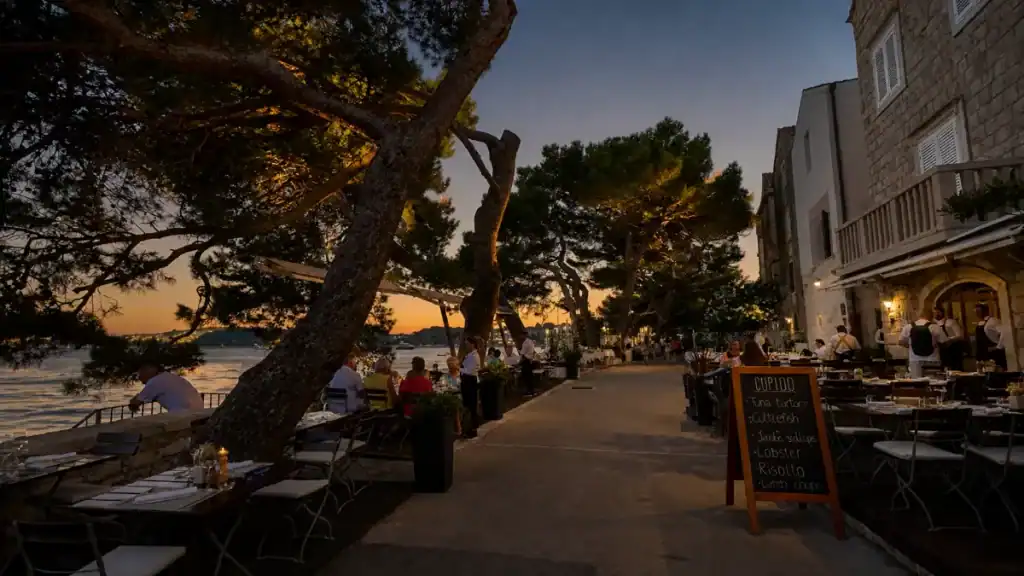
I preferred it before sunset, while there was still light across the harbour. Afterwards, sunset in Korčula Town made an easy continuation around the outer waterfront as the temperature dropped.
🏘️ Does Korčula Feel More Authentic Than Dubrovnik?
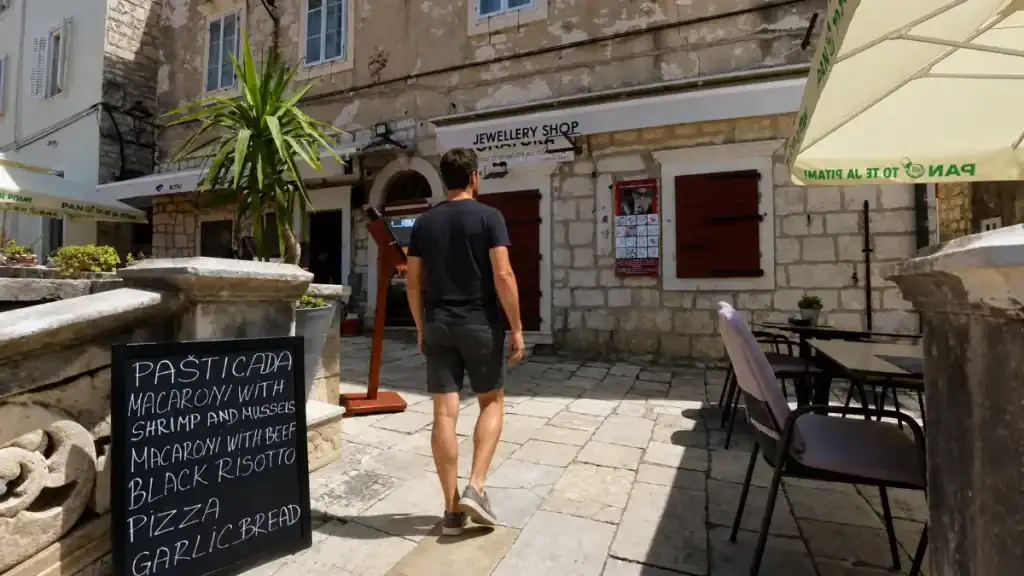
Korčula felt more lived-in to me, although I would describe that as a difference in atmosphere rather than claim one town is objectively more authentic. What finally separated the two places was not the architecture but small encounters with people still making a living inside Korčula’s historic streets.
One family olive-oil shop had been operating for 21 years, with the daughter taking over from her father. Their bottles were labelled so two placed together formed a single image. That kind of detail was easy to miss if I treated the Old Town only as a sequence of monuments.
I also met Irena, a third-generation coral jeweller whose family story runs through silverwork, goldsmithing and coral jewellery. Listening to her explain the environmental pressures affecting Adriatic coral gave the shop far more weight than another souvenir stop.
Who Is Korčula Likely to Suit Better?
I would steer travellers who want the biggest historic spectacle and the strongest concentration of major sights towards Dubrovnik. Korčula suited me better once I wanted easier wandering, quieter detours and ordinary island life still visible between the sights. Dubrovnik remained grander; I simply stopped judging the two places by grandeur alone.
🧭 Is Marco Polo Really From Korčula?
The evidence does not establish Korčula as Marco Polo’s birthplace. Korčula promotes the connection, but most historians accept him as Venetian, while the evidence placing his birth on the island remains inconclusive and has not gained broad scholarly acceptance.
Korčula does have a genuine historical connection. Polo was captured during the 1298 naval battle fought near the island, and the Polo or Depolo family name has long local associations. That gives the story substance without proving the birthplace claim.
Is the Marco Polo House Worth Seeing?
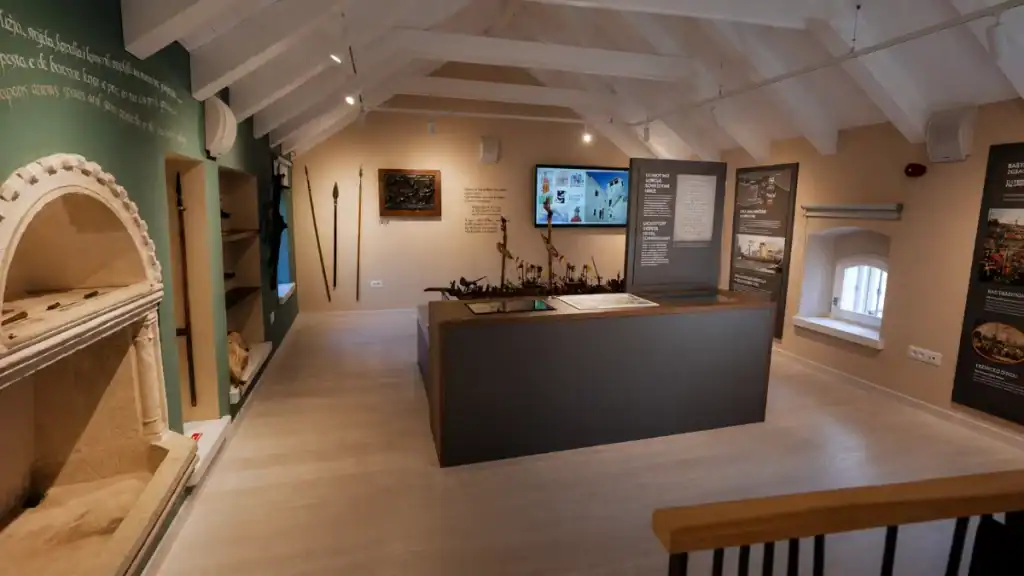
I would see the Marco Polo house while already passing through the Old Town, but I would not build a visit around it. The house traditionally associated with him could be seen from the street when I visited, although the tower attached to it was added roughly 200 years after his death. It was a useful reminder not to confuse a compelling local story with settled history.
I actually preferred the uncertainty. Korčula did not need Marco Polo to carry the whole visitor experience. The streets, harbour, churches and everyday life had already made their case.
⚖️ How Long Do You Need in Korčula Compared With Dubrovnik?
I would allow about a day and a half to two days for Korčula Town itself. That was enough time to explore the Old Town properly, climb the tower, swim, eat beside the water and still leave room for the evening. I would stay longer only when Lumbarda, wineries or nearby islands were part of the plan.
For Dubrovnik, I would allow about two to three days for a first visit. The historic centre is larger, the walls demand more time, and there are enough major sights and nearby excursions that squeezing everything into a single day changes the experience much more than it does in Korčula.
⏱️ THE PRACTICAL DIFFERENCE
🏘️ Korčula Town: around 1.5–2 days for the town itself
🏰 Dubrovnik: around 2–3 days for a more complete first visit
🌊 Stay longer in Korčula: when you want beaches, vineyards or nearby islands
If I were choosing purely for monumental architecture, Dubrovnik would win. For quieter streets, spontaneous stops and a historic centre that still felt inhabited after the main sightseeing was finished, I would choose Korčula.
That is also why how many days you need in Korčula Town is less about fitting in more sights than deciding how long you want to stay once the pace has slowed.