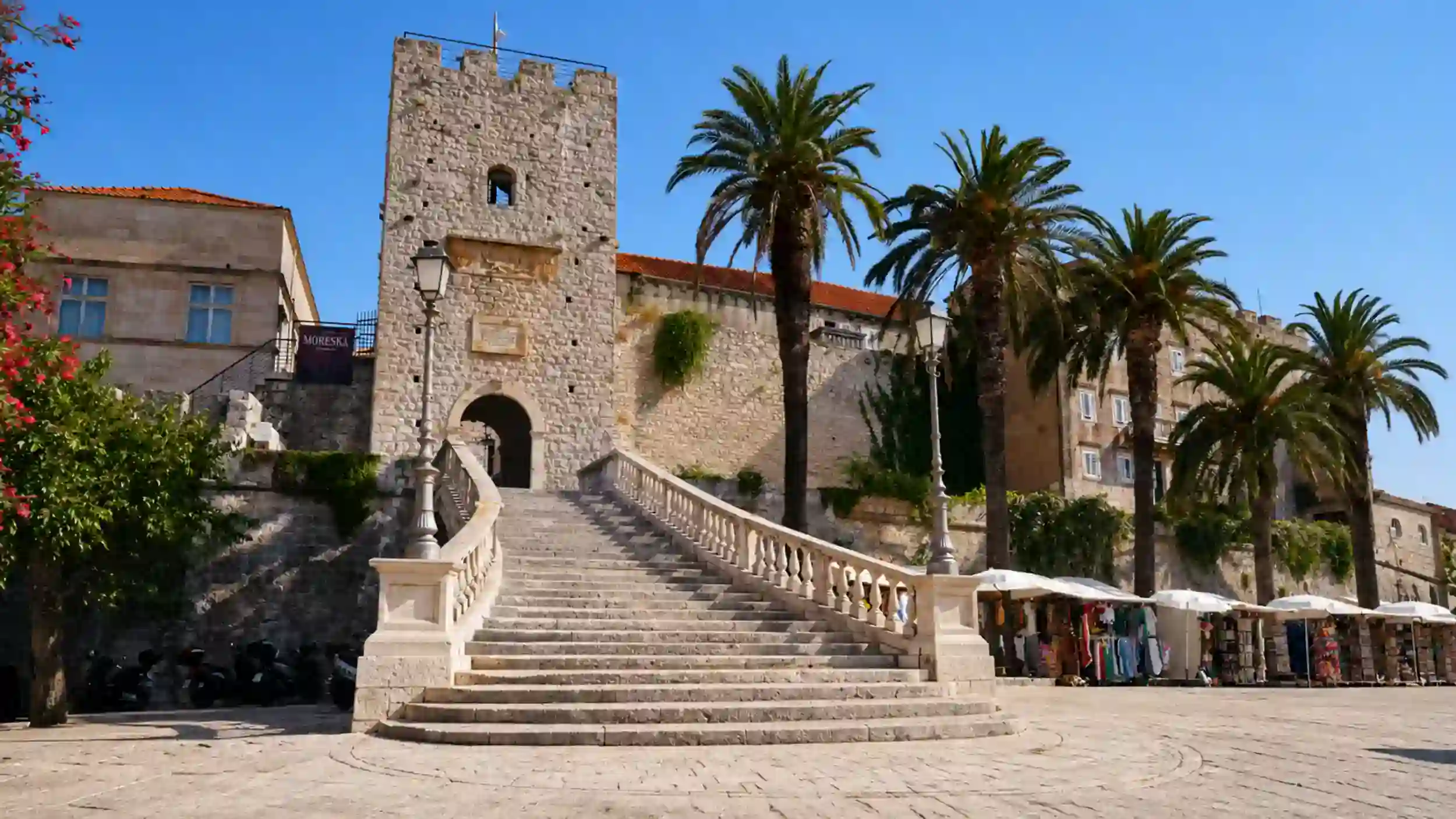
You do not need a car to explore Korčula Town, Badija or even nearby Lumbarda, but a car becomes much more useful for Pupnatska Luka, inland wine villages and Vela Luka. Korčula is compact enough to cross by road in roughly 45 minutes, yet many of its best beaches and quieter corners sit beyond the practical reach of walking.
Nearby islands add another possibility. I liked that the harbour could become a starting point for exploring rather than simply the place where I had arrived.
How much you need to organise depends mainly on distance. Badija takes little thought; the western end of Korčula needs a proper plan.
A day in Korčula Town is enough to see how much you can cover before needing to venture further.
🏝️ Is Badija Easy to Visit From Korčula Town?
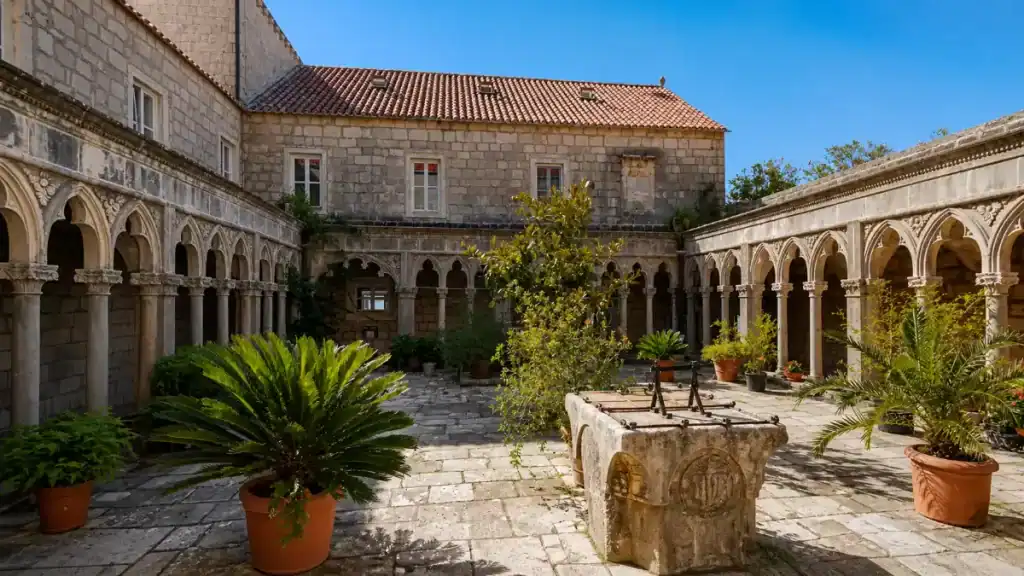
Yes. Badija was the easiest place I explored beyond Korčula Town because it needed almost no planning. Seasonal water taxis leave from town and the crossing is only around 10 minutes, so I could decide to go without building the rest of the day around the excursion.
The Monastery Gives Badija More Than Swimming
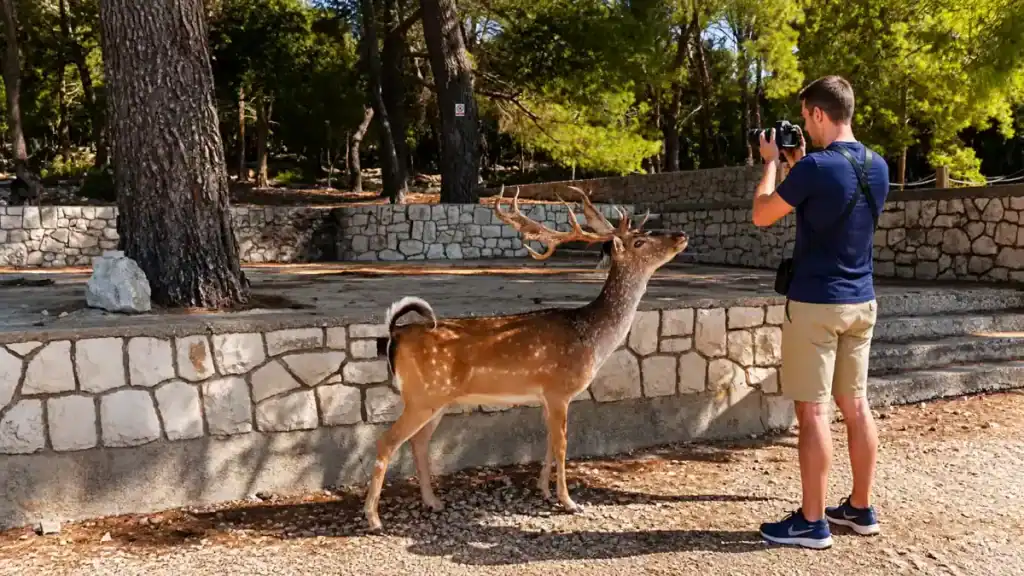
The island’s 14th-century Franciscan monastery gives the visit more substance than a simple swim stop. Deer roam freely around Badija and often approach visitors, so even a short circuit of the island can feel quite different from time spent around Korčula Town.
Badija Can Become a Three-Island Morning
If you want to explore from Korčula Town without hiring a car, water taxis also make it possible to combine Badija with Vrnik and Stupe. Korčula Town day trips explains how to turn the short crossing into a longer morning on the water.
🚗 WHEN I WOULD HIRE A CAR
🟢 No car needed: Old Town, Badija, Lumbarda
🟡 Car starts to help: Pupnatska Luka and inland villages
🟠 Car makes most sense: Vela Luka and a full island-crossing day
🏖️ Is Lumbarda Easy to Explore From Korčula Town?
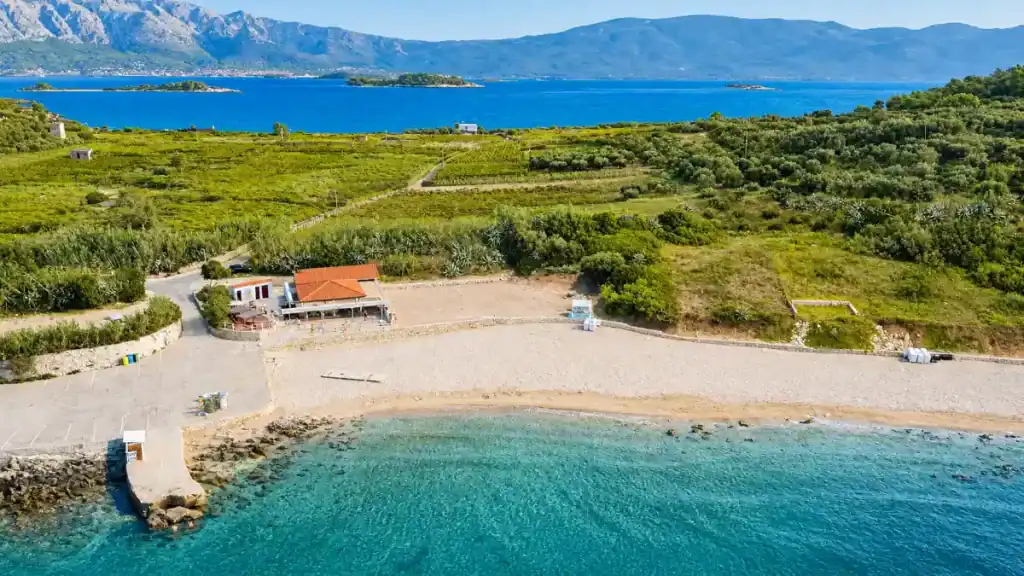
Yes. Lumbarda was the easiest mainland-style excursion from Korčula Town because I could reach it without hiring a car. It is about six kilometres away, with the local bus taking roughly 15 minutes; taxis are quicker and cycling is realistic for reasonably confident riders. Once there, I could see why the village works so well as a combined beach-and-wine stop.
Vela Pržina or Bilin Zal?
Vela Pržina and Bilin Zal both offer shallow, calm water. They’re particularly good for families, although swimmers looking for deeper water may prefer other parts of the island.
Grk Gives Lumbarda Another Reason to Stop
Lumbarda is also the heartland of Grk, with family wineries including Lovric, Bire and Vitis offering tastings. It is one of the easiest places to explore from Korčula Town when you want wine and coast in the same outing. If wine is the priority, a Korčula Town winery day gives you a more focused way to explore the vineyards.
| Lumbarda works best for | Pick |
|---|---|
| 🏖️ Sandy beach | Vela Pržina |
| 👨👩👧 Shallow water | Bilin Zal |
| 🍷 Local wine | Grk |
| 🚌 Getting there | Bus, bike, taxi or car |
🌊 Do You Need a Car for Pupnatska Luka?
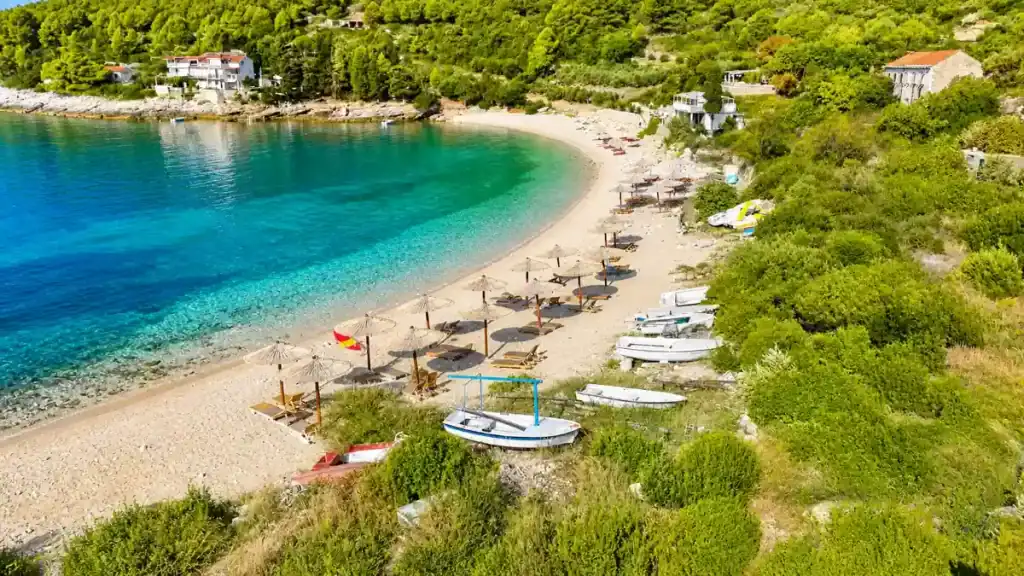
For me, yes. Pupnatska Luka is about 15 kilometres by road from Korčula Town, usually around 20 to 30 minutes by car, and this was the point where public transport or spontaneous exploring stopped being the easy option. The final road winds steeply towards a sheltered cove of white pebbles and clear turquoise water, and I would specifically choose a small car because the narrow descent leaves less room than the main island road suggests.
Before Midday Is the Better Window
Pupnatska Luka is widely considered one of Korčula’s best beaches, and for me the cove gives the drive a clear purpose rather than feeling like mileage for its own sake. It becomes busier as the day develops, so arriving before midday gives you a better chance to enjoy it before it fills.
Spontaneous Exploring Stops Working Here
Unlike Badija or Lumbarda, Pupnatska Luka is not somewhere you casually stumble across. By this distance, I found the useful question had changed from “where shall I go?” to “which place am I driving to?” You need the destination in mind before leaving Korčula Town.
For swimming without committing to the drive, swimming in Korčula Town covers the places you can reach much closer to the Old Town.
🍇 Is It Worth Exploring Korčula’s Inland Villages?
Yes, particularly if I wanted the day to show me something beyond beaches and the Old Town. Korčula’s central road runs along the island’s elevated spine, with small villages scattered just beyond it, and the contrast with the coast became clearer as I moved inland. Smokvica and Čara gave me wine, but also a quieter and more agricultural side of the island.
Smokvica and Čara Put Pošip at the Centre
Both villages are associated with Pošip wine. Toreta Winery in Smokvica offers tastings with vineyard views, while Luka Krajančić is one of the producers most closely associated with establishing Pošip as a serious wine. A Korčula Town winery day gives you a more deliberate route if wine is the main reason for heading inland.
Smaller Roads Lead Beyond the Wine Villages
Pupnat and Žrnovo take you further into the island’s quieter interior. Down the smaller roads, places such as Triporte can feel remarkably isolated. Stone houses, a chapel and the occasional washing line replace the busier visual cues of the coast, which was one of the clearest changes I noticed away from Korčula Town.
Worth knowing: these villages are only short detours from the main road, but narrow lanes and limited signage mean it’s much easier to explore them with directions rather than improvising as you drive.
🪨 Is Vela Luka Worth the Drive From Korčula Town?
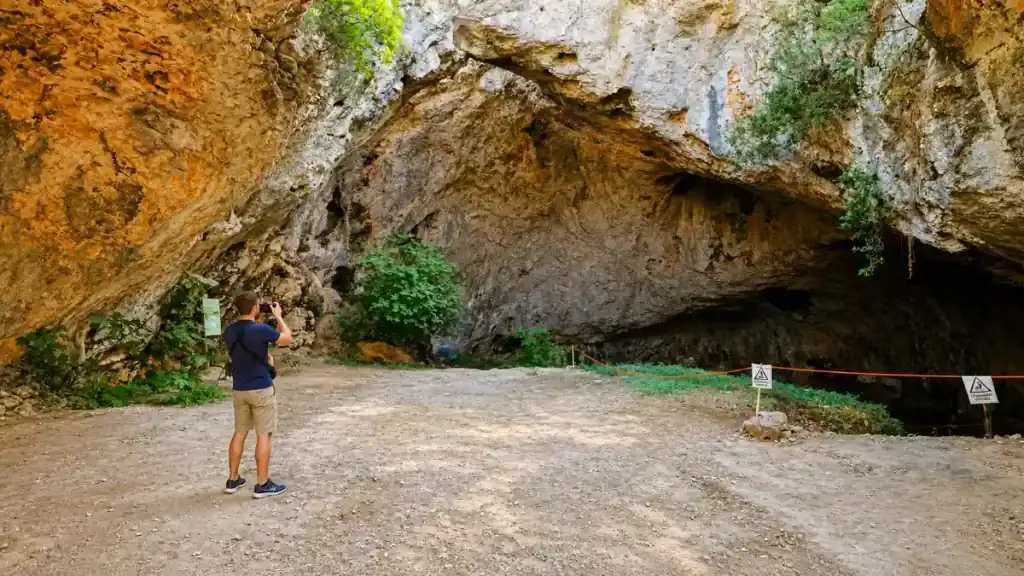
Yes, but only if I treated it as a proper day out rather than one more stop. Vela Luka sits about 42 kilometres from Korčula Town at the western end of the island, around 40 to 45 minutes by car. By then I was crossing most of Korčula, so the journey made sense when I combined Vela Špila, the harbour and nearby coast rather than driving west for a single attraction.
Vela Špila Gives the Drive a Stronger Purpose
Above Vela Luka, Vela Špila contains archaeological finds dating back more than 20,000 years. The excavated deposits extend more than seven metres deep, with signs explaining what archaeologists discovered at each level.
Pair the Cave With the Coast
The journey made more sense to me when the cave was paired with the coast rather than treated as a single stop. Picena Bay is within easy reach of Vela Luka, with clear water, sunbeds and a small restaurant, giving the western drive a second purpose before turning back.
| From Korčula Town | Travel commitment |
|---|---|
| 🏝️ Badija | 🟢 Short water taxi |
| 🏖️ Lumbarda | 🟢 10–15 min drive |
| 🌊 Pupnatska Luka | 🟡 25–30 min drive |
| 🪨 Vela Luka | 🟠 40–45 min drive |
If you’re going this far, treat it as one of your Korčula Town day trips rather than something to squeeze casually into the afternoon.
🚗 How Far Can You Explore from Korčula Town Without Much Planning?
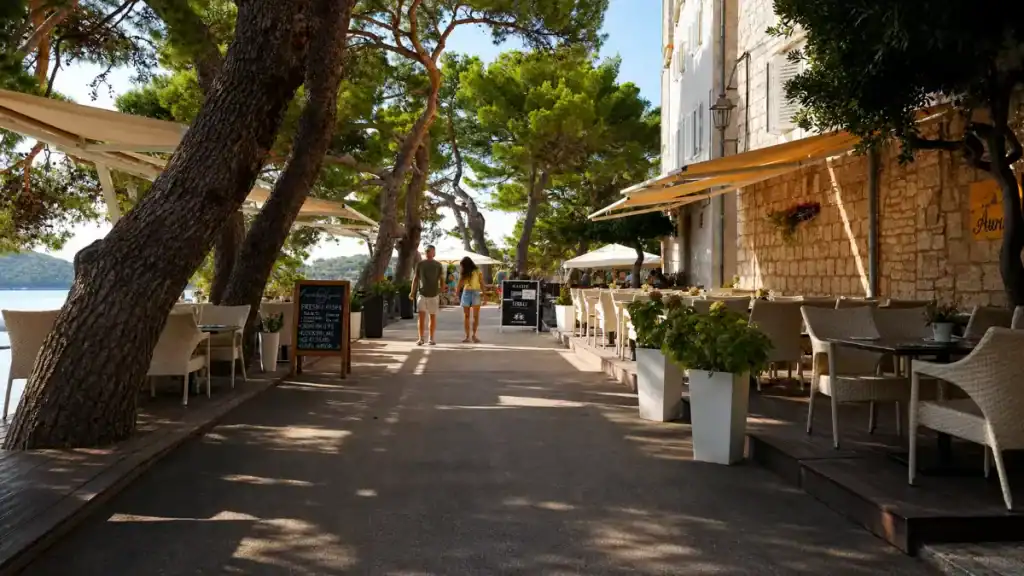
Without much planning, I would comfortably explore Korčula Town, Badija and Lumbarda. Beyond that, I would decide where I was going before setting out. Driving directly from Korčula Town to Vela Luka takes roughly 45 minutes and covers about 42 kilometres, but I found the beaches, wineries and quieter villages that make the journey worthwhile sit down side roads, so a real exploring day takes far longer than the island crossing itself.
A Small Car Makes the Side Roads Easier
A compact car made the most sense to me. Single-lane descents are common, particularly towards secluded beaches and coastal settlements, and the extra width of a larger vehicle buys you nothing when there is very little room to manoeuvre.
The Transport Changes With the Distance
| How far you want to explore | What you need | Planning |
|---|---|---|
| 🚶 Old Town & waterfront | Nothing | 🟢 None |
| 🚤 Badija | Water taxi | 🟢 Minimal |
| 🚌 Lumbarda | Bus, bike, taxi or car | 🟢 Easy |
| 🚗 Pupnatska Luka | Car | 🟡 Destination planned |
| 🍇 Inland villages | Car + directions | 🟠 Plan the route |
| 🪨 Vela Luka | Car | 🟠 Make a day of it |
Without a plan, Korčula Town itself can comfortably fill the day. To explore from Korčula Town more widely, I would decide on the destination first and then choose the transport. Badija can stay spontaneous; Pupnatska Luka, the inland villages and Vela Luka work better when the route has a purpose.
If you have enough time to explore beyond the walls, how many days you need in Korčula Town helps decide how much of your stay to give to the rest of the island. The further you want to explore from Korčula Town, the more useful that extra time becomes.