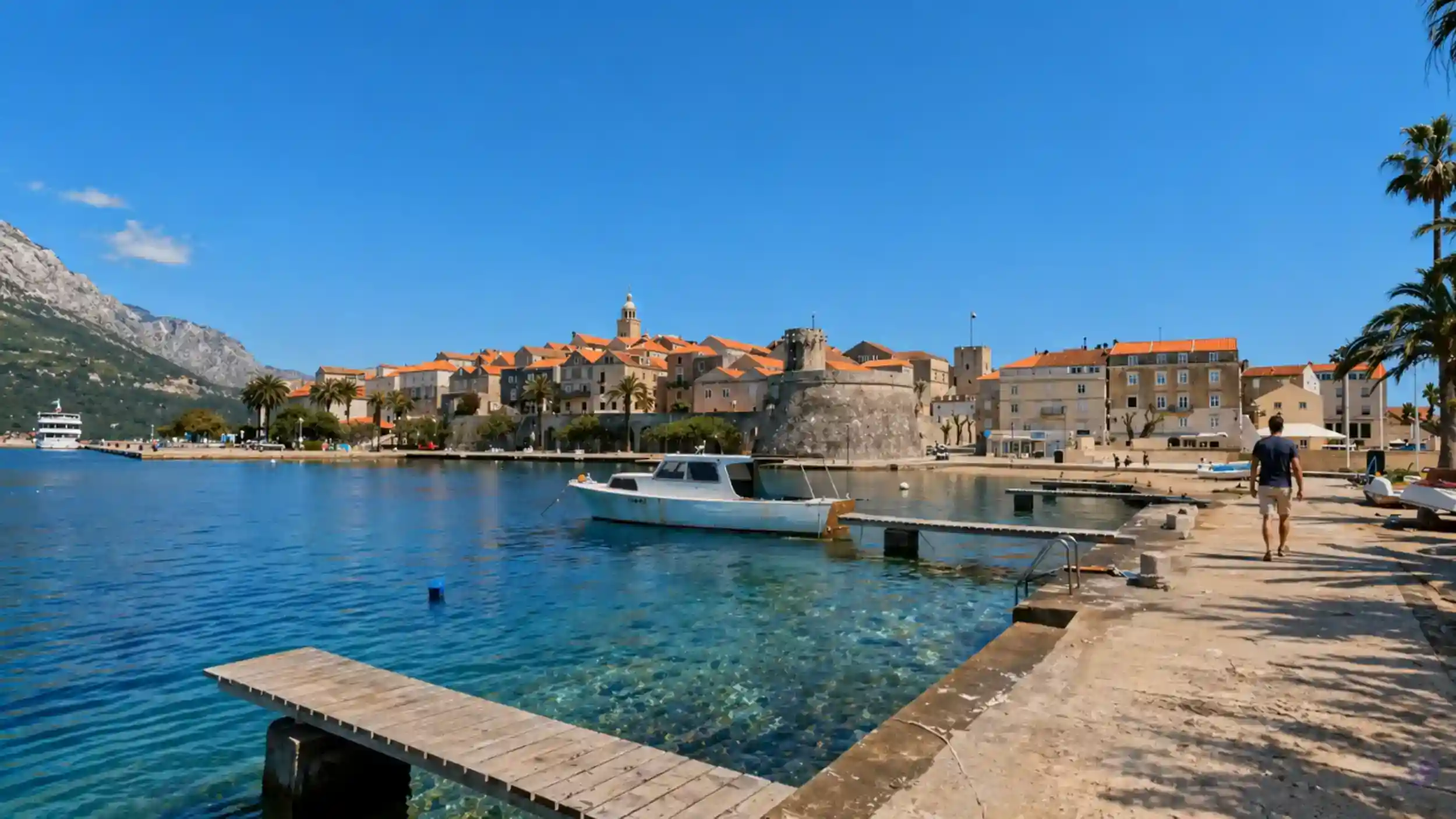
Korčula Town day trips work best when they add something the Old Town cannot: Badija for an easy swim-and-walk escape, Lumbarda for vineyards and sandy beaches, Mljet for a more active island day, Pelješac for wine and oysters, or Dubrovnik when its major historic sights justify a much longer journey. I became increasingly reluctant to surrender a whole day unless the contrast genuinely earned it.
I rarely found a dawn departure necessary. The harbour came alive gradually, and leaving around mid-morning felt far more natural than rushing out before Korčula Town had properly woken up.
Getting back before dinner was my preference. It made the excursion feel like part of a day in Korčula rather than a day taken away from it.
🏝️ Are Badija and Vrnik Worth Visiting From Korčula Town?
Yes. Badija was my easiest all-round escape from Korčula Town, while Vrnik worked when I wanted somewhere even quieter and more characterful. Taxi boats leave from the east side of the Old Town beside the Konzum supermarket, with departures every half hour from 9am, and Badija takes only around ten minutes.
Badija Gave Me the Best Easy Mix
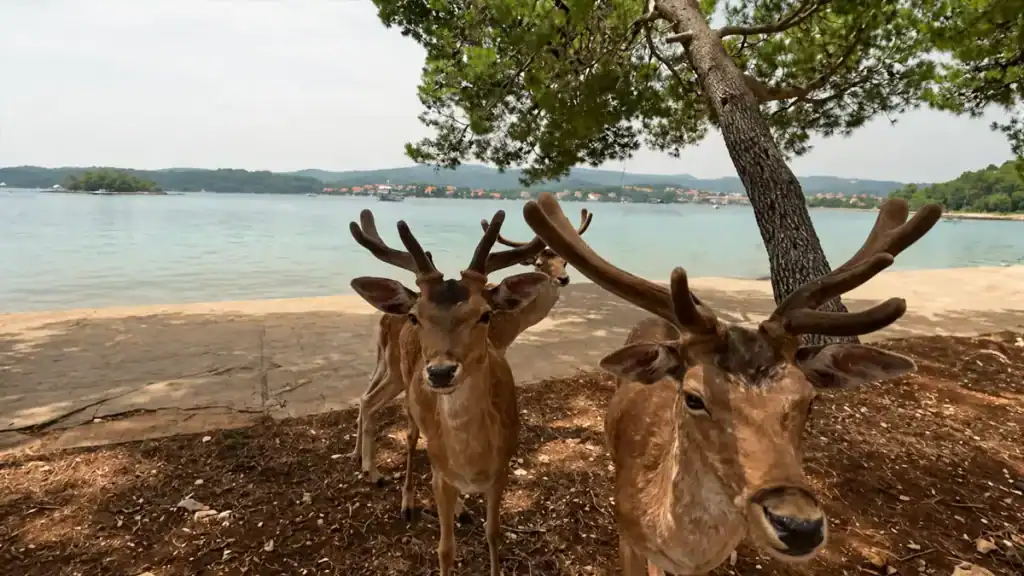
Badija gave me an unusually easy mix of a 15th-century Franciscan monastery, wild deer, wooded paths and small coves of remarkably clear water. I could walk around the island in roughly an hour and stop for a swim whenever the shoreline looked inviting.
Vrnik Felt Quieter and More Characterful
Vrnik felt quieter again. The island is car-free, and centuries of stone quarrying have left old quarry faces visible beside the coast. I liked that it asked very little of the day: wander, look around, stop at the restaurant or gallery, then take the boat back.
| Island | Best for | Feel |
|---|---|---|
| 🦌 Badija | Walking & swimming | Wooded, easy-going |
| 🪨 Vrnik | Quiet exploration | Small, historic |
| 🍹 Stupe | Lunch & beach club | Livelier |
If you want all three, half-day boat tours combine Badija, Vrnik and Stupe in a single loop and still get you back to Korčula Town comfortably before dinner.
🚲 Is Lumbarda Worth a Day Trip From Korčula Town?
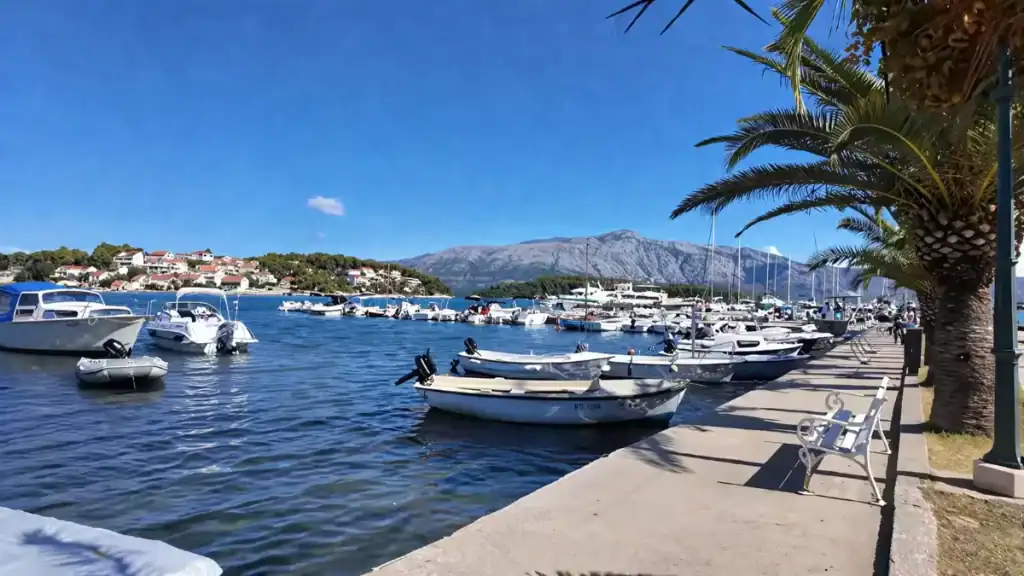
Yes, particularly if beaches, vineyards and a change of landscape are what you want the day to add. Lumbarda sits only six kilometres from Korčula Town, which made it one of the trips I was happiest to do under my own steam. Cycling is realistic, with vineyard country along the way and cycle-friendly stretches for much of the journey.
The Sandy Beaches Change the Feel of the Day
Lumbarda’s sandy beaches felt noticeably different after so much rock and pebble shoreline elsewhere around Korčula. For me, that made the village a particularly good cycling destination because the ride could end with a few easy hours beside the water.
I Would Leave Time for Grk, Not Just the Beach
The surrounding vineyards produce Grk, a distinctive white wine grown in Lumbarda’s sandy soil. For more than a quick tasting, a half-day around the Lumbarda wineries gives you time to visit family producers such as Bire, Zure and Popić without rushing.
Don’t worry if you only want to cycle one way. Summer buses run between Lumbarda and Korčula Town throughout the day, giving you an easy alternative for the return journey.
🌊 Is Vela Luka and Proizd Worth the Longer Journey?
For me, yes, but only because Proizd gave the longer journey a clear purpose. Vela Luka sits at the western end of Korčula and was a much bigger commitment than Badija or Lumbarda. I would not surrender that much of the day simply to reach another town, but some of the best swimming I found on the island changed the calculation.
Vela Spila Gave the Journey West More Purpose
Just outside Vela Luka, Vela Spila is one of the more significant prehistoric sites in this part of the Adriatic. It gives the journey west a purpose beyond simply using Vela Luka as a connection point.
Proizd Was the Reward for Going Further
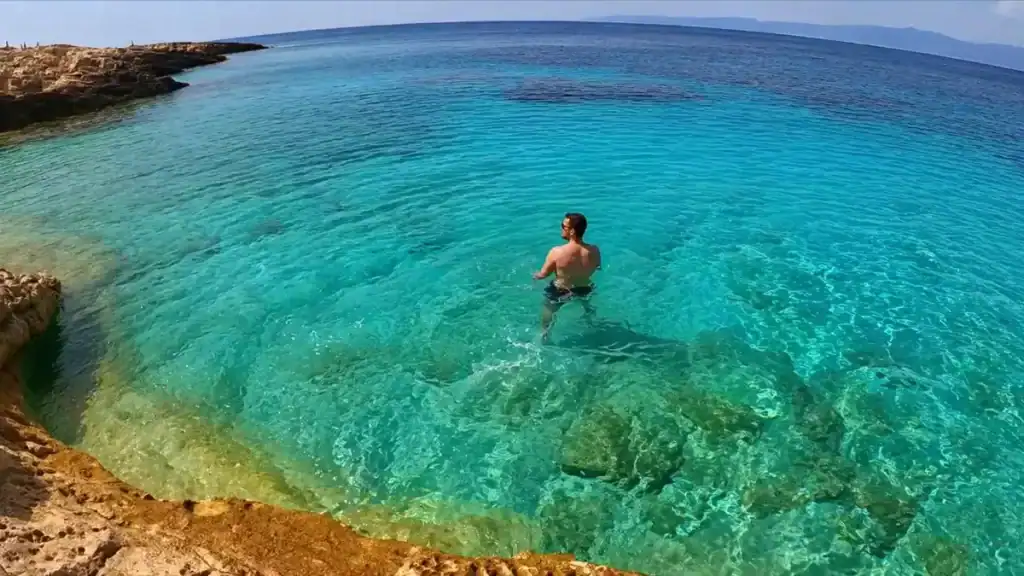
A short boat crossing from Vela Luka took me to Proizd Island, where white rock shelves meet intensely turquoise water. Of all the swimming I experienced on these Korčula Town day trips, this was the best. The journey from Korčula Town is considerably less convenient than Badija or Lumbarda, but the quality of the water gave me a reason to make it.
Worth the effort? Yes, particularly if swimming is the priority. But check the Vela Luka bus times before leaving and aim to depart Proizd by mid-afternoon. The western bus route runs less frequently, so this isn’t a day to improvise the return journey.
🍷 Is Pelješac Worth a Day Trip From Korčula Town?
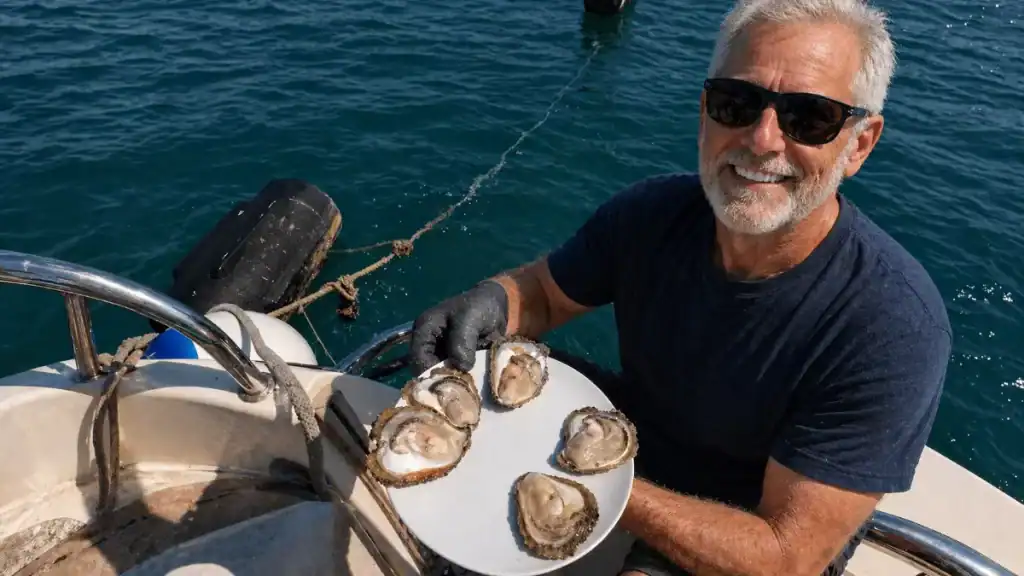
Yes, if food and wine matter more to you than another swimming day. Pelješac gave me a completely different experience from the island trips. A small passenger ferry crosses from Korčula Town to Orebić in just a few minutes, while continuing towards Ston turns the outing into a fuller day built around vineyards and the peninsula’s best-known oyster country.
The Plavac Mali Vineyards Were the Main Draw Inland
Pelješac produces some of Croatia’s most serious red wine. Plavac Mali grows on the peninsula’s steep hillsides, and wineries such as Miloš give you the chance to taste it close to where the grapes are grown.
Ston Shifted the Day From Wine to Oysters
Further along the peninsula, Ston changes the focus from wine to food. Oyster beds have occupied these waters for centuries, making this the strongest day trip if eating and drinking well matters more to you than beaches or swimming.
| Choose Pelješac for… | Highlight |
|---|---|
| 🍷 Wine | Plavac Mali |
| 🦪 Food | Fresh Ston oysters |
| 🚢 Easy start | Short ferry to Orebić |
| 🌊 Swimming | Choose another trip |
🌿 Is Mljet Worth a Day Trip From Korčula Town?
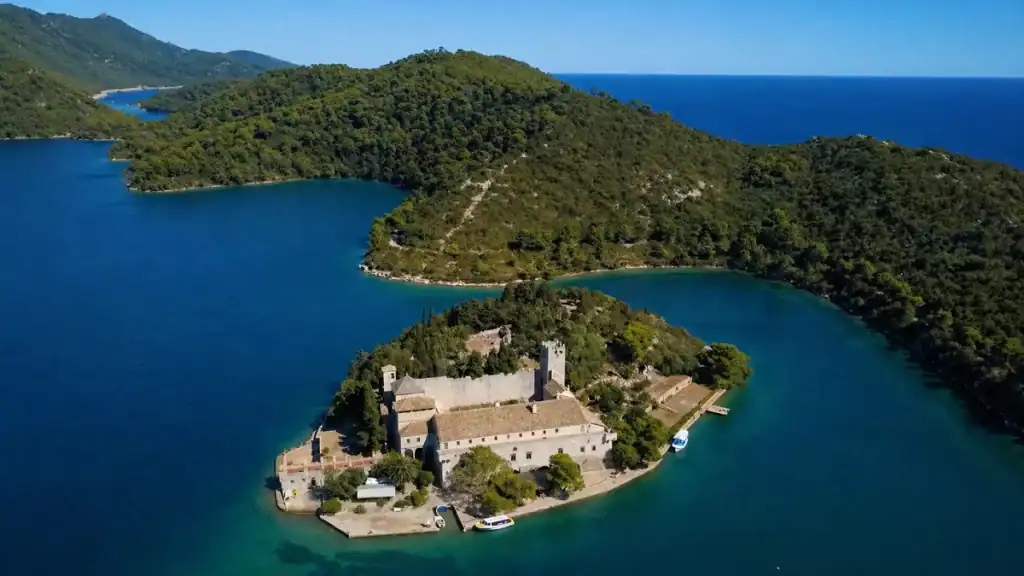
Yes, if you want a full active day rather than a quick escape. Mljet gave me the strongest change from Korčula Town, with cycling, swimming and the national park replacing old streets and waterfront wandering. Catamarans stop at Pomena, close to the park, and the crossing is roughly 35 to 45 minutes depending on the sailing.
Cycling Made the Saltwater Lakes Easy to Explore
Two saltwater lakes form the heart of the national park, with cycling paths providing an easy way to explore. You can combine the ride with swimming and still cover a good amount of the park before mid-afternoon.
I Added the Boat to St Mary’s Island
A short boat ride crosses the larger lake to the monastery on its tiny island. This gives the day a good mix of cycling, swimming and sightseeing rather than making Mljet purely a hiking trip.
⚠️ Check the return sailing first: boats back to Korčula are limited. Missing the last connection creates a genuine problem, so this is one trip where you should plan the return before setting off.
⛴️ Is Dubrovnik Worth a Day Trip From Korčula Town?
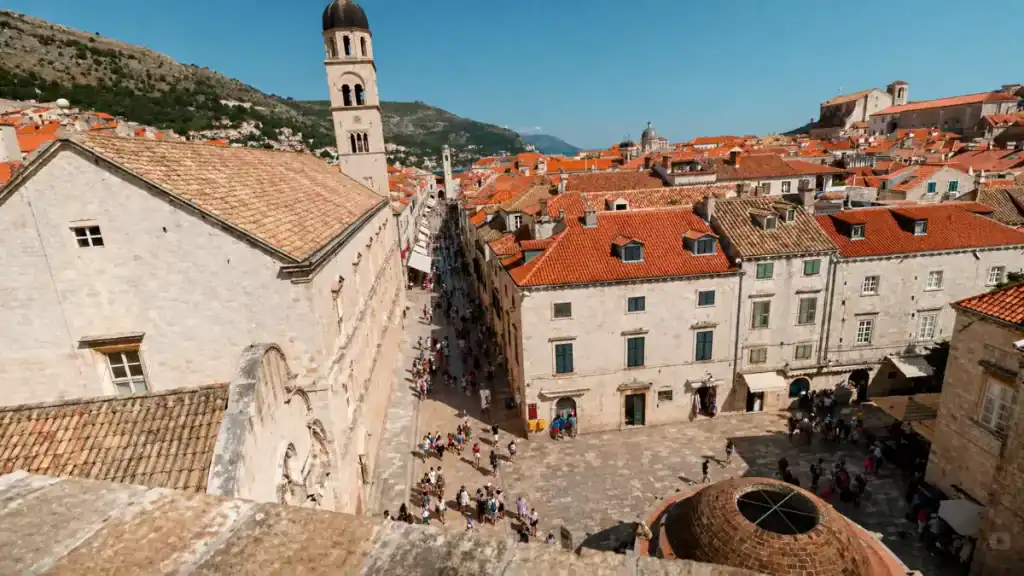
Only if Dubrovnik itself is a priority. It is possible as a day trip from Korčula Town, but this was the option I would think hardest about because it genuinely consumes the whole day. The fastest summer catamarans take about two hours, with some sailings longer, and arrive at Gruž harbour about three kilometres from the Old Town.
I Would Only Make the Journey if Dubrovnik Is a Priority
Yes, if you particularly want to see the city walls and Old Town. But unlike Badija, Lumbarda or Mljet, there is little room for a relaxed schedule. An early boat out and the last practical catamaran back gives you the most useful time on the ground.
I Would Book the Return Before Leaving Korčula
In July and August, book ahead rather than relying on availability at the port. Tickets are tied to specific sailings, so securing the return journey removes the biggest uncertainty from the day.
If you’re weighing the two destinations more broadly, Korčula compared with Dubrovnik looks at how the two medieval towns differ.
⏱️ MATCH THE TRIP TO YOUR TIME
🟢 Easy half day: Badija, Vrnik or Lumbarda
🟠 Fuller day: Pelješac or Mljet
🔴 Big commitment: Proizd or Dubrovnik
🧭 What Are the Best Day Trips From Korčula Town?
Badija would be my best overall choice because it added swimming, walking and a genuine change of setting for almost no travel penalty. I would choose Lumbarda for beaches and wine, Pelješac for food and wine, Mljet for an active nature day and Proizd when exceptional swimming justified a longer journey. Dubrovnik only made sense to me when seeing Dubrovnik was itself a priority.
| Day trip | Best for | Commitment | My verdict |
|---|---|---|---|
| 🦌 Badija & Vrnik | Swimming, walking, easy escape | 🟢 Low | ⭐ Best overall |
| 🚲 Lumbarda | Wine, cycling, sandy beaches | 🟢 Low | ⭐ Easiest variety |
| 🌊 Vela Luka & Proizd | Exceptional swimming | 🟠 High | ⭐ Worth the journey |
| 🍷 Pelješac | Wine and oysters | 🟠 Medium | ⭐ Best for food & wine |
| 🌿 Mljet | Nature, cycling, swimming | 🟠 Medium | ⭐ Best active day |
| 🏰 Dubrovnik | Major historic sights | 🔴 High | Only if it’s a priority |
⭐ Badija Would Be My First Choice
Badija earns my top spot. The crossing is short, the island feels genuinely different from Korčula Town, and I could walk, swim and explore without sacrificing the evening back in the Old Town.
How many trips you should attempt ultimately depends on how many days you have in Korčula Town. With a short stay, choose Badija or Lumbarda. With several days, Mljet or Proizd become much easier to justify.