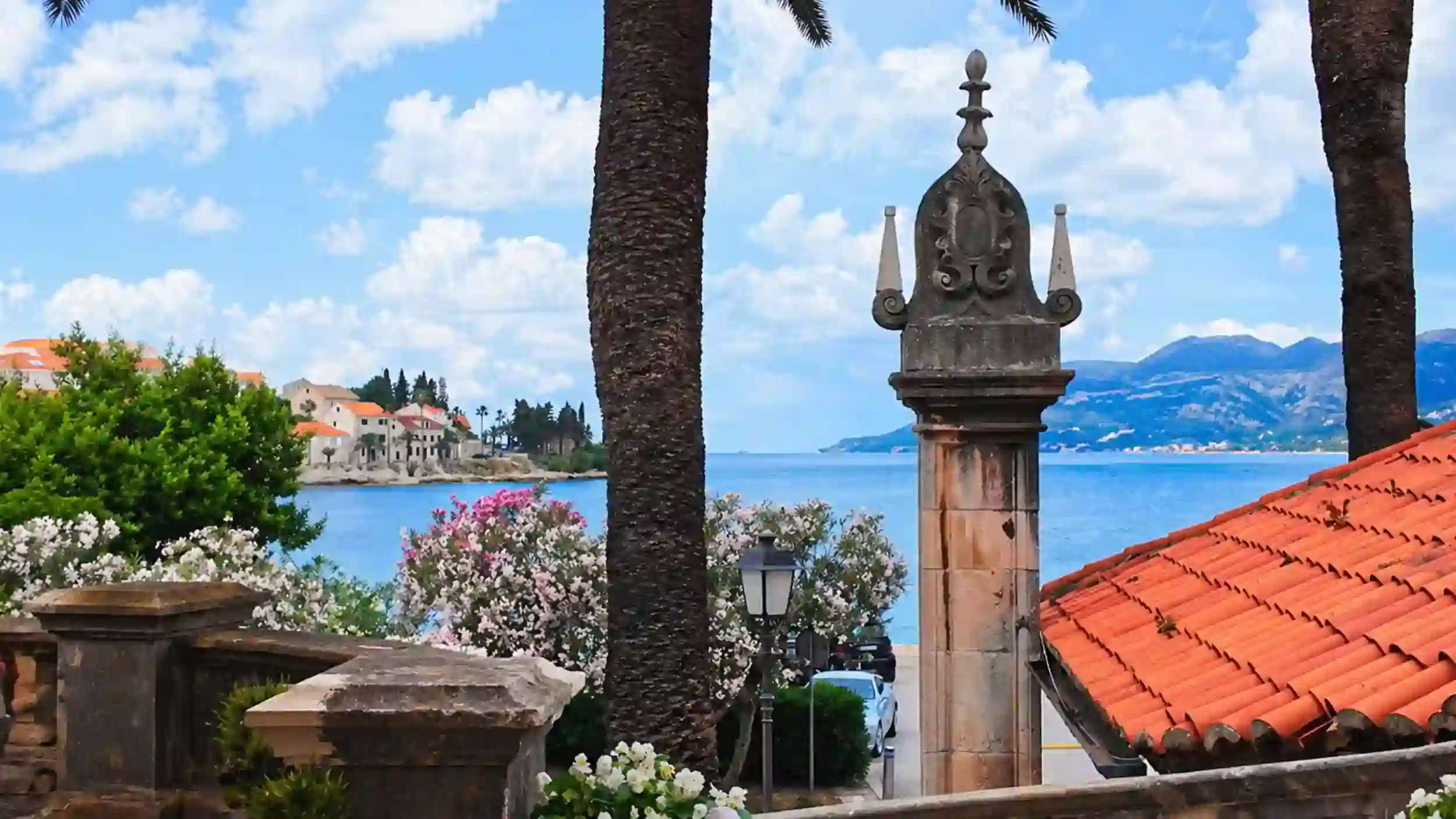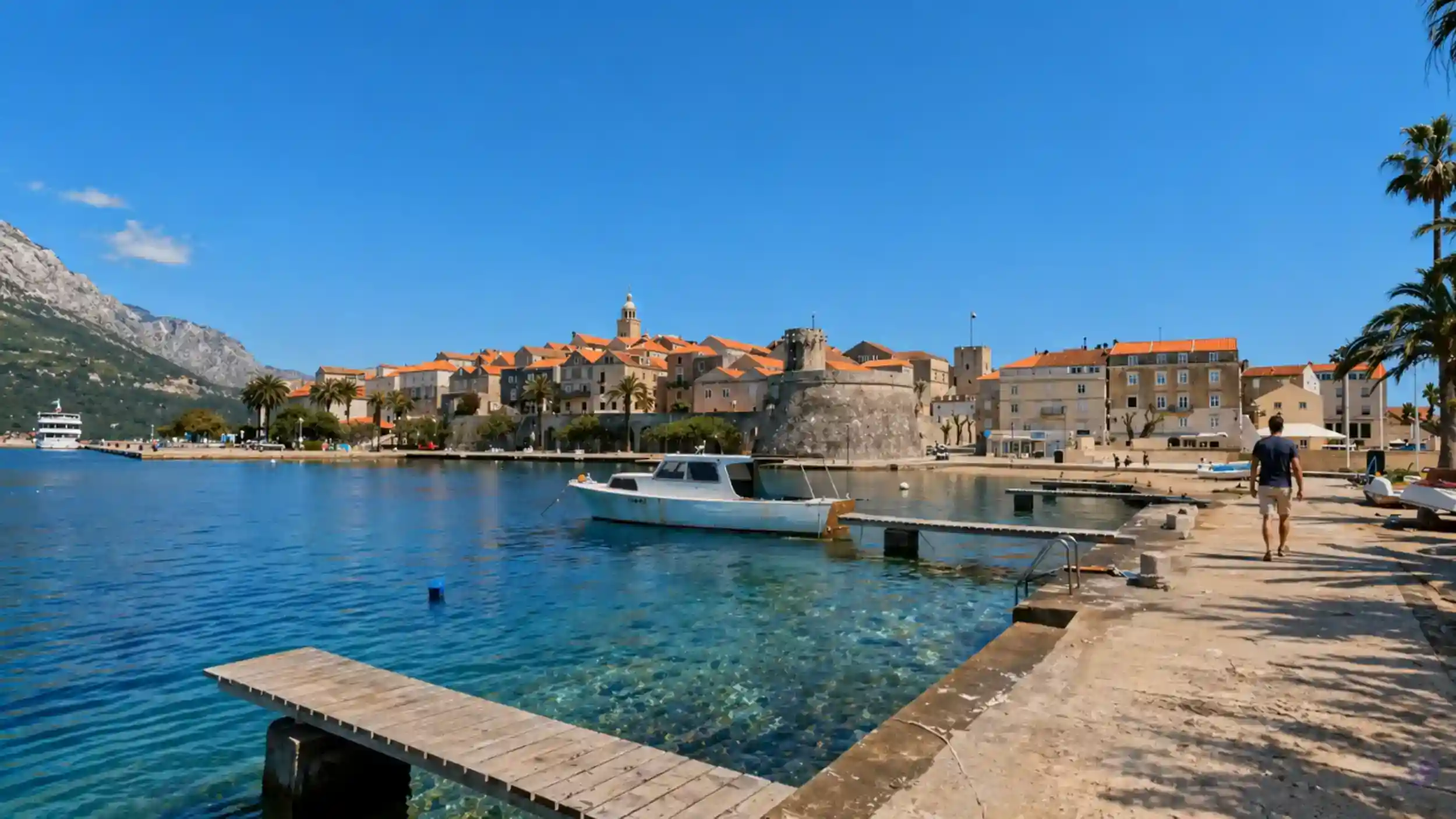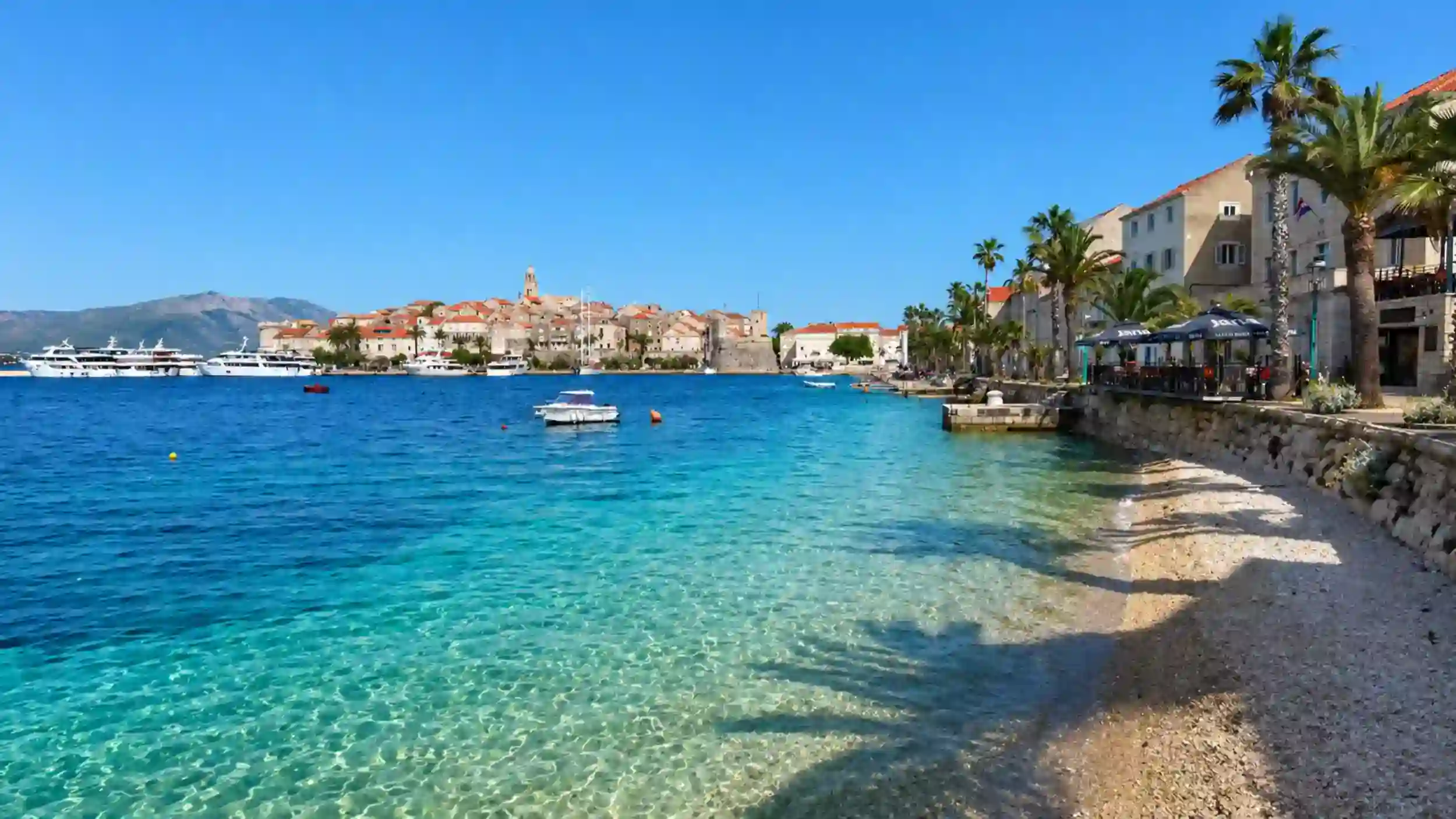
The best time to explore Korčula Old Town in summer is early morning, before the stone lanes heat up, then again from late afternoon into evening. Midday is the least comfortable window: July highs commonly reach around 29–31°C, and direct sun on pale limestone can make the compact Old Town feel hotter than the air temperature suggests.
That was the rhythm that worked for me. I used the cooler hours for streets and sights, stopped trying to sightsee continuously once the heat built, then returned to the waterfront when the light softened and the town began to feel animated again.
Lunch, shade and a swim filled the middle of the day without making me feel I was wasting it.
⏰ THE SUMMER RHYTHM I WOULD USE
🌅 Early morning: lanes, cathedral and quieter sightseeing
☀️ Midday: lunch, shade or swimming
🌊 Late afternoon: Rampada, walls and waterfront
🌇 Evening: shops, restaurants and another relaxed wander
🌅 What Is the Best Time to Explore Korčula Old Town?
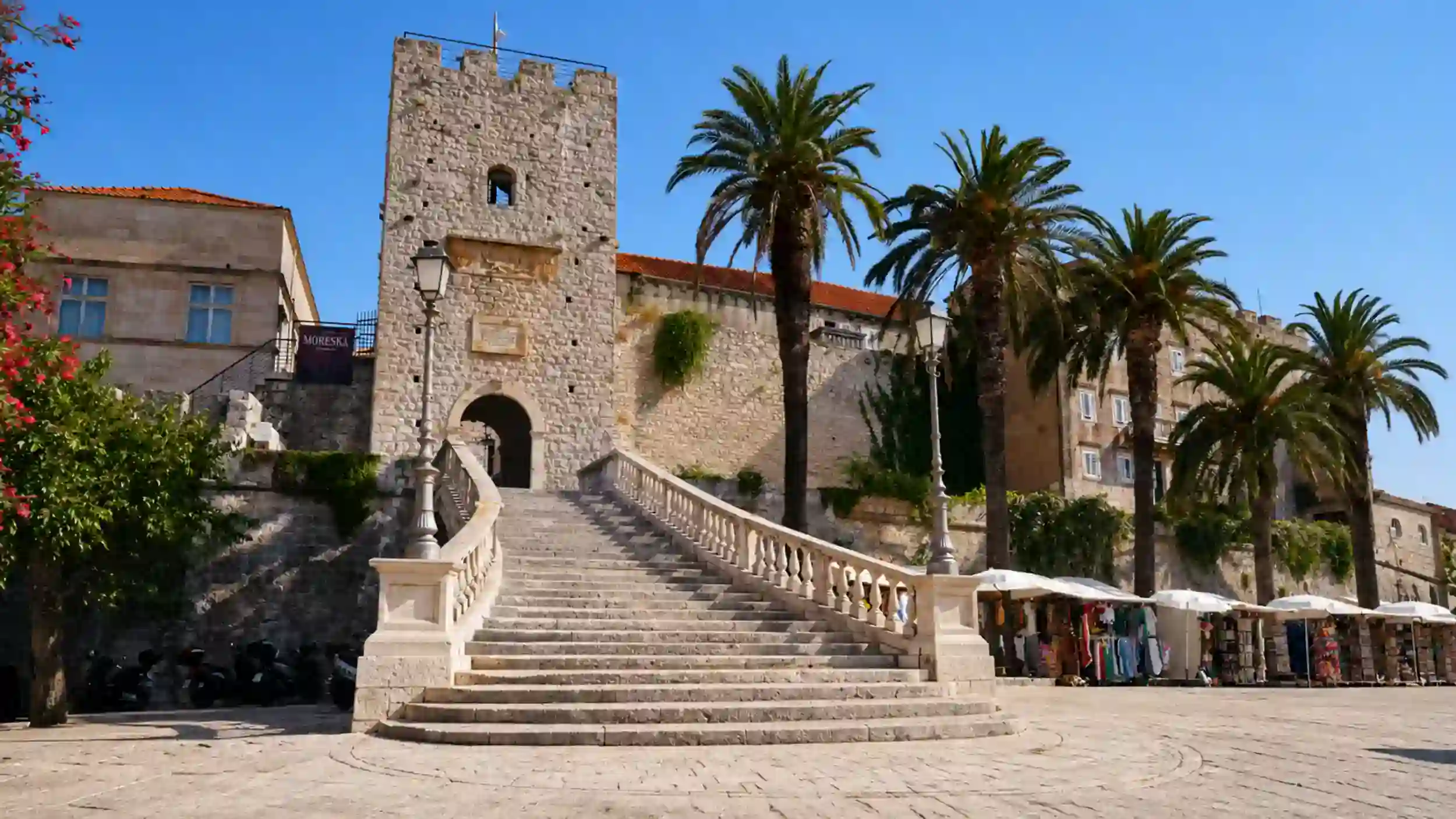
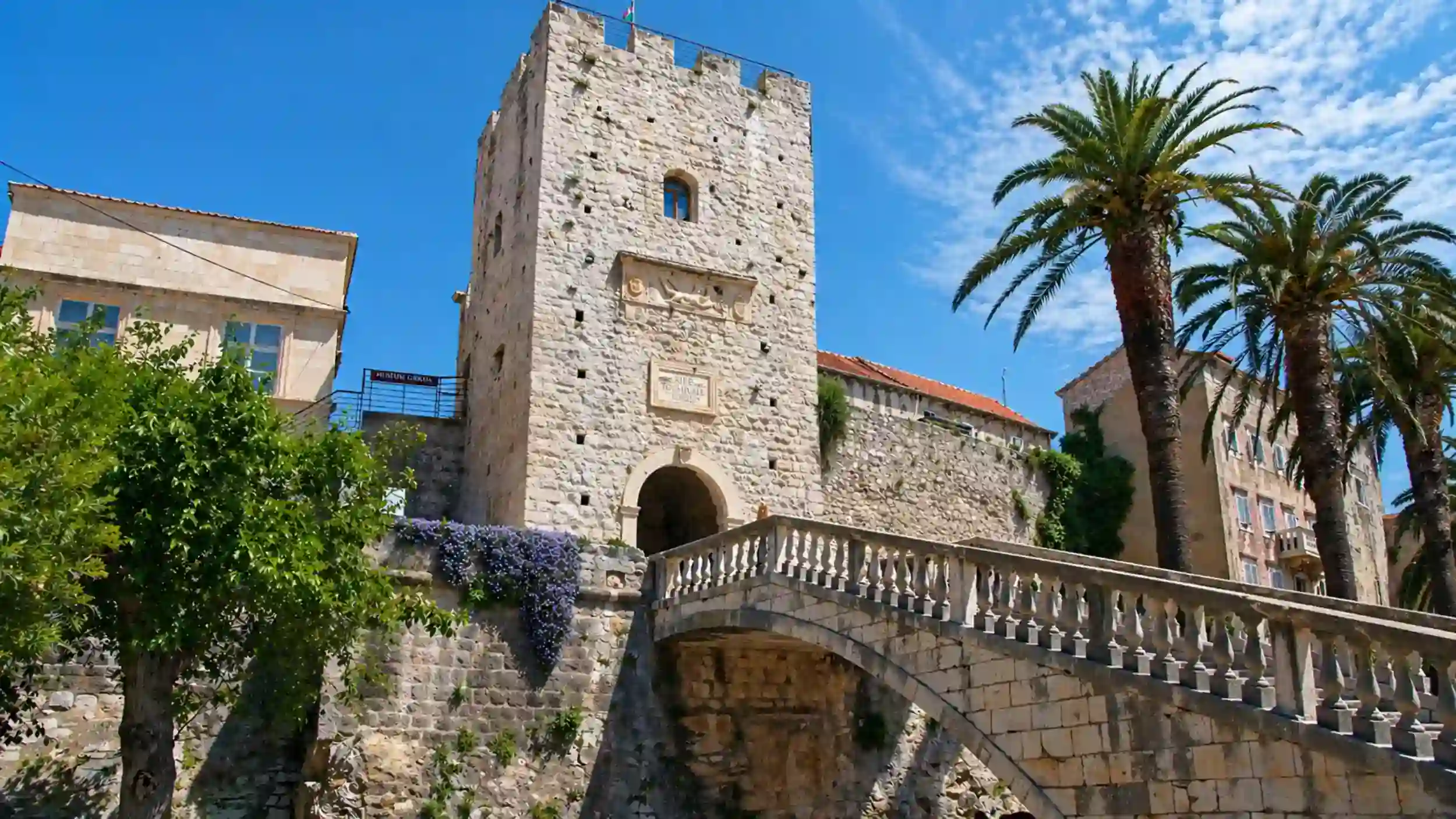
Early morning was the best sightseeing window for me. I started at Gradska Vrata, the Town Gate, before the heat built, while much of the Old Town was still in shade and the stone lanes remained comfortable underfoot.
The Herringbone Streets Made More Sense on Foot
Ulica Korčulanskog statuta led me directly into the Old Town, but sticking rigidly to it would have missed the point. Smaller lanes branch away in Korčula’s distinctive herringbone pattern, designed to channel useful breezes while limiting the force of stronger winds.
Early morning was when that layout felt most enjoyable. There was enough shade to wander without thinking about the heat every few minutes, and the lanes had not yet filled with the heavier daytime flow of visitors.
The Comfortable Window Closed Faster Than I Expected
Once direct sun reached more of the stone, the change was obvious.
I would not save the Old Town’s narrow streets for midday in July or August. Typical summer highs sit around the upper 20s to low 30s Celsius, with hotter spells possible. Add reflected light and heat stored in limestone, and a short sightseeing circuit can feel considerably more tiring than the distance suggests.
🏛️ Is the Marco Polo Centre Worth Visiting?
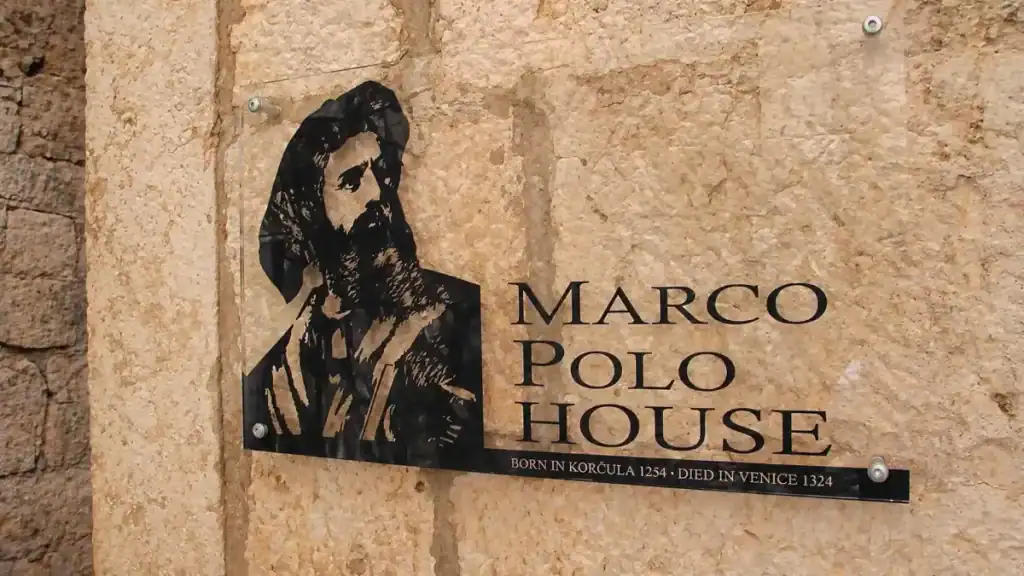
For me, it was worth a short stop rather than planning the morning around it. The site is traditionally associated with Marco Polo, but the claim that he was born in Korčula remains disputed, so I never approached it expecting to stand inside a proven birthplace.
The attraction works better as a compact interpretation stop. The restored Marco Polo Centre adds context to his journeys and Korčula’s connection with the 1298 naval battle, while the elevated parts of the site provide views over the roofs and channel.
It Earns Its Place if the Story Interests You
For me, it fits naturally into the morning because it is right inside the Old Town and does not require a major detour. I would allow roughly half an hour, perhaps longer if you enjoy interpretation rather than treating it as another photo stop.
If Marco Polo does not particularly interest you, skipping it would not weaken a one-day visit. Korčula’s streets, cathedral and waterfront are stronger reasons to be here.
A few minutes away, St Mark’s Cathedral deserved more than a passing look. Construction continued from the 15th into the mid-16th century, and the detailed stonework across the façade and portal was easier to appreciate before the square became hotter and busier.
From there, I headed down to the Petar Kanavelić Promenade. The morning water was bright and calm, and coffee beside the Adriatic became a natural full stop before the hotter part of the day.
☀️ What Should You Do in Korčula Town at Midday?
I would use midday for lunch, shade or a swim rather than another sightseeing circuit. By then I found the lanes quieter, the stone holding the heat and walking simply for the sake of seeing one more street much less appealing. Slowing down worked better than fighting the summer rhythm.
Luka Korčulanska Gave Me the Shade I Wanted
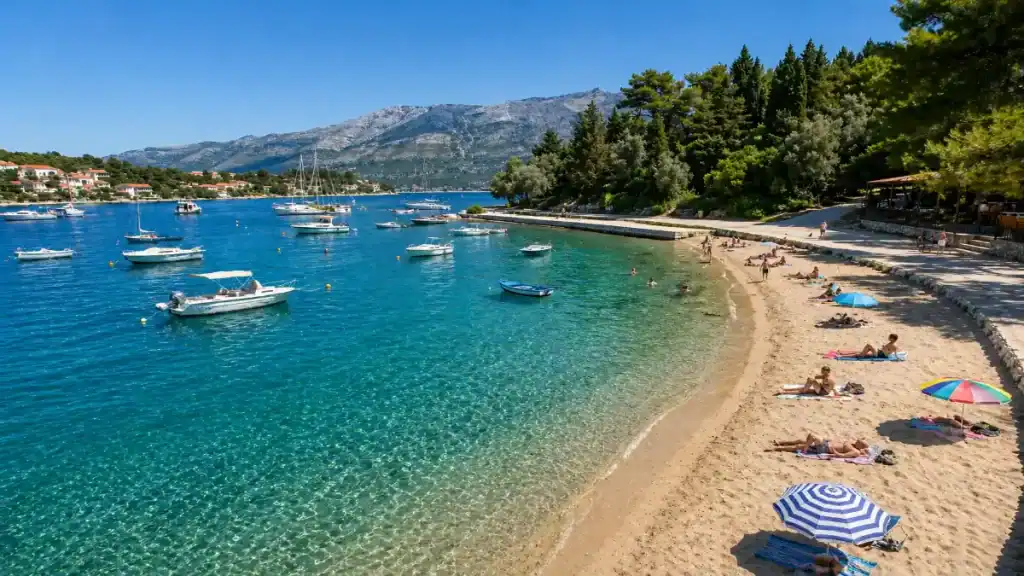
Just outside the Old Town, Luka Korčulanska is a useful escape from the exposed stone. The sheltered bay has easy water access and mature pines close to parts of the shoreline, so it gives you both swimming and somewhere to get out of direct sun without travelling across the island.
That made more sense to me than walking further simply to find a more famous beach.
| ☀️ Around midday | What I would do |
|---|---|
| 🥾 Old Town lanes | ❌ Save them for later |
| 🌲 Pine shade | ✅ Better option |
| 🏊 Luka Korčulanska | ✅ Easy nearby swim |
| 🪨 Exposed limestone | ❌ Can become very hot |
I preferred the swimming spots around Korčula Town closer to the walls in the morning or late afternoon. At midday, shade won.
🌊 What Is Rampada and When Should You Walk It?
Rampada is part of the easy pedestrian circuit around Korčula’s old walls, and late afternoon was when it made most sense to me. As the light softened, I headed back towards the sea walls and rocky shoreline below them, just as the heat began easing and the waterfront started filling again.
Rampada Is Part Street, Part Perimeter Walk
Rampada is the southeastern section of the pedestrian route beside Korčula’s old walls, around the remains of All Saints Tower. It links into the waterfront promenade and forms part of the easy circuit around the edge of the Old Town rather than being a separate ticketed attraction.
I liked it because the perspective changed. Inside the walls, the town feels compressed into lanes and stone façades; out here, the Adriatic suddenly occupies most of the view.
A Late Swim Worked Better for Me
The rocky shoreline below the walls was much more inviting than it had been at midday. The limestone had begun to cool and the light was less harsh, so a swim fitted naturally into the short walk around the fortifications.
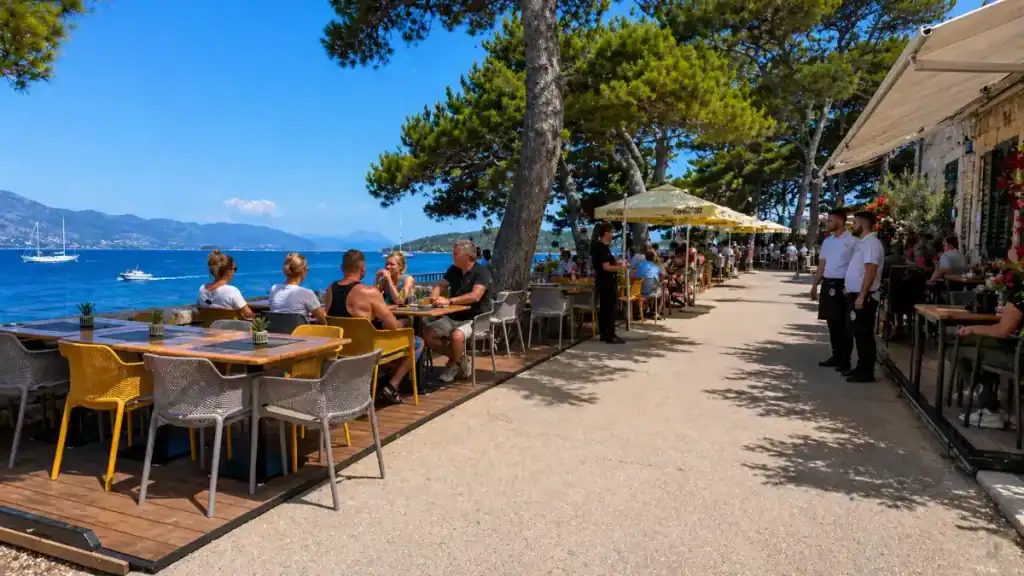
🌇 What Time Do Shops and Restaurants Reopen in Korčula Town?
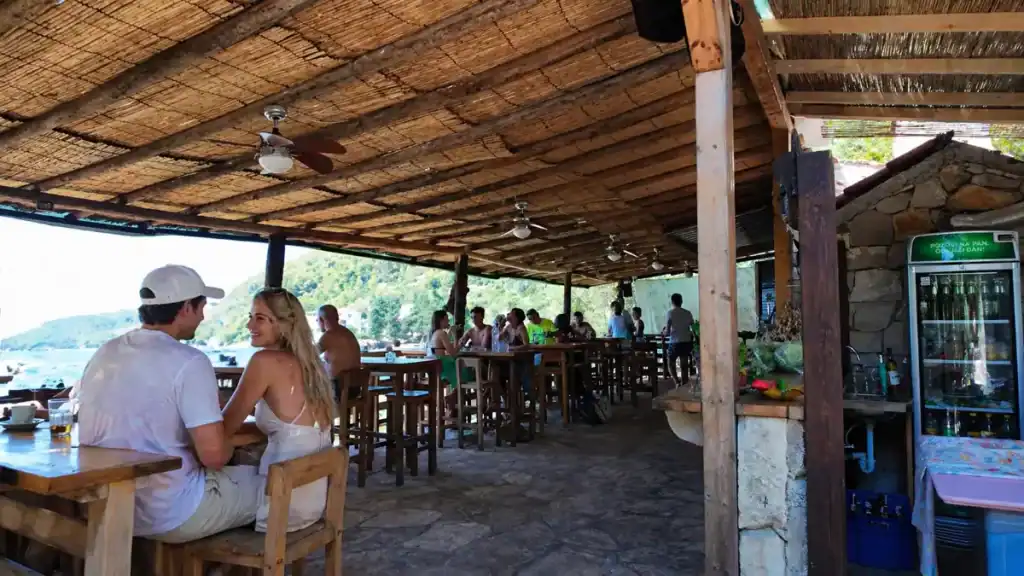
There is no single reopening time to plan around. Some restaurants trade through the afternoon, others begin service around 14:00 or later, while several traditional konobas do not open until roughly 16:00 or 17:00. I found it safer to treat individual opening hours as the rule rather than assume the whole Old Town followed the same summer schedule.
Small shops can also use continuous or split hours, so individual doors matter more than a town-wide rule. In practical terms, the Old Town feels much more reliably active again from late afternoon onwards.
🛍️ IF YOU WANT TO BROWSE
I would leave non-essential shopping until after about 16:00 rather than assuming every small shop will be open through the hottest part of the afternoon. Restaurants are less predictable, so check the place you actually want to eat.
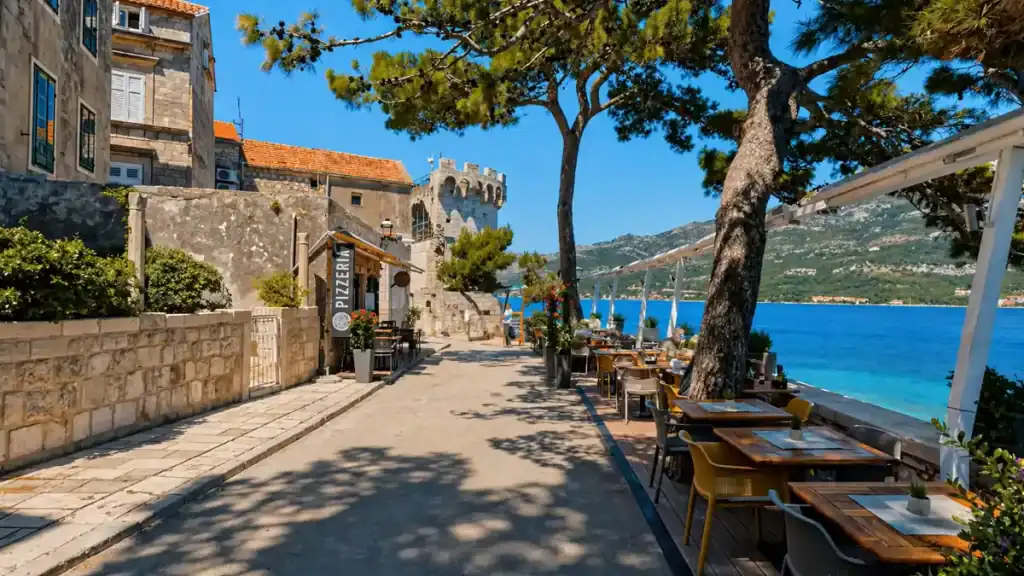
✨ What Is Korčula Town Like in the Evening?
Evening was when Korčula Town felt most animated to me. As the afternoon heat faded, people returned to the promenade, terraces became busier and the Old Town opened up again. After structuring the morning around sightseeing, this was one of my favourite times simply to wander without a fixed route.
If I wanted something genuinely connected to the region, local olive oil or lavender made more sense to me than another souvenir magnet. But shopping was secondary. By early evening, the waterfront itself had become the attraction.
For a summer day, I would explore Korčula Old Town before late morning, step back from sightseeing through the hottest hours, then return from around 16:00 or 17:00 onwards. Early morning gives you the easiest walking; late afternoon and evening give you the town at its most enjoyable.