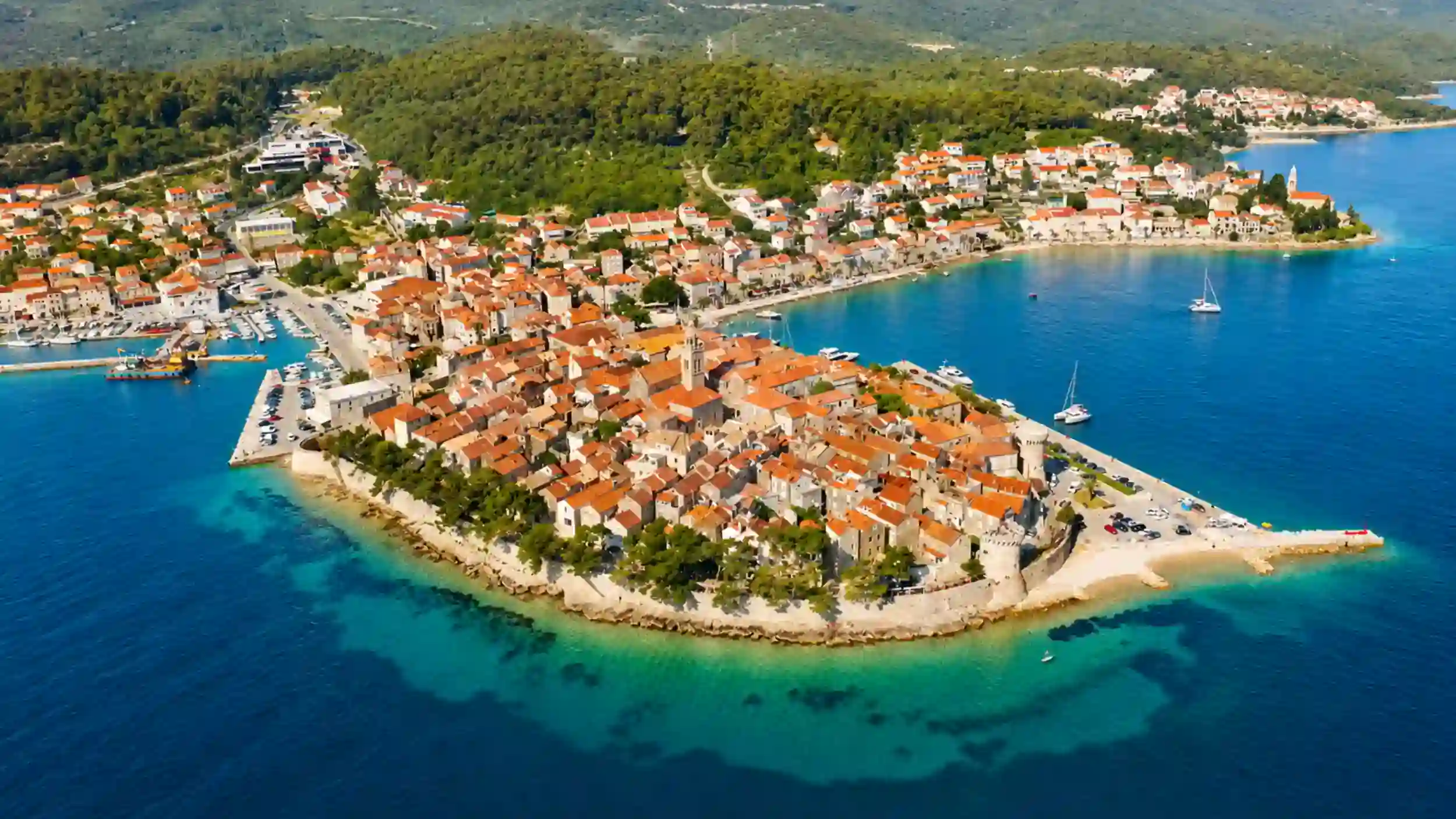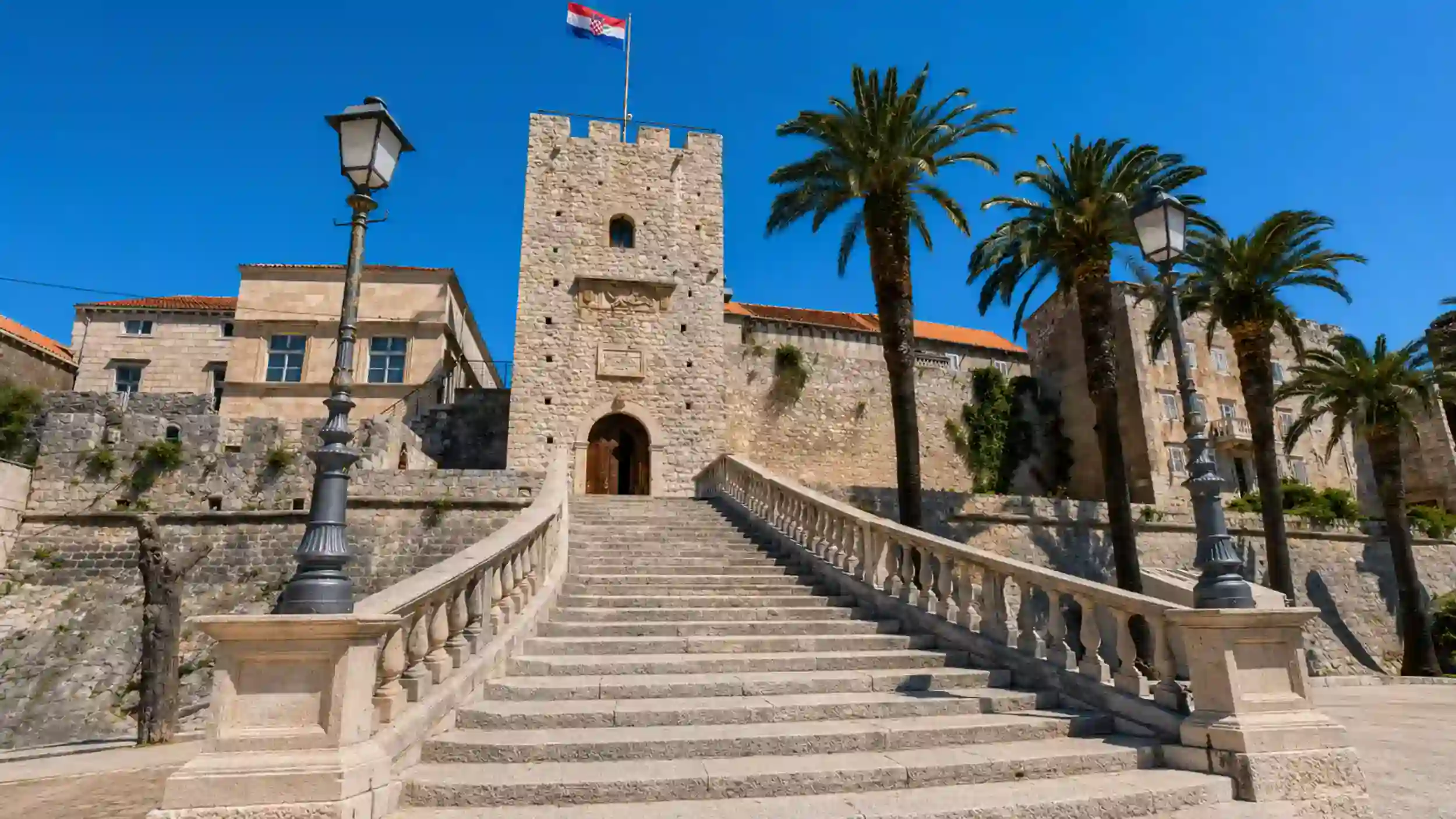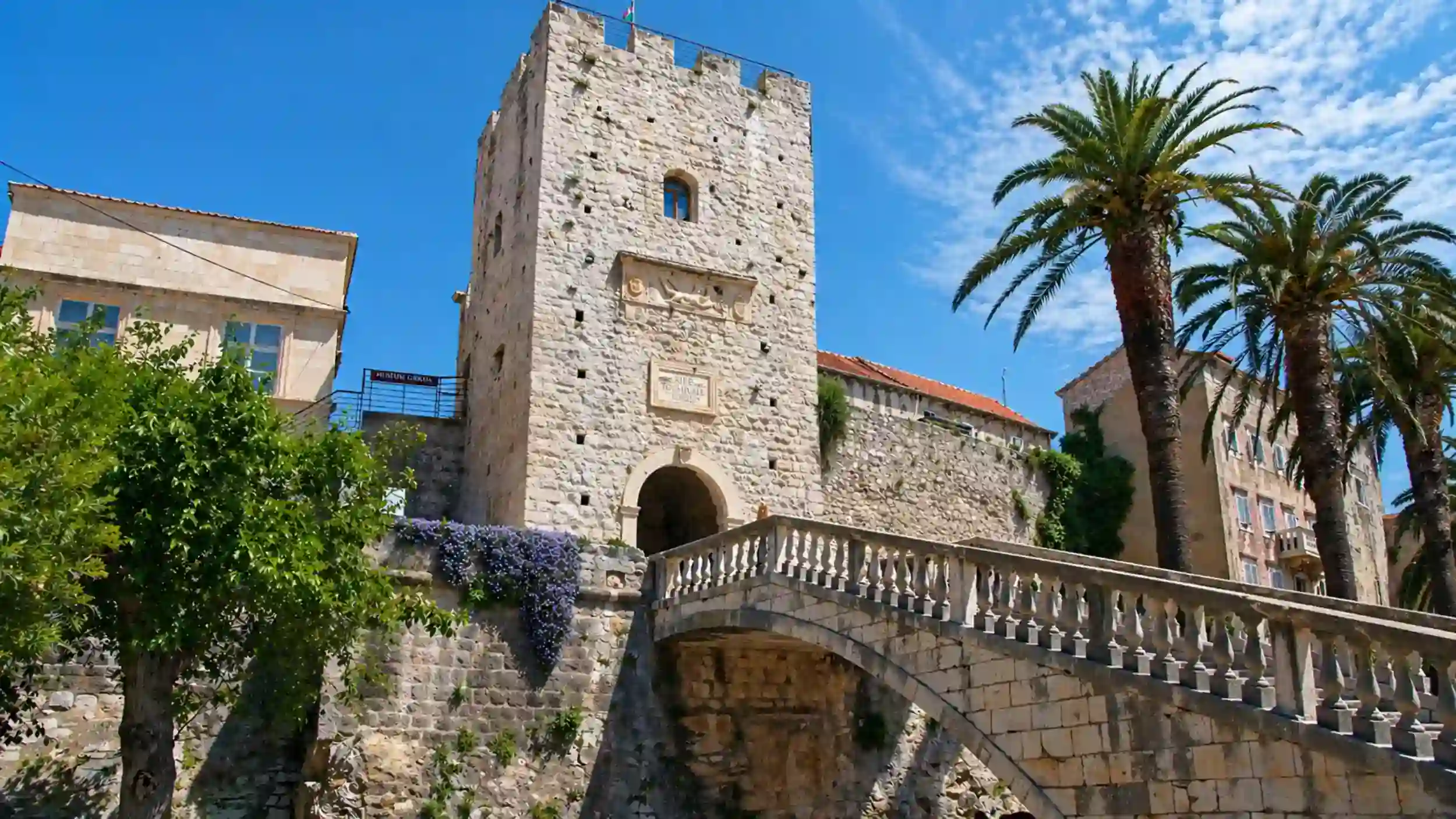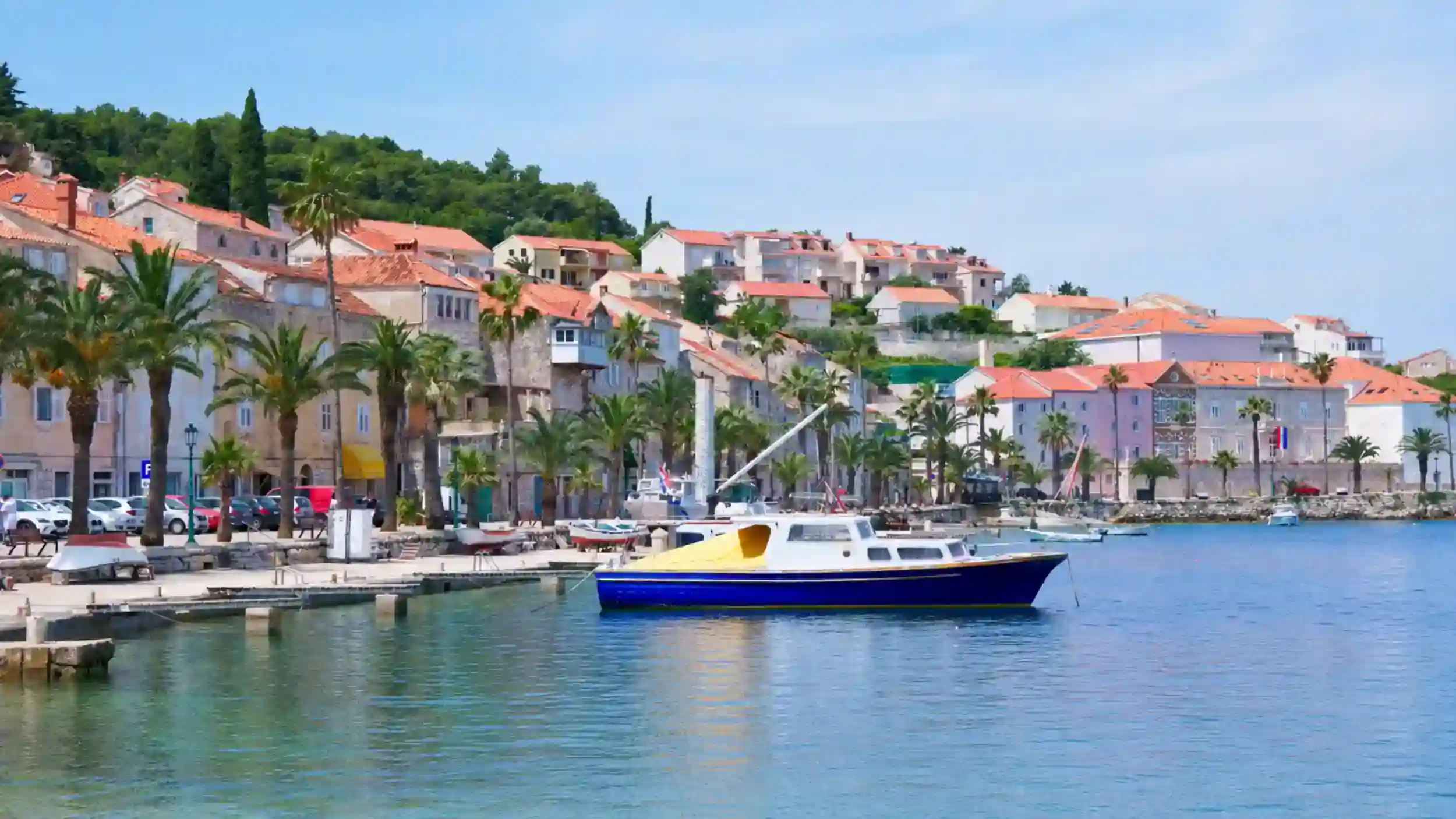
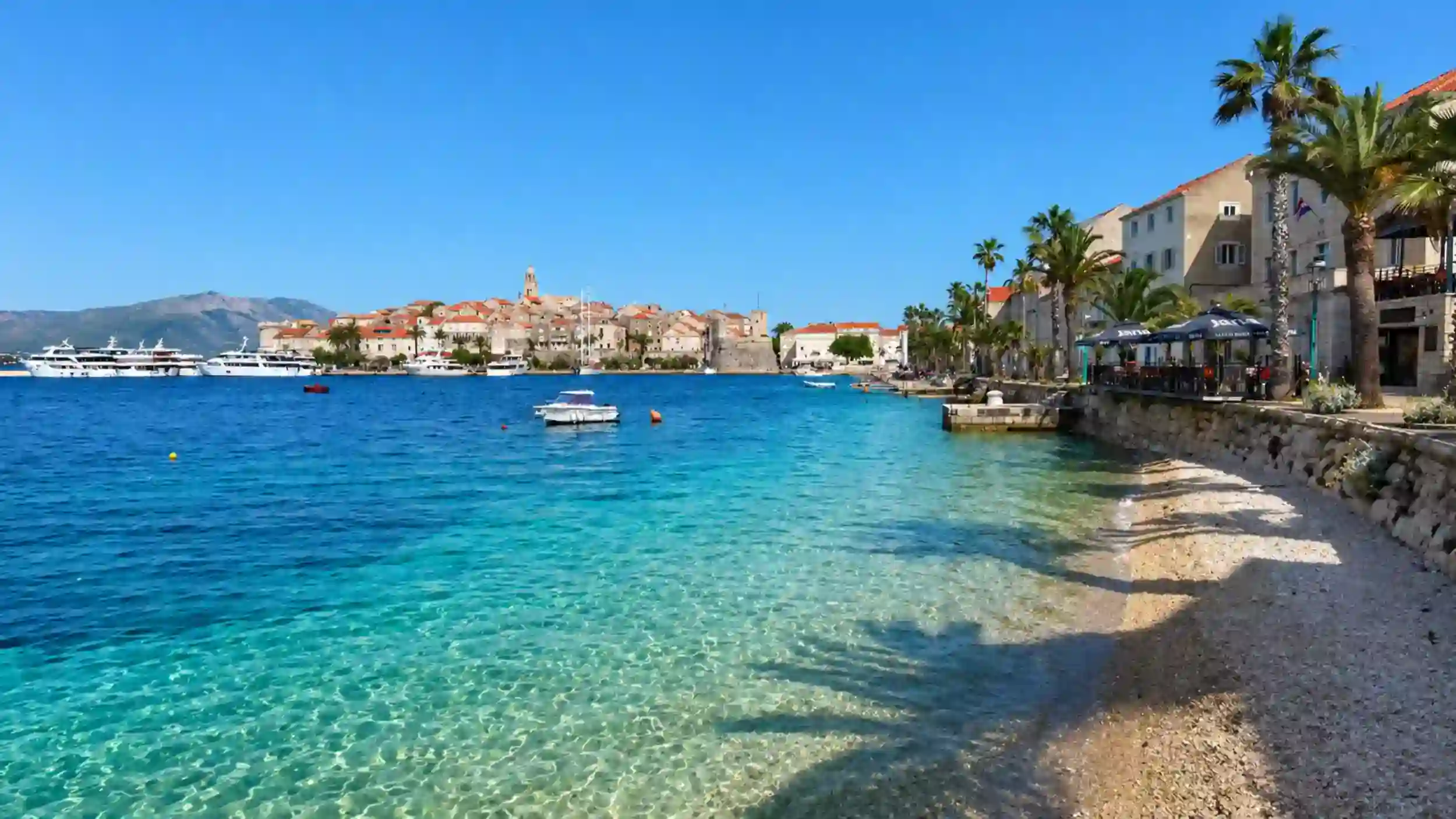
Swimming in Korčula Town means changing what you think of as a beach. There is no single main stretch of sand beside the Old Town; instead, rocky coves, limestone platforms, jetties and steps provide access to remarkably clear Adriatic water, often within minutes of the walls. Banje adds a small pebble beach when you want an easier entry.
That freedom became part of the appeal for me. I could follow the water, find an inviting entry point and stop without deciding in advance where the day’s swim would be.
🌊 What Are the Beaches and Swim Spots in Korčula Town Like?
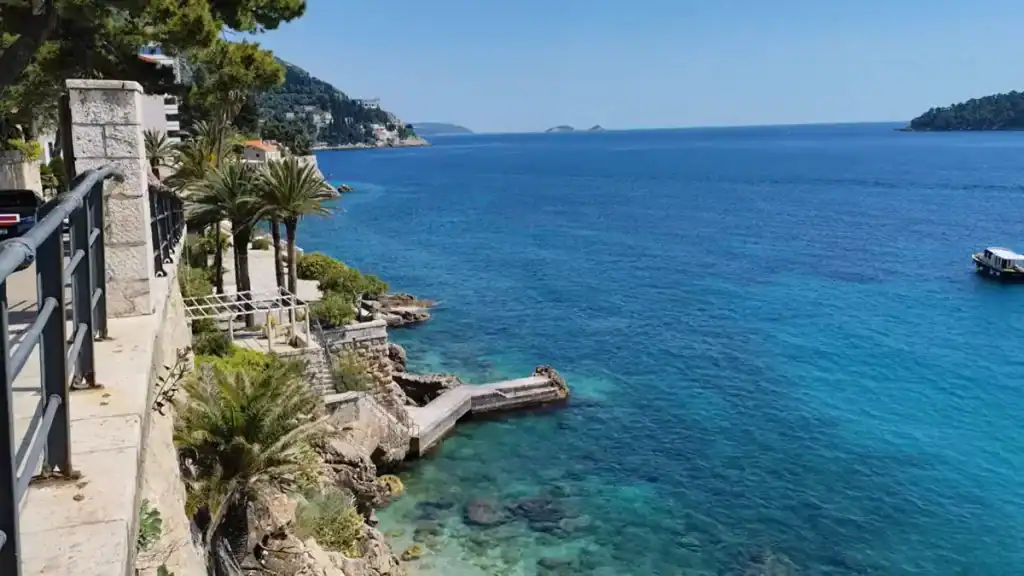
Most of the swimming around Korčula Old Town is from pale limestone, cut-stone platforms, jetties, steps and ladders rather than conventional beaches. That surprised me at first, but I quickly preferred having so many small places to get into the water instead of being tied to one main beach.
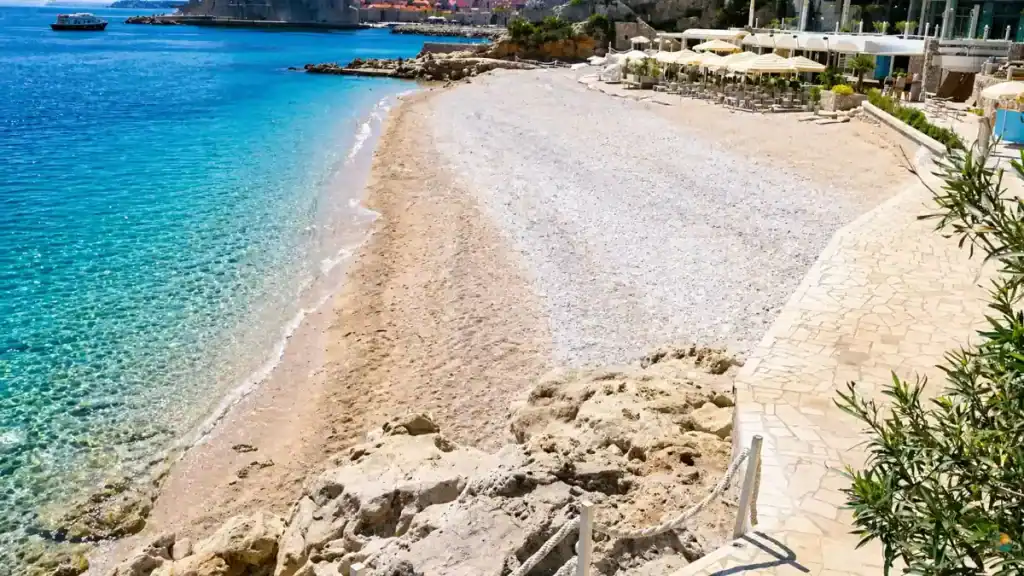
I Preferred the Rocks, but Banje Is Easier
I preferred the rock entries because they often put me straight into deeper, clearer water. Banje is the easier option if that sounds awkward. Its small pebble cove is more comfortable underfoot and better suited to families or anyone less confident stepping in from limestone.
| Shoreline | Entry | Best for |
|---|---|---|
| 🪨 Flat limestone | Direct | Confident swimmers |
| 🪜 Steps & ladders | Easiest | Simple water access |
| 🏖️ Banje pebbles | Gradual | Families & easier entry |
I never felt much need to arrive at one swimming spot and settle there for the day. It suited Korčula better to keep walking until a section of shoreline looked right, swim, then move on later.
🚶 How Far Are the Best Swim Spots From Korčula Old Town?
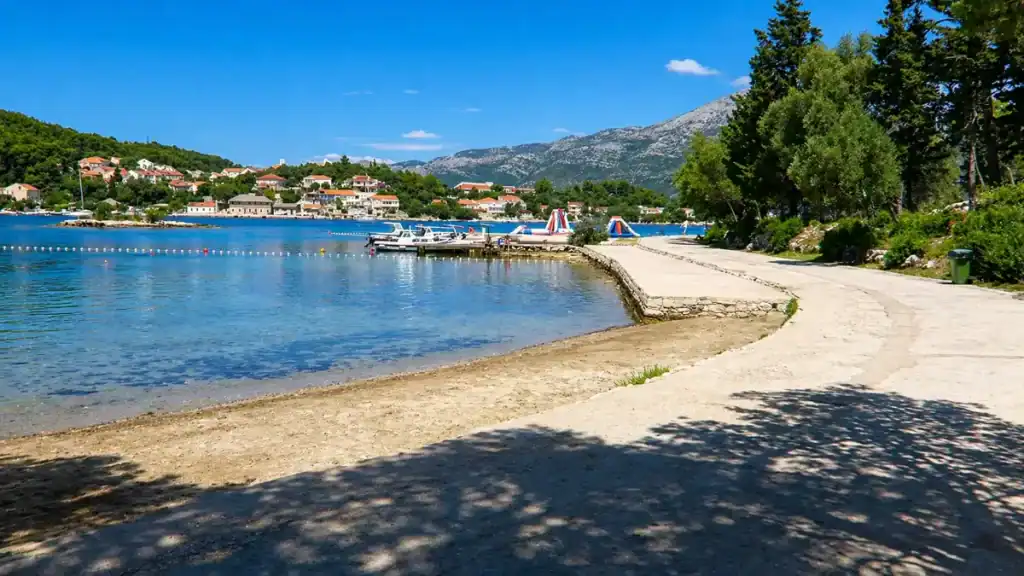
Not far at all. Puntin, at the tip of the Old Town peninsula, gave me swimmable rocks within a few minutes of the walls, while the western side added several more entry points within a five to ten-minute walk. I only needed to go further when I wanted more space or calmer water.
I Walked Further When I Wanted More Space
When I walked around 15 to 20 minutes towards Port 9, the swimming changed noticeably. There was more space, calmer water and less passing foot traffic along the shoreline.
That proximity made it easy for me to swim more than once. A quick dip close to town fitted naturally between sightseeing, while I could leave a longer swim for later when I had more time.
🪨 Is It Easy to Swim From the Rocks and Jetties?
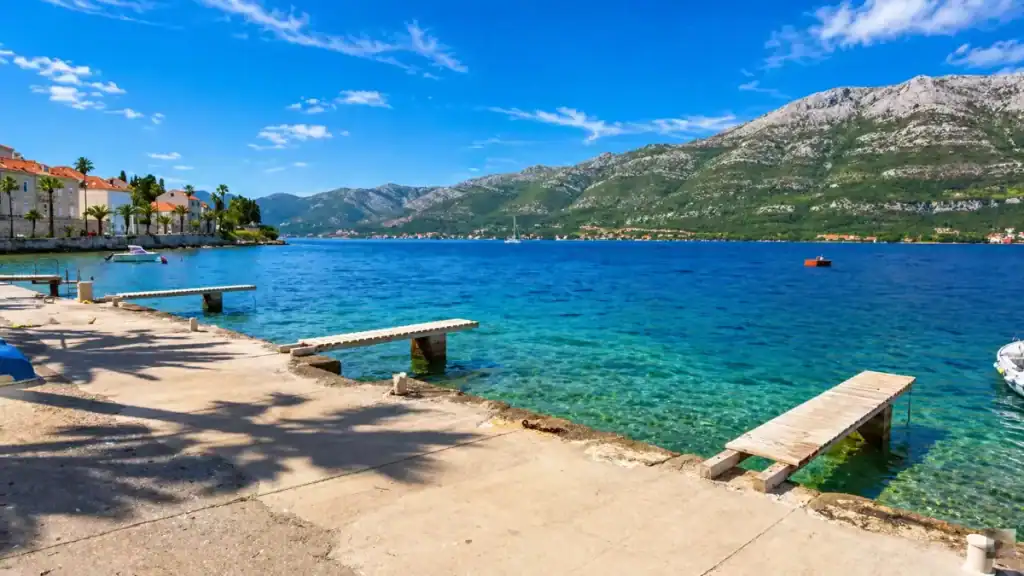
Yes, once I became selective about where I entered. Around the Old Town, worn limestone forms natural platforms where I could sit, leave a towel and lower myself straight into the water. Some spots had ladders or steps; others relied on the rock edge, so I never assumed every inviting platform offered an equally easy way back out.
I Learned to Check the Rock Before Getting In
I looked for flat, dry rock and clear water with enough visible depth before getting in. Dark or shiny limestone was usually the warning sign: if it looked wet and slippery, I moved a few metres and found a better entry.
Pebbles Were Easier; Rocks Gave Me Better Water
Banje was easier underfoot, but I liked the rock entries because they often put me directly into deeper, clearer water. The jetties and limestone platforms worked particularly well when I wanted a quick swim rather than a conventional beach day.
💎 What Is the Water Like Around Korčula Town?
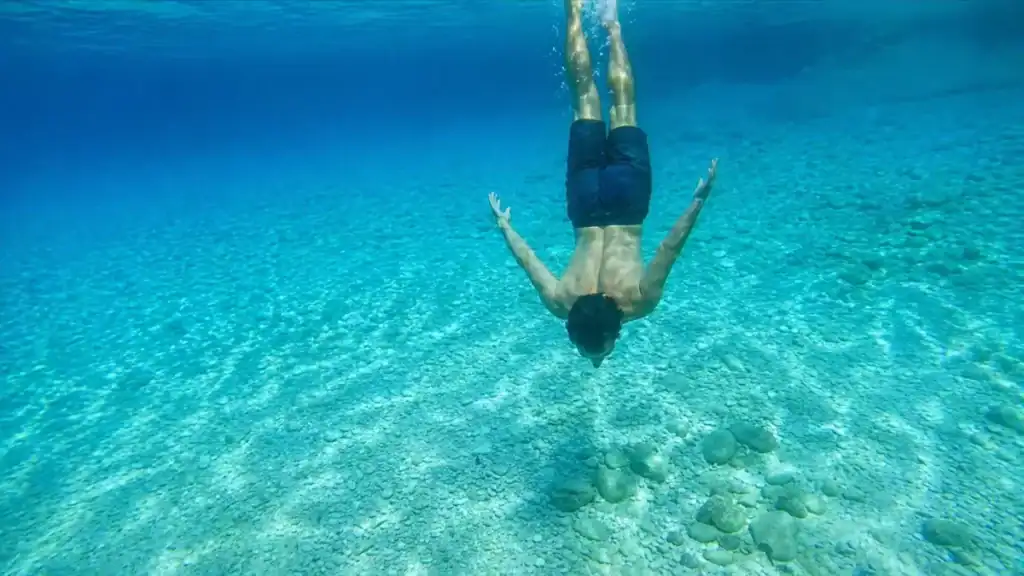
The water was remarkably clear, and morning gave me the calmest conditions. At times it was almost glassy, with the seabed visible well enough for me to judge a rock entry before getting in. That clarity was one of the reasons I ended up preferring the direct rock entries to the easier pebble beach.
The Water Changed as the Day Went On
By afternoon, the exposed western tip can pick up a little movement, while sheltered areas such as Port 9 tend to remain calmer.
| Time / Location | Water | Good for |
|---|---|---|
| 🌅 Morning | Very calm and clear | Rock entries |
| ☀️ Afternoon west side | Slightly more movement | Casual swims |
| 🌊 Port 9 | More sheltered | Longer swims |
I quickly learned to read the surface rather than assume conditions were the same everywhere. If one section looked choppy, walking a little further often revealed calmer water nearby.
🏊 How Do You Choose a Safe Place to Enter the Water?
I stopped planning particular entry points fairly quickly, but I did not treat every stretch of rock as suitable. I looked for an obvious way in and out, enough visible depth, dry footing and ideally another swimmer already using the spot. If any of those felt wrong, I kept walking.
Four Things I Checked Before Swimming
- Someone else is already swimming there
- The entry is obvious, whether rock, steps or a ladder
- You can see enough depth beyond the edge
- The rock you’re stepping from looks dry rather than slippery
If something didn’t look right, I kept walking. Another potential entry point was usually only a minute or two further along. For swimming beyond the town shoreline, nearby Badija adds more places to get into the water after a short taxi-boat journey.
🏝️ Is Badija Worth Visiting for Swimming?
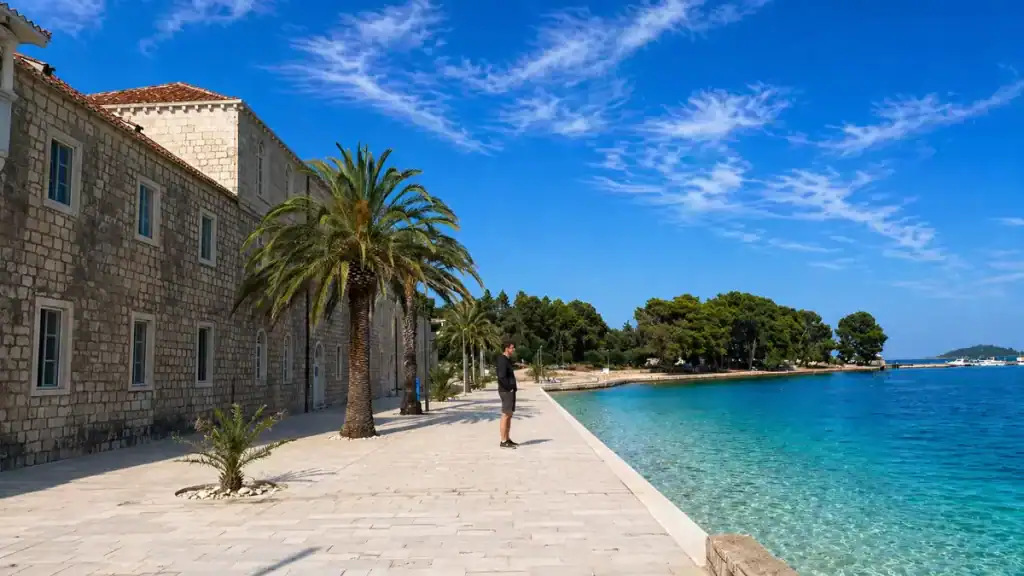
For swimming, I thought Badija was worth the short trip. It gave me clearer water and generally fewer people than around the main peninsula, while the ten-minute water-taxi journey from Korčula’s east port was short enough that the excursion never took over the day.
I Used the Same Approach on the Islands
Badija is particularly easy to reach, with the water taxi taking around ten minutes from Korčula’s east port. Once there, I used much the same approach as in town: walk the shoreline, choose an appealing entry, swim, then continue. Vrnik worked in a similar way.
For swimming, I thought the short journey was worthwhile. Badija gave me clearer water and generally fewer people than around the main peninsula, while getting to Badija was straightforward enough to combine a swim with exploring the island.
☀️ What Is the Best Time of Day to Swim in Korčula Town?
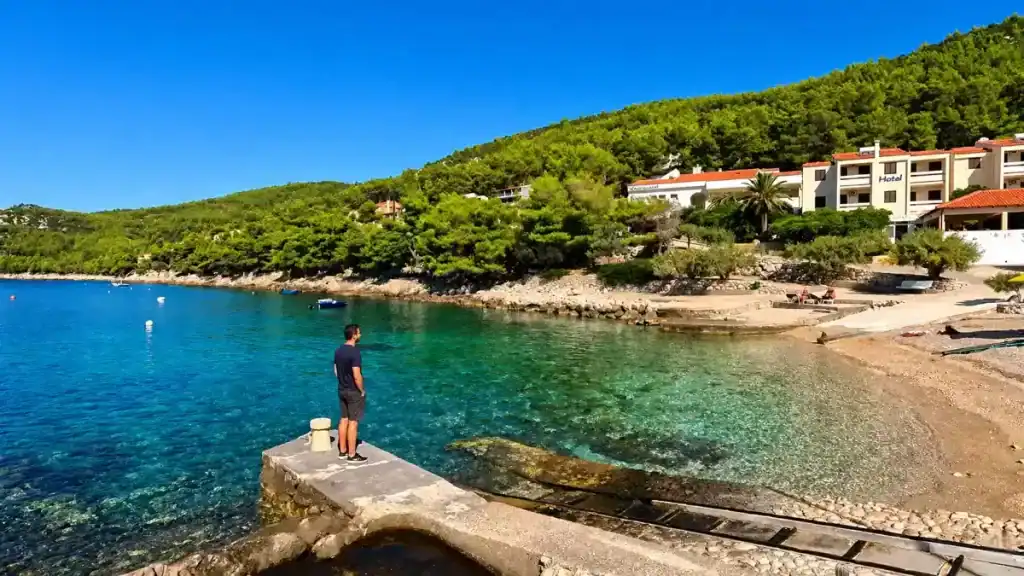
Late afternoon was my favourite overall, although early morning gave me the calmest water and easiest rock entries. By late afternoon the Adriatic had warmed, the west-facing shoreline still held the sun and the crowds were beginning to thin, which made it the best balance for me.
| When | What it’s like | Best for |
|---|---|---|
| 🌅 Early morning | Calm, clear and quiet | Easiest rock entries |
| ☀️ Midday | Hot rocks, little shade, busier | Quick dips |
| 🌇 Late afternoon | Warm water, fewer crowds | Best overall |
Late Afternoon Was My Favourite
Late afternoon was my favourite overall. The west-facing shoreline keeps the sun until late, the water has had all day to warm and the crowds begin thinning. I also found it an easy time to combine a swim with a sunset walk around the outer walls.
For a longer midday swim, head further from the Old Town where you’ll find more shade and space rather than settling on the exposed limestone close to the walls.
📍 What Are the Best Korčula Town Swim Spots?
I would choose Puntin for a quick swim, Banje for the easiest entry, Port 9 for more space and calmer water, and Badija or Vrnik when water quality mattered more than staying beside the Old Town. Those differences became much clearer once I had tried several rather than looking for one universally ‘best’ spot.
Puntin: Best for a Quick Swim
Puntin became my quick-swim option. It sits at the tip of the peninsula, only a few minutes from the Old Town, and the direct entry into deeper water worked particularly well when I wanted an early swim without walking far.
Banje: Best for Easier Access
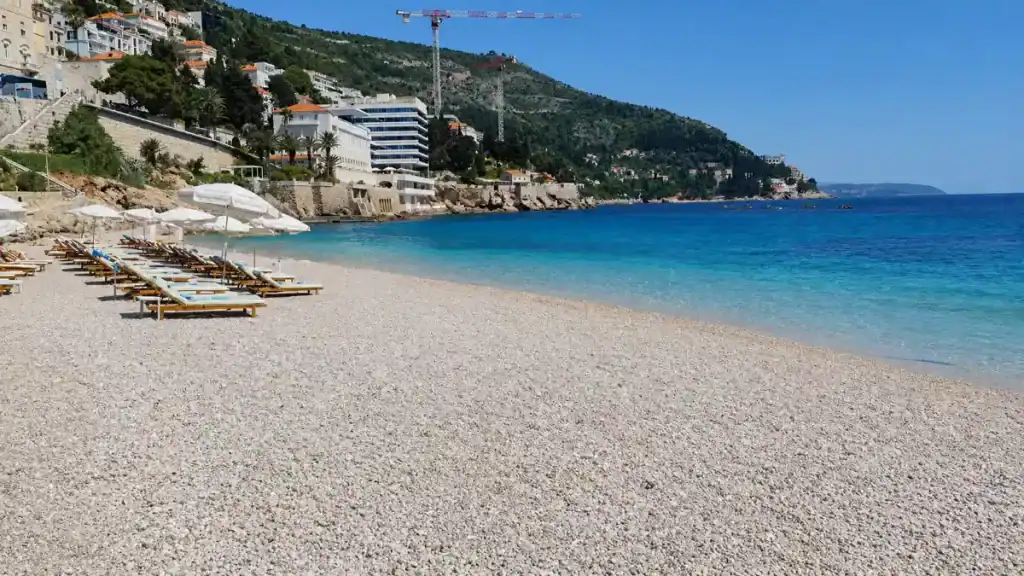
I found more entry points along the west promenade towards Banje than anywhere else close to town. Banje itself adds a pebble shoreline, so I would choose it for easier access if entering from rocks does not appeal.
Port 9: Best for a Longer Swim
Port 9 felt noticeably calmer to me. There was more space, softer water and less passing foot traffic, so the extra walk was worthwhile when I wanted to stay in the water longer rather than keep moving.
Badija & Vrnik: Best Overall Water
Badija and Vrnik required a short taxi-boat trip, but I found clearer water and generally fewer people than around the main peninsula. Of the options further from town, these gave me the best swimming overall.
| Swim spot | Best for | From Old Town |
|---|---|---|
| 🪨 Puntin | Quick dip | A few minutes |
| 🏖️ Banje | Easier entry | Short walk |
| 🌊 Port 9 | Longer, calmer swim | 15–20 min walk |
| 🏝️ Badija & Vrnik | Clearer, quieter water | Short taxi boat |
🎒 What Do You Need for Swimming in Korčula Town?
I needed very little: water shoes or flip-flops, a towel, drinking water and goggles. The footwear mattered most around pebbles and wet limestone, while the Adriatic was clear enough that goggles earned their place in my bag almost every time I went swimming.
Goggles Earned Their Place in My Bag
The Adriatic was clear enough to make goggles genuinely worthwhile for me. A small snorkel also makes sense if you enjoy looking beneath the surface, but I saw little reason to carry lots of beach equipment when moving between swim spots was part of the experience.
The Small Kit I Would Carry
- Water shoes or flip-flops for rocks and pebbles
- Goggles for the clear water
- Towel for sitting and drying off
- Water if you’re walking further along the coast
- Optional snorkel if you want to explore below the surface
I would keep the kit light. A bulky beach setup would have got in the way of the way I enjoyed swimming here most: carrying everything easily, walking the shoreline and stopping whenever the water looked inviting.