
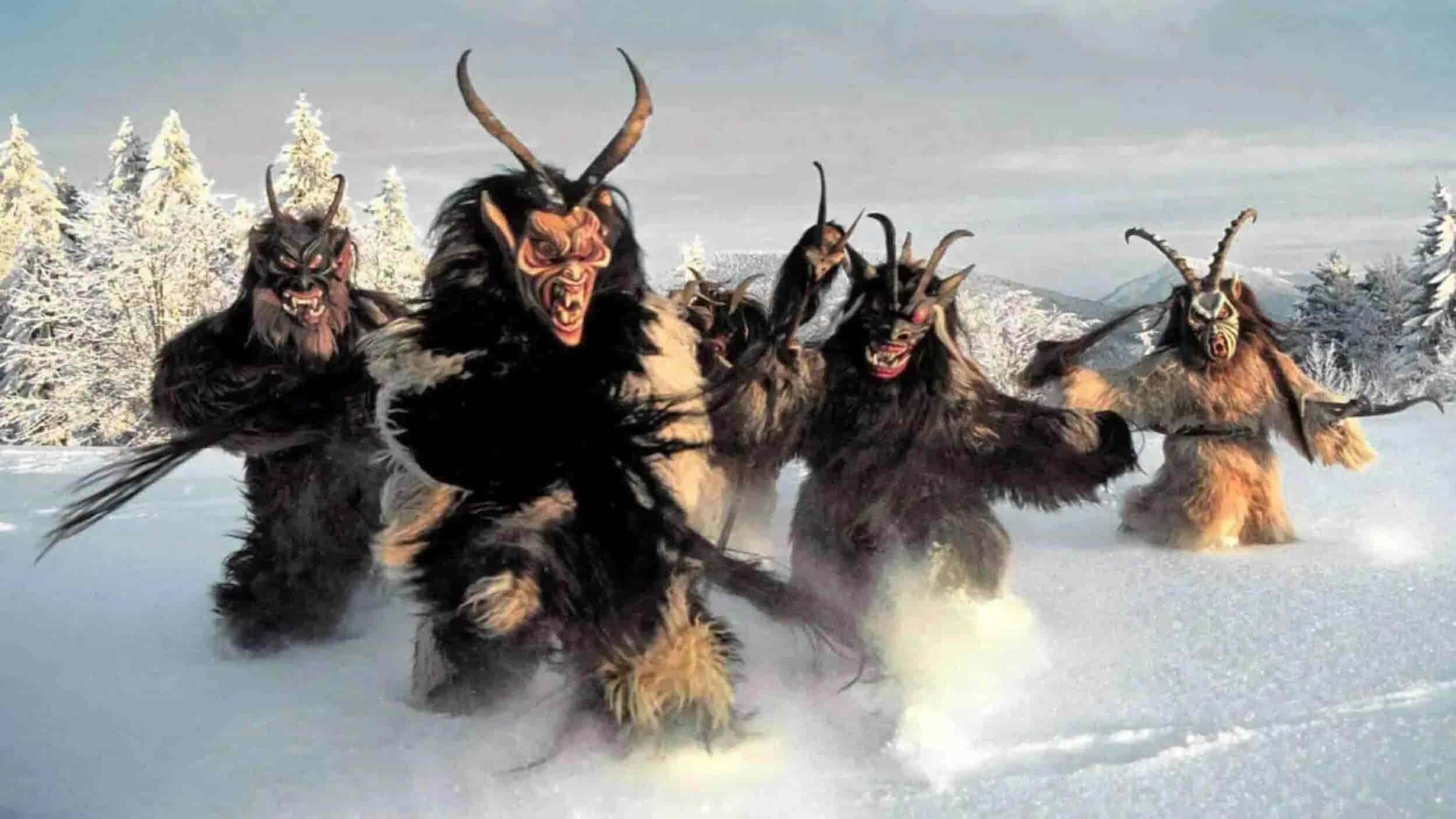
The Krampus origin traces back to Alpine folklore, where this horned, menacing figure contrasts Saint Nicholas by punishing misbehaving children during the holiday season. Rooted in pagan traditions and later integrated into Christmas customs, understanding the Krampus origin reveals a fascinating mix of cultural storytelling, superstition, and festive ritual in regions across Austria, Germany, and beyond.
👀 At a Glance: Krampus Essentials
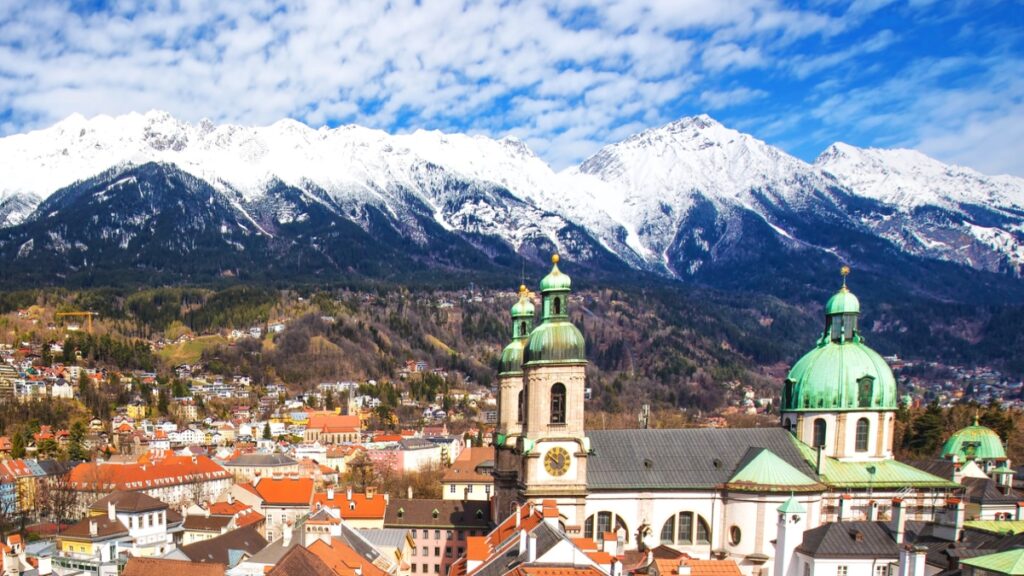
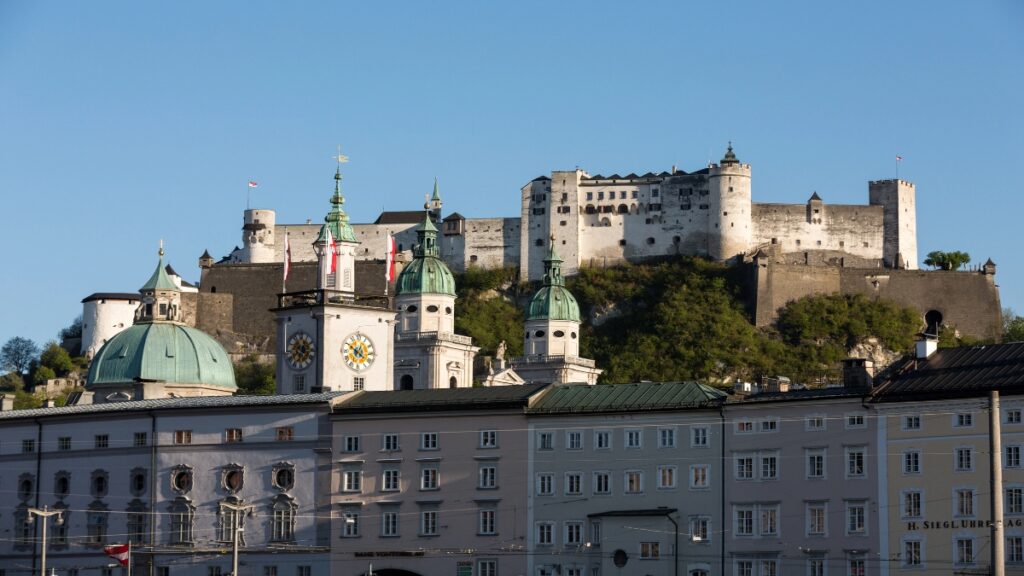
📍 Best Locations: Salzburg, Innsbruck, Tyrol regions
📅 Peak Season: December 5-6 (Krampusnacht)
💰 Budget: €50-150 per day including accommodation
⚠️ Must Know: Wear dark colors, arrive early, respect the tradition
🎭 Experience Level: Intermediate to advanced cultural travelers
What started as a simple Christmas market trip became a rabbit hole deeper than my student debt. I discovered Austria’s most incredible hidden tradition that most tourists never experience. After three separate Krampuslauf experiences and countless conversations with locals, I finally understand the true Krampus origin. Trust me, you’re going to be absolutely fascinated by why this ancient custom matters more than ever.
🎭 Krampus Origin: The Story of Krampus and Christmas Devil Legend
The first time someone mentioned Krampus to me, I thought they were pulling my leg harder than a carnival strongman. A horned Christmas devil that punishes naughty children at Christmas? Here’s what locals know that the guidebooks won’t tell you. This anthropomorphic figure sounded like someone’s fever dream after too much eggnog. It didn’t seem like a real cultural tradition rooted in authentic folklore.
The Ancient Pagan Origins and Alpine Folklore
But Krampus has origins going back over 1,000 years to pre-Christian Alpine traditions that predate modern Christianity. As documented by History.com’s comprehensive research, the Story of Krampus begins with mountain communities celebrating winter solstice. They practiced pagan rituals involving wild, hairy creatures that would punish badly behaved children and adults. These ceremonies took place throughout the year in traditional pagan celebrations.
The Catholic Church couldn’t sweep these pagan traditions under the rug like embarrassing family photos, so they brilliantly adapted them instead. The wild creatures became linked with Saint Nicholas, creating the perfect good-versus-evil story. Locals could understand and embrace this narrative while maintaining their cultural heritage. This fascinating origins and evolution incorporates cultural elements widely distributed in Europe.
How Krampus Became the Christmas Demon
In traditional Alpine folklore where Nicholas rewards good children, Saint Nicholas represents reward and kindness for well-behaved people. Krampus stands for punishment and consequence – trust me, it’s absolutely fascinating how this balance creates such compelling storytelling! According to Britannica’s definitive guide, the German word “krampen,” which translates to claw, shows the connection. This demonstrates how the legend became assimilated to the Christian devil.
What makes this half-goat, half-demon different from other Christmas figures is his role as active punishment. He doesn’t offer passive disappointment like coal in stockings. What does Krampus do to his victims? Whilst Santa Claus might bring coal, Krampus legend speak of carrying off the worst offenders. He uses his bundle of birch basket – now that’s serious consequences for bad children!
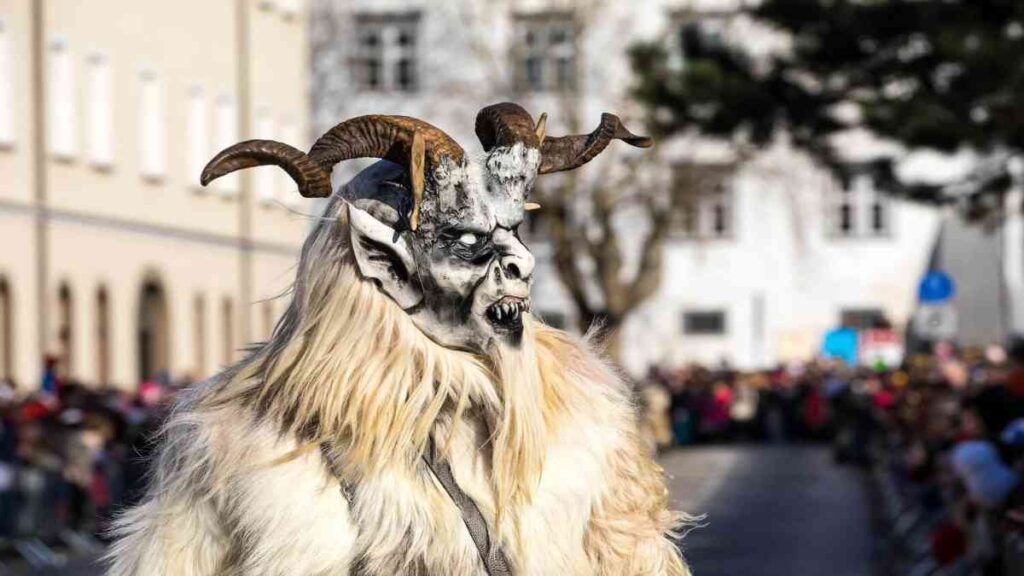
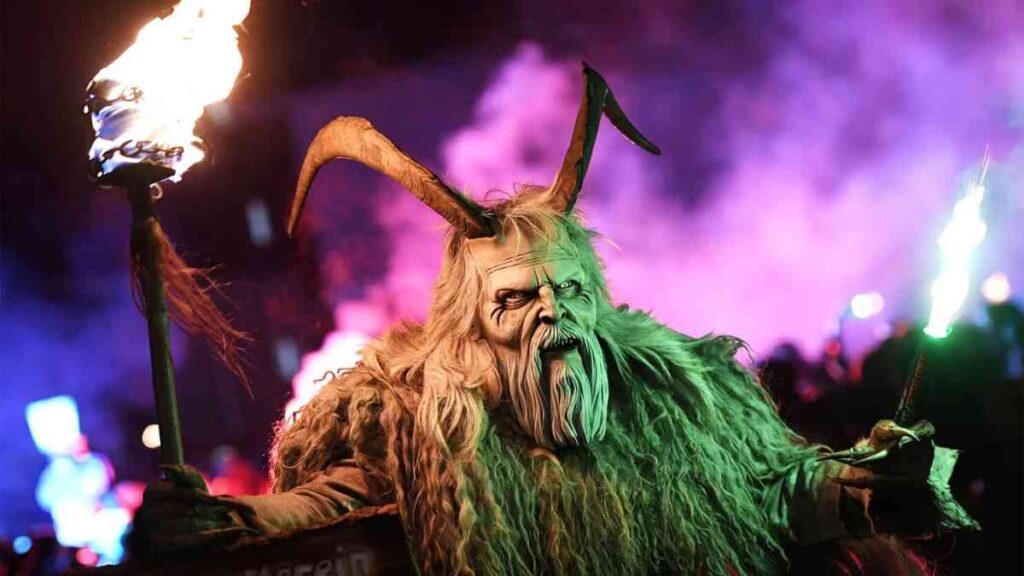
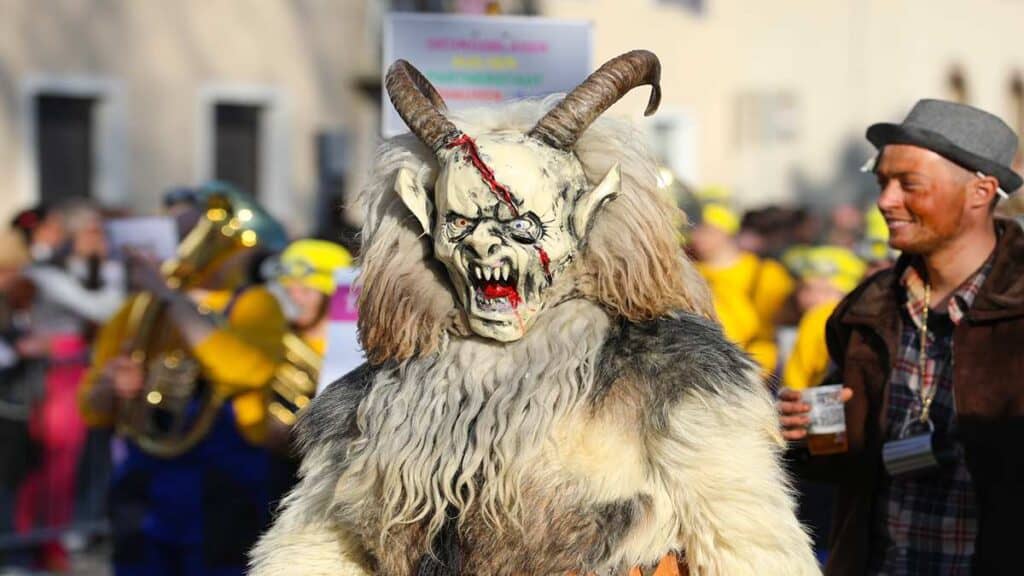
Krampus is described with curved horns of a goat, a long pointed tongue, fangs, and dark hair or fur. This gives him a devilish appearance that’s absolutely terrifying. Most carry chains, bell, and birch branches called “ruten,” with some carrying a whip. In some representations this is strapped to his back for punishing naughty children of the world.
Regional History and Tradition Across Austria and Germany
Different regions across Austria and Germany have their own ideas of what Krampus represents. I discovered this during my travels through Tyrol and Salzburg over multiple winter seasons. Known in Germany as popular Christmas tradition, in Tyrol the costumes tend to be more detailed and artistic. Meanwhile Salzburg versions focus on theatrical elements that’ll absolutely blow your mind.
Popular in Germany and Slovenia, the Krampus tradition incorporates local variations with some families passing down hand-carved pieces. These are treated like precious heirlooms for generations. The Krampus story varies by region, but the core resemblance to the devil remains consistent. This holds true across all areas where this Alpine folklore thrives.
🔥Krampus Run: The Krampuslauf Experience
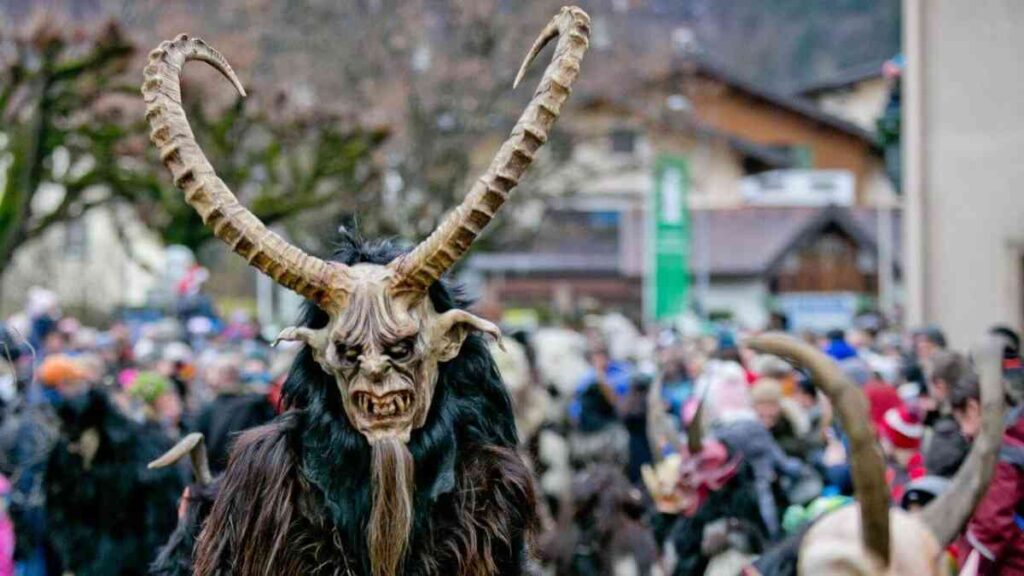
Nothing prepares you for your first Krampus run – and I mean absolutely nothing in your previous travel experiences! I thought I understood what to expect after watching YouTube videos. But the reality involves seeing locals dress as Krampus in ways that’ll absolutely blow your mind.
My First Krampuslauf Disaster and When Krampus Appears
I made every possible mistake at my first annual Krampus event in Salzburg’s old town. I essentially became a walking example of what not to do. Don’t make the mistake of wearing the wrong clothes, standing in the wrong place, and having wrong attitude. This was especially problematic during what happens when Krampus appears during this ancient celebration.
The event started at 7:30 PM sharp on December 5, but I arrived late at 8:15 PM. Punctuality has never been my strong suit, like a Swiss watch that runs on island time. By then, the best viewing spots were packed tighter than sardines in designer tins. I found myself squeezed against a shop window with nowhere to escape when things got intense.
When the first group of Krampuses charged down the narrow street, chains clanging and bells of various sizes ringing loudly, everything changed. It sounded like a heavy metal German Christmas concert, and my flight response kicked in immediately. Picture this: there was nowhere to go – just a wall of people behind me. Horned demons approached fast with their cloven hooves thundering on cobblestones like approaching thunder.
Understanding the Krampuslauf Structure
Most Krampuslauf events follow a similar pattern in early December, though each region adds its own local style. This is absolutely captivating and reflects centuries of cultural evolution. Here’s what locals know: the evening usually begins around the Feast of St Nicholas making an appearance. Angels often accompany him, representing the light side of this incredible tradition that balances darkness with hope.
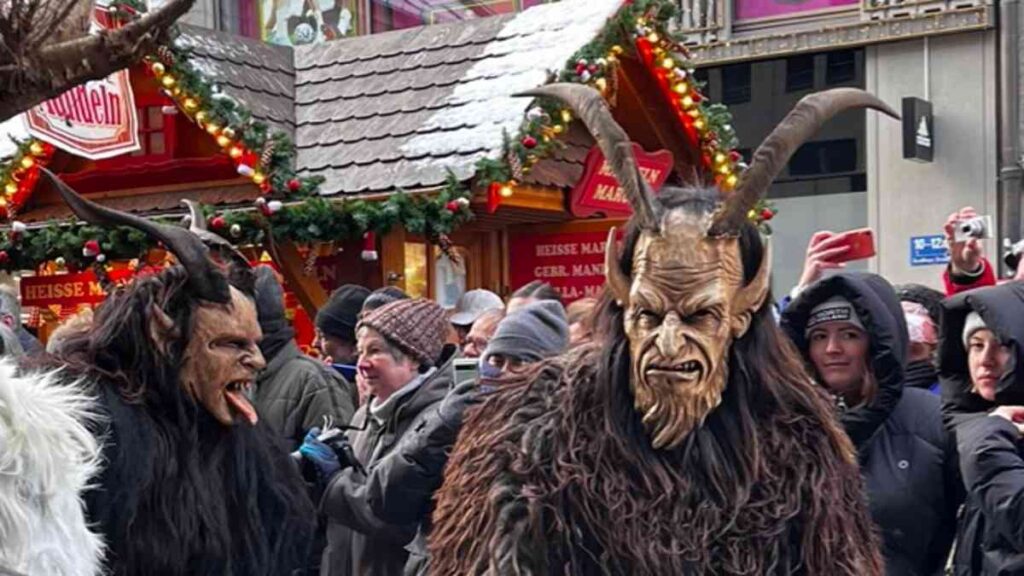
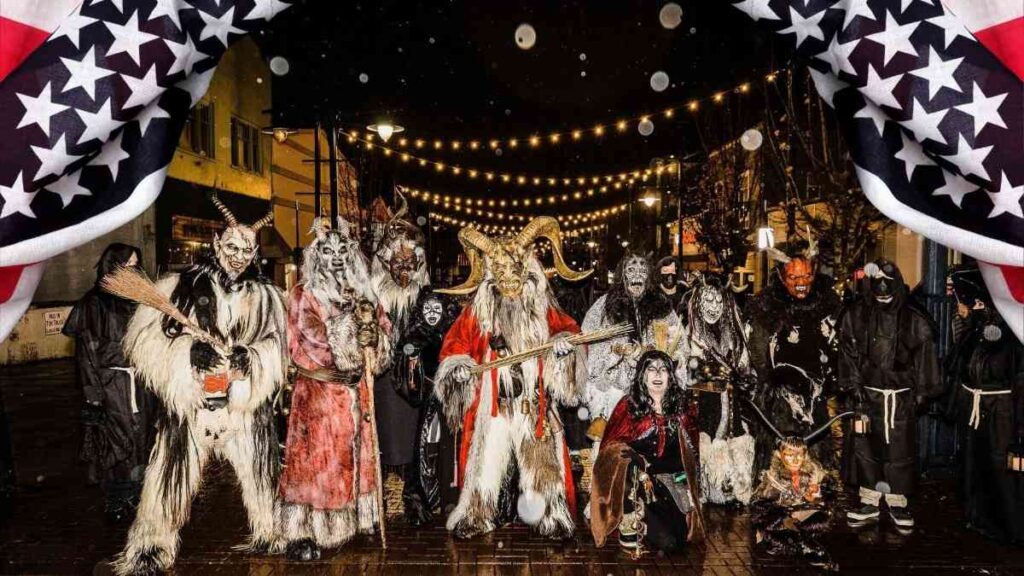
Then comes the main event: groups of Krampuses from different villages or clubs parade through the streets. They move with thunderous energy that electrifies the entire atmosphere. You absolutely must understand that each group usually has 15-30 people who dress as Krampus. They move through set routes stopping to interact with crowds in ways that’ll make your heart race.
The interactions can range from gentle teasing to more intense encounters. This depends on the group and audience response that builds throughout the evening. Learning what Krampus would do during these events is fascinating. Some focus on children, others target adults, and a few seem to enjoy startling anyone within reach. They use their bundle of birch sticks wielded with theatrical precision that’s honestly impressive.
Pro Tip: Do yourself a favor and wear dark colours while avoiding bright accessories. These might attract unwanted attention from mischievous performers seeking targets for their antics. Also, don’t carry anything you can’t afford to lose. Those birch sticks have seriously good reach, and trust me, you don’t want to test their accuracy!
The Organised Chaos Experience
What surprised me most was how organised the apparent chaos really is. It’s like watching a perfectly choreographed dance disguised as mayhem.
Each Krampuslauf has marshals, set routes, and safety rules that most tourists miss help maintain authentic spirit while keeping everyone secure during intense celebrations. Access guidelines through Austrian Ministry of Interior for event safety standards and Alpine Tourism Safety for crowd management and emergency procedures.
The performers go through months of preparation, not just for the physical demands but also mental aspects. They must embody this ancient archetype with complete commitment. Wearing a heavy mask and costume whilst keeping up a terrifying character for hours requires serious dedication. The physical conditioning that’s honestly impressive and takes real athletic ability.
During my second Krampuslauf in Innsbruck, I spoke with a performer afterwards who explained their intensive training process. They practice movements, develop character personas, and learn crowd management techniques to ensure everyone stays safe. They also work to maximize the authentic fear factor. It’s method acting meets extreme sports featuring centuries of Krampus lore that’s absolutely incredible to witness!
🧠 Understanding The Deeper Meaning of Krampus
Beyond the spectacle and tourist excitement, Krampus represents something much deeper about human nature and community values. Most tourists miss this completely. This hit me during a quiet conversation with an elderly Austrian woman after my third Krampuslauf experience. The adrenaline had worn off completely, and she dropped wisdom on me like pure enlightenment.
The Psychological Release Function
She explained that Krampus serves as a cultural pressure valve. It’s a safe way for communities to explore darker emotions within carefully controlled boundaries. Here’s what locals know: during most of the year, Alpine communities maintain strict social order and politeness. But attempts to suppress the Krampus and similar traditions only made them stronger over time.
But for one night in early December, particularly on December 6th, the normal rules get suspended completely. It’s like a Netflix subscription you can’t afford anymore! People can be wild, express aggression, and face fear in a controlled environment. This actually builds stronger community bonds rather than tearing them apart. It’s brilliant social engineering disguised as folklore that’s more effective than modern therapy!
This psychological function explains why Krampus has survived for over a thousand years. It endured religious persecution and social changes that eliminated many other traditions. It’s essential community therapy disguised as ancient folklore, providing a vital release mechanism. These traditional pagan rituals provide benefits that modern psychology is only beginning to understand fully.
The Balance of Light and Darkness
Traditional Alpine culture understands that life contains both positive and negative forces. What incredible wisdom that modern society often tries to ignore completely! Trying to suppress the darker aspects only makes them more powerful and destructive. They eventually surface in unhealthy ways that damage relationships and communities in lasting ways.
The pairing with Saint Nicholas creates perfect balance – you can’t fully appreciate the light without experiencing darkness firsthand. This approach absolutely changed my perspective on dealing with difficult emotions. I’d spent years avoiding uncomfortable feelings like they were expired milk. This traditional wisdom showed me that might contaminate everything else if ignored completely.
Community Bonding Through Shared Fear
What fascinated me most was watching how shared fear brought people together during Krampuslauf events. Normal social interactions never create bonds like this. Strangers would grab each other’s arms, laugh nervously together, and form instant connections. The common experience of controlled terror breaks down social barriers like nothing else I’ve witnessed.
This bonding function helps explain why Krampus celebrations remain so popular in small Alpine communities. They face increasing modernization and globalization pressures that threaten traditional ways of life. The shared yearly experience builds social connections and creates lasting memories. These bind generations together like the world’s most memorable family reunion featuring just the right amount of controlled chaos.
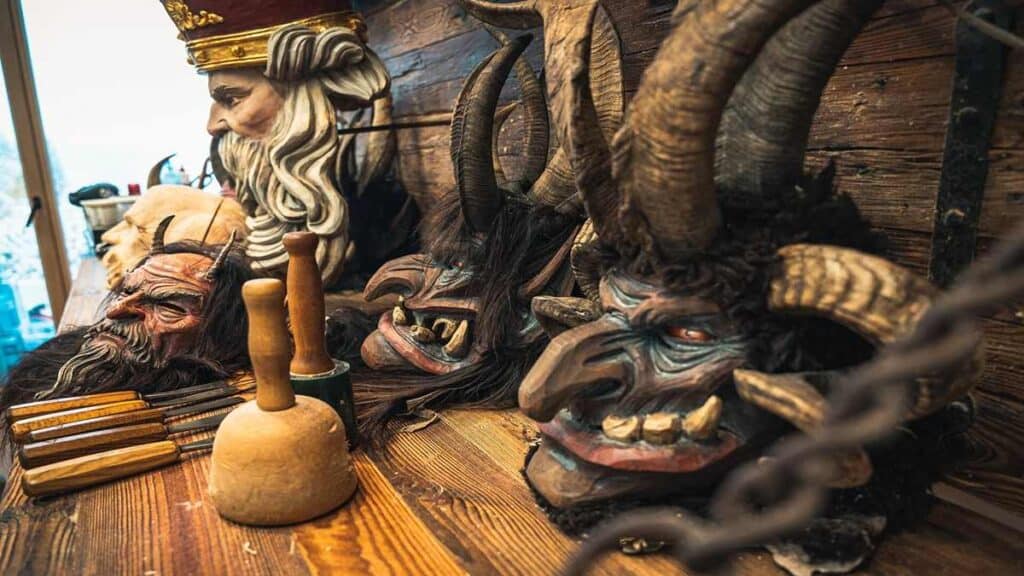
🎨 The Artistry Behind Krampus Costume Craftsmanship
The skill behind Krampus costumes deserves its own recognition – you’re going to love the incredible dedication and artistic talent involved! During my travels, I met craftspeople whose dedication to this tradition borders on obsession. They approach their work in the most wonderful way possible, and their creations are absolutely extraordinary in every detail.
Traditional Mask Making Techniques
In a workshop outside Salzburg, I watched a master carver create a Krampus mask using traditional techniques. These methods have been passed down through generations like sacred knowledge that connects families across centuries. The process takes months of careful work, starting with selecting the right piece of wood. He used methods that blend practical knowledge with almost mystical intuition from Bavaria to Austria.
Alpine pine remains the preferred material because it’s lightweight yet durable enough to withstand years of intense use. It holds up during festivals and celebrations that can be quite rough on equipment. The carver explained that each mask develops its own personality during creation. This happens through the wood’s natural grain and the maker’s emotional state during the carving process. It’s pure artistic magic that transforms raw materials into something almost alive.
Hand-painted details bring the masks to life, with specific colour combinations holding traditional meanings. These have been preserved for centuries through careful cultural transmission. Understanding what Krampus looks like helps visitors appreciate the incredible skill required for authentic creation. Red tongues represent hunger for mischief, whilst gold accents indicate higher-ranking demons. This follows the traditional hierarchy of Alpine supernatural beings that locals still respect today.
The Modern Evolution of Costumes
Modern Krampus costumes blend traditional elements with contemporary materials and techniques. It’s fascinating evolution in action that respects the past while embracing practical innovation! I met performers using lightweight fibreglass horn instead of real animal parts. They also use synthetic fur that looks completely authentic whilst being more practical. This works better for annual Krampus events and is much easier to maintain properly.
But the core appearance remains unchanged – these costumes must inspire genuine fear and respect. They need to maintain the essential character that makes them authentically powerful. The most successful performers understand that Krampus isn’t just about wearing a scary outfit. It’s about embodying a fundamental archetype that speaks to something deep in human nature.
🗺️ Krampus Experience: Real Festival Celebrations
Planning your own Krampus adventure requires more research than typical Austrian tourism. But trust me, the effort pays off with experiences you’ll never forget. Here’s everything I learned through trial and substantial error over multiple seasons of Krampus hunting. I covered Austria and Bavaria extensively, so consider this your crash course from someone who learned everything.
Best Locations and Timing
Salzburg offers the most accessible Krampuslauf experiences for international visitors, with multiple events throughout December and excellent transport connections.
According to Salzburg’s official tourism board, main Krampuslauf events occur on December 5th with additional celebrations throughout the month. Plan visits using Salzburg Tourism for current festival schedules and Austria Tourism for verified event dates and location details.
Innsbruck provides perfect traditional atmosphere with excellent transport connections for international visitors accessing Krampus celebrations. Plan journeys using Austrian Federal Railways for train schedules and Innsbruck Tourism for local transport options and arrival logistics.
For more authentic experiences, consider smaller towns like Schladming or Bad Gastein offer authentic experiences requiring more planning for accommodation and transport. Research options through Styria Tourism for regional information and Salzburg Land Tourism for traditional celebration locations and local logistics.
Pro Tip: Do yourself a favor and book accommodation early since December brings peak tourism season with extra demand from Krampus events. Secure verified stays through Austrian Hotel Association for quality standards and Austria.info for official accommodation booking and availability during festival periods.
Practical Preparation Essentials
Dress warmly but avoid anything too bulky that might restrict movement when you need to dodge enthusiastic Krampuses. They’re fully committed to their roles and won’t break character for tourists. I learned this lesson whilst wearing a thick winter coat that prevented quick escapes. Learn from my mistakes and choose layers that allow mobility while keeping you warm.
Comfortable shoes with excellent grip are absolutely essential – Alpine winter streets can be slippery. You might need to move quickly when those bell start ringing ominously. Avoid anything with loose parts that could catch on costume elements.
Consider waterproof options since December weather in Austria can be unpredictable with snow and slush common during Krampuslauf season. Check conditions through ZAMG for official weather forecasts and Austrian Weather Service for winter travel advisories and clothing recommendations.
Bring minimal valuables and secure everything carefully to avoid losing important items during the chaos. The festivities create excitement that can be overwhelming for first-time visitors. The chaos of Krampuslauf makes pickpocketing easy, though most participants respect the community nature. These sacred events focus on celebration rather than opportunistic theft.
Cultural Etiquette and Safety
Respect local customs by learning basic German greetings and showing genuine appreciation for the tradition. Don’t treat it like a tourist photo opportunity that exists for your entertainment. Austrians take Krampus seriously as living heritage, and treating it as a joke can cause real offense. This affects your entire experience and the welcome you’ll receive from locals.
Don’t provoke or challenge Krampuses unless you’re prepared for the consequences. You need to understand the traditional rules of engagement during these events. These performers stay completely in character throughout the evening. Aggressive tourists sometimes receive more attention than they bargained for. Those birch branches and theatrical aggression are very convincing and can be intimidating!
📸 Krampus Festival: Survival Guide for First-Time Visitors
After three separate Krampuslauf experiences, I’ve developed a survival guide for newcomers. This goes beyond basic tourist advice to include real insider knowledge. These insights come from real mistakes and unexpected discoveries that’ll save you. You won’t have to repeat my learning curve and can maximize your enjoyment.
Photography and Crowd Navigation
Taking photos during Krampuslauf requires balancing personal memories with respect for performers and other spectators. Everyone is equally invested in the experience and deserves consideration. Flash photography often irritates both Krampuses and crowd members around you. Learn your camera’s low-light settings beforehand and practice using them. Challenging conditions require preparation, and angry Austrians can make your evening less enjoyable.
Position yourself strategically near escape routes rather than getting trapped against immovable obstacles. Walls or barriers limit your options when things get intense. Unlike my first disastrous experience trapped against a shop window with nowhere to go, smart spectators prepare. They identify multiple exit paths before the action starts for maximum flexibility. You’ll thank me later when you need to move quickly!
What to Eat and Drink During Events
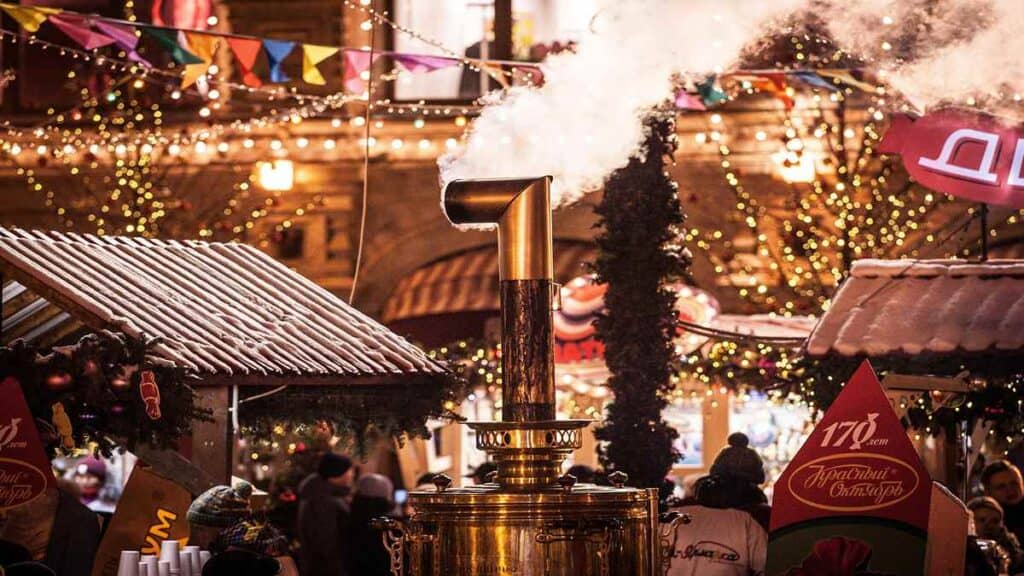
Traditional food stalls often appear alongside Krampuslauf routes, offering warming treats perfect for cold December evenings. These keep your energy up throughout the festivities that can last several hours. According to travel experts who’ve documented Austrian Christmas market traditions, mulled wine, or Glühwein, is fantastic for warming up. It’s also great for making new friends with other spectators. Think of it as liquid courage and social lubricant combined in one delicious beverage!
Avoid heavy meals before attending – the combination of cold weather, potential crowd movement, and adrenaline can upset stomachs. This happens in unexpected ways that can ruin your evening. Light snacks and warm drinks work much better for maintaining festival stamina. They keep you comfortable throughout the evening while keeping your stomach settled. This helps during intense moments when the Krampuses make their dramatic appearances.
🌍 Growing Popularity: Krampus Beyond the Alps
In recent years, I’ve watched Krampus evolve from a regional Alpine tradition into a global phenomenon. It’s spreading to unexpected corners of the world in fascinating ways. This expansion brings both incredible opportunities and serious challenges for the tradition’s future. As Smithsonian Magazine’s cultural analysis documents, it’s cultural globalization in real time. This process includes all the benefits and complications that come with worldwide cultural transmission.
International Krampus Celebrations
Cities like London, New York, and Los Angeles now host their own Krampus events. These are often organised by expat Austrian communities or dedicated folklore enthusiasts. They want to share their heritage with new audiences who appreciate authentic cultural experiences. I attended a Krampuslauf in London’s Camden Market that captured surprising authenticity. This happened despite the urban setting and distance from traditional Alpine roots. It proved that meaningful cultural transmission is possible across continents when done with care.
However, these international versions sometimes lose essential cultural context that gives the tradition its deeper meaning. Without the Alpine community structure and generational knowledge that provides the foundation, problems arise. Krampus risks becoming just another costume party rather than meaningful tradition. This would eliminate the important social functions that make it culturally significant. That would be such a tremendous loss for global cultural diversity.
Commercial Exploitation Concerns
Tourism boards increasingly promote Krampus events as unique selling points for Austrian winter holidays. This brings economic benefits but also fundamental changes to traditional practices. While this generates much-needed winter tourism revenue for Alpine communities, it also changes things. It fundamentally alters the nature of these traditional celebrations in ways that concern locals. They’ve maintained these traditions for generations and worry about commercialization.
Some locals worry that commercialisation will sanitise Krampus, removing the genuine edge that makes these traditions powerful. The psychological and social meaning could be lost in tourist-friendly versions. These might lose their essential community function – the very thing that makes them special. This would make them indistinct from generic holiday entertainment designed for mass consumption rather than cultural preservation.
❓ What Krampus Means To Modern Austrians
During my conversations with Austrians across different generations, I discovered that Krampus means different things to different people. Certain themes consistently emerge across age groups though. You’re going to love these perspectives because they reveal how living traditions adapt. They maintain their essential character while navigating changing social conditions and evolving values!
Generational Perspectives on Tradition
Older Austrians often view the tradition as an essential connection to their cultural roots and community identity. It links them to centuries of Alpine heritage that predates modern Austria. Many grew up with these traditions as fundamental parts of their childhood winter experiences. It’s living history and tradition passed down through families like precious heirlooms. These carry the weight of generations and ancestral knowledge that connects past to present.
Younger generations sometimes struggle with Krampus in the context of modern values. Issues like gender equality and non-violent conflict resolution seem to clash with traditional elements. Some see it as outdated tradition that belongs in the past. Others embrace it as unique cultural heritage worth preserving for future generations. This happens despite evolving social norms, and the debate continues with passionate advocates on all sides!
Integration with Contemporary Values
Modern Austrian society has adapted the traditions to align with current social awareness. They preserve their essential character that makes them culturally meaningful. Female participants now join traditionally male-dominated groups, and safety protocols ensure inclusive participation. Everyone interested can take part while maintaining the authentic spirit. This gives these traditions their power and significance in contemporary society.
Future of the Tradition
Most Austrians I spoke with feel optimistic about Krampus surviving and thriving. They acknowledge challenges from globalisation and changing lifestyles that affect all traditional practices. The tradition shows remarkable resilience – it’s survived over a thousand years of social change. It endured religious persecution and cultural transformation while adapting to remain relevant. This flexibility has allowed it to stay meaningful across generations.
Community organisations work tirelessly to maintain authentic standards whilst welcoming newcomers and tourists. They focus on people who show genuine respect for the traditions. This cultural heritage represents centuries of Alpine wisdom and community bonding. The balance ensures the tradition remains vibrant and relevant for generations to come. It preserves essential character that makes it so special in our modern world.
💫 My Krampus: Transformation Journey
My journey to understand the true Krampus origin completely transformed my entire approach to cultural travel. It opened my eyes to depths I never knew existed in traditional festivals. Instead of simply observing traditions as an outsider collecting experiences like postcards, I learned something deeper. I discovered how to engage with the meanings and community connections that make experiences meaningful. Turns out, the best travel stories come when you accidentally sign up for emotional education!
These ancient Alpine traditions offer something increasingly rare in our modern world. They provide genuine encounters with fundamental emotions and authentic community bonds. These cut through superficial interactions that dominate contemporary social life. The fear, excitement, and shared humanity of Krampuslauf create memories that last beyond typical tourist experiences. They change how you understand human nature through shared vulnerability that connects strangers instantly.
Whether you’re drawn by the incredible costumes, intrigued by the psychological elements, or seeking unique winter adventures, Krampus offers rewards. It’s perfect for travellers willing to step outside their comfort zones. Just remember: comfort zones are completely overrated anyway. They’re basically emotional lazy chairs that keep you from amazing experiences. These could fundamentally change how you see the world and your place in it.
Have you ever experienced a cultural tradition that challenged your assumptions? Something that forced you to reconsider what you thought you knew about human nature? I can’t tell you how amazing it would be to hear about your encounters. Share your experiences with unexpected customs and how they changed your perspective on travel and cultural understanding!