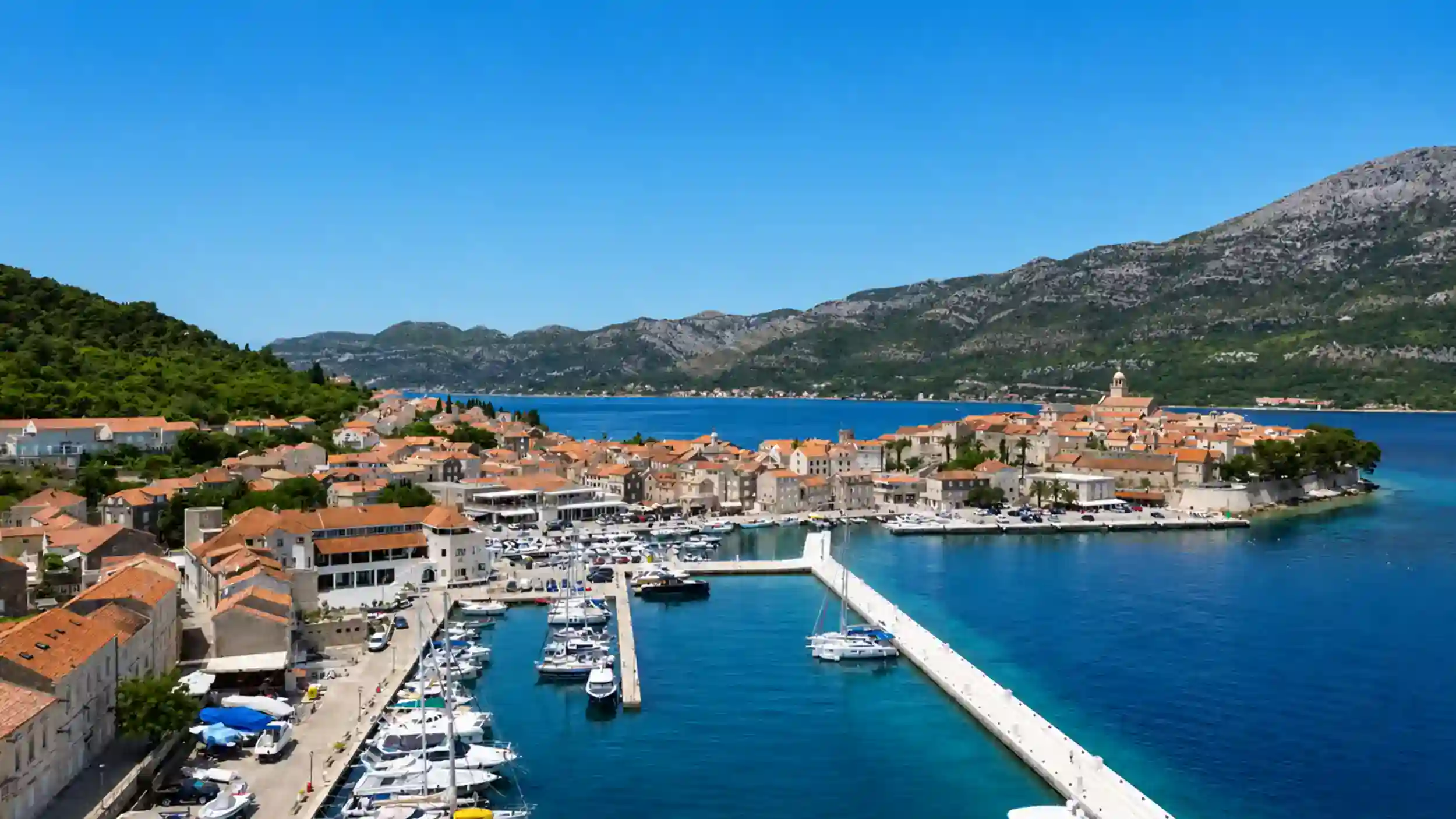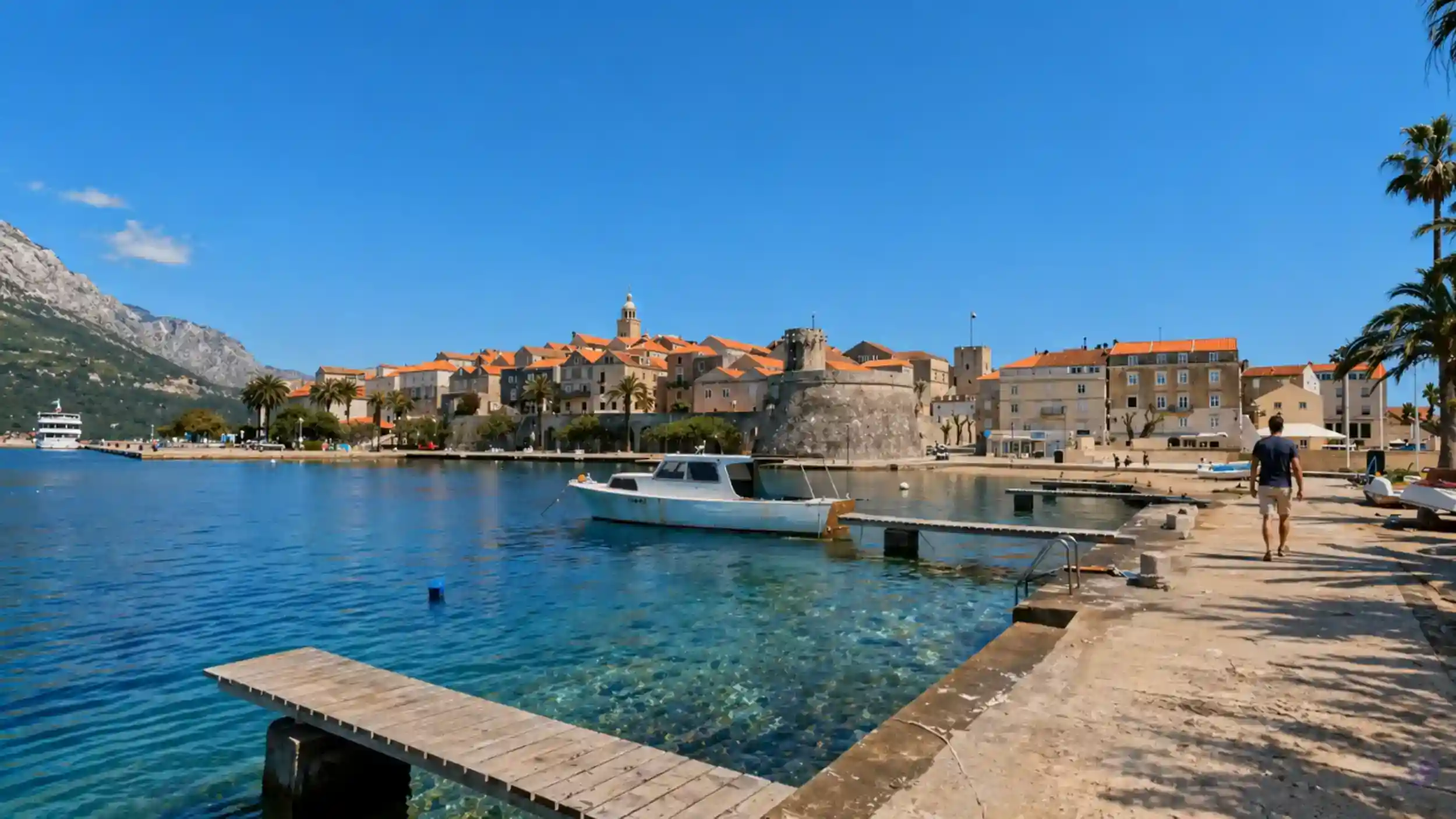
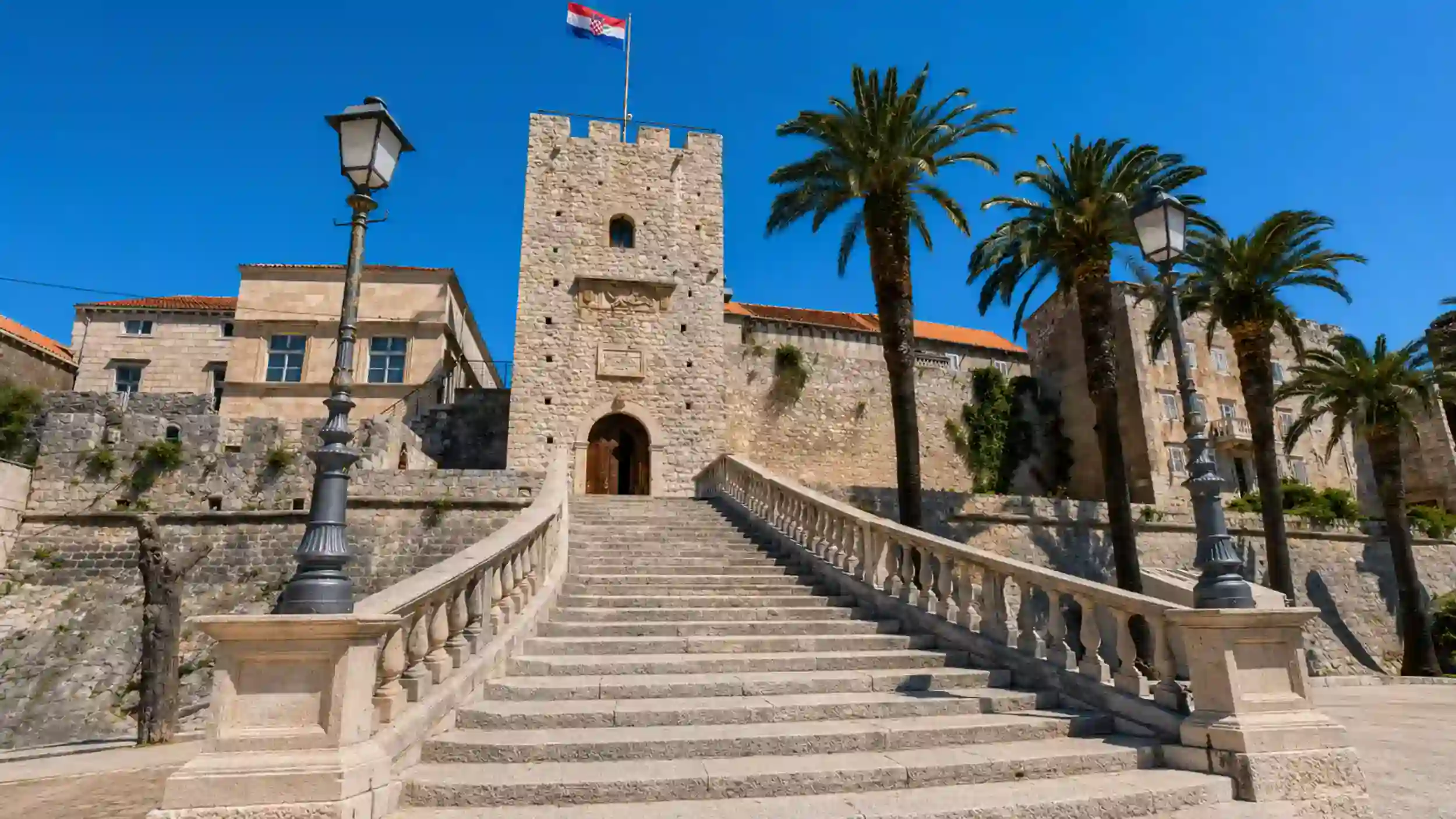
Is Korčula Town worth visiting? Yes, especially if you enjoy historic places without needing several days to explore them. The compact walled Old Town fills a narrow peninsula, putting stone streets, defensive towers and frequent Adriatic views within an area you can comfortably discover in a morning.
That small scale is part of the appeal. Stay for lunch, walk beside the water, then use the rest of the day for swimming, vineyards or another part of the island.
You do not need to stretch the sightseeing to make Korčula Town worthwhile.
🗺️ How Long Does It Take to Explore Korčula Old Town?
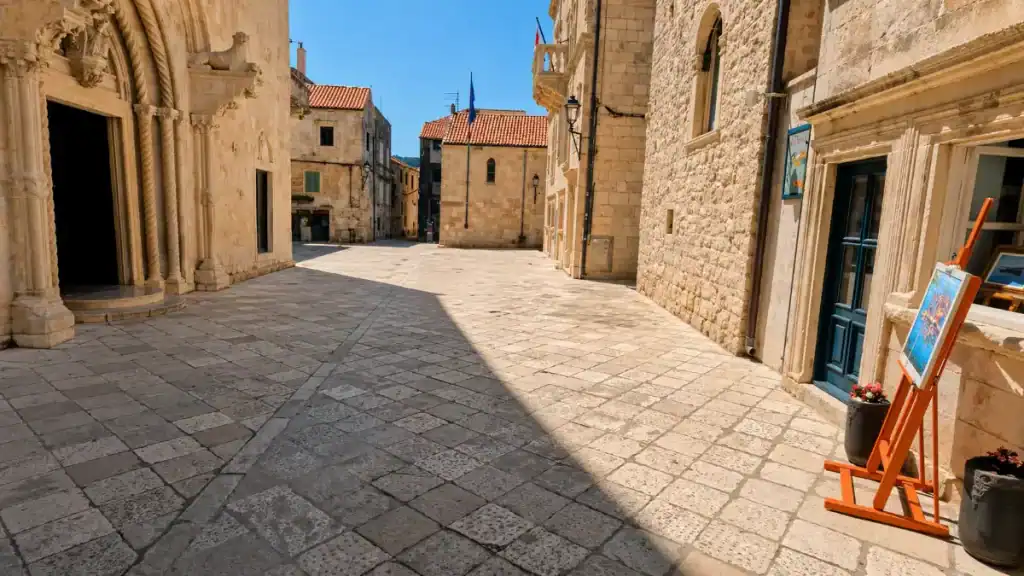
We found one to two hours enough to cover most of Korčula Old Town, although stopping for views, churches or cafés can easily stretch that. The peninsula does much of the navigational work for you: a central street runs north from the southern entrance, while smaller lanes branch towards the water on both sides.
You Can Wander Without Planning a Route
The street pattern has more thought behind it than first appears. Western lanes meet the central route at almost right angles, while those on the eastern side curve, helping protect the tightly packed streets from the prevailing northern wind while still allowing air to circulate.
Most of the Old Town can be covered in one to two hours, depending on how often you stop. We found there was little reason to follow a route: streets reconnect so frequently that wandering works better than checking a map at every junction.
If you want to slow that pace and explore beyond the walls, two days in Korčula Town gives you considerably more room.
🌊 Is Korčula Town Good for Swimming?
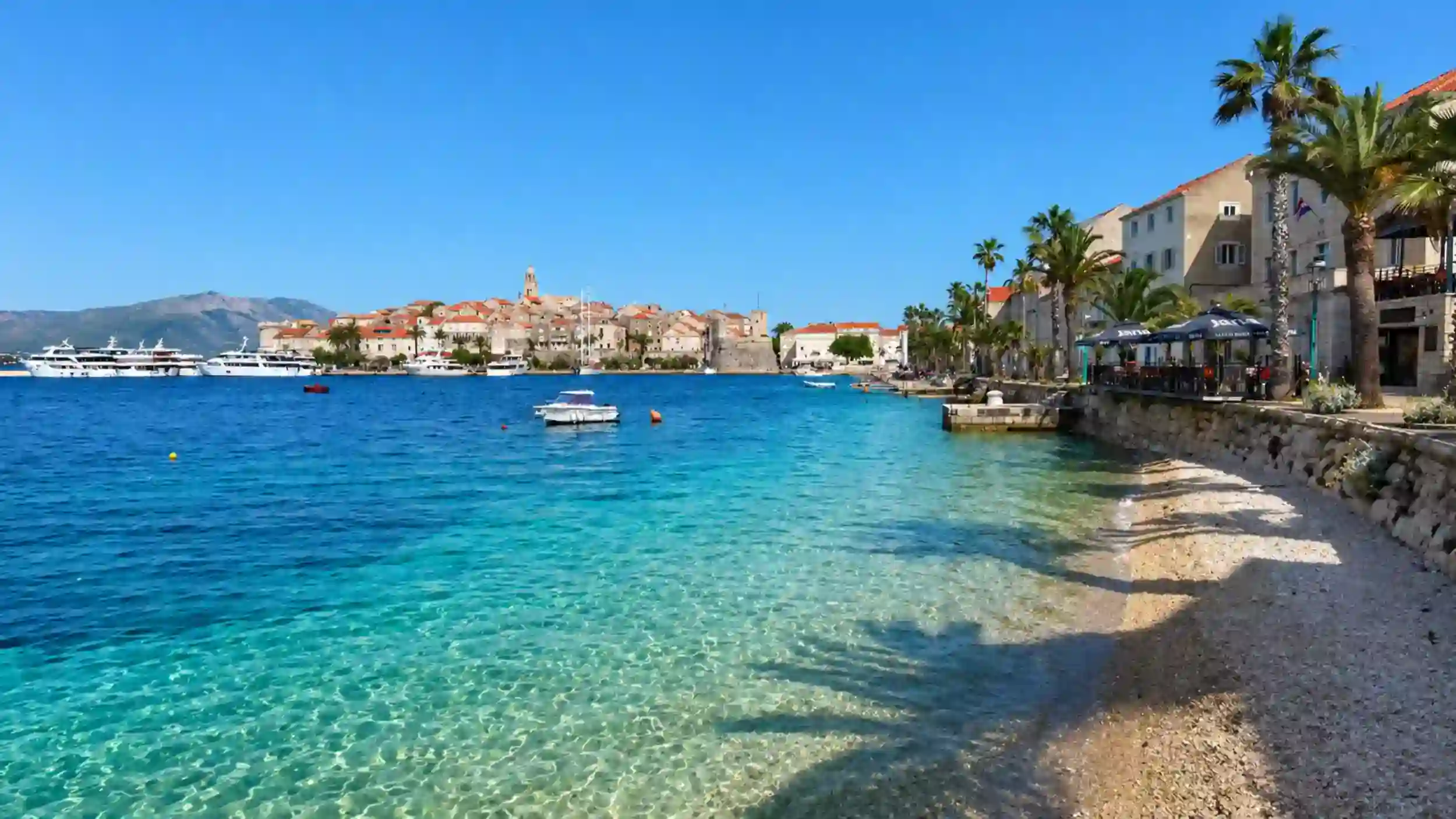
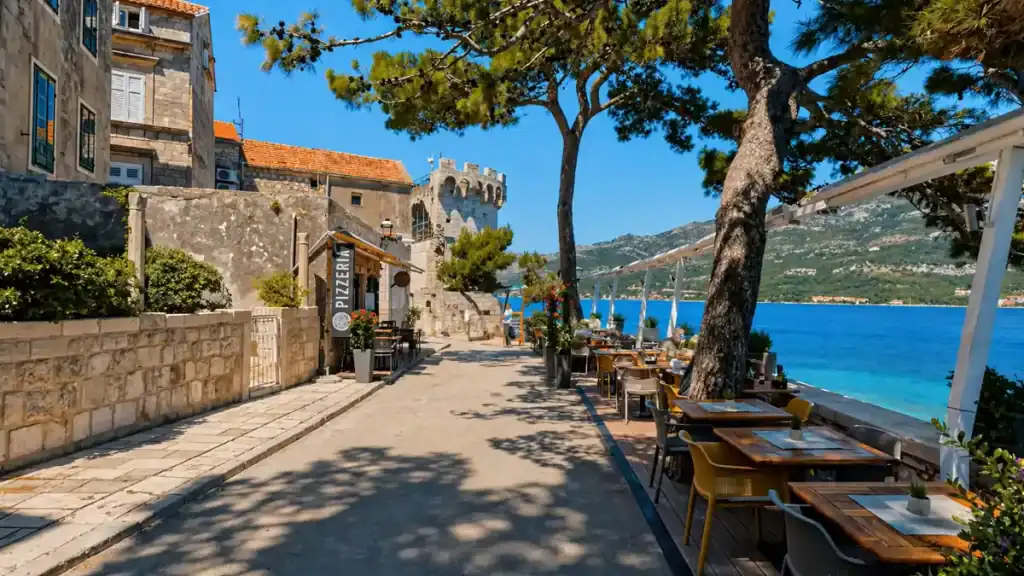
Yes, particularly if you are happy swimming from rocks or cut-stone access points rather than needing a conventional beach. That suited us because the narrow peninsula kept pulling the Adriatic back into view, and we could leave the stone lanes and be beside the water within minutes.
Outside the walls, a continuous waterfront path gives you a more open version of the town. Sections are lined with cafés and restaurants, some with tables almost at the water’s edge, so the walk can easily turn into a long stop rather than another sightseeing circuit.
You Do Not Need a Proper Beach to Swim
Rock and cut-stone access points appear around the shoreline, and the swimming spots around Korčula Town make it easy to pair a morning inside the walls with an afternoon in the water.
That suited us because swimming did not need to become a separate excursion. We could leave the stone streets and be beside the Adriatic within minutes.
If your idea of a beach day means a broader stretch of sand rather than slipping into the sea from rocks or stone, nearby Lumbarda is the stronger option.
👀 What Is There to See in Korčula Town?
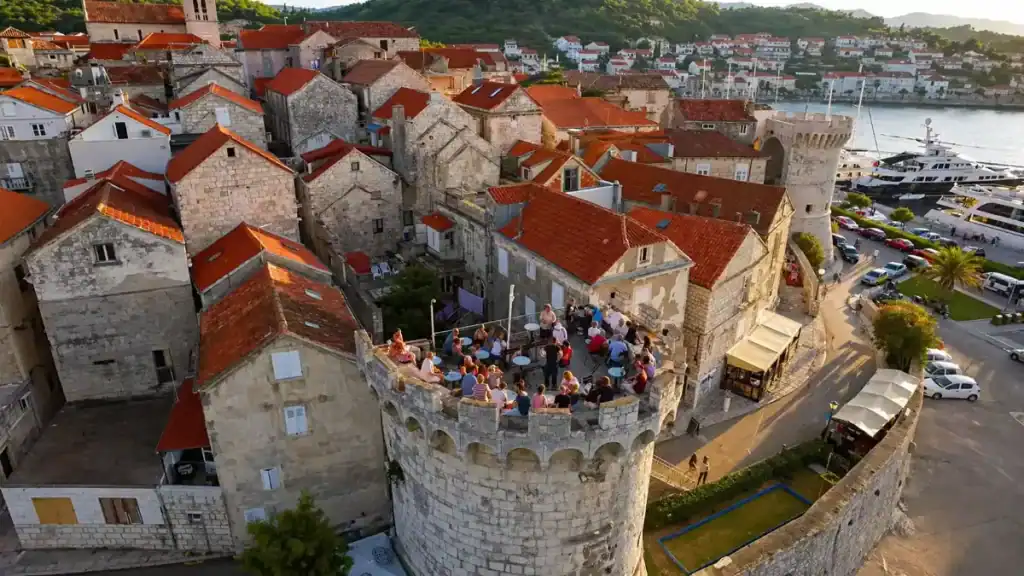
We found the Old Town itself more memorable than any long attraction list. The stone streets and waterfront did most of the work, with the Marco Polo story, Massimo tower and Moreška Sword Dance adding interest rather than carrying the visit on their own.
The Marco Polo Story Is More Complicated Than the Signs Suggest
The Marco Polo connection is promoted heavily, but there is no confirmed historical evidence that he was born in Korčula. The claim remains disputed, so I wouldn’t use the supposed birthplace as a reason to visit in its own right.
There is a firmer connection between Polo and Korčula through the naval battle fought off the island in 1298, when he was captured by the Genoese. That is quite different from proving he was born here.
Massimo Cocktail Bar is more unusual. It occupies the top of a defensive tower, reached by ladder rather than conventional stairs, with uninterrupted views across the rooftops and surrounding sea.
Then there is the Moreška Sword Dance, a distinctly local performance built around choreographed sword combat between two groups. Performances are scheduled during the tourist season rather than running continuously, so this is one experience worth checking in advance.
🧭 WHAT I WOULD PRIORITISE
Give the Old Town itself more attention than the Marco Polo story. The streets, waterfront and easy access to the sea are what make a short visit work.
🍇 Is Lumbarda Worth Visiting From Korčula Town?
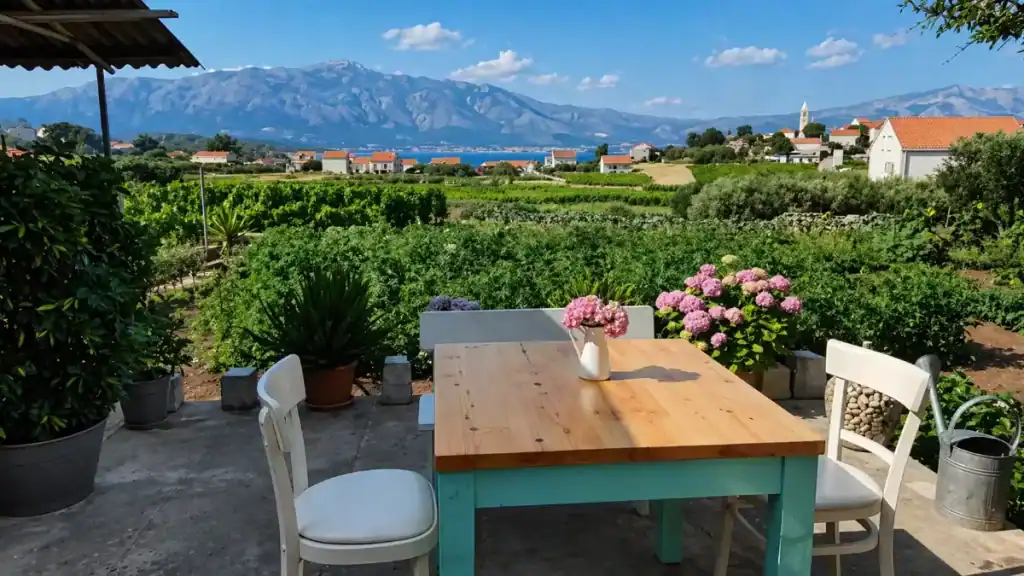
Yes, especially if vineyards or a proper sandy beach would improve the second half of your day. Lumbarda sits around six kilometres from Korčula Town and can be reached in roughly fifteen minutes by local bus, yet we found the landscape changed far more than that short journey suggested.
Stone lanes give way to low-lying countryside, vineyards and a more rural stretch of coast. The area is closely associated with local wine production, so it adds something genuinely different rather than simply extending the sightseeing.
Vineyards or Sand Can Fill the Second Half of the Day
A winery day in Lumbarda fits comfortably into a late morning and afternoon. For a short stay, I like that balance: the Old Town provides the history and architecture, while Lumbarda opens the day out into vineyards and countryside.
Nearby Vela Pržina is the alternative if a proper beach matters more than wine. Its sandy shoreline is relatively unusual on this part of the Adriatic, where pebble and rocky beaches are much more common.
That proximity is what makes the combination work. Medieval walls in the morning can become vineyards or sand by the afternoon without turning the day into a transport exercise.
⚖️ Is Korčula Town or Hvar Better for a Short Stay?
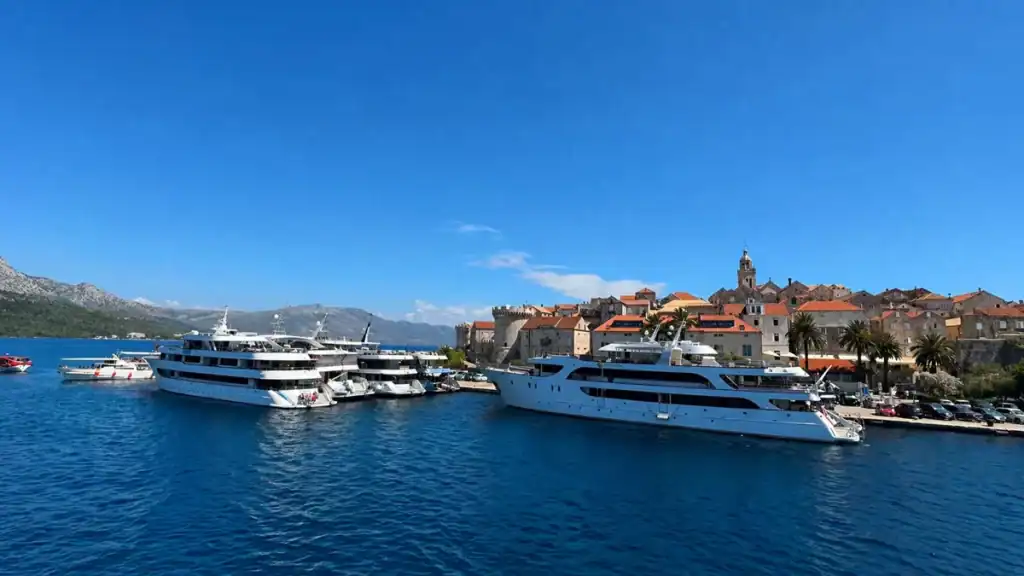
For the kind of short stay we prefer, I would choose Korčula Town: the historic centre is compact, swimming needs almost no planning and Lumbarda adds vineyards or sand without taking over the day. I would choose Hvar instead if nightlife, a livelier harbour scene and boat trips towards the Pakleni Islands were higher priorities.
The difference is not that one has history and the other does not. Both have attractive old centres. It is what happens after the sightseeing that separates them.
🏛️ CHOOSE KORČULA TOWN
For a smaller walled centre, quieter evenings, easy swimming and Lumbarda’s vineyards or sandy beach nearby.
⛵ CHOOSE HVAR
For more nightlife, a busier social atmosphere and easier access to the Pakleni Islands as part of the stay.
For Us, Korčula’s Small Scale Was the Advantage
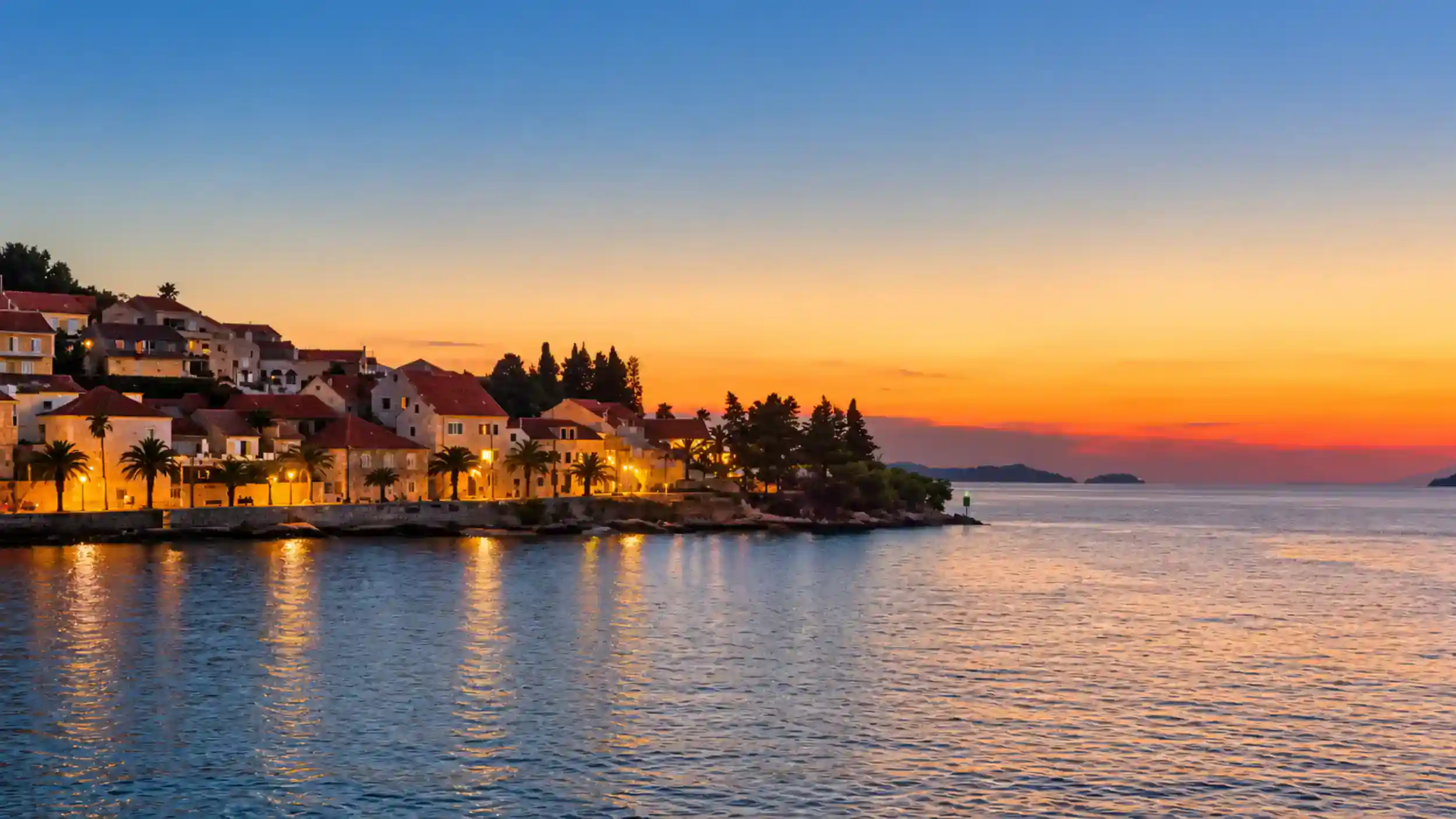
Fast-ferry arrivals can briefly concentrate crowds around the main gate, but we found the atmosphere changed quickly once we moved away from the central street. There are enough restaurants and visitor services to make a stay easy without needing to fill every hour with attractions.
A morning can cover the Old Town properly. Lunch can be beside the water, and the afternoon remains free for swimming or somewhere nearby such as Lumbarda.
If crowds concern you, Korčula Town’s busy times are worth considering when deciding when to explore the central streets, particularly around ferry arrivals.
Korčula Town does not need a long stay to justify the journey. For me, that is its strength rather than a limitation: a beautiful, manageable Old Town surrounded by water, with enough variety nearby to make one or two days feel complete without stretching the sightseeing.