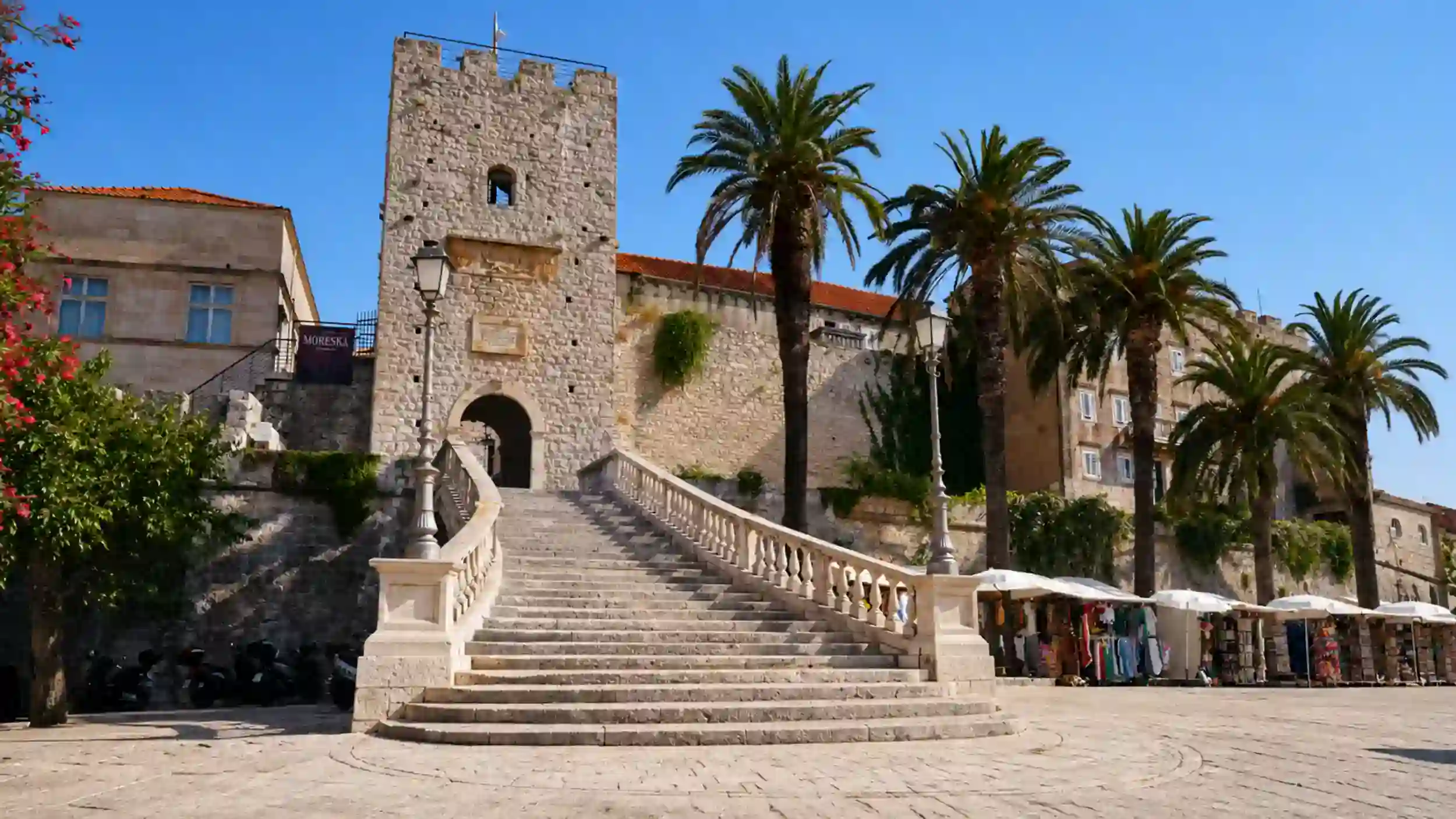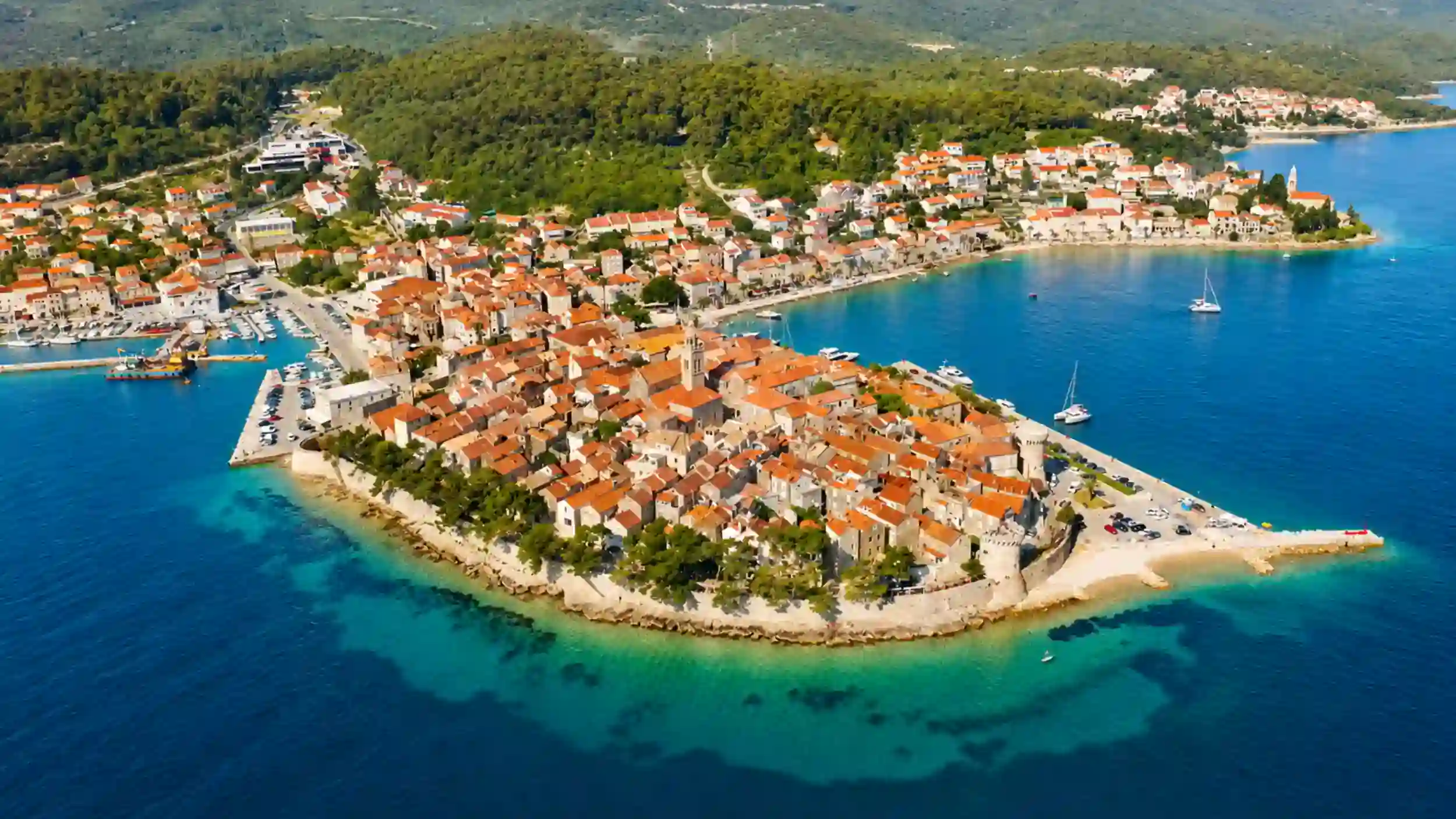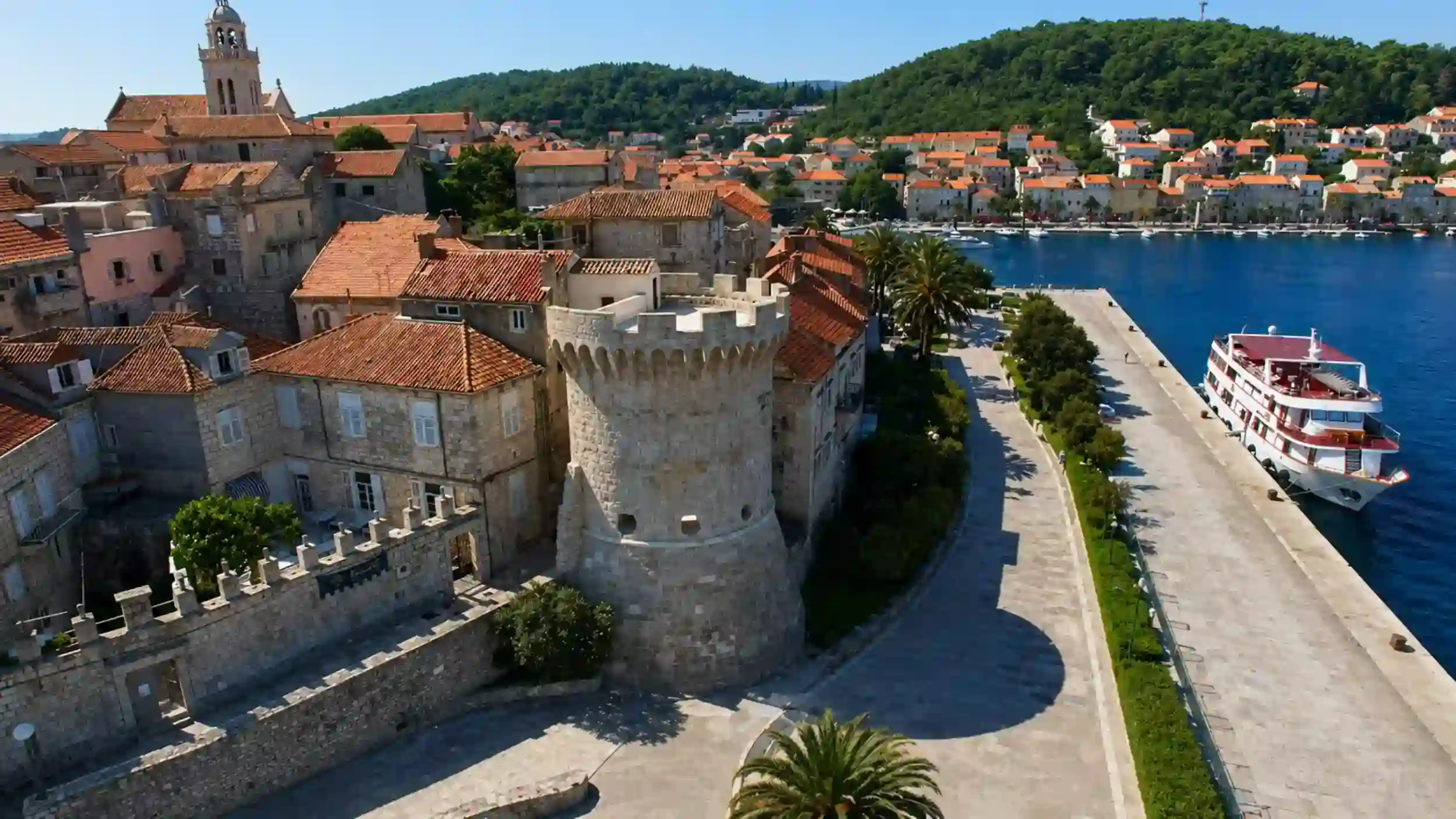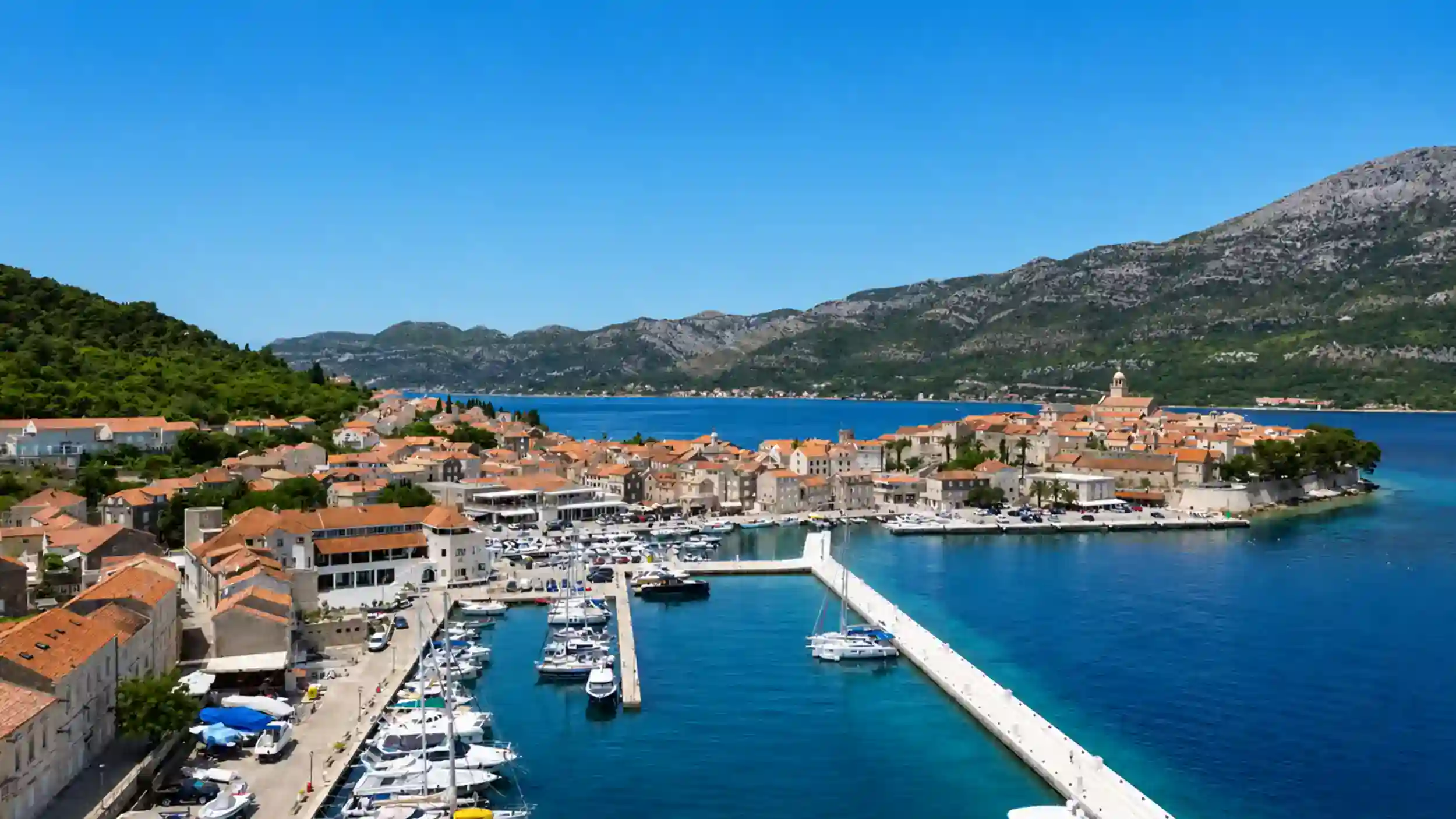
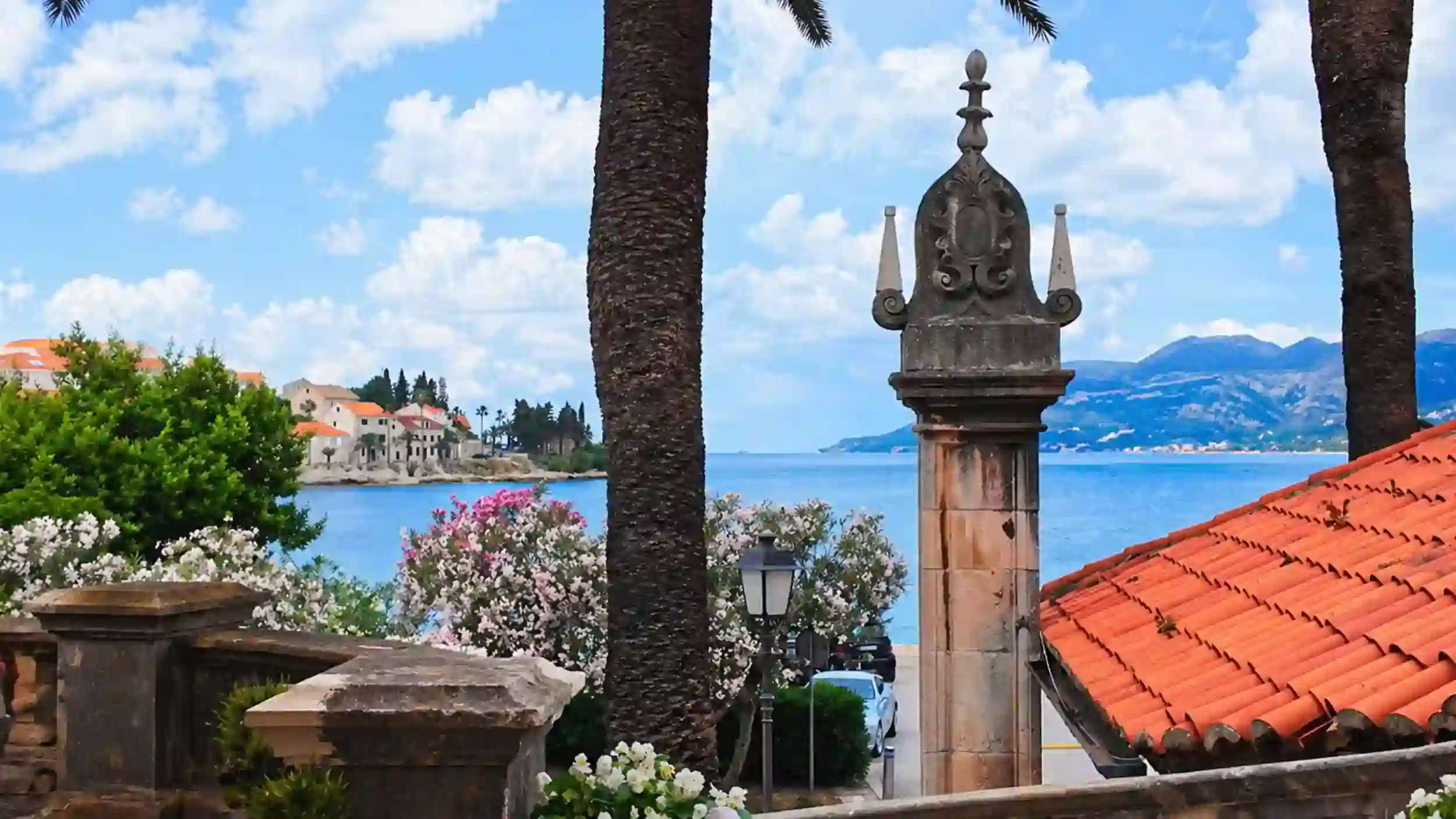
A Korčula Town winery day fits comfortably into half a day. Korčula is particularly known for its indigenous white wines: Grk around Lumbarda and Pošip around Čara and Smokvica. I found no reason to commit to an all-day wine tour; several unhurried hours in one wine area still left the evening free back in town.
I quickly realised the choice was geographical as well as vinicultural. Nearby Lumbarda is Grk country, while travelling further inland towards Čara and Smokvica takes you into the heartland of Pošip.
I would choose one or the other. Trying to squeeze both into the same outing would have turned a relaxed winery day into an unnecessary circuit.
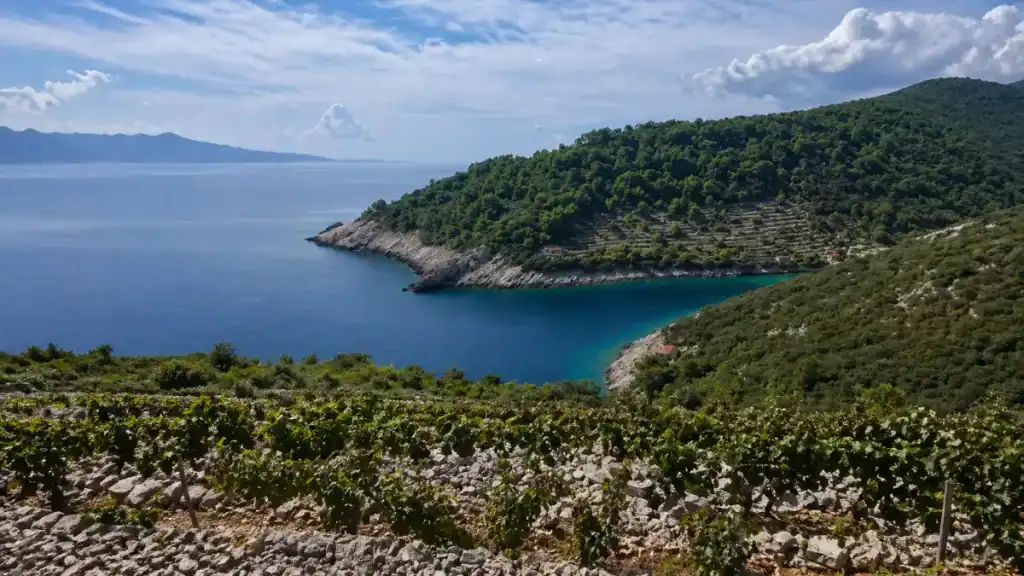
🍷 How Should You Start a Winery Day From Korčula Town?
I would leave Korčula Town around 9 or 10am rather than force an early start. By then the Old Town lanes were beginning to fill and the sun was already strong on the walls, which made swapping the centre for the vineyards feel like a natural change rather than another item on the day’s schedule.
I Started With the Island’s Two Grapes
Grk and Pošip were the two varieties I wanted to understand before setting out. Tasting one in town first gave me useful context before seeing the landscapes where the grapes actually grow.
Đilas Made an Easy First Stop
Đilas made an easy introduction because this small family winery is close enough to reach on foot from the Old Town. From there, I could decide whether to continue east towards Lumbarda or make Pošip the focus and head inland.
| If you want… | Head towards | Look for |
|---|---|---|
| 🍋 Distinctive local white | Lumbarda | Grk |
| 🍏 Classic Korčula white | Čara & Smokvica | Pošip |
| 🚶 Minimal travelling | Near Korčula Town | Đilas |
🍇 Is Lumbarda the Best Choice for Grk?
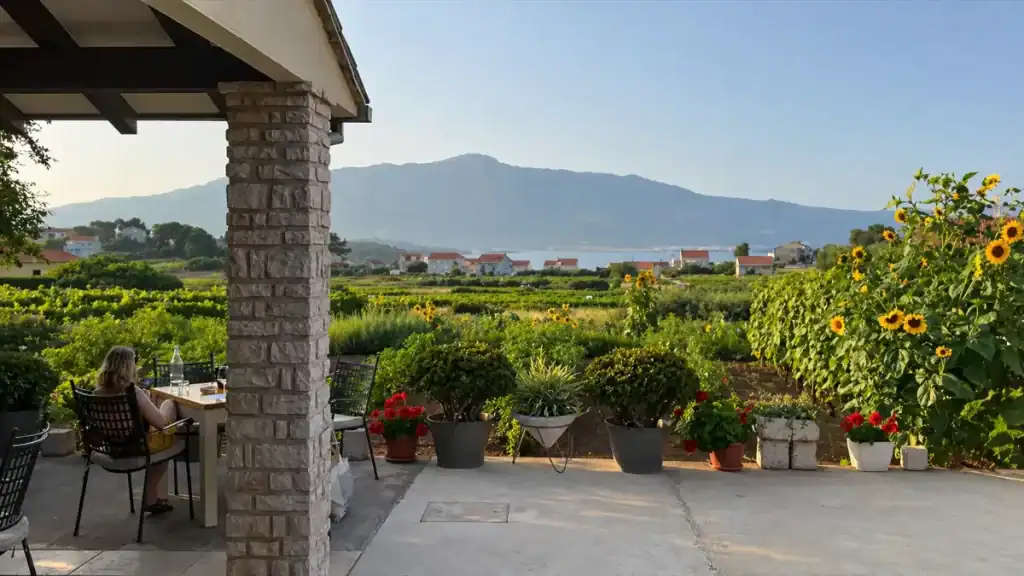
Yes, if Grk is the wine you particularly want to understand. Lumbarda is roughly five to six kilometres from Korčula Town, or around 15 minutes by local bus, and the surroundings changed quickly for me: stone walls, olive trees and sandy vineyard soils replaced the busy waterfront. This is the small eastern wine area most closely associated with Korčula’s distinctive indigenous white grape.
Zure Was My Easiest First Tasting
Zure felt particularly easy as a first tasting. I could walk through the vineyards, ask questions without feeling rushed and try its unusual sparkling Grk. The restaurant using produce from the farm also makes it somewhere I would happily allow more time.
Popić Had the Terrace I Wanted to Linger On
Popić felt less like a formal tasting to me. Its terrace looks across vineyards towards the sea, the welcome was relaxed and the generous pours made it very easy to stay longer than I had planned.
Bire Added Something Different
Bire added something different to the Lumbarda trio. The winery specialises in organic production, with vineyards climbing a slope above the surrounding countryside. Alongside the local Grk, its rosé was the bottle I would particularly look out for.
| Winery | Go for | Standout |
|---|---|---|
| 🥂 Zure | First-time visit | Sparkling Grk |
| 🌊 Popić | Relaxed tasting | Vineyard & sea terrace |
| 🌿 Bire | Organic wines | Grk & rosé |
🥂 Where Should You Go for Pošip on Korčula?
I would head inland to Čara and Smokvica rather than east towards Lumbarda. They form the island’s main Pošip heartland, and the landscape felt noticeably quieter once the coastal road fell behind. This was the better direction for me when tasting Korčula’s classic Pošip mattered more than keeping the journey short.
Čara Gave Me a Useful Pošip Starting Point
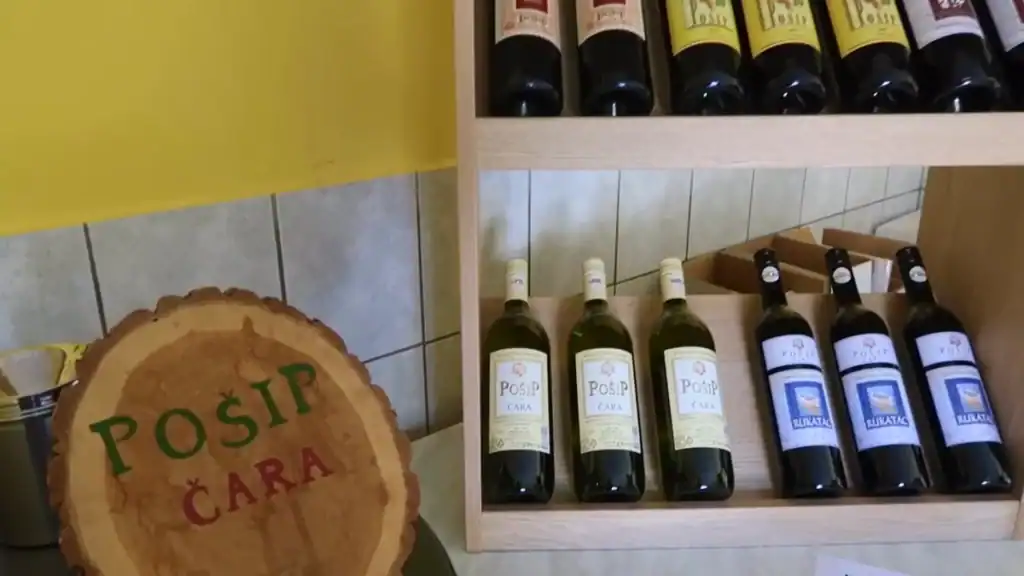
Pošip Čara produces on a surprisingly large scale considering how peaceful the valley felt. Its yellow-label Pošip gave me a useful introduction to the grape and a reference point before trying smaller producers.
Luka Krajančić Deserved More Than a Quick Stop
In nearby Smokvica, I found Luka Krajančić a more individual experience. He is closely associated with establishing Pošip as a serious wine and even paints his own labels. I would give his wines more time than a quick tasting stop.
Čara and Smokvica sit close to the island’s central road, so both are easy additions when exploring the villages beyond Korčula Town rather than destinations requiring a major detour.
🌅 How Long Do You Need for a Korčula Winery Day?
About four hours worked well for Lumbarda, while I would allow four to five hours for Čara and Smokvica because of the extra travelling. Either way, mid-afternoon was the point when I wanted to leave the vineyards. I could get back while Korčula Town was still relatively quiet and before the waterfront began filling again for the evening.
I found little benefit in stretching the winery day into the evening. Getting back earlier left time to rest before the promenade and restaurants became livelier as the temperature dropped.
If you want to plan what happens after you return, an evening in Korčula Town fits naturally after a few hours in the vineyards.
🧭 What Is the Best Way to Plan a Korčula Winery Day?
I would choose one wine area rather than try to cover the island. Lumbarda worked best when I wanted Grk, several wineries close together and an easy day without driving. Čara and Smokvica made more sense when Pošip was the priority. Trying to combine both routes would have taken away much of what I enjoyed about the experience.
Do You Need a Car for a Korčula Winery Day?
Not for Lumbarda. Local buses take around 15 minutes from Korčula Town, summer water taxis provide another option, and cycling is realistic if you are comfortable with a few hills and sections shared with traffic. Once there, I found several wineries close enough to combine on foot.
For me, that makes Lumbarda the simplest choice if everyone wants to taste rather than nominate a driver. Čara and Smokvica require more transport planning, so an organised transfer or tour makes more sense if Pošip is the priority.
What I Would Do Before Setting Out
- 📞 Call ahead where possible. These are working family wineries rather than large visitor attractions.
- 💶 Carry cash in euros for tastings or bottles. Card acceptance is not universal at small family wineries, so I would not rely on a card alone.
- 💧 Drink water between tastings, particularly during hot afternoons.
- 🕙 Allow a late morning and early afternoon rather than sacrificing the whole day.
| Choose | Best if you want | Allow |
|---|---|---|
| 🍇 Lumbarda | Grk + several wineries | About 4 hours |
| 🥂 Čara & Smokvica | Pošip + quieter interior | About 4–5 hours |
| 🍷 Both routes | Maximum variety | Better on separate days |
The best Korčula Town winery day was not the one with the most tastings. I would pick one wine region, give the wineries enough time and return to town before the evening begins.