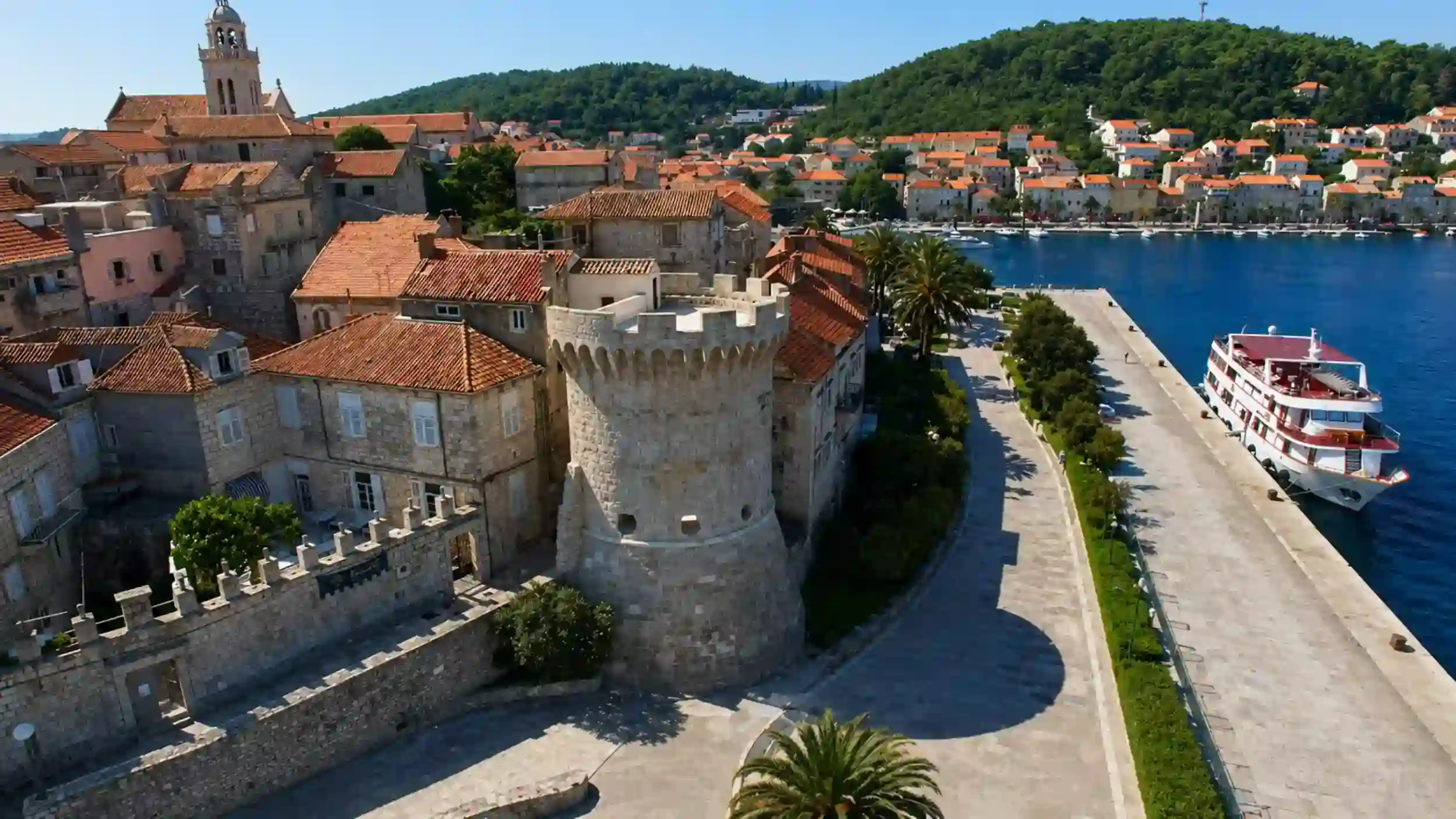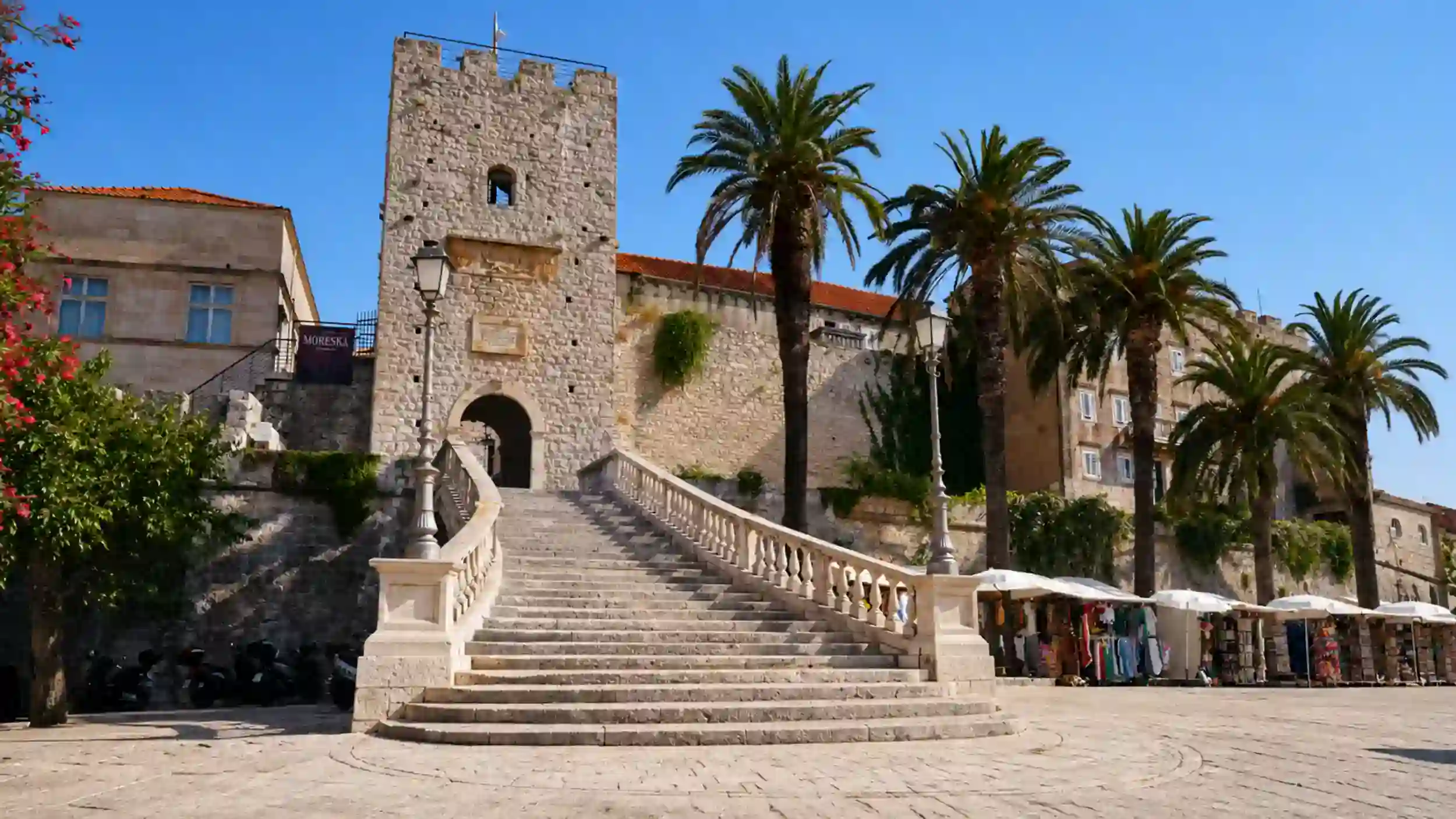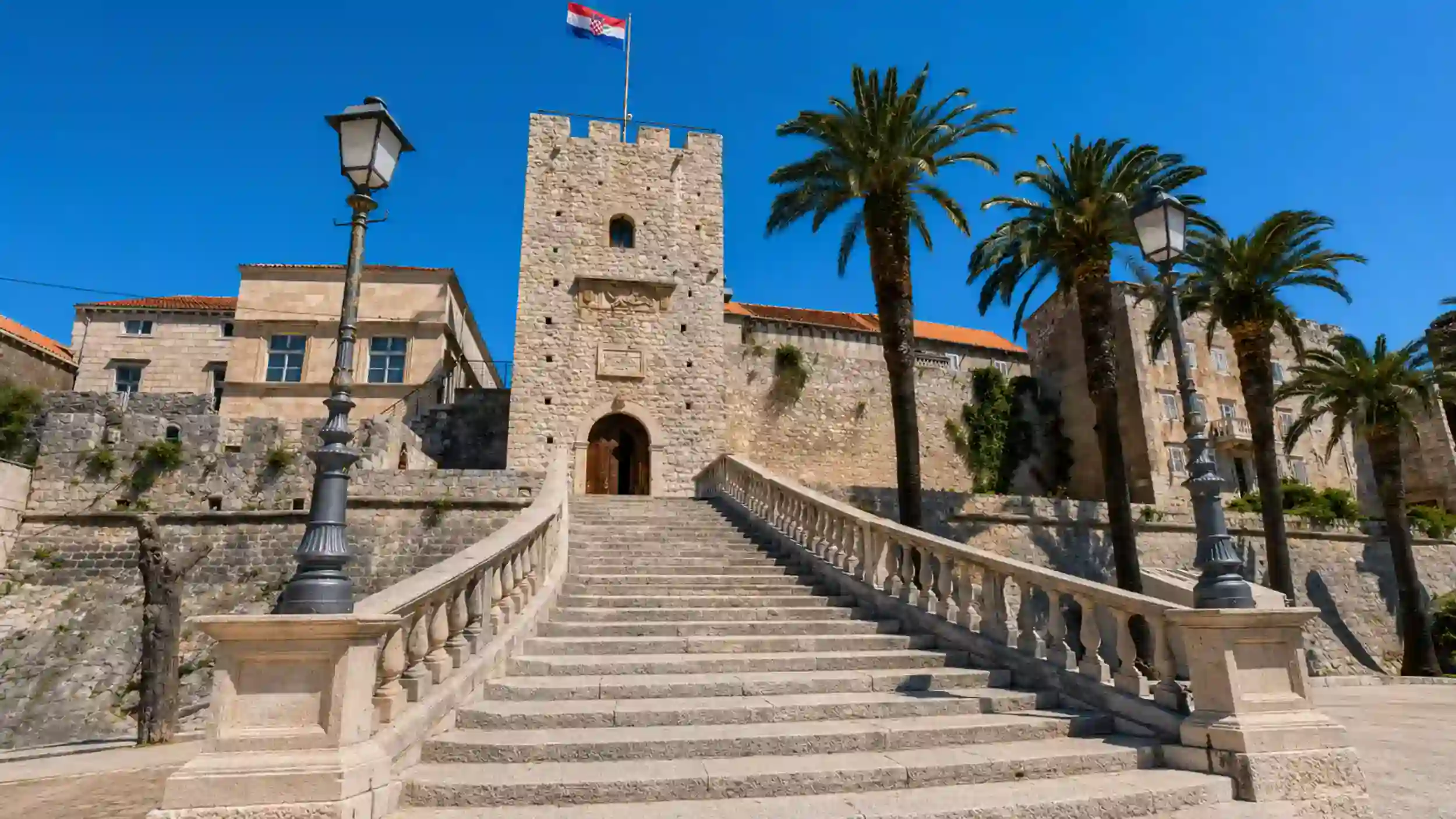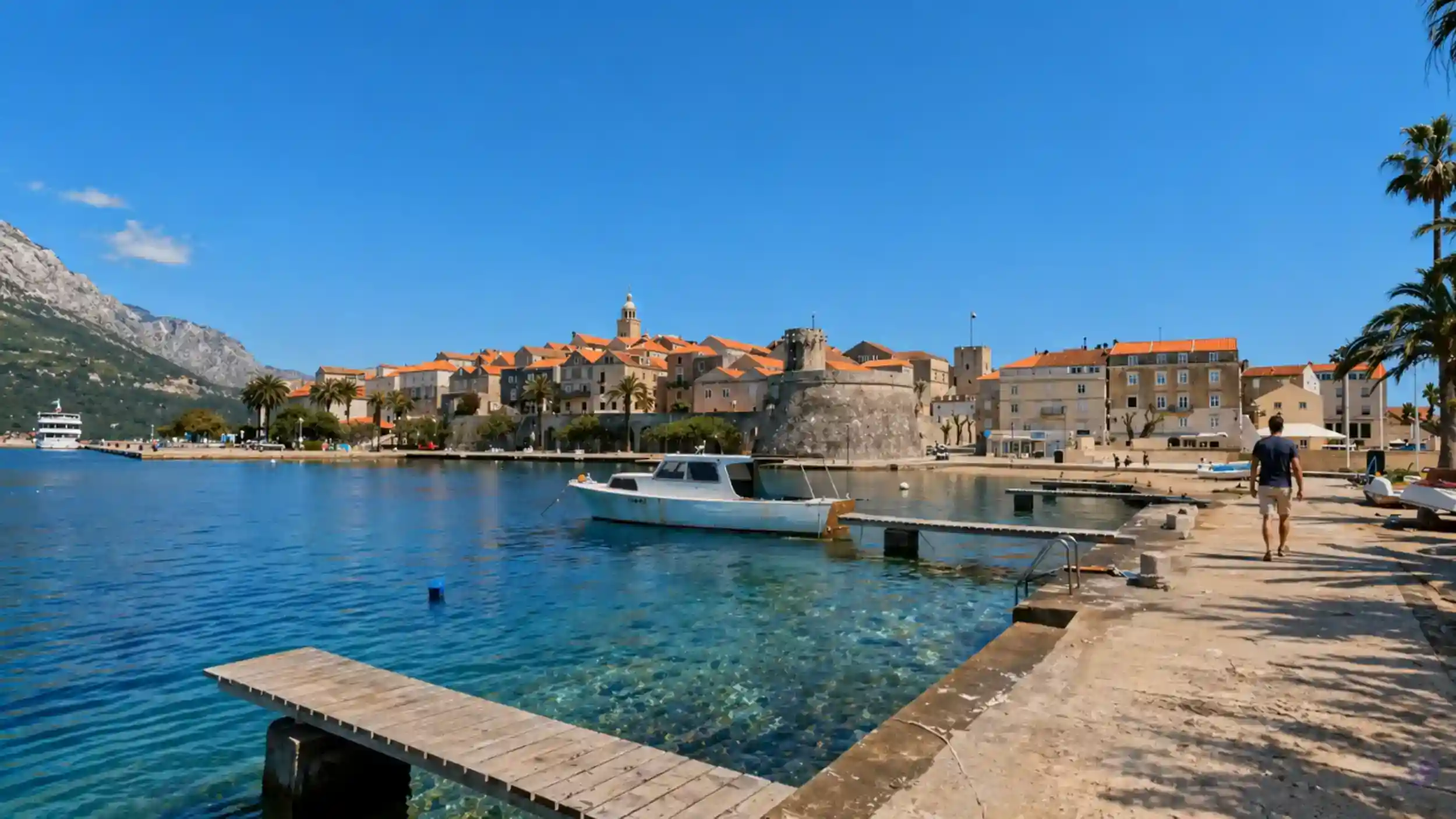
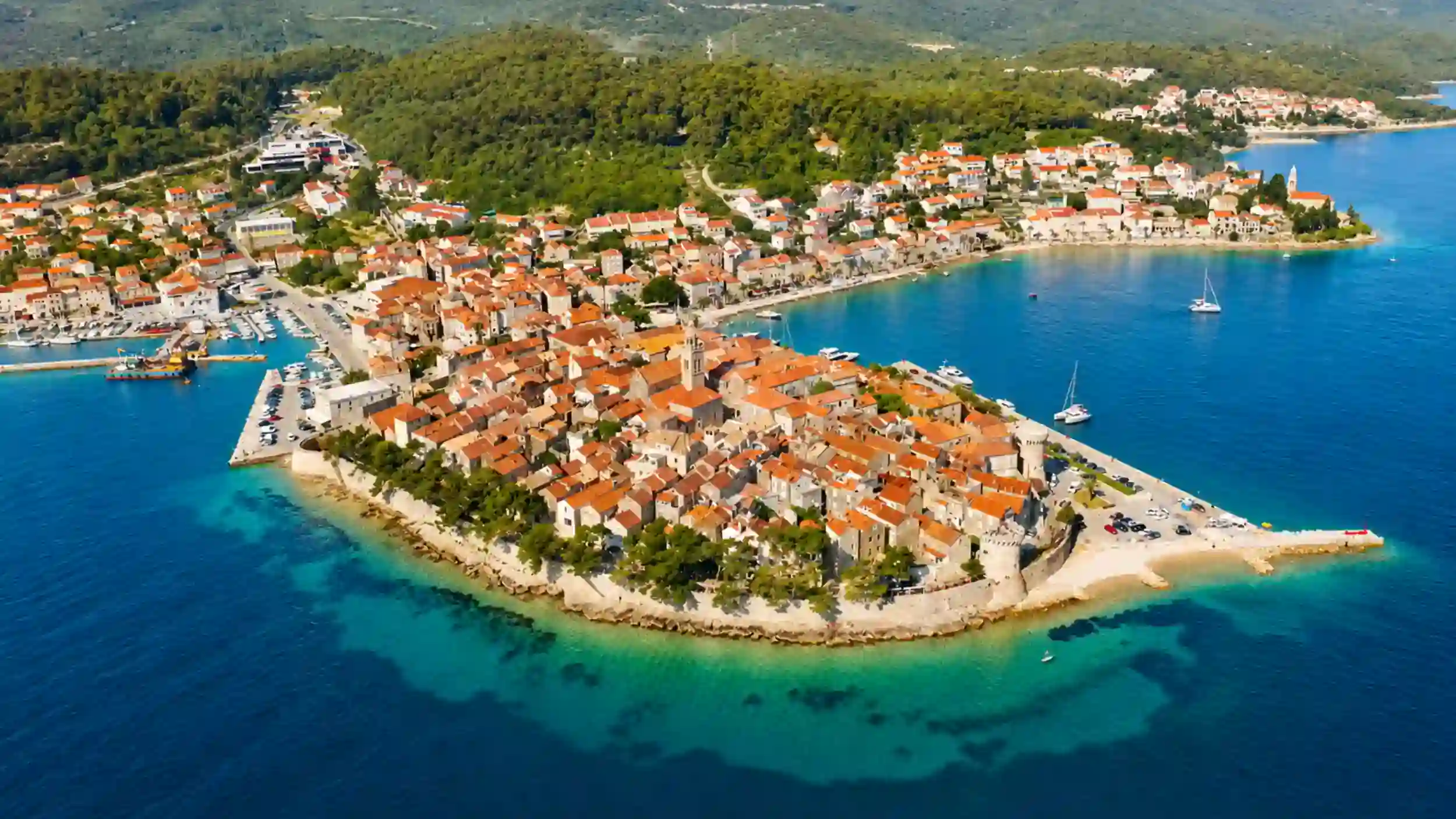
The main sights of Korčula Old Town fit comfortably into a morning. I could cover the land gate, St Mark’s Cathedral, bell tower, Marco Polo stop, walls and sea gate without rushing, and by lunchtime the streets had started repeating themselves. That compactness turned out to be useful rather than limiting: the afternoon was still free for Badija, Vrnik or the sandy beaches around Lumbarda.
What surprised me was how little distance was needed to make the second half of the day feel completely different. Once the Old Town had become familiar, a short boat ride was enough to swap stone lanes for monastery grounds, a swimming cove or sand.
🏰 How Long Do You Need for Korčula Old Town?
I had expected Korčula Old Town to occupy most of the day, but a full morning was enough without making it feel rushed. I entered through the land gate beneath Revelin Tower, passed the Merchants’ Lodge and small Chapel of Saint Michael almost immediately, then let the streets draw me towards the cathedral square.
Two to three hours covered the principal sights for me, including time inside St Mark’s and the bell tower rather than simply walking past them. I would still allow a full morning if you want the freedom to stop, double back through the lanes and reach lunch without watching the clock.
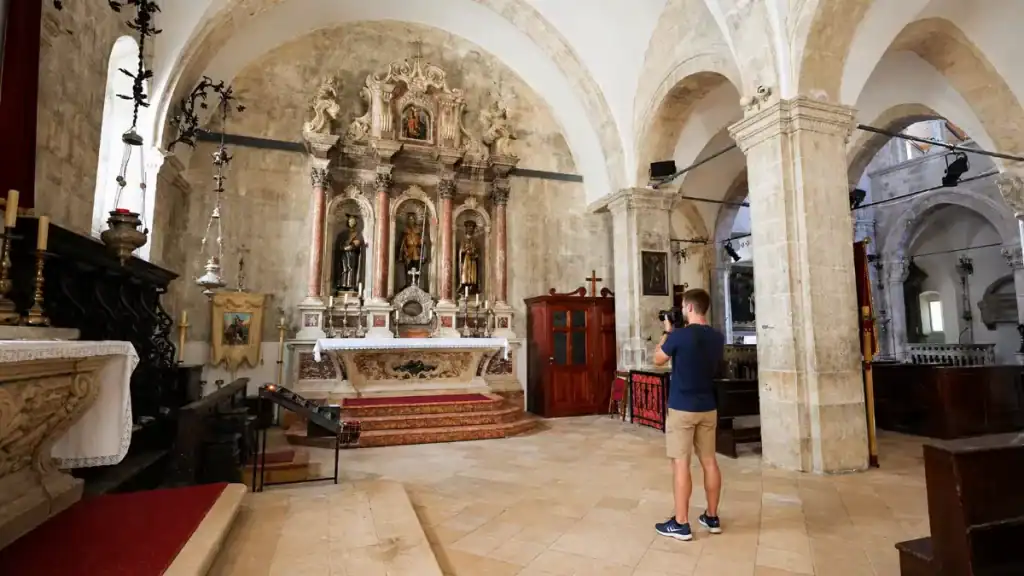
Is St Mark’s Cathedral Worth Going Inside?
For me, yes. The asymmetrical nave and painting attributed to Tintoretto held my attention longer than I expected, then the bell tower changed the scale completely. After looking closely at stonework and interiors, I was suddenly above the roofs with the channel and surrounding islands doing the work.
The Riznica, or Bishop’s Treasury, sits beside the cathedral. Current visitor information lists the Treasury separately, with cathedral admission included for visitors who have already entered the Treasury. I would therefore check there first rather than automatically paying at the cathedral entrance and discovering afterwards that the order mattered.
🎟️ TICKET TIP
If you want both the Riznica and St Mark’s, start with the Treasury and ask what the current ticket includes. Do not assume the museum-wide combined ticket is the same thing: that ticket covers a different group of Korčula attractions.
The sea gate gave the morning a natural finish. By then I was no longer finding an entirely new part of the Old Town each time I turned a corner, which was a better signal to move on than checking whether I had completed a sightseeing list.
🧭 Is the Marco Polo Stop Worth Visiting?
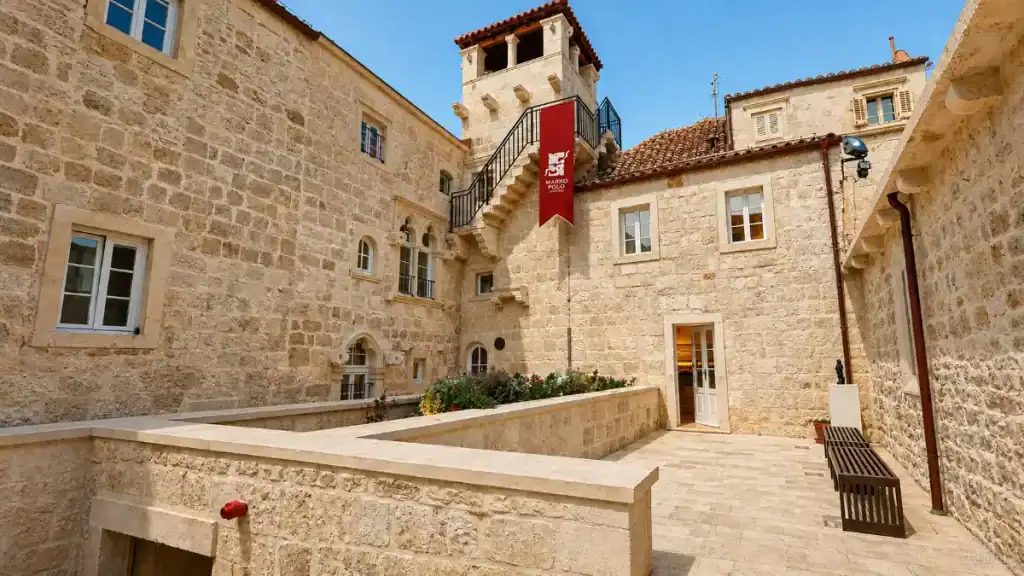
I would include the Marco Polo stop while already exploring the Old Town, but I would not reorganise the morning around it. Korčula’s connection with him is interesting, yet the claim that he was born here remains historically disputed, and knowing that changed what I expected from the visit.
When I visited, the tower associated with the birthplace claim could be seen from the street but was closed to visitors. It took only a few minutes to look around, and that felt about right. If the Marco Polo story particularly interests you, check the current visitor arrangements because the wider interpretation offer has changed over time.
How Do You Know When You Have Seen Enough of the Old Town?
The cathedral square, main gate and route towards the sea gate kept reappearing. By the third circuit, that familiarity had become noticeable. Korčula had not become boring; I had simply reached the point where another lap would add less than going somewhere new.
Lunch became the dividing line. I could sit beside the waterfront knowing the main sights were covered, then decide whether the afternoon needed swimming, another island or sand.
If I was not ready to leave town immediately, swimming in Korčula Town gave me an easy way to extend the morning without committing to another journey.
🚤 What Should You Do After Seeing Korčula Old Town?
I would use the afternoon to leave the Old Town rather than keep circling streets that had already become familiar. The harbour made that easy: the hop-on hop-off taxi boat links Badija, Vrnik and Lumbarda, letting me move between three very different stops without returning to Korčula Town each time.
The advertised daily ticket is currently €20 per person online, reduced from €25, and is valid through the day. Prices can change, so I would check before relying on that figure. For me, the value was not simply transport: one ticket removed the need to choose between monastery grounds, a tiny quarry island and a sandy beach before I had seen any of them.
🚤 THREE STOPS, THREE DIFFERENT REASONS
🦌 Badija: monastery, walking and a swim
🪨 Vrnik: stone-quarry history, tiny village and clear water
🏖️ Lumbarda: sandy beaches and an easy place to slow down
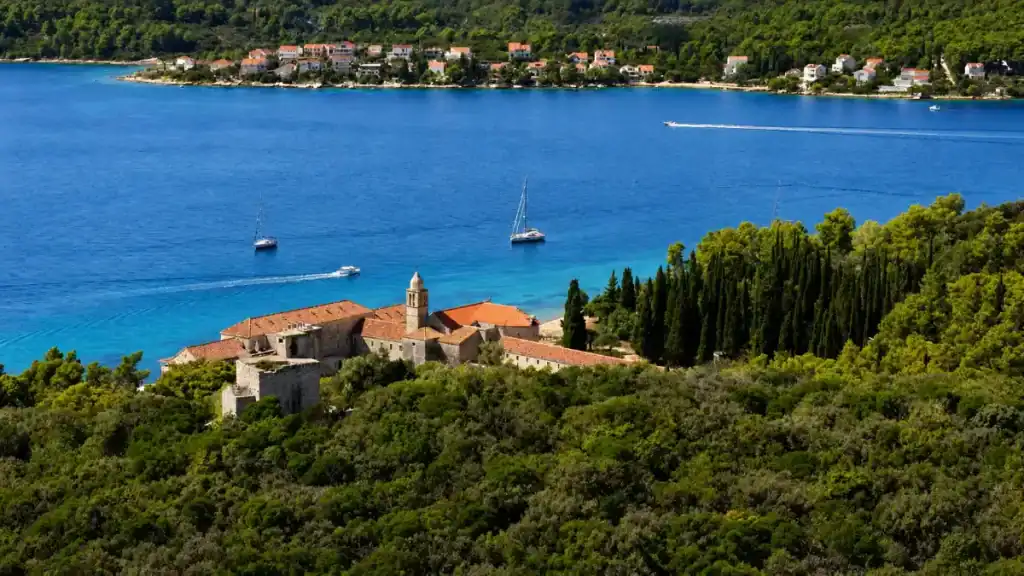
Badija was the stop that made me want to explore rather than immediately get back into the water. A 14th-century Franciscan monastery stands close to the shore, with a quiet Gothic-Renaissance cloister behind it. Deer roam freely around the island and sometimes approach visitors, although feeding them is discouraged.
🪨 Is Vrnik Worth Adding to the Boat Circuit?
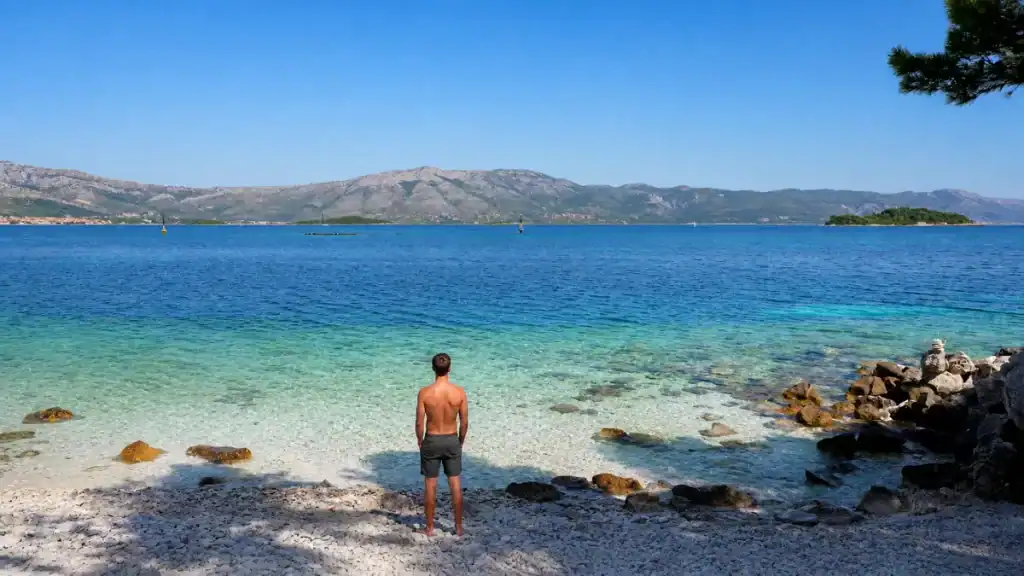
Yes, if you like short stops that combine a little history with an easy swim. Vrnik changed the mood again: this tiny inhabited island is shaped by centuries of stone quarrying, with old workings, a small village, church and pebble swimming spots rather than a long list of conventional attractions.
I did not need an itinerary there. The beach sits close to the arrival point, so swimming quickly became the obvious thing to do. Clear water made it inviting, but sea urchins around the rocks were enough reason to keep my shoes on until I had chosen a safe entry.
What Makes Vrnik Different From a Swimming Stop?
The old stone quarries explain much of Vrnik’s identity and are what distinguish it from simply stopping at another swimming spot. I liked that the history did not require a formal attraction: it was part of the landscape I was already walking through.
That made Vrnik work best for me as a short stop. Walk through the settlement, look at the quarrying landscape, then swim before the next boat arrives.
🏖️ Is Lumbarda Worth Adding for a Sandy Beach?
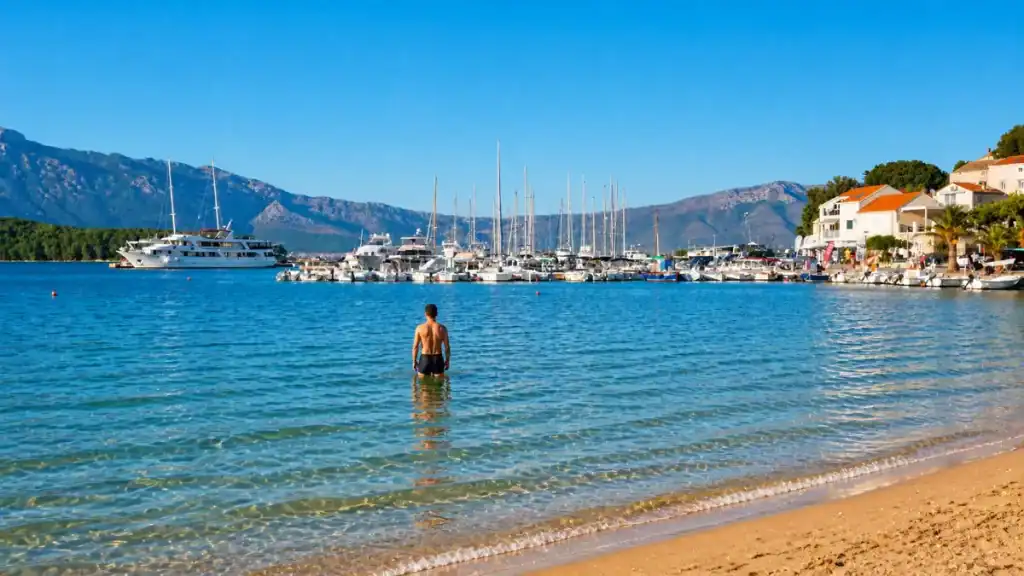
Yes, particularly if the rock and pebble swimming around Korčula Town has left you wanting proper sand. After those entries and Vrnik’s pebble shoreline, Lumbarda felt different underfoot before I had done anything else. It gave the afternoon something neither the Old Town nor the small islands had provided.
Vela Pržina is the largest and best-known choice, with a broad sandy shoreline, shallow water and more facilities. That popularity is also the compromise: in July and August it can become busy.
Which Lumbarda Beach Should You Choose?
I would start with Vela Pržina for the fullest beach experience, then choose Bilin Žal if I wanted something smaller and more sheltered. Bilin Žal sits on the other side of the Lumbarda peninsula and has shallow sandy entry that works particularly well for families.
Tatinja adds another small sandy option close to the village centre. I would still choose Vela Pržina when the priority is the fullest beach experience, Bilin Žal for a smaller and calmer-feeling setting, and Tatinja when convenience matters more than scale.
That was ultimately why leaving Korčula Town worked so well. The Old Town had not failed to fill the day; it had finished at the right moment. A morning of cathedral stone, gates and compact streets could become an afternoon of monastery paths, quarry history and sand without any of the journeys feeling disproportionately long.
For one easy day, I would keep the geography tight: give the Old Town the morning, then use the boat circuit for one or more of Badija, Vrnik and Lumbarda. That combination worked without a car and avoided spending a large part of the day in transit. For more ambitious options, Korčula Town day trips covers how much further you can realistically go.