The drive from Baiona to O Grove takes about 1 hour 15 minutes on the fastest route, covering roughly 80 km. I would allow most of a day instead. The better experience is not the quickest transfer north, but a slower Rías Baixas journey with time for Monte A Groba, coastal viewpoints, harbour towns and Praia da Lanzada before reaching O Grove.
I would also leave Baiona early rather than set a firm arrival time in O Grove. A stop that looks like ten minutes on the map can turn into a beach walk, a viewpoint or lunch beside a harbour. That happened often enough that I stopped thinking about the route in terms of mileage.
The useful question is not how quickly you can reach O Grove, but how much of the coastline you are prepared to miss by hurrying.
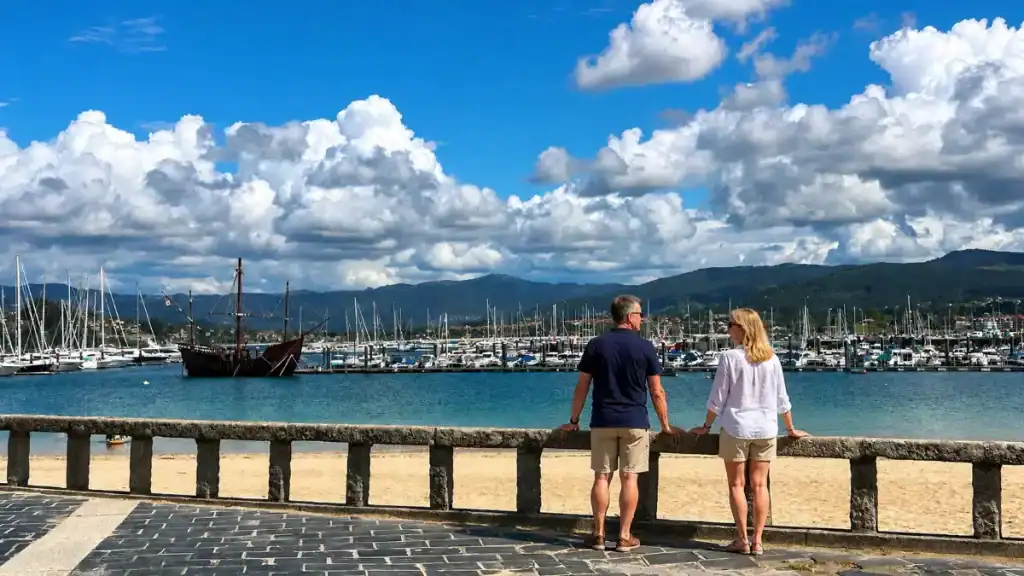
🚗 The Fast Drive Is About 1 Hour 15 Minutes, but I Would Allow Most of the Day
The direct drive is only about 1 hour 15 minutes, but I would allow most of the day if the journey itself matters. The roads were generally manageable. What slowed me down was everything beside them.
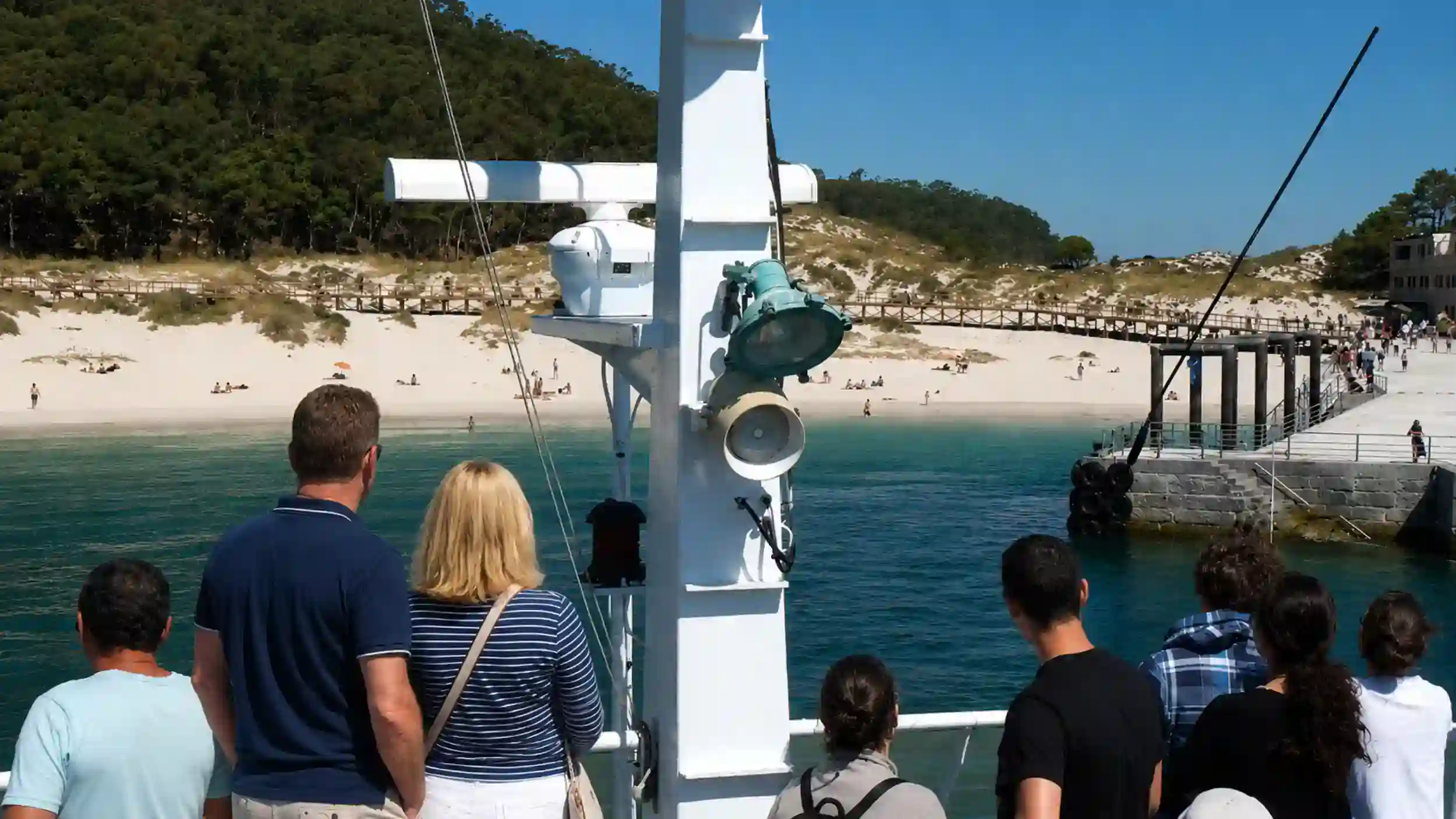
A beach would appear through the trees, fishing boats would fill a small harbour, then another viewpoint would open across an estuary just when I thought I was ready to make progress.
The Stops Matter More Than the Mileage
I kept seeing the same behaviour at roadside viewpoints: cars pulling in for what looked like a two-minute stop, people walking to the railings, then staying once they saw the view.
My own day fell into that rhythm. Stop briefly. Walk to the viewpoint. Look across the water. Back into the car. Then another beach sign appeared farther ahead.
The route feels more like a sequence of connected coastal pauses than one continuous drive. If you only want to reach O Grove, use the faster roads. If the drive itself is part of the day, leave considerably more time.

🌅 I Would Leave Baiona Early
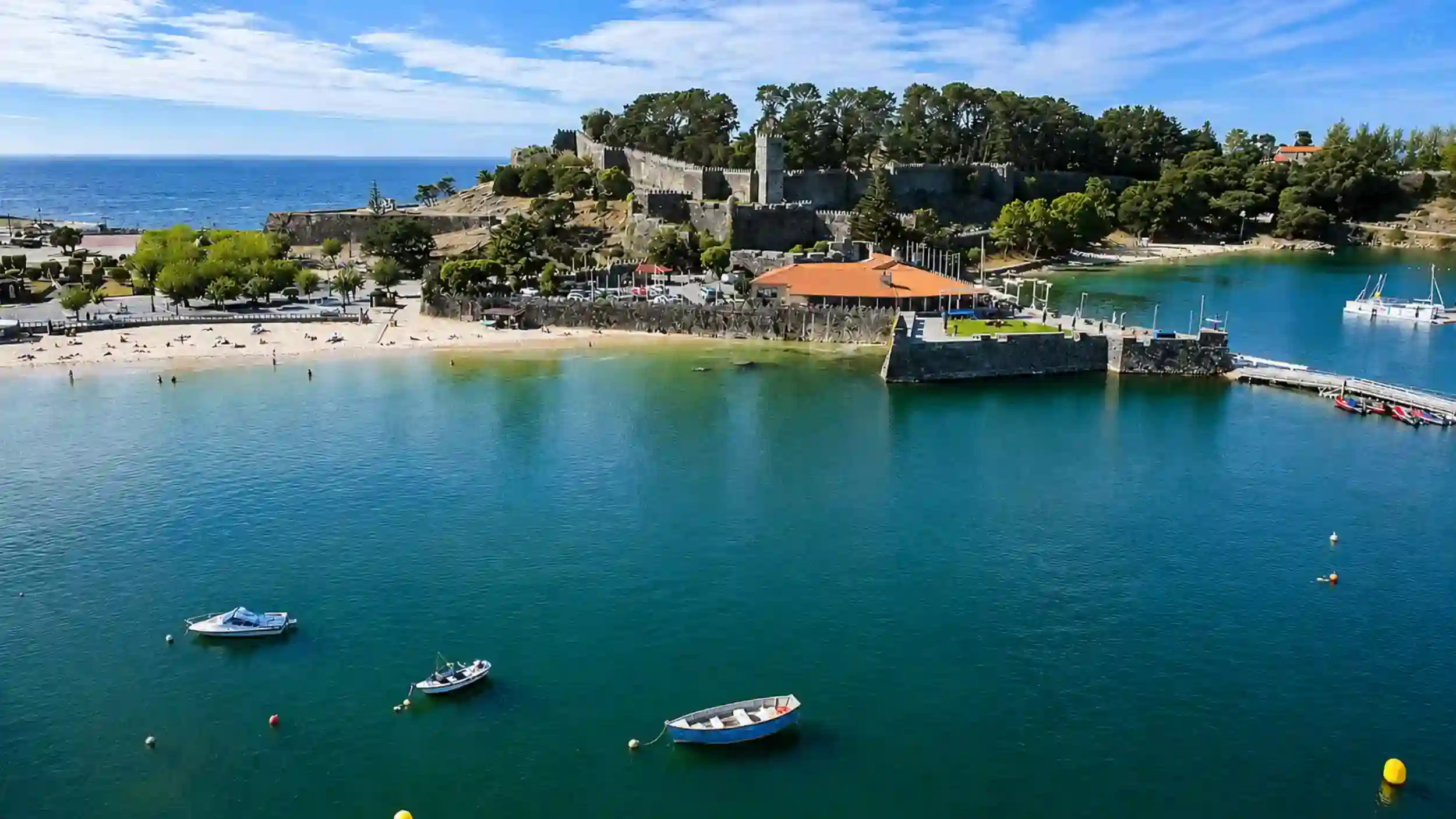
I would leave Baiona early, before a chain of unplanned stops starts eating into the day. The harbour and Monterreal Fortress also put the Atlantic character of this part of Galicia in front of you before the driving begins.
Early in the morning, the waterfront still feels calm. The harbour sits below the old fortress walls, fishing boats move across the bay and there is time to look around without feeling that the road is already eating into the day.
That is when I would start. Leaving in the morning gives you room for the unexpected stops that make this journey worthwhile, while also putting the popular beach stretches ahead of the busiest afternoon period in summer.
Baiona Is Worth a Look Before You Leave
Walking part of the fortress wall before driving north gives the wider coastline some context. From around Baiona, you can see the Atlantic stretching towards the islands while greener hills rise immediately behind the town.
That sea-and-mountain contrast became one of the recurring features of the day.
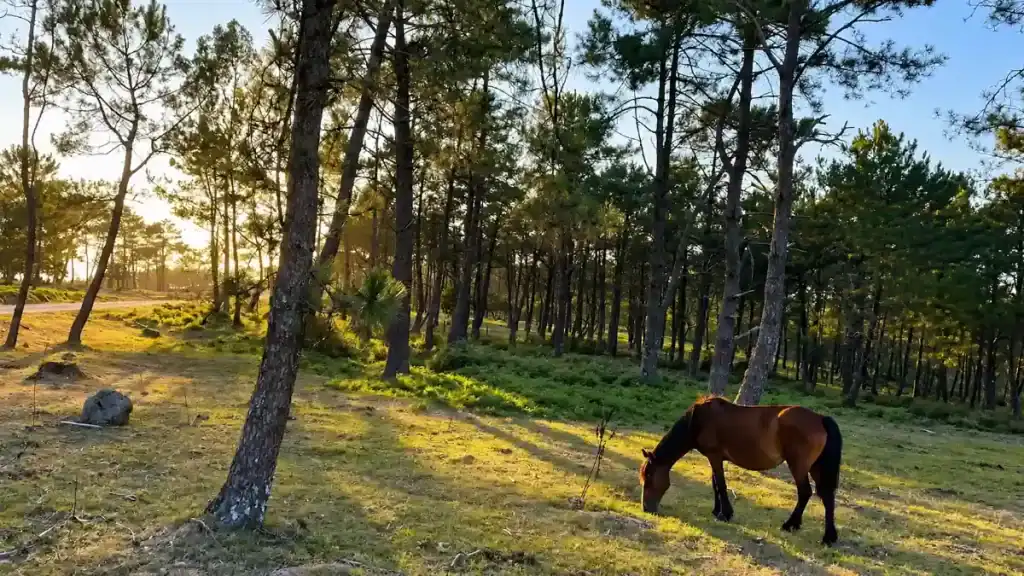
⛰️ Monte A Groba Is the Detour I Would Keep
If I were choosing one deliberate detour around Baiona, it would be Monte A Groba. The road climbs away from the coast into pine forest, rougher open ground and elevated viewpoints, creating a surprisingly abrupt change of scenery.
Mist and cloud can move across the hillside while the coast below remains brighter. The wild horses made it feel even less like an ordinary viewpoint stop, grazing across the open slopes and sometimes appearing close to the road.
The View Makes the Detour More Than a Photo Stop
From Miradoiro do Cortelliño, the higher perspective helps explain the shape of the coastline around Baiona and the Val Miñor. Estuaries, headlands and the Atlantic begin fitting together in a way they do not when you are driving at sea level.
I would not squeeze Monte A Groba into a tight schedule. Even a short detour can easily absorb an hour once you start stopping at viewpoints. On a clear morning, that is time I would happily trade for arriving in O Grove slightly later.
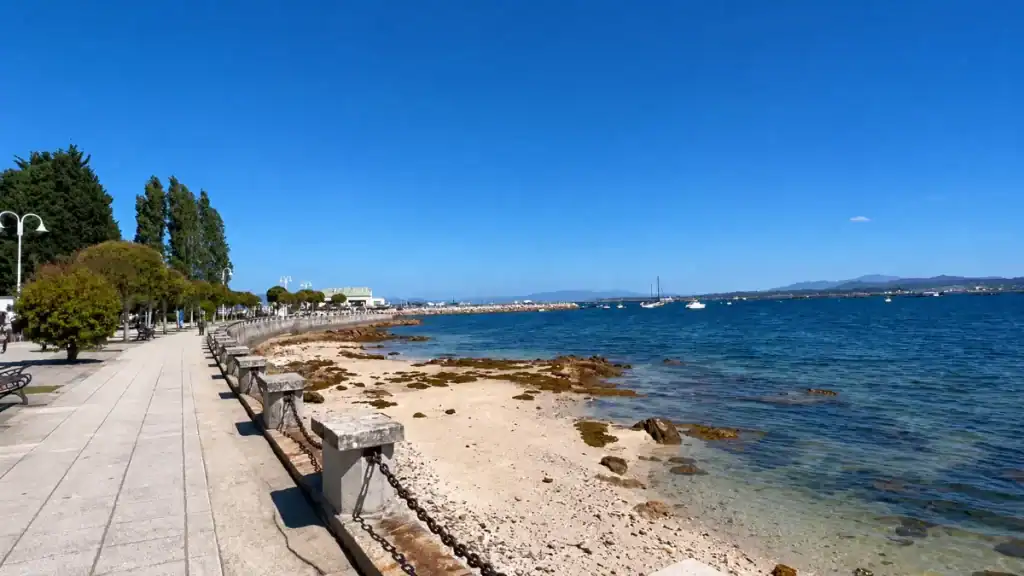
⚓ Choose a Few Good Stops Rather Than Trying to Collect Them All
I would choose two or three stops and let the rest go. The coastal route is not one uninterrupted ocean road. It shifts between sea views, estuaries, busier stretches, beaches and working waterfronts, and that variety makes an over-planned stopping list unnecessary.
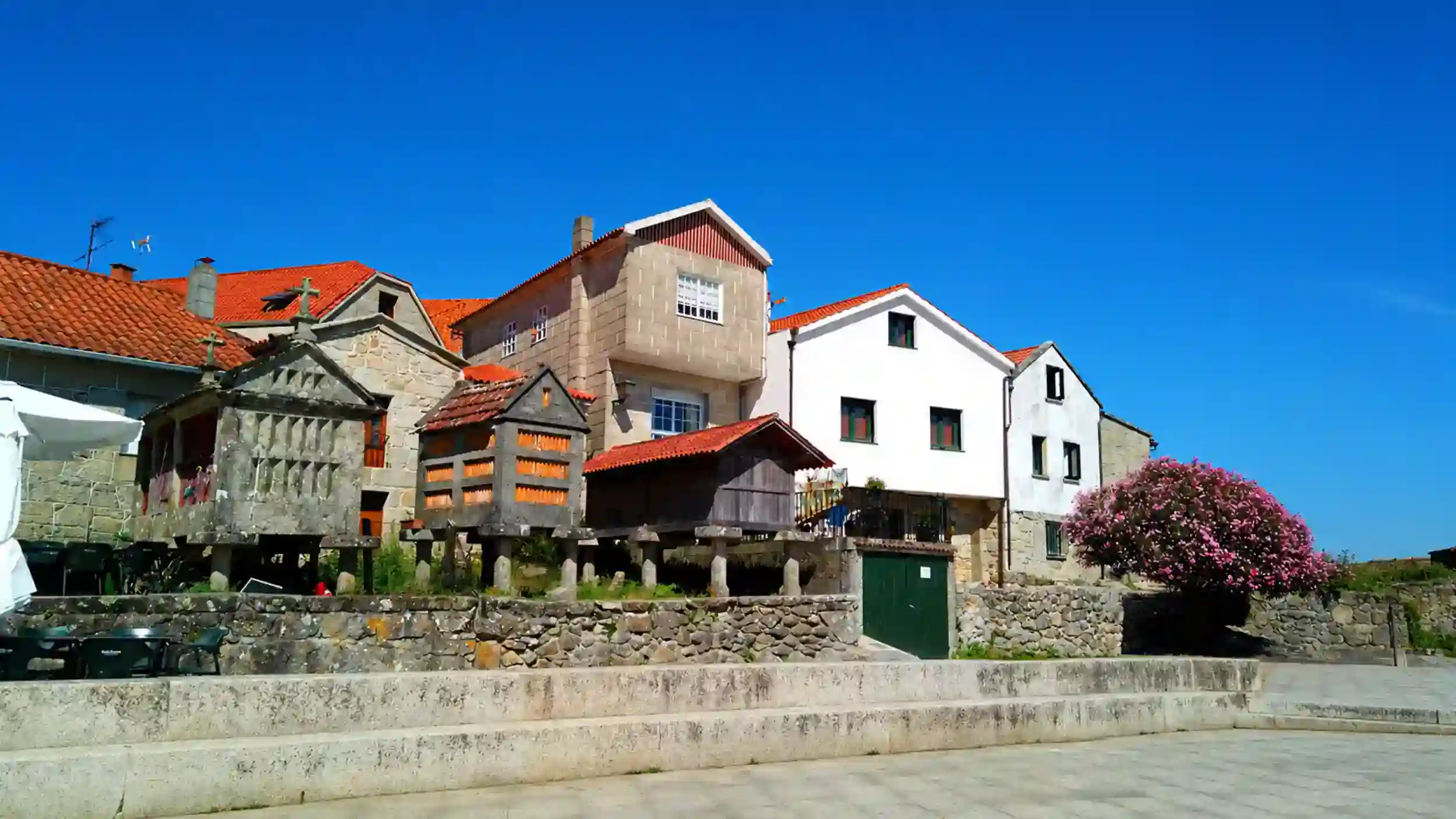
Panxón works as an early coastal pause. Farther north, Combarro is the stop I would consider when I wanted a proper harbour break rather than another quick viewpoint. Its stone hórreos, waterfront and estuary setting give it enough character to justify getting out of the car rather than simply driving through.
I found that a planned twenty-minute harbour walk could easily become an hour once seafood and waterfront terraces entered the equation. That is exactly why I would choose two or three meaningful stops rather than trying to pull over everywhere.
📍 My Shortlist for the Journey
- ⛰️ Monte A Groba for the elevated view over the coast and the chance of seeing free-roaming horses.
- 🌊 Panxón for an early coastal stop after leaving the Baiona area.
- ⚓ Combarro when you want a harbour walk, old stone character and somewhere worth lingering over lunch.
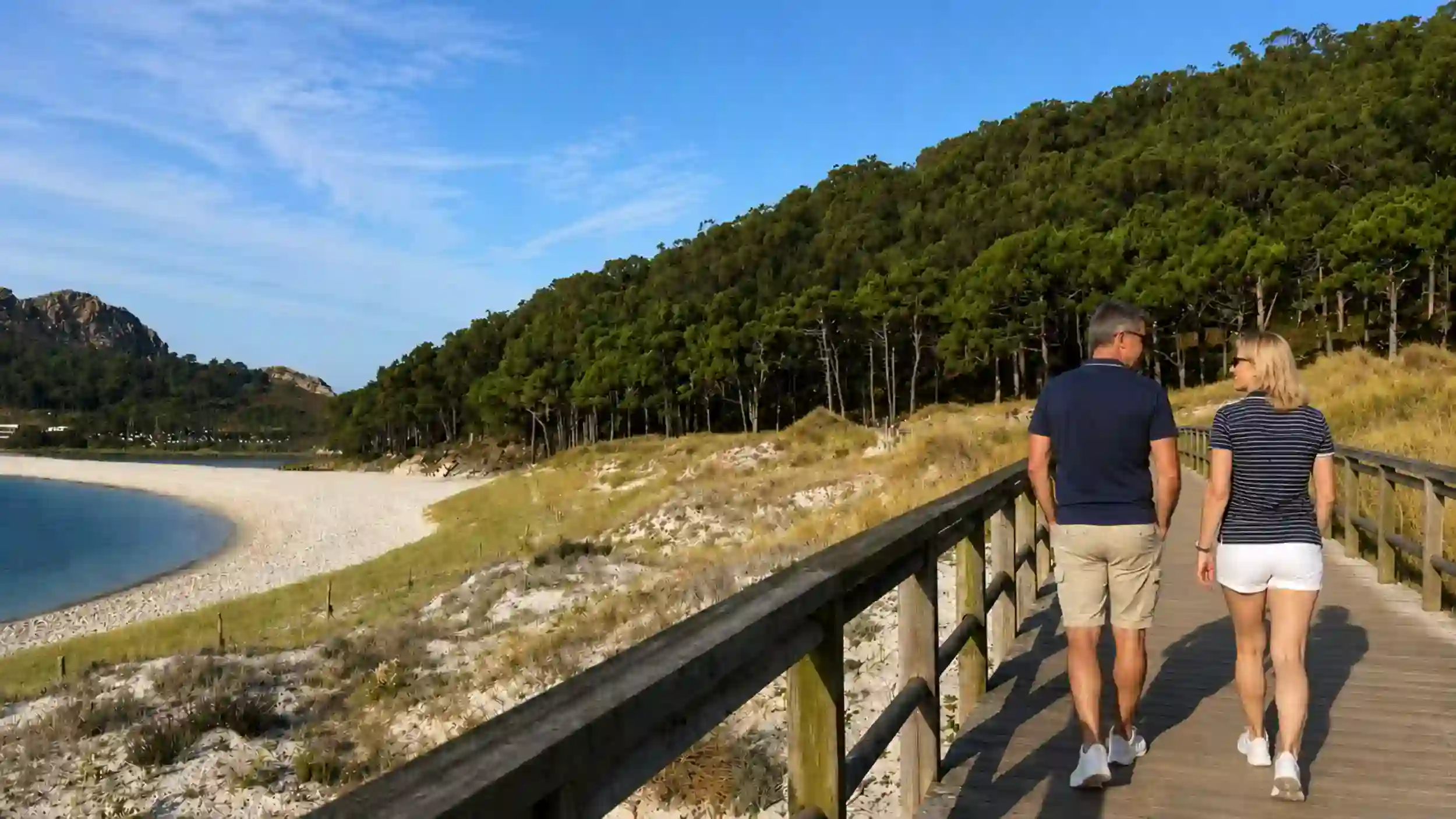
- 🏖️ Praia da Lanzada for the point where the sheltered Rías Baixas scenery gives way to a much more open Atlantic landscape.
Those stops do different jobs. That matters more to me than simply choosing the four most famous names on the map.
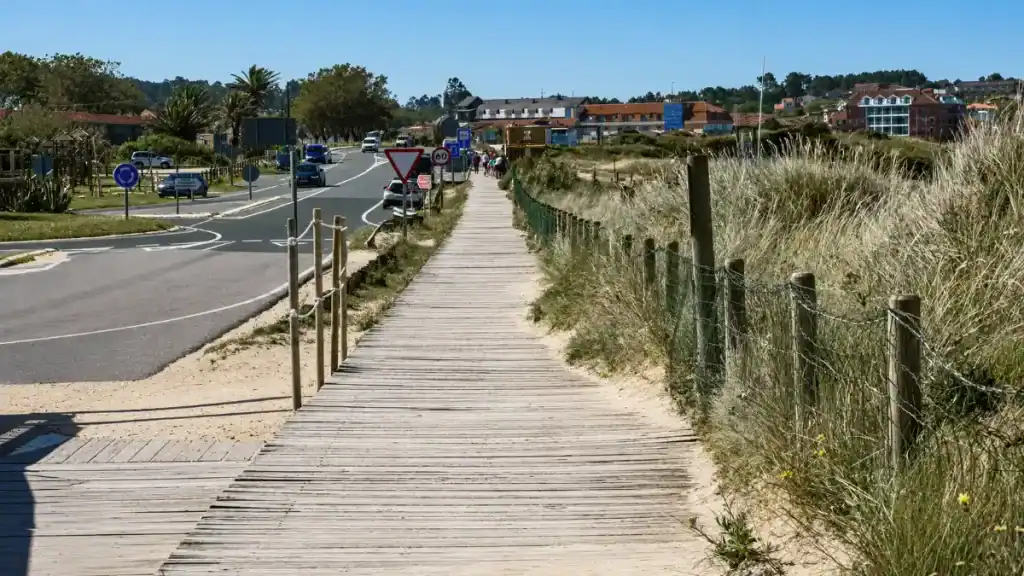
🏖️ Beach Traffic Can Change the Pace Later in the Day
Later in the day, beach traffic can matter more than distance. Earlier, the same stretch of coast can feel easy. By a warm summer afternoon, access roads and parking begin determining how long a stop actually takes.
This is particularly relevant around Praia da Lanzada, San Vicente do Mar and the approaches to O Grove. The kilometres are not the problem. Searching for somewhere to leave the car can take longer than expected in July and August.
One Good Beach Stop Beats Three Rushed Ones
Trying to move repeatedly between beaches during the busiest part of the afternoon can turn a relaxed road trip into a sequence of parking searches.
I would pick the beach that looks right, accept that it may take longer than planned and give it some time. That approach suited the journey far better than treating every stop as another item to clear before O Grove.
💡 Good to Know
Do not judge the day by the 1 hour 15 minute driving time. Monte A Groba, a harbour stop and one proper beach can comfortably turn the transfer into most of a day.
🦞 O Grove Is Worth Arriving Early Enough to Stay
I would arrive early enough to stay rather than treat O Grove as the point where the road trip ends. The town’s working harbour, seafood restaurants and waterfront give you a reason to park the car rather than immediately continue elsewhere.
By the time I reached this part of the coast, another viewpoint was less appealing than sitting down near the harbour and letting the pace drop. That felt like a better ending to the drive than arriving late, eating quickly and leaving again.
The Peninsula Deserves More Than a Drive-Through
Beyond the town itself, O Grove gives easy access to Praia da Lanzada, smaller beaches around San Vicente do Mar and La Toja. If seafood, beaches and slower coastal days are part of the reason you came to Rías Baixas, I would stay long enough for O Grove to become a destination rather than merely the northern end of the drive.
🧭 My simple plan: leave Baiona in the morning, keep Monte A Groba if visibility is good, choose one meaningful harbour stop, give Praia da Lanzada proper time and reach O Grove early enough for the waterfront and dinner.