I found Cabo Home straightforward to walk but far more exposed than the easy-looking paths first suggested. The trails themselves were rarely the problem; the Atlantic wind was what changed the experience. For the main lighthouse circuit, allow roughly two to three hours of walking, then add time if you stop often at viewpoints or beaches.
That extra time mattered more than the distance. In places I heard the Atlantic before I could properly see it. Waves below the cliffs and wind crossing the headland drowned out almost everything else, then the path opened and suddenly put the ocean directly in front of me.
🌊 The Best Views Kept Breaking My Walking Rhythm
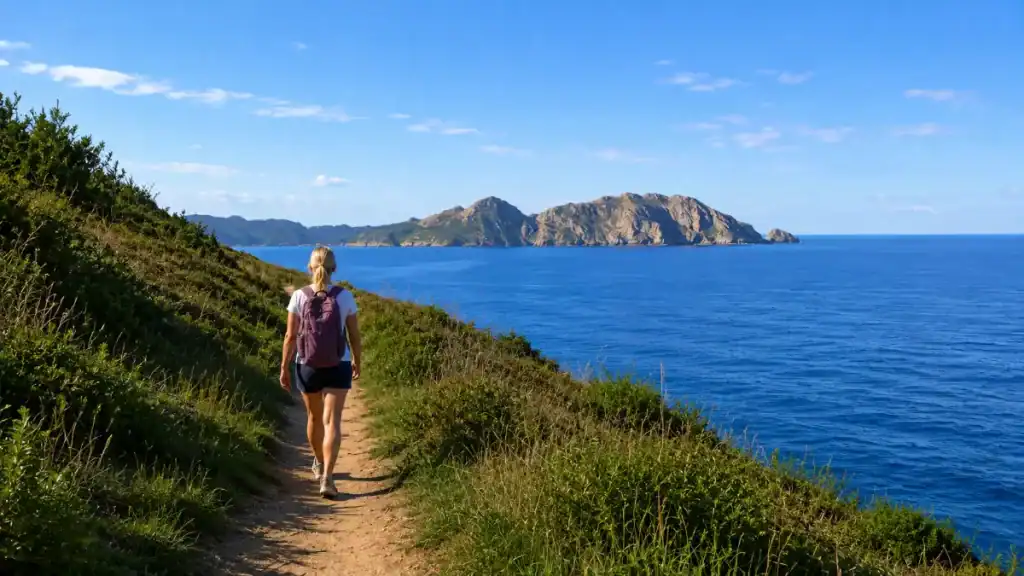
My walk became slower than expected almost immediately because the viewpoints kept interrupting it. I would round one bend, stop, start moving again and then find another opening between the rocks or pines.
Some pauses lasted thirty seconds. Others became ten minutes when the light changed or the sea looked rougher below the cliffs. After a while, distance stopped being the useful measure of progress.
The Cíes View Is the One I Would Not Rush
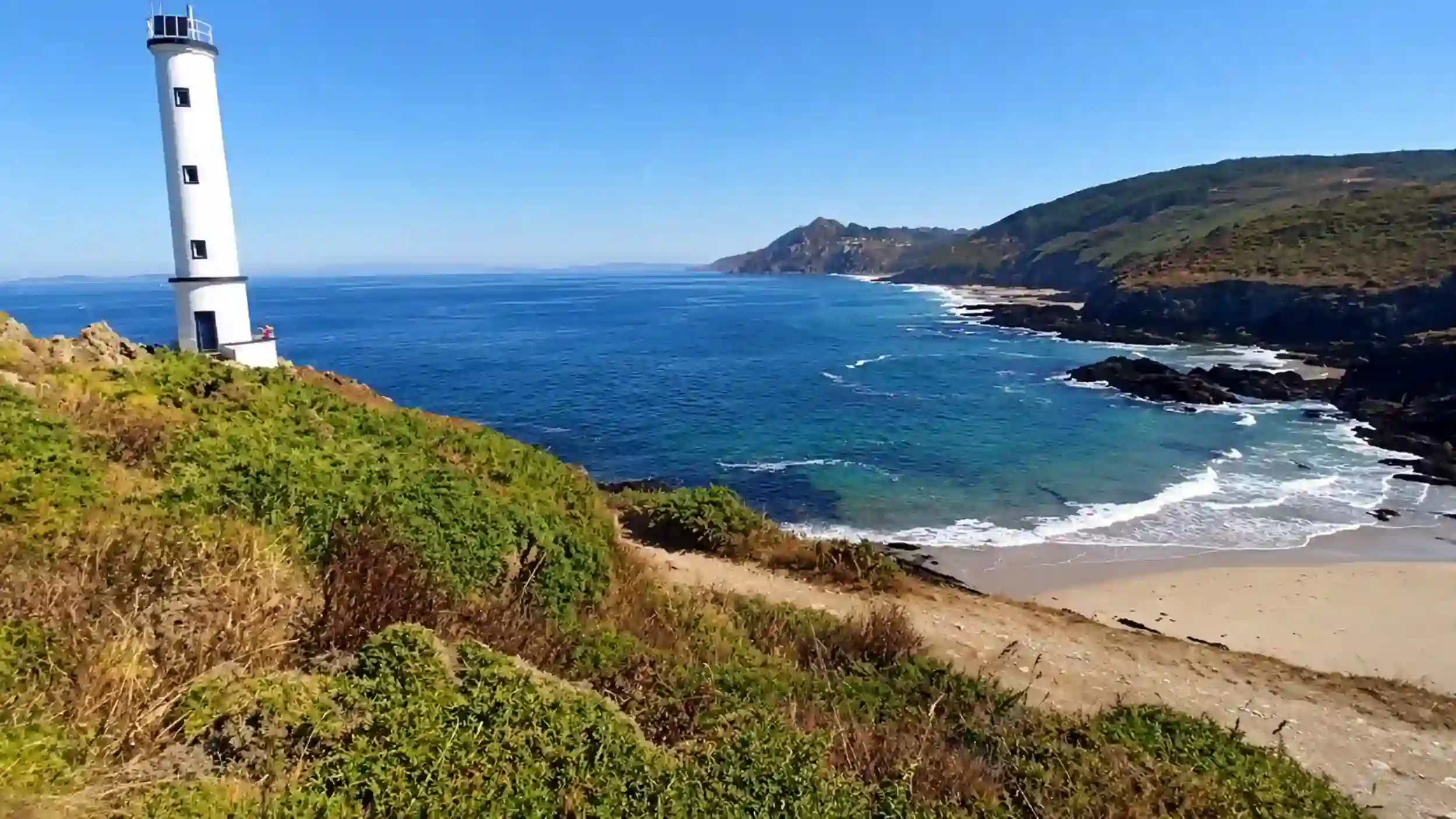
The lighthouse section gives the clearest open view towards the Cíes Islands offshore, and it is one of the strongest reasons to walk rather than simply drive to an access point. The islands sit directly across the water, giving the headland a much wider sense of scale.
Punta Robaleira is another worthwhile stop, especially because the coastline feels rougher once the path drops closer to the exposed edge. Farther around, the approach towards Melide and Punta Subrido adds a different perspective back across the beaches and headlands.
💨 The Wind Changed the Walk More Than the Terrain
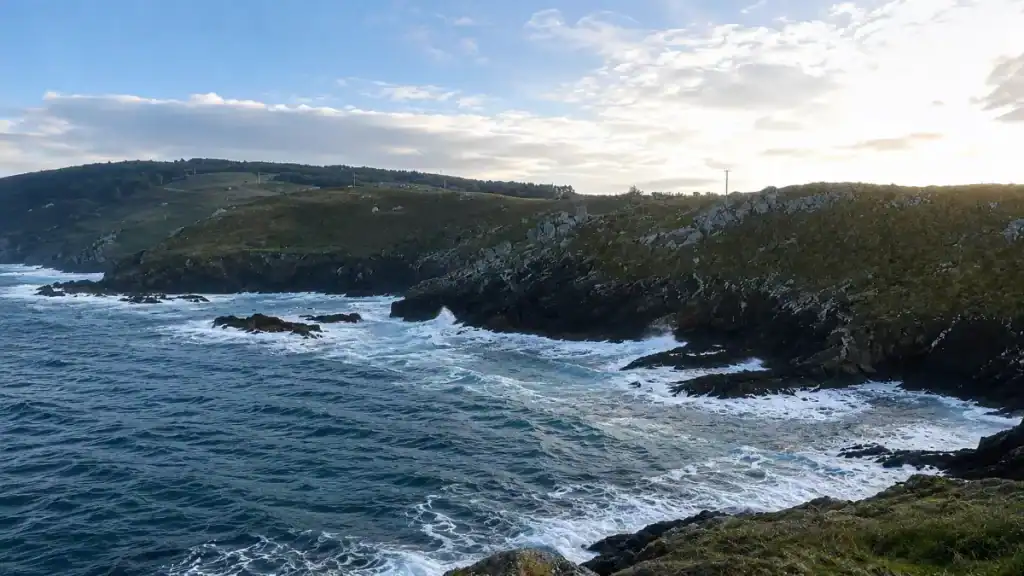
The wind affected my walk more than the terrain did. Some mornings can feel relatively calm, particularly before the Atlantic breeze strengthens, but later the exposed sections may feel dramatically different even when the path itself has barely changed.
One stretch felt easy and open. Around the next cliff edge, the wind hit directly from the ocean and conversation became difficult. My pace shortened without any conscious decision to slow down.
Shelter Can Disappear in a Few Steps
Pine-covered and lower sections give useful breaks from the exposure, but they can create false confidence. The next open section may feel much cooler and harder simply because the shelter vanishes.
Wind also changes how long the viewpoints remain enjoyable. On calmer days, people linger around the lighthouse railings. Stronger gusts tend to shorten those stops once the photographs are taken.
💨 What caught me out: warm weather did not guarantee a warm-feeling walk once the Atlantic breeze strengthened across the exposed headland.
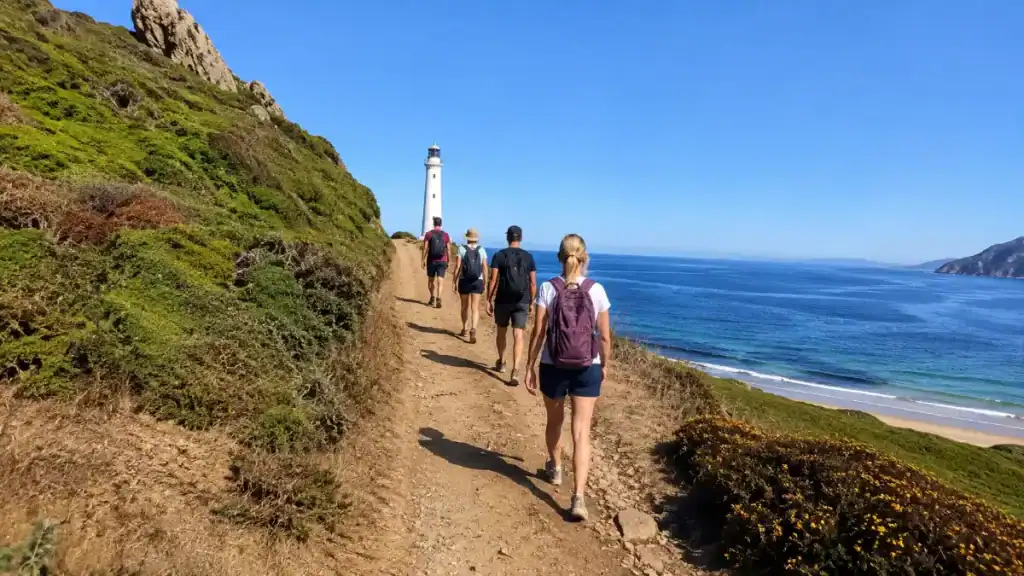
🚶 The Lighthouse Is Busier Than the Paths Beyond It
The lighthouse access points were the busiest part of my visit, not the paths beyond them. That is where shorter-stay visitors gathered first, particularly during clear weather and busy weekends.
Cars arrived steadily through the afternoon. Parking tightened, movement slowed and the areas closest to the main access roads felt far busier than the wider headland.
The surprise came once I walked away from those arrival points. People spread out quickly, and the paths regained space within a relatively short distance.
I Would Arrive Earlier Next Time
Late morning was easier around the access points than mid-afternoon. Arriving earlier would not make Cabo Home empty, but it would reduce the part of the visit most affected by parking and short-stay traffic.
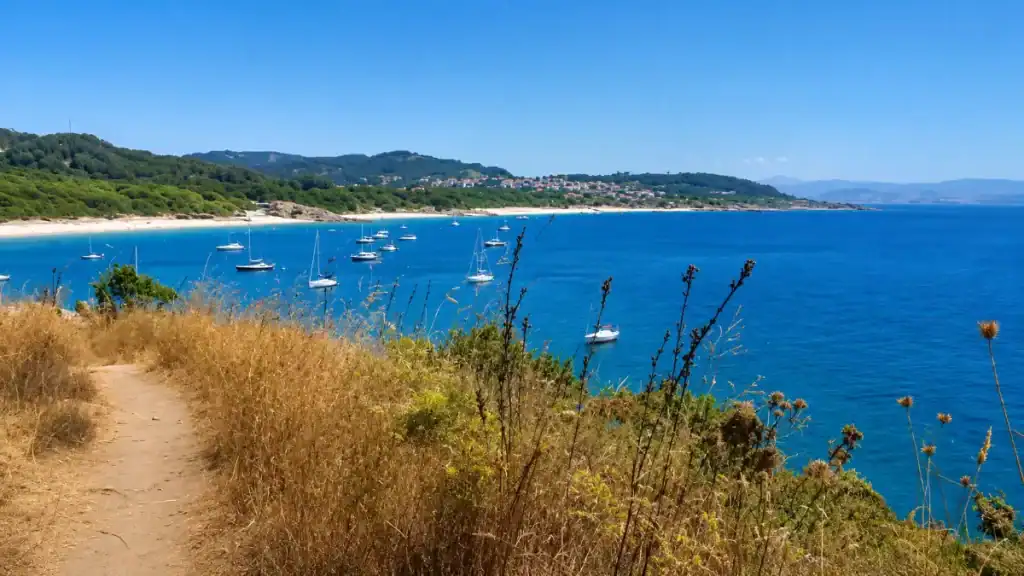
🌿 The Quieter Paths Were Where Cabo Home Became More Interesting
The quieter paths were the part of Cabo Home I preferred. Beyond the most photographed lighthouse areas, groups thinned, conversations faded and the walking became more connected to the coastline than to sightseeing stops.
Those were the stretches I preferred. Granite cliffs dropped towards the water, seabirds moved below the paths and the weather became much more noticeable once other people stopped absorbing attention.
The smaller details started registering too: wind moving through low vegetation, salt in the air and the colour of the water shifting as cloud and light changed.
Melide and the Outer Paths Give You More Space
Walking towards Praia de Melide and the outer sections around Punta Subrido is the obvious way to escape the busiest lighthouse zone without leaving the main Cabo Home landscape behind. The farther the path carries you from the parking areas, the less the walk feels like a viewpoint circuit.
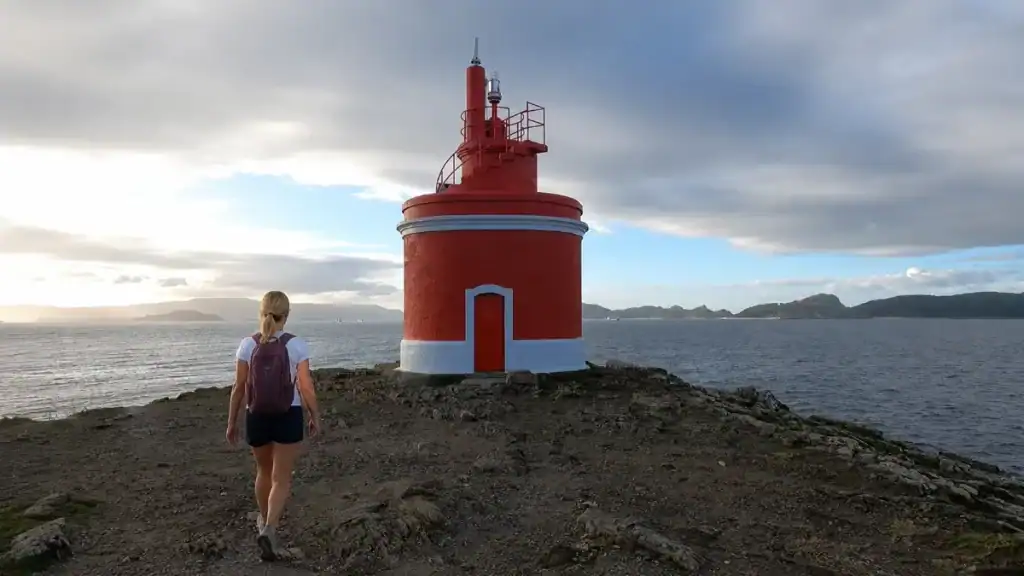
🌦️ The Weather Can Rewrite the Walk Surprisingly Quickly
The weather could rewrite the feel and pace of the walk surprisingly quickly. Bright conditions opened long views towards the islands, while thicker cloud shortened the coastline and made the same paths feel more isolated.
Mist changed it again. The cliffs and sea appeared in fragments, and the lighthouse areas felt more exposed once visibility shortened. With less landscape visible, the wind seemed to take over.
I still enjoyed Cabo Home in those conditions, just for different reasons. Some memorable walking days here happen when the Atlantic feels unsettled rather than perfectly calm.
🧭 Let the Conditions Decide the Pace
- 💨 Strong wind: expect exposed sections to feel harder and viewpoint stops to become shorter.
- ☀️ Clear afternoon: visibility improves, but lighthouse access areas are more likely to be busy.
- 🌫️ Mist: views shorten, navigation deserves more attention and the headland feels wilder.
- 🌲 Sheltered paths: use them as a physical break rather than assuming the next exposed stretch will feel the same.
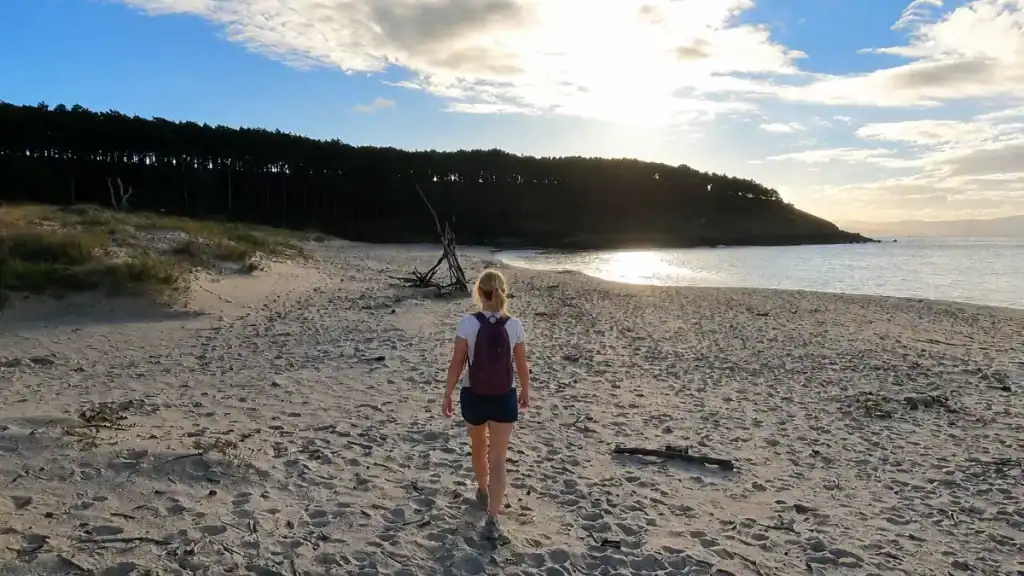
🥾 Allow More Time Than the Distance Suggests
A common circular walk linking Cabo Home, Punta Robaleira, Melide and Punta Subrido is roughly 8–9 km. Around two to three hours is a reasonable walking-time guide, depending on the exact route and pace.
I would allow longer if the purpose is actually to enjoy Cabo Home. My own walk became stop-start almost immediately, and that never felt like wasted time.
Walk for a while. Stop above the Atlantic. Carry on when the wind becomes uncomfortable or another opening in the coast pulls you away from the route.
Treating the paths as a timed hike misses much of what makes them worthwhile. The best viewpoints, changing weather and exposed sections naturally decide how quickly you move.
🥾 My choice: allow half a day if you want the lighthouse circuit to feel relaxed rather than measured. Cabo Home is easy enough to walk quickly, but it is much better when you do not.