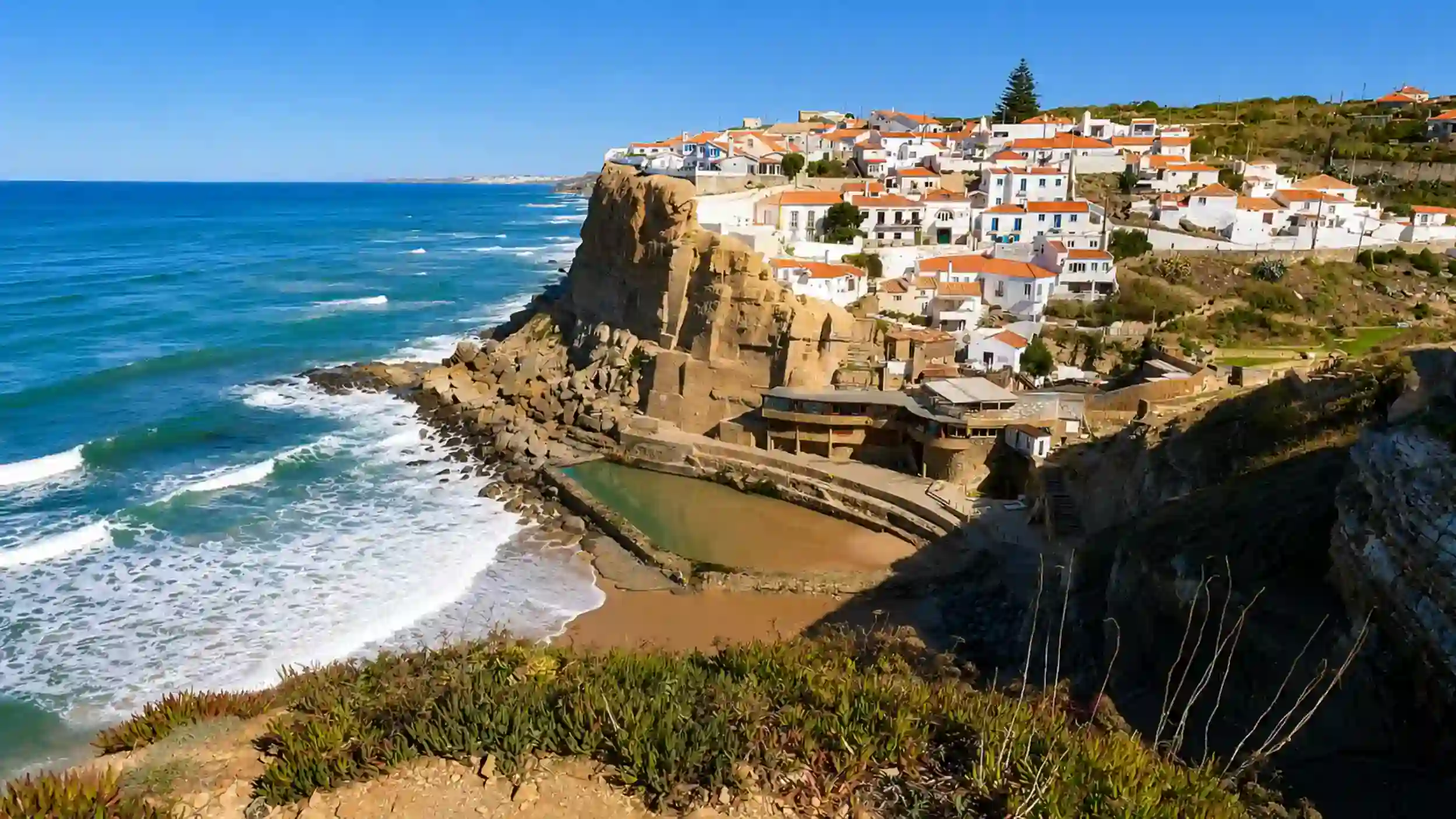
Morning is the easier time to visit Azenhas do Mar, while late afternoon gives you the stronger light and atmosphere. The difference was obvious across our visits: quieter streets and easier parking earlier in the day gave way to busier viewpoints, fuller parking and a livelier coast later on.
Neither won outright. It depended on what we wanted from the stop.
When space and convenience mattered, morning worked better. When the setting and changing light were the reason for being there, accepting the extra people later in the day felt like the worthwhile trade.
🌊 Azenhas do Mar Was More Than the Famous Viewpoint
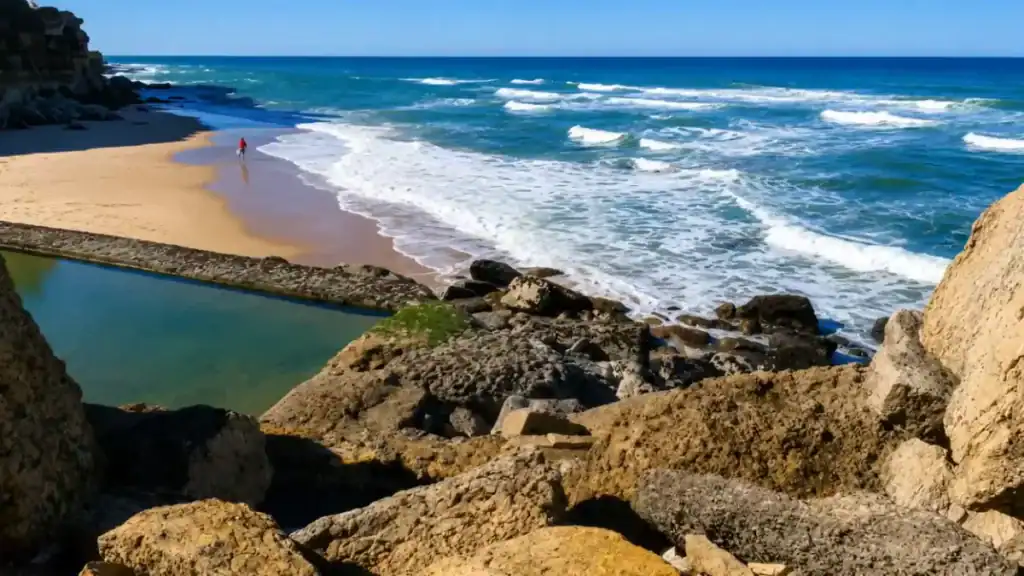
Azenhas do Mar was more than the famous viewpoint because the village, seawater pool and cliff-edge setting gave us reasons to stay after taking the obvious photograph. It sits around 12 kilometres west of Sintra, between Praia Grande to the south and Praia das Maçãs to the north, which made it a natural coastal stop rather than somewhere we needed to build an entire day around.
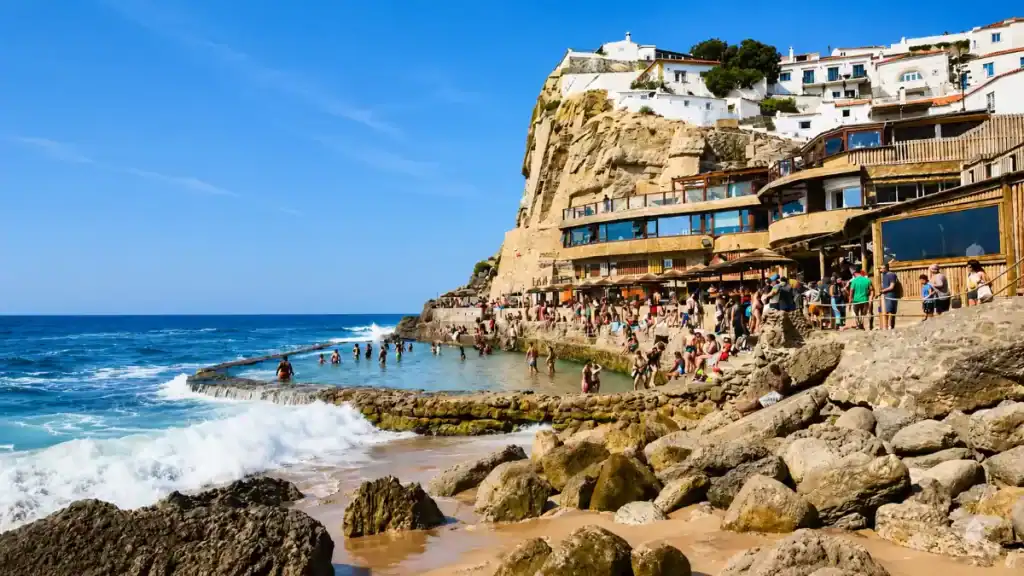
The seawater pool at the base of the cliffs was the feature I expected to dominate the visit. In practice, the village above it and the changing view along the cliffs mattered just as much, which was why a quick viewpoint stop kept stretching longer.
A Car Made the Coastal Route Much Easier for Me
Without a car, I would need a bus or taxi from Sintra. Buses run to Azenhas do Mar, but I would check the limited timetable before travelling rather than assume the connections would fit my day.
By car, I found the village considerably easier to incorporate into a coastal day. From Lisbon, I would allow around 45 minutes to an hour depending on traffic.
🌅 Morning Gave Me the Village Before the Crowds
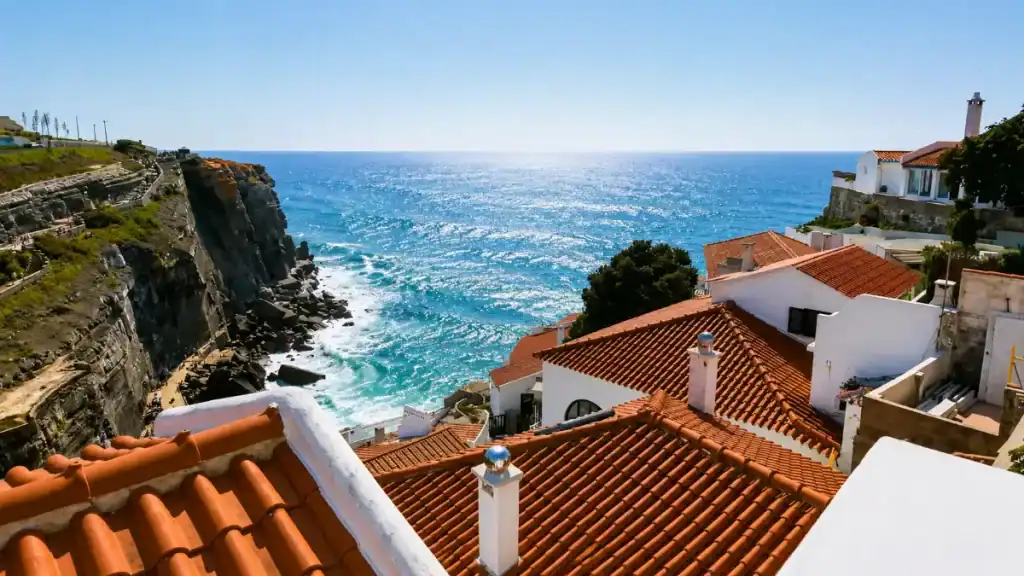
Morning gave me the village before the crowds, with easier parking, quieter viewpoints and narrow lanes that still felt residential rather than dominated by visitors. That changed the visit immediately because there was no pressure to grab the photograph and move aside.
This Was When the Village Felt Most Local to Me
Open windows, local routines and the Atlantic below were easier to notice before the steady flow of visitors built. The village felt like somewhere people lived rather than somewhere everyone had come simply to photograph.
Morning also made the whitewashed houses and Atlantic backdrop easier to frame without people constantly entering the viewpoint. Down by the water, the pool and seafront lanes were quieter too.
The trade-off for me was atmosphere. The seafood restaurant may not yet be serving and the village operates at a much slower pace, which I enjoyed but would not suit everyone.
☀️ By Afternoon, I Was Sharing Azenhas With Everyone Else
By afternoon, I was sharing Azenhas do Mar with far more people and the character had shifted with them. Visitors arriving after a morning around Sintra mixed with people following the coast through Cabo da Roca, Praia das Maçãs and Praia Grande.
The viewpoints filled, the restaurant became busier and there was more movement through the narrow lanes and around the seawater pool. That was the point at which afternoon began making a stronger case for atmosphere, even while it lost the argument on convenience.
The trade-off was crowd density. Parking became harder as the day progressed, particularly during summer and at weekends, while the main viewpoint could turn into somewhere people effectively took turns photographing the village.
Late Afternoon Was the Light I Would Come Back For
For photography, late afternoon had the strongest case for me. As the sun dropped towards the Atlantic, I saw the whitewashed houses take on warmer light and stand out more strongly against the darker ocean.
This was when the classic Azenhas do Mar view looked most striking to me. I would accept the extra people for that light, even though my instinct for avoiding crowds would normally push me towards morning.
🅿️ Parking Was the Strongest Argument for Going Early
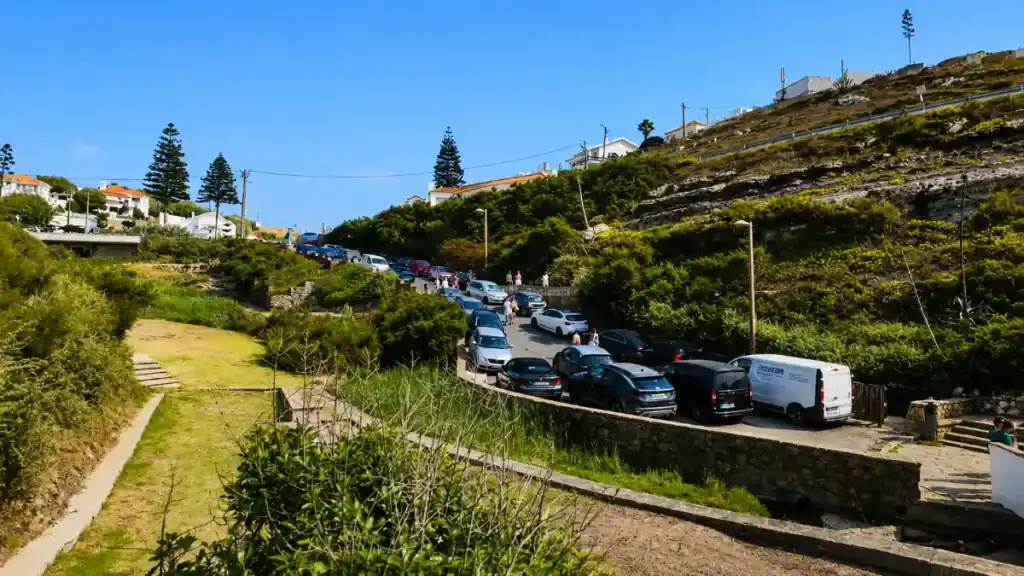
Parking was the strongest practical argument for going early. Earlier in the day, spaces close to the village were easier to find; later, the simple act of stopping started requiring more patience.
By afternoon, competition for spaces had increased, particularly during summer, at weekends and when visitors were combining the village with nearby beaches.
If parking convenience were my priority, I would choose morning without much hesitation.
If I wanted the late-afternoon light, I would consider arriving earlier and staying rather than leaving and returning. That way I would not need to find another space just as parking pressure was increasing.
📱 The Quick Timing Choice
- 🌅 Early morning: easier parking, quieter lanes and fewer people at the viewpoint.
- ☀️ Early afternoon: more activity and lunch atmosphere, but noticeably more visitors.
- 📷 Late afternoon: the light I preferred, with harder parking as the trade-off.
- 🏖️ Coastal half-day: pair Azenhas do Mar with Praia das Maçãs, Praia Grande or continue towards Cabo da Roca.
🗺️ I Would Make Azenhas Part of a Wider Coastal Day
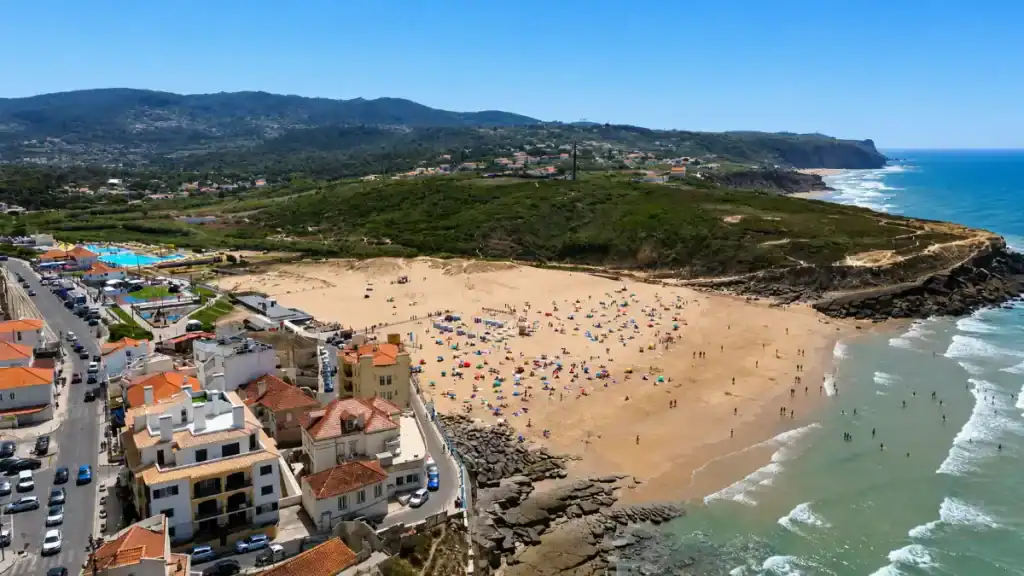
I would make Azenhas do Mar part of a wider coastal day rather than give it an entire day of its own. Cabo da Roca lay to the southwest, Praia Grande sat along the same stretch of coast, and Praia das Maçãs was just to the north.
Praia das Maçãs Was the Easiest Beach to Add
I liked the idea of a morning at the coast followed by lunch in Azenhas do Mar, giving me proper beach time before the village reached its busiest period.
Praia das Maçãs paired naturally with Azenhas do Mar when I wanted proper beach time rather than simply stopping at viewpoints along the coast.
I could also make this combination work as a half-day trip from Sintra, while keeping enough flexibility to continue towards Cabo da Roca or Praia Grande if I still had time.
🧭 Would I Make the Effort to Visit Azenhas do Mar?
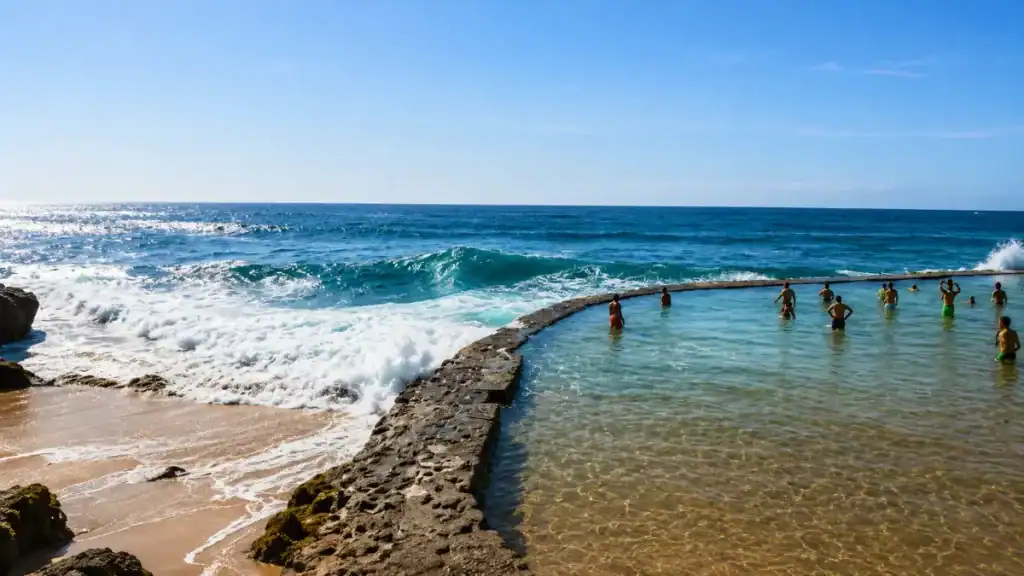
Yes, Azenhas do Mar is worth visiting, but I would not describe it as a hidden gem. Arriving with that expectation would have been disappointing. Its appeal came from the dramatic setting instead: whitewashed houses clinging to the cliffs above the seawater pool and Atlantic.
My Choice Comes Down to Quiet or Light
🧭 My choice: morning for quieter viewpoints and easier parking; late afternoon when the changing light and atmosphere matter more than avoiding people.
For a straightforward visit, around one to two hours is enough to see the viewpoint, wander the lanes and spend some time by the pool. Add longer if you want lunch or swimming. The famous panorama drew us in, but the cliff-edge views and changing light were what stopped the visit ending after ten minutes.