
Is Colares worth visiting? Yes, particularly if you want a few hours away from Sintra’s major attractions. The reason to stop is not landmark sightseeing. For me, it was the combination of local wine, straightforward food and a position that naturally joins the Sintra hills to the Atlantic coast.
That distinction shaped the visit. Colares worked better as part of a wider coastal day than as somewhere I needed to build the entire itinerary around.

🌿 Colares Felt Like a Working Village, Not Another Sintra Attraction
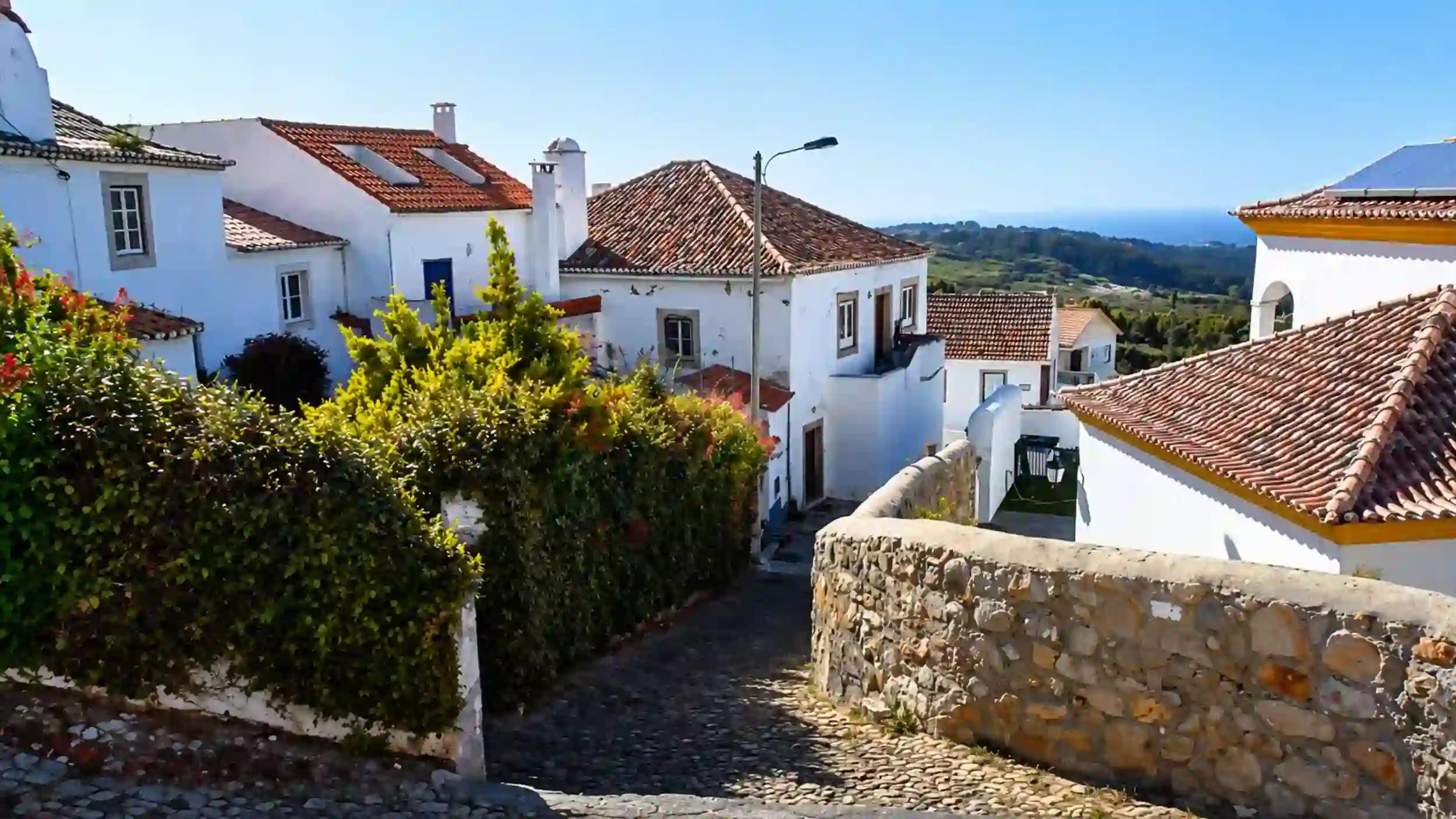
Colares felt like a working village rather than another Sintra attraction, which was exactly why I liked stopping there. Roughly midway between Sintra town and the Atlantic, whitewashed houses, a main square, small shops and cafés sat among vineyards and forested hills.
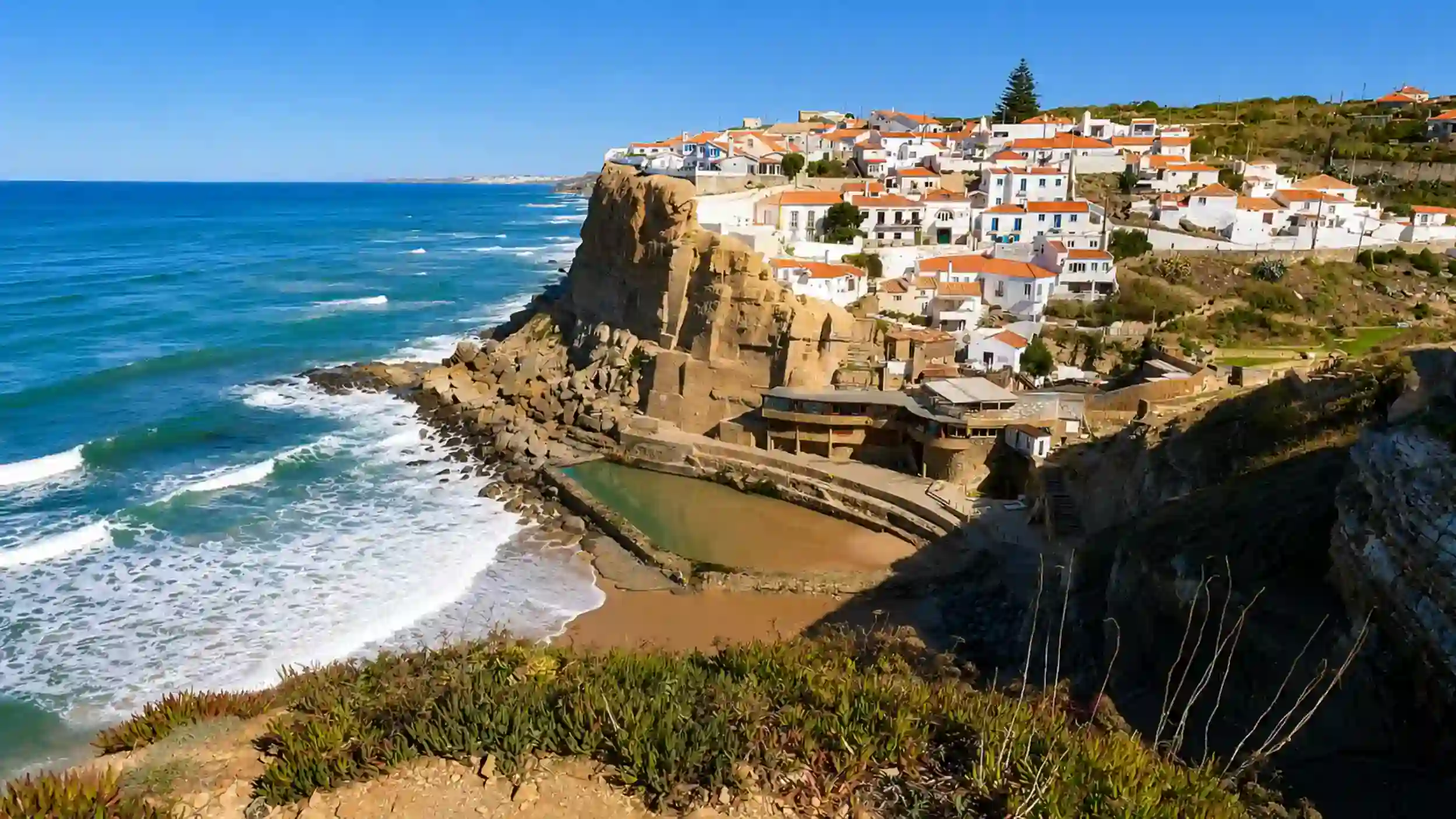
The location quickly became part of the appeal. Praia das Maçãs lay to the northwest, Azenhas do Mar was close by on the coast, while Praia da Adraga and Cabo da Roca were easy to reach to the south. Stopping here did not feel like a detour from the coastal route.
The Atlantic Fog Changed the Feel of Colares
Atlantic fog could move through surprisingly quickly, particularly on summer mornings. The change was enough to make the village feel cooler and damper than the short distance from Sintra town had led me to expect.
That cooler, damper microclimate has helped shape both the landscape and the distinctive Colares wine region. It also reinforced something useful for the itinerary: the move from Sintra towards the coast is a real change of environment, not simply another short drive between attractions.

🍷 The Wine Was My Strongest Reason to Stop in Colares
The wine was my strongest reason to stop in Colares because it gave the village its clearest identity. Vineyards grow in deep sandy soils, which protected local vines from the phylloxera epidemic that devastated much of Europe’s wine industry during the 19th century.
Some remarkably old ungrafted vines still grow on their original roots. Ramisco, the grape most closely associated with the region, produces structured red wines with high acidity and tannin that can develop for years.
The Regional Cooperative Gives the Wine Stop a Clear Focus
Adega Regional de Colares in the centre of the village gives the wine stop an obvious focus. It remains one of the region’s most important producers, operating as a working winery as well as somewhere to buy and learn about local wines.
Adega Viúva Gomes and Adega Vadia continue the tradition on a smaller scale, producing limited quantities and offering another way to explore how Ramisco is handled.
This was the point at which simply driving through stopped making sense to me. If wine or food already formed part of the day, Colares had a reason to become a proper stop rather than just a name on the road to the coast.
🍽️ I Would Time Colares Around Lunch
I would time Colares around lunch because the food felt straightforward and local, and it solved the meal decision before the route reached quieter stretches of coast. Restaurants and cervejarias served grilled fish, octopus, tuna steak and traditional Portuguese dishes without the same tourist focus I encountered around central Sintra.
Prices also felt more in keeping with a village serving local residents than somewhere built around a constant stream of day-trippers. That made lunch here feel like part of the route rather than another attraction stop.
That became the practical reason to time Colares around lunch. Restaurant choices become thinner around Cabo da Roca and Praia da Adraga, so eating here avoided carrying the lunch decision farther along the coast.
The main square offered the most reliable choice of coffee and food through the day. Small shops selling local wine, honey, olive oil and other regional products also strengthened the sense that Colares belonged to the agricultural landscape around it.
📱 Colares Works Best When the Stop Has a Purpose
- 🍷 Wine: make the cooperative or a smaller producer the reason to linger.
- 🍽️ Lunch: eat before continuing towards Cabo da Roca or Praia da Adraga.
- 🌊 Beach route: continue to Praia das Maçãs, Praia da Adraga or farther south towards Praia da Ursa.
- ⏱️ Time: allow around two or three hours when lunch and wine are part of the stop.

🌊 Colares Put Several Very Different Beaches Within Reach
Colares put several very different beaches within easy reach, which made it useful as more than a wine or lunch stop. About five kilometres south, Praia da Adraga felt noticeably less developed than many beaches along the Sintra coast, with dramatic limestone cliffs and stronger Atlantic waves.
The compromise is access. Parking is limited and the narrow road can become busy on summer weekends, so arriving late can make a simple beach stop more awkward. On quieter days, the setting made the extra effort easier to justify.
Praia das Maçãs was the closest beach to Colares to the north and considerably easier to reach. The historic tram from Sintra also terminates there.
Further south, Praia da Ursa sits below the cliffs near Cabo da Roca. The steep descent made it a very different proposition from the more accessible beaches around Colares, and not one I would treat as a casual stop.

🗺️ Colares Made the Hills-to-Coast Route Work
Colares made the hills-to-coast route work because it gave me a natural break between Sintra and the Atlantic. It works best as part of a wider day rather than as a destination that needs to fill the itinerary on its own, with wine, food or both providing the reason to stop.
Two or Three Hours Was Enough for the Stop I Wanted
Two or three hours was enough for the version of Colares that made sense to me: lunch, a wine stop and a short wander through the village or surrounding landscape. Without lunch or wine, the village itself needs much less time.
Understanding how much time the Sintra region actually needs changed where Colares fitted into my plan. Once the palace circuit had its own time, Colares stopped competing with Sintra’s headline sights and fitted much more naturally into a separate coastal day.
On a Longer Stay, I Could See Colares Becoming a Base
On a longer stay, the village becomes more useful as a base for exploring this quieter side of Sintra. Knowing which places around Sintra deserve priority helped me decide whether the wine region, beaches and smaller villages deserved more of the trip.
Almoçageme sat nearby and paired naturally with Colares when the plan shifted from ticking off sights to exploring the coast at a slower pace.
🧭 My verdict: Colares is worth visiting not as another attraction to tick off, but as the point where wine, food, villages and the Atlantic coast begin to connect.