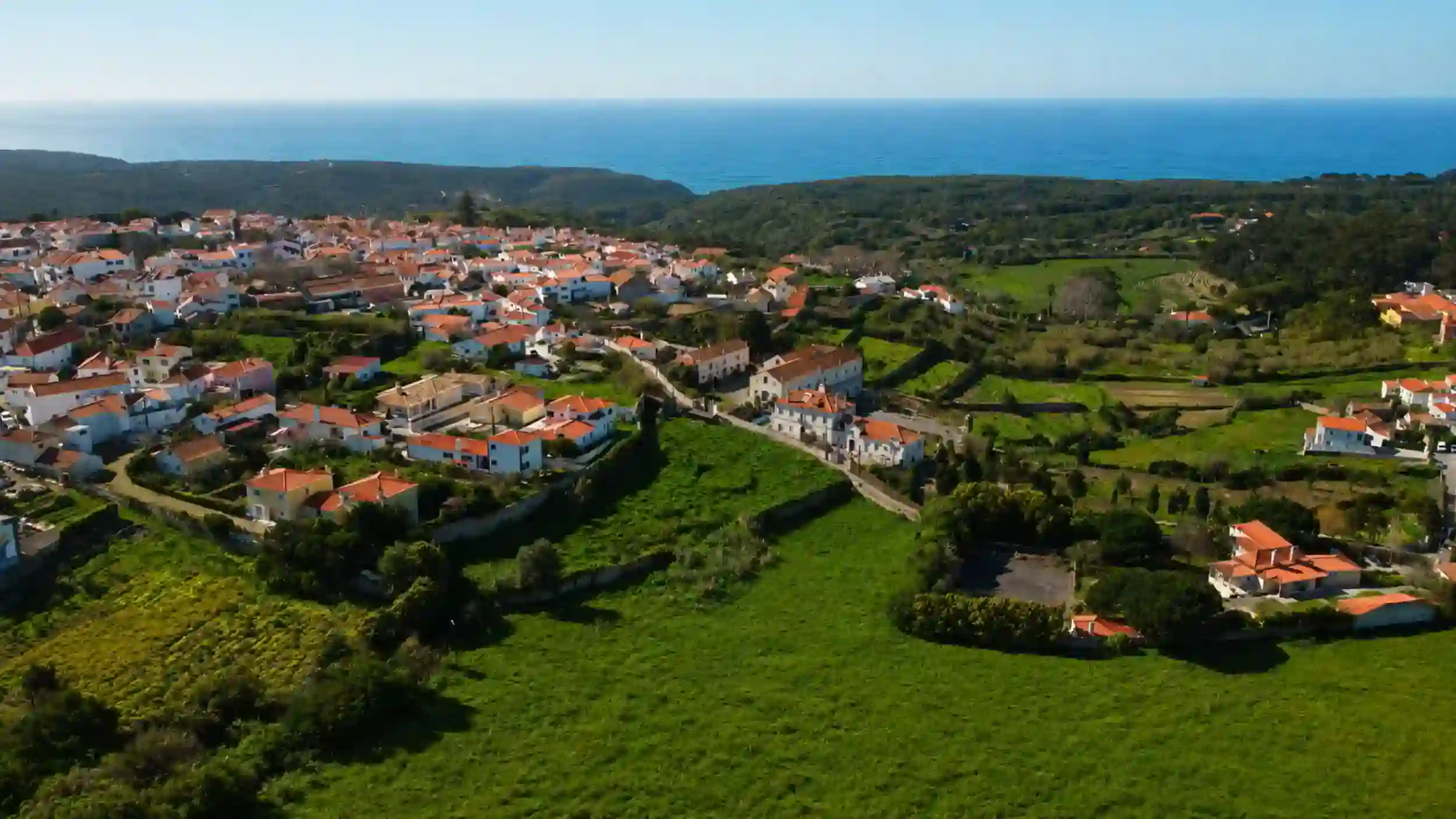
I think Almoçageme is worth a stop if, like me, you want to see a more everyday side of the Sintra coast. It is small and shaped far more by local life than sightseeing, which gave me a useful contrast to the better-known villages and attractions elsewhere in the region.
Its location was the other advantage for me. Sitting between the Sintra hills, Praia da Adraga and Cabo da Roca, Almoçageme fitted naturally into my day exploring the western coast.
🌿 I Could See Why Most Visitors Drive Straight Through
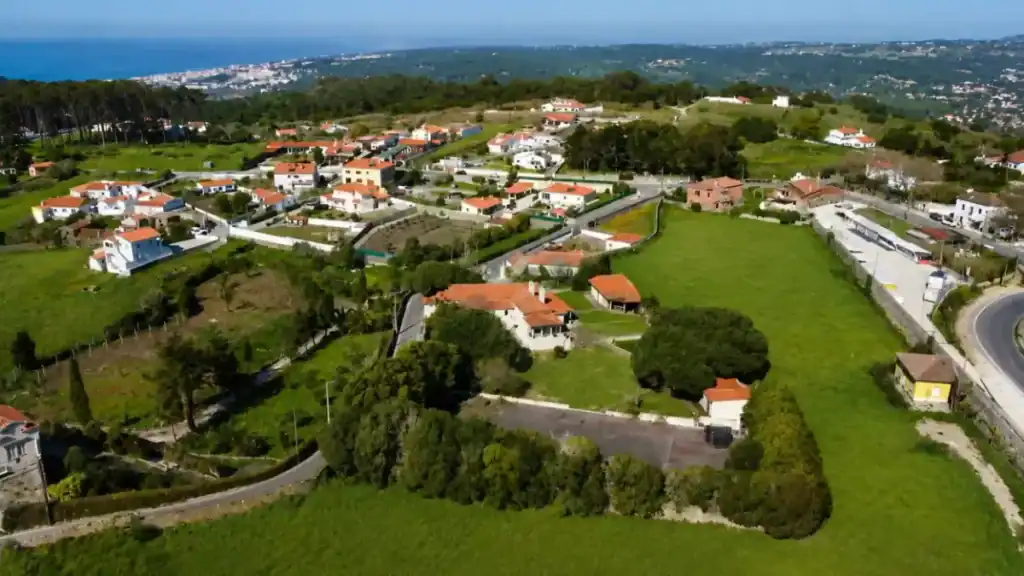
I could see why most visitors drive straight through Almoçageme because nothing on the main route announces it as an obvious sightseeing stop. With Praia da Adraga, Cabo da Roca or the beaches farther north usually the destination, the instinct was simply to keep driving.
Nothing obvious announced the village. No castle appeared above the rooftops, there was no famous viewpoint and nothing from the main road suggested we had reached somewhere that demanded a stop.
That became part of the appeal. Once we stopped, the reward was a working village within the Sintra-Cascais Natural Park, with a slower pace, local restaurants and streets that had not been reshaped around sightseeing.
It gave the day something the palace circuit could not: a glimpse of how this part of the Sintra coast felt away from its major attractions.

⛪ I Found More by Slowing Down Than Looking for Sights
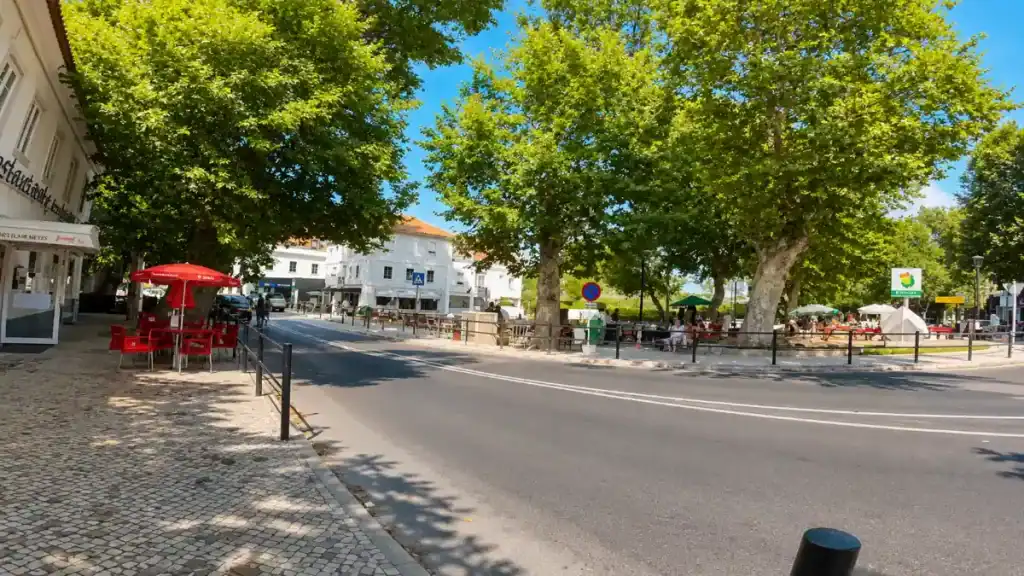
I found more in Almoçageme by slowing down than by looking for conventional sights. The central square had cafés, restaurants and small local shops, with much of the everyday village life concentrated around it.
The Church Gave the Village a Natural Centre
The parish church became the village’s main architectural landmark for me. It was modest beside Sintra’s grander buildings, but the square around it gave us a natural place to stop for coffee rather than immediately getting back in the car.
On Foot, the Atlantic Felt Much Closer
The village sits just where the Sintra hills begin falling towards the coast. From here, walking routes led towards quieter countryside and cliff paths above the Atlantic.
On foot, that position became much clearer. Village streets gave way quickly to forested hills and exposed coastline, making Almoçageme feel connected to the wider Sintra landscape rather than isolated from it.
📱 When Almoçageme Is Worth the Stop
- ☕ For village life: the square, cafés and everyday streets are the strongest reason to slow down.
- 🥾 For walking: routes towards the hills and Atlantic make the village more rewarding than its conventional sights suggest.
- 🏖️ For the beach: Praia da Adraga is only a few kilometres away and makes an excellent pairing.
- 🚗 For a coastal road trip: Almoçageme fits naturally with Colares and Cabo da Roca.
- 🏘️ For major sights: look elsewhere. Conventional sightseeing is not the reason to stop.
🌊 Praia da Adraga Was the Best Reason to Build Almoçageme Into My Route
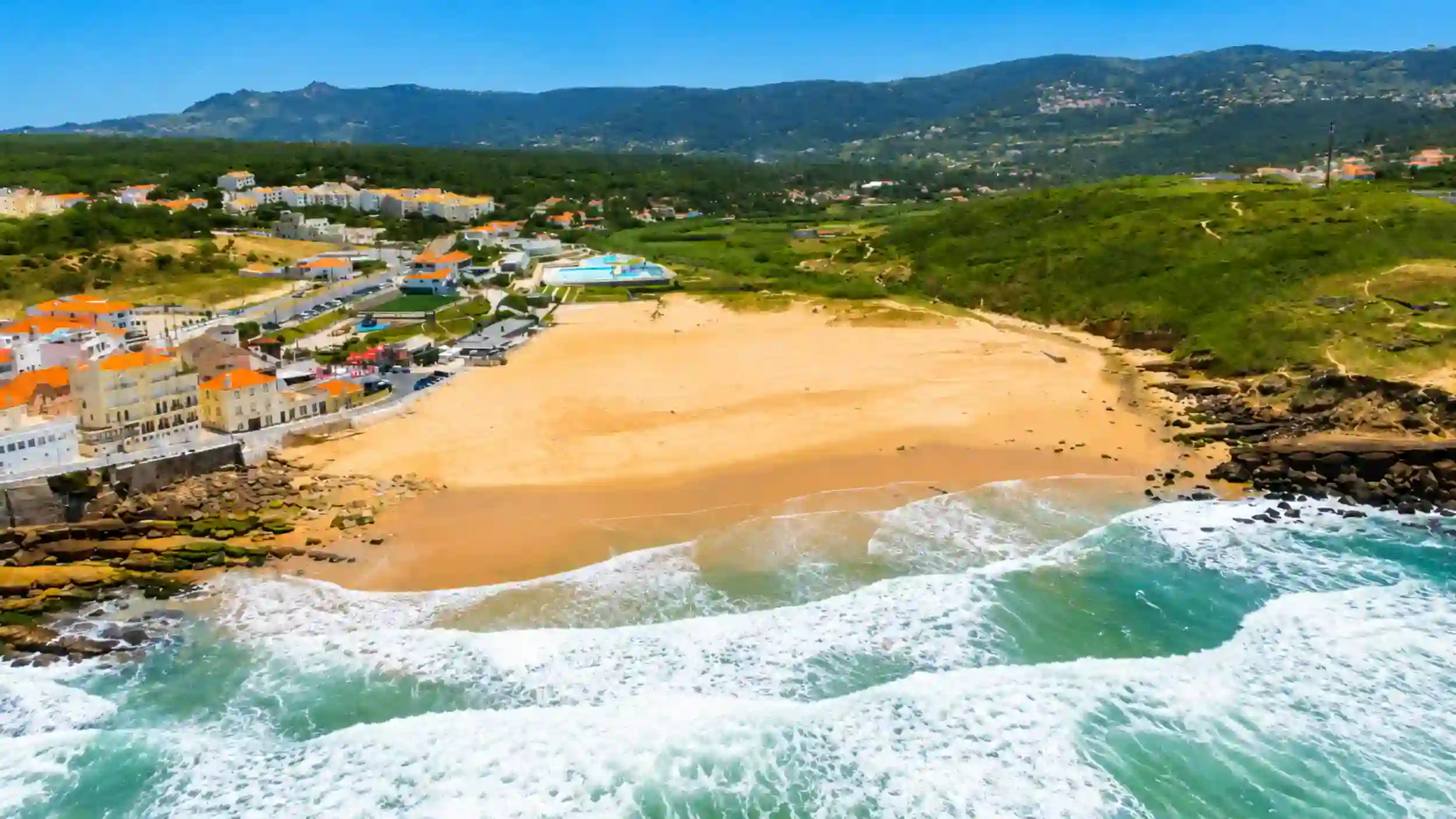
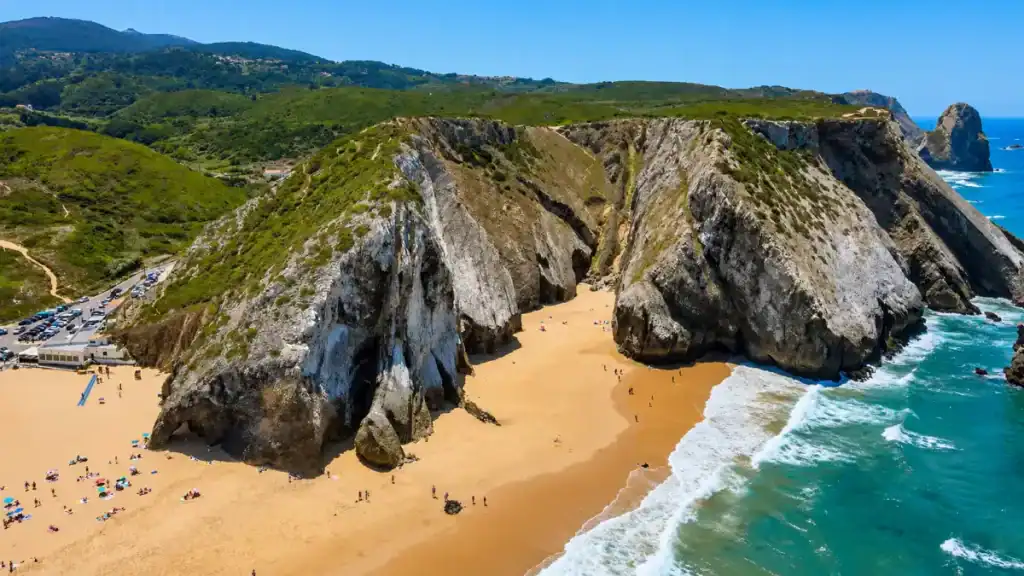
Praia da Adraga was the strongest practical reason for me to build Almoçageme into a first visit. The beach lay only a few kilometres south, reached along a narrow road through scrubland towards the Atlantic.
At the end of that road, dramatic cliffs enclosed a wide sandy bay, with sea caves accessible at low tide. The minimal development gave Praia da Adraga a noticeably different atmosphere from the busier beaches around Sintra.
Beach First, Village Second Worked Better
On summer weekends, the beach made more sense earlier because parking becomes difficult as the day builds. In quieter months, weekday mornings could feel completely different.
Once the beach began getting busier, moving back to Almoçageme for lunch solved two problems at once: we left Adraga before parking pressure peaked and reached the village when its cafés and restaurants were useful. That beach-first, village-second sequence made both stops work better.
🌿 Adding Colares Made the Day Feel Less Like a Beach Run
Adding Colares made the day feel less like a beach run because it introduced a completely different stop only a short distance north of Almoçageme.
Colares gave the route a completely different kind of stop. It produces one of Portugal’s most distinctive wines, grown in sandy soils that protected local vines from the phylloxera epidemic, while its adega broke up a day otherwise dominated by beaches and viewpoints.
Combining the two villages also changed how the route fitted together. Vineyards, small settlements and forested slopes connected places that could otherwise have felt like unrelated stops between the Sintra hills and Atlantic.
That is when I would pair Almoçageme and Colares: when the aim is to see more of the region than its headline attractions.
🚗 A Car Became Far More Useful Once We Left Sintra
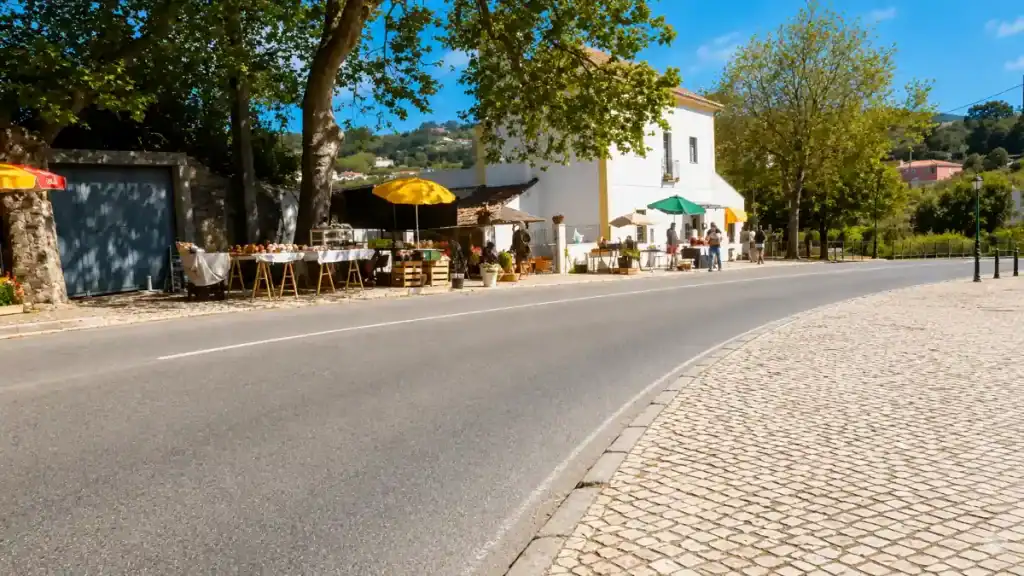
A car became far more useful once we left Sintra because it gave us the flexibility to link Almoçageme with the coast without organising the day around public transport. I would allow around 20 minutes by car from Sintra to Almoçageme and roughly 40 to 50 minutes from Lisbon, depending on traffic.
The historic tram was no help here because it continues from Sintra to Praia das Maçãs rather than stopping in Almoçageme. Without a car, the local bus network becomes the alternative.
The Flexibility Mattered More Than the Driving Time
Driving proved simplest because the flexibility mattered more than the short distances. We could combine the village with Praia da Adraga, Cabo da Roca and other coastal stops without building the day around timetables.
The road through Almoçageme was narrow and parking around the centre limited. In summer, arriving outside the busiest middle part of the day also avoids some of the heavier traffic on the coastal roads.
🧭 Would I Include Almoçageme on a First Sintra Trip?
Yes, but I would include Almoçageme only with more than one day in the Sintra region. Its value appeared once the trip moved beyond the palace circuit towards walking, local food and the quieter side of the Atlantic coast.
With only one day, the major Sintra sights deserve priority. With two days, a separate coastal route becomes much easier to justify without feeling that the essentials are being sacrificed.
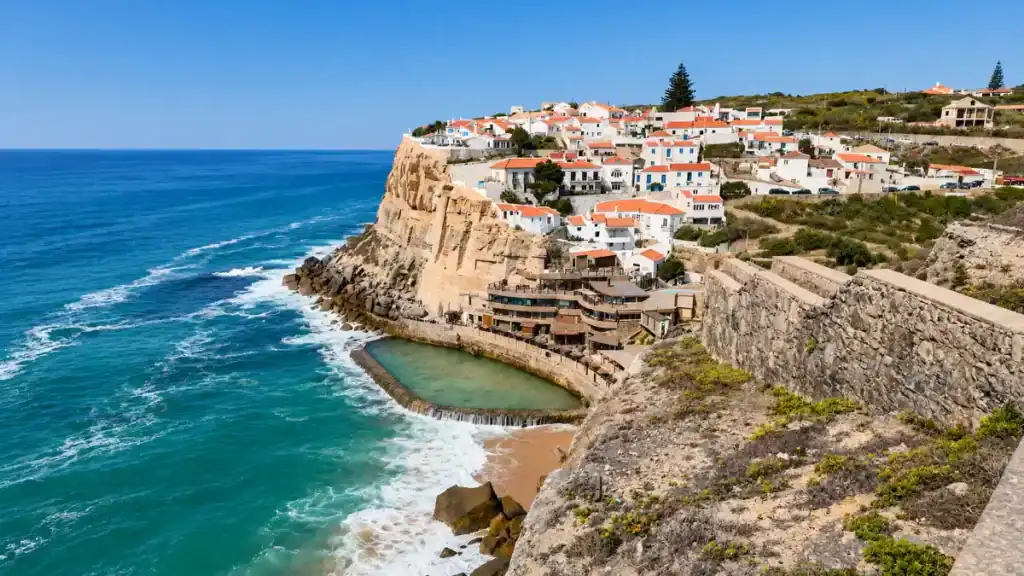
Azenhas do Mar delivered the dramatic clifftop scenery I expected from this stretch of coast. Almoçageme was useful precisely because it offered a quieter contrast nearby.
How many days the Sintra region actually needs ultimately determined whether there was room for places like this. Once the palace circuit had its own day, Almoçageme became much easier to include without turning the coast into another rushed checklist.
🧭 My verdict: Almoçageme worked best for me not as a major attraction, but as a place that made a slower exploration of the Sintra coast feel more complete.