I found Praia das Maçãs could fill a day without needing a detailed itinerary. The broad Atlantic beach was the obvious focus, but the river, village, historic tram and surrounding coastline gave me several options whenever I wanted to move away from the sand.
I would not try to fit them all in.
When conditions were good, I stayed longer at the beach and used the village and nearby coast to shape the rest of the day around it.

🌊 What Is Praia das Maçãs Like?
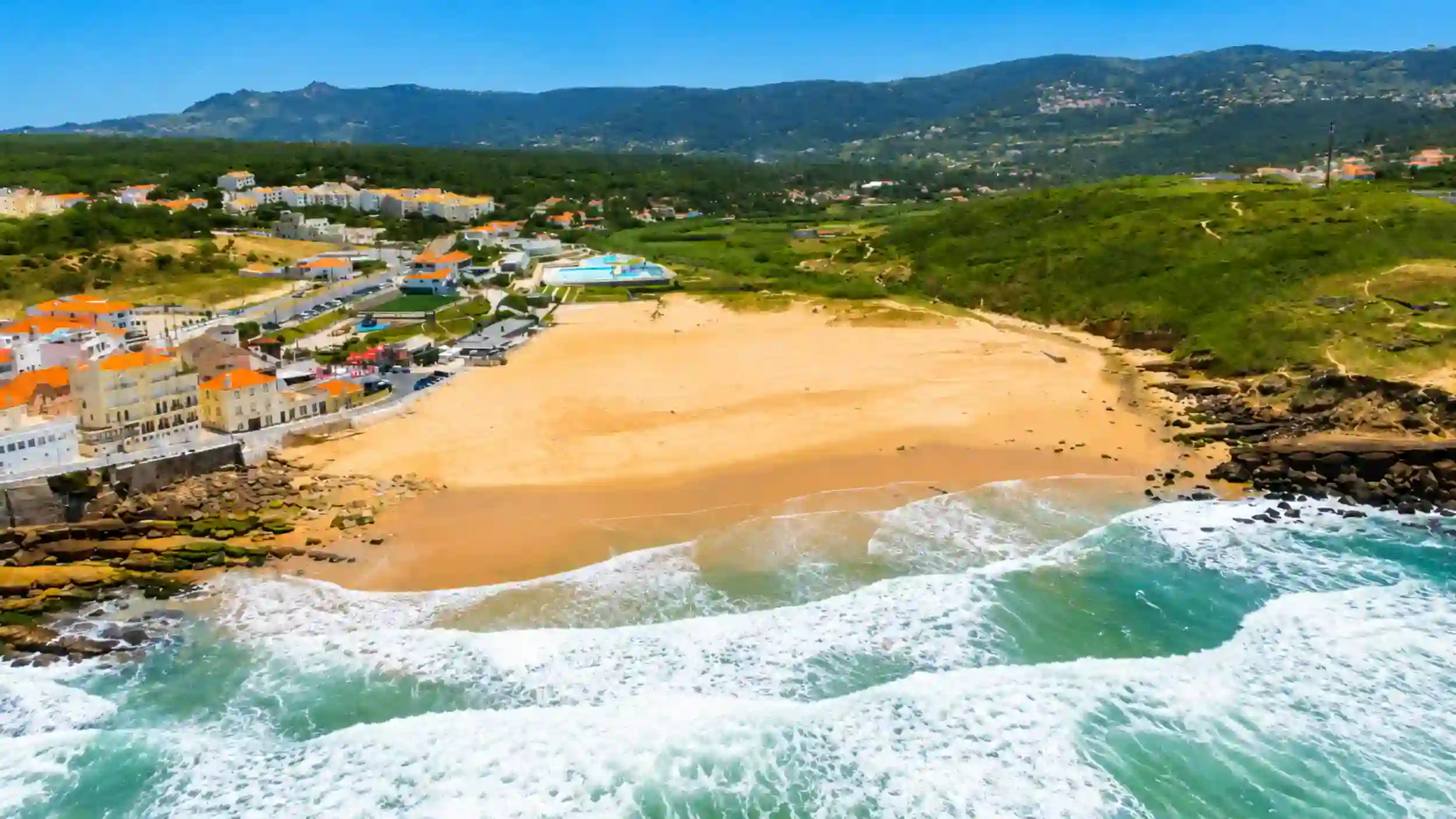
Praia das Maçãs is a broad Atlantic beach backed by a small seaside village, with the Ribeira de Colares meeting the ocean at its southern edge. What stood out to me was that it felt like a place in its own right rather than simply a beach with development behind it.
The beach stretched across a broad sweep of sand, with the river running along its southern edge before reaching the sea. I liked the contrast between open Atlantic water and the calmer river edge. It gave the place two quite different characters within a few minutes’ walk.
Its name is traditionally linked to apples carried down the Ribeira de Colares and washed onto the sand. The old tram from Sintra adds another layer of identity, so Praia das Maçãs never felt interchangeable with the other beaches along this coast.
🌊 WHAT PRAIA DAS MAÇÃS IS REALLY KNOWN FOR
🏖️ Broad Atlantic beach: enough sand for a proper beach day rather than a quick scenic stop.
🚋 Historic tram: the seasonal journey from Sintra makes getting here part of the experience.
🏄 Surf: strong Atlantic waves give the main beach genuine surfing and bodyboarding character.
👨👩👧 Family appeal: cafés, summer supervision and the calmer river edge make the day easier to manage.
🏄 Is Praia das Maçãs Good for Swimming and Surfing?
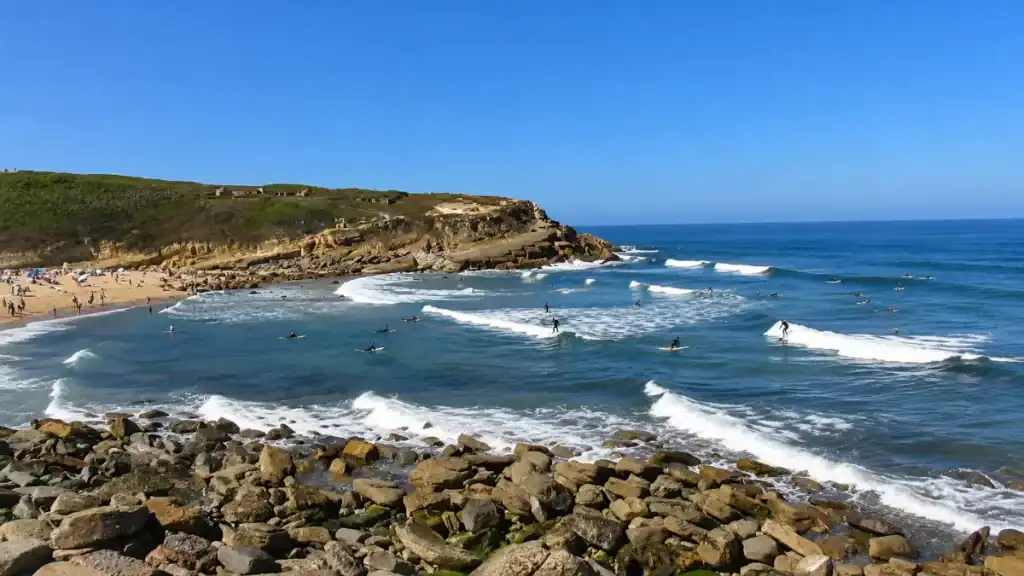
Praia das Maçãs is good for surfing and bodyboarding, but I would not treat it as a predictably gentle swimming beach. The main beach faces directly onto the Atlantic, and I found the swell could look more manageable from the sand than it felt once I was near the water.
Surfing is a genuine part of the beach rather than an activity added for visitors. Conditions vary, of course, so I would judge the water on the day rather than assume every session suits every ability level.
Families Have More Than One Way to Use the Beach
For families, the beach worked best for me because there were alternatives when the Atlantic felt too energetic. During the summer bathing season there is supervision, while cafés and restaurants immediately behind the sand made it easy to stop without packing everyone back into the car.
At the southern end, the Ribeira de Colares created a calmer, shallower edge away from the open Atlantic. I found that contrast useful, although I would still judge water conditions locally rather than assume the river mouth is automatically suitable for swimming on every visit.
The nearby swimming pool also gave me another summer option when the sea was rough. That combination made Praia das Maçãs more flexible for a mixed family group than a beautiful but exposed beach with nothing behind it.
👨👩👧 HOW I WOULD USE PRAIA DAS MAÇÃS WITH A FAMILY
🌊 Calm Atlantic: use the main beach and enjoy the space.
🌬️ Rougher sea: I would be more cautious about open-water swimming and use the other options around the village.
🍽️ Lunch break: cafés and restaurants are close enough that the day does not need much organisation.
☀️ Busy summer day: arriving early matters almost as much as choosing the beach itself.

🚋 How Do You Get to Praia das Maçãs From Sintra?
You can get to Praia das Maçãs from Sintra by car, seasonal historic tram or regular bus. By car, I would allow around 20 minutes in ordinary conditions. That was the practical choice when I wanted to continue along the coast afterwards, but it was not the most memorable way to arrive.
The historic Sintra tram still runs to Praia das Maçãs seasonally. I found its slow journey through the countryside changed the mood of the day completely: instead of simply appearing from a car park, the coast arrived gradually.
I would treat it as an experience rather than fast transport. The service is seasonal and timetables can change, so I would check the current operating days and departures before building a beach day around it.
The Bus Is the More Practical Public-Transport Option
Praia das Maçãs is also reachable from the Sintra area by regular bus. In summer, services towards the Sintra beaches are useful when I want straightforward transport rather than the slower tram experience.
If I were travelling without a car, I would choose between them according to the day: tram for character when its schedule worked, bus when timing mattered more.
🚗 HOW I WOULD GET THERE FROM SINTRA
🚗 Car: easiest for an early arrival and for adding Azenhas do Mar or Praia Grande later.
🚋 Historic tram: slow, seasonal and much more memorable when the timetable suits the day.
🚌 Bus: the practical public-transport choice when I care more about flexibility than nostalgia.
☀️ What Is the Best Time to Arrive at Praia das Maçãs?
On a warm summer weekend, I would aim to arrive at Praia das Maçãs before 10am. I found the practical pressure showed most clearly around parking and the busiest parts of the sand, so an earlier start gave me more choice.
That is not because the beach becomes unusable later. It simply gives me more choice: easier parking, more freedom over where to settle and a less hurried start before the village fills.
Arriving early also leaves the afternoon open. If the beach is working well, I can stay. If the wind picks up or I have had enough of the sand, the surrounding coast gives me several worthwhile alternatives without needing to return to Sintra.
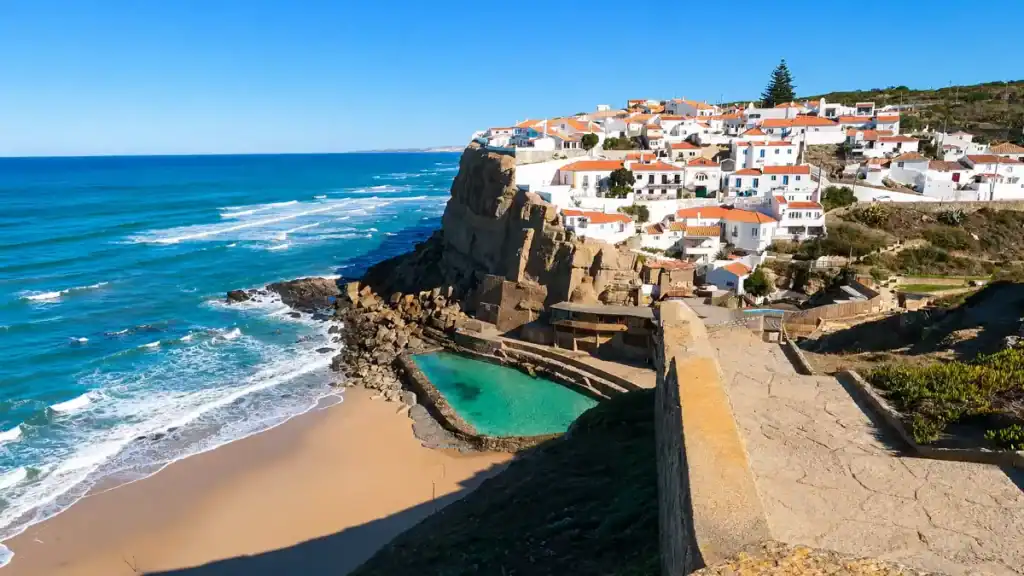
🗺️ What Can You Combine With Praia das Maçãs?
I would combine Praia das Maçãs with Azenhas do Mar for scenery or Praia Grande for another larger surf beach, rather than trying to invent activities once I was ready to leave the sand. That made the area work much better for me as a coastal day.
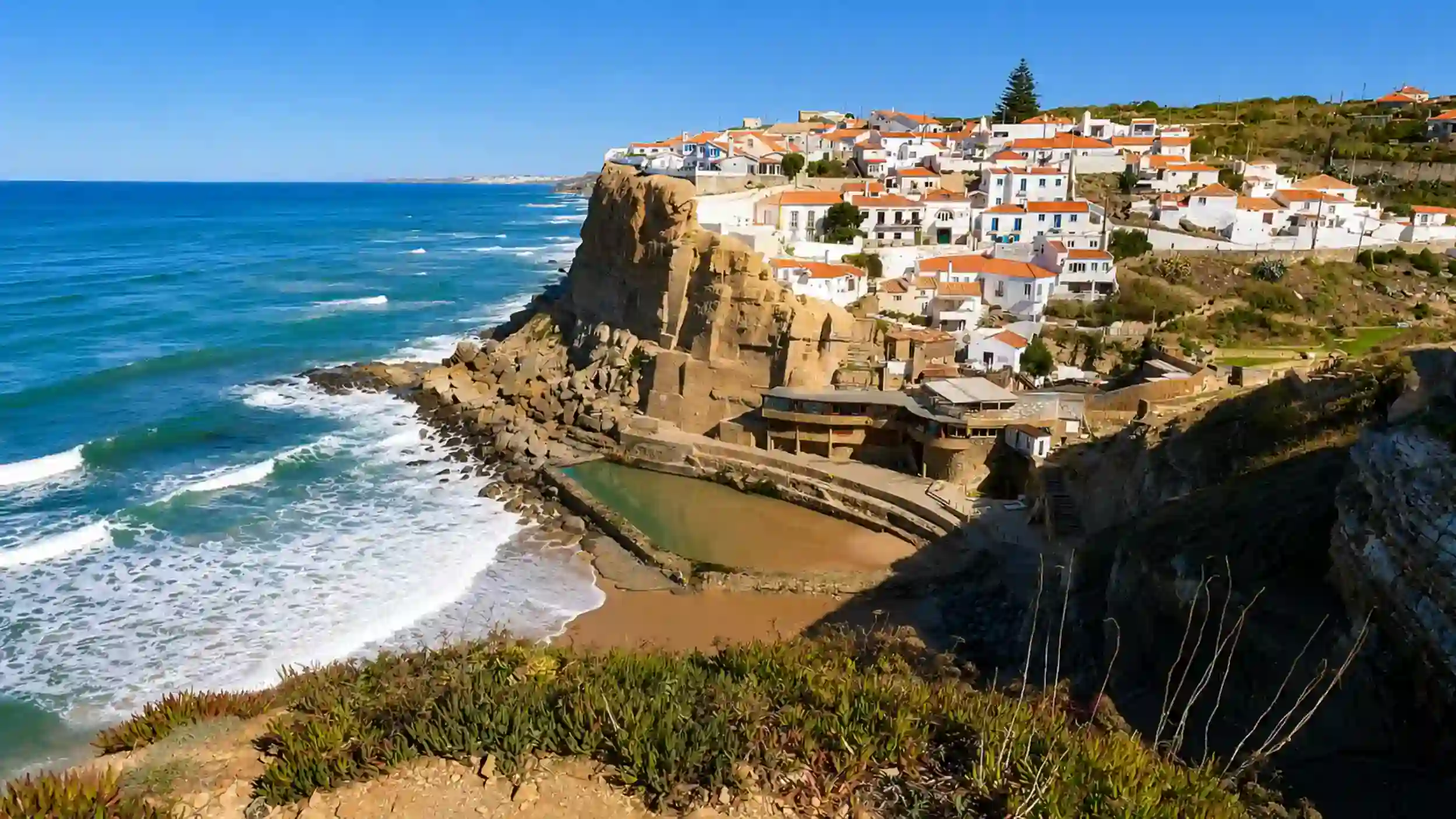
Azenhas do Mar was only a short drive away and gave me an immediate contrast, with whitewashed houses clinging to the cliffs above the ocean. Combining the two gave me a proper beach stop and one of the most distinctive coastal settings around Sintra without much extra driving.
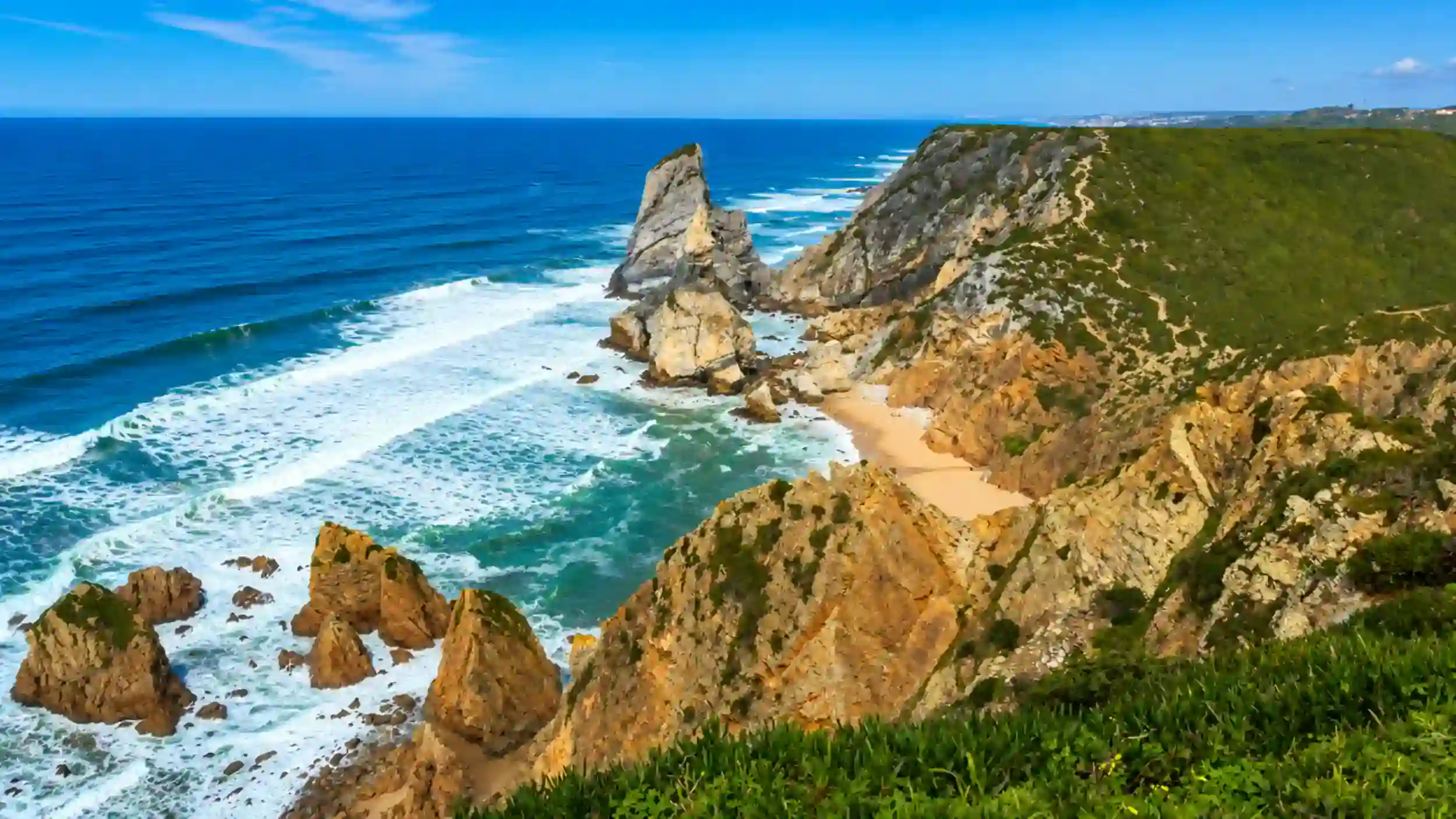
Farther south, Praia Grande gave me a much larger stretch of sand and an even stronger surfing identity. Continuing beyond it would eventually take me towards Praia da Adraga and Cabo da Roca.
There Is More Nearby Than Another Beach
The area also has archaeological interest. Praia das Maçãs has prehistoric remains and the Alto da Vigia archaeological site, and Sintra has run guided summer visits connected with this local heritage. I would check what is operating during my stay rather than assume access or guided visits are available every day.
For a simpler afternoon, I would just walk around the compact village, stop for food and let the beach remain the centre of the day. Traditional houses, cafés and small businesses gave me enough everyday activity that I never felt I needed a long attractions list.
🗺️ WHAT I WOULD ADD NEAR PRAIA DAS MAÇÃS
🏘️ Azenhas do Mar: my easiest scenic addition when I want cliffs and village views rather than another long beach stop.
🏄 Praia Grande: the stronger addition when surf and a bigger sweep of sand are the priority.
🏺 Local archaeology: worth checking when guided access or summer heritage activities coincide with the visit.
🚶 The village itself: enough for a slow wander, coffee or meal without turning the day into another sightseeing circuit.
🌅 Is Praia das Maçãs Worth a Full Day?
Yes, Praia das Maçãs is worth a full day if I want the beach to remain the focus while keeping easy alternatives nearby. Its strength for me was not a long attractions list, but the freedom to arrive for the sand and adjust the rest of the day without much effort.
Families had practical alternatives when the Atlantic was rough, surfers had a genuine open-ocean break, and the tram gave the journey a character I would not get from simply driving to another stretch of sand.
🌅 My choice: in summer, I would arrive before 10am, choose the beach conditions I had rather than the ones I hoped for, and add only one or two nearby stops if I still wanted more. That kept the day feeling coastal rather than turning it into another checklist.