
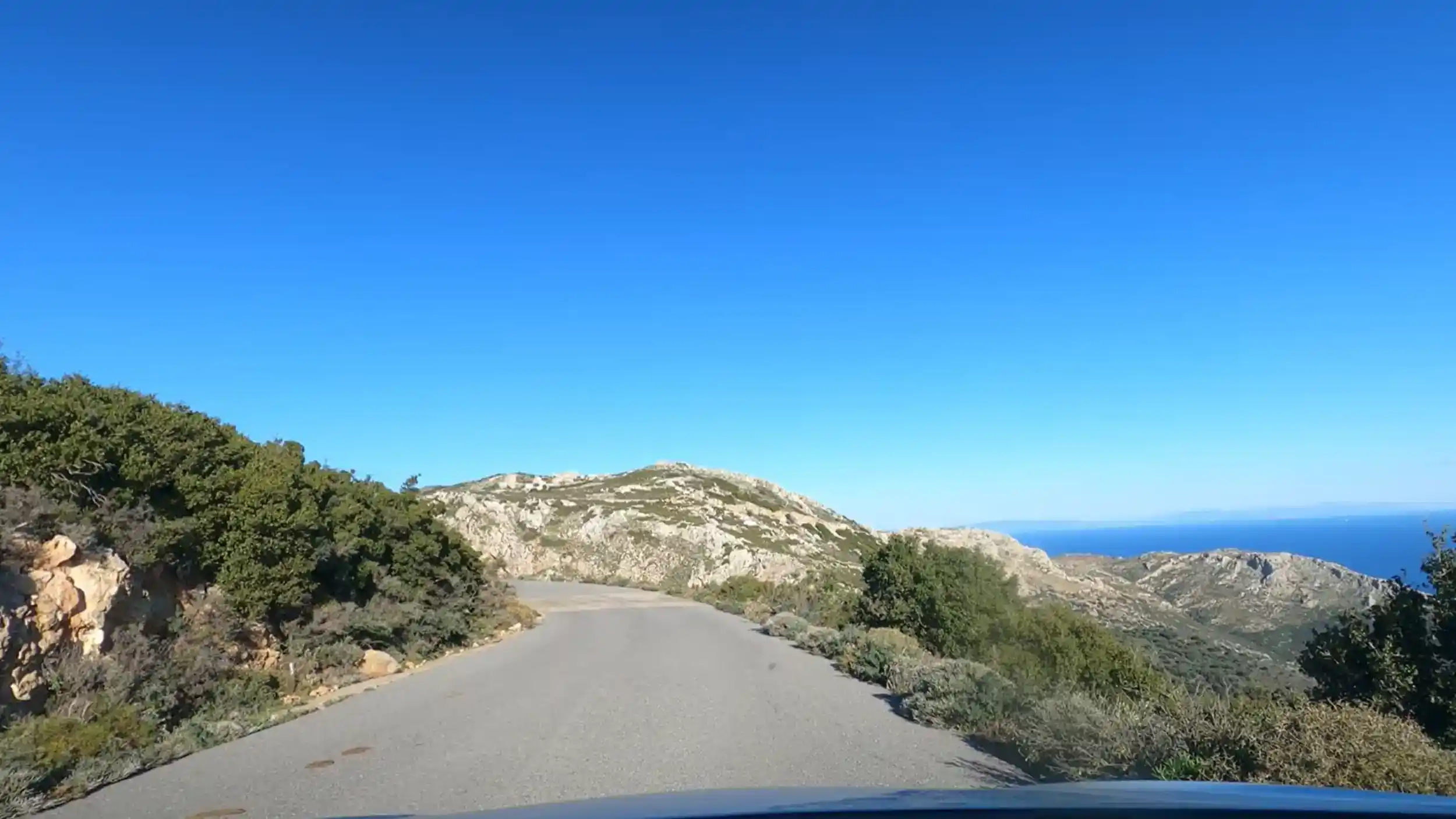
Driving in the Mani Peninsula is not like driving anywhere else in Greece. The roads here don’t ease you in. From the moment you leave the main artery south of Areopoli, the landscape starts making demands – on your attention, your patience, and occasionally your nerves.
Narrow Mountain Roads and Hairpin Bends
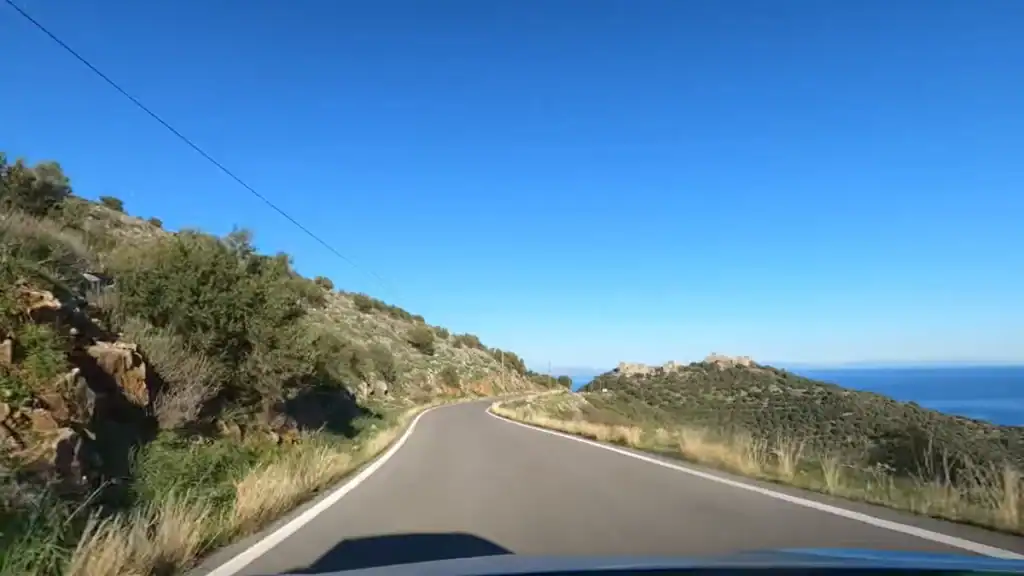
The mountain roads of the inner Mani sit somewhere between functional and feral. They were built to connect villages, not to accommodate two cars travelling in opposite directions at speed, and that logic is still baked into their width. On the route down the east coast, passing through old stone settlements and along ridgelines with nothing but air to one side, the road narrows without warning. The asphalt often ends in a crumbled edge rather than a proper verge. Hairpin bends are frequent and tight. Some are well-signposted. Others arrive after a blind curve with no particular announcement.
The experience of driving over the mountain pass near Mystras – where the road climbs steeply before dropping toward the coast – is genuinely beautiful and genuinely demanding at the same time. The view from up there makes it worth it. But you need to be present. Oncoming traffic tends to be sparse in low season, which helps. In July and August, camper vans and rental cars share these roads with local trucks and agricultural vehicles, and the arithmetic gets harder.
Drive Times vs Map Distances
This is where the Mani misleads people more than anywhere. Twenty kilometres on a map might suggest half an hour. On these roads, with elevation changes, tight switchbacks, slow sections through village centres, and the occasional stop to let a flock of goats renegotiate right of way, the same distance can take well over an hour.
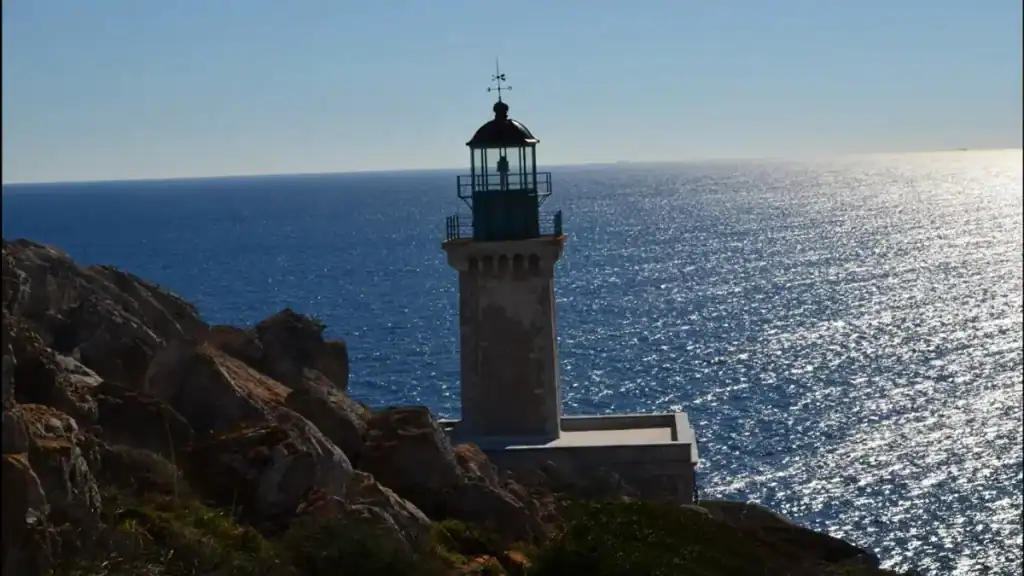
The drive from Areopoli south to Cape Tenaro is a reasonable example. The distance looks simple. The road tells a different story – winding, narrowing, occasionally deteriorating into something that resembles a suggestion more than a route. Budget generously. If you’re aiming to reach somewhere for a meal or a ferry, add thirty minutes to whatever the map application tells you and you’ll be closer to accurate.
Mountain sections in the interior are the worst offenders. The roads near Fatja and the abandoned villages above the coast involve gradients and surfaces that navigation apps don’t weight properly. The canyon roads near the Peloponnese interior – beautiful, rugged, and occasionally unpaved – can add significant time if you take a wrong turn and end up on a track that started confidently and narrowed into something your car probably shouldn’t be on.
Coastal Sections of Road
The coastal stretches are a different experience. Between small towns like Limeni and the bays further south, the road hugs the hillside above the water and the views open out completely. These sections are genuinely spectacular – deep blue against pale rock, the odd fishing boat below, the kind of scenery that makes you want to stop every few hundred metres. The problem is that stopping is not always easy. Pull-offs exist, but they’re informal – a widened section of road, a flat piece of gravel above a drop. On some coastal sections, there’s no real shoulder at all.
If you want to photograph a particular bay or stretch of coast, you often need to commit to it: find a wider point, pull fully off, and walk back. Attempting to pause on a blind coastal bend is exactly as inadvisable as it sounds. The road along the east coast, travelling north after the southern tip, is one of the better-surfaced coastal drives in the area. It passes some genuinely beautiful bays and small settlements. The pace suits a slow afternoon rather than a transit drive.
Parking in Villages
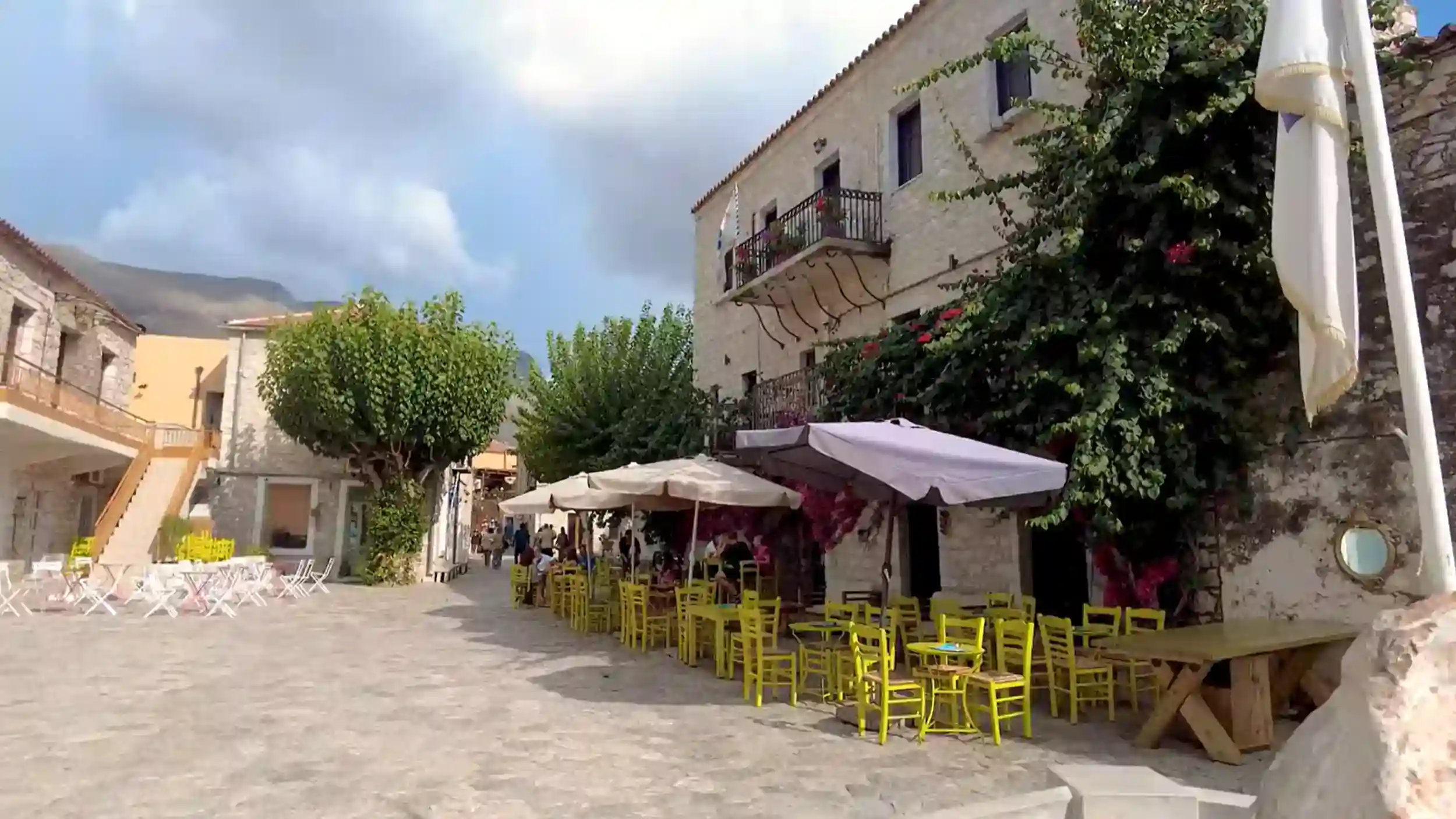
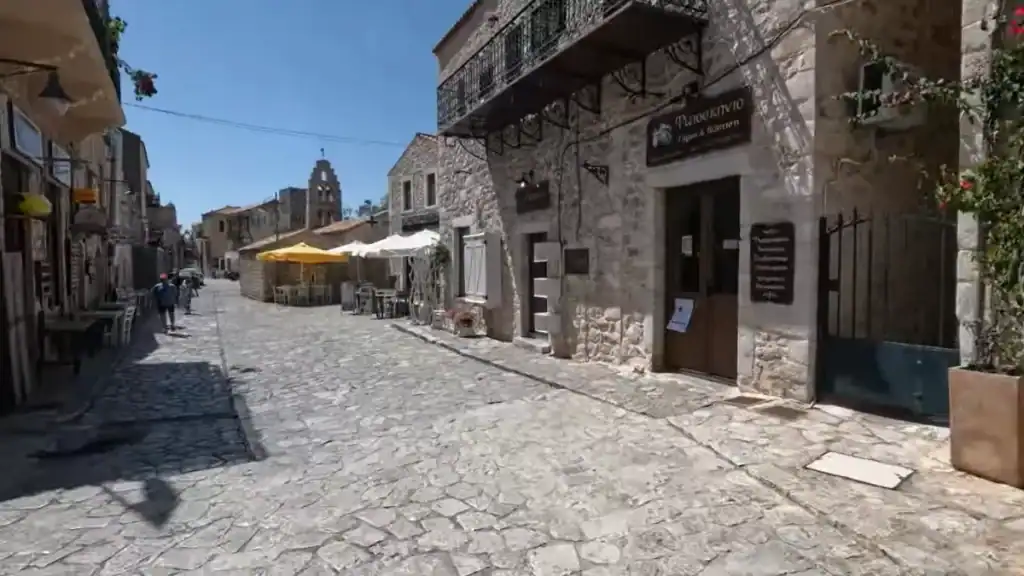
Village parking in the Mani operates on a combination of informal convention and optimism. In Areopoli, there’s a central square where most people leave their cars, but it fills quickly during the day. In smaller villages – and the Mani has many that consist of little more than a cluster of tower houses and a single taverna – parking means finding a flat piece of road that isn’t actively blocking something.
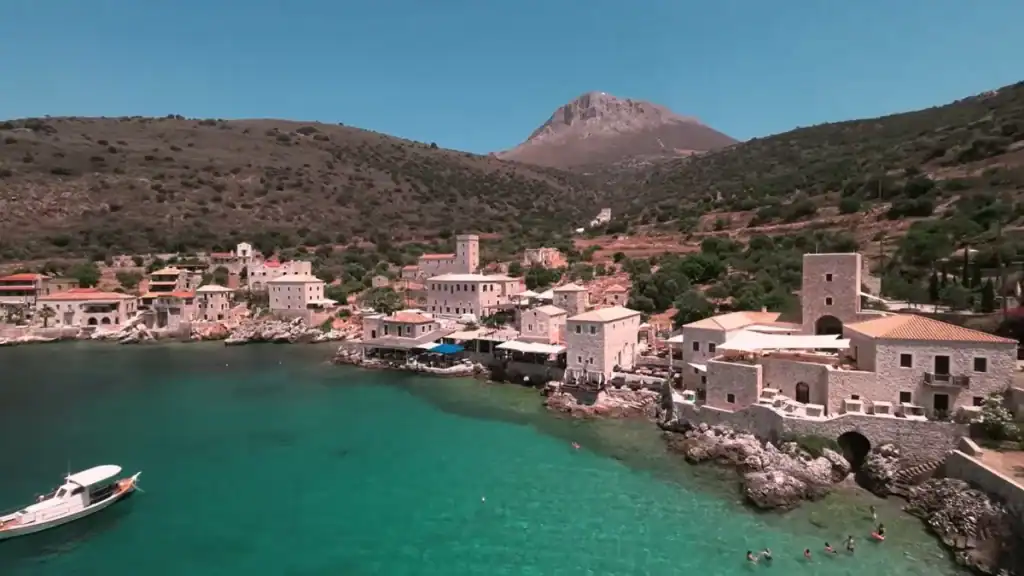
In Limeni, the road drops toward the water and the space near the harbour is limited enough that arriving early matters. The same applies in most coastal settlements. The villages that sit above the road, accessed by a narrow lane, often have no real parking infrastructure at all. You leave the car where the road allows and walk. Nobody seems to park aggressively or badly here, for the most part. The scale of the villages makes inconsiderate parking immediately and personally consequential, which tends to regulate behaviour in ways that signage doesn’t.
Fuel Stops and Practical Gaps
Fuel availability is one of the things worth thinking about before you head south into deep Mani. The further down the peninsula you go, the more scarce petrol stations become. Areopoli has a station. There’s one at the entrance to Dimitzana if you’re coming from the mountain interior. South of Areopoli, options thin out considerably.
If you’re planning to drive to Cape Tenaro and back, or explore the east coast before cutting north, fill up before you commit to the southern routes. The distances involved aren’t enormous, but the roads add time and fuel consumption – particularly if you’re driving something larger, or navigating a lot of low-gear climbing. Opening hours are also worth noting. Some stations in smaller Mani villages are not open in the early morning or late evening. These are not service-station motorway operations.
Is a Small Car Better?
On balance, yes. Not dramatically, but meaningfully. A compact car manages the hairpins with less drama, fits through the narrower village lanes without requiring precise geometry, and sits more comfortably on roads that taper unexpectedly. If you’re renting specifically to drive the Mani, there’s no advantage to going larger than you need.
That said, ground clearance matters more than people expect. Some of the tracks leading to viewpoints or off the main roads have broken surface and uneven stone. A car that sits very low will scrape. The sweet spot is something small but not entirely without clearance – a standard compact rental handles it without much difficulty; a low sports configuration would be more problematic.
Four-wheel drive is not necessary for normal Mani driving. The main roads, even the demanding ones, are paved. Where they’re not, the unpaved sections are usually short and manageable in dry conditions. In winter or after heavy rain, the calculation changes – but that’s a different conversation.
Large campervans and roof tents are entirely possible, as plenty of travellers demonstrate. The trade-off is that some of the narrower routes simply become inaccessible, and parking constraints become more acute. The experience works, but it requires accepting that certain corners of the peninsula stay out of reach.