
Summer leaves the Mani slowly, and not always gracefully. By late September the hills look spent – scrub bleached to straw, the limestone blinding even in softer light, the coastal rocks stripped of anything that wasn’t rooted deep. But something starts to shift through October. The first rains arrive without ceremony, often brief and violent, spilling down the cobbled drainage channels that run through villages like Lagia before the ground has even had a chance to absorb them properly. The dust settles. The air, which carried a particular dryness in August, loses its edge. Visiting the Mani Peninsula in autumn means catching this transition at close range – neither the punishing clarity of high summer nor the stripped-back quiet of winter, but something between, where the peninsula starts, almost reluctantly, to breathe again.
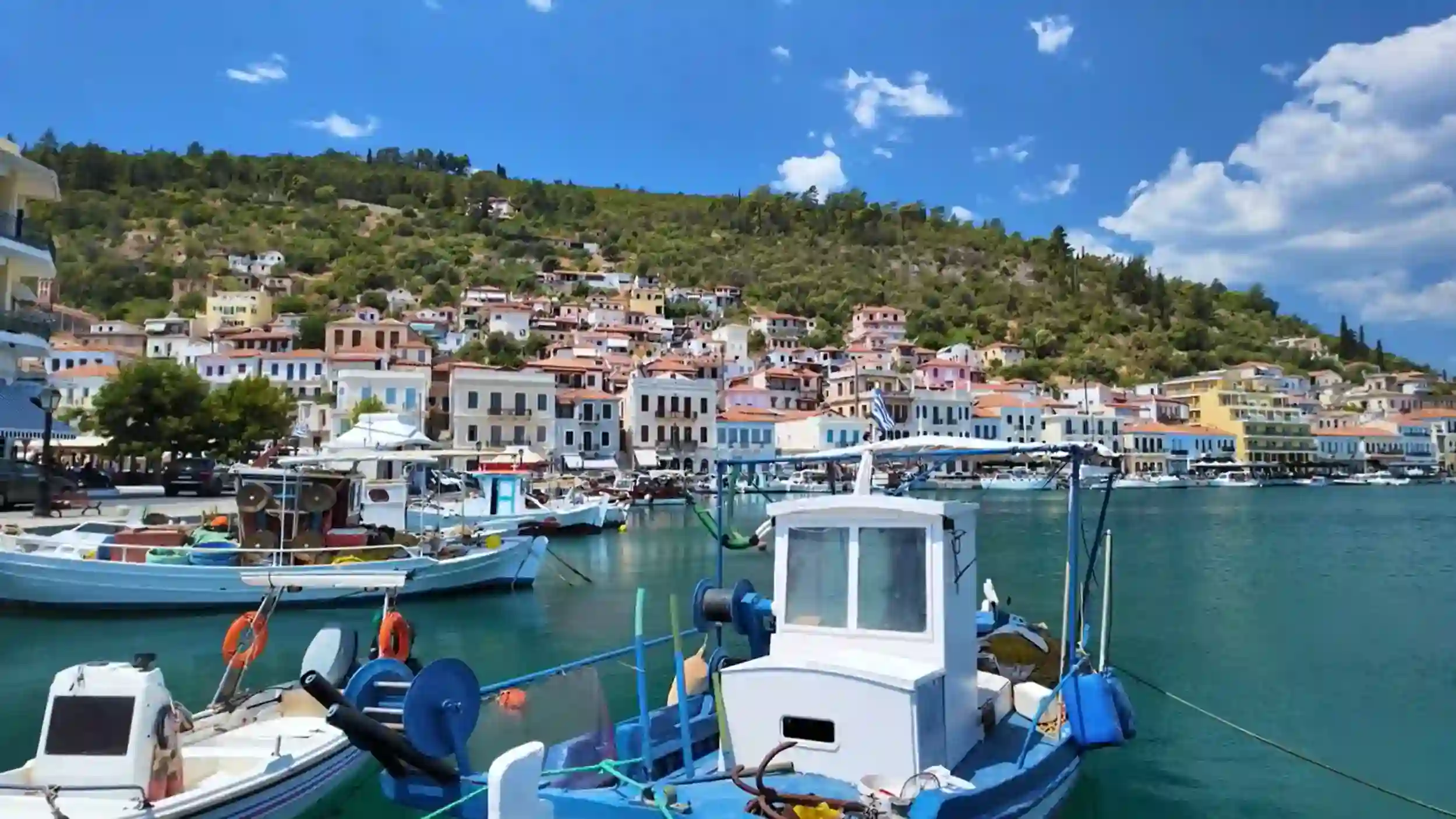
Featured image: Gytheio.
The colour change is gradual and easy to miss if you’re moving too fast. Burnt-orange hillsides don’t suddenly go green. It happens in patches – a flush of low growth along a terrace wall, dark soil visible where nothing showed before, prickly pear cactus fat with fruit. The coastline reads differently too. The sea is still the same improbable blue, but the light shifts angle, hitting the water earlier in the afternoon, and the shadows from the Taygetos ridgeline come down faster. By late October, the hills above villages like Lagia and Vathia carry their first traces of returning colour, and what looked raw and exhausted in July is starting, slowly, to recover itself.
The Olive Harvest
October in the Mani is olive season, and it shapes everything. Not in a commercial, organised-tour kind of way – the groves here are small, the operations family-scale, the equipment often decades old. Trained pruners come first. That distinction matters, and locals are particular about it: knowing which branches to remove requires accumulated knowledge, and it shows in the trees that have been properly cared for over generations versus those that haven’t. The less skilled work – spreading the tarps, gathering the fallen olives, loading for transport – comes after, and there’s always a version of that rhythm happening somewhere in the hills around you when you walk out beyond the village edge.
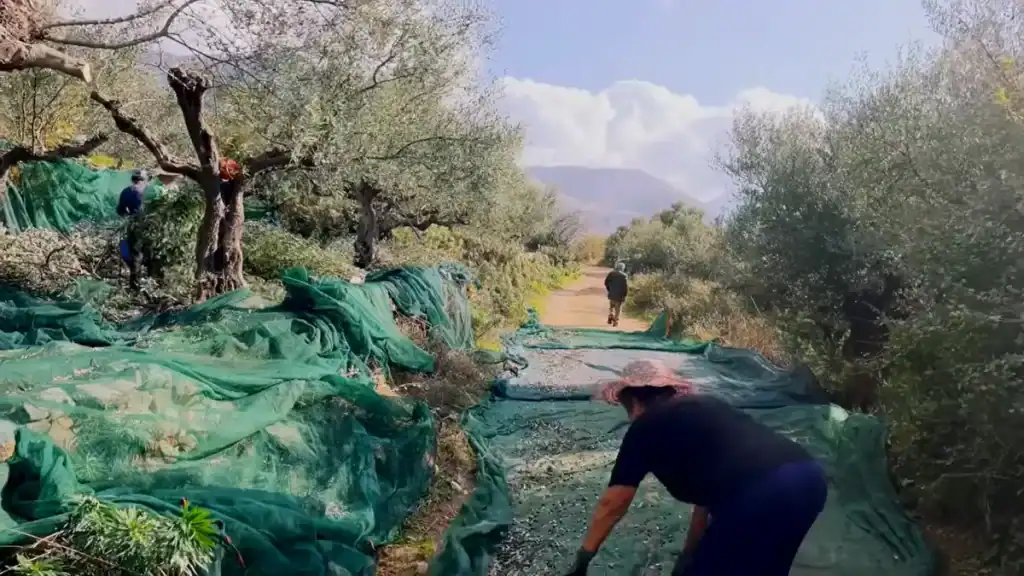
The Kalamata olives grown on this side of the Peloponnese are genuinely exceptional. For a long time they were exported in bulk to be blended with lower-quality oils from Spain and Italy, which is both economically logical and something of a waste. There’s a shift happening now – smaller producers working toward unblended, organic marketing, extracting a better price and a cleaner product. It hasn’t transformed the landscape of the harvest, which is still largely quiet, purposeful, and conducted by people who don’t especially need an audience, but it adds a layer of intent to what you’re watching.
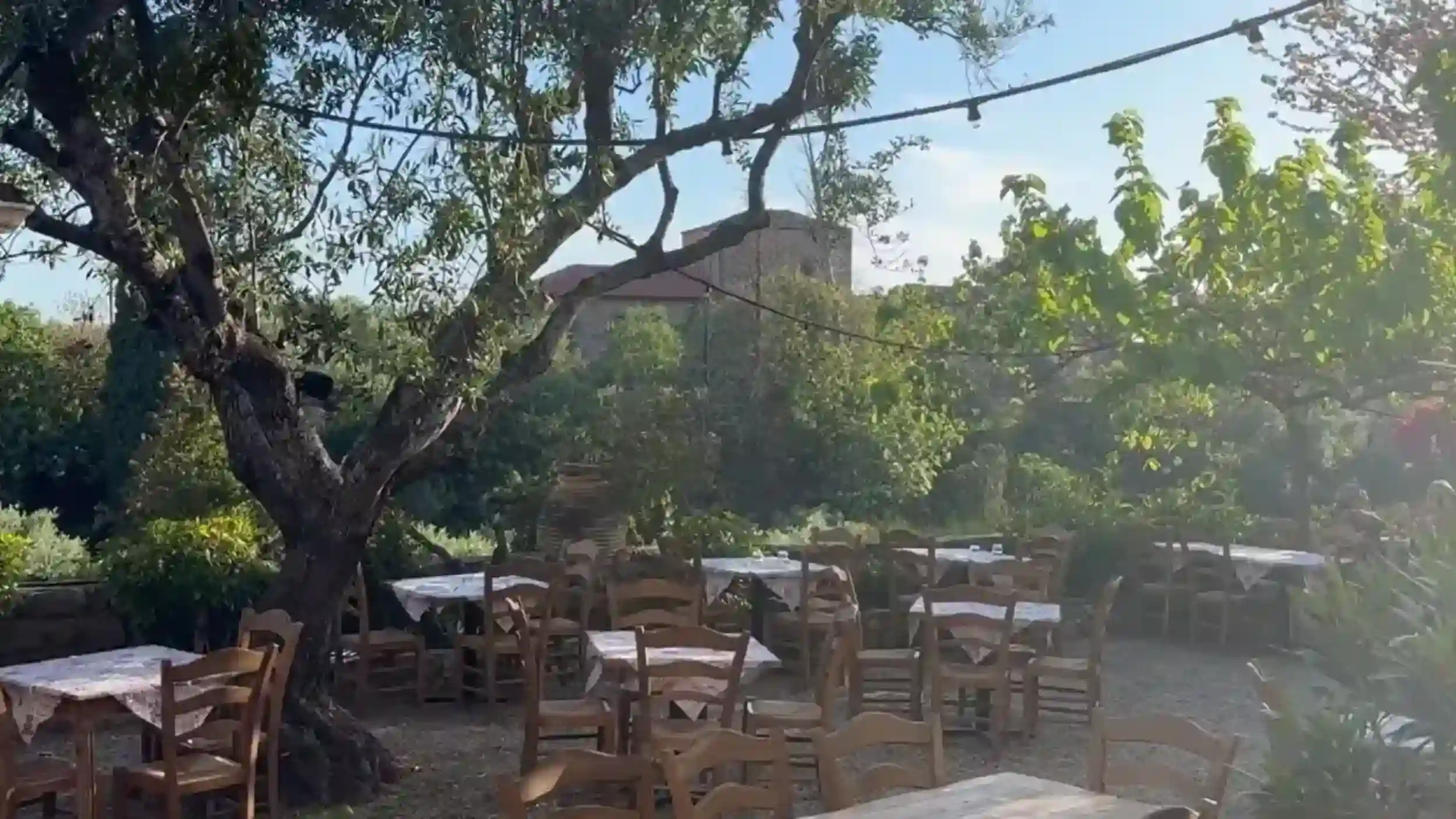
The days during harvest have a different quality. Mornings are purposeful in a way that summer mornings weren’t. There’s movement in the groves, the sound of tarps, the occasional tractor. By afternoon things slow. The Taverna in Lagia – the one run by the priest, who is also the village contractor and serves, effectively, as the town hall – fills at a certain hour with people who’ve been working since first light and aren’t in any hurry to move.
Driving after Summer
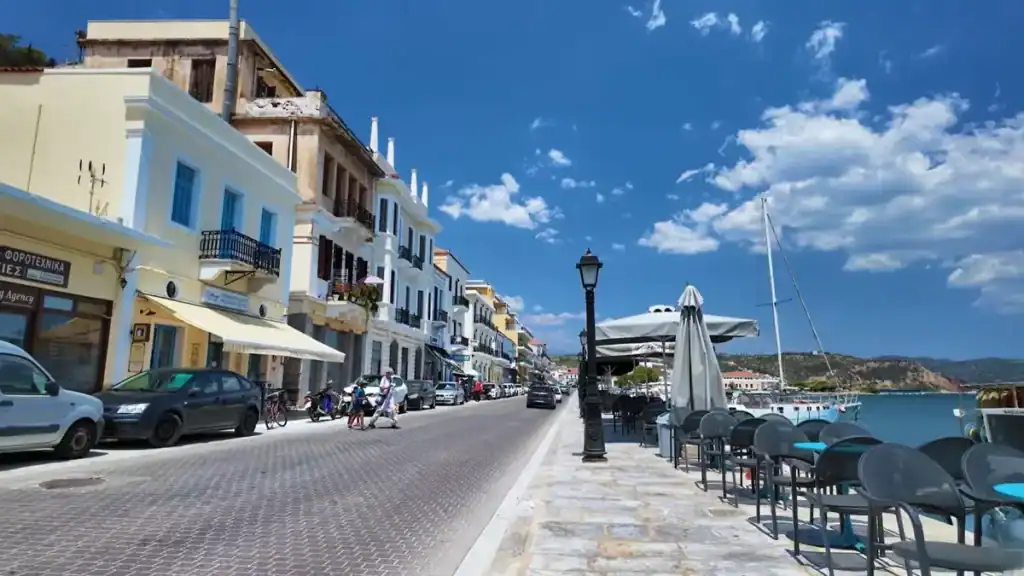
Driving the Mani after summer is a different experience from driving it in July. The campervan convoys that back up on the single-lane passes thin out. The goats are still there – they’re always there, appearing on blind corners with no apparent concern for the geometry of the road – and rock falls remain a genuine consideration on the cliff-edge sections south of Gytheio. But the congestion that makes certain stretches frustrating in peak season is mostly gone.
The air after rain has a clarity that makes the topography feel sharper; you notice the scale of the drops to the sea more acutely when there’s no heat haze softening the edges. The mountain passes are worth taking seriously at any time of year. The first significant rainfall of autumn can leave debris on roads that haven’t been cleaned, and the narrow agricultural terraces-turned-tarmac that lead up to villages like Vathia – at around six hundred feet – require attention rather than admiration when you’re on them.
But for drivers who find pleasure in roads that demand something, this is genuinely good territory. The peninsula’s topography means there are almost no east-west routes; you travel with the grain of it, up and down the coasts, and the road south from Gytheio to the cape can take ninety minutes even in clear conditions. In autumn, without the summer traffic, you can actually think while you’re driving it.
Swimming Into October
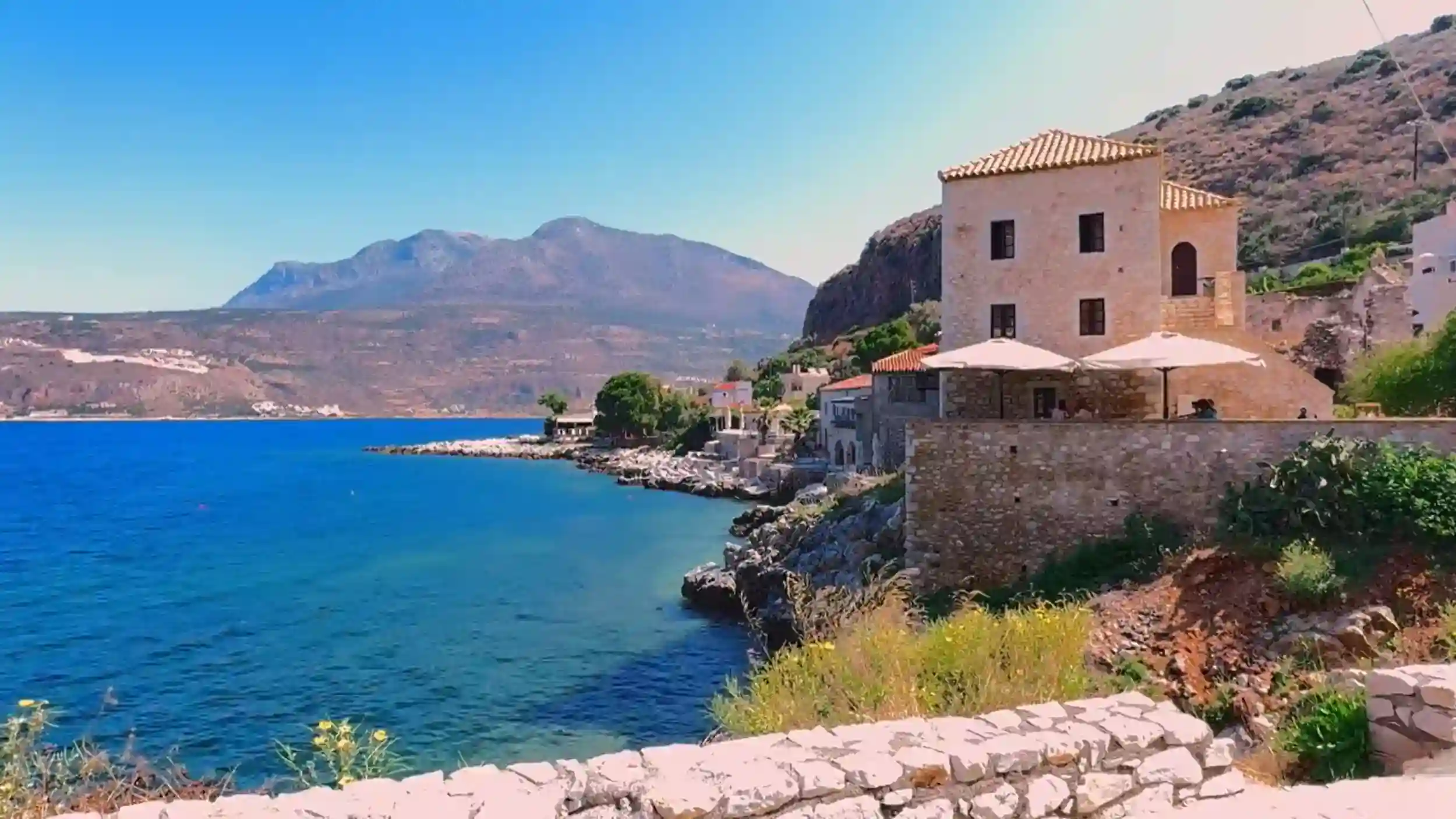
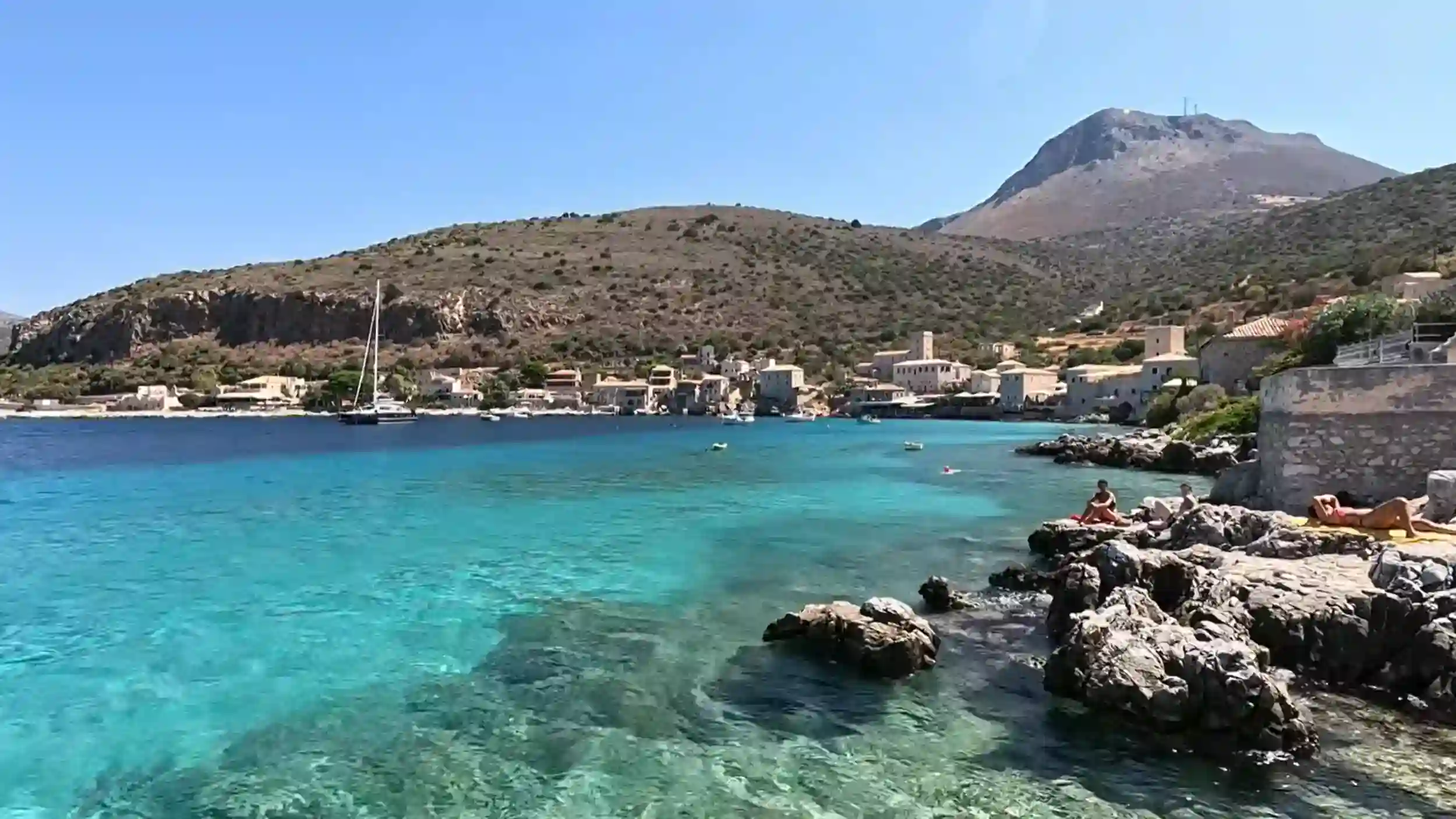
The sea temperature through October stays warmer than most visitors expect. The eastern coast – the Exo Mani – sits in a rain shadow, which means calmer conditions on average, and the residual heat from summer keeps the water accessible well into November if the weather is cooperative. The coves along the western coast, below villages like Gerolimenas, are exposed to different wind patterns; there are days when swimming is easy and days when it isn’t, and that variability is part of the character of autumn rather than a deficiency.
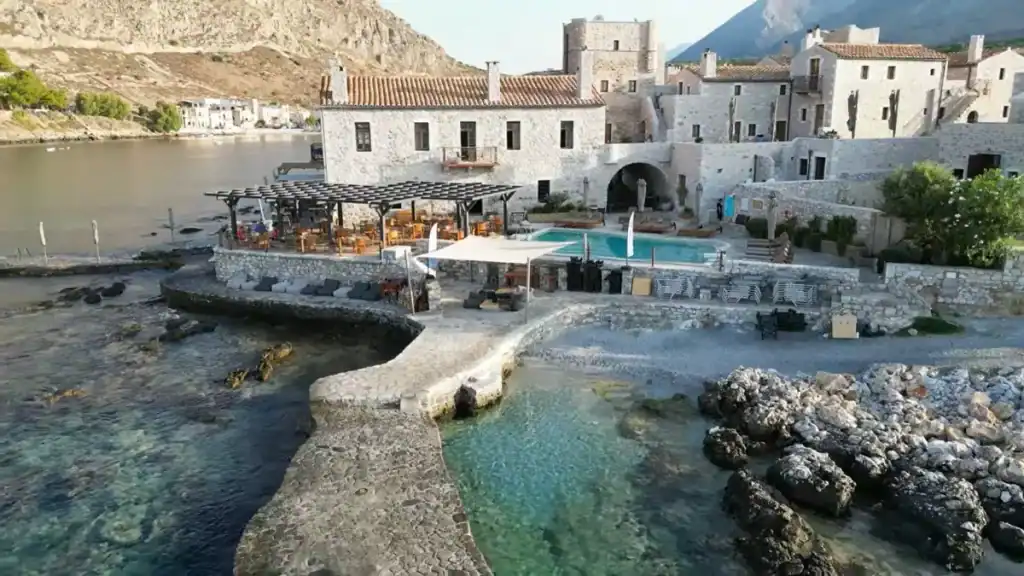
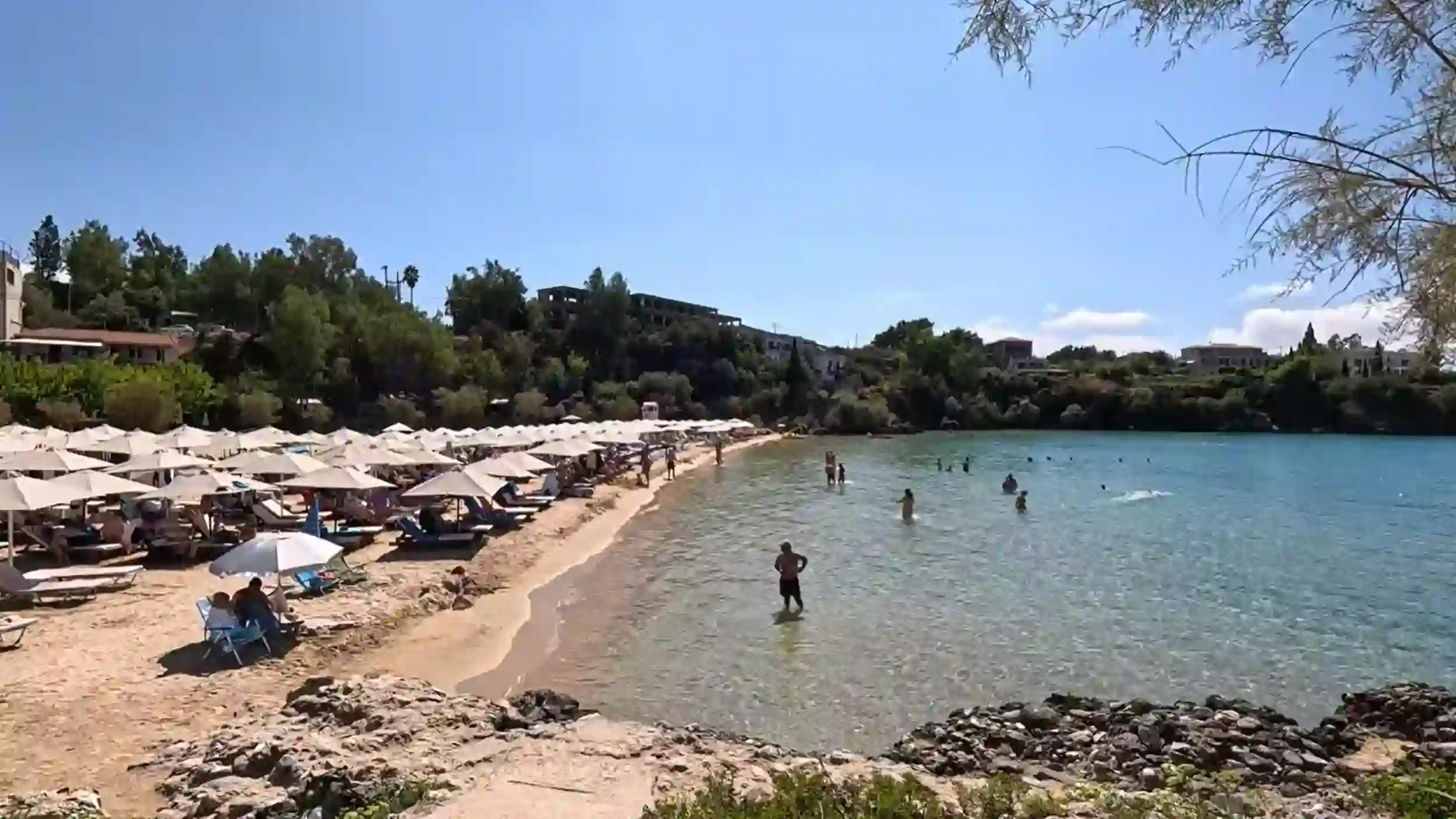
The beaches here are almost universally shingle and pebble – limestone, marble, rounded by the water into something pleasing underfoot, nothing like the sandy beaches of the Aegean islands – and in October you’ll often find them empty or close to it. The beach below the road from Lagia, down past the little church of Agios Nikolaos, is typical: a rocky cove, no facilities, no particular reason to be there except that the water is warm and there’s nobody else. Some of the most isolated stretches of coastline on the western side require little more than a short walk from wherever you can park, and the access question is straightforward – the Greek constitution places public access to the coastline beyond dispute. What you won’t find is infrastructure. In autumn that’s partly the point.
Village Life in the Off-Season
The village population contracts visibly in September. Lagia, which has around thirty permanent residents at most, holds those numbers year-round – it’s one of the places in the Mani that has maintained a small but real community, including families with young children, which is not something you can say about every settlement. But the summer visitors, the Athenian second-home owners, the Airbnb rotation – that presence recedes. Vathia, which was always closer to a ghost town than a village even in summer, becomes quieter still. Some of its tower houses were loosely prepared for the tourist economy in the seventies and eighties, when there was a government initiative to develop it as a heritage destination, with tavernas and guest rooms. That initiative didn’t really take hold, and now most of what’s there is just wind and stone and the occasional person looking warily at anyone who walks through.
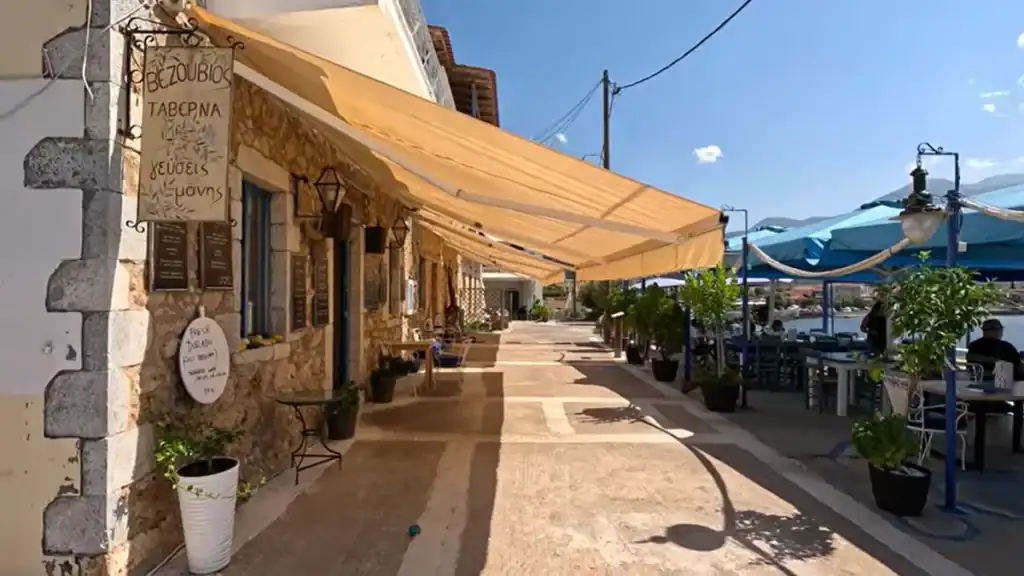
The social texture of the villages that do retain life changes once the seasonal population leaves. Evenings at the Lagia Taverna become less performative. The conversations are between people who are actually there, not passing through. The place doubles as post office, town hall, and informal labour exchange – if you need work done on a property, you ask there – and in autumn those functions feel more dominant than the tourism-facing ones. It’s a different kind of quiet from winter isolation: there are still people, still activity, but the ratio of locals to visitors inverts, and what you get is something closer to the actual rhythm of the place.
Closures
Some things close. The guest houses that operated seasonally through July and August don’t all make it to November. Certain stretches of the peninsula that had a café or a small shop functioning in summer revert to having nothing, which in a few cases means the nearest supplies are a significant drive away. The local history museum in Lagia – housed in a restored building, in need of some explanation about whether it is ever actually open – was shut when last checked. These are not failures of tourism infrastructure so much as a realistic picture of what a peninsula with this few permanent residents looks like outside the season.
What doesn’t close is more telling. The Taverna in Lagia stays open, though the kitchen operates on whatever was cooked that day. The church is open. The monastery above the coast road, where one or two monks remain, continues on its own schedule regardless of month. The Byzantine chapels scattered across the hillsides – many of them centuries old, several near the village with interior frescoes that would stop most people cold if they happened to open the right door – are simply there, as they’ve always been. The one near the house below the church, with its painted iconostasis and ceiling, is easy to miss if you don’t know to look. In autumn, with fewer people moving through, there’s more time to find things like that.
The Quality of October Light
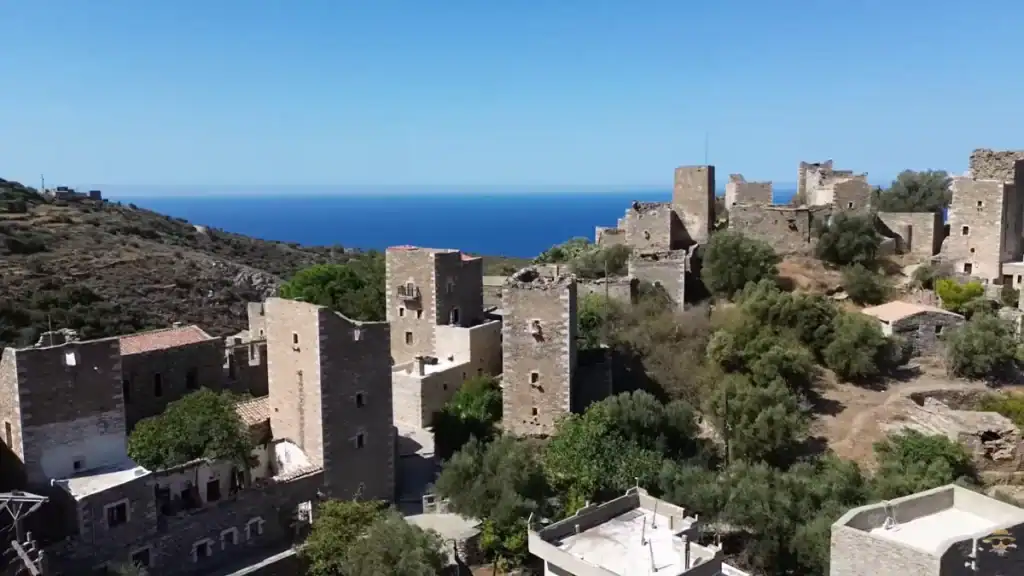
The quality of light in October is the thing people who’ve been here in both seasons mention first. Summer light in the Mani is intense and largely unforgiving – appropriate for the landscape, which doesn’t ask for softening – but it flattens detail and makes long stretches of the day uncomfortable for simply being outside. Autumn light arrives at a lower angle, holds warmth without aggression, and does something useful to the limestone tower houses that are the peninsula’s defining architectural form. At Vathia in the late afternoon, facing west, the setting sun picks up the stone in a way that makes the ruins look considered rather than abandoned. The same stretch of coastline that looked scorched in August reads as austere and deliberate in October.
There’s a version of the Mani that exists only at its extremes – the height of summer, with its intensity and crowds, or deep winter, when the isolation is real and not scenic. The weeks between, when the harvest is happening and the roads are clear and the sea is still warm enough, offer something that neither of those versions contains: the peninsula functioning as it actually functions, without the pressure of peak season or the withdrawal of winter. That’s harder to frame as a selling point than “best beaches” or “authentic village life,” which might explain why it remains, for now, relatively undiscovered.