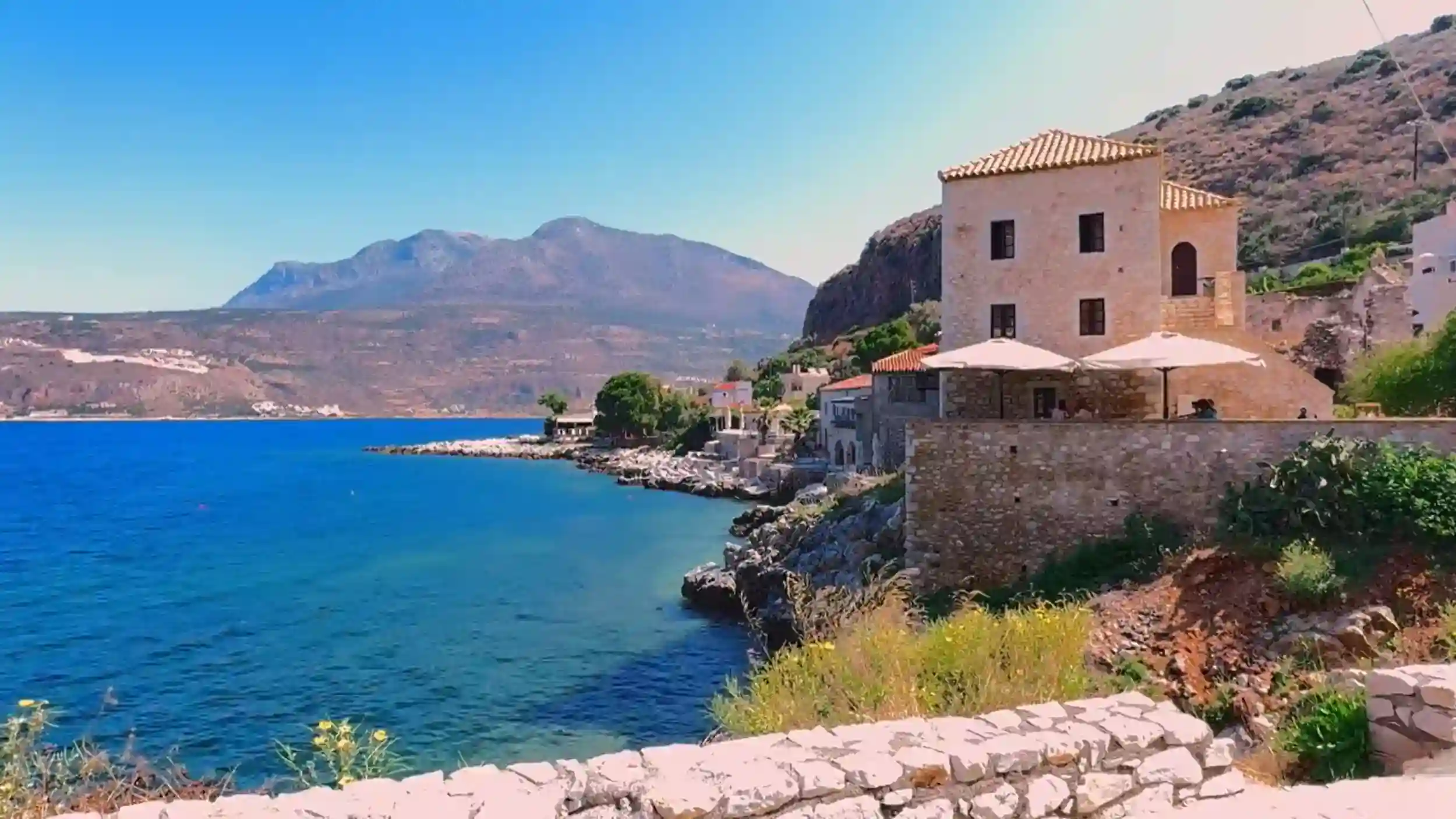
Mani Peninsula in spring brings greener hills, quieter roads, cooler walking weather and softer coastal light, making April and May ideal for travellers who value scenery and space over guaranteed heat.
🌿 How the Landscape Changes Between Spring and Summer
The Mani has two very different personalities.
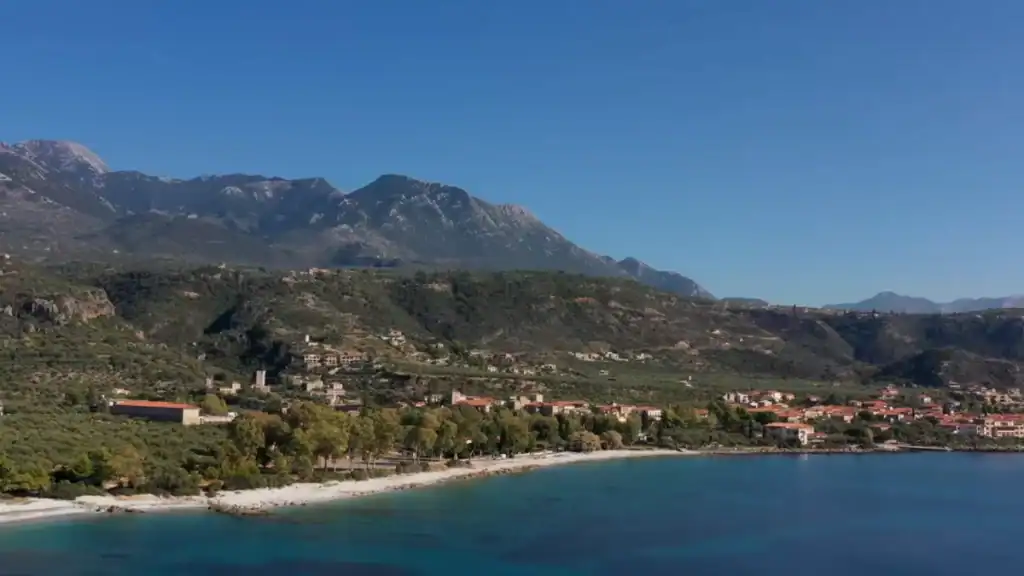
Visitors arriving in April or May often struggle to reconcile what they see with the photographs that dominate travel brochures later in the year. Instead of pale, sun-scorched hills, the peninsula is unexpectedly green, with wildflowers appearing between ancient stone terraces and fresh growth softening the rugged limestone slopes.
It feels like a landscape that’s only briefly letting its guard down.
A Short-Lived Season of Colour
Spring transforms the approach from Kalamata through the Taygetos foothills.
Olive groves regain their rich green tones, roadside flowers brighten the verges and valleys that appear almost barren by August suddenly feel alive. The dramatic tower villages remain every bit as striking, but they’re framed by vegetation that disappears as summer advances.
This greener landscape also changes the way the peninsula feels to explore, particularly on foot.
Walkers following old stone paths during April and May experience cooler temperatures and far more colour than those visiting later in the season. It’s one reason many hikers deliberately avoid the height of summer. Hiking the Mani Peninsula: Stone Paths and Silent Gorges explores the routes that benefit most from these cooler months.
Light Changes the Landscape Too
Colour isn’t the only difference.
The lower angle of the spring sun creates longer shadows and gentler contrasts, giving stone villages and coastal cliffs much more texture than they have beneath the high summer sun. Photographers often plan entire trips around this softer light because it reveals details that become washed out later in the year.
Spring doesn’t replace the classic Mani landscape.
It simply reveals a version of it that exists for only a few weeks each year.
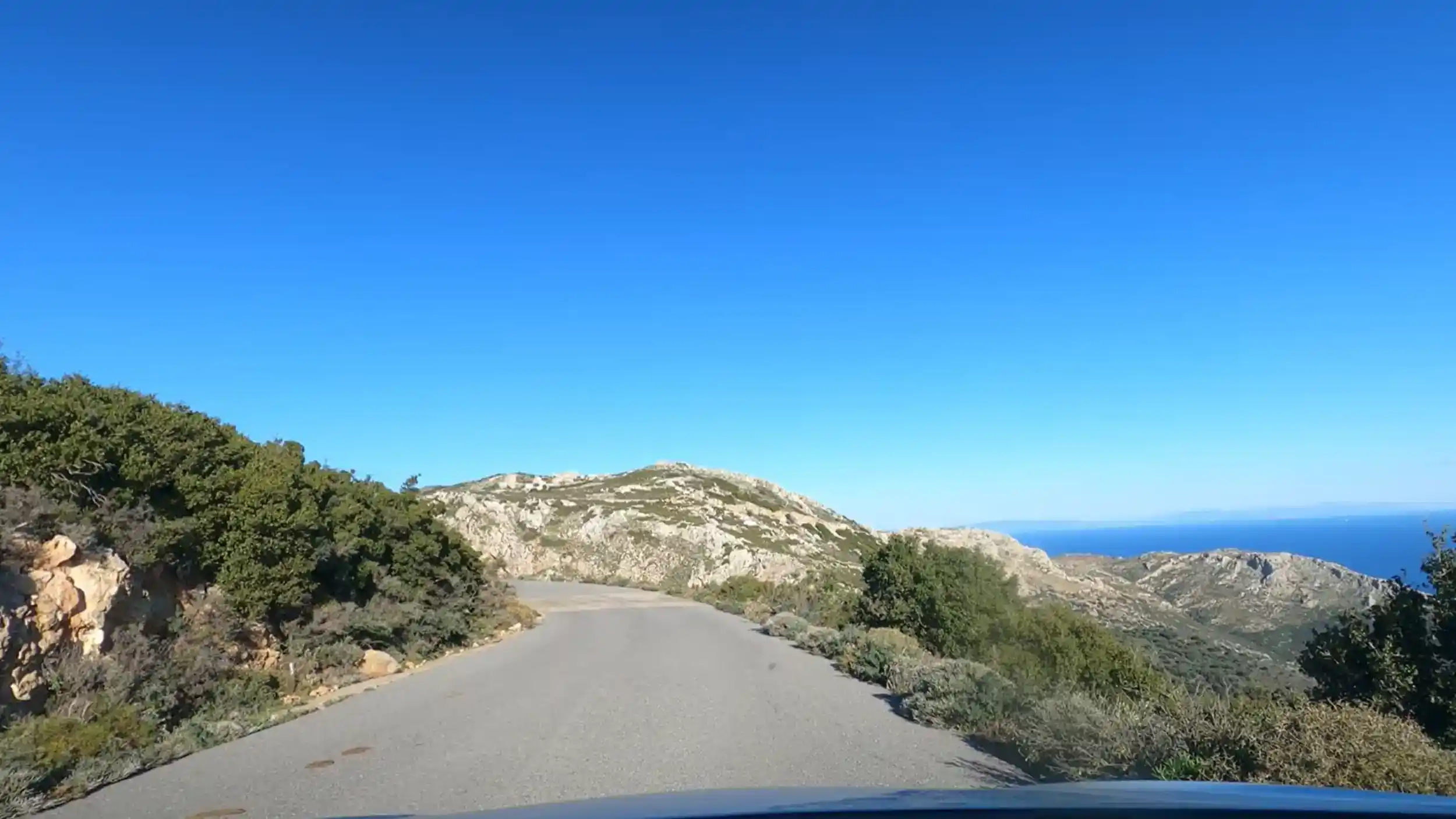
Those planning to explore by car often notice the change even more dramatically. Roads that weave through olive groves and mountain passes become journeys in their own right rather than simply a way of reaching the next village.
🚶 Crowd Levels in April and May
Spring offers something that’s becoming increasingly difficult to find elsewhere in southern Europe.
Space.
The Mani Peninsula has never attracted the visitor numbers of Santorini, Crete or even neighbouring parts of the Peloponnese, but the difference between April, May and the height of summer is still immediately noticeable.
April Feels Quiet Almost Everywhere
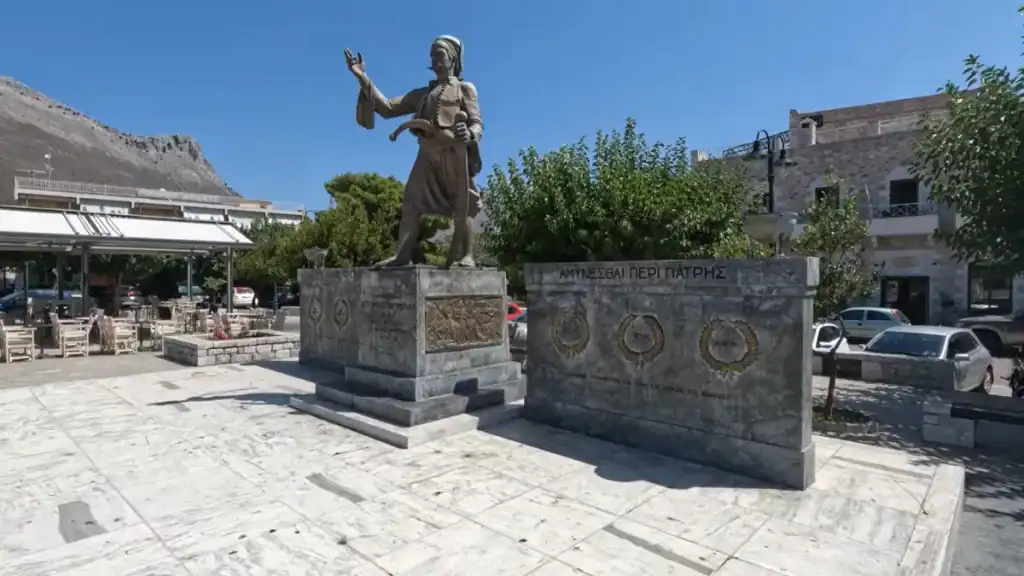
Outside the Easter period, it’s entirely possible to wander through villages such as Vathia or Gerolimenas without seeing more than a handful of other visitors.
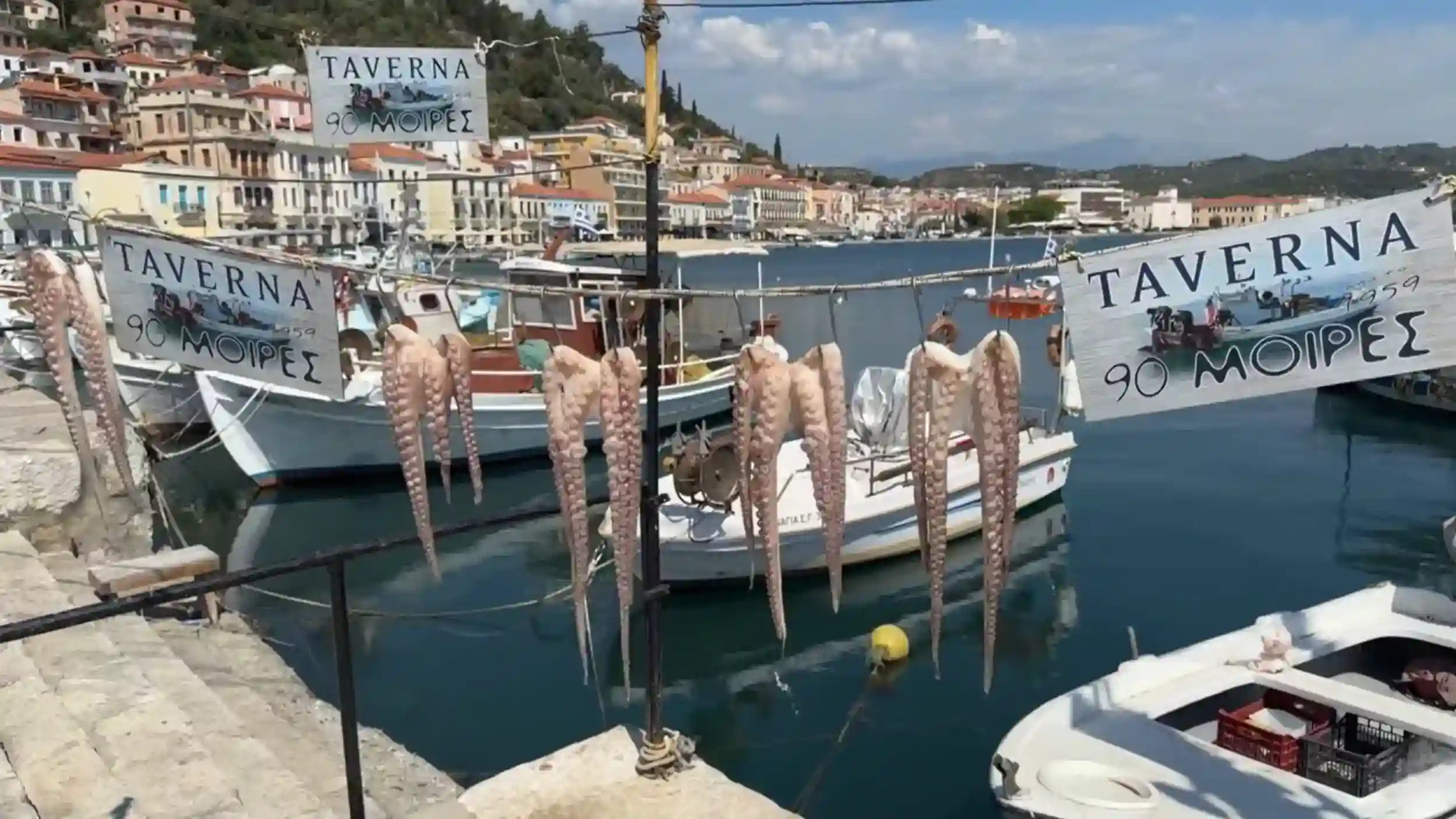
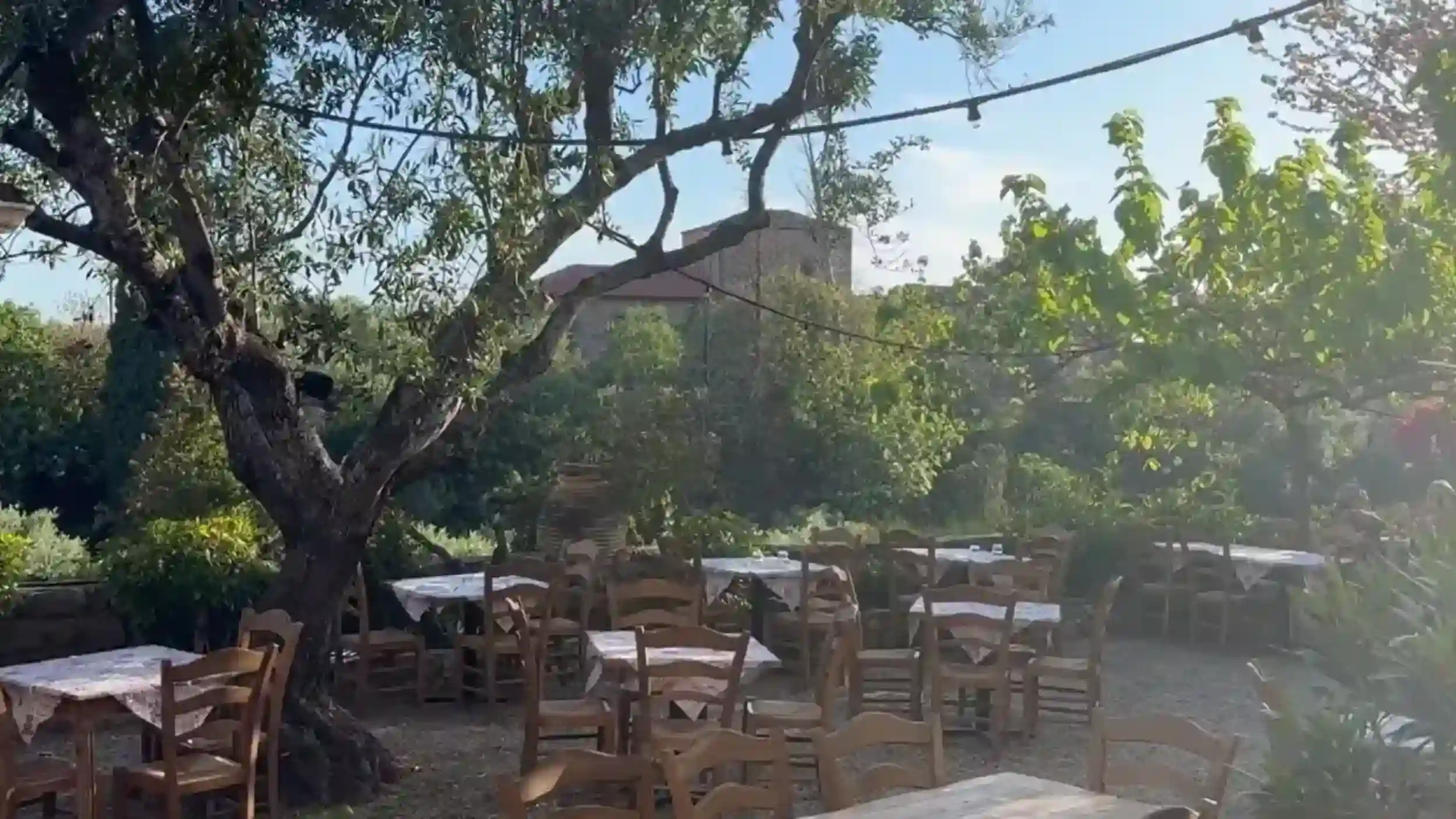
Beaches remain largely empty, viewpoints are rarely crowded and even the most popular tavernas often have plenty of outdoor tables available.
The roads reflect that same calm atmosphere.
If you’re driving between villages, you’ll spend more time stopping for photographs than waiting behind traffic. That’s one of the reasons many people find Driving in the Mani Peninsula: Roads, Turns and What to Expect especially enjoyable during spring.
Easter Changes the Picture
There is one notable exception.
Greek Easter brings families back to the Peloponnese, filling churches, village squares and many restaurants for a few days. The atmosphere is lively and authentic, but it’s very different from the peaceful experience that characterises much of the rest of spring.
Whether that’s a benefit or a drawback depends entirely on the kind of trip you’re hoping to have.
Why May Is Often the Sweet Spot
By mid-May, the peninsula settles again.
School groups have largely disappeared, Easter celebrations have finished and the main summer season is still weeks away. Accommodation is easier to book, restaurants are opening more consistently and there’s still plenty of room to enjoy the scenery at your own pace.
| Period | Typical Atmosphere |
|---|---|
| 🌸 Early April | Very quiet |
| ✝️ Easter | Noticeably busier |
| 🌿 Mid to Late May | Quiet with most facilities open |
| ☀️ July & August | Peak visitor season |
Rather than feeling empty, the Mani in late spring simply feels unhurried. Conversations last longer, coastal walks are quieter and many of the peninsula’s best viewpoints still feel like discoveries rather than attractions.
🏡 What Is and Isn’t Open in Early Season
Spring rewards flexibility.
While the Mani never closes completely, it doesn’t wake up all at once either. Some villages feel almost fully operational by late March, while others take until May before restaurants, guesthouses and visitor attractions return to their regular routines.
Knowing that beforehand makes planning much easier.
The Western Coast Opens First
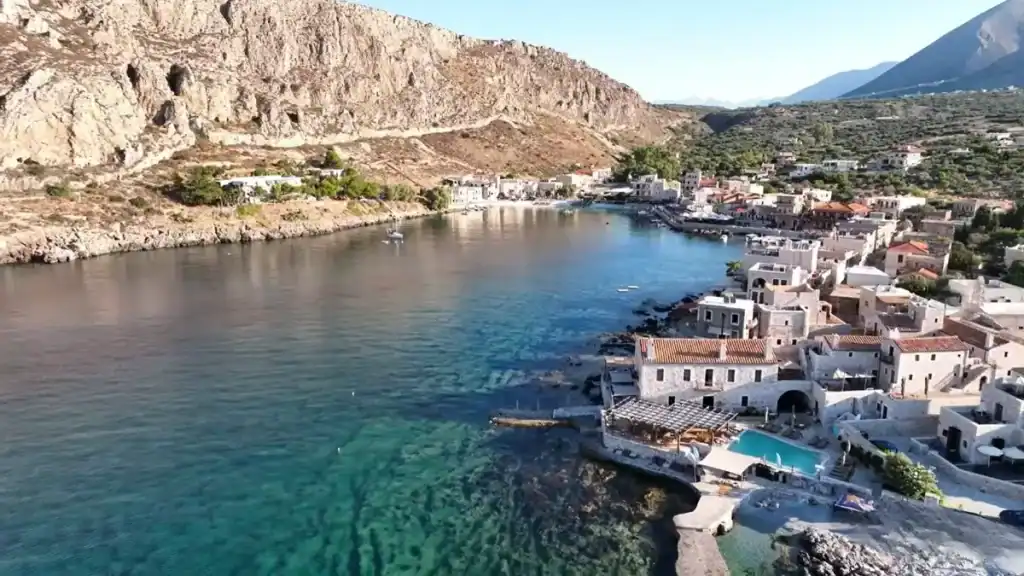
Places such as Kardamyli and Stoupa generally prepare for visitors earlier than the more remote southern villages.
You’ll usually find accommodation, cafés and supermarkets operating without difficulty, although individual family-run businesses may still be following reduced opening hours.
The Deep Mani Takes Longer
Further south, the rhythm is noticeably different.
Small tavernas may open only at weekends early in the season, boutique hotels sometimes delay reopening until Easter and a few family businesses simply wait until demand increases. Rather than seeing this as a disadvantage, many visitors enjoy the quieter atmosphere it creates.
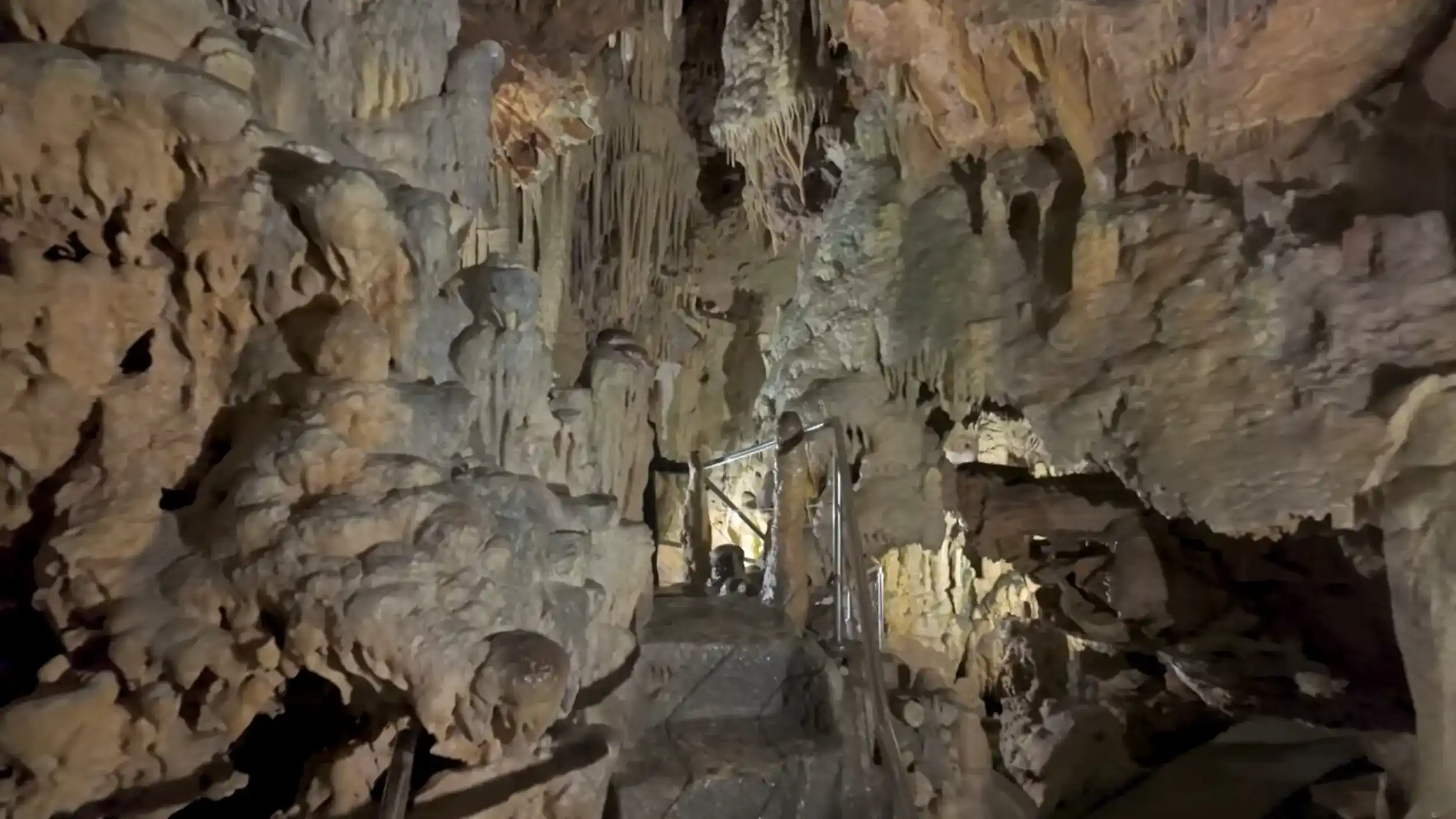
If the Diros Caves are one of your priorities, check opening times before travelling. The Diros Caves: What the Visit Is Actually Like explains how seasonal opening hours can affect your plans and why arriving prepared makes the visit much smoother.
Leave Room for the Unexpected
One of spring’s greatest strengths is its flexibility.
A village that wasn’t originally on your itinerary may tempt you to stay for lunch, while a restaurant you intended to visit might still be closed for the season. Travellers who allow their plans to evolve during the day often discover corners of the peninsula they would otherwise have driven straight past.
Spring is the easiest season to travel without a rigid timetable.
The quieter roads and slower pace make spontaneous detours feel like part of the journey rather than a disruption.
🌊 Swimming in Spring
Spring invites you into the water.
Whether you actually go in is another matter.
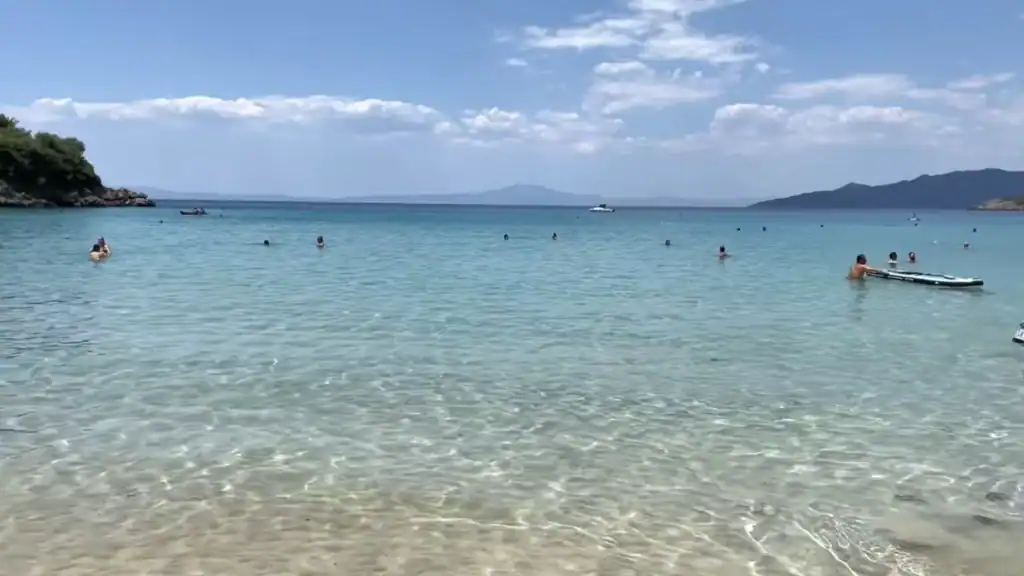
By April, the sea around the Mani is beautifully clear but still cool enough to divide opinion. Some visitors happily swim every day, while others are content to admire the turquoise bays from a waterfront taverna until temperatures rise later in the season.
What the Water Really Feels Like
Sea temperatures during April generally hover around 17°C to 19°C.
It’s refreshing rather than warm, particularly during the morning. Once you’re swimming the temperature becomes easier to enjoy, but the first few moments are memorable for almost everyone.
By mid to late May, conditions begin to change.
The water usually reaches 20°C or slightly above, making longer swims much more comfortable, especially on sunny afternoons when the sea has absorbed several hours of warmth.
Where Spring Swimming Works Best
Sheltered bays warm more quickly than open stretches of coastline.
Limeni, Stoupa and several western coves often feel noticeably more inviting than exposed beaches facing stronger winds. If you’re choosing between locations, Mani Peninsula Beaches: Where People Actually Go compares the peninsula’s most popular swimming spots and explains how their character changes throughout the season.
| Month | Typical Swimming Experience |
|---|---|
| 🌸 April | Refreshing but perfectly possible |
| 🌿 Early May | More comfortable on sunny days |
| ☀️ Late May | Suitable for longer swims |
Not everyone visits the Mani to spend hours on the beach.
For many travellers, a quick swim after a morning of sightseeing is simply part of the day’s rhythm before heading back to explore villages, enjoy lunch or continue along the coast. That’s one of spring’s biggest advantages: the sea complements the journey instead of dominating it.
🌼 Why Some Travellers Prefer Spring
Ask ten returning visitors to choose their favourite season and a surprising number won’t say summer.
They’ll say spring.
Not because the weather is perfect every day, but because the Mani feels closer to its natural rhythm. The landscape is greener, the roads are quieter and there’s a sense that you’re discovering places rather than joining a queue to see them.
The Journey Becomes Part of the Holiday
One of spring’s greatest strengths is how effortlessly days unfold.
You can stop whenever a viewpoint catches your eye, linger over lunch without worrying about reservations and change your plans simply because a quiet harbour or mountain village looks inviting.
That freedom is harder to find during the busiest months.
Travellers exploring by car often notice this first. Quiet roads, cooler temperatures and easier parking combine to make the peninsula feel much more relaxed than it does in midsummer. Driving in the Mani Peninsula: Roads, Turns and What to Expect explains why many experienced visitors deliberately choose April or May for a road trip.
Different Doesn’t Mean Better
Spring isn’t automatically the right choice for everyone.
If your ideal holiday revolves around warm sea temperatures, long beach days and lively evening waterfronts, summer may suit you better. But if walking, photography, scenic drives and peaceful villages sit higher on your list, spring offers advantages that disappear once the hottest months arrive.
For many people, that’s exactly the appeal.
Those looking for a direct comparison with the hotter months may also find Summer in the Mani Peninsula: Heat, Light and Daily Rhythm useful, as it explains how dramatically the experience changes once July and August arrive.
Spring doesn’t ask you to see more of the Mani.
It simply gives you more time to enjoy the parts you do see.
That slower pace, combined with cooler weather and softer light, is why so many travellers quietly return in spring instead of peak summer.