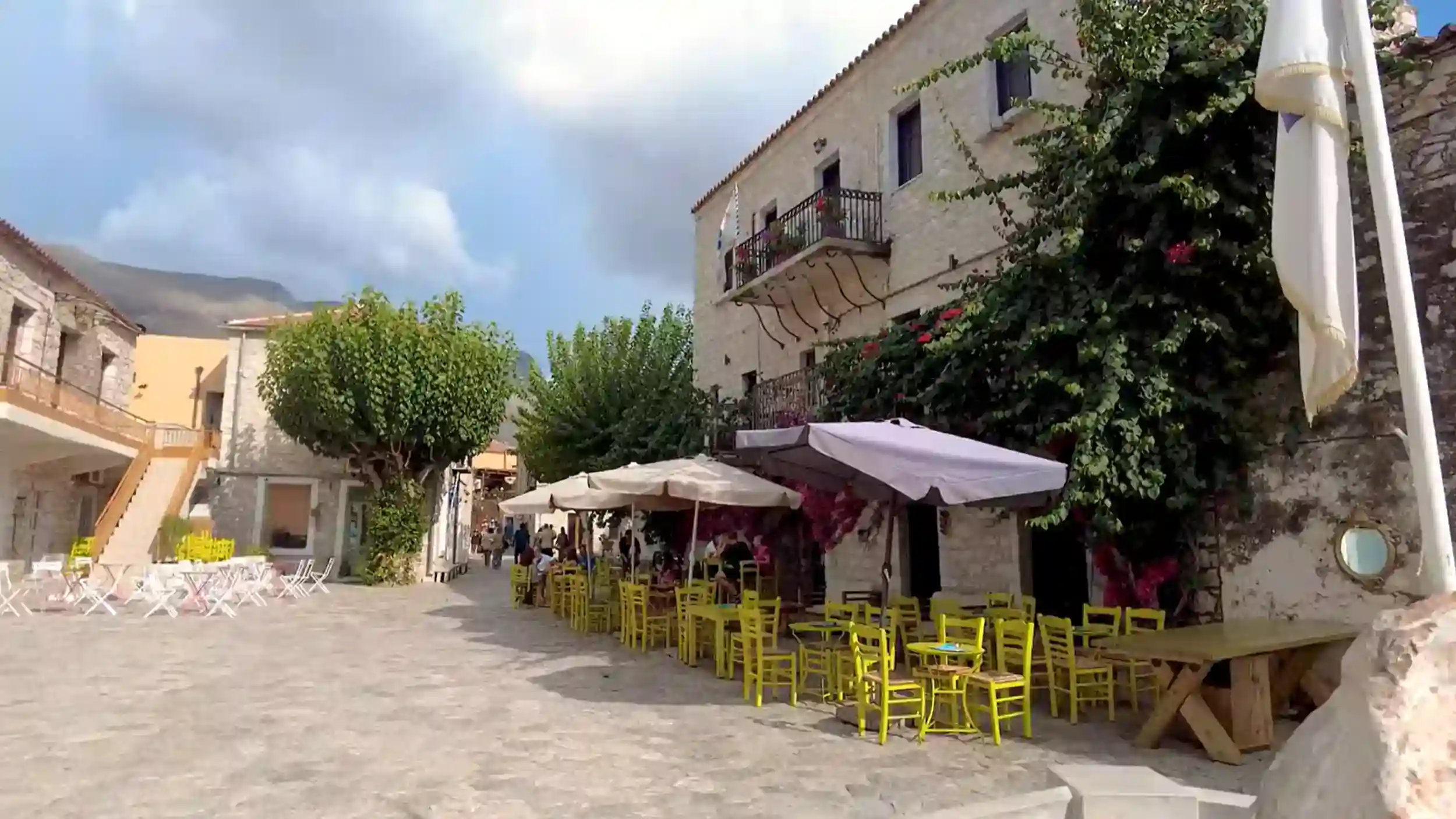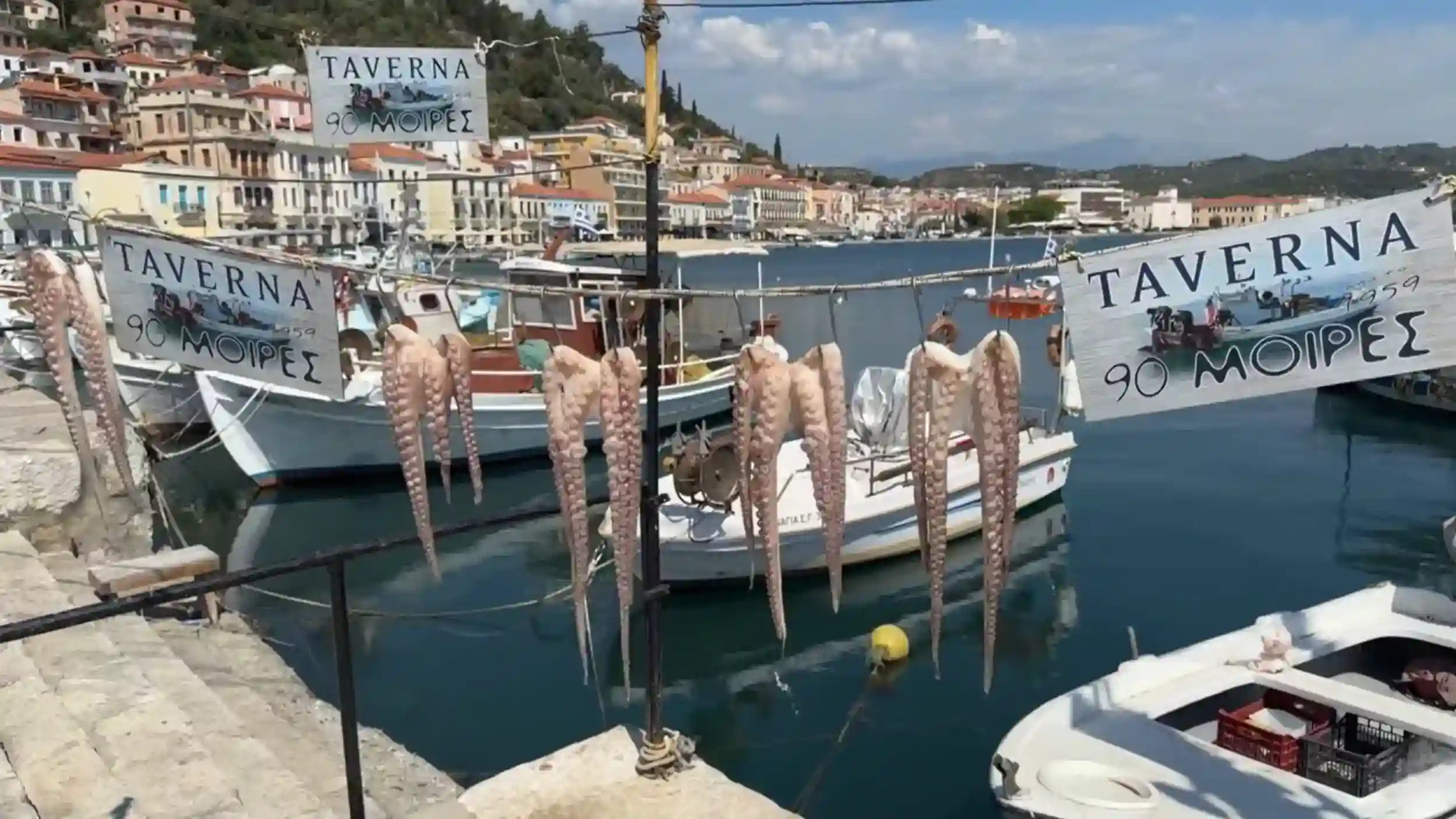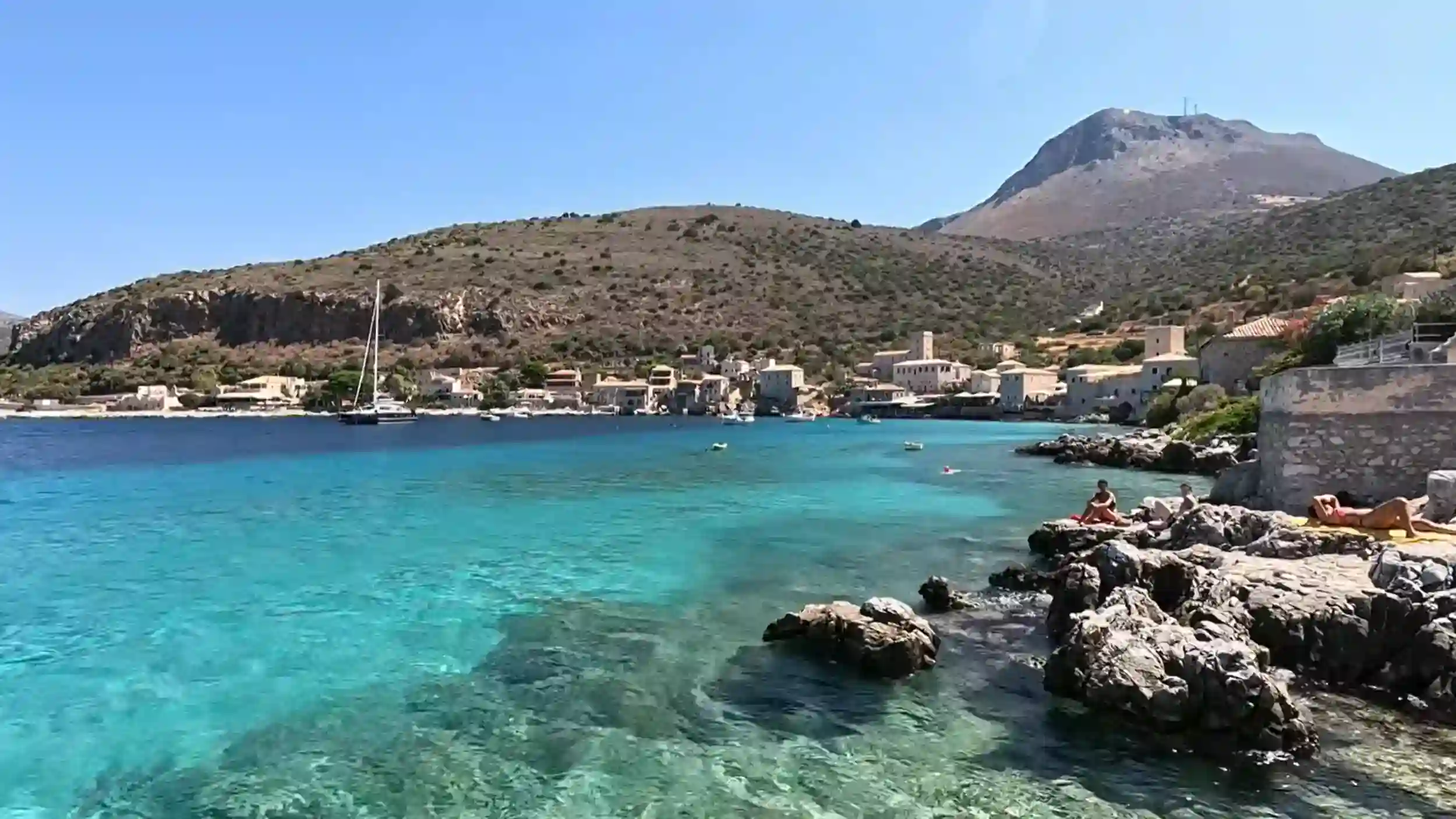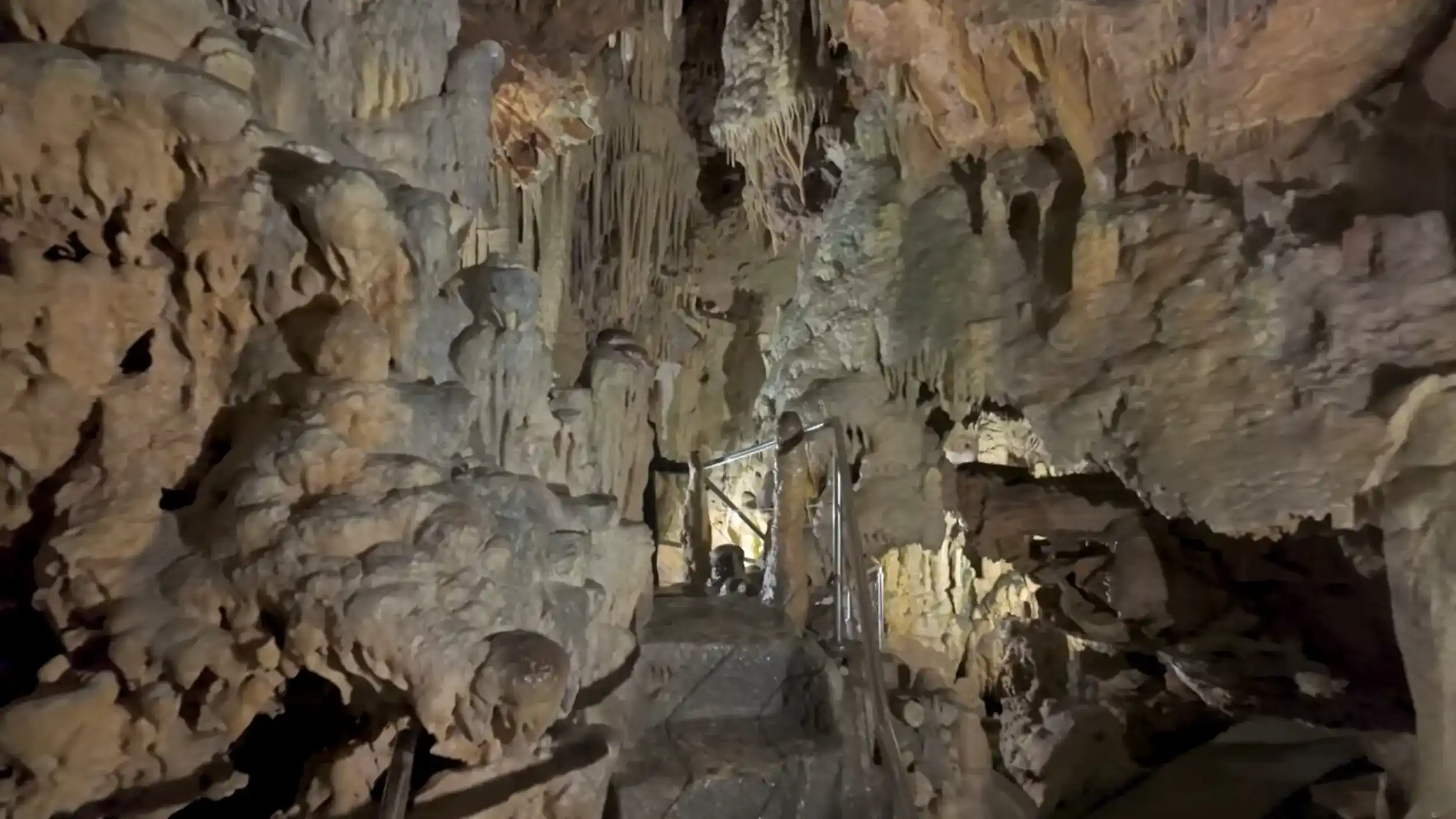
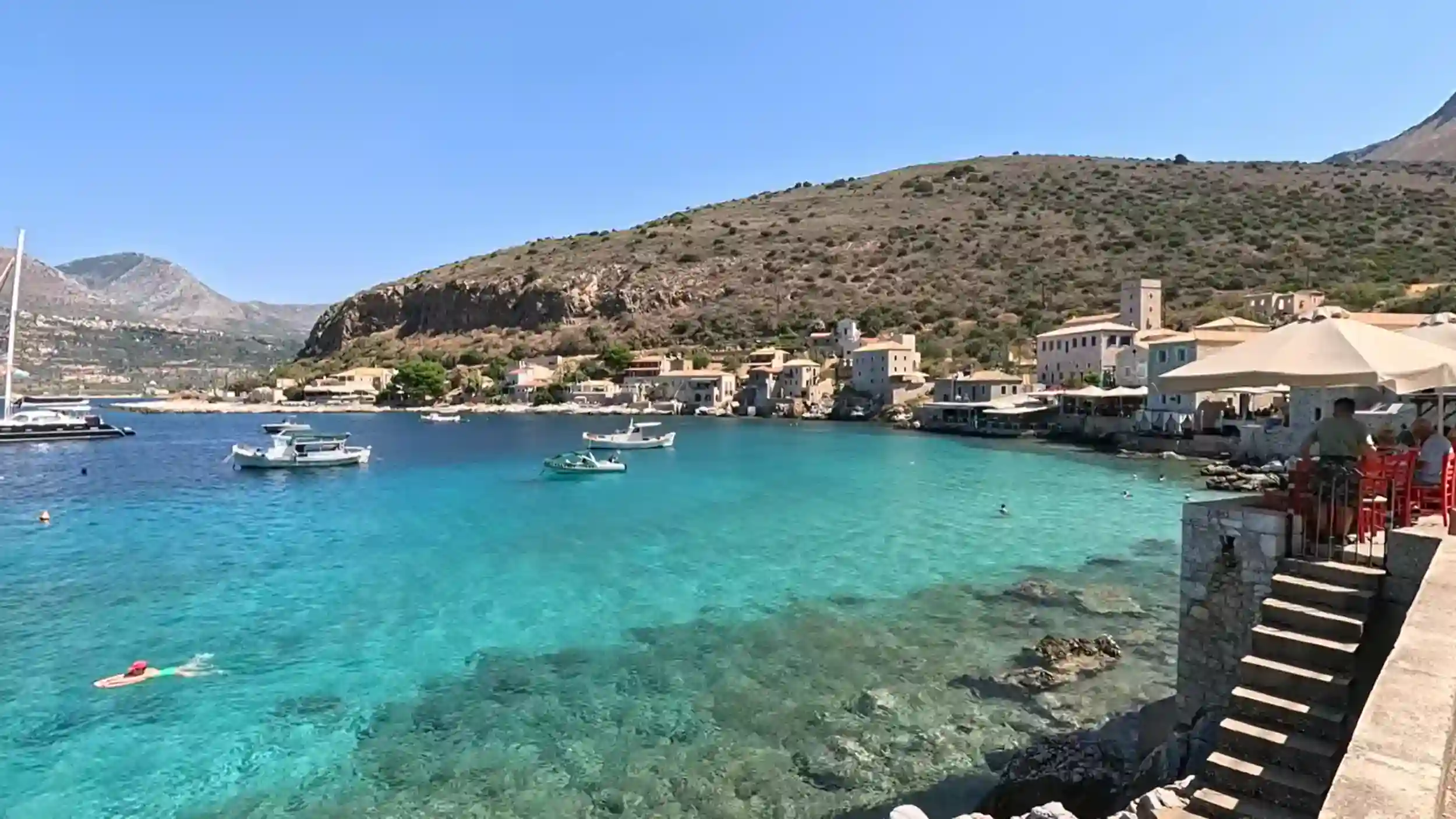
Mani Peninsula travel appeals to independent travellers, road-trippers and repeat visitors who value quiet villages, rugged landscapes and places that still operate on their own terms.
The peninsula in the southern Peloponnese doesn’t advertise itself aggressively, doesn’t orient itself around the visitor experience, and doesn’t especially change to accommodate new arrivals. For a certain type of traveller, that’s precisely the point.
🚙 The Kind of Traveller the Mani Attracts
The Mani doesn’t attract everyone.
In many ways, that’s its greatest strength.
Unlike destinations built around package holidays or famous landmarks, the peninsula tends to appeal to people who enjoy discovering places for themselves. They don’t mind changing plans, taking slower roads or stopping simply because something unexpected catches their attention.
Independent Travellers Feel at Home Here
Most visitors arrive with a hire car rather than a tour group.
That freedom matters because the Mani isn’t designed around a single destination. Its appeal lies in moving gradually between villages, coastlines and mountain roads, allowing the journey to unfold naturally instead of following a fixed schedule.
Travellers planning their first road trip often find Visiting the Mani Peninsula: How Much Time Do You Really Need? useful before deciding how long to stay, as the peninsula almost always rewards extra time.
Curiosity Matters More Than a Checklist
The people who enjoy the Mani most are usually comfortable with uncertainty.
They’ll follow a side road without knowing exactly where it leads, spend longer than expected in a village café or stop because an old church happens to be open.
The best experiences here are often unplanned.
The peninsula rewards curiosity far more than efficiency.
That’s one reason hikers, photographers, history enthusiasts and road-trippers often leave with similar stories despite following completely different routes.
| Traveller Type | Why the Mani Appeals |
|---|---|
| 🚗 Road-trippers | Scenic drives and flexibility |
| 🥾 Walkers | Historic paths and quieter landscapes |
| 📷 Photographers | Dramatic light and authentic villages |
| 🏛️ History lovers | Tower houses, churches and archaeology |
The Mani rarely tries to impress visitors immediately. Instead, it gradually rewards those who are happy to slow down and let the peninsula reveal itself in its own time.
🇬🇷 Greek Visitors Versus International Visitors
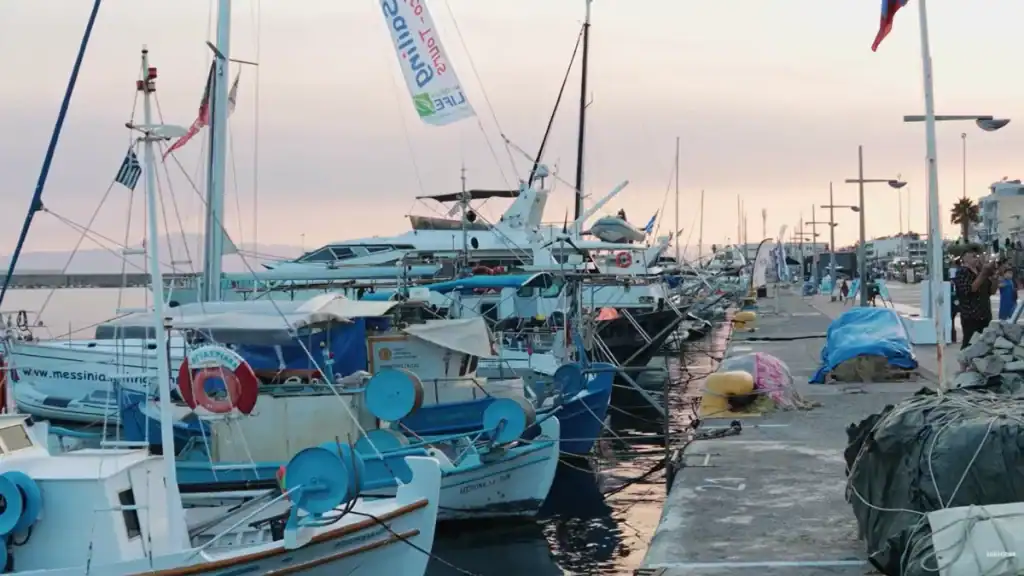
The Mani attracts both Greek and international visitors, but they often experience it differently.
Local visitors usually arrive already knowing where they want to go, while international travellers are more likely to explore the peninsula as part of a wider journey through the Peloponnese.
Greek Visitors Travel With Familiarity
Many Greek visitors return year after year.
Favourite tavernas, family beaches and traditional villages are often already part of the plan before they arrive. Rather than trying to see everything, they tend to revisit places they already know suit their pace and interests.
Summer weekends are when this becomes most noticeable, particularly around Stoupa and Kardamyli.
International Travellers Come to Discover
Visitors from abroad usually approach the Mani differently.
They’re often looking for a quieter side of Greece, one that feels less developed than the islands and rewards independent exploration. Historic villages, dramatic scenery and slower travel often rank much higher than nightlife or organised attractions.
Many also arrive with the Diros Caves near the top of their itinerary. The Diros Caves: What the Visit Is Actually Like explains why they’re considered one of the peninsula’s essential experiences.
| Greek Visitors Often Prioritise | International Visitors Often Prioritise |
|---|---|
| 🏖️ Favourite beaches | 🏛️ Historic villages |
| 🍽️ Traditional tavernas | 🚗 Scenic road trips |
| 👨👩👧👦 Family holidays | 📷 Photography and culture |
| ☀️ Summer visits | 🌿 Spring and autumn travel |
Despite these differences, both groups usually arrive for the same underlying reason. The Mani offers a version of Greece that still feels authentic, unhurried and refreshingly independent of mainstream tourism.
📅 When Different Types of Traveller Arrive
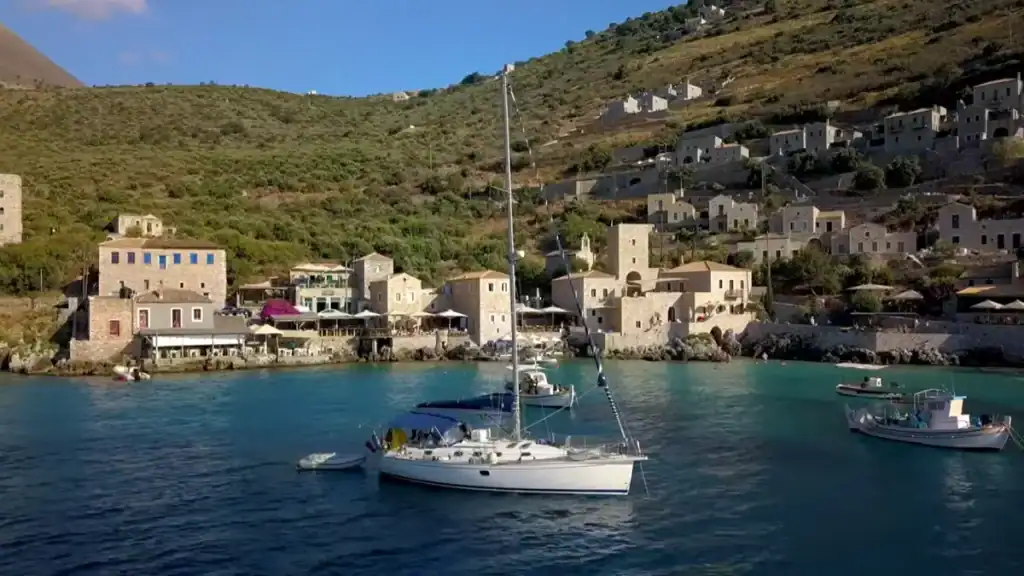
The Mani changes noticeably with the seasons, and so do the people who visit.
Summer attracts the widest mix of travellers, while spring and autumn tend to appeal to those looking for quieter roads, easier walking conditions and a slower pace. Winter, meanwhile, belongs largely to returning visitors and local communities.
Summer Brings the Broadest Audience
July and August are when the peninsula is at its busiest.
Families arrive for the beaches, road-trippers continue south through the Peloponnese and coastal villages become livelier during the evenings. Even then, the Mani never reaches the visitor numbers found on Greece’s better-known islands.
If you’re wondering whether summer suits your style of travel, Summer in the Mani Peninsula: Heat, Light and Daily Rhythm explains how the season shapes everything from sightseeing to swimming.
Spring and Autumn Attract a Different Crowd
Outside peak season, the atmosphere changes.
Walkers, photographers and independent travellers become far more noticeable than family holidaymakers. Cooler temperatures make hiking easier, scenic drives become more relaxed and accommodation is generally easier to find.
Many visitors deliberately choose these shoulder seasons because they value the quieter experience rather than simply accepting it as a compromise.
The quieter the season, the more the Mani feels like everyday Greece rather than a holiday destination.
Winter Is for Returning Visitors
Winter brings the smallest number of visitors.
Those who do arrive often know exactly what they’re looking for. They’re less interested in beach weather and more interested in empty villages, dramatic landscapes and seeing the peninsula without the rhythm of the tourist season.
For travellers who enjoy solitude, that’s precisely the attraction.
The season you choose doesn’t just affect the weather. It also changes the type of people you’ll share the peninsula with, and that subtly shapes the experience from the moment you arrive.
❌ Who the Mani Is Not Right For
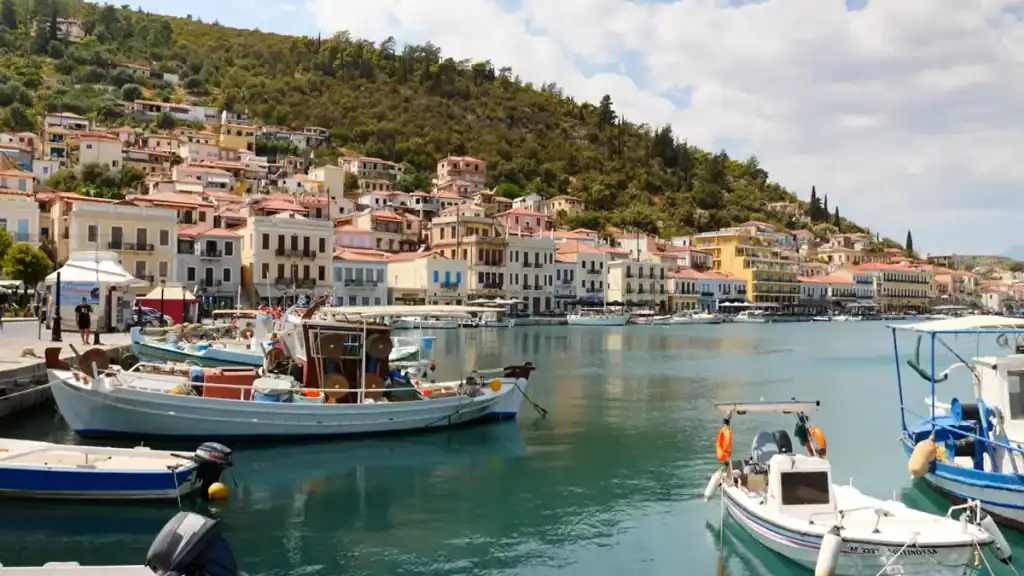
The Mani isn’t a destination that tries to please everyone.
In fact, much of its appeal comes from the fact that it hasn’t reshaped itself around mainstream tourism. Visitors expecting polished resorts, tightly organised attractions or predictable itineraries can find the peninsula surprisingly challenging.
If You Want a Traditional Beach Resort
The beaches are beautiful.
The infrastructure is deliberately modest.
Outside Stoupa, you’ll find relatively few stretches lined with organised facilities, beach bars or water sports. Many of the peninsula’s best swimming spots are quiet coves where the scenery matters far more than the amenities.
If your ideal holiday revolves around resort life, the Mani may feel too understated. Those looking for the coastline itself rather than beach entertainment often find Mani Peninsula Beaches: Where People Actually Go a much better match for their expectations.
If Every Minute Needs a Plan
The Mani also frustrates travellers who prefer certainty.
Opening hours occasionally change, small tavernas sometimes close unexpectedly and a road that looked straightforward on the map may take considerably longer than expected. Flexibility isn’t essential, but it certainly helps.
The peninsula rewards adaptability far more than rigid planning.
People who enjoy discovering places as they go usually see these moments as part of the experience. Those working to a tightly packed itinerary often see them as interruptions.
| The Mani May Not Suit You If You Want… | |
|---|---|
| 🏖️ Large beach resorts | Extensive resort facilities |
| 🎉 Busy nightlife | Lively entertainment districts |
| 🚌 Coach-tour convenience | Attractions close together |
| ⏱️ Highly structured itineraries | Predictable travel schedules |
None of these qualities make the Mani better or worse than other parts of Greece. They simply explain why some visitors fall in love with it, while others realise after a day or two that they were looking for a very different kind of holiday.
🔄 Why People Come Back
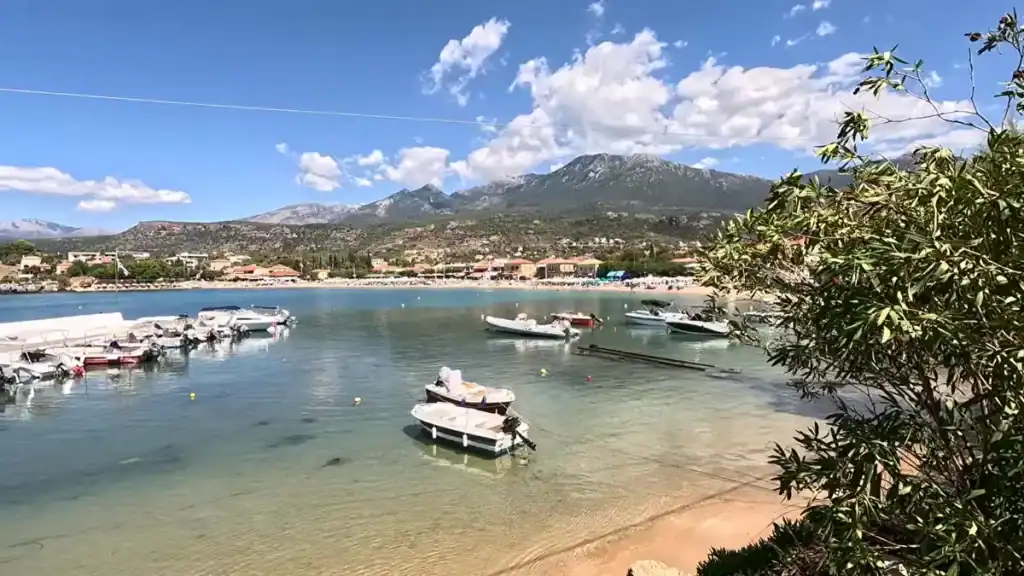
Very few people see everything on their first visit.
That’s partly because the peninsula is larger than it first appears, but mostly because the experience changes depending on the road you take, the season you visit and the amount of time you allow yourself.
Many return simply because they know they’ve only scratched the surface.
The Second Visit Feels Different
First-time visitors naturally focus on the famous places.
They head for Areopoli, the Diros Caves, Limeni and Cape Tainaron because those are the names that appear in every guide. Returning visitors often do the opposite.
They revisit favourite villages, spend longer in one place and deliberately leave whole days without fixed plans.
That slower approach is one reason Visiting the Mani Peninsula: How Much Time Do You Really Need? encourages allowing extra time rather than trying to see everything at once.
Familiar, But Never Repetitive
The peninsula changes with the seasons without losing its identity.
Spring brings greener hillsides, summer revolves around long evenings by the sea, autumn introduces quieter roads and the olive harvest, while winter reveals a landscape that’s almost entirely returned to local life.
Each visit offers a different perspective without feeling like a different destination.
| People Often Return For… | |
|---|---|
| 🌅 Longer stays in favourite villages | More relaxed pace |
| 🚗 Roads they didn’t have time to explore | New scenic drives |
| 🥾 Walking routes missed on the first trip | Cooler-season hiking |
| 🍽️ Favourite tavernas and harbours | Familiar atmosphere |
The Mani doesn’t rely on novelty.
It rewards familiarity, encouraging visitors to notice more each time they return.
That’s perhaps the biggest reason repeat visitors are so common. The peninsula never feels finished, and many people leave already thinking about which road they’ll take next time.