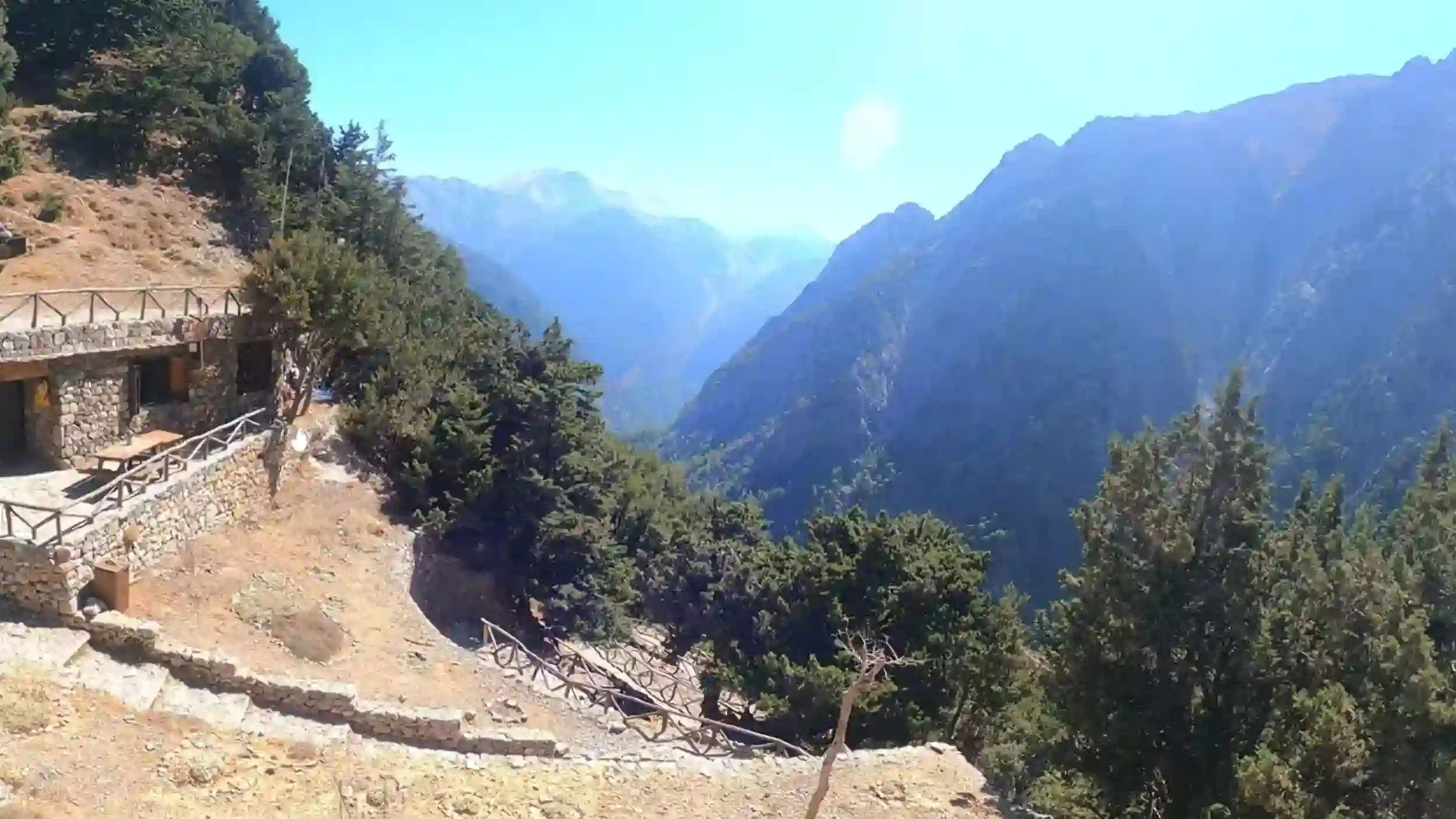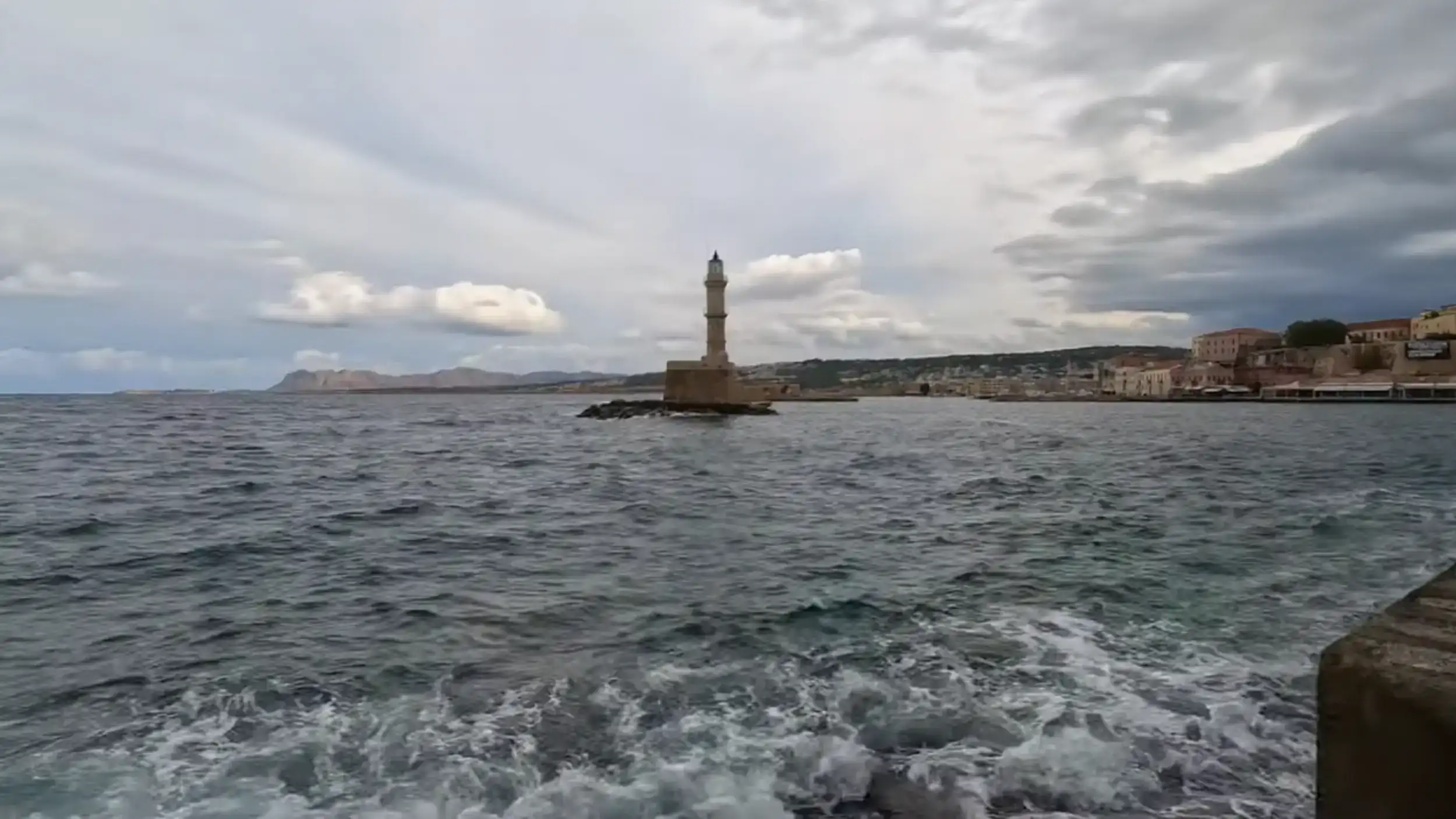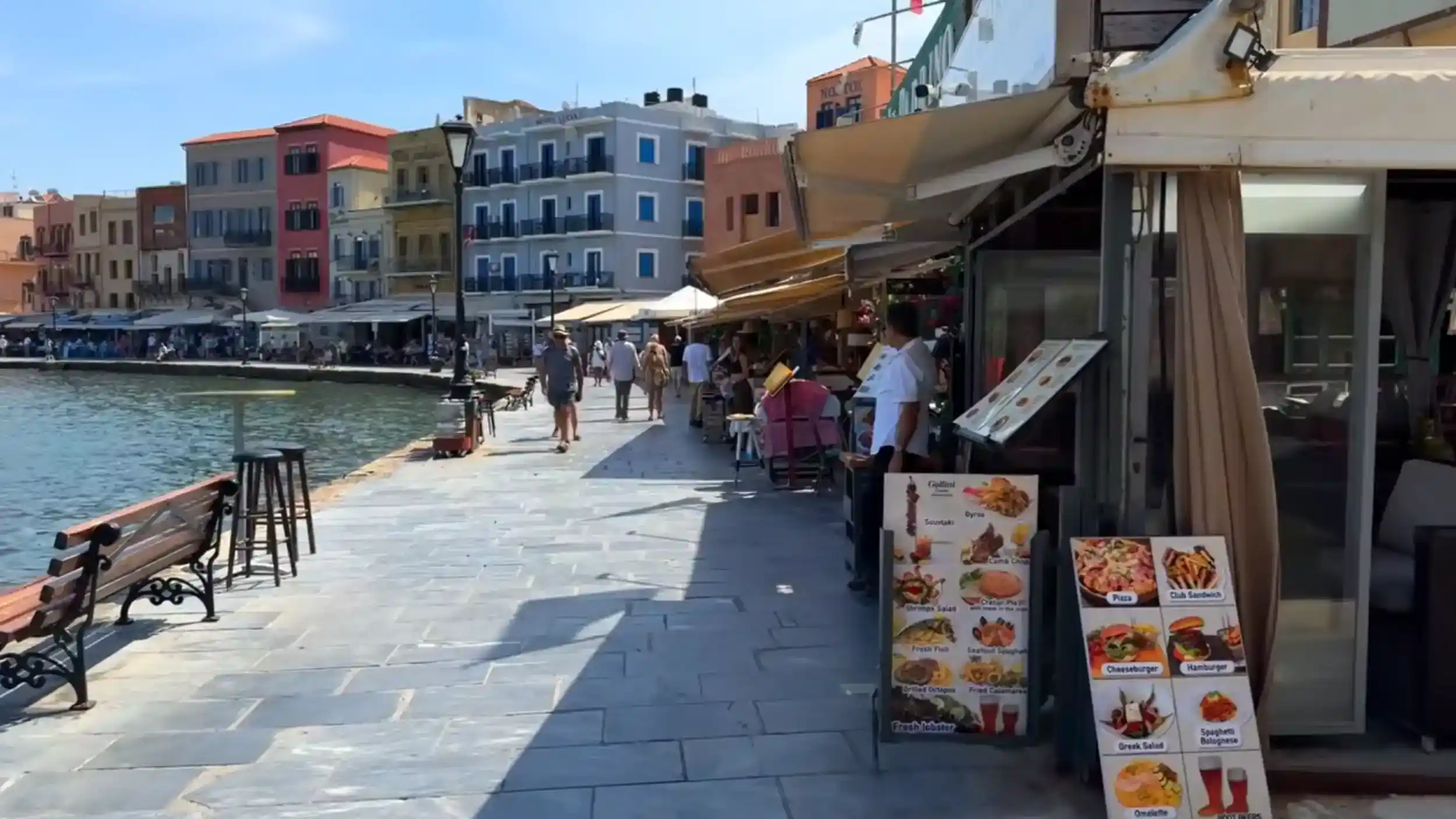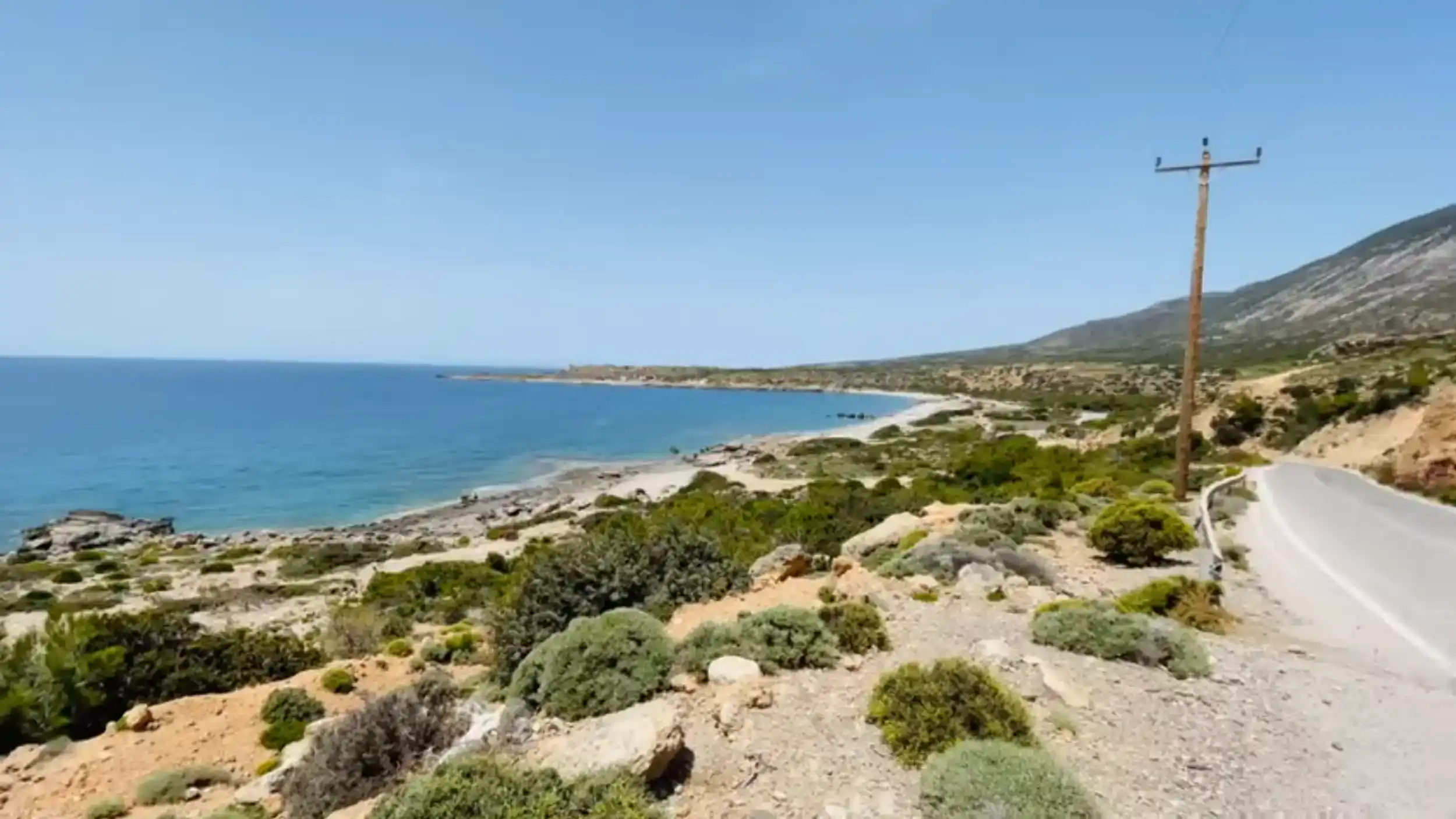
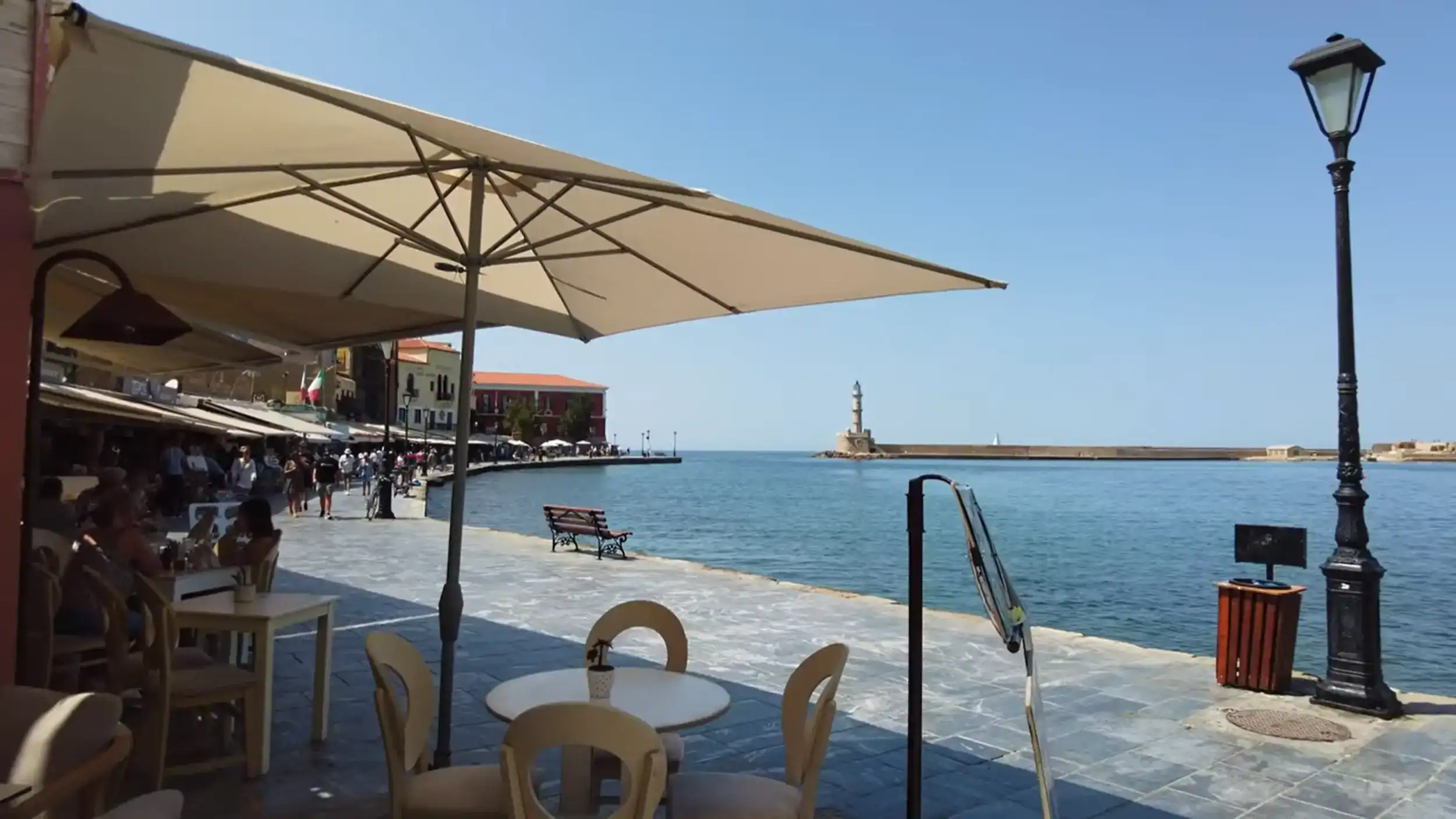
Chania beyond the Old Town begins where most visitors stop looking. Beyond the Venetian harbour lie quieter neighbourhoods, working olive groves, hidden beaches and experiences that reveal a more authentic side of western Crete. Exploring these places transforms Chania from a beautiful city into a much richer destination.
🧭 Why Chania Beyond the Old Town Starts Elsewhere
Most visitors experience remarkably little of Chania.
The Venetian harbour, lighthouse and surrounding lanes occupy less than a square kilometre, yet they’re where many holidays begin and end.
There’s nothing wrong with that. The Old Town is beautiful. The problem is that it quietly convinces people they’ve already seen the city.
Looking beyond Chania beyond the Old Town
The further you walk from the harbour, the more everyday life begins to replace tourism.
Neighbourhood cafés become busier than waterfront restaurants, local beaches appear without ticket booths or organised excursions, and the pace slows almost immediately. Instead of discovering attractions, you begin discovering how Chania actually functions.
| Most visitors | What lies beyond |
|---|---|
| 🏛️ Venetian harbour | 🌊 Local seafront neighbourhoods |
| 🍽️ Waterfront restaurants | ☕ Everyday cafés and tavernas |
| 🛍️ Tourist shopping streets | 🌿 Residential districts and quieter corners |
| 📸 Famous viewpoints | 🚶 Places discovered simply by exploring |
The Old Town deserves its reputation, but it shouldn’t become the boundary of your trip. Some of Chania’s most memorable experiences begin only after the harbour disappears behind you, revealing a city that’s less polished, more authentic and ultimately far more rewarding to explore.
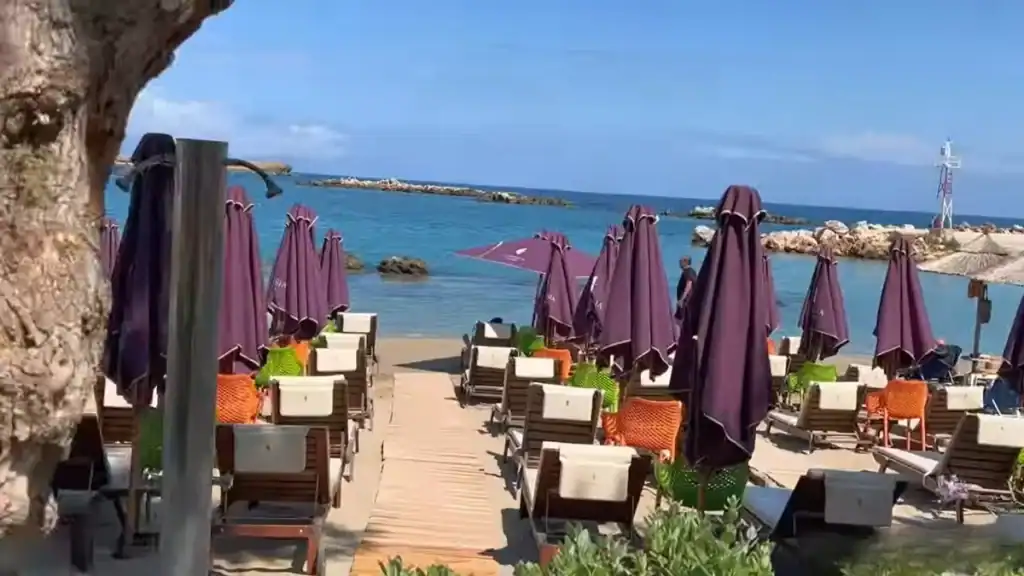
🌅 The Western Seafront Before the Heat Builds
The harbour isn’t the only place to walk beside the sea.
Head west and Chania changes surprisingly quickly.
Within twenty minutes, the crowds begin to thin, the souvenir shops disappear and the waterfront starts serving the people who live here rather than those simply passing through.
Walking west from Chania beyond the Old Town
The route follows the shoreline towards Nea Hora, one of the city’s favourite local beaches.
Early in the morning, it feels almost disconnected from the busy harbour. Fishermen prepare their boats, cafés open slowly and the sea is calm enough to reflect the changing light across the bay.
| Along the walk | What you’ll discover |
|---|---|
| 🚶 Seafront promenade | A quieter alternative to the harbour |
| 🏖️ Nea Hora Beach | A local beach with a relaxed atmosphere |
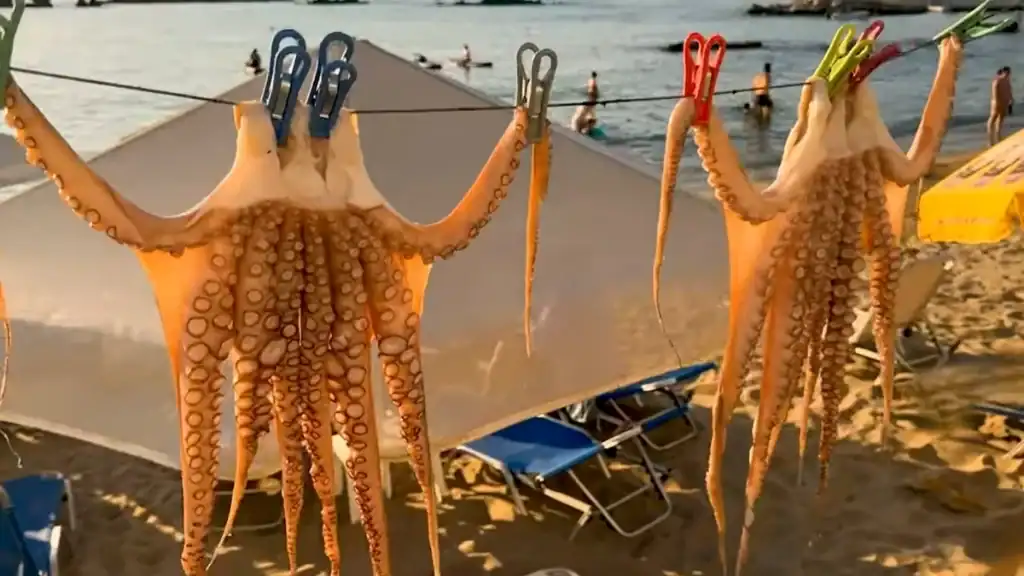
| 🐙 Waterfront tavernas | Fresh seafood and traditional octopus drying outside |
| ☕ Beach cafés | Informal seating without the tourist rush |
Nothing here feels designed around sightseeing.
The cafés, beach and tavernas exist because local people use them every day, not because visitors expect them to be there. That simple difference gives this stretch of coastline an authenticity that’s often harder to find around the Venetian harbour itself.
😴 What Siesta Actually Tells You About Chania
For a few hours each afternoon, Chania changes completely.
The crowds don’t disappear, but the city quietly reveals a different rhythm.
Many local businesses close between mid-afternoon and early evening, leaving the harbour noticeably calmer and the narrow streets around the Old Town surprisingly peaceful.
Experiencing Chania beyond the Old Town during siesta
This is one of the best times to slow down rather than keep sightseeing.
Without the constant flow of visitors, details become easier to notice. The scent of olive oil drifting from kitchens, the sound of shutters opening and closing, and the way sunlight reflects from Venetian stonework all become part of the experience.
| During siesta | What changes |
|---|---|
| 🚶 Old Town lanes | Quieter and easier to explore |
| ☀️ Afternoon light | Strong shadows and warm colours |
| 🐈 Local life | Cats, residents and quieter cafés replace the crowds |
| 🌆 Evening | The harbour gradually comes back to life |
When the city wakes again after late afternoon, the atmosphere shifts completely. Restaurants fill, the waterfront becomes lively and the harbour takes on the energy most visitors associate with Chania. Experiencing both sides of the day gives a much fuller understanding of the city than simply seeing it at its busiest.
If you’re planning to spend time in the historic centre, Wandering Chania’s Old Town explores the streets and hidden corners that reveal themselves best once the afternoon quiet begins.
🫒 Driving East from Chania Beyond the Old Town
Leaving Chania behind reveals another side of western Crete.
The harbour gives way to olive groves, quiet villages and roads that seem to wind endlessly through the landscape.
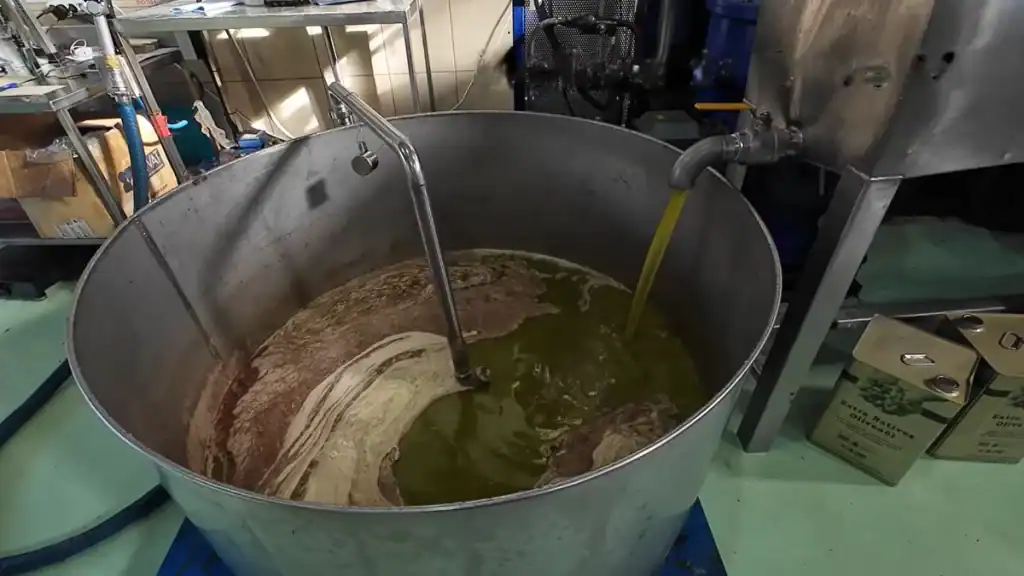
Around an hour east of the city, the countryside becomes dominated by one thing above all else: olive trees. Visiting a working olive oil factory explains why this landscape has shaped Cretan life for thousands of years.
Understanding olive oil beyond Chania beyond the Old Town
Watching the production process changes how you think about olive oil.
Instead of seeing it as another supermarket product, you begin to understand the speed, precision and tradition required to produce genuinely high-quality extra virgin olive oil.
| At the olive oil factory | What you’ll learn |
|---|---|
| 🌿 Fresh olives | Processed within hours of harvesting |
| ⚙️ Pressing process | From sorting to extraction |
| 👃 Tasting | How aroma reveals quality |
| 🫒 Cretan traditions | Why olive oil is central to everyday life |
The factories aren’t polished visitor attractions.
They’re working businesses, and that’s exactly what makes them memorable. The machinery, aromas and pace of production reveal a side of Crete that’s impossible to appreciate from the beaches or historic streets alone, adding a completely different dimension to exploring beyond Chania’s waterfront.
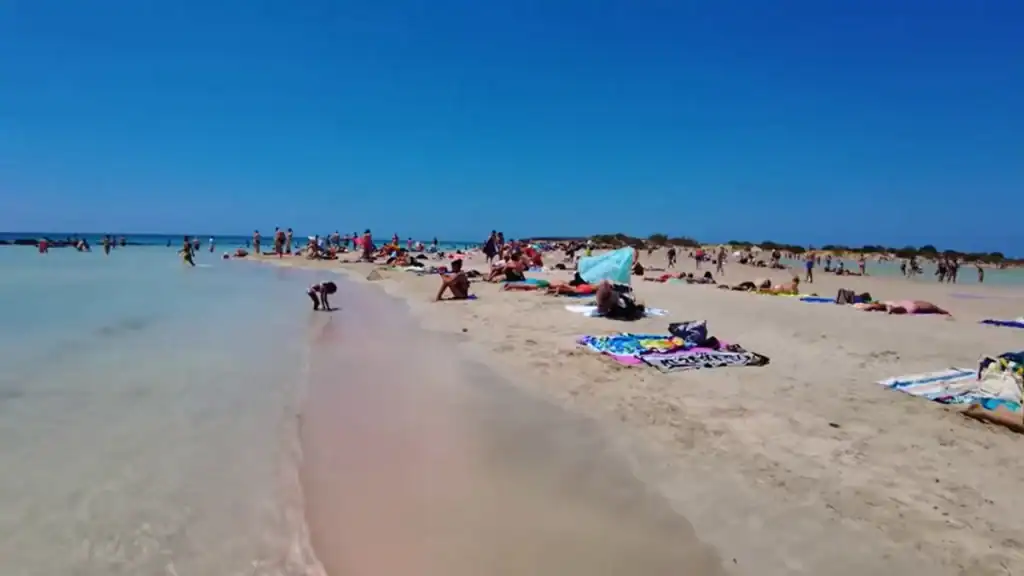
🏝️ Elafonisi: What the Photographs Leave Out
Few places in Crete are photographed more often than Elafonisi.
The colours really are that remarkable.
Shallow turquoise water, pale sand and the famous pink hues created by crushed shells make it one of the island’s most recognisable landscapes. What photographs rarely capture is everything that shapes the experience once you arrive.
Visiting Elafonisi from Chania beyond the Old Town
The journey is longer than many first-time visitors expect.
Reaching the beach involves around 90 minutes of driving through the White Mountains or joining an organised excursion, making Elafonisi much more than a quick trip from Chania.
| Expectation | Reality |
|---|---|
| 🌸 Bright pink sand | Subtle pink tones that vary with the light |
| 🌊 Calm shallow lagoons | Often accompanied by a noticeable breeze |
| 📸 Empty beaches | Busy by late morning during summer |
| 🚗 Easy visit | A rewarding but relatively long journey |
Timing makes an enormous difference.
Arriving early transforms the experience, allowing you to enjoy the shallow lagoons before the largest tour groups arrive. By late morning the beach becomes far busier, changing the atmosphere far more than the photographs suggest.
If you’re planning the journey yourself, Getting to Elafonisi from Chania explains the route, driving conditions and why the journey is as memorable as the destination itself.
🏖️ Fassana: A Beach That Doesn’t Announce Itself
Fassana doesn’t compete for attention.
That’s precisely why it stays memorable.
Unlike Crete’s headline beaches, there are no dramatic viewpoints, famous landmarks or endless rows of facilities. Instead, the appeal comes from clear water, a peaceful setting and a pace that encourages you to stop rather than keep moving.
Finding Fassana beyond Chania beyond the Old Town
Many visitors only discover Fassana because it’s included on organised coastal tours.
Independent travellers often drive straight past without realising there’s a beach waiting just off the road.
| What you’ll find | What to expect |
|---|---|
| 🌊 Crystal-clear water | Calm conditions on many summer days |
| 🏖️ Small beach | Plenty of space away from major resorts |
| 🐟 Seafront taverna | Fresh seafood and simple local dishes |
| 🌿 Quiet surroundings | Little commercial development |
There’s very little here demanding your attention.
Without large beach clubs or organised entertainment, the experience becomes surprisingly restorative. Time slows naturally, conversations last longer and sitting quietly beside the sea starts to feel like the activity rather than something between attractions. That’s a side of Crete many visitors never experience if they stay close to the better-known destinations.
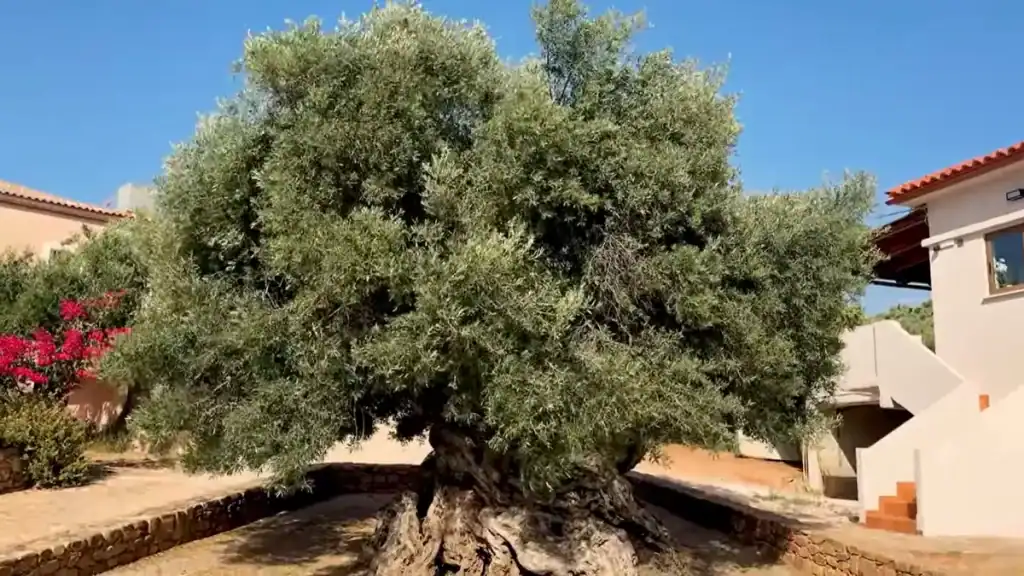
🌳 The Olive Tree Near Vouves
Some attractions impress because of what they are.
This one impresses because of how long it has survived.
Near the village of Vouves stands one of the world’s oldest living olive trees, estimated to be several thousand years old and still producing olives today. Standing beside it makes history feel tangible rather than abstract.
Visiting the ancient olive tree beyond Chania beyond the Old Town
The tree is best appreciated slowly.
Photographs capture its extraordinary size, but they can’t convey the twisted trunk, the enormous hollow centre or the quiet atmosphere that surrounds it.
| What makes it remarkable | Why it matters |
|---|---|
| 🌳 Ancient olive tree | Estimated to be between 3,000 and 5,000 years old |
| 🫒 Still producing olives | Continues to fruit after millennia |
| 🪵 Twisted trunk | Shaped by centuries of natural growth |
| 🏛️ Protected monument | Preserved as one of Crete’s natural treasures |
Visiting the olive oil factory first gives the tree even greater meaning. Seeing how olives are harvested and pressed before standing beside a living tree that has survived since the Bronze Age creates a connection that’s difficult to appreciate when either experience is visited on its own.
🚗 Getting to Chania and Why Arrival Matters
How you arrive in Chania shapes more than your first few hours.
It often determines how much of the city you explore during the rest of your stay.
Visitors arriving after a long journey naturally stay close to the harbour, while those with a more relaxed arrival are far more likely to begin exploring beyond the familiar streets of the Old Town.
Arriving for Chania beyond the Old Town
Every route into Chania creates a slightly different first impression.
Whether you arrive by ferry, bus or plane, allowing yourself time to settle before setting out usually leads to a much richer experience.
| Arrival route | What to expect |
|---|---|
| ✈️ Chania Airport | Quick access to the city and western Crete |
| 🚌 Heraklion | Scenic two-hour drive across the island |
| ⛴️ Cyclades ferries | Longer journeys with island transfers |
| 🚗 Rental car | Immediate flexibility to explore beyond the city |
Many visitors spend their first evening around the Venetian harbour, and it’s easy to understand why. After a long journey, the cafés, waterfront and illuminated lighthouse provide exactly the kind of relaxed introduction most people need.
The following morning is often the right moment to look further afield. With the arrival behind you, exploring beyond the Old Town becomes much easier, allowing the quieter beaches, villages and countryside to become part of the trip rather than remaining places you’ll visit “next time.”
🕰️ Planning Chania Beyond the Old Town
The places themselves don’t change.
The experience of them changes dramatically depending on when you visit.
Summer brings long evenings, lively waterfronts and busy beaches. Spring and autumn slow the pace, making it easier to explore beyond the city’s best-known sights without constantly planning around crowds or heat.
Choosing the right time for Chania beyond the Old Town
Different seasons reward different styles of travel.
| Season | What stands out |
|---|---|
| 🌸 Spring | Wildflowers, comfortable temperatures and quieter roads |
| ☀️ Summer | Long evenings and the liveliest atmosphere |
| 🍂 Autumn | Warm sea, fewer visitors and easier sightseeing |
| ❄️ Winter | Local life takes centre stage after tourism slows |
The same applies to each day.
An early morning walk along the western seafront feels completely different from an afternoon spent exploring the Old Town during siesta, while sunset transforms the harbour into one of Crete’s most atmospheric places. Understanding that rhythm helps you experience several different versions of Chania instead of seeing the same city at the same time every day.
For visitors willing to look beyond the obvious, timing becomes as important as location. It’s often the difference between simply visiting Chania and discovering the places that many travellers never realise are there.