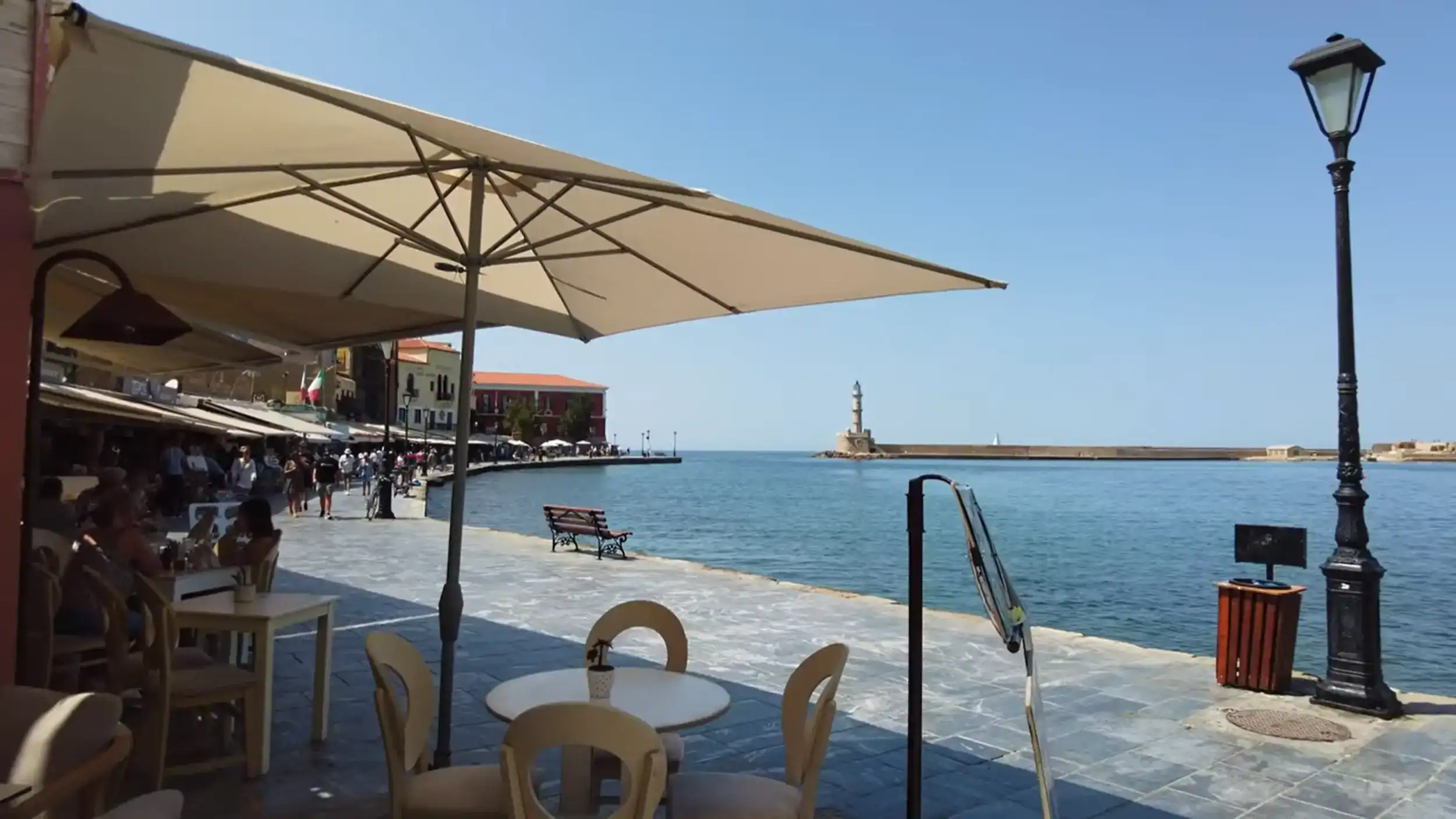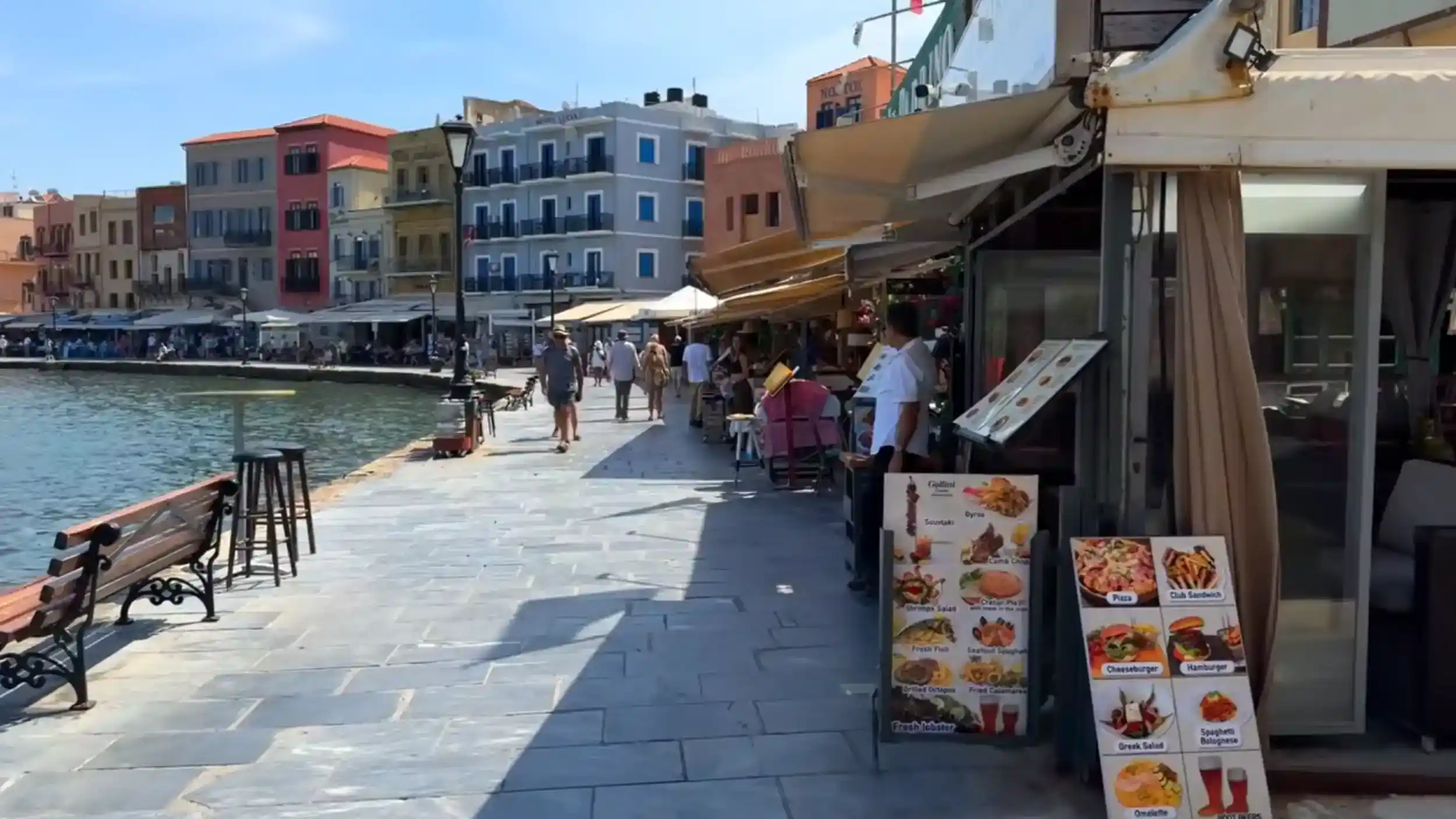
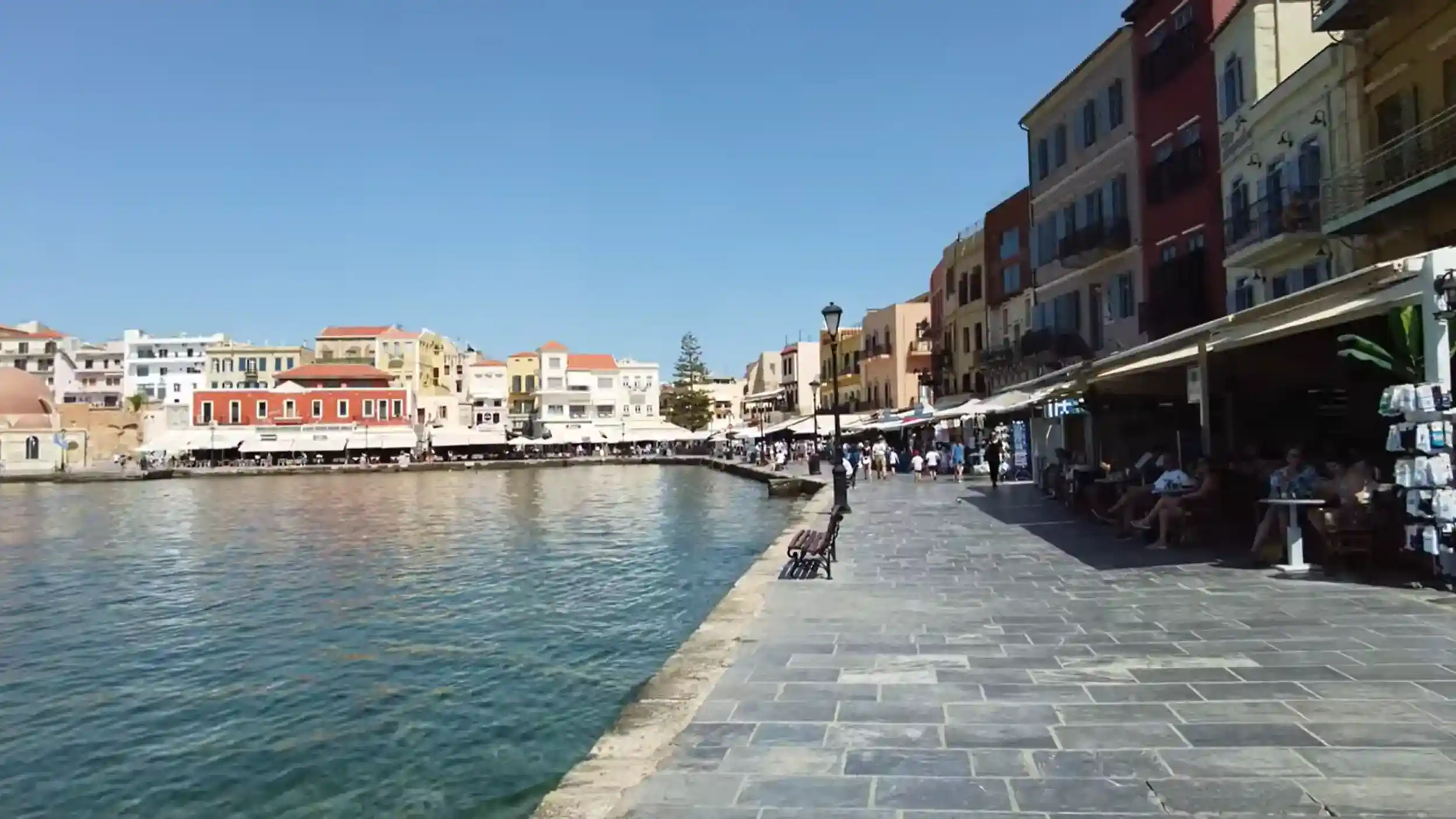
Chania Harbour reveals a different side of itself each time I return. The buildings and lighthouse barely change, but the light, weather, water and rhythm of the Old Town can make the same waterfront feel completely different from one visit to the next.
That is why I wouldn’t treat the harbour as something to tick off once. I enjoyed it in the morning when the promenade was still quiet, again later when the city had properly woken up, and after dark when the waterfront became almost unrecognisable.
🔄 Why Is Chania Harbour Worth Visiting More Than Once?
It is easy to think you’ve understood Chania Harbour after walking around it once.
I certainly thought I had.
The curved waterfront, Venetian buildings, lighthouse and mosque are immediately recognisable, and on a first visit there is so much to look at that one circuit can feel surprisingly complete.
Then I came back at a different time of day and realised I had only seen one version of it.
The Same Harbour Can Feel Completely Different
The structures remain almost identical, but everything around them changes.
In the morning, the promenade can feel spacious and almost local. Later, restaurants fill, excursion boats become more active and the waterfront becomes one of the city’s busiest areas.
The light changes the architecture too. Pale stone that looks bright and flat around midday takes on warmer tones as the sun drops.
| What Changes | How It Affects the Harbour |
|---|---|
| 🌅 Light | Venetian stone changes colour through the day |
| 🌊 Water | Reflections and movement continually alter the view |
| 🚶 Atmosphere | Quiet mornings become lively evenings |
| 🍂 Season | Crowd levels and pace change considerably |
What I liked was that returning never felt repetitive.
I wasn’t walking back to see the lighthouse again. I was returning to see what the harbour was doing now.
That distinction is what makes Chania Harbour different from a viewpoint or monument you might reasonably visit once and move on from.
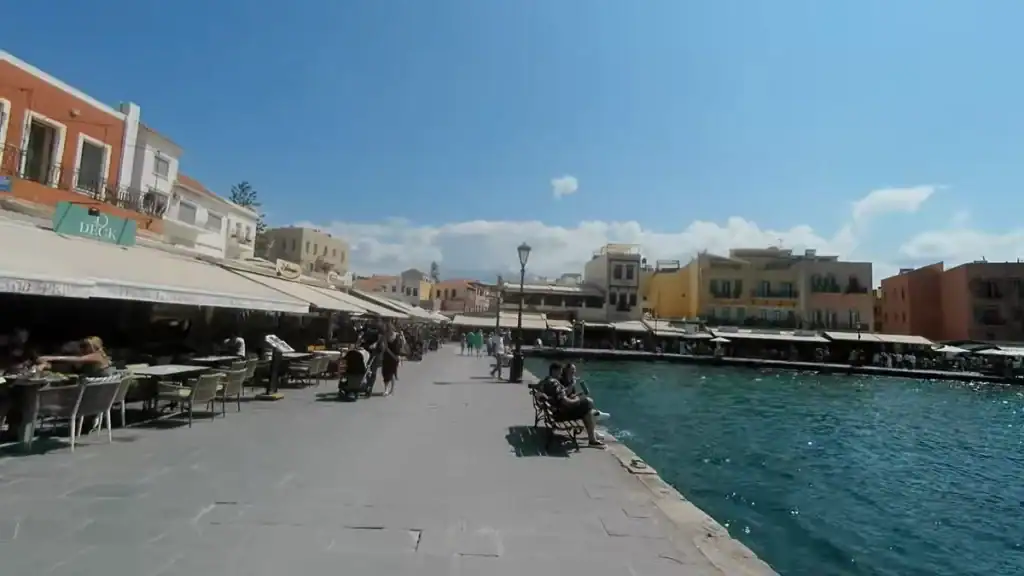
🌅 What Is Chania Harbour Like Early in the Morning?
Early morning is the version of Chania Harbour I would least want to miss.
Before the main flow of visitors arrives, the waterfront feels more connected to the city itself. Restaurant terraces are still being prepared, fishing boats move around the quay and there is noticeably more space to stop without feeling that you’re obstructing somebody.
I didn’t need to arrive at sunrise to notice the difference.
Before nine was early enough.
Morning Is When I Noticed the Details
The calmer atmosphere changed what I paid attention to.
Instead of concentrating on where everyone else was walking, I noticed reflections in the water, the texture of the Venetian stone and boats returning towards the quayside.
The water was usually calmer too, which made the harbour look almost polished compared with later in the day.
| Before 9am | What I Noticed |
|---|---|
| 🌅 Soft morning light | Warmer colours across the harbour walls |
| 🎣 Fishing boats | Returning towards the quayside |
| 🚶 Promenade | Far fewer tour groups |
| ☕ Cafés | Quietly preparing for the day |
I wouldn’t suggest setting an alarm purely to prove you’ve visited early.
But if you’re staying nearby, walking down before breakfast takes very little effort and shows you a side of Chania Harbour that disappears remarkably quickly once the day begins.
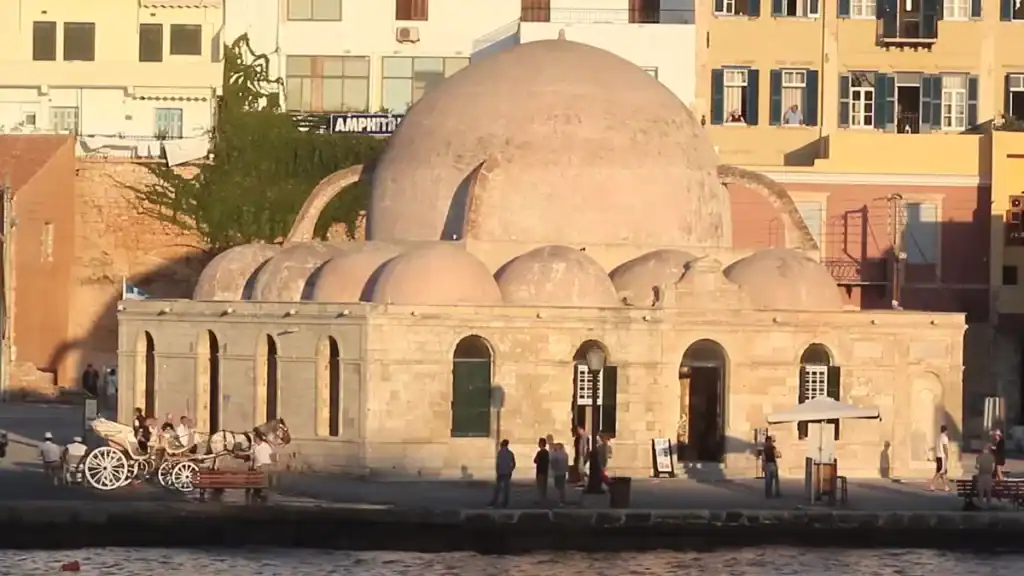
🕌 Küçük Hasan Mosque at Chania Harbour
The former Küçük Hasan Mosque is one of the harbour’s easiest landmarks to recognise.
I photographed it on my first visit, as most people probably do.
What became more interesting later was watching how the space around it changed.
The mosque itself remained almost completely still while the harbour repeatedly reorganised itself around it.
The Atmosphere Around the Mosque Changes All Day
Morning brought walkers and photographers.
By midday, the square felt brighter and busier. Later in the afternoon, the stone began warming in colour, and by evening the building became part of the illuminated waterfront rather than an isolated historical landmark.
| Time of Day | What Changes |
|---|---|
| 🌅 Morning | Soft light and quieter surroundings |
| ☀️ Midday | Bright stone and a busier square |
| 🌇 Late afternoon | Warmer tones appear |
| 🌙 Evening | The mosque becomes part of the illuminated waterfront |
I found that progression more interesting than simply learning a few dates about the building.
It has survived Venetian, Ottoman and modern Greek Chania, and standing beside it makes the layered history of the harbour much easier to recognise.
The cafés and crowds may dominate your first impression, but the mosque is one reminder that this waterfront existed long before either.
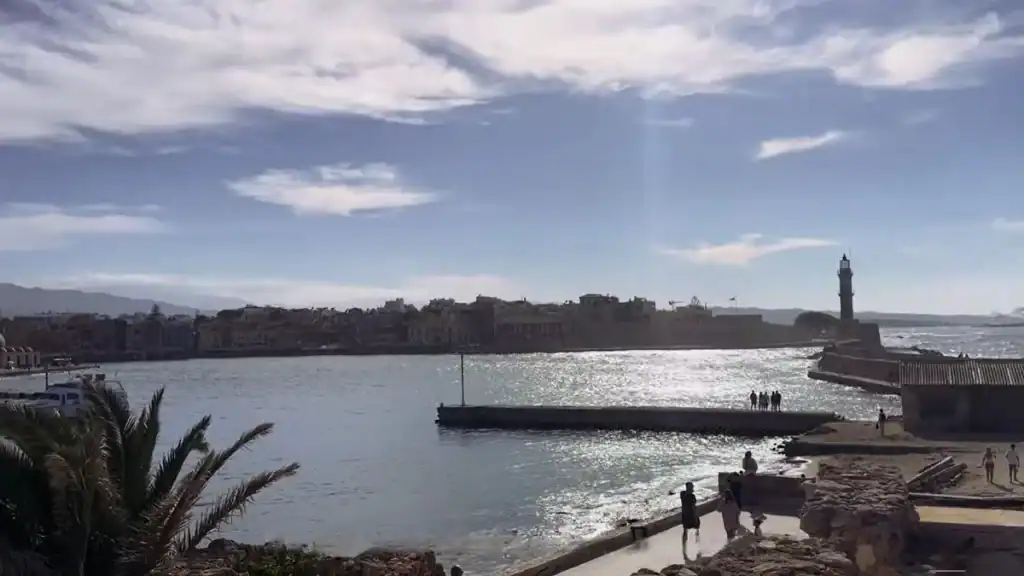
🚶 Is the Walk to Chania Harbour Lighthouse Worth It?
Yes. I think the lighthouse walk is one of the easiest ways to understand the harbour properly.
You can see the lighthouse from almost everywhere around the waterfront, which oddly makes walking to it feel less necessary.
I nearly treated it that way myself.
But once I followed the harbour wall away from the cafés, the perspective changed completely.
The Best View Is Looking Back
The walk itself is short, around ten to twelve minutes along the harbour wall.
As I moved farther from the main promenade, the noise dropped and the open sea became much more noticeable.
Reaching the lighthouse was satisfying, but the real reward for me was turning around.
From there, the Old Town suddenly made more sense.
The curve of the waterfront, position of the mosque and tightly packed buildings behind it could all be seen together rather than as separate landmarks.
| Along the Walk | What You Get |
|---|---|
| 🚶 Harbour wall | Around 10 to 12 minutes on foot |
| 🌊 Open sea | Clear views outside the harbour |
| 🗼 Lighthouse | Chania’s best-known harbour landmark |
| 🏛️ Old Town panorama | One of the clearest views back towards the city |
If you’re spending only one day in Chania, I would still make time for this short walk.
It doesn’t take much of the day, but it gives you a much better understanding of the place you’re exploring.
🌊 How Does the Water Change Chania Harbour?
I hadn’t expected the water itself to affect the harbour as much as it does.
I initially treated it as the space between the waterfront and lighthouse.
After returning several times, I realised it was constantly changing the appearance of everything around it.
On calm mornings, reflections could make the waterfront appear almost doubled. Later, even a moderate breeze broke those reflections apart and changed the colours completely.
Sitting Still Reveals More Than Another Lap of the Harbour
One of the easiest mistakes to make here is to keep walking.
I did that initially because there always seemed to be another corner worth seeing.
Eventually I stopped beside the water for a while and found that watching the harbour was more interesting than covering another few hundred metres.
Fishing boats created small wakes. Yachts moved through the entrance. Light shifted across the surface. The same buildings looked different every few minutes.
| Water Conditions | What You’ll Notice |
|---|---|
| 🌅 Calm mornings | Strong reflections across the harbour |
| ⛵ Boats moving | Gentle changes around the quayside |
| 🌬️ Afternoon breeze | Broken reflections and changing light |
| 🌙 Evening | Illuminated buildings reflected in the water |
The harbour was built to protect boats, and that function hasn’t disappeared just because visitors now come to photograph it.
Fishing vessels, sailing yachts and excursion boats are still using the same protected water.
I found remembering that made the waterfront feel more like a working harbour and less like a scenic backdrop.
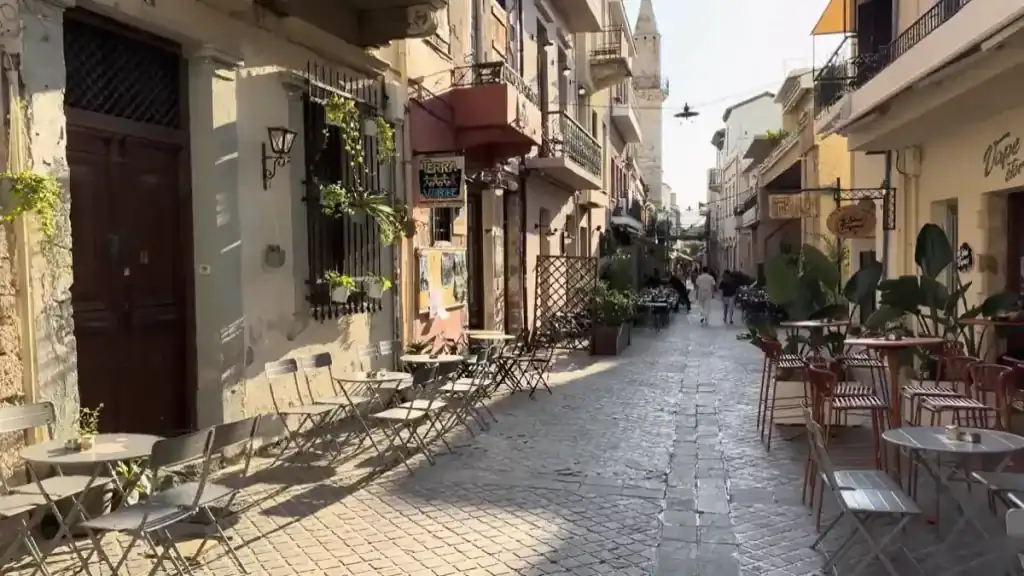
🏘️ What Is Behind Chania Harbour?
The harbour gives Chania its strongest first impression.
The streets immediately behind it are where I started finding more of the city’s character.
Only a few minutes from the waterfront, the broad promenade gives way to narrow lanes, shaded courtyards and streets where Venetian and Ottoman details become easier to notice without constantly looking across the water.
The Best Streets Were Often the Ones I Didn’t Plan to Take
I found this part of Chania much more enjoyable without a route.
A side street could lead to a small café, workshop or quiet square that I would never have deliberately searched for.
There was no sense of progressing towards a major sight.
I was simply wandering and occasionally finding something worth stopping for.
| Behind the Waterfront | What You May Find |
|---|---|
| 🛍️ Side streets | Independent shops and local crafts |
| ☕ Small cafés | Quieter places away from the promenade |
| 🏛️ Historic buildings | Venetian and Ottoman details |
| 🌳 Small squares | Places to sit away from the crowds |
That is why I wouldn’t spend an entire Chania visit circling the water.
The harbour is the obvious starting point, but the city becomes more interesting once you begin moving away from it.
Wandering Chania’s Old Town looks more closely at the side streets and quieter corners I think are easiest to miss when the harbour keeps pulling your attention back towards the water.
🌆 What Is Chania Harbour Like at Night?
Chania Harbour after dark is not simply the daytime version with the lights switched on.
The atmosphere changes much more than that.
As daylight fades, the working waterfront gradually becomes one of the most atmospheric evening areas in western Crete.
Buildings take on warmer colours, restaurant tables fill and reflections begin stretching across the water.
I Preferred the Transition Into Evening
The harbour is beautiful once it is completely dark, but I particularly liked arriving before that point.
There is a period when the daylight is fading, lights are beginning to appear and the waterfront is lively without yet feeling at its busiest.
For me, that was the best balance.
I could still see the architecture clearly while the first reflections were appearing across the harbour.
| After Sunset | What Changes |
|---|---|
| ✨ Waterfront lights | Reflections begin across the water |
| 🍽️ Restaurants | The harbour becomes much livelier |
| 🌊 Evening breeze | Temperatures feel more comfortable |
| 📸 Night views | Warm lighting changes the architecture |
Later, the harbour becomes busier and more obviously social.
That is enjoyable too, but it feels completely different from the place I had walked through before nine in the morning.
Returning at night made the case for repeat visits better than anything else.
Same harbour. Almost entirely different experience.
📝 What Is the Best Time to Visit Chania Harbour?
There isn’t one best time.
That is really the point of this article.
If I could visit only once, I would probably choose late afternoon and stay through sunset because that gives you the greatest amount of change during a single visit.
But if I’m staying in Chania for several days, I would deliberately return at different times.
Two or Three Short Visits Work Better Than One Long Visit
The harbour is easy to reach on foot from the Old Town, so returning doesn’t require much planning.
I would use it almost as a place to pass through between other parts of the city.
Walk there early one morning. Return for the lighthouse later in the trip. Come back again before dinner or after dark.
| Best Time | Why I Would Visit Then |
|---|---|
| 🌅 Early morning | Quiet promenade and softer light |
| ☀️ Late morning | Lighthouse walk and Old Town exploring |
| 🌇 Early evening | Changing light and comfortable temperatures |
| 🌙 After dark | Illuminated waterfront and lively atmosphere |
Trying to experience everything during a single afternoon gives you plenty of photographs.
Returning gives you a much better sense of the harbour itself.
That was the difference for me.
Chania Harbour stopped feeling like one attraction and became somewhere I naturally kept returning to because I knew it would probably look and feel slightly different again.
If you want to go farther than the waterfront, Chania Beyond the Old Town explores the neighbourhoods, beaches and quieter corners that reveal a very different side of the city.