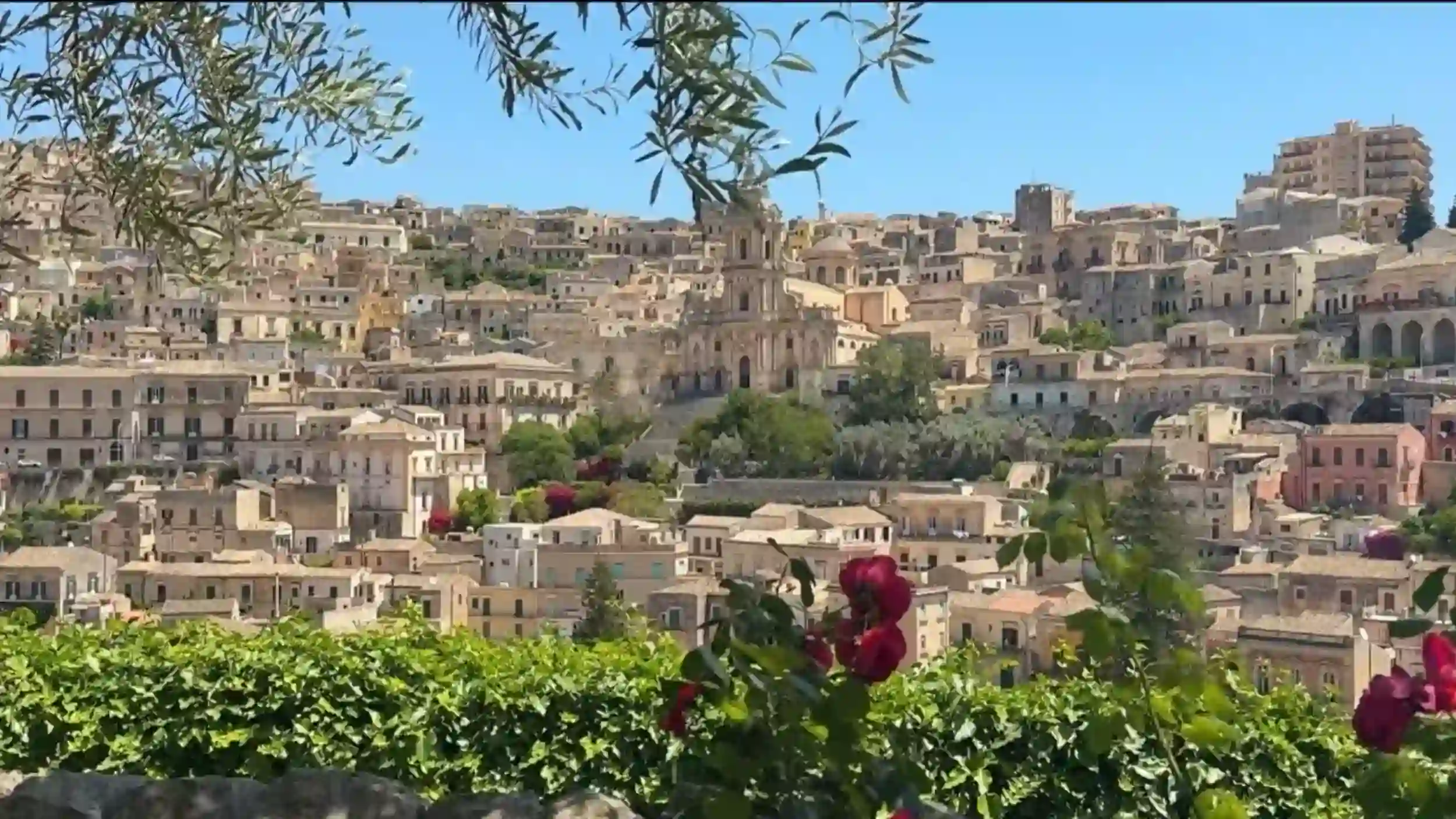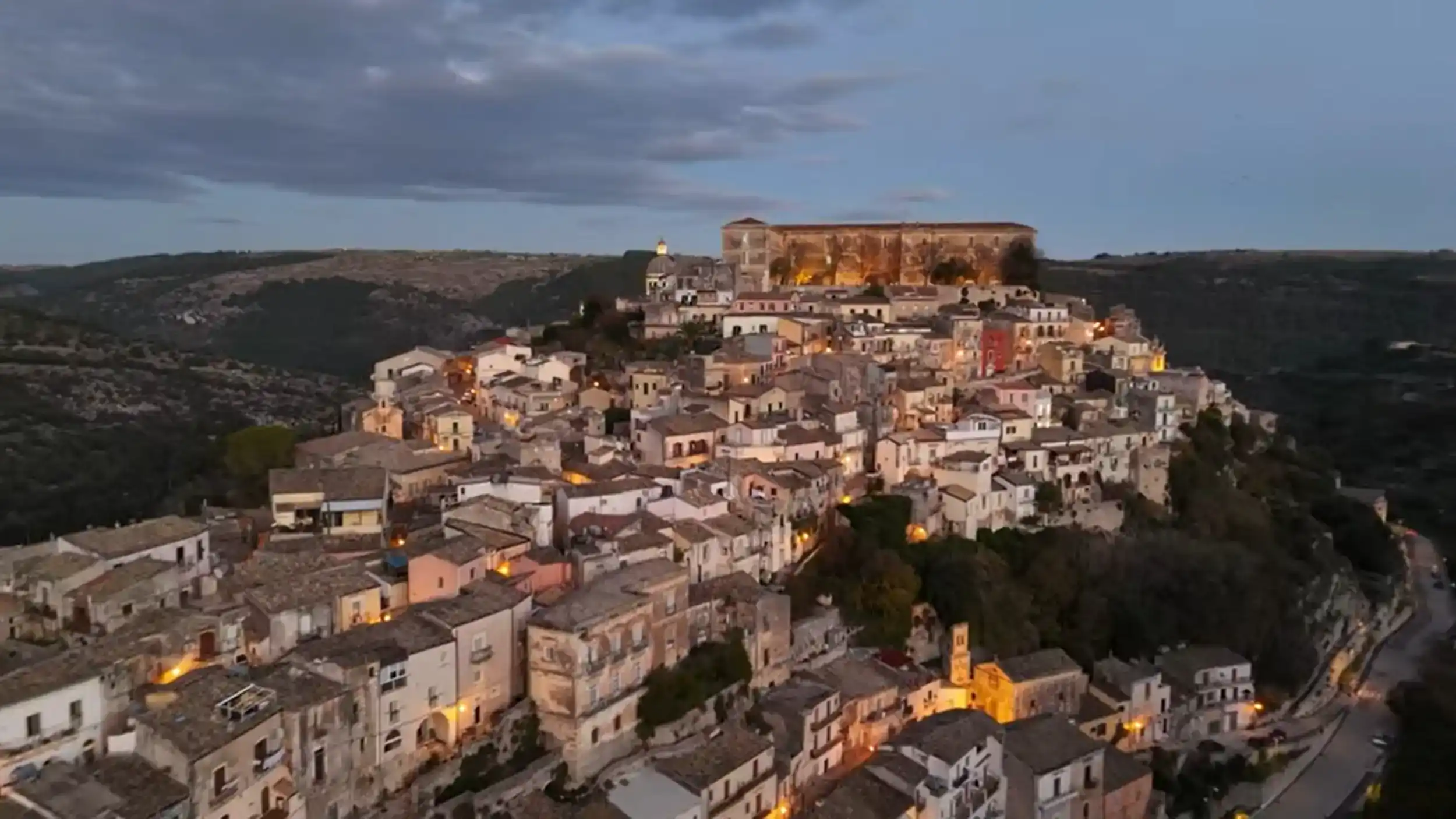
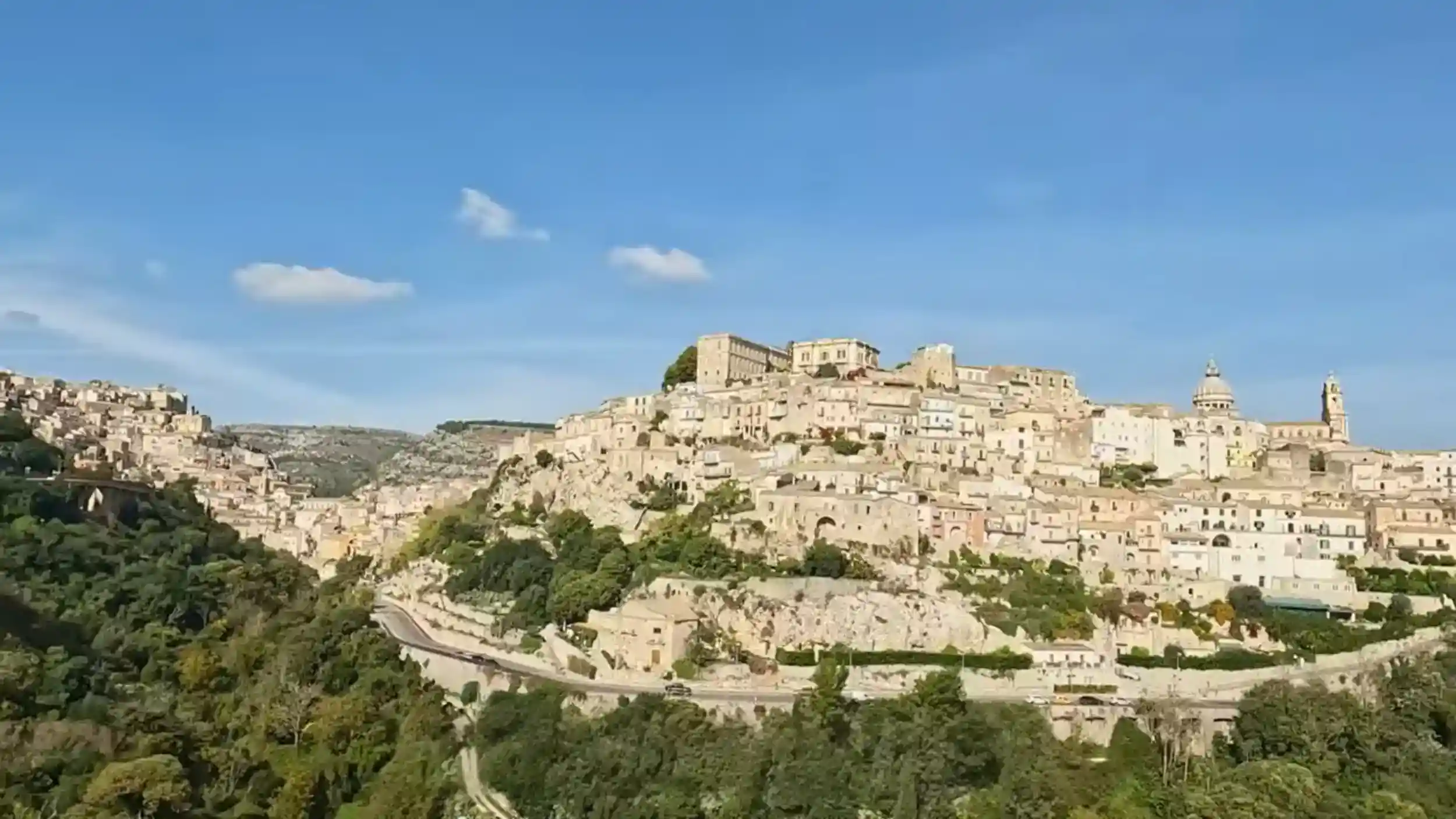
Ragusa’s history is unusually easy to read in the city itself. The 1693 earthquake destroyed much of the old settlement, then reconstruction created two centres: Ibla below and a planned new town on higher ground.
Food added another layer for us. Ragusano DOP, scacce, local olive oil and nearby Modica’s chocolate all connect the city to a wider Iblean landscape where farming and craft traditions still matter.
But convenience was not what made us remember it.
Once we had spent a few days here, the steep geography, neighbourhood cafés and layered streets mattered as much to us as the places we had originally come to see.
🏛️ Why Ragusa Felt Like Two Different Cities to Us
We understood Ragusa’s history much better after walking between its two halves. Following the devastating earthquake of 1693, the city did not rebuild as one settlement. It developed in two directions, and that division remains obvious today.
What looks like an unusual city layout is the result of two competing ideas about Ragusa’s future. The earthquake made rebuilding unavoidable. The unusual part was that some residents rebuilt the ancient centre while others created a new one above it.
The 1693 Earthquake Still Shapes the Walk
Some of the city’s wealthiest families chose the plateau above the damaged medieval settlement for a new town. Superiore shows the result clearly. Its streets are wider, its squares larger and its eighteenth-century layout much more orderly.
Other residents stayed below and rebuilt among the original streets. In Ibla, the medieval street pattern still shaped the way we moved. Around it rose the elegant Baroque buildings that now define the old town.
🏛️ One Disaster, Two Different Answers
Ragusa Ibla: rebuilt around the older medieval street pattern, with narrow lanes, stairways and Baroque landmarks.
Ragusa Superiore: developed on higher ground with wider streets, larger squares and a more ordered plan.
Moving Between the Two Halves Explains Ragusa
Although Ragusa Ibla and Ragusa Superiore officially merged in 1927, they never felt like a single continuous place to us. Moving from Ibla’s intimate lanes to the broader avenues above was precisely what made Ragusa so distinctive, and we would not choose one district at the expense of the other.
If you want to experience the same transition, our guide to walking between Ragusa Superiore and Ibla follows the historic route we used and explains why the descent became one of our favourite ways to understand the city.
🚶 What Walking Through Ragusa Ibla Was Like for Us
Ragusa Ibla only really began to make sense to us on foot. A car can take you close to the centre. Walking the lanes, climbing staircases and emerging into small Baroque squares revealed far more.
We would allow at least half a day without rushing. A full day suited us better because it gave us time to leave Piazza Duomo behind and wander into the quieter eastern side of Ibla without constantly checking what came next.
Piazza Duomo Kept Pulling Us Back
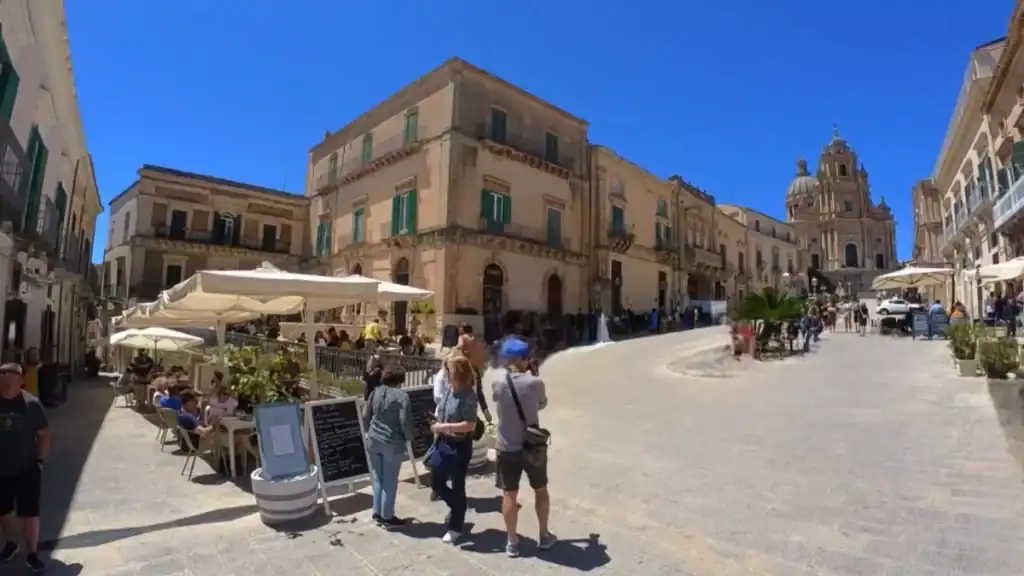
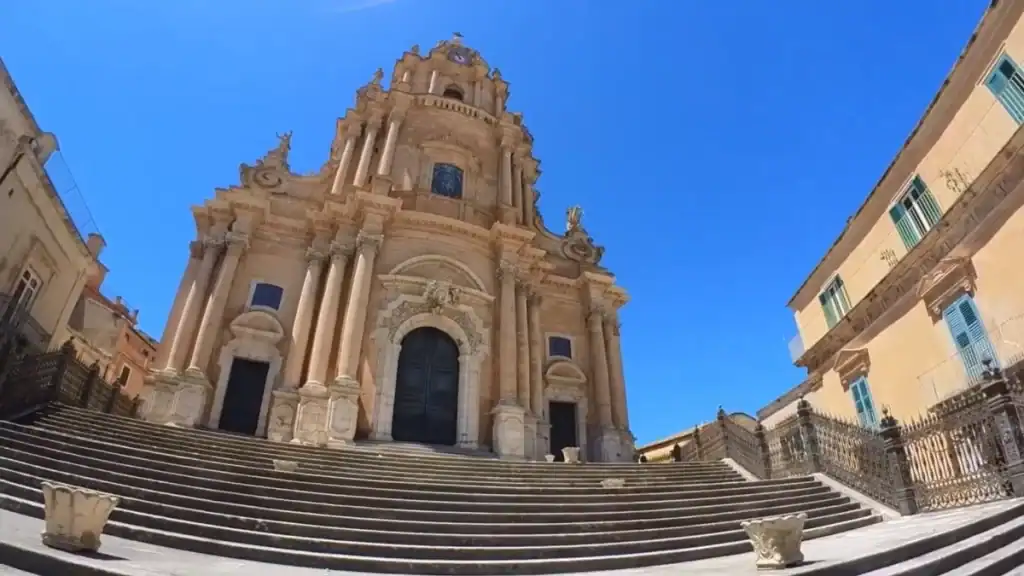
Our wandering repeatedly pulled us towards Piazza Duomo, where the Cathedral of San Giorgio dominates the skyline. From there we followed Corso XXV Aprile towards Giardino Ibleo, but the better moments often came when a side street or viewpoint distracted us from the obvious route.
The walking circuit we would use:
- 🪜 Santa Maria delle Scale
- ⛪ Piazza Duomo and the Duomo di San Giorgio
- 🏛️ Quiet Baroque side streets
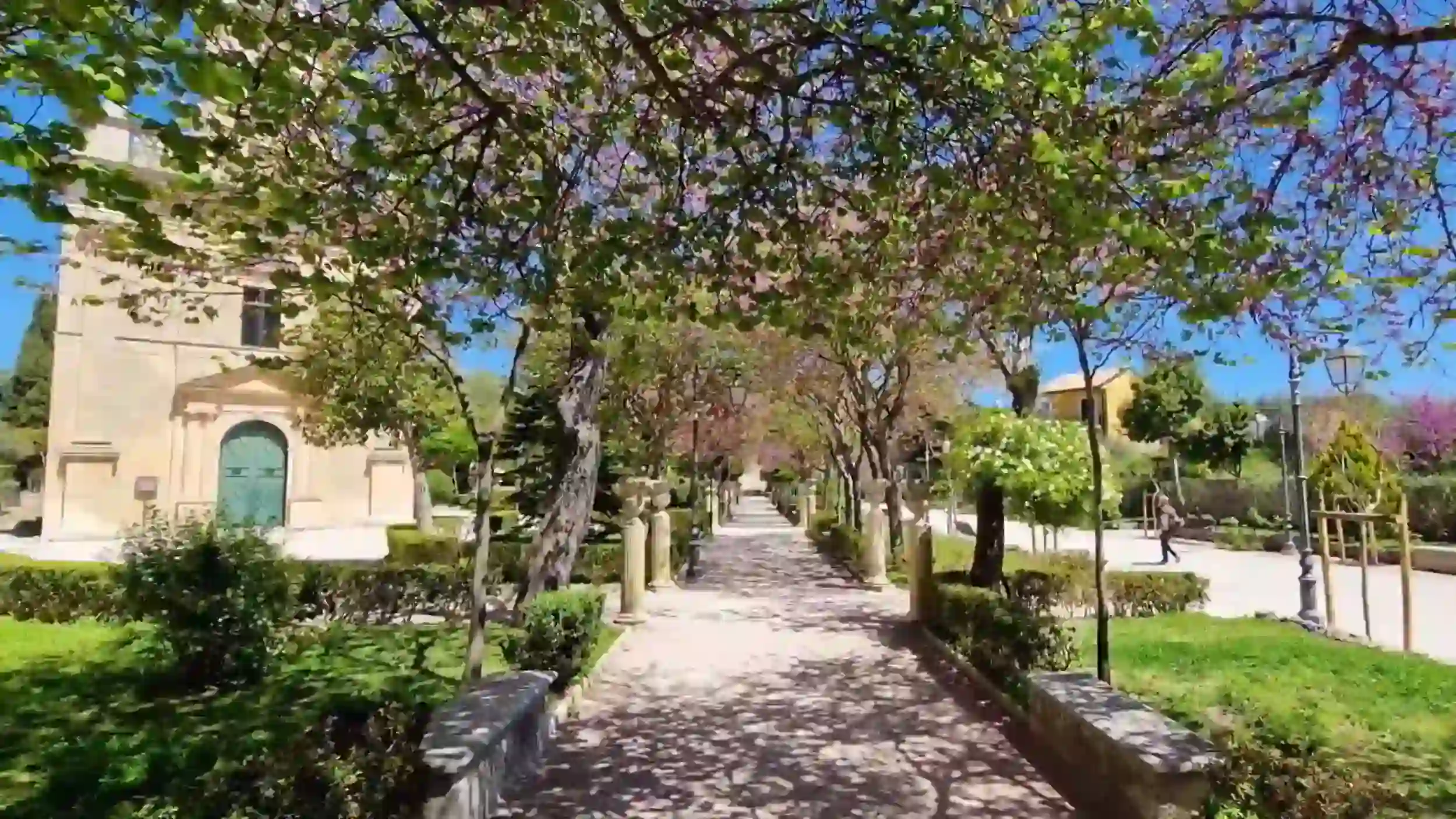
- 🌳 Giardino Ibleo
- 👀 Valley viewpoints along the eastern edge
We found the return towards Ragusa Superiore much less appealing than the descent, particularly when imagining those steps in summer heat. The local bus from Ibla is a useful alternative, and we would rather save our energy for exploring than prove a point by climbing every stair twice.
For the practical route, our guide to walking from the upper town into Ragusa Ibla covers the descent, the return climb and the stops we think make the walk worth doing.
Giardino Ibleo Gave Us Space to Slow Down
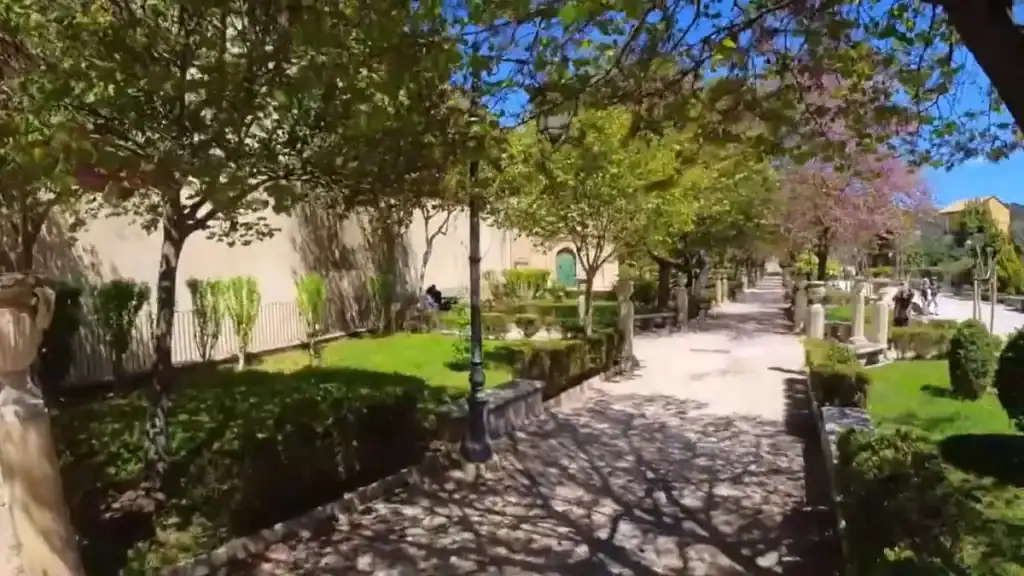
Giardino Ibleo gave us a welcome change after the enclosed streets of Ibla. At the eastern edge of town, paths run between carob trees, pomegranate shrubs and mulberries. We were particularly interested in the carob trees: their name traces to the Arabic word karuba, reflecting the influence of Arab agriculture across Sicily. Before sugar became widespread, carob was used as a sweetener, while its remarkably consistent seeds became a historical standard for weighing gemstones.
Discovering that the word carat comes from carob was one of those small details that made the garden more interesting to us. It also made more sense once we considered the trading networks that once connected this part of the Mediterranean.
A half day covered Ibla’s essential ground, but we preferred having a full day. That gave us time for the quieter streets south of the main corso, the area around the Portale di San Giorgio and Giardino Ibleo without rushing. From near the garden, the local bus also removes the need to tackle the long climb back to Superiore.
🧀 What We Actually Tried From the Ragusa Province
We did not have to search very hard to eat well in Ragusa. Local dairy farming and fertile countryside feed directly into the province’s food traditions. Some of our most memorable food was simple rather than elaborate.
For us, the ingredients were usually more interesting than the presentation.
Ragusano and Scacce Were the Obvious Starting Points
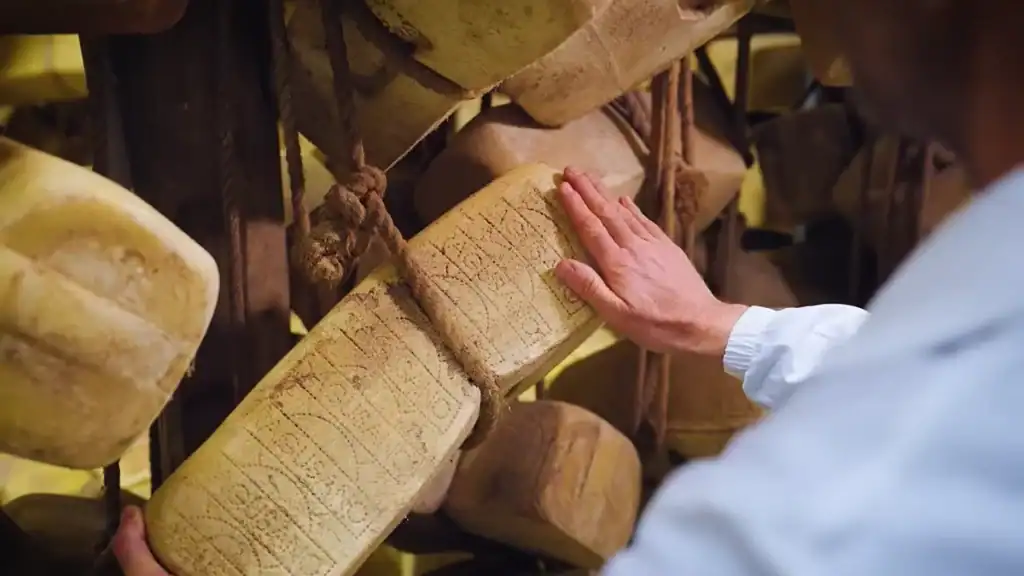
Ragusano DOP was one of the easiest local specialities for us to encounter. Made from cow’s milk, it matures in distinctive rectangular blocks. Age makes it firmer and richer in flavour. We saw it in simple trattorias and more ambitious restaurants.
Scacce were more useful when we wanted something quick. These folded flatbreads can be filled with tomato, cheese, onion or olives before baking. They made an easy lunch between walks.
Other traditional flavours in the wider area include ricotta, local sausage, carob and sweets such as cubbaita. For us, though, Ragusano and scacce were the clearest starting points.
🍴 What We Would Actually Look For
🧀 Ragusano DOP: the province’s best-known protected cheese and one of its strongest food identities.
🫓 Scacce: folded, filled flatbreads that work particularly well as a quick local lunch.
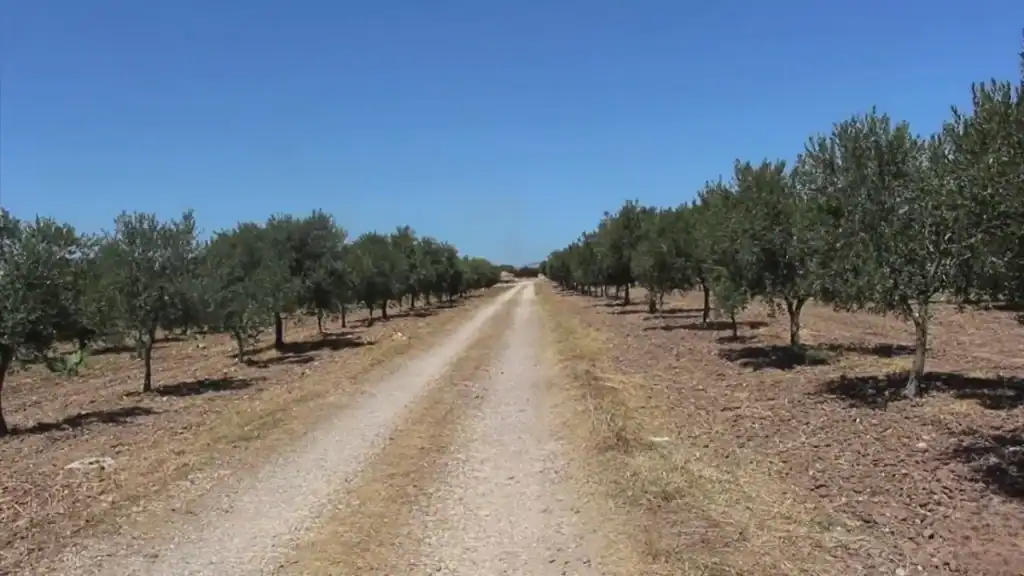
🫒 Iblean olive oil: another direct connection with the agricultural countryside around the city.
🍫 Chocolate: important to the wider Ragusa province, but Modica is the recognised chocolate town. We would go there for the tradition itself.
Food Made More Sense in Its Historical Context
The more local food we tried, the more it reflected the layered history visible in the architecture. Arab influence survives in ingredients such as carob. Spanish traditions shaped nearby Modica’s chocolate, while farming remains obvious on Ragusa’s menus.
Our guide to combining Modica and Ragusa looks more closely at how Modica’s chocolate tradition fits alongside the Baroque history shared by the two towns.
🌱 Where Tradition and Innovation Meet in Ragusa
Innovation in Ragusa is less about a single famous invention and more about how traditional industries are adapting. Agriculture and dairy production remain central. Modern businesses increasingly combine inherited skills with quality control, sustainability, management and export markets.
Cheese Shows the Connection Particularly Well
Ragusano DOP still depends on old cheesemaking knowledge and careful ageing. Yet the surrounding dairy sector is also a modern industry, competing on protected origin, traceability, quality and international sales.
🌾 THE MODERN RAGUSA STORY
What interested us was the continuity. Ragusa has not needed to choose between heritage and modernisation. Its strongest contemporary direction often makes traditional agriculture, food production and local identity work in a modern economy.
That approach now extends into local development. Recent initiatives have focused on agricultural management and on connecting Ragusa’s urban economy with its rural territory. It is practical innovation rather than a futuristic visitor attraction.
🏙️ Why Ragusa Superiore Was Worth Our Time
We could understand why so many visitors spend almost all their time in Ragusa Ibla.
Ibla is the postcard image we had expected: Baroque churches, narrow streets and a dramatic position above the valley. But once we spent time in Superiore, concentrating only on Ibla began to feel like seeing just half the city.
Superiore showed us the more everyday side of Ragusa.
Superiore Felt Like a Working City
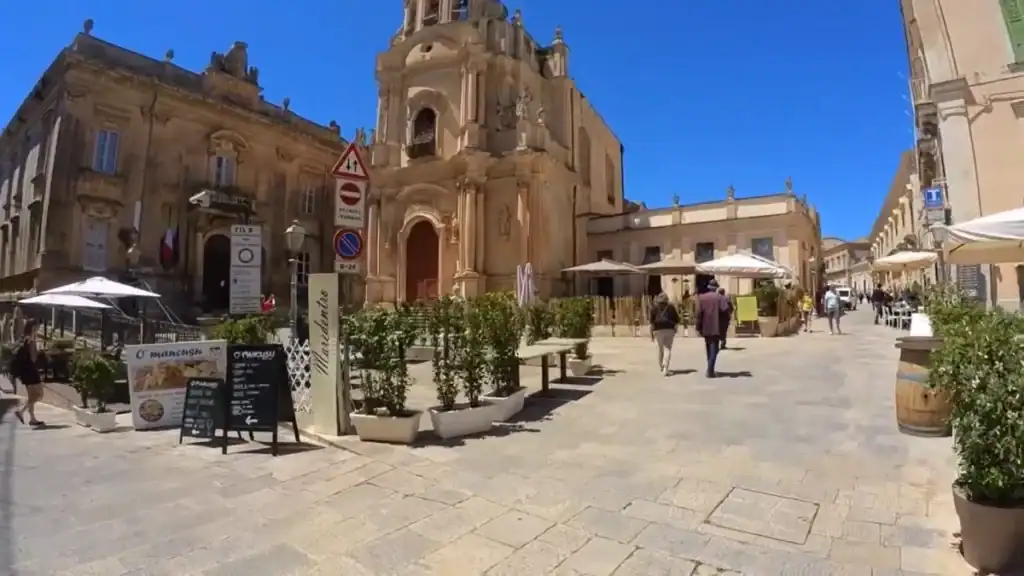
Built on higher ground after the 1693 earthquake, Ragusa Superiore became the commercial and administrative heart of the city. We noticed the difference immediately: wider streets, larger piazzas and busier shopping areas made it feel more shaped by local routines than sightseeing.
The Cathedral of San Giovanni Battista gave us an obvious focal point in Piazza San Giovanni. It receives less attention than San Giorgio in Ibla, but we thought the Baroque church deserved to be seen as part of Superiore rather than as a secondary version of Ragusa’s more famous cathedral.
What gave us a reason to stay in Superiore:
- 🏛️ Cathedral of San Giovanni Battista
- ☕ Busy cafés used mainly by locals
- 🛍️ Corso Italia and shopping streets
- 🚶 A glimpse of everyday life beyond the tourist trail
Seeing both districts on the same day made Ragusa’s split personality much clearer to us. A morning in Ibla followed by an afternoon in Superiore felt less like moving between neighbourhoods and more like visiting two places that happen to share the same history.
🌄 Where We Would Explore Beyond Ragusa
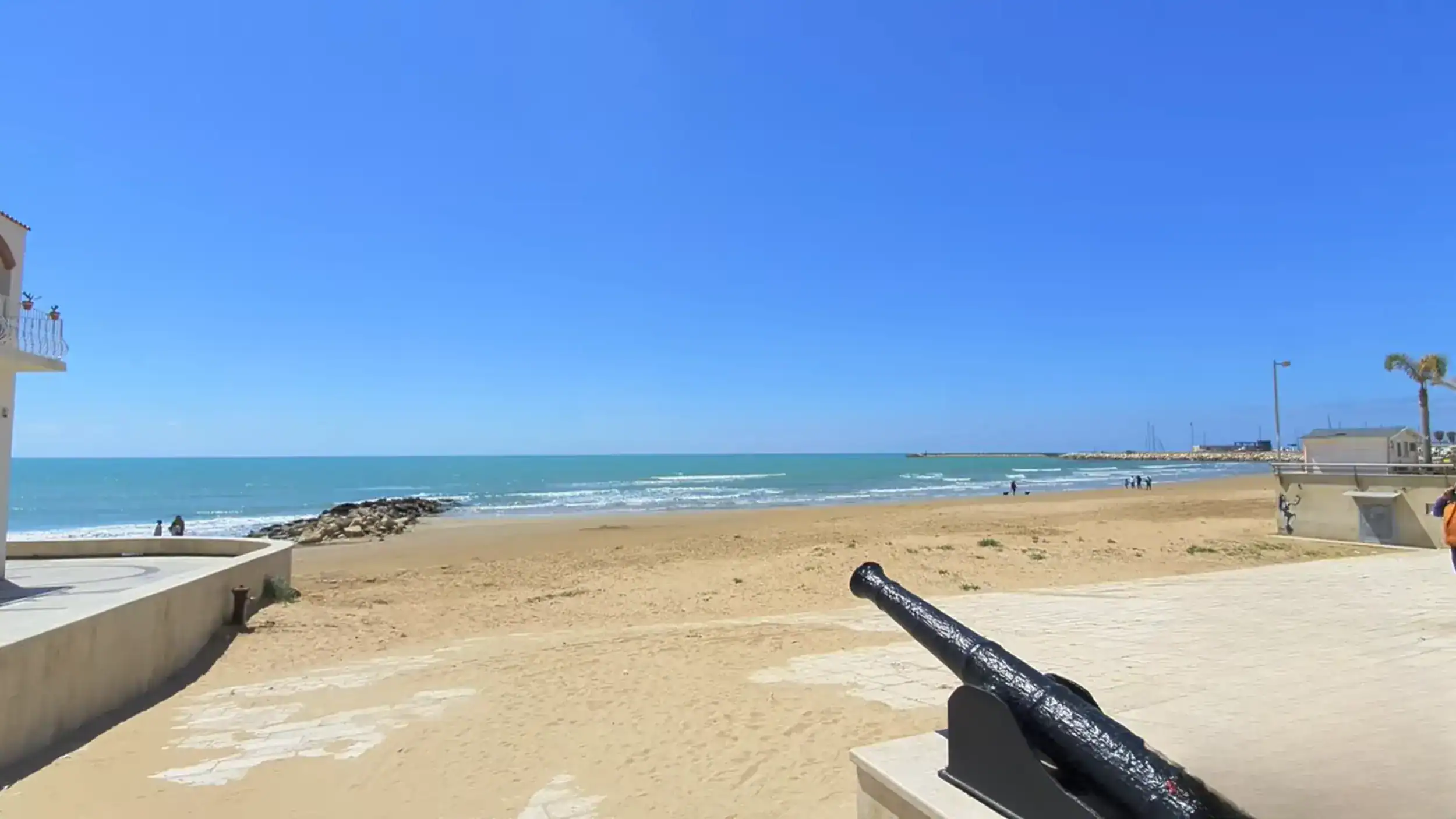
We would stay in Ragusa for several days partly because the surrounding province adds so much variety. Short drives took us towards Baroque towns, quiet hill villages, sandy beaches and countryside that felt far removed from Sicily’s busier visitor centres.
That meant our days never needed to follow the same pattern.
Four Nearby Places We Would Consider First
| Destination | Why Visit? |
|---|---|
| 🍫 Modica | Historic centre and famous chocolate |
| 🏛️ Scicli | Elegant Baroque streets with fewer visitors |
| 🌊 Punta Secca | Relaxed seaside village and beaches |
| 🌳 Chiaramonte Gulfi | Hilltop views and renowned olive oil |
We liked being able to change the emphasis completely from one day to the next. UNESCO-listed architecture could be followed by local produce or the coast, and the relatively short distances meant we rarely felt that the journey itself was consuming the day.
Short Distances Made Slower Travel Possible
For us, the province worked best when we stopped treating each town as an isolated attraction. Moving between them gradually revealed how southeastern Sicily’s history, landscape and food connect, while each place still retained enough character to justify the journey.
If you’re choosing where to go next, our guide to Modica and Ragusa compares two of the region’s finest Baroque towns, while our experience of Ragusa Ibla at night shows why we think it is worth being back in the city after the day-trippers have gone.