
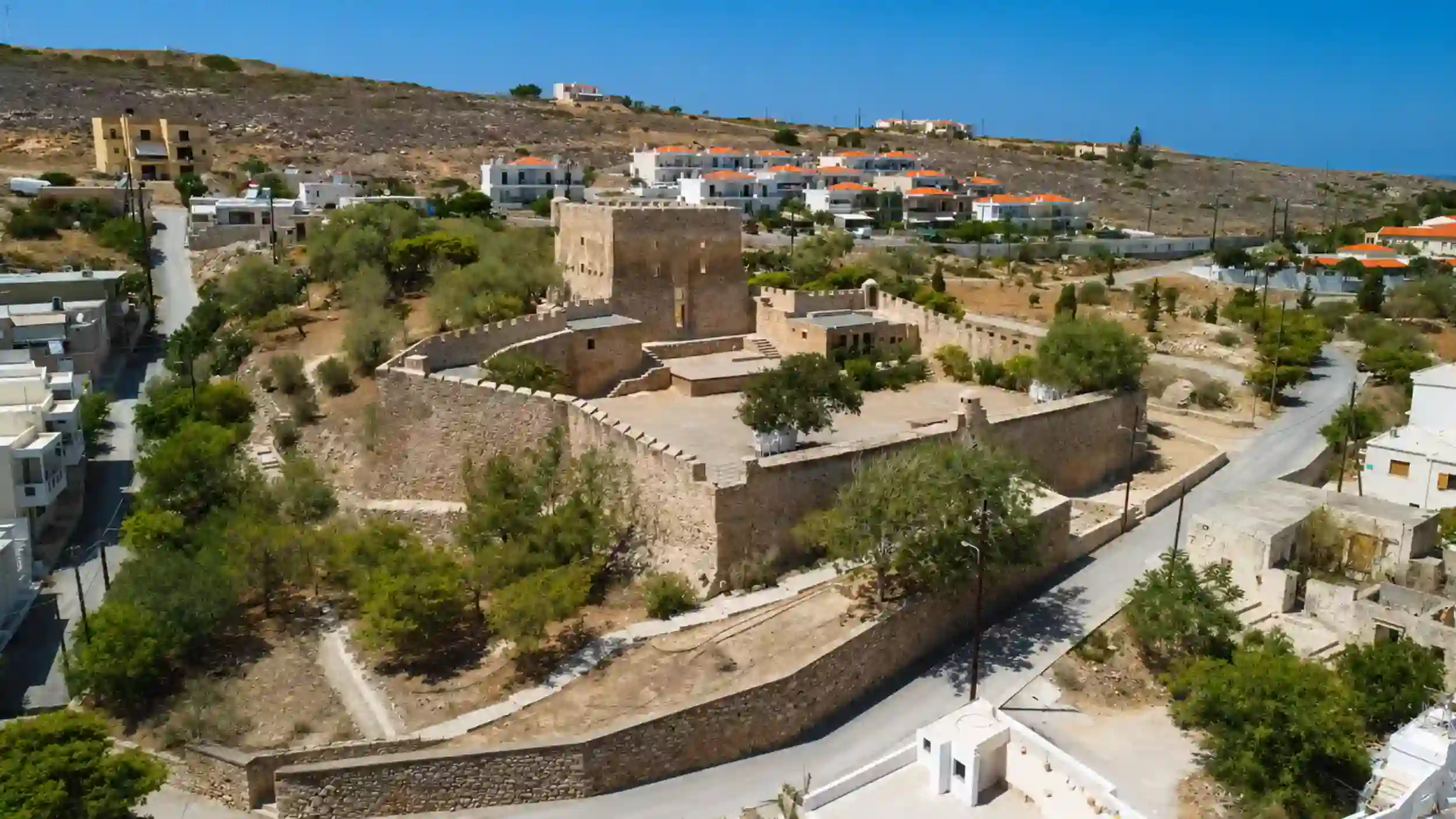
Sitia and Palekastro sit in the far eastern corner of Crete, where the island starts feeling quieter, emptier, and less shaped around tourism. Once you drive beyond Agios Nikolaos and keep pushing east, roads thin out, towns get smaller, and beaches sit further apart. By the time you reach Sitia, you are no longer moving through Crete’s resort corridor. You are entering its working eastern edge, where staying in the right base matters more than chasing individual attractions.
For most people, that base comes down to two places: Sitia or Palekastro.
They are close enough to combine, but they serve different purposes. Sitia is the proper town. Palekastro is the practical village closer to the peninsula beaches. Understanding that split makes this whole region easier to plan, and it sits inside the broader logic of how East Crete actually fits together rather than working as one continuous coast.
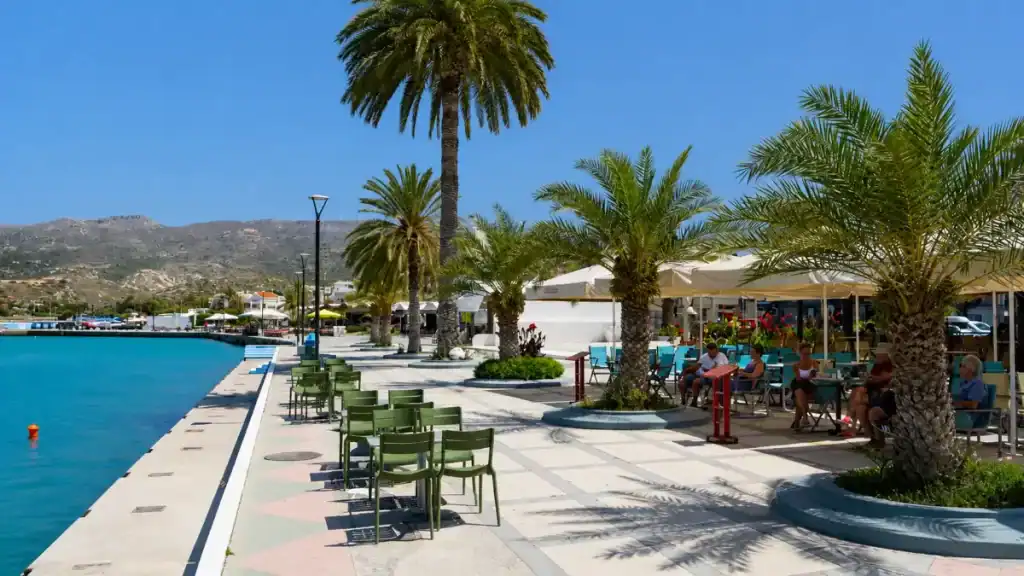
Sitia Is the Last Proper Town Before the Peninsula Opens Out
Sitia has a reputation for being quieter than Agios Nikolaos, and that is accurate, but quiet does not mean dead. It is a functioning harbour town first, tourist stop second. That makes it useful.
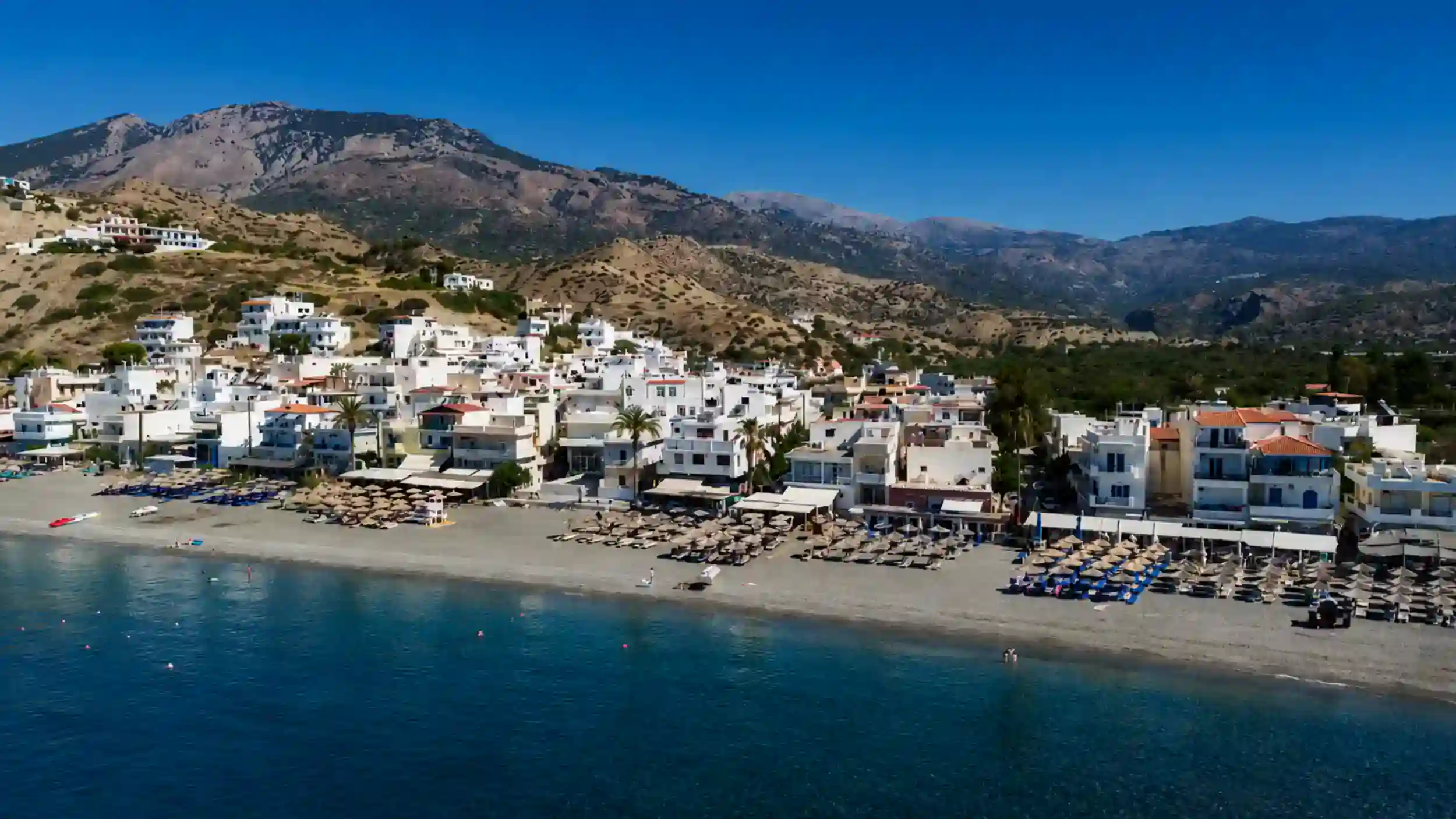
The waterfront runs in a broad curve around the marina, with cafes, bakeries, tavernas, banks, fuel stations, and supermarkets all spread within a short walk. In the evening the promenade fills steadily rather than suddenly. Locals sit for coffee, ferries move in and out, and families use the harbour front as their nightly walk. There is enough life here that you can happily end every day in town without feeling stranded in some remote eastern outpost.
That practical side matters because once you leave Sitia heading further east, facilities start thinning quickly. Smaller villages can feed you and give you a bed, but they cannot do everything.
So Sitia works best for travellers who want a real evening base. You can drive all day, come back, park, walk the harbour, and still have choices. Most of those drives back are along the older eastward coast road from Agios Nikolaos, which is the route worth knowing if you are arriving from the western end of the region.
It is not the prettiest town in East Crete, but it is one of the easiest to use.
The Drive to Palekastro Changes the Mood Quickly
From Sitia to Palekastro is only about twenty to twenty-five minutes, but it feels like a step out of town life and into open peninsula country.
The road is straightforward and fast by East Crete standards. You pass low agricultural land, scattered olive groves, dry fields, and long open stretches where the sea wind starts to become more noticeable. There is less visual clutter here. Less building. Less shade. The landscape becomes flatter and barer before lifting again toward the peninsula roads.
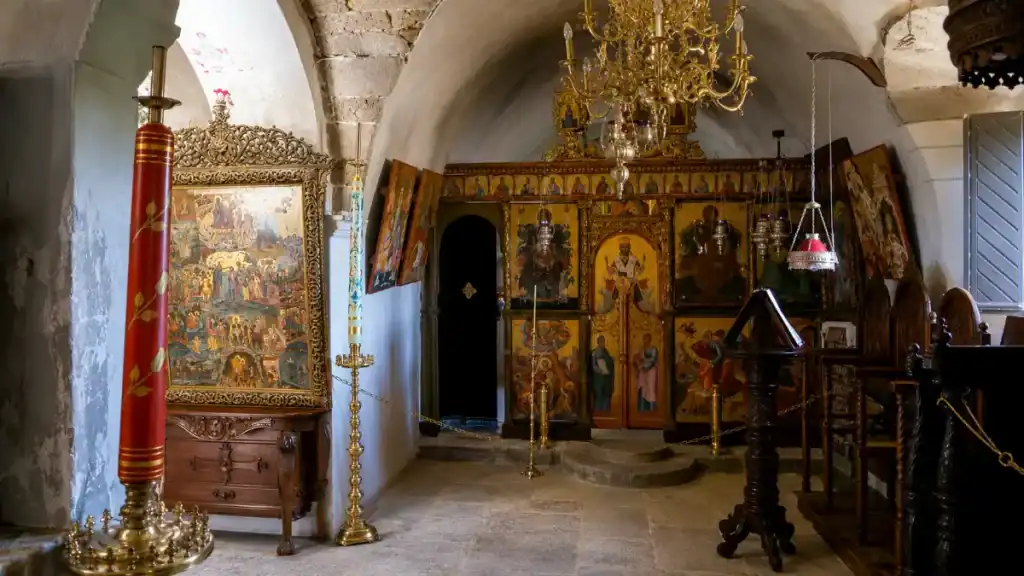
You also pass the Toplou monastery area on this route, which serves as a useful landmark. Once you are beyond that point, everything begins to feel more spread out.
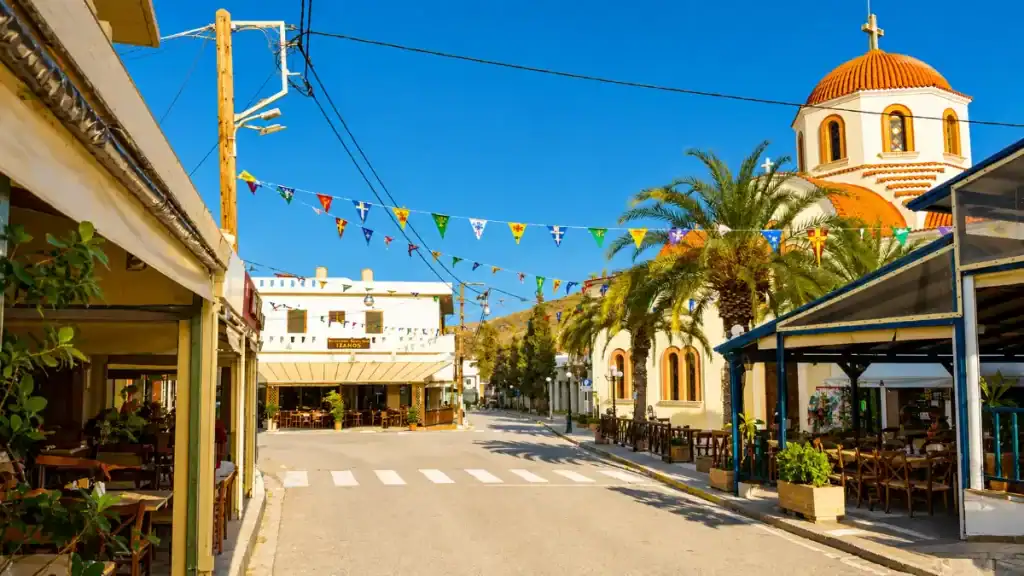
Palekastro itself is not a destination village people fall in love with at first sight. It is a simple inland service village with rooms, tavernas, bakeries, and a small square. You stay here because it sits in the middle of everything important, not because you come here for evening atmosphere.
That distinction matters.
Sitia is where you stay if you want a town. Palekastro is where you stay if you want easier daily movement.
Palekastro Works Because the Beaches Radiate Around It
From Palekastro you can be at Kouremenos in minutes, Vai in ten to fifteen, Itanos shortly after that, and the Zakros inland road without retracing half your day.
That saves more time than the map suggests.
When beaches and archaeological stops are all scattered in different directions, shaving fifteen or twenty minutes off each run changes the rhythm of the day. You stop feeling like you are commuting and start feeling like you are exploring. The handful of beaches clustered around Vai itself is the clearest example, because doing them in the right order matters far more than doing them quickly.
This is why Palekastro makes sense for two or three nights if the peninsula is your focus.
You wake up and simply choose wind direction, swimming conditions, or mood.
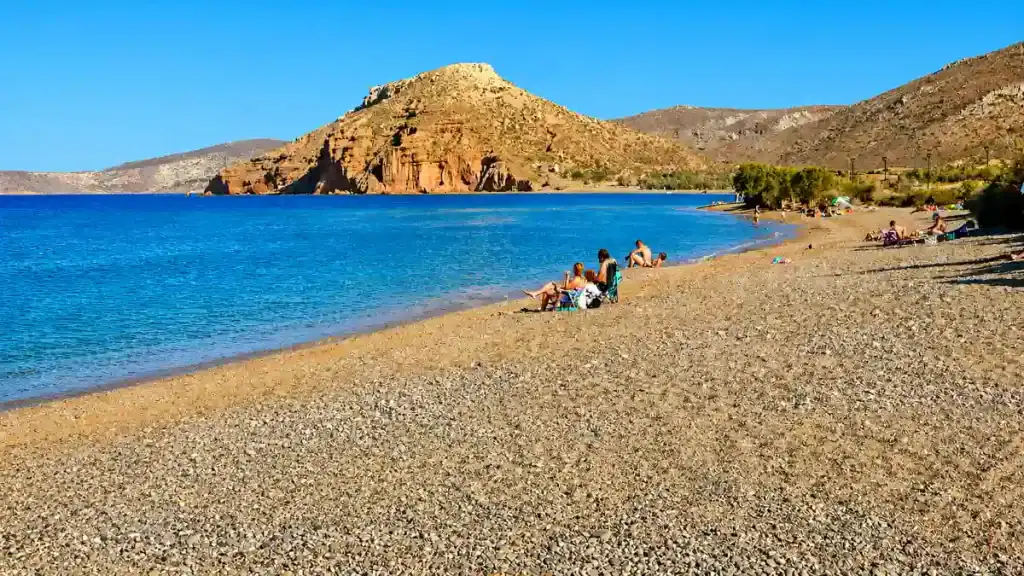
Kouremenos Is the Peninsula’s Most Usable Everyday Beach
Kouremenos sits just east of Palekastro and is the kind of beach that works better in practice than in photographs.
It is long, open, easy to park behind, and lined loosely enough with tavernas that you can spend half a day here without logistical effort. The bay is broad rather than dramatic, with plenty of space even in season.
The defining feature is the wind.
This coast catches the northwest airflow hard, which is why windsurfers use it heavily. On some days the beach is full of sails, boards, and constant movement over chopped water. If you are into windsurfing, this is one of the east coast’s obvious choices. If you are looking for mirror-calm swimming, it depends entirely on conditions.
Still, even when the sea is rougher, Kouremenos remains useful because it is so accessible. You can swim, eat, leave, come back, and never feel locked into an expedition.
I would not call it the peninsula’s most beautiful beach.
I would call it one of its easiest.
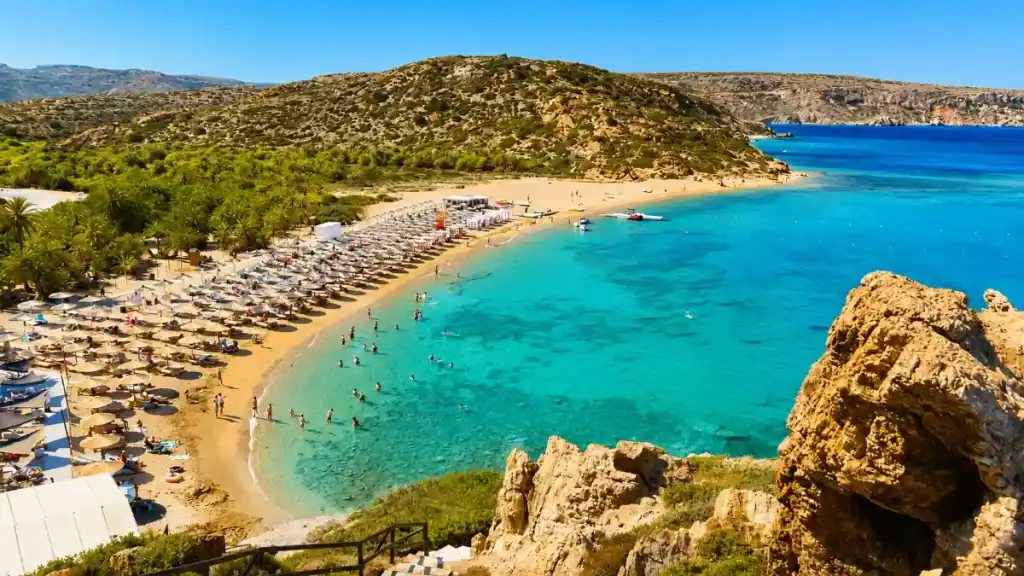
Vai Is Close Enough to Visit Early and Leave Before It Gets Busy
The main practical advantage of staying in Palekastro is how quickly you can reach Vai.
The road north is simple, direct, and fully manageable. No difficult mountain bends. No hidden turnoffs. Just a dry open run through sparse eastern terrain. In ten to fifteen minutes you are there.
That means you can do Vai the right way.
Arrive early.
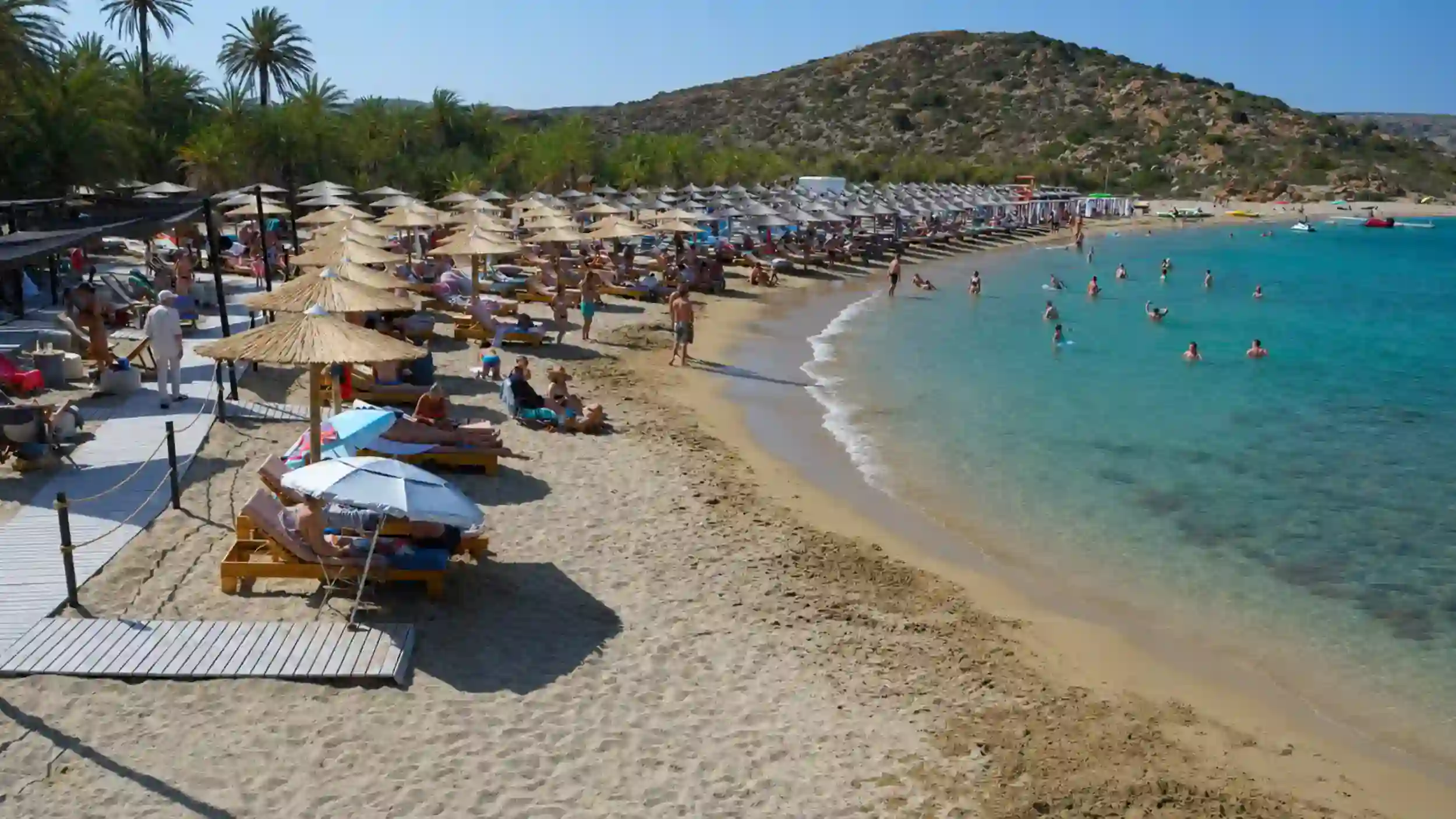
This beach becomes much less appealing once the middle of the day traffic arrives. Coaches, hire cars, organised umbrellas, and the predictable concentration around the palm grove all flatten the sense of place. The famous palm forest is still impressive, but the main bay loses some of its natural feel when every central line of sand is occupied.
Go before the excursion crowd and it is far better.
The water is calmer, parking is simple, and the grove itself feels quieter.
Late afternoon also works, but midday is the one period I would avoid if possible.
The Inland Zakros Road Split Changes the Region Completely
Beyond the peninsula beach circuit, the other major movement from this zone is the inland split toward Zakros.
This is where East Crete stops feeling coastal and starts feeling isolated.
From the Palekastro side, the road turns away from the sea and folds into a drier, more rugged interior. Villages become sparse. Slopes tighten. You spend long stretches with little traffic and almost no commercial interruption.
It feels remote without being difficult.
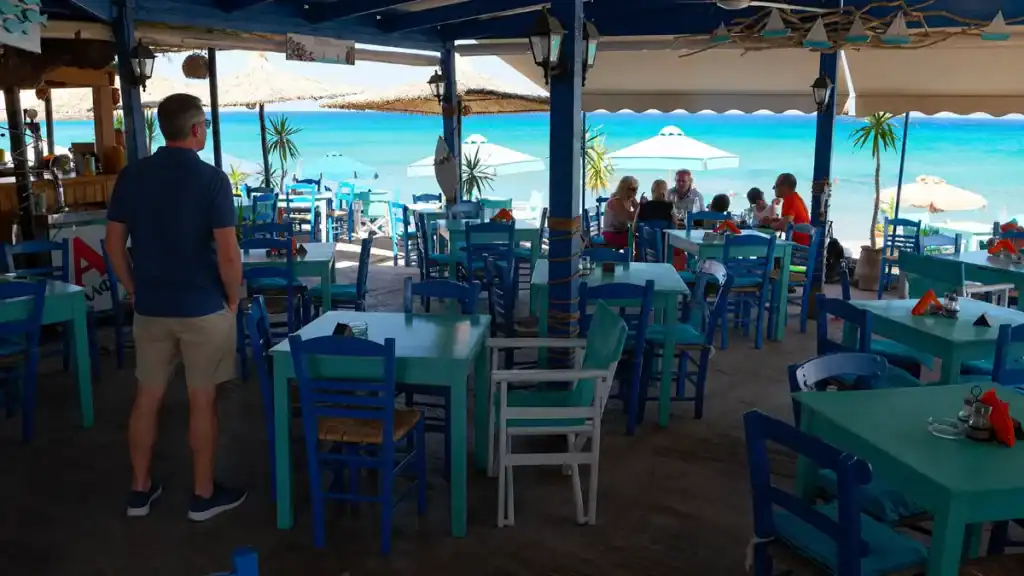
Zakros village itself provides the break in that drive. There is more greenery here, springs, tavernas, and a calmer inland feel after the exposed northern roads. It is a useful lunch or coffee pause before continuing down to Kato Zakros.
Then the road drops again.
This descent is one of the better visual transitions in East Crete. Dry enclosing hills suddenly open into a contained coastal bay where the archaeological site, beach, and tavernas all sit close together. It feels hidden from the rest of the island.
Because of the drive in and out, this is not a quick stop. Zakros and Kato Zakros deserve most of a day if you are doing them properly.
That is another reason this far-east region rewards staying nearby rather than commuting in from further west.
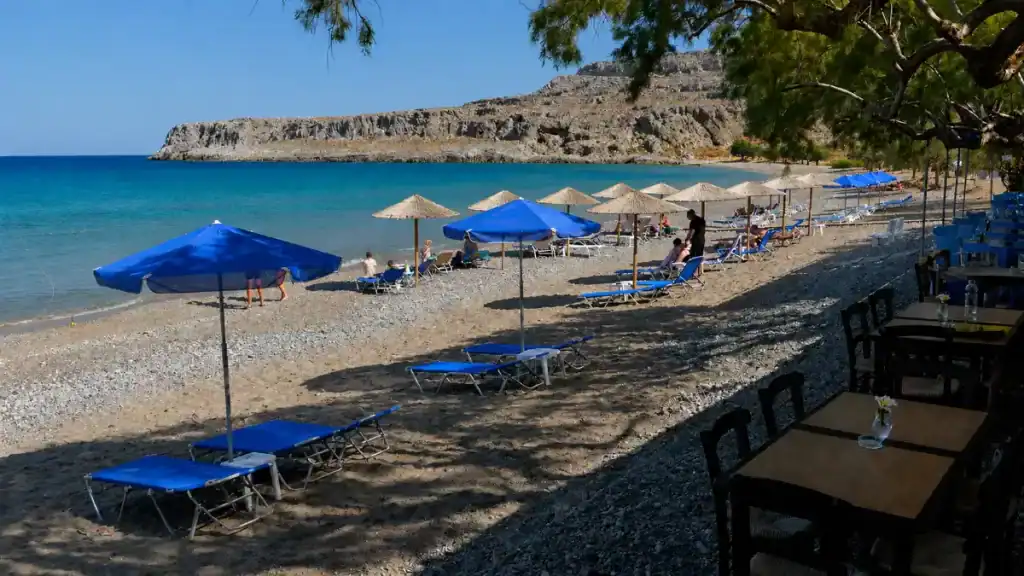
Which Base Should You Actually Choose?
Choose Sitia if: you want a proper evening town, supermarkets, waterfront dining, and less dependence on one small village.
Choose Palekastro if: you want faster access to beaches, easier early starts, and shorter drives to Vai, Kouremenos, Itanos, and the Zakros routes.
There is no wrong option, but they create different holidays. The same logic applies if you are still working through the wider question of where to base in East Crete rather than only thinking about the eastern peninsula.
Sitia feels anchored. Palekastro feels mobile.
Personally, if the trip is focused on the far-east peninsula itself, I would lean Palekastro. The reduced driving accumulates over several days, and this corner of Crete is at its best when you are not constantly measuring return distances.
You need time here because plans change quickly. A windy morning sends you inland. A crowded Vai arrival sends you elsewhere. A long lunch in Zakros removes half the afternoon.
That flexibility is what makes the far east good.
This part of Crete is not built for ticking boxes in one pass. It works when you let the roads, weather, and spacing between places dictate the day.