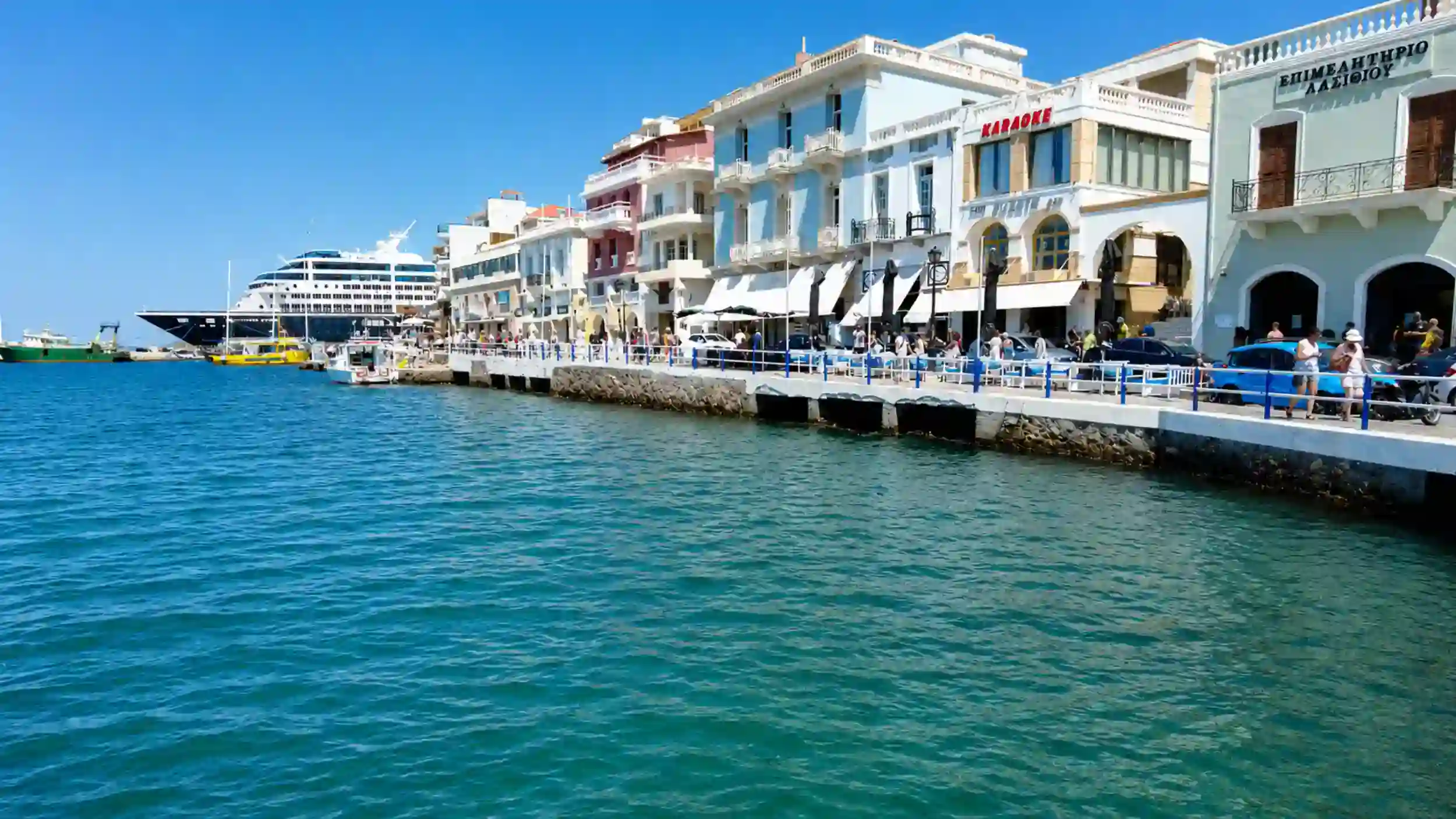
Choosing where to stay in East Crete matters more than you might expect. The region looks compact on a map, but winding roads, scattered beaches and very different coastal towns mean the wrong base can leave you spending far too much of your holiday driving.
The best choice depends on the kind of days you want. Agios Nikolaos works well for variety, Elounda for a more polished stay, Sitia for the far east, while Ierapetra and Makry Gialos put the south coast within much easier reach.
If you’re still deciding how the different parts of the region fit together, start with the East Crete Travel Guide before choosing your base.
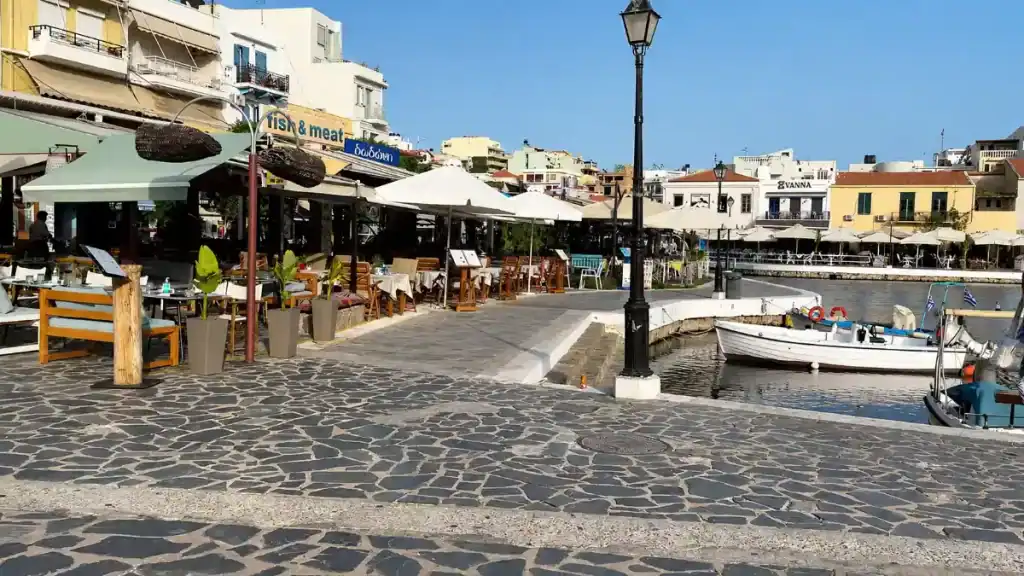
🏙️ Agios Nikolaos: The Best All-Round Place to Stay in East Crete
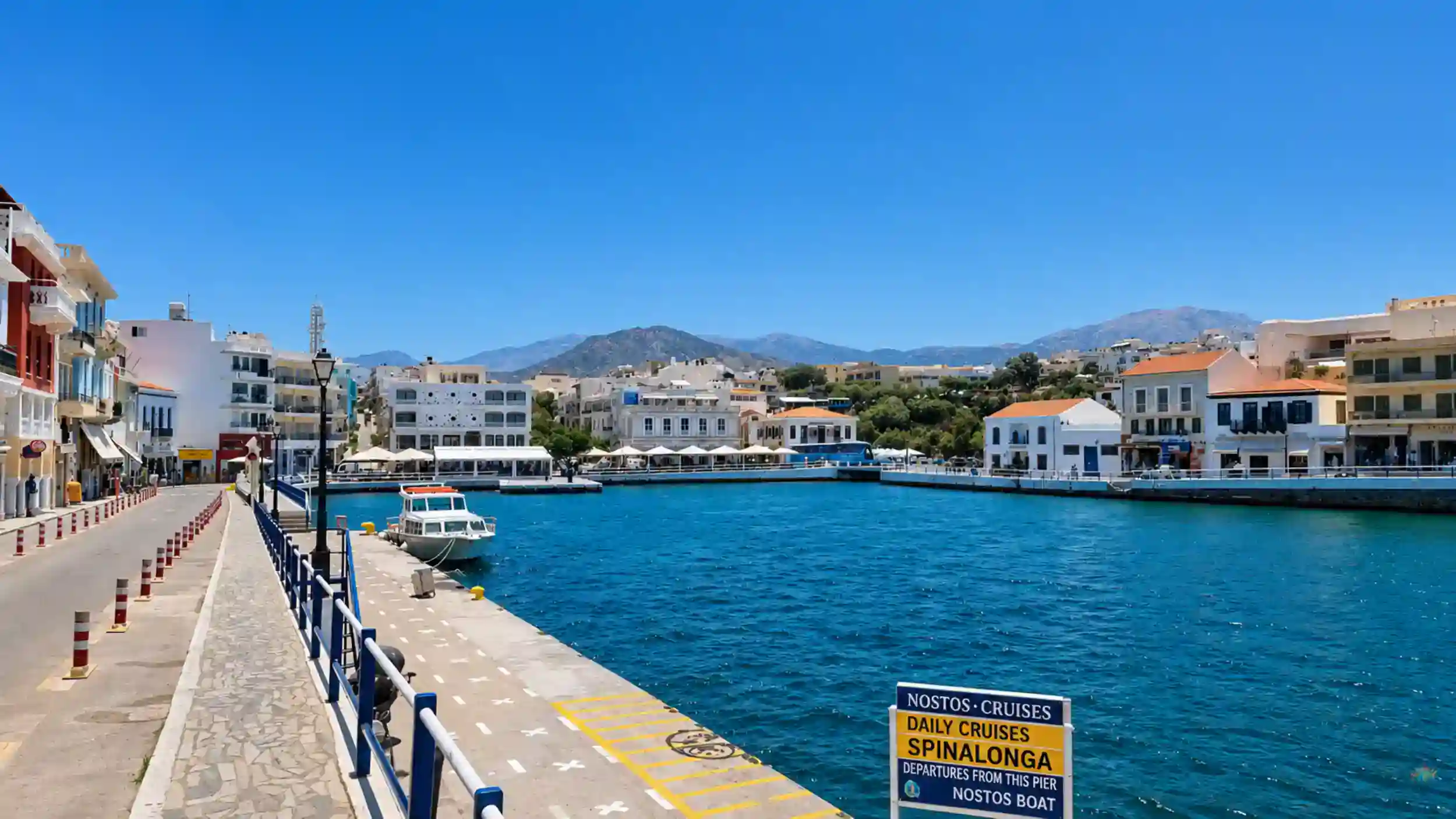
If you want to stay in East Crete without feeling restricted to one part of the region, Agios Nikolaos is the strongest all-round base. It has a proper town centre, busy waterfront, shops, restaurants and enough evening activity to feel alive beyond the main tourist hours.
🚗 Best for Exploring in Different Directions
Location is the biggest advantage. You can drive north towards Elounda and Plaka, inland to Lato or south towards Ierapetra without every outing becoming a major journey. Being close to the main road network also makes longer East Crete day trips easier.
🏖️ Easy Beach Days Without Long Drives
You don’t need to travel far every day. The beaches near Agios Nikolaos give you several easy options around Mirabello Bay when you simply want a beach day close to your base.
| Agios Nikolaos is best if… | Why it works |
|---|---|
| 🚗 You want day trips | Good road connections |
| 🍽️ You want evening choice | Plenty of restaurants and tavernas |
| 🛍️ You want facilities | Proper town rather than resort village |
| 🏖️ You want nearby beaches | Several bays within easy reach |
The trade-off is atmosphere. Agios Nikolaos is a town first, so it isn’t the best choice if your priority is a small, quiet beach setting.
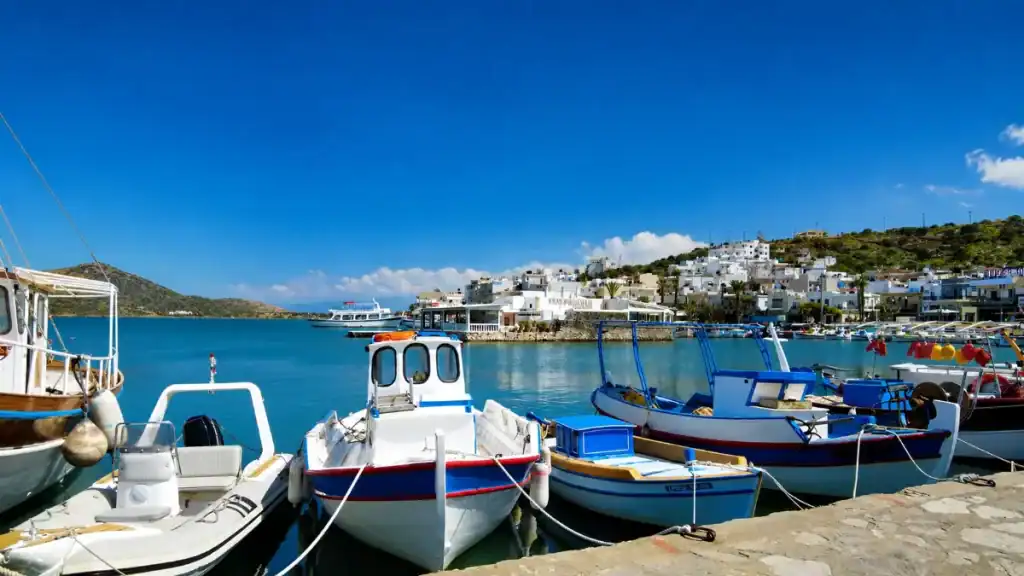
🌊 Elounda: Where to Stay in East Crete for Couples
Elounda is a good choice if the accommodation itself is an important part of your holiday. This stretch of East Crete feels more polished than Agios Nikolaos, with larger hotels, hillside resorts and waterfront properties overlooking Mirabello Bay.
❤️ Best for Slower Days and Evenings
The sea is calm, the waterfront is easy to walk and evenings tend to revolve around long dinners rather than a busy town centre. It works particularly well for couples who value comfort and scenery more than constant exploring.
🚤 Stay Here for Spinalonga
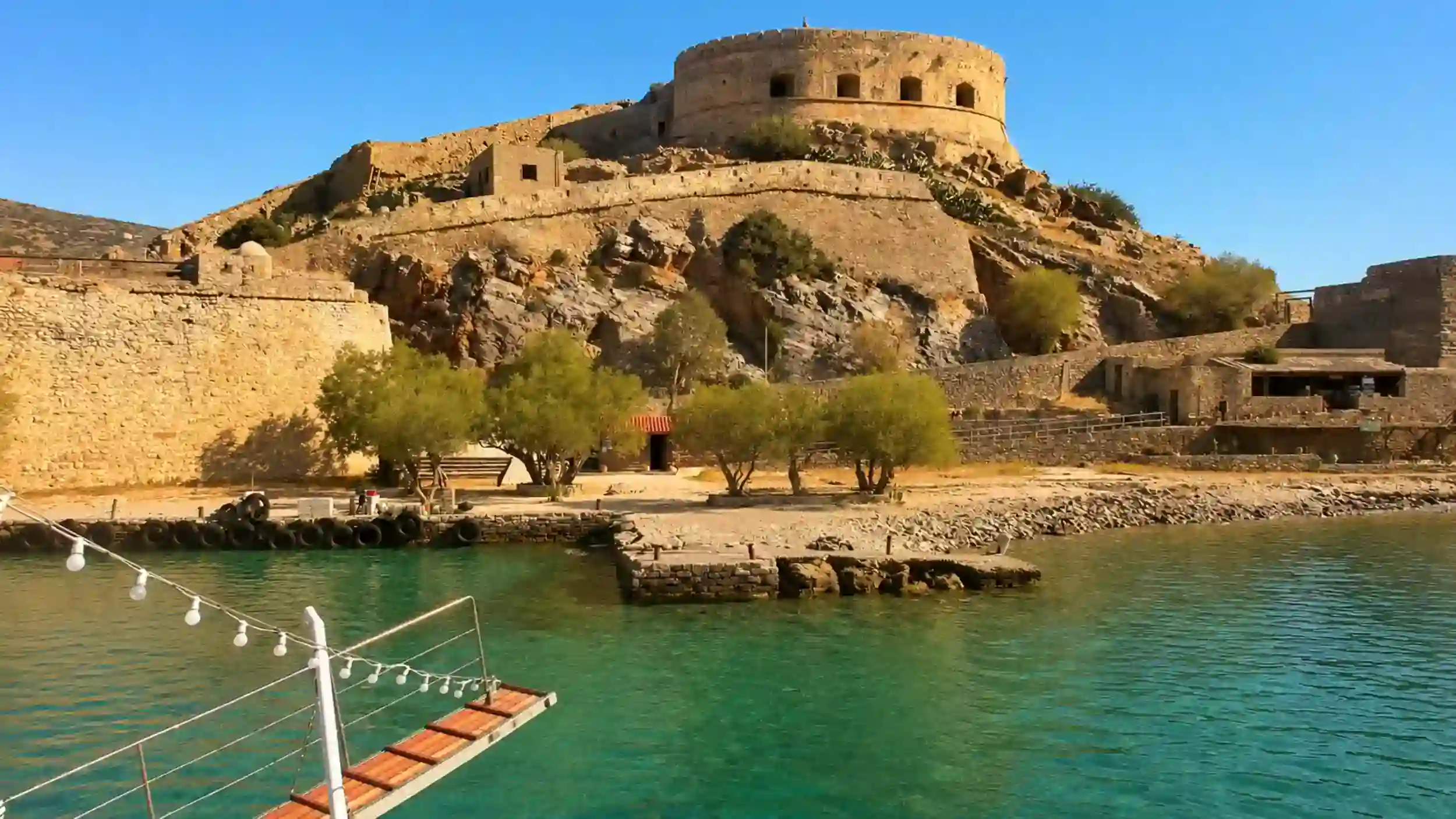
Elounda also puts you close to Plaka and the short boat crossing to Spinalonga. Visiting Spinalonga from Elounda is an easy half-day trip that doesn’t require a long drive across the region.
The compromise is location. If you want to explore the far southeast of East Crete regularly, Elounda isn’t the most practical base.
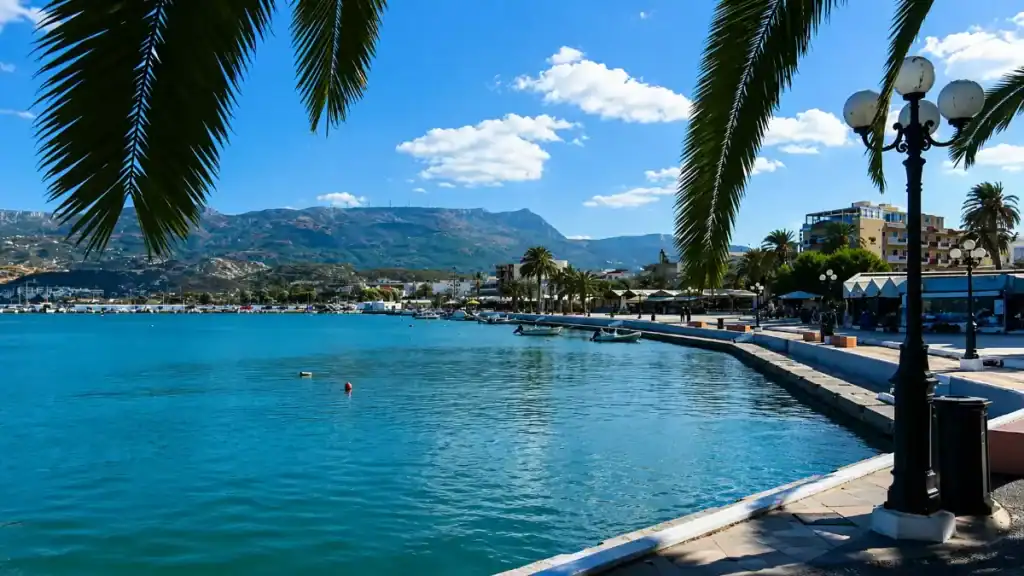
🏺 Sitia: Where to Stay for the Far East
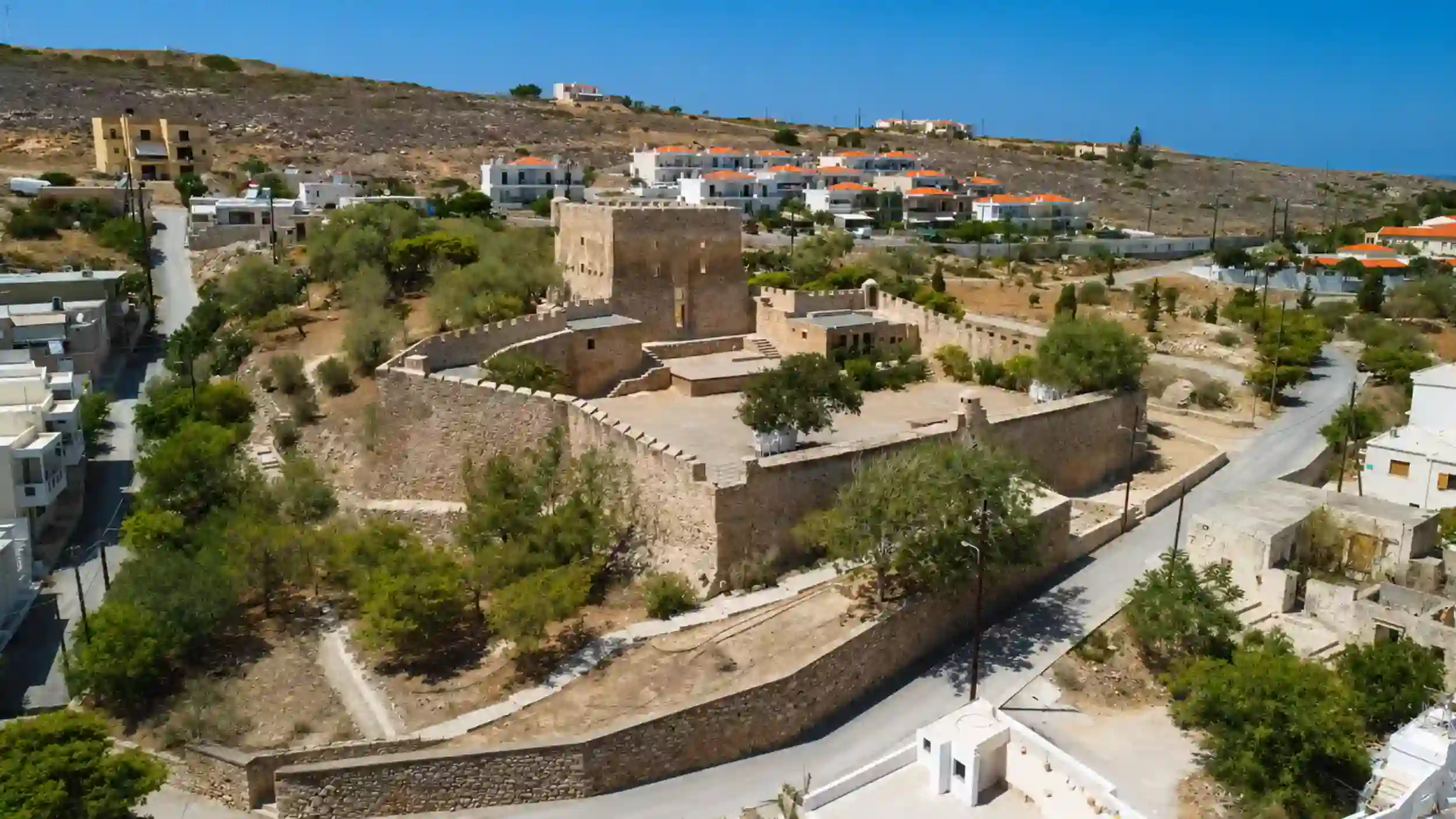
Sitia makes the most sense if you want to concentrate on the wilder northeastern corner of East Crete. The town itself is functional rather than glamorous, with a working harbour, local centre, tavernas and enough accommodation and evening life for a multi-night stay.
🚗 Best for Vai, Palekastro and Zakros
Geography is the real reason to stay here. Vai, Toplou, Itanos, Palekastro, Zakros and the eastern tip are considerably easier to reach from Sitia than from Agios Nikolaos.
⏱️ Stay Here to Cut the Driving
From further west, exploring this part of East Crete can mean long return journeys on mountain roads. From Sitia, many of those same trips become manageable half days.
| Stay in Sitia if… | Look elsewhere if… |
|---|---|
| 🏺 Ancient sites interest you | 🌊 You want a polished resort |
| 🏖️ You prefer less-developed beaches | ❤️ Romantic atmosphere is the priority |
| 🚗 You want to explore the far east | 🏨 Your hotel is a major part of the holiday |
Sitia sacrifices some of the visual charm of Agios Nikolaos or Elounda, but if the far east is your priority, the time you save on the road is more valuable.
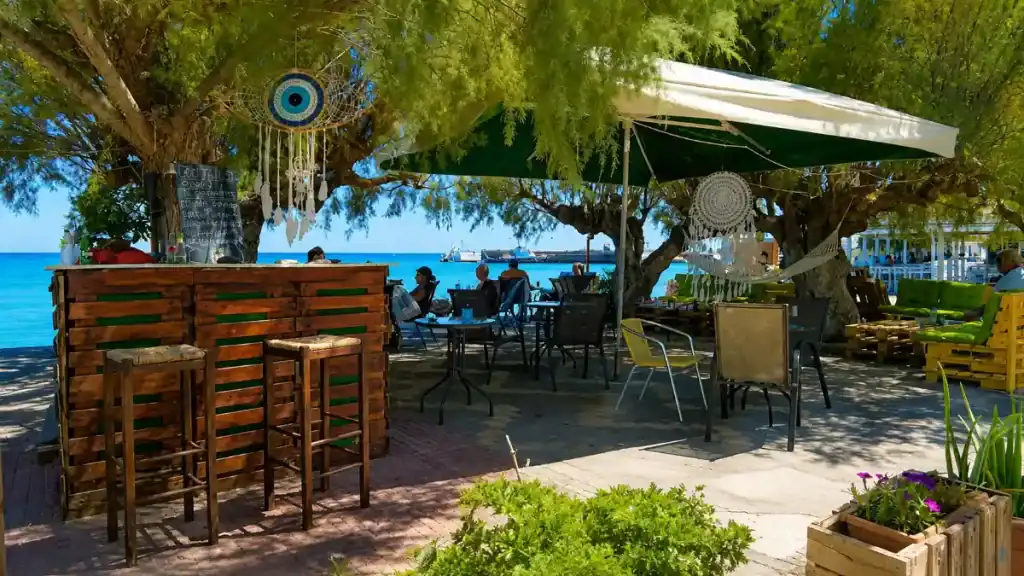
☀️ Ierapetra: Where to Stay on the South Coast
Ierapetra is the strongest choice if you want to stay in East Crete on the south coast without giving up the facilities of a proper town. It has multiple harbour areas, a long restaurant-lined seafront and shopping streets, with plenty of local life continuing into the evening.
🏙️ Best for Town Life and Practicality
This isn’t a polished resort. Ierapetra feels more urban and functional, but that gives you considerably more choice than the smaller coastal villages. It’s particularly useful if you want restaurants, shops and services within easy reach.
🚗 Explore the South and Southeast
Ierapetra puts Ferma, Myrtos and Makry Gialos within straightforward reach, while also providing access to the wider southeast coast.
Boats also leave from here for Chrissi Island, making the island easy to include without changing bases.
The compromise is character. Ierapetra feels more like a small working city than the prettier harbour towns and villages elsewhere in East Crete.
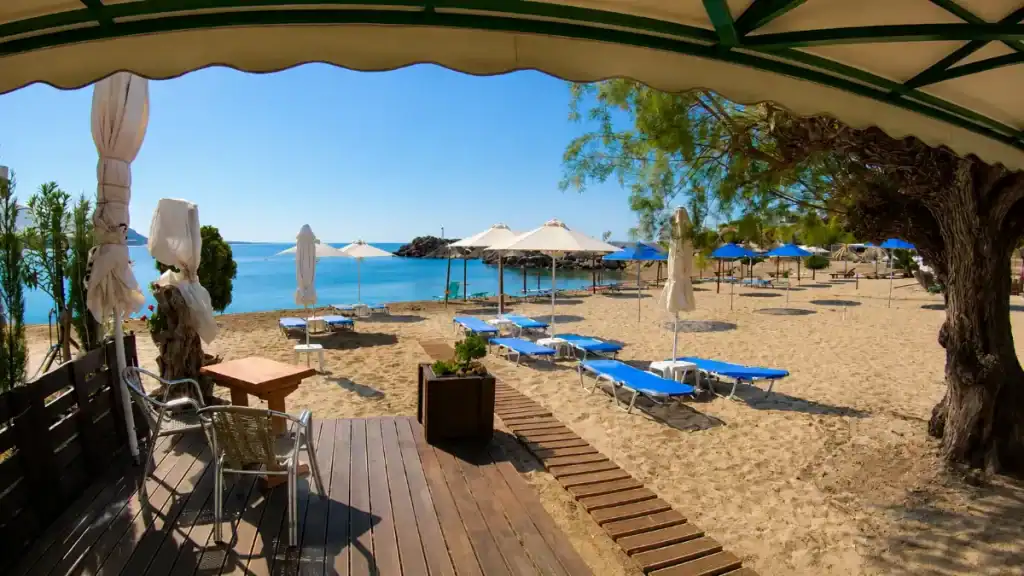
🏖️ Makry Gialos: Where to Stay for Beaches
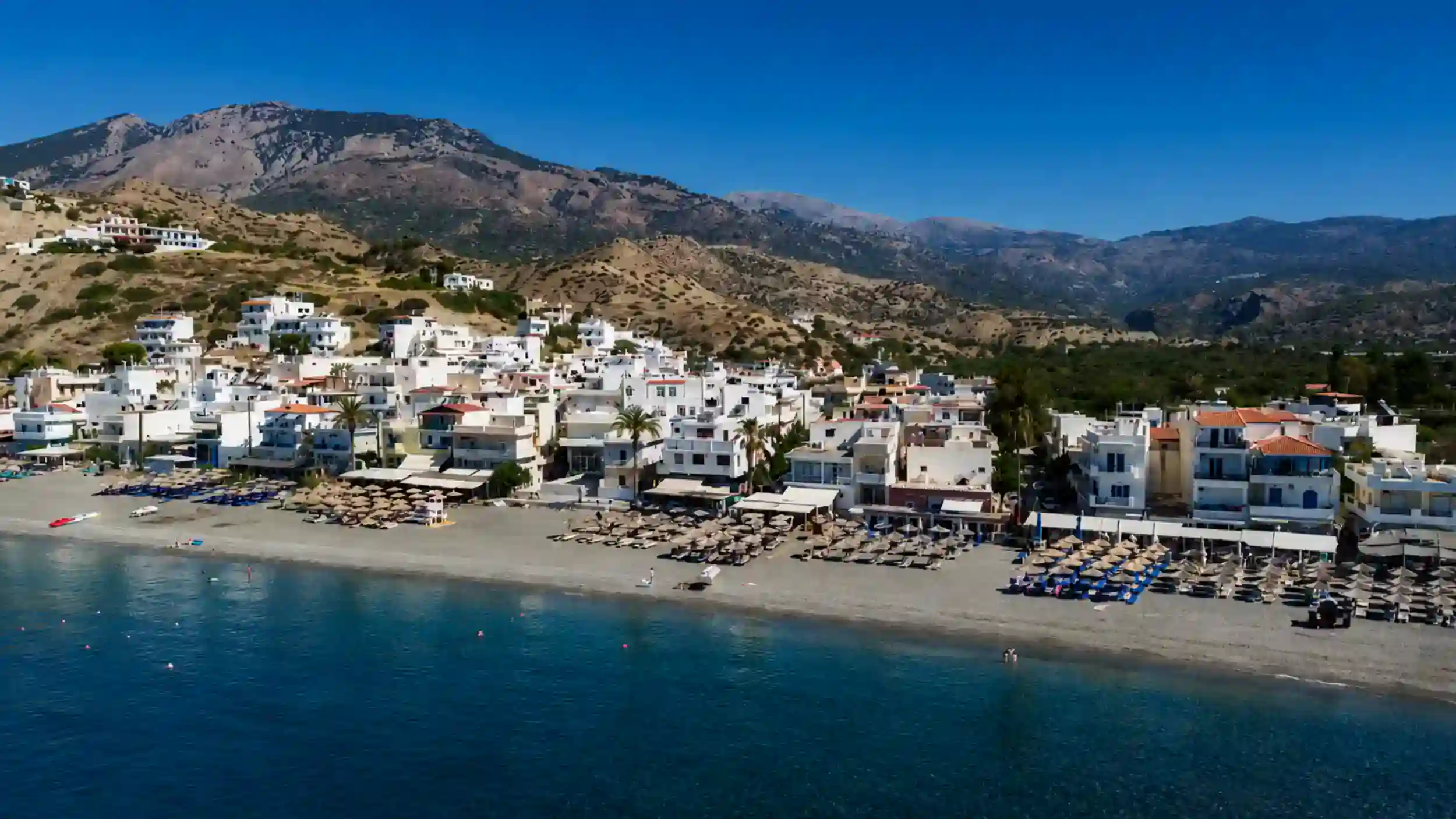
Makry Gialos is one of the best places to stay in East Crete if your holiday is mainly about swimming, beach time and slower days. The village sits around a sheltered bay, with a long beach, low-rise accommodation, tavernas and a small harbour.
🌊 Best for an Easy Beach Holiday
The pace is noticeably slower than Agios Nikolaos or Ierapetra. You can walk to the beach, swim, eat along the waterfront and spend several days without needing much structure. The shallow, calm water also makes Makry Gialos particularly practical for families.
🚗 A Good Base for Southeast East Crete
Its location also puts you within reach of Xerokampos, Koutsouras, Goudouras and the inland monastery routes. The south coast of East Crete has quieter beach pockets that are easy to explore from here.
The compromise comes after dinner. Makry Gialos is a village rather than a town, so don’t choose it if shops, nightlife and lots of evening choice are important.
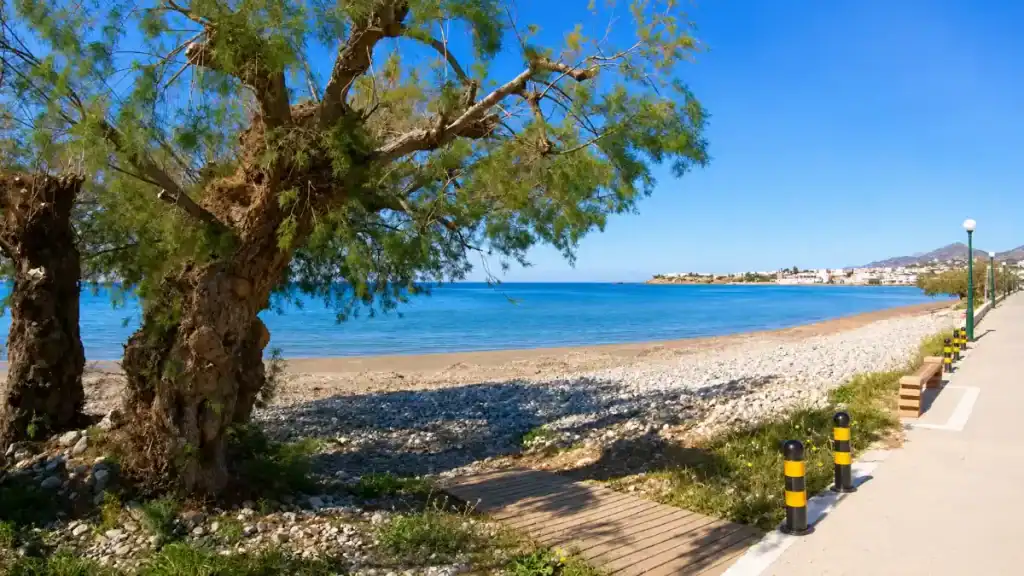
🧭 Should You Stay in One or Two East Crete Bases?
For a first trip, choosing where to stay in East Crete doesn’t necessarily mean choosing a single base. The region works better when you avoid repeatedly crossing it on long day trips.
🚗 Split Your Stay to Reduce Driving
For a longer trip, spend around four nights in Agios Nikolaos or Elounda for the north and central east, then move to Ierapetra or Makry Gialos for the southern coastline. This gives each half of the trip its own practical base.
🏨 If You Only Want One Base
Choose Agios Nikolaos if exploring and variety matter most. Choose Makry Gialos if you want a slower holiday built primarily around the beach.
| Your priority | Best place to stay |
|---|---|
| 🚗 Best all-round base | Agios Nikolaos |
| ❤️ Couples and higher-end hotels | Elounda |
| 🏺 Exploring the far east | Sitia |
| 🏙️ South coast with town facilities | Ierapetra |
| 🏖️ Quiet beach holiday | Makry Gialos |
| 🗺️ Exploring the whole region | Split between two bases |
The East Crete Travel Guide puts these bases into the wider regional picture and helps show why where you sleep can shape the rest of the trip.