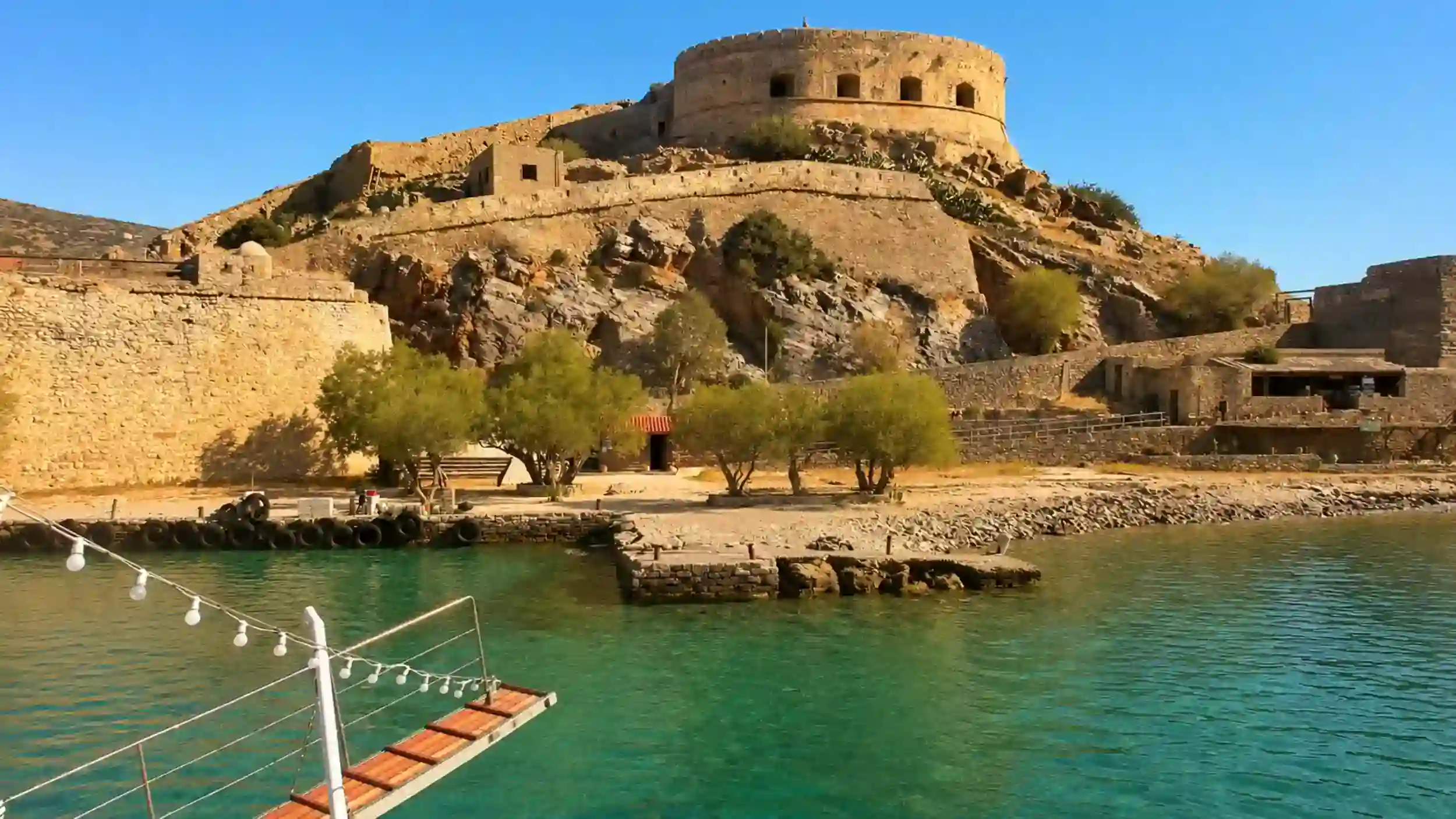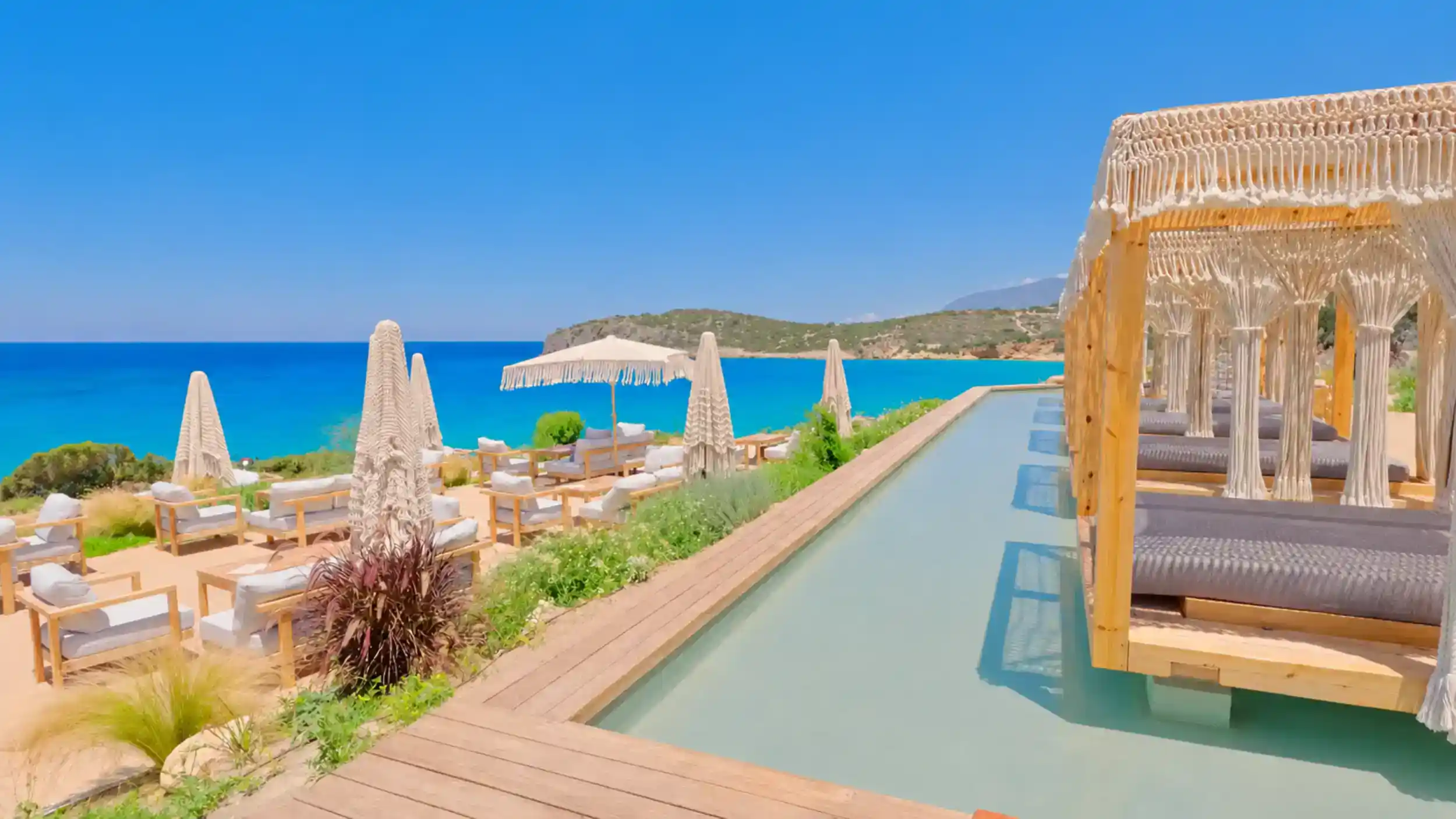
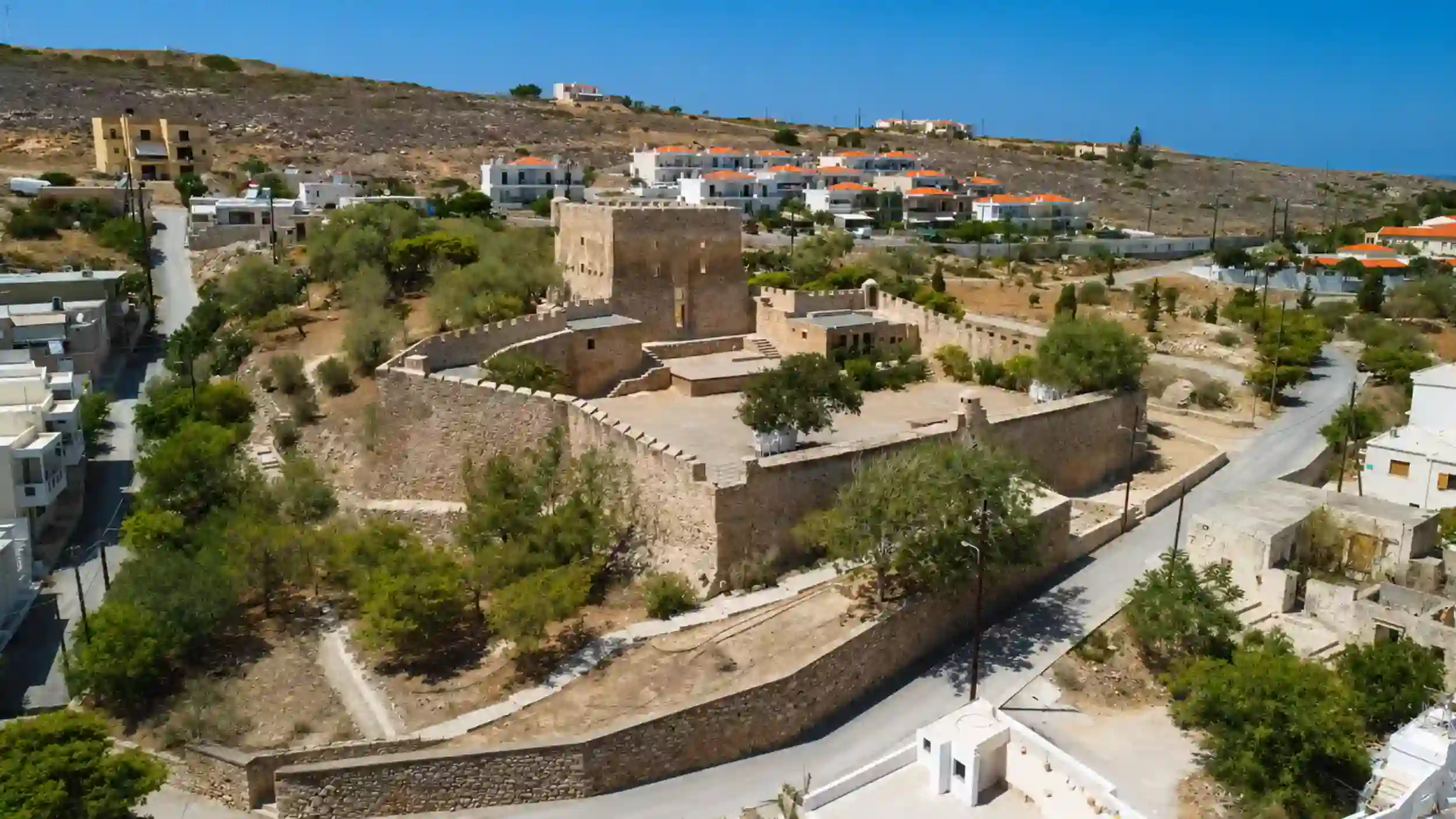
Sitia and Palekastro sit in the far eastern corner of Crete, where the island becomes quieter, emptier and noticeably less shaped around tourism. Beyond Agios Nikolaos, the roads thin out, towns become smaller and beaches sit further apart.
The two places make very different bases. Sitia gives you a proper harbour town with restaurants, shops and evening life, while Palekastro puts you closer to the peninsula’s beaches, Vai and the roads towards Zakros. Understanding that difference makes exploring Far East Crete considerably easier.
🏙️ Sitia: The Best Town Base in Far East Crete
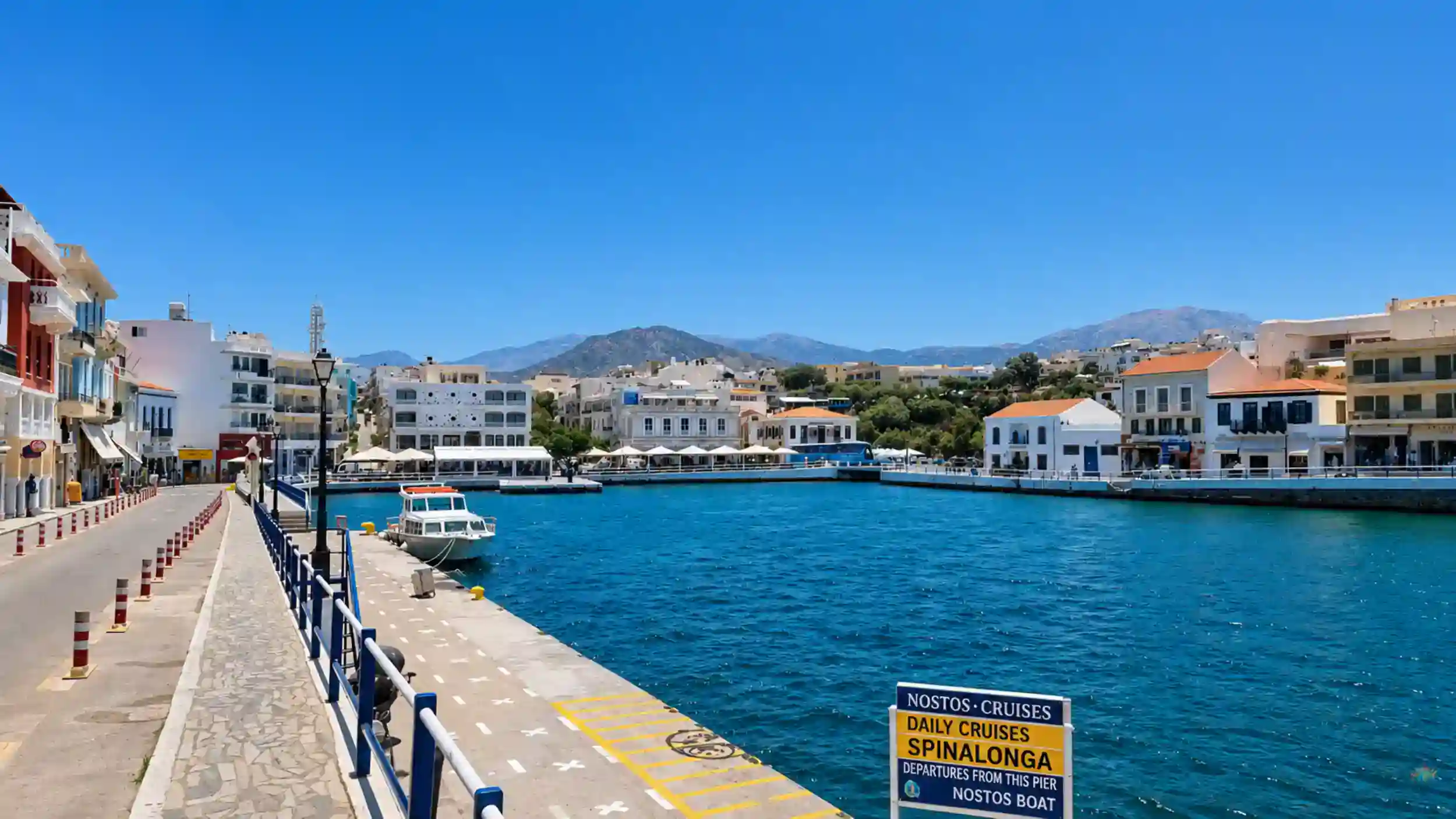
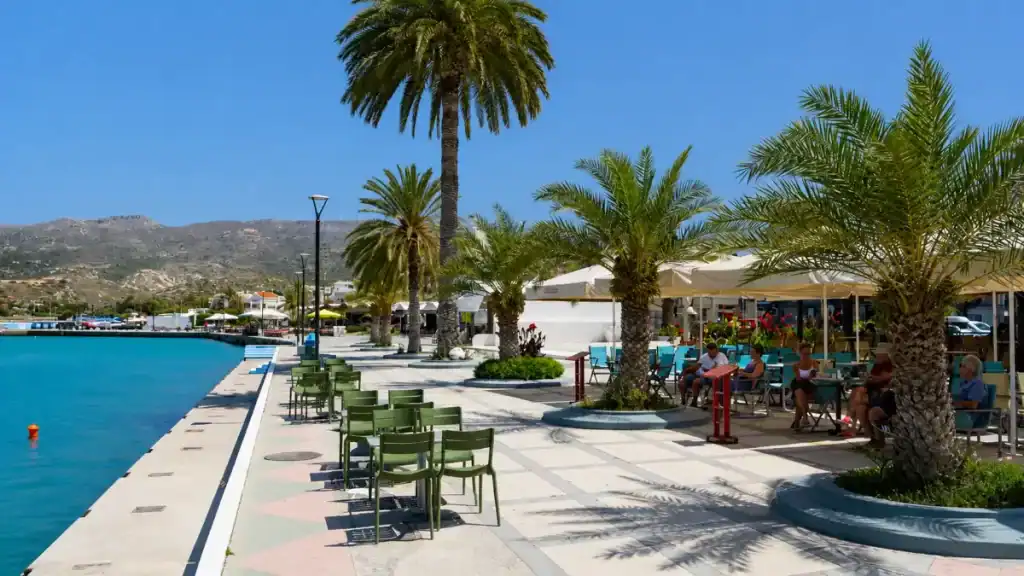
Sitia is the stronger base if you want to explore Sitia and Palekastro while still returning to a proper town each evening. It’s a functioning harbour town first and a tourist destination second, which makes it particularly easy to use.
🍽️ Everything You Need Is Close By
The waterfront curves around the marina, with cafés, bakeries, tavernas, supermarkets, banks and fuel stations all within easy reach. In the evening, the promenade stays lively with local families, cafés and harbour activity without feeling like a busy resort.
🚗 Use Sitia for Exploring Further East
Facilities become noticeably thinner once you continue east towards Palekastro and the peninsula. Sitia therefore works particularly well if you want to explore during the day but still have plenty of choice when you return.
If you’re arriving from further west, the Agios Nikolaos to Sitia coastal drive is the route worth taking.
🚗 Driving from Sitia to Palekastro
The drive between Sitia and Palekastro takes only around twenty to twenty-five minutes, but the surroundings change quickly. You leave the harbour town behind and enter the much more open landscape of the far-east peninsula.
🛣️ An Easy Drive Across the Peninsula
The road is straightforward by East Crete standards, passing agricultural land, olive groves and increasingly sparse countryside. Toplou Monastery provides a useful landmark along the way, after which the landscape begins to feel noticeably more remote.
🏘️ Palekastro Is Practical Rather Than Pretty
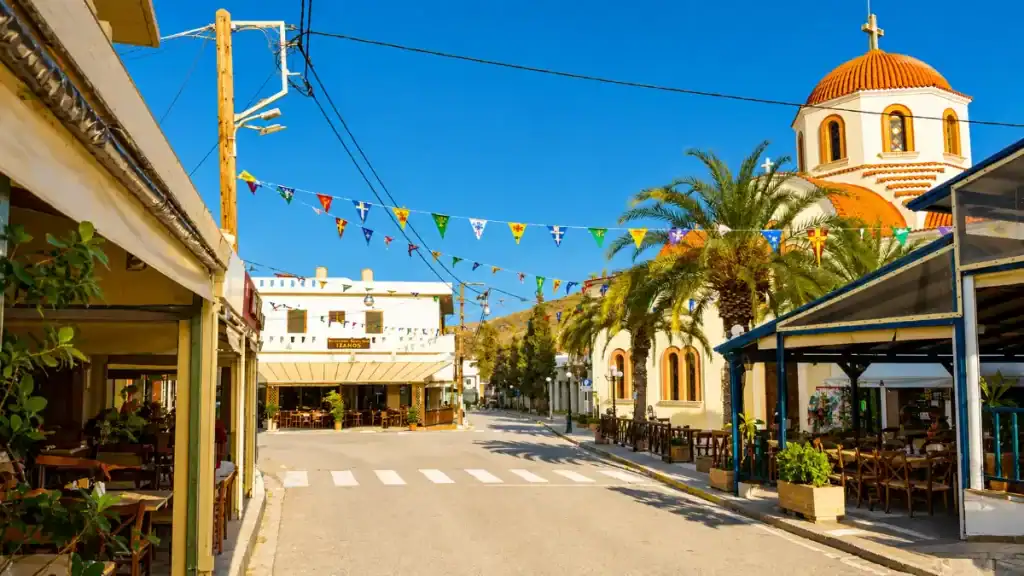
Palekastro itself is a simple inland village with tavernas, bakeries, rooms and a small square. You don’t stay here for a beautiful waterfront or lively evenings. Its advantage is location.
Sitia works better if you want a town around you. Palekastro works better if you want shorter drives and easier access to the peninsula.
🏖️ Palekastro: The Best Base for the Peninsula Beaches
Palekastro works particularly well as a base because several of Far East Crete’s best-known beaches spread out around it. Kouremenos is only minutes away, Vai around ten to fifteen minutes, with Itanos just beyond.
🚗 Spend Less Time Driving
Those short distances matter when you’re staying for several days. Instead of repeatedly driving between Sitia and Palekastro, you can choose a beach according to the weather, swimming conditions or simply what you feel like doing that morning.
🌊 Explore the Vai Coast
Palekastro also makes it easier to combine several beaches without turning the day into a long road trip. The beaches near Vai Beach are close enough that you can explore them in a sensible order rather than rushing between them.
If beaches and the eastern peninsula are your priority, Palekastro makes most sense for a stay of two or three nights.
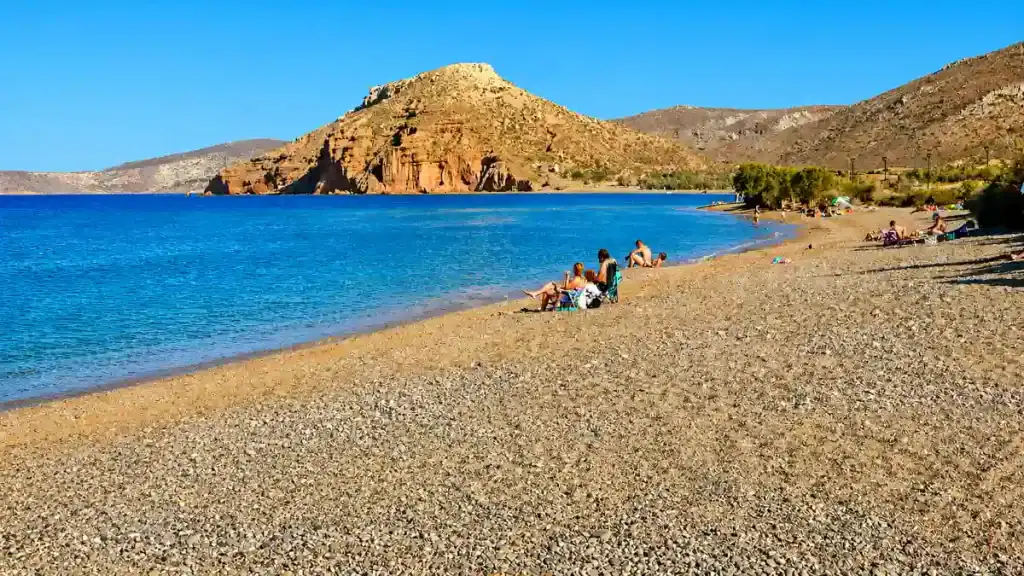
🌊 Kouremenos: The Easiest Beach Near Palekastro
Kouremenos sits just east of Palekastro and is one of the easiest beaches to use when exploring Sitia and Palekastro. It may not be the peninsula’s most dramatic beach, but its convenience makes it particularly useful for a relaxed half-day.
🏖️ Easy Parking, Swimming and Lunch
The beach is long and open, with straightforward parking and several tavernas spread along the coast. Even during the main season, there’s usually enough space that it doesn’t feel overly organised.
💨 Check the Wind Before You Go
Kouremenos is exposed to the northwest wind, which is why it’s popular with windsurfers. On windier days the water can become choppy, so it’s not always the best choice if you’re looking for calm swimming.
When conditions are good, however, its easy access means you can swim, eat and move on without turning a beach visit into an expedition.
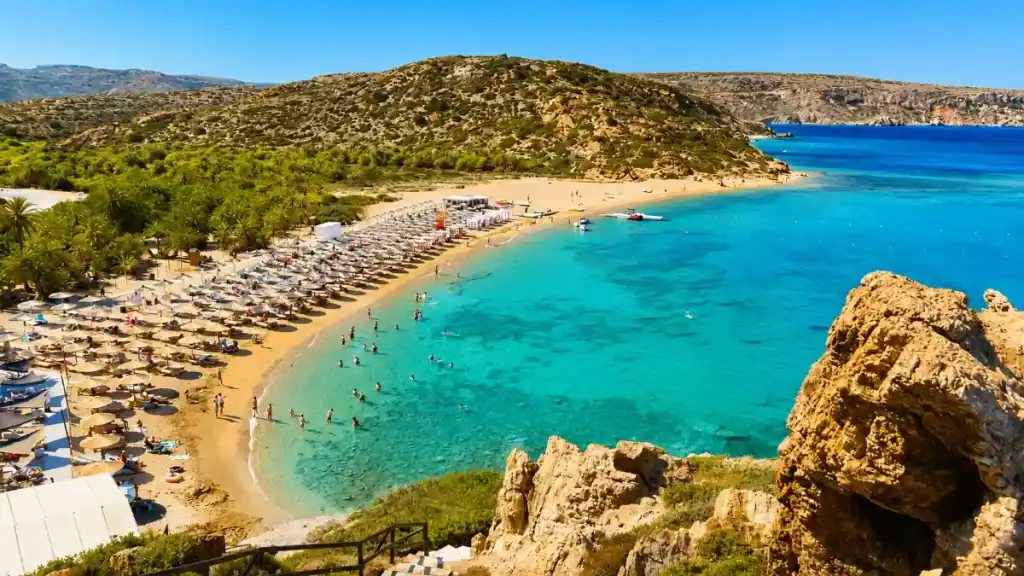
🌴 Vai Beach: Go Early from Palekastro
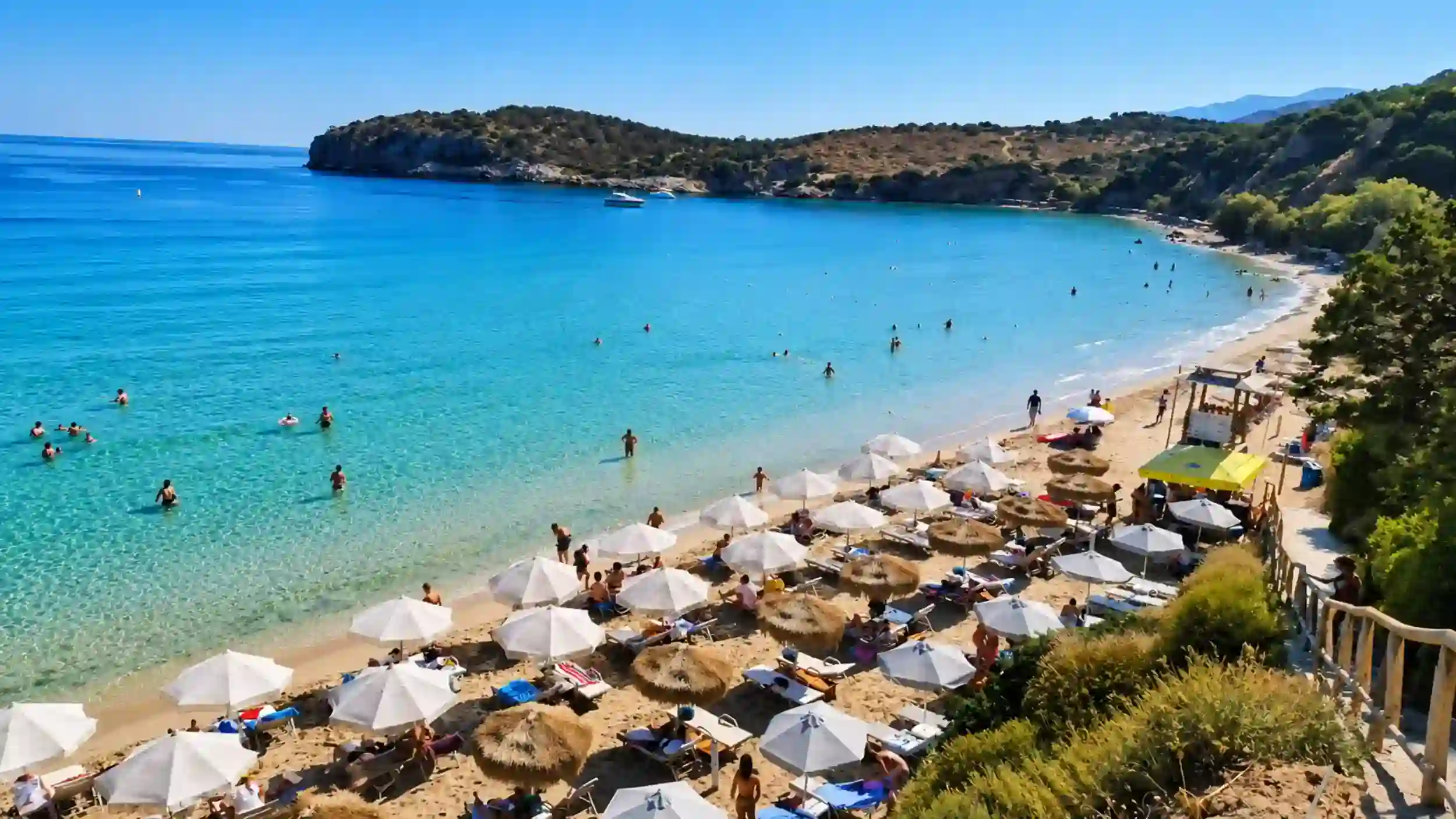
Vai is easy to reach from Palekastro, with the drive taking only around ten to fifteen minutes. That proximity gives you an important advantage: you can visit before the main crowds arrive.
🌅 Arrive Early for the Best Experience
Vai changes considerably through the day. Early in the morning, parking is easier, the water is calmer and the famous palm grove feels much quieter. By midday, coaches, hire cars and organised umbrellas begin to dominate the beach.
⏰ Avoid the Middle of the Day
If you can’t arrive early, late afternoon is the better alternative. Midday is the period to avoid if possible, when the concentration of visitors around the palm grove takes away much of the beach’s natural feel.
Staying in Palekastro makes this much easier. You can see Vai at its best, then leave as it becomes busy and continue exploring elsewhere on the peninsula.
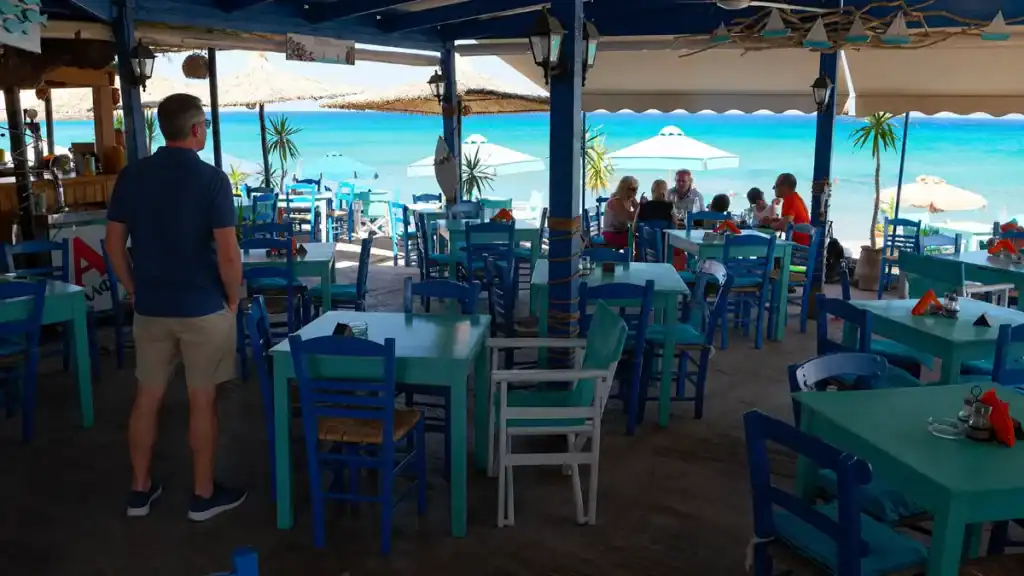
🏔️ Palekastro to Zakros and Kato Zakros
The road from Palekastro towards Zakros takes you away from the beaches and into a very different side of Far East Crete. The landscape becomes drier and more rugged, villages thin out and long stretches of road have little traffic or development.
🌿 Stop in Zakros Village
Zakros provides a natural break before the final descent to the coast. The village is greener than the exposed peninsula, with springs and tavernas making it a good place for coffee or lunch.
🌊 Continue Down to Kato Zakros
Beyond the village, the road drops through dry hills before suddenly opening onto Kato Zakros. The archaeological site, beach and waterfront tavernas all sit close together in a bay that feels unusually isolated from the rest of Crete.
Don’t treat Zakros and Kato Zakros as a quick detour. The drive in and out means they deserve most of a day, which is another reason Palekastro works so well as a base for exploring the far-east peninsula.
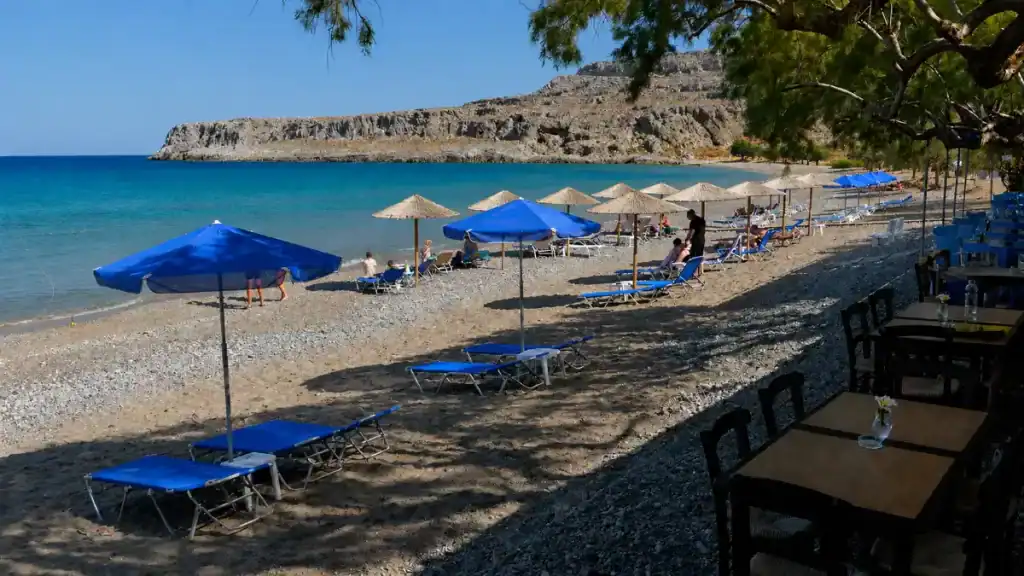
🧭 Sitia or Palekastro: Which Base Should You Choose?
Choosing between Sitia and Palekastro comes down to the type of stay you want. Sitia gives you a proper town to return to each evening, while Palekastro puts the beaches and far-east peninsula within much easier reach.
🏙️ Choose Sitia for Town Life
Stay in Sitia if you want waterfront restaurants, supermarkets, more evening choice and the convenience of having everything close by. It’s the stronger option if exploring the peninsula is only one part of your East Crete trip.
🏖️ Choose Palekastro for Exploring
Palekastro is the better choice if Vai, Itanos, Kouremenos and Zakros are your priorities. The shorter daily drives add up over several days and give you more freedom to change plans according to crowds, wind or swimming conditions.
If the far-east peninsula is the main focus of your trip, Palekastro is the stronger base. If you want more life around you after a day exploring, choose Sitia.
For a wider comparison, where to stay in East Crete looks at the other main bases across the region.