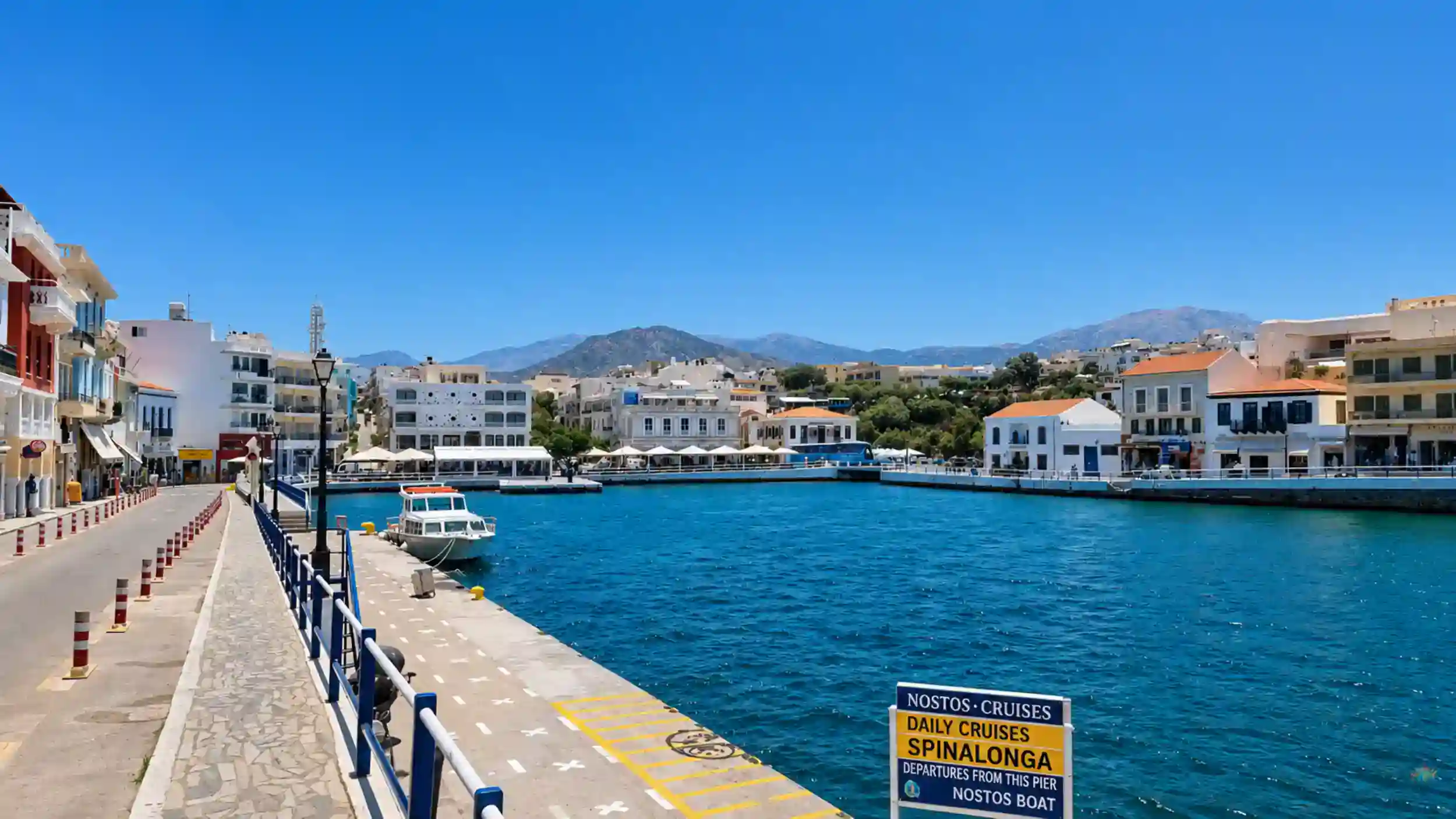
The Agios Nikolaos to Sitia drive is much more than a straightforward transfer across East Crete. Take the older coastal route rather than treating the journey as something to get through quickly, and the drive becomes part of the day itself.
It isn’t a difficult mountain road. Instead, expect an easy eastward drive with long stretches of sea views, a few worthwhile places to stop and one detour that can transform the journey into a relaxed half-day road trip.
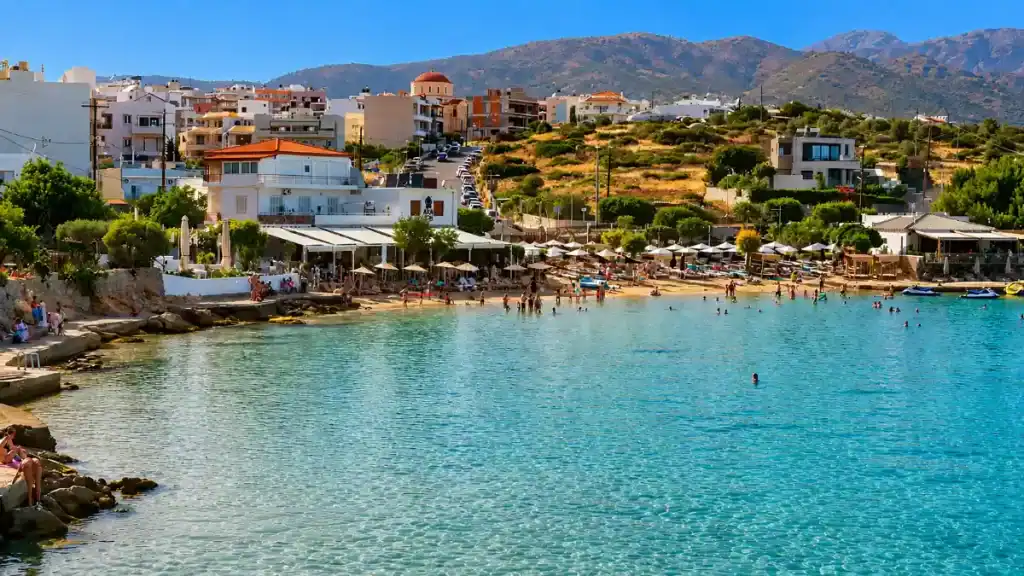
🚗 Leaving Agios Nikolaos for Sitia
The first fifteen to twenty minutes from Agios Nikolaos to Sitia are easy and immediately scenic. The road is smooth, the bends are gentle and the sea remains on your right for much of the journey towards Istro.
🏖️ Skip the Early Beach Stops
You’ll pass Almyros and Ammoudi soon after leaving town, but neither is worth interrupting the drive for unless you’re specifically planning a beach day. The better approach is to continue towards Istro, where the coastline begins to open up.
If beaches are your priority, the beaches near Agios Nikolaos are better explored separately.
📷 Stop Above Voulisma
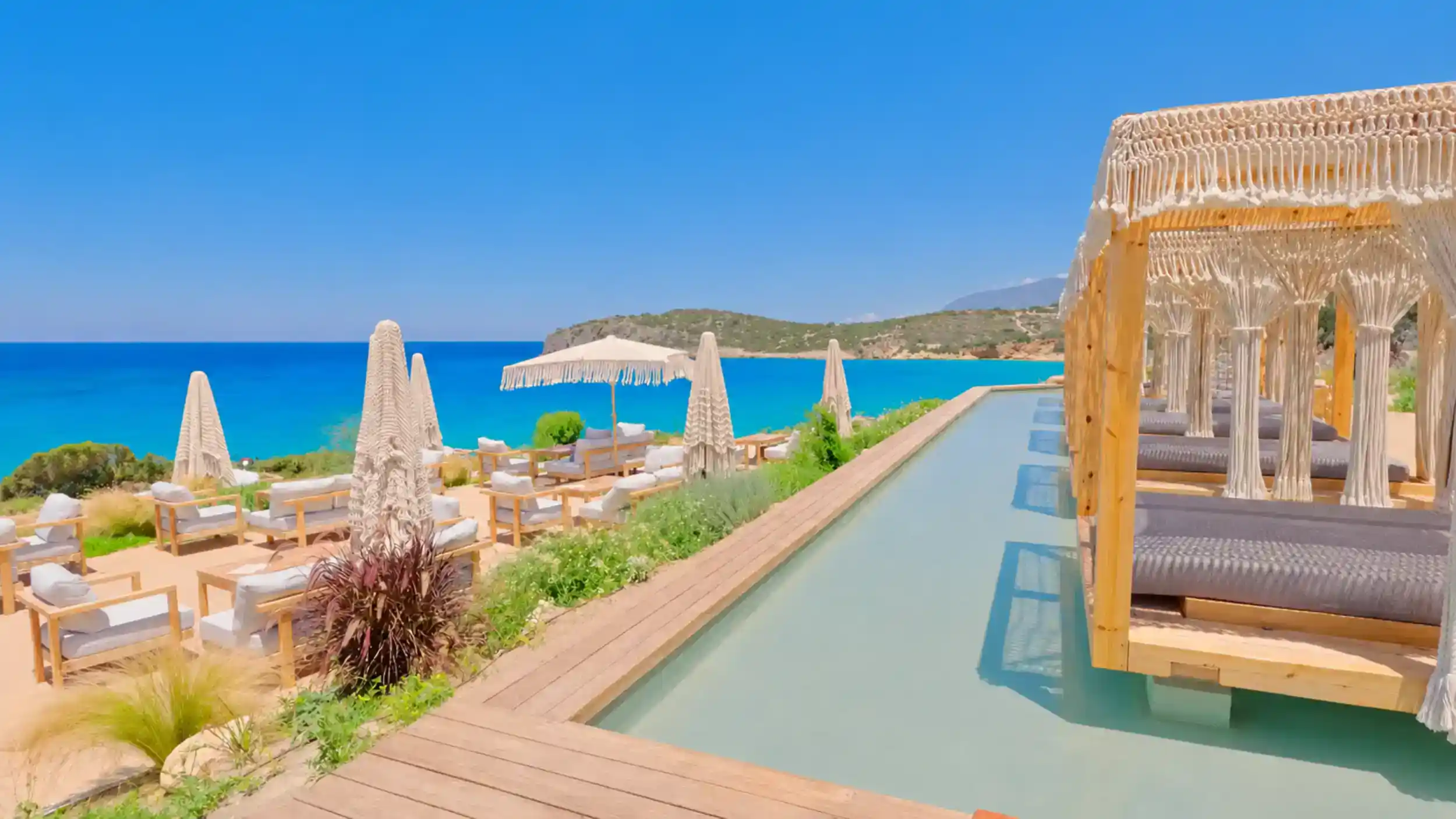
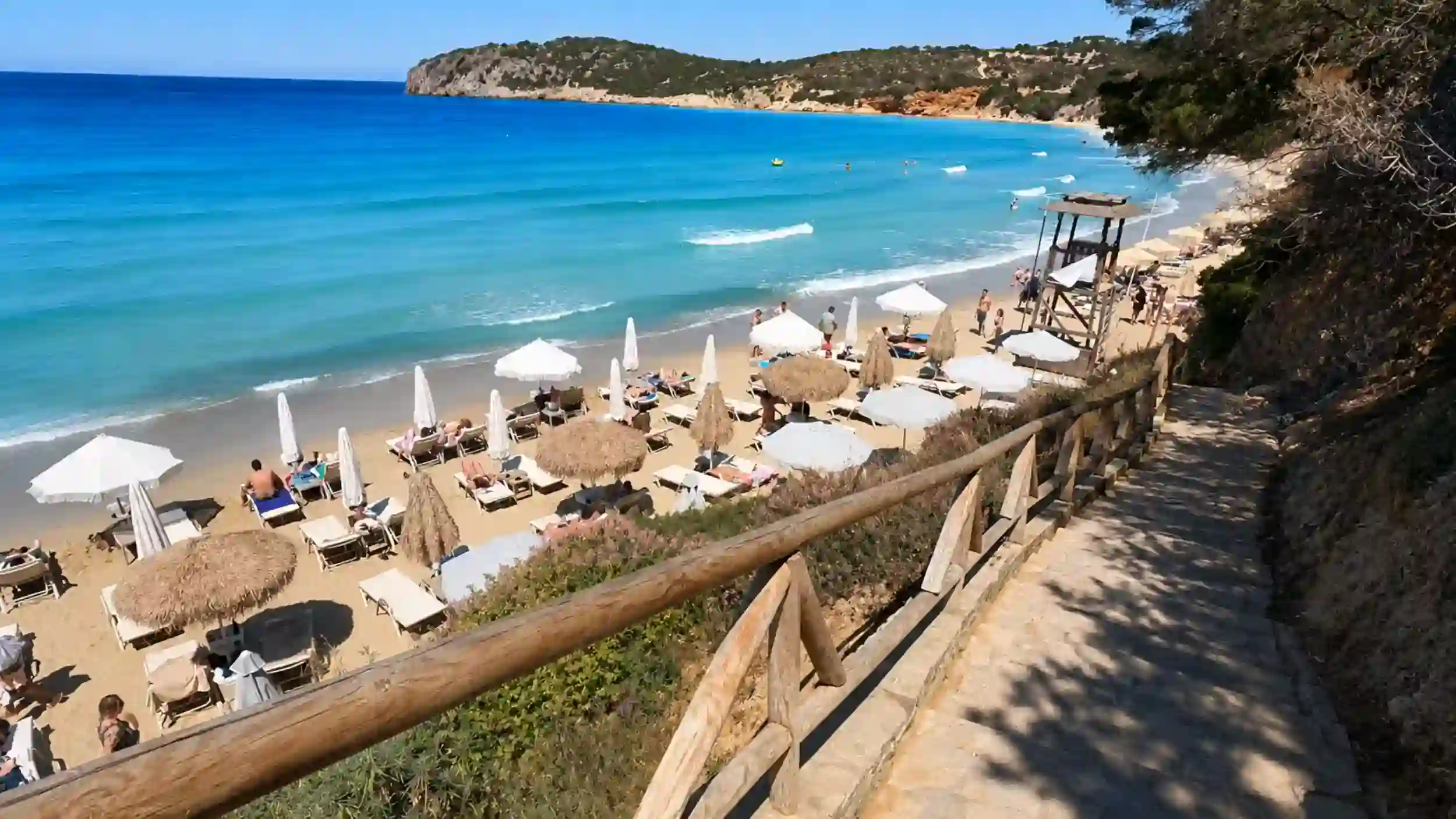
Just before descending towards the bays around Istro, look for the pull-out above Voulisma. Five minutes is enough to take in the pale turquoise water, surrounding headlands and the coastline stretching east towards Sitia.
🌊 Istro to Kavousi: The Best Scenic Section
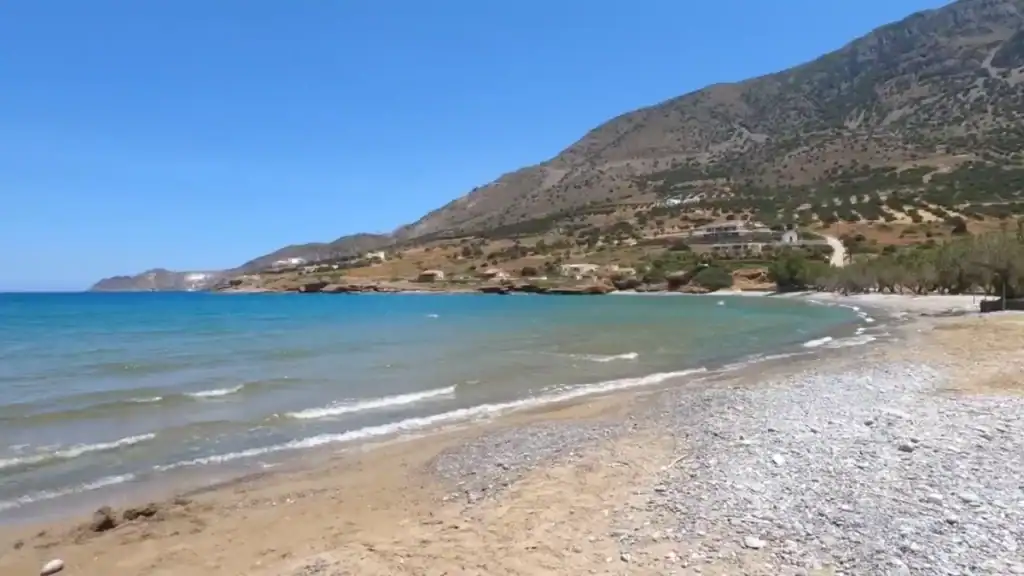
Once past Istro, the Agios Nikolaos to Sitia drive settles into its strongest continuous stretch. The road briefly moves inland through Kalo Chorio before opening onto long views of the sea and the increasingly rugged eastern coastline.
🚗 Enjoy the Drive Rather Than Looking for Stops
For around half an hour towards Kavousi, the road stays high enough for wide views without becoming difficult. The sea remains open to the north while dry hills rise inland, making this a section where the drive itself is the attraction.
☕ Pachia Ammos or Kavousi?
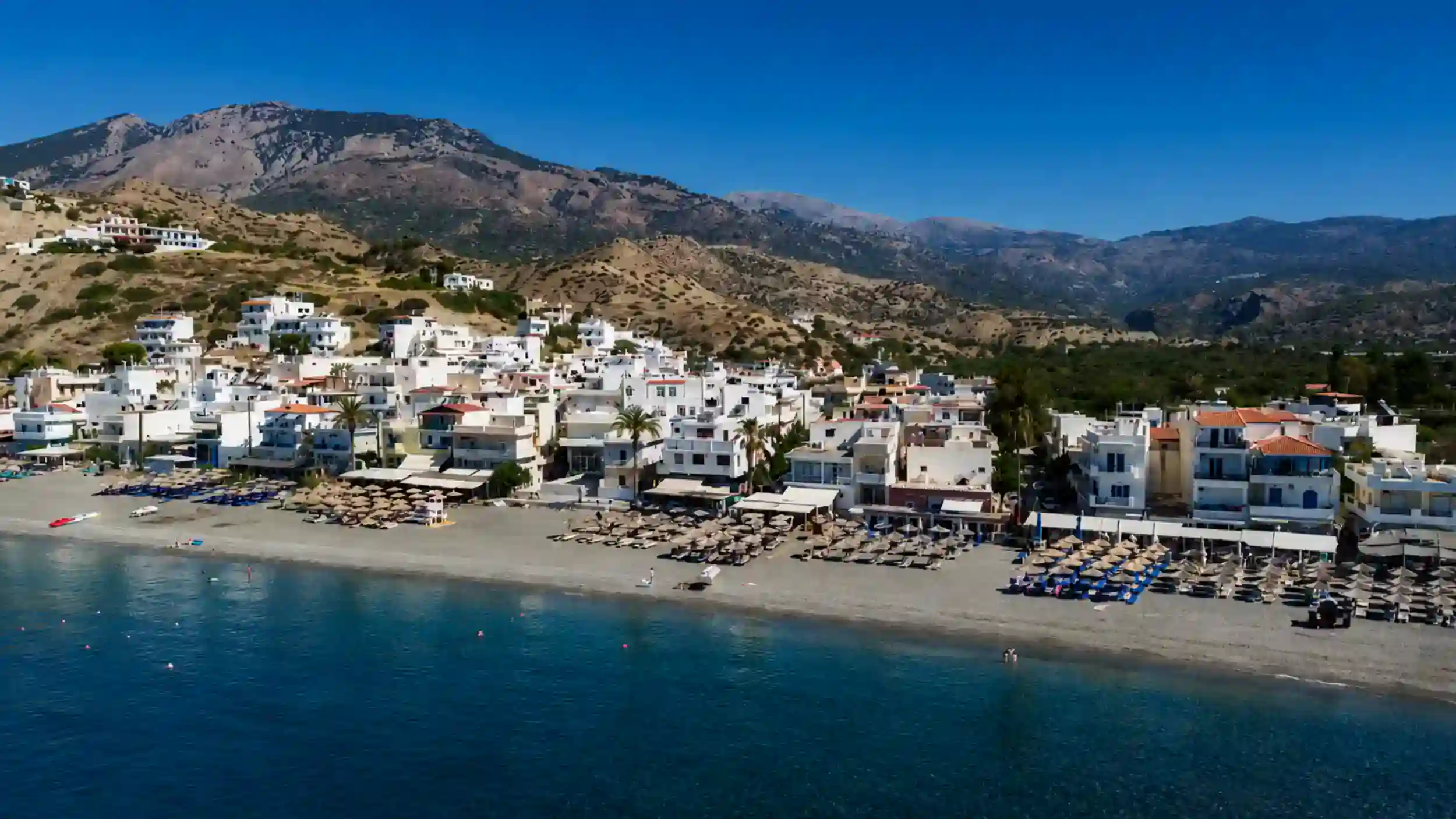
Pachia Ammos is useful if you need fuel, coffee or lunch, but there is little reason to make it a planned stop. Kavousi is similarly low-key, although its village kafeneia work well for a quick coffee if you want to break the journey.
Neither needs much of your time. Save that for the detour coming next.
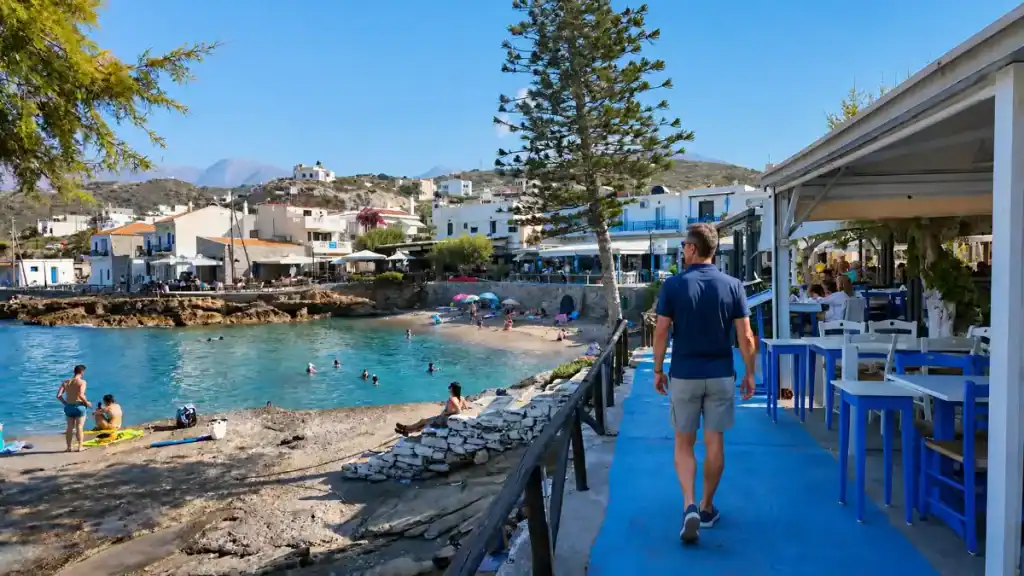
🏘️ Mochlos: The Detour Worth Taking
Shortly after Kavousi, you’ll reach the turn for Mochlos. Of all the possible stops between Agios Nikolaos and Sitia, this is the detour most worth building into the journey.
🚗 Allow Time for the Detour
The road drops for around five kilometres through tight but well-surfaced switchbacks. It needs to be driven slowly, and you’ll have to climb the same road afterwards, so Mochlos isn’t worthwhile for a ten-minute photo stop.
🍽️ Make Mochlos Your Lunch Stop
The small fishing village sits directly beside the water, with a short line of tavernas facing a tiny offshore Minoan island. There is no resort strip or through traffic, and tables sit almost at sea level.
This is easily the best place for lunch on the Agios Nikolaos to Sitia route. If the sea is calm, add a swim and turn the detour into a longer coastal break.
Mochlos is also one of the smaller coastal stops highlighted in the East Crete Travel Guide as somewhere worth slowing down rather than simply driving past.
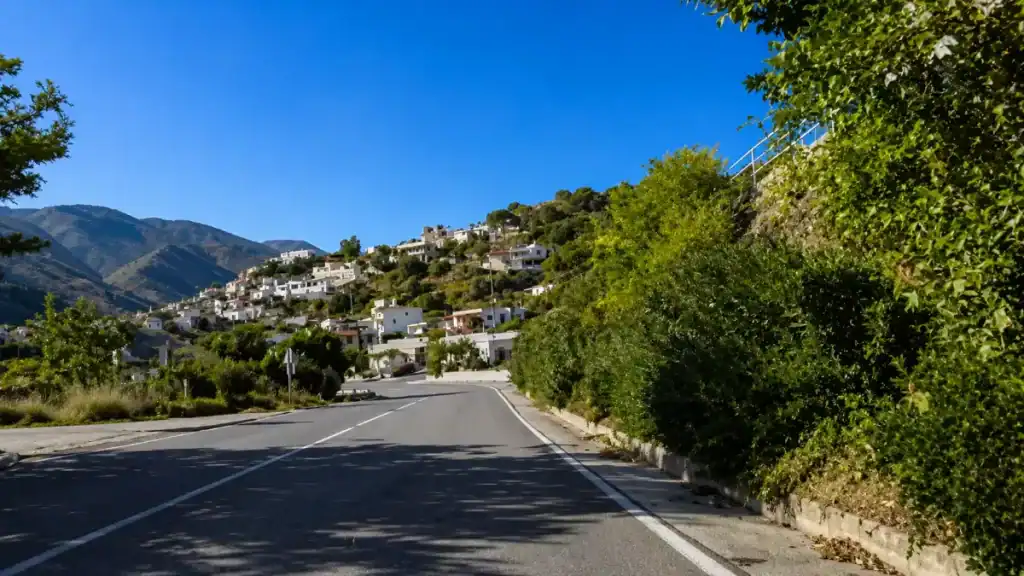
🛣️ Mochlos to Mirsini: The Less Scenic Stretch
After climbing back from Mochlos, the Agios Nikolaos to Sitia route changes character. The road gradually leaves the coast and runs through lower hills, olive country and scattered inland settlements.
🚗 Treat This as the Transit Section
The drive remains easy and pleasant, but the long coastal views largely disappear. This is the least memorable part of the route, particularly between the Mochlos junction and Mirsini.
☕ Don’t Chase Extra Stops
Mesa Mouliana and Exo Mouliana offer quiet village kafeneia if you specifically want a coffee stop, but neither justifies leaving the main route otherwise.
Keep moving towards Sitia. The road soon begins dropping back towards the coast and the scenery improves again.
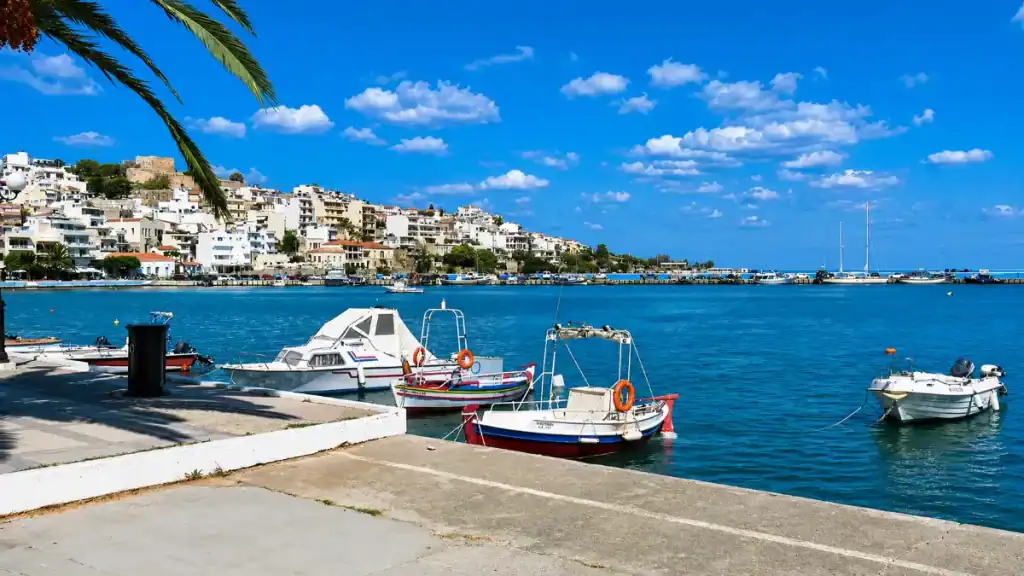
🏖️ The Final Drive into Sitia
From Mirsini, the Agios Nikolaos to Sitia route begins its gradual descent back towards the coast. The road remains straightforward, with moderate bends, a good surface and regular opportunities to pass slower traffic.
🌊 The Sea Returns on the Approach
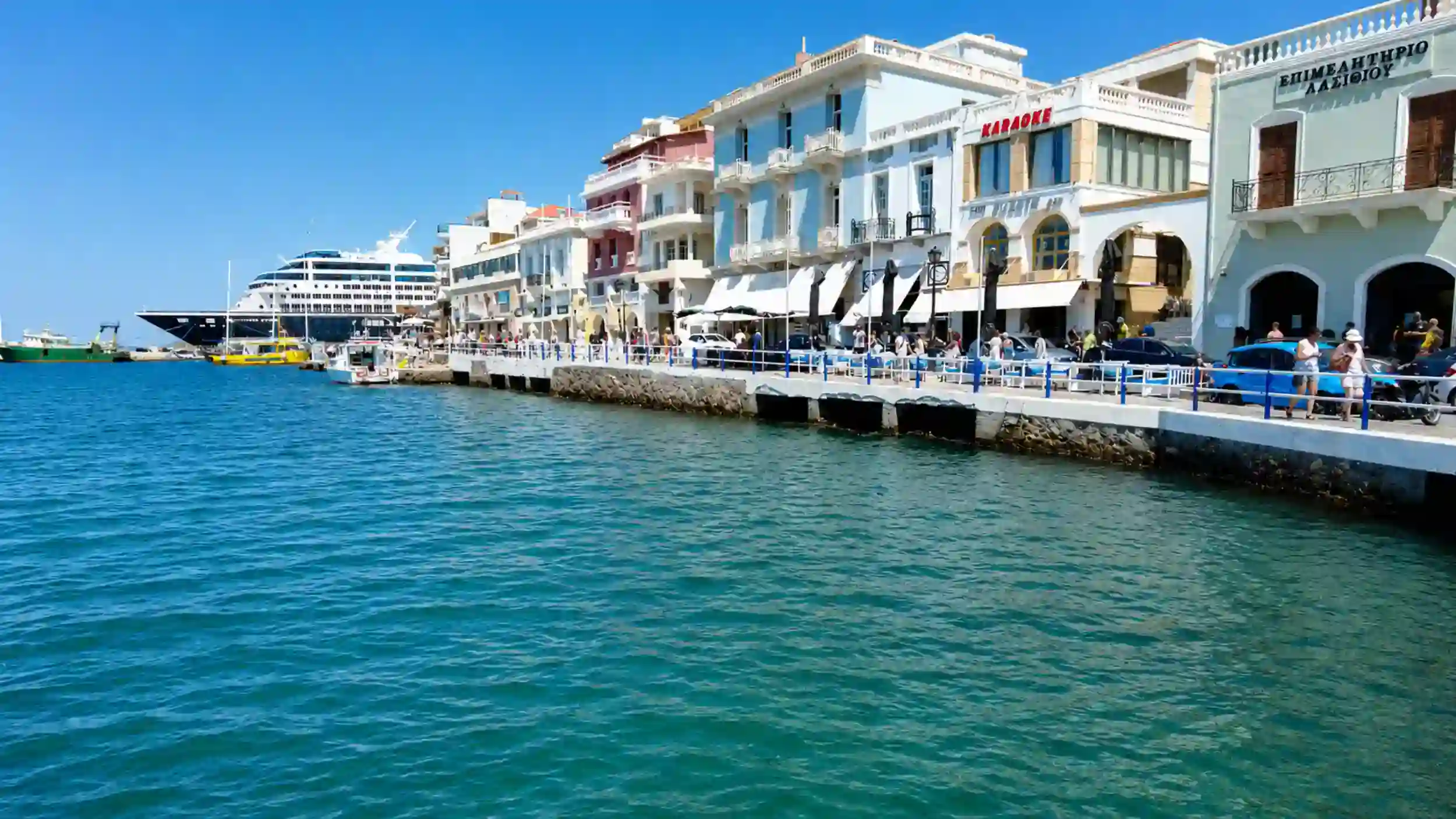
The final reward comes as Sitia Bay opens out and the town appears below you. There isn’t a formal viewpoint you need to seek out, but after the inland stretch, the return of the coast gives the journey a satisfying finish.
🚗 Sitia Doesn’t Have to Be the End
Sitia is a natural stopping point, but it also marks the beginning of the more remote eastern peninsula. From here, you can continue towards Palekastro and the far east rather than turning back.
The Sitia to Palekastro and Far East Crete guide continues the journey east.
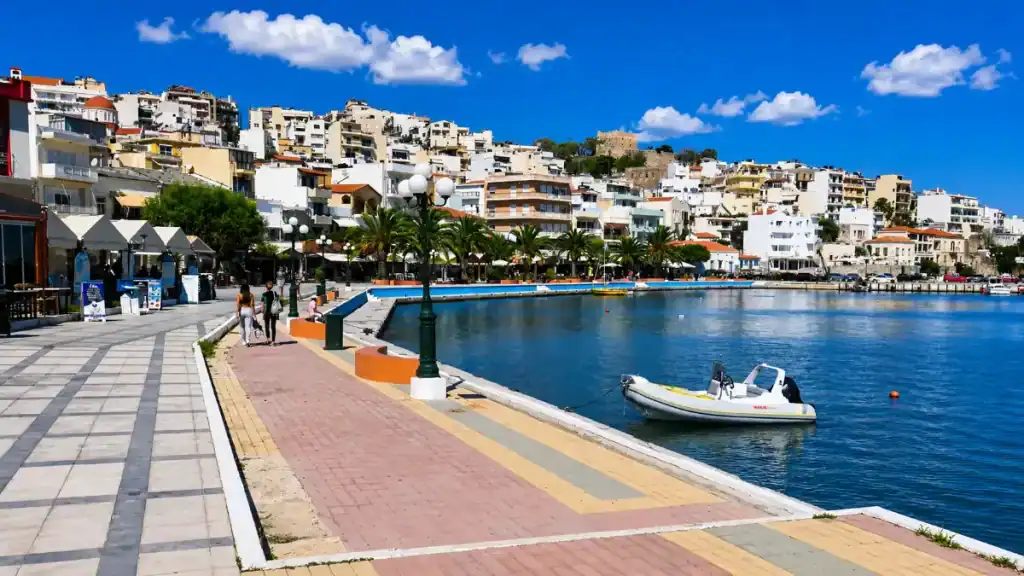
⏱️ Agios Nikolaos to Sitia Drive Time and Roads
The Agios Nikolaos to Sitia drive is straightforward by Cretan standards. It’s a two-lane road with a good surface and moderate bends, without the difficult mountain sections you encounter on some inland routes.
🚗 How Long Does Agios Nikolaos to Sitia Take?
Without stops, allow around 1 to 1½ hours from Agios Nikolaos to Sitia.
If you include the Mochlos detour and stop there for lunch, allow 3 to 4 hours. That’s the better way to experience the route rather than treating it purely as a transfer.
🛣️ Is the Road Difficult?
No. The road surface is good and the bends are manageable for an average driver. The only section requiring a little more patience is the descent to Mochlos, where the road becomes tighter and more winding.
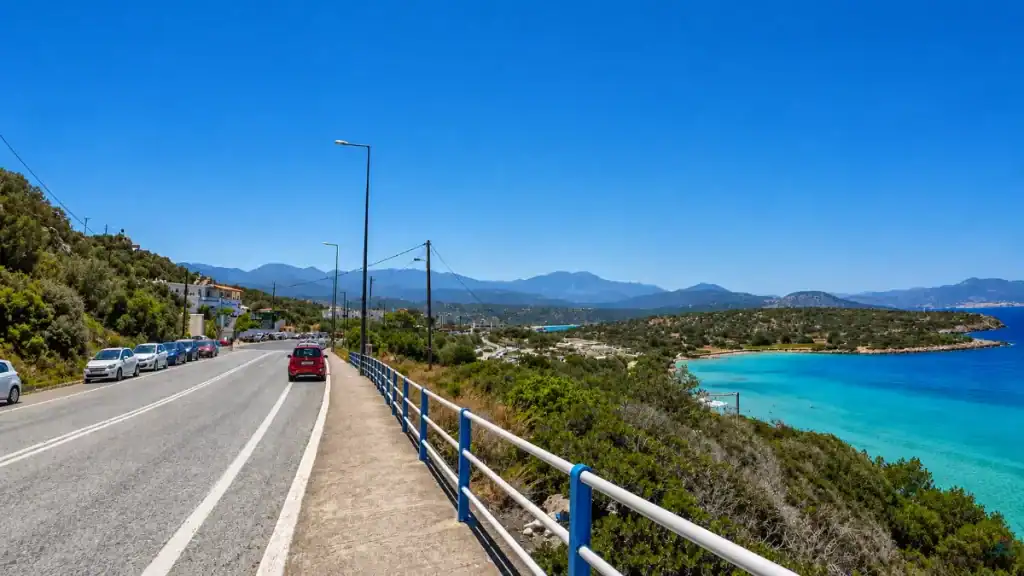
🧭 Where to Stop Between Agios Nikolaos and Sitia
You don’t need to stop everywhere between Agios Nikolaos and Sitia. The route works better when you concentrate your time on the few places that genuinely improve the journey.
📍 The Stops Worth Making
| Stop | Worth it? | Why |
|---|---|---|
| 📷 Voulisma viewpoint | Yes | Quick coastal views |
| ☕ Kavousi | Maybe | Useful coffee break |
| 🍽️ Mochlos | Definitely | Best lunch stop and optional swim |
| 🏖️ Pachia Ammos | Usually skip | Mainly useful for food or fuel |
| 🏘️ Mirsini and Mouliana | Usually skip | Limited reason to leave the route |
The Voulisma pull-out only needs a few minutes, while Mochlos deserves considerably longer. If you aren’t planning to eat or swim at Mochlos, however, the lengthy descent and return climb make the detour less worthwhile.
Taken purely as transport, this is an easy drive east. Slow it down, add the best viewpoint and build in a proper stop at Mochlos, and the Agios Nikolaos to Sitia journey becomes one of the easiest half-day road trips in East Crete.