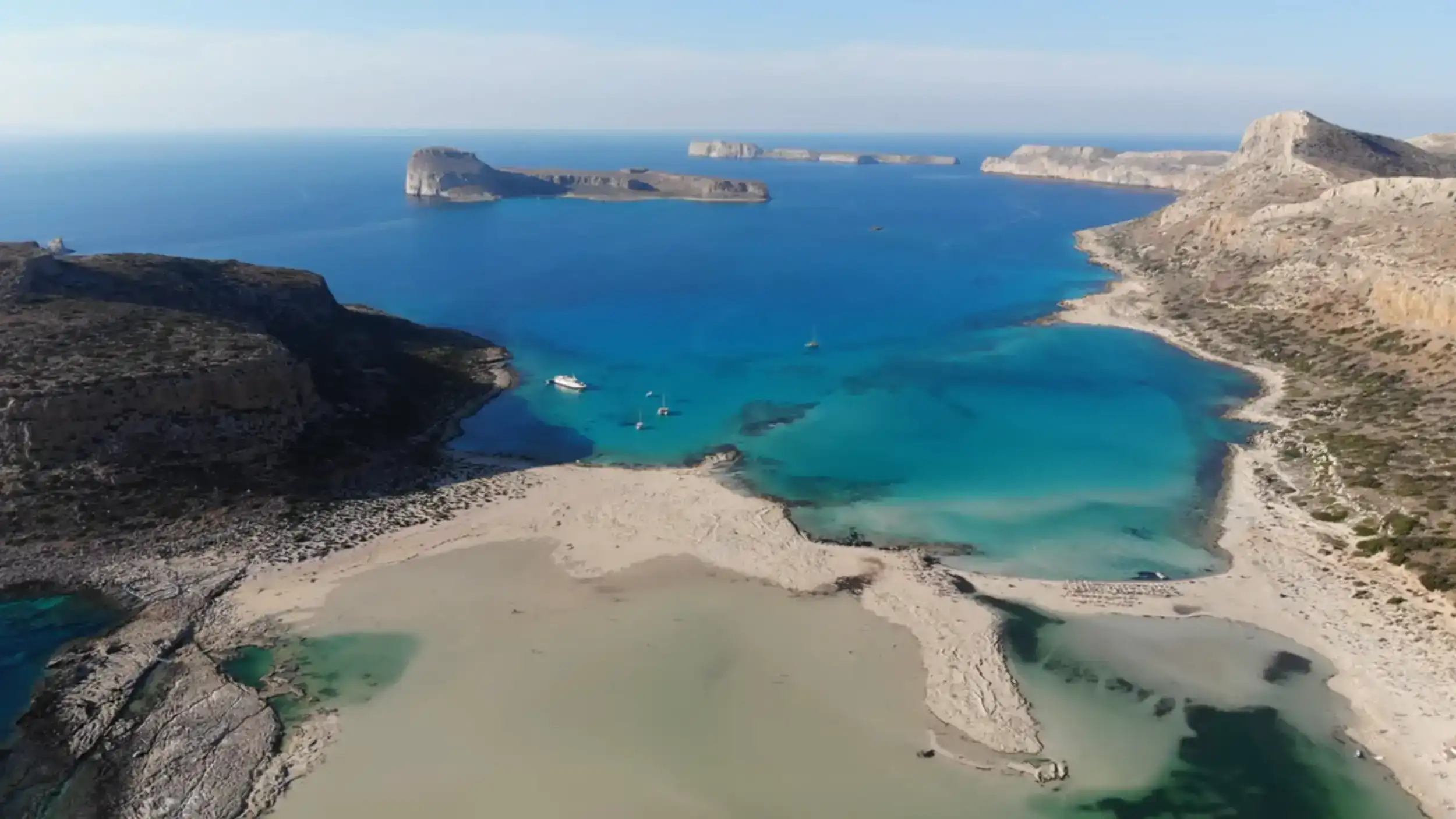
Balos Lagoon is worth the journey, but we found that how you arrive changes the experience considerably. Driving across the rugged Gramvousa Peninsula gave us more independence and the dramatic view from above, while arriving by boat avoids the rough access road and the steep walk down.
For me, that makes the car-versus-boat decision about more than convenience. The two routes reveal Balos from completely different perspectives, and the journey becomes part of what you remember about the day.
🏝️ Why Balos Lagoon Looks So Different in Person
Balos Lagoon was one of those places where I immediately understood why the photographs attract so much attention.
Rather than being a single beach, it’s a meeting point of shallow turquoise water, open sea and a sweeping sandbar that constantly changes with the light and tide.
Set on the remote Gramvousa Peninsula, it began to feel separated from the rest of Crete well before we reached the shoreline. That isolation adds something the familiar photographs cannot really show.
What Surprised Us About Balos Lagoon?
What surprised me was that the lagoon did not depend on one famous viewpoint to look dramatic.
From above, we saw the familiar contrast between pale sand and vivid water. At sea level, though, the character changed completely: the lagoon felt calmer and the warm, shallow water extended much farther from shore than the elevated photographs suggest.
| What makes Balos special | What to expect |
|---|---|
| 💙 Turquoise lagoon | Shallow, warm water with remarkable clarity |
| 🩷 Pale sand | Soft sand with subtle pink tones in places |
| 🏝️ Gramvousa Peninsula | Rugged scenery far from major resorts |
| 🏰 Gramvousa Island | Venetian fortress visible just offshore |
I did not think the photographs exaggerated the colours. What they failed to convey was the scale. High cliffs, open sea and the exposed peninsula made the setting feel much larger than the lagoon itself, and that wider landscape was a big part of what made Balos memorable for us.
🚗 Why We Chose to Drive to Balos Lagoon
Driving appealed to us because it gave us control over when we arrived and how long we stayed.
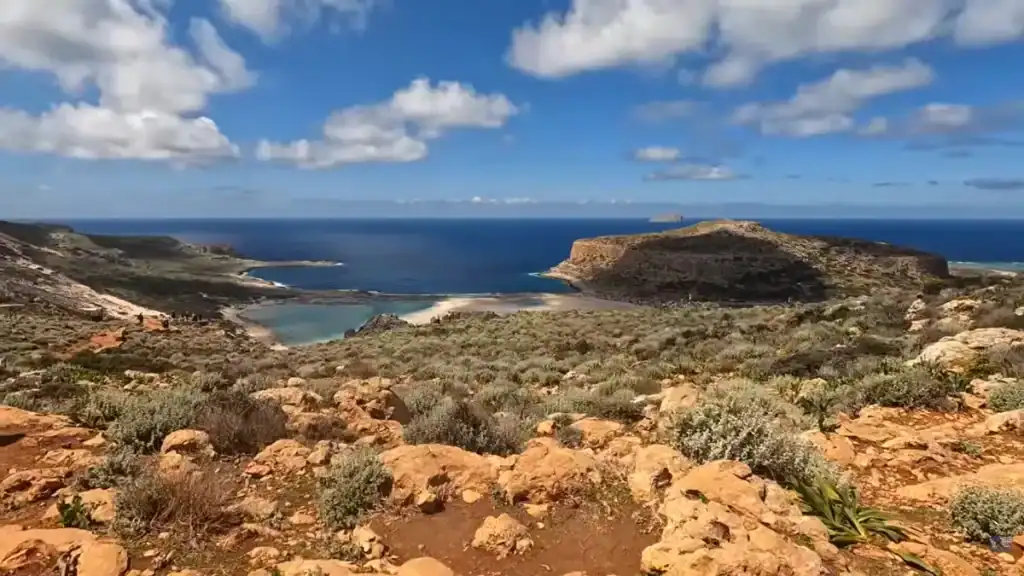
It also gave us what I think is the most dramatic introduction to Balos: seeing the lagoon from above before walking down.
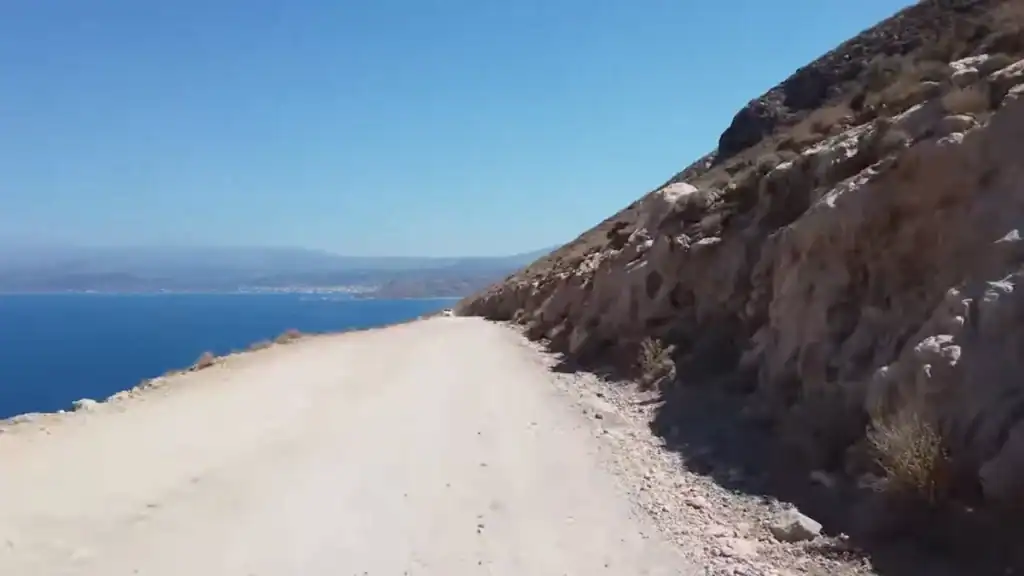
The final approach follows an unpaved road across the Gramvousa Peninsula before ending at a cliff-top car park. From there, the lagoon suddenly appears below, creating one of western Crete’s most memorable viewpoints before you’ve even reached the beach.
How Bad Is the Road to Balos Lagoon?
I found the road required patience more than any unusual level of driving skill.
It was slow, dusty and uneven in places, so we took our time rather than treating it like a normal paved road. The important practical point is to check your rental agreement before using an unpaved road rather than assume the vehicle is covered.
| Driving route | What to expect |
|---|---|
| 🚗 Chania to Kissamos | Around 45 to 60 minutes on paved roads |
| 🛣️ Final gravel road | Approximately 8 km of unpaved surface |
| 🅿️ Cliff-top parking | Seasonal parking available |
| 🚶 Walk to the beach | Around 20 to 25 minutes downhill |
The biggest advantage we found with driving was timing. Arriving early gave us the viewpoint, descent and lagoon before the main excursion boats arrived from Kissamos. I would also take the return climb seriously: it is much harder than walking down, and doing it before the strongest afternoon heat makes a noticeable difference.
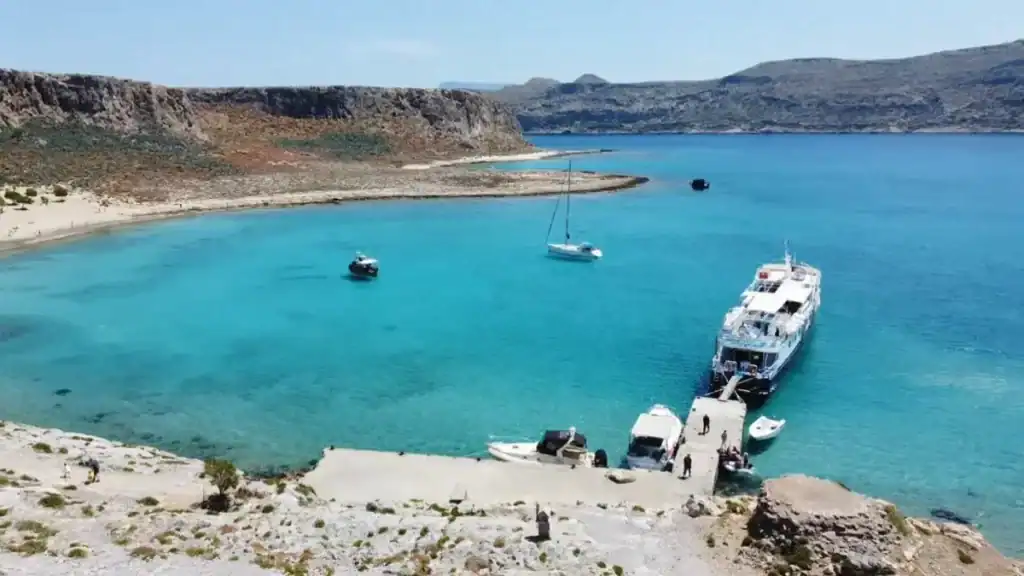
⛴️ When Going to Balos by Boat Makes More Sense
The boat offers a genuinely different Balos experience rather than simply an easier version of the drive.
Instead of getting that sudden view from the cliffs, you watch the lagoon gradually reveal itself as the boat approaches the shoreline.
For many visitors, this is the easiest way to reach Balos, especially if they’re staying in Chania without a rental car or simply prefer to avoid the long gravel road.
What Do You Gain and Lose by Taking the Boat?
Most scheduled boats depart from Kissamos Port.
The crossing takes around 90 minutes and often includes a stop at nearby Gramvousa Island, turning the day into more than just a beach visit.
| Boat journey | What to expect |
|---|---|
| ⛴️ Departure | Regular sailings from Kissamos Port |
| 🏰 Gramvousa Island | Often included as part of the trip |
| 🏖️ Arrival | Direct access to the beach without the cliff walk |
| ⏰ Time ashore | Usually around two to three hours |
The compromise is flexibility. Boat schedules decide when you arrive and leave, so most passengers see Balos during its busier hours. For me, that is the main reason to favour the car if you are comfortable with the road: an early arrival gives you a version of the lagoon that scheduled boats cannot easily provide.
If I were choosing purely on experience, I would drive again. If avoiding the gravel road and steep access walk mattered more, I would take the boat without feeling that I had chosen the wrong way to see Balos.
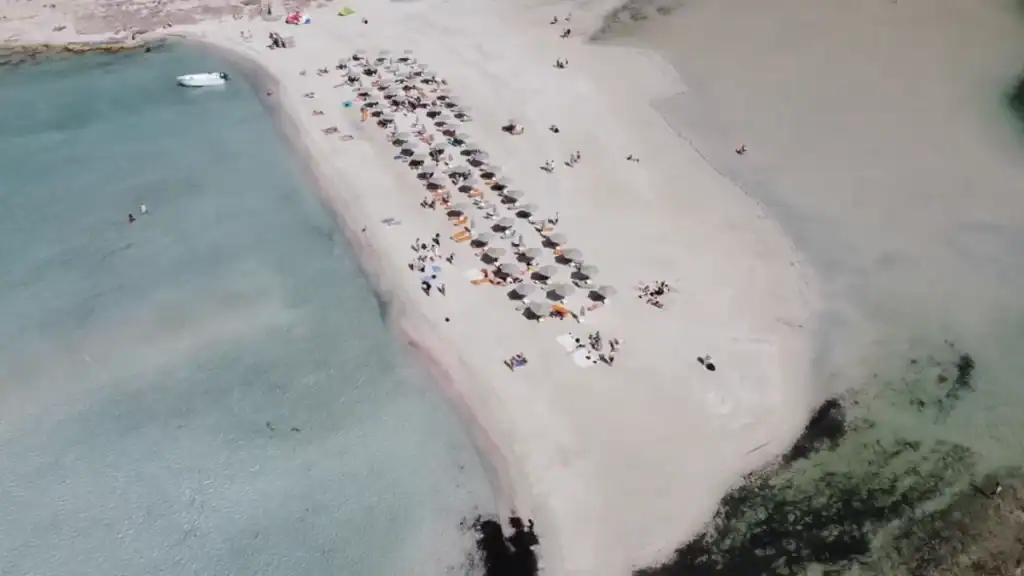
🌊 What Balos Lagoon Feels Like Once You Reach the Beach
The viewpoint was spectacular, but for us it was only the introduction.
Walking down changed the experience from looking at Balos to actually spending time in it.
Once you reach Balos Lagoon, the landscape feels very different from the dramatic panorama above. Instead of towering cliffs, you’re surrounded by shallow water, soft sand and constantly changing shades of blue that encourage you to slow down rather than simply admire the scenery.
What Is Swimming at Balos Lagoon Actually Like?
We found that the lagoon side and open beach felt surprisingly different despite being only a short walk apart.
The sheltered lagoon is warmer and exceptionally shallow, making it ideal for paddling and relaxed swimming, while the seaward side catches more breeze and feels noticeably more open.
| Area | What to expect |
|---|---|
| 💙 Lagoon | Warm, shallow water with gentle conditions |
| 🌊 Open beach | Deeper water and more exposed to the wind |
| 🏖️ Sandbar | Easy to walk across while enjoying panoramic views |
| ☀️ Facilities | Seasonal sunbeds, umbrellas and refreshments |
Timing changed the atmosphere more than I expected. Earlier in the day the beach felt quieter; once the excursion boats arrived, the same stretch of coastline became much livelier. I preferred the earlier atmosphere, although the scenery itself remained just as impressive.
🚙 Which Balos Route Works Best from Chania?
Chania is the main starting point for most visits to Balos Lagoon.
From here, you have three realistic options, each offering a different balance of flexibility, convenience and travel time.
Driving provides the greatest independence, while organised tours remove the logistical challenges. Travelling by public transport is also possible, although it involves combining a bus with a boat departure from Kissamos.
Should You Drive, Take a Tour or Use the Bus and Boat?
I would choose the transport around the kind of day you want rather than simply the shortest-looking journey.
| From Chania | What to expect |
|---|---|
| 🚗 Rental car | Around 1 hour to the Balos access road, plus the walk down |
| ⛴️ Bus and boat | Bus to Kissamos, then boat to the lagoon |
| 🚌 Organised tour | Transport and boat connections arranged for you |
| ⏰ Early departure | The quietest experience and cooler temperatures |
For us, driving offered the best balance because we valued an early arrival and the cliff-top viewpoint. The boat removes the gravel road and steep access walk, but its fixed timetable naturally puts you at Balos during a busier part of the day.
If you’re staying in Chania Beyond the Old Town, Balos Lagoon makes one of the most rewarding full-day excursions, combining dramatic mountain scenery, an unforgettable coastline and some of Crete’s clearest water into a single trip.
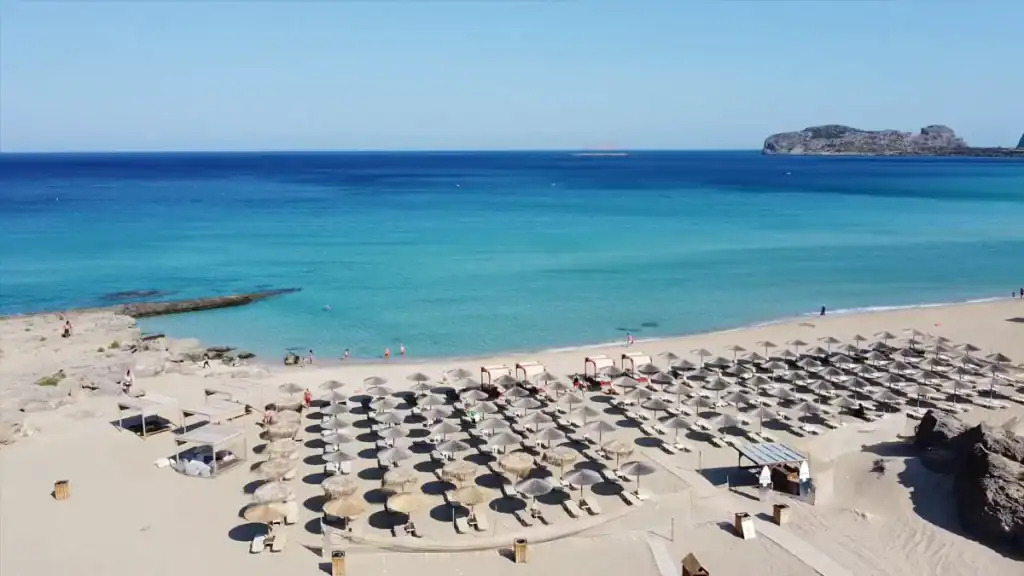
🌅 Why Balos and Falasarna Work So Well Together
We found Balos and Falasarna worked particularly well together because they offered almost opposite versions of Crete’s west coast.
Although they’re often compared, they deliver completely different coastal experiences.
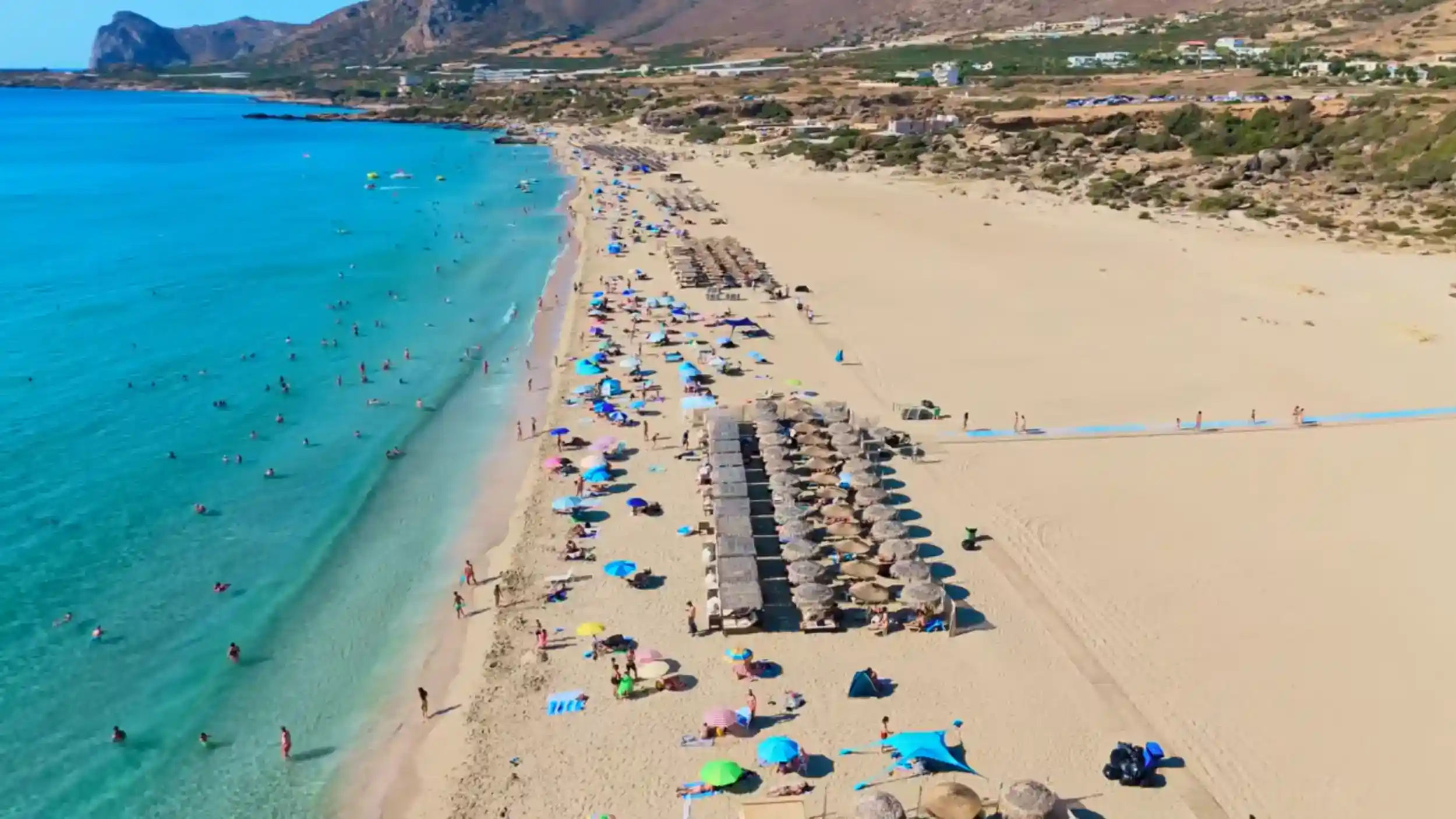
Balos is defined by its sheltered lagoon and dramatic scenery, while Falasarna is an expansive west-facing beach where the open sea, rolling waves and wide horizon become the main attraction.
Can You Visit Balos and Falasarna in One Day?
For us, the combination only really made sense in one order: Balos first, Falasarna later.
Arriving at Balos early allows you to enjoy the lagoon before the busiest crowds, leaving the afternoon free for Falasarna when the sunlight begins to soften across the west coast.
| Destination | Best time to visit |
|---|---|
| 🏝️ Balos Lagoon | Early morning for quieter conditions |
| 🌊 Falasarna | Late afternoon and sunset |
| 🚗 Drive between them | Around 35 to 40 minutes |
| 📸 Experience | Two completely different beaches in one day |
I would not choose between them if the itinerary allows both. Balos gave us calm water, extraordinary colours and a memorable journey to reach it; Falasarna gave us space, open sea and a completely different late-afternoon atmosphere. Together they made a much more varied coastal day.
If you’re wondering what makes Falasarna so different, Falasarna From Chania: Coastal Views and Sunset Moments explains why it’s widely regarded as one of western Crete’s best beaches.
📝 What We Would Do Differently at Balos Lagoon
If I were planning Balos again, I would make the arrival time the first decision rather than treating it as a minor detail.
How you arrive determines the viewpoint and flexibility; when you arrive determines the heat, crowds and overall atmosphere.
Everything else tends to fall into place once those two choices are made, allowing you to spend more time enjoying the landscape and less time dealing with queues, heat or crowded viewpoints.
What Should You Know Before Going to Balos?
Our practical priorities would be simple: water, supportive footwear, sun protection and an early start if driving.
| Before you go | Why it matters |
|---|---|
| 💧 Carry plenty of water | The walk from the car park is exposed |
| 🥾 Wear supportive footwear | The access path is rocky and uneven |
| 🧴 Bring sun protection | Very little natural shade is available |
| ⏰ Arrive early if driving | The quietest views and easiest parking |
What stayed with me was how much timing shaped the visit. Seeing Balos before the excursion boats arrived gave us time to absorb the landscape rather than simply find a place on the beach. Whichever route you choose, I would leave enough time to slow down, because Balos was far more rewarding for us as a landscape to explore than as a beach to tick off.
If you’re building a wider itinerary, Chania Beyond the Old Town brings together Balos, Elafonisi, Falasarna and other destinations that reward leaving the city behind for the day.