
Hiking the Mani Peninsula is not an activity the landscape accommodates. It permits it. The distinction matters once you’re an hour into a kalderimi descent with no shade and a water bottle that’s already half gone.
Why the Old Mule Trails Still Matter
The kalderimi are the arteries of the hinterland. Cobbled mule paths, Byzantine and Ottoman in origin, some of them a thousand years old, built with a precision that has outlasted almost everything around them. On the Mani, the best-preserved sections will stop you mid-step. Not because they’re picturesque. Because the engineering is serious and the seriousness is visible.
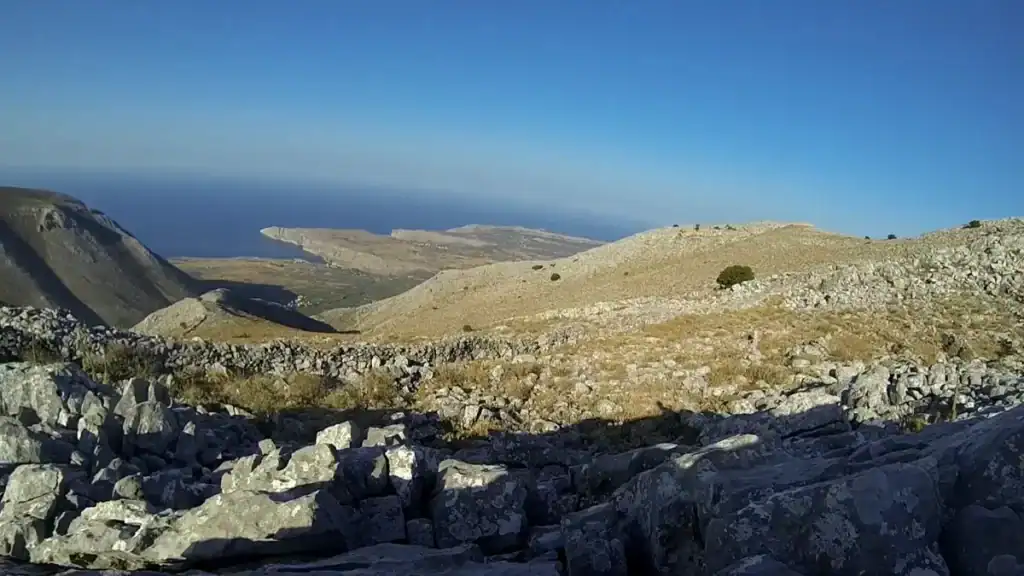
These paths were built under specific pressures. Piracy kept coastal populations precarious for centuries. Malaria did similar work at lower elevations. The population moved uphill and the kalderimi followed – connecting villages, moving animals, carrying goods across terrain that offered no easier route. The paths don’t fight the topography. They read it, then commit. That intelligence is worth paying attention to. The routes avoid south-facing scree on the hottest slopes. They cut through cols at sheltered points. They find water. Walking them slowly, you start to understand the landscape as a problem that was already solved, centuries before you arrived to find it beautiful.
The authenticity exists partly because the region is economically marginal. There’s no incentive to overdevelop. The result is preservation through circumstance rather than intention. That’s complicated to think about. It’s worth thinking about.
Gorge Routes Most Visitors Never Attempt
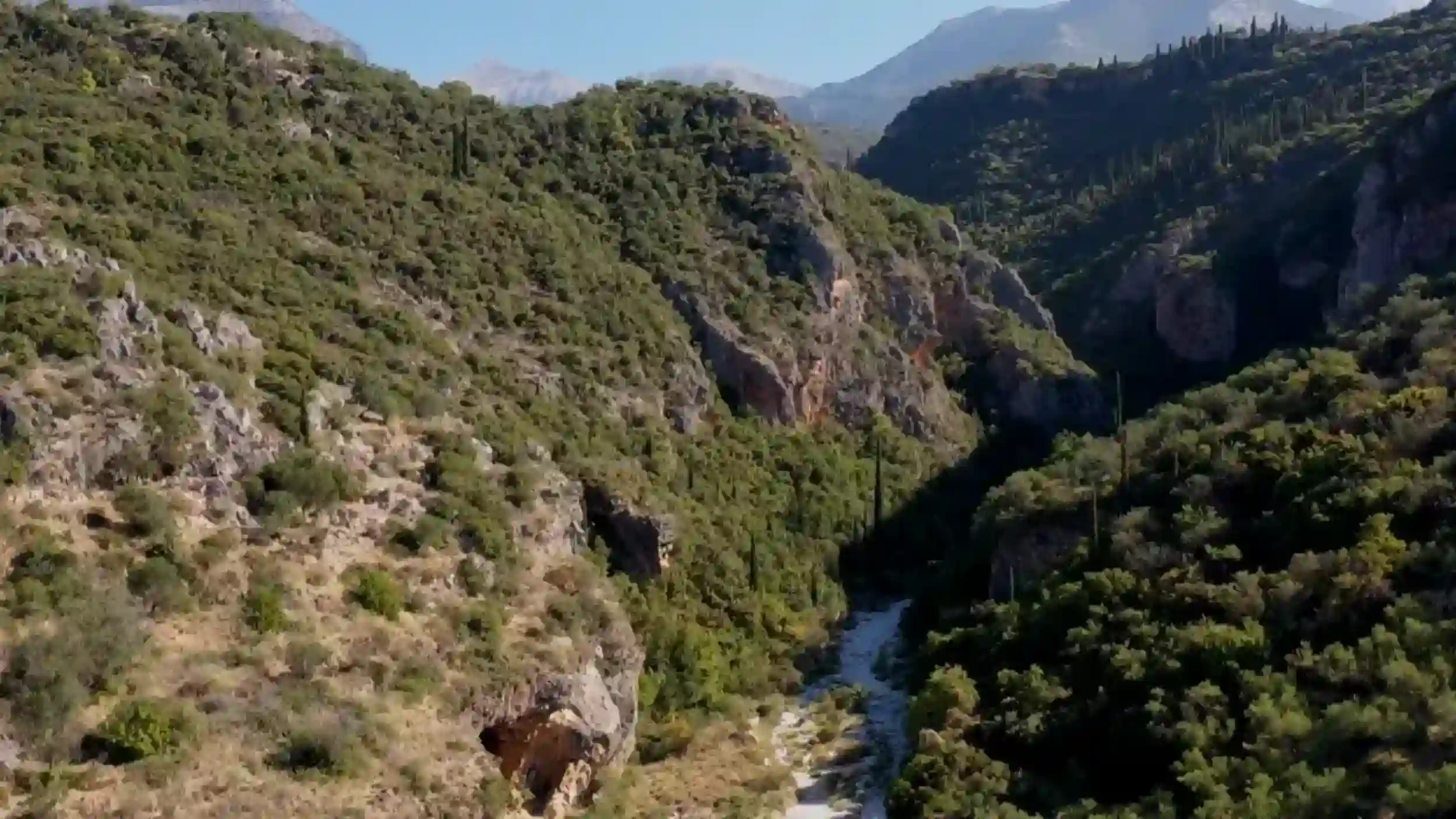
The gorges cutting through the Mani’s limestone spine don’t announce themselves. No signboards, no car parks, often no visible indication from the road that anything significant lies below. Most visitors drive past them. The ones who stop and look are usually already committed to looking.
The ravines running west from the central ridge toward the Messenian Gulf are the less-visited ones. Narrower than the gorges further north, shadowed longer in the mornings, the path sometimes collapsing into a dry streambed that requires route-finding rather than trail-following. The rock is deeply pocketed, almost sculptural, carved by water that hasn’t run through here since April. In the gorge interior, the silence feels geological rather than merely quiet.
Getting in requires commitment. The descents are steep and loose in sections. The return is always uphill, always hotter than expected. Several approach routes start from villages with no reliable water at the trailhead. You carry what you need or you reconsider. That’s not a warning. It’s a description of the terms.
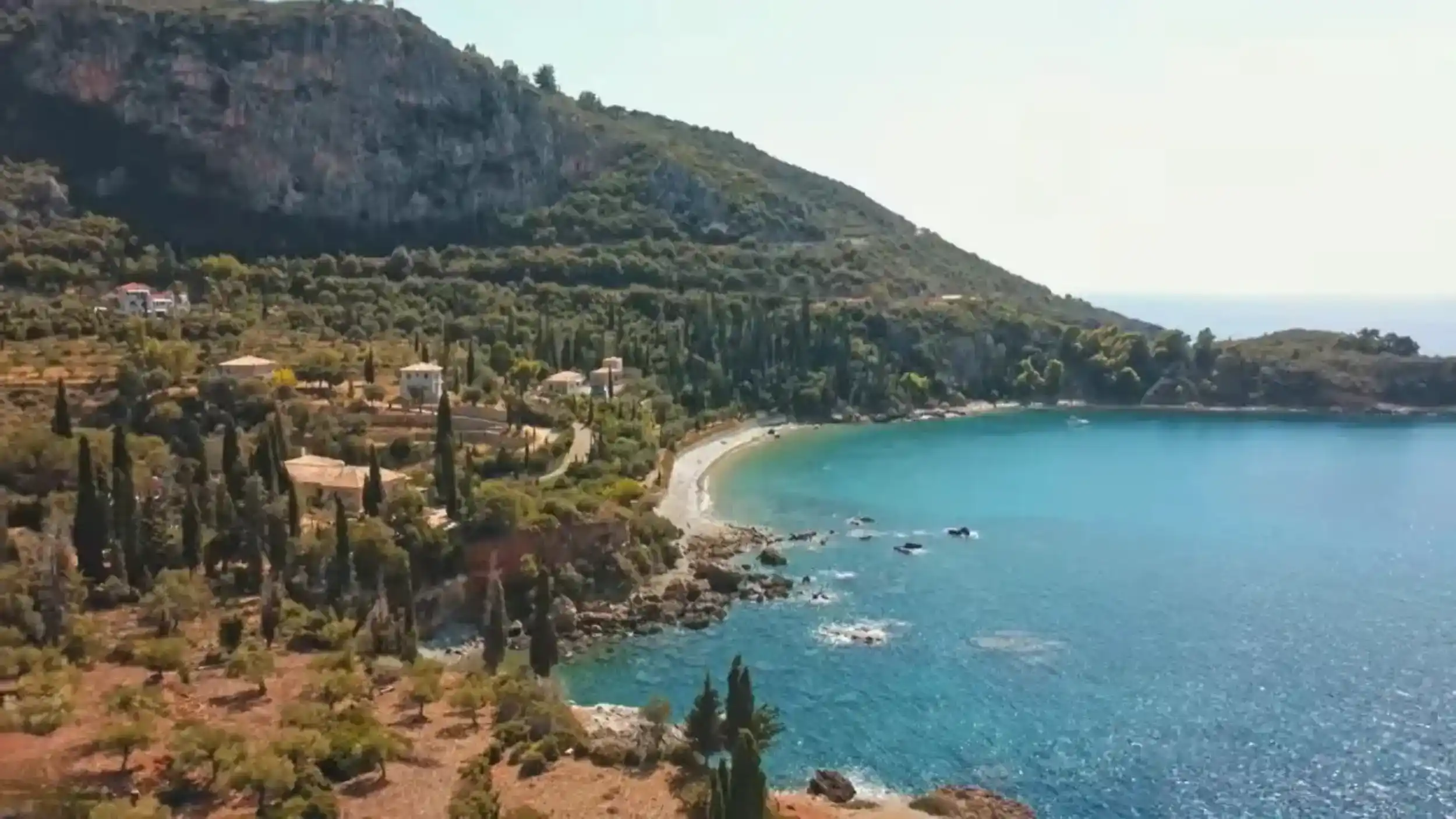
Rocky Descents to Hidden Coastal Coves
The Mani’s coastline is not easy to reach on foot. That’s exactly why parts of it remain on serious topographic maps and nowhere else. The Anavasi 1:30,000 series – the most detailed and accurate mapping available for the southern Peloponnese – shows paths to coves with no road access and no names in common use. These are the routes.
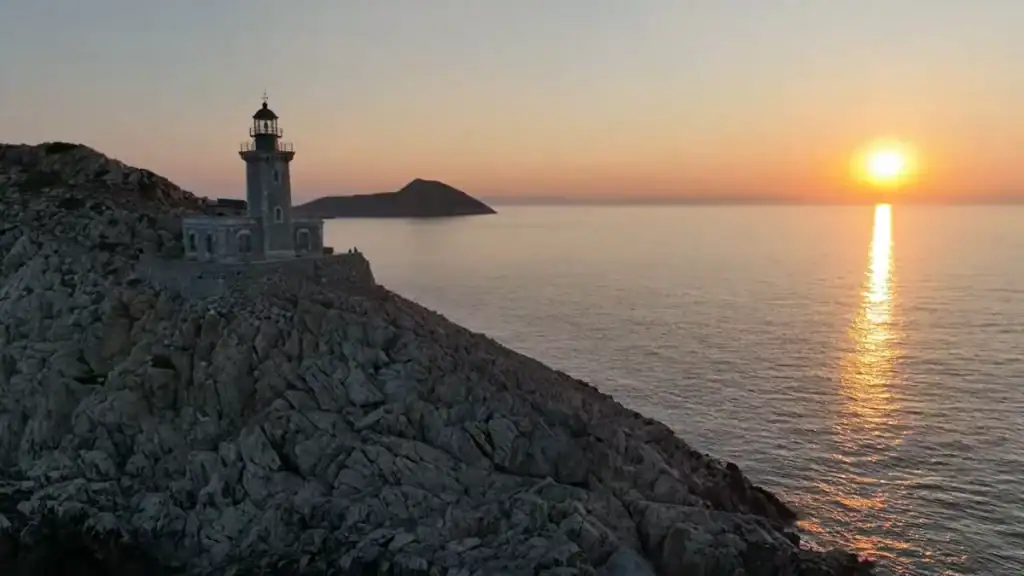
The descents tend to be punishing in a specific way. Loose scree over limestone, the path occasionally disappearing and requiring a commitment to a line that may or may not reassemble itself lower down. Trekking poles matter here, less for the descent than for the return, when both knees and judgement are compromised. The coves at the bottom are not comfortable destinations. Stony, small, no facilities, no shade. The water is an implausible blue. You swim, eat whatever you carried, and face the climb back. There’s no attempt to make these places convenient for visitor consumption. They exist on their own terms.
The western coast toward Cape Tenaro has some of the most demanding descents. The cape path itself is well-enough known. The side routes branching toward water are not. Some require scrambling. All require the understanding that a twisted ankle here is a serious problem, not an inconvenience.
What the Heat Does to a Walking Day
By ten in the morning on an exposed Mani ridge in July, the rock is already radiating. By noon, continuing on open ground is not heroic. It’s poor planning. The heat restructures the day entirely. You start before seven or you start wrong. Exposed terrain needs to be behind you by midday. What follows is a long, still middle – shade, food, horizontal – before movement becomes sensible again in the late afternoon.
This isn’t a failure of fitness. It’s the same adaptation the people who built these paths made for centuries. The paths themselves often reflect it, preferring olive grove shadow and canyon routes over open ridge precisely because they remained walkable through the middle of the day. The advice on water management for Peloponnese hiking is blunt: carry more than you expect to need, fill every container at every source you pass, and if the previous night’s accommodation had a freezer, freeze a bottle to carry alongside liquid water so cold water remains available well into the afternoon.
On the Mani, this matters acutely. Springs marked on older maps are not reliable in summer. Dry riverbeds that appear to have had recent flow may have been dry since April. Villages in the Deep Mani are often too small to have a shop, let alone a tap for walkers. Plan for scarcity. The landscape doesn’t have an obligation to provide.
Reading the Landscape Like a Local
The Mani is legible if you know the grammar. A terrace wall means cultivation was possible here, which means water was once present. A tower house this far from the nearest village suggests either wealth sufficient for isolated defence or a boundary being contested. The direction a path curves on a hillside usually encodes something about wind or the location of a spring long since dried.
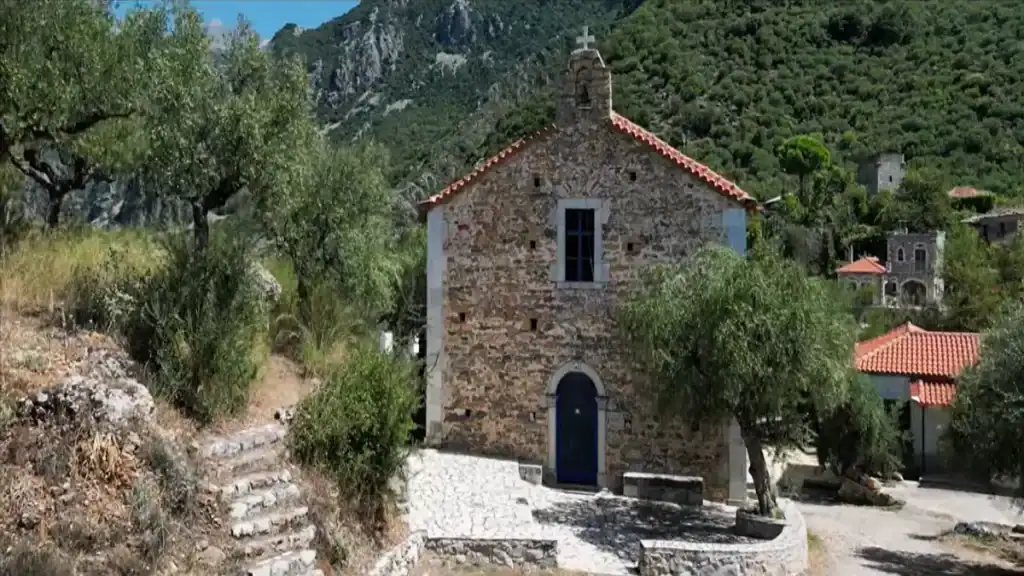
Shepherds still use some of the old routes, particularly in the higher interior above Kotronas and along the ridgeline approaching Taygetos from the south. They’re working. Their relationship to the landscape is entirely functional, not scenic. But they know the paths better than any map does. At junctions where trail marking contradicts itself or simply stops, a shepherd is more reliable than GPS.
The tower villages are the obvious expression of the Mani’s history of isolation. But so is the distribution of arable land – tiny terraced pockets on impossible slopes, evidence of a population that had no surplus land and worked every available surface. That’s not picturesque. It’s the residue of necessity. Walking between these remnants with some attention to what they represent changes the route considerably. The same distance, different weight.
Gear Decisions That Change the Experience
Pack weight is not a comfort issue on the Mani. It’s a safety calculation. On paths where some of the coastal descents require free hands for balance, a heavy pack changes the geometry of the walk in ways that matter. The position on this is unambiguous: 45 to 65 litres, nothing inside that you don’t genuinely intend to use, ruthlessness before you leave rather than regret by day three.
Long trousers and long sleeves are not optional. The phrygana – the dense, thorny scrub covering much of the peninsula’s slopes – is relentless. Lightweight hiking trousers take up negligible weight and remove a persistent source of misery on overgrown sections. Exposed skin in the Mani’s scrub is a mistake you make once.
Footwear matters more than almost anything else. The kalderimi are not soft surfaces. Worn-out trail runners, smooth soles, or anything without genuine ankle support will make rocky descents significantly more dangerous than they need to be. This is not technical terrain. But it doesn’t forgive casual choices over a long day.
On navigation: the Anavasi maps are the reliable baseline. GPS tracks downloaded from aggregator apps can be inconsistent – some show routes impassable for years, others omit paths clearly still in use. Carry both. Trust the map when the two disagree. That’s not conservatism. It’s experience.
Trail Segments Ranked by Raw Solitude
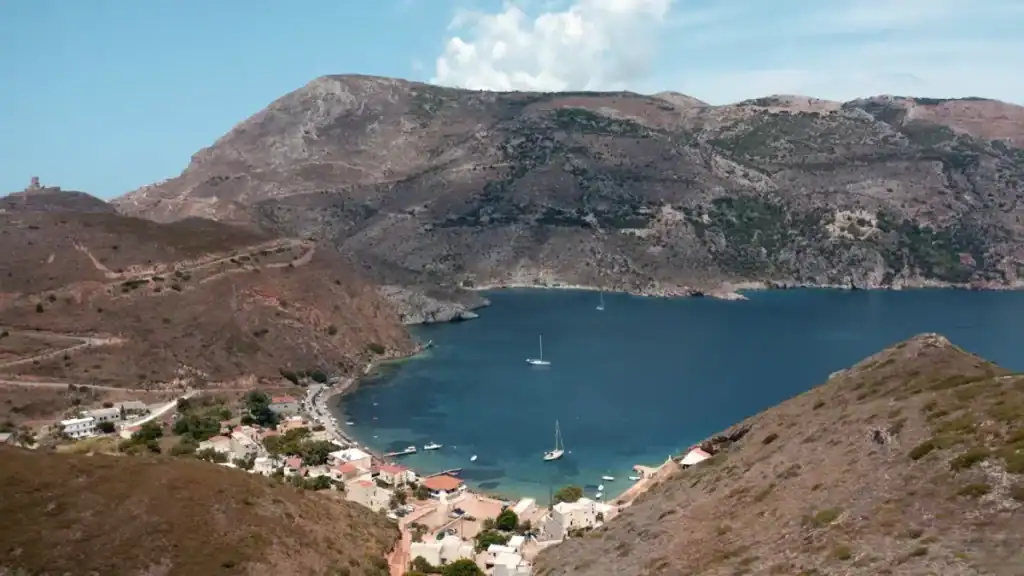
The Cape Tenaro approach from Porto Kagio is the most-walked path on the peninsula. It remains a fine route. Solitude is not what it offers. The ridge walk between Kita and Vathia, staying on kalderimi rather than the road, is considerably quieter. The path crosses terrain that feels genuinely uninhabited – views east to the sea, west toward the Messenian Gulf, tower villages appearing and disappearing as the ridge curves. On a weekday in shoulder season you may walk the full section without encountering another person. That’s not a guarantee. It’s a reasonable expectation.
The gorge routes descending toward the western coast, starting above Stavri, offer the deepest solitude the Mani provides. These paths are not consistently marked, not consistently maintained. Most walkers avoid them for that reason. The ones who don’t find sections where the stone underfoot has not been touched by human weight in a long time – where the path is still entirely itself, entirely unconcerned with being found.
That quality – the landscape’s indifference – is what the Mani does to walkers who stay long enough to feel it. It’s not hostile. It’s simply not arranged around your presence. The paths exist because people once needed them. Not because anyone thought you’d come looking. That distinction matters more than it sounds like it should.