
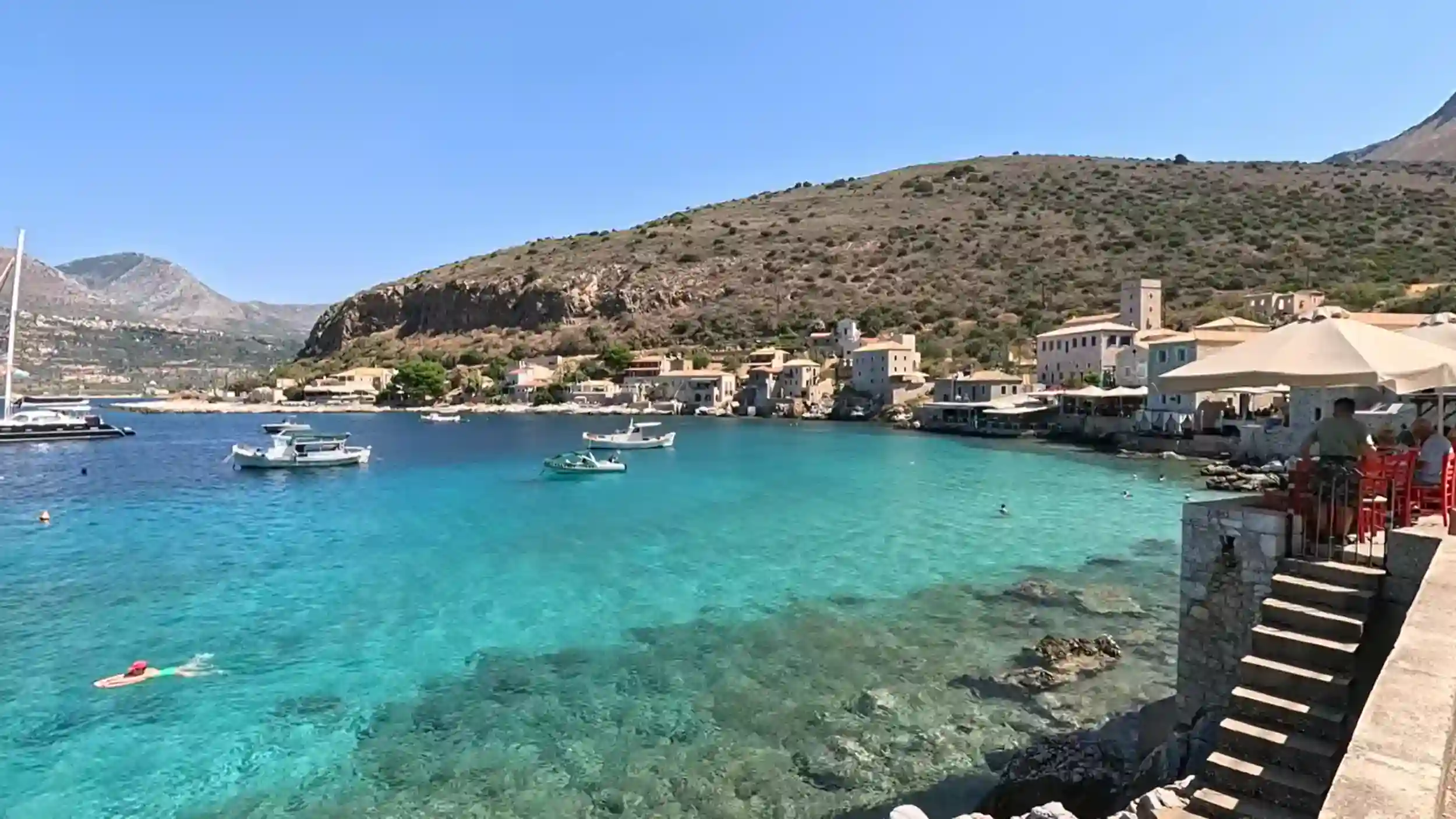
Mani Peninsula travel has a self-selecting quality that most destinations lack. People don’t stumble here. The road south from Kalamata narrows, the villages thin out, the signage becomes less accommodating, and somewhere around the point where the coastal road pulls away from the sea and climbs into the mountains, casual tourists tend to have already turned back. What remains, broadly speaking, is a particular kind of traveller – one who came looking for something specific, or one who simply kept driving and found it anyway.
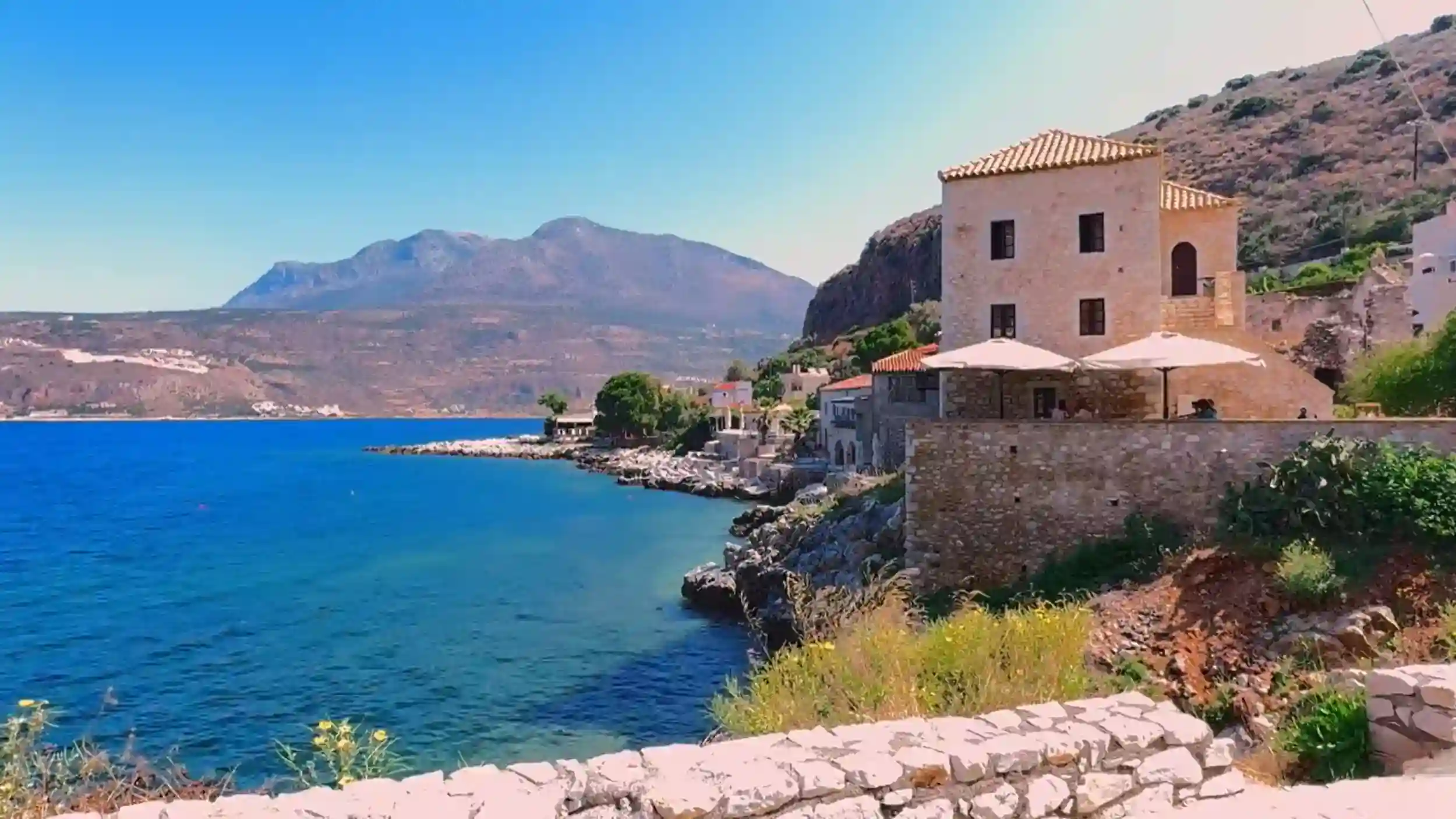
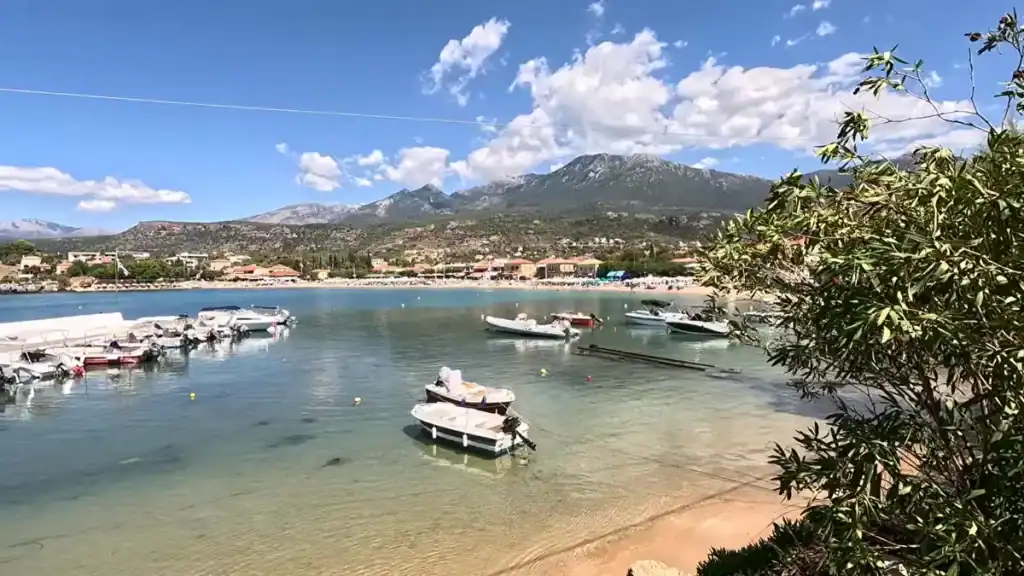
Featured image: Limeni
The independent traveller dominates. Not the backpacker moving between hostels on a budget itinerary, but the person with a rental car and no fixed plan for the night – the type who stops in Kampos because a church door was open, eats when hungry rather than when scheduled, and makes accommodation decisions at five in the afternoon based on mood. Road-trippers form the core of this group, and the Mani suits them structurally: the peninsula is shaped like a route, not a resort. You move through it south by south, collecting villages, Byzantine churches, coastal viewpoints, and the occasional overgrown castle that required a scramble and a thrown rock to get past a dog. The experience rewards improvisation more than planning.
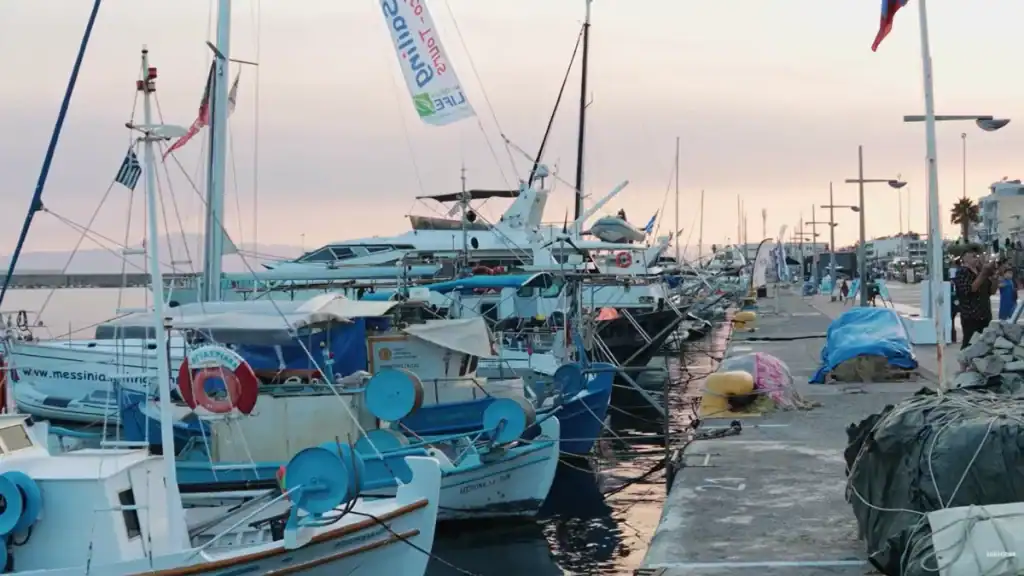
Couples and Solo Travellers
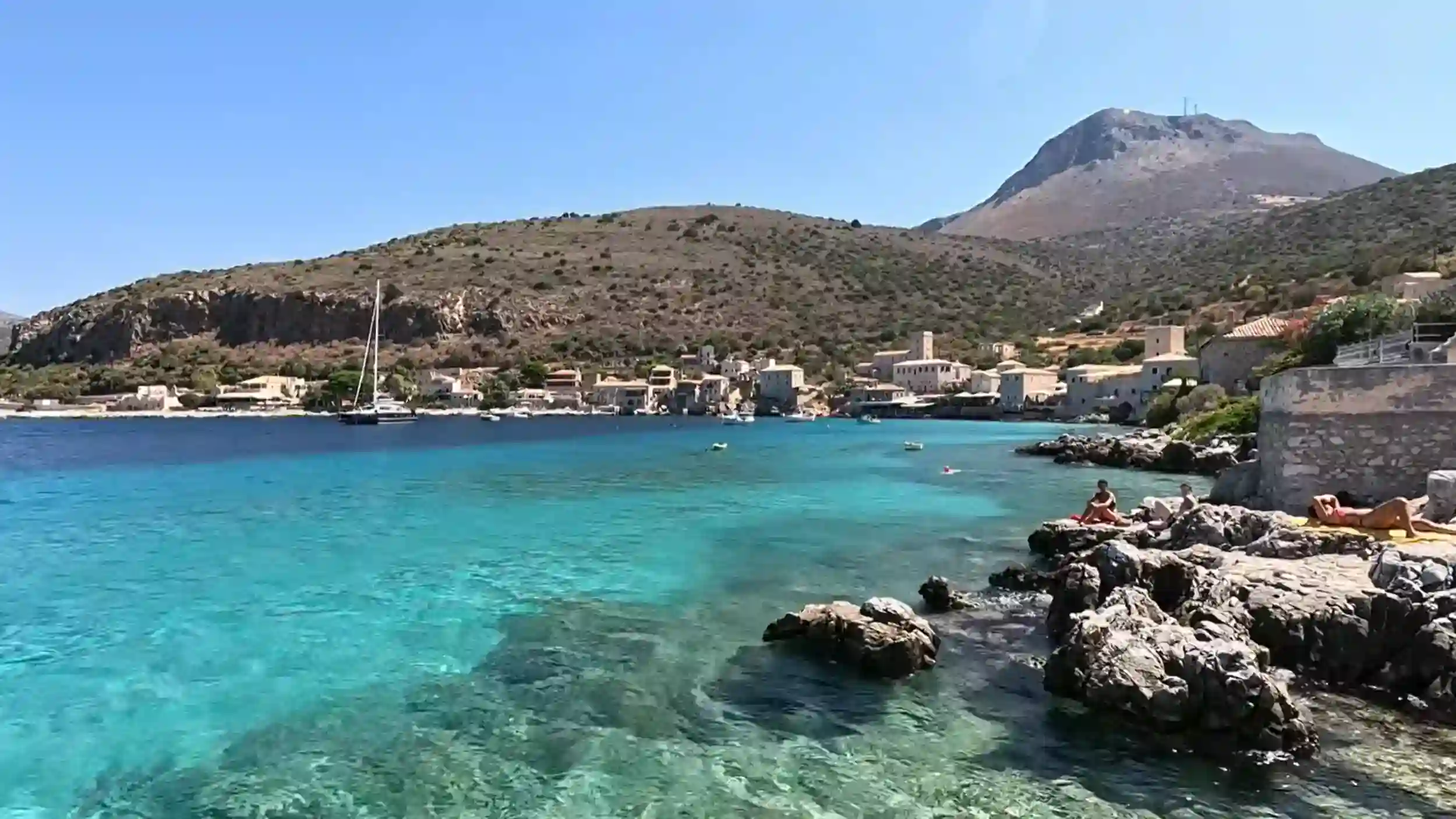
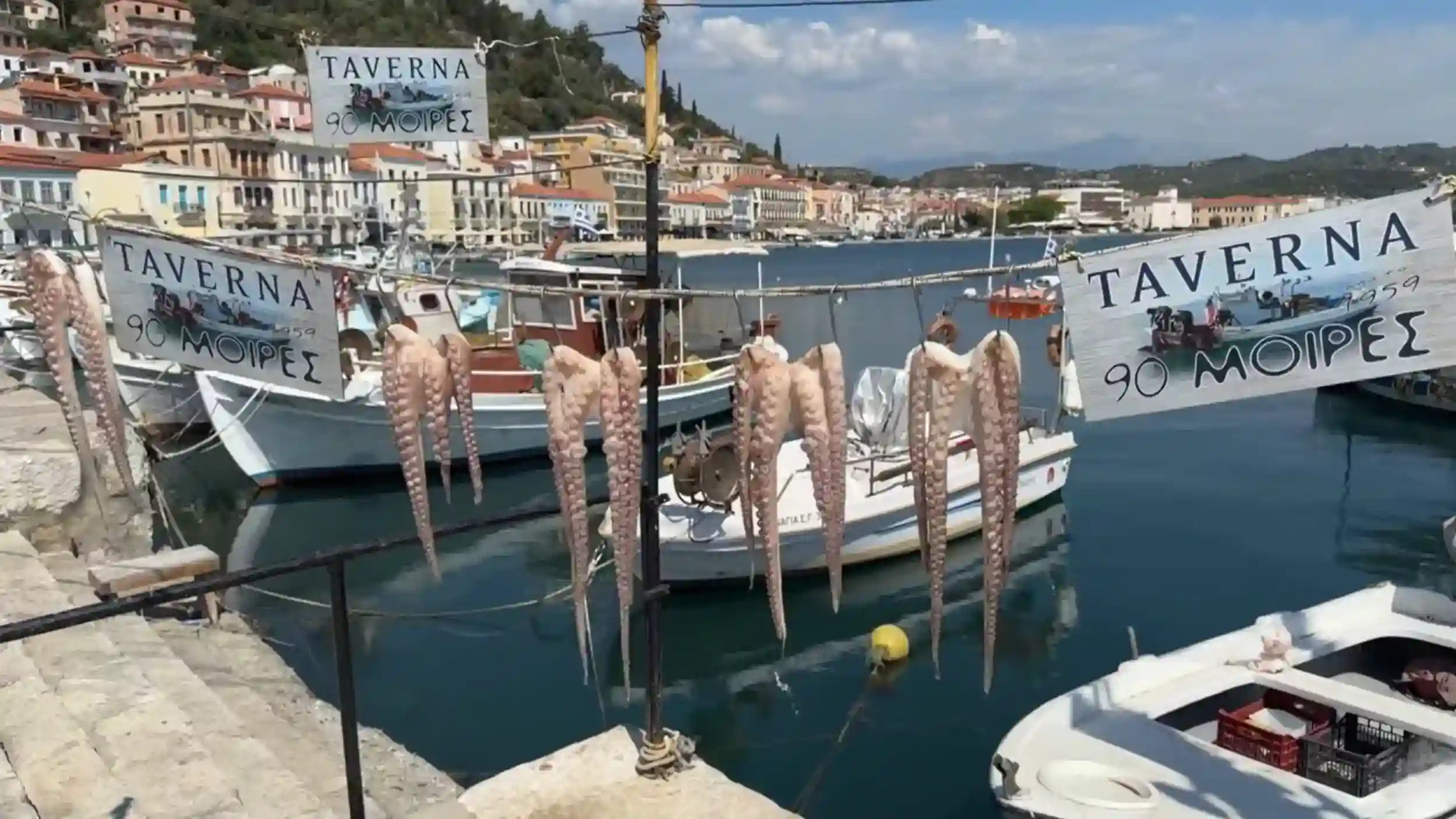
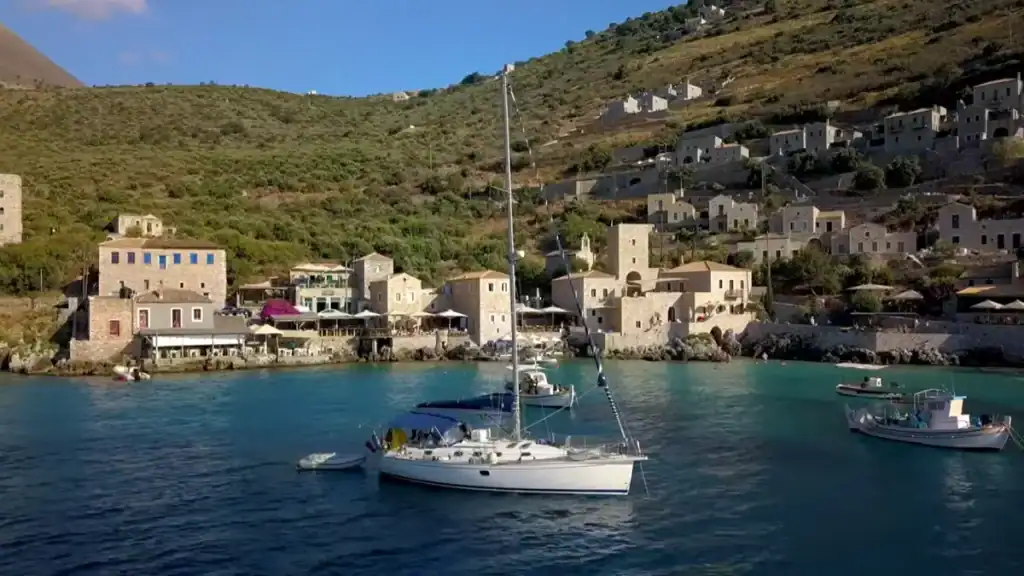
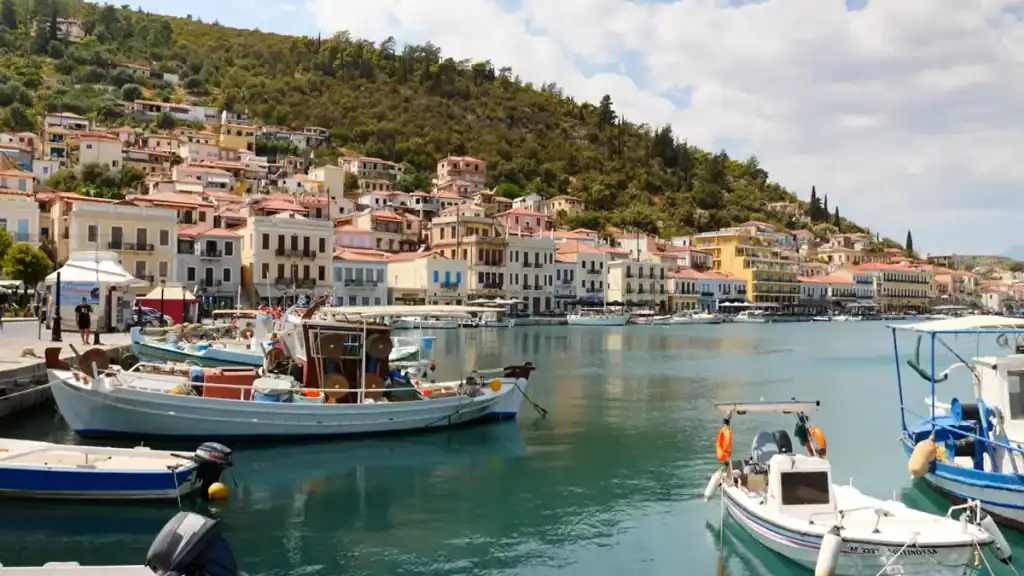
Couples travel here in reasonable numbers, though not the honeymooner variety seeking choreographed romance. The Mani draws couples who are comfortable with quiet – who can spend a late afternoon in a near-empty harbor town watching the light on the water and find that sufficient. Limeni fits this. So does Gytheio, which has the feel of a town that still belongs to itself: a working harbor, good rooms with sea-facing balconies at reasonable prices, restaurants that fill slowly. The intimacy of the place is incidental rather than manufactured, which is a meaningful distinction.
Greek vs International Visitors
Greeks travel here too, though the patterns differ. Domestic visitors tend to know the interior – they’ll head for Areopoli with a specific taverna in mind, or drive to a beach that isn’t on any curated list. They move through the landscape with a different familiarity, less inclined to stop at every church door and more likely to know which ones are worth opening. International visitors, particularly northern Europeans, arrive with more of a historical appetite. The UNESCO sites, the tower villages, the Byzantine frescoes – these register differently to someone encountering them for the first time. An 11th-century church with earthquake-damaged murals and barely legible saints painted across every interior surface is, objectively, not a rare thing in the Mani. To a visitor from elsewhere, it can feel like an unreasonable amount of history concentrated into a single afternoon.
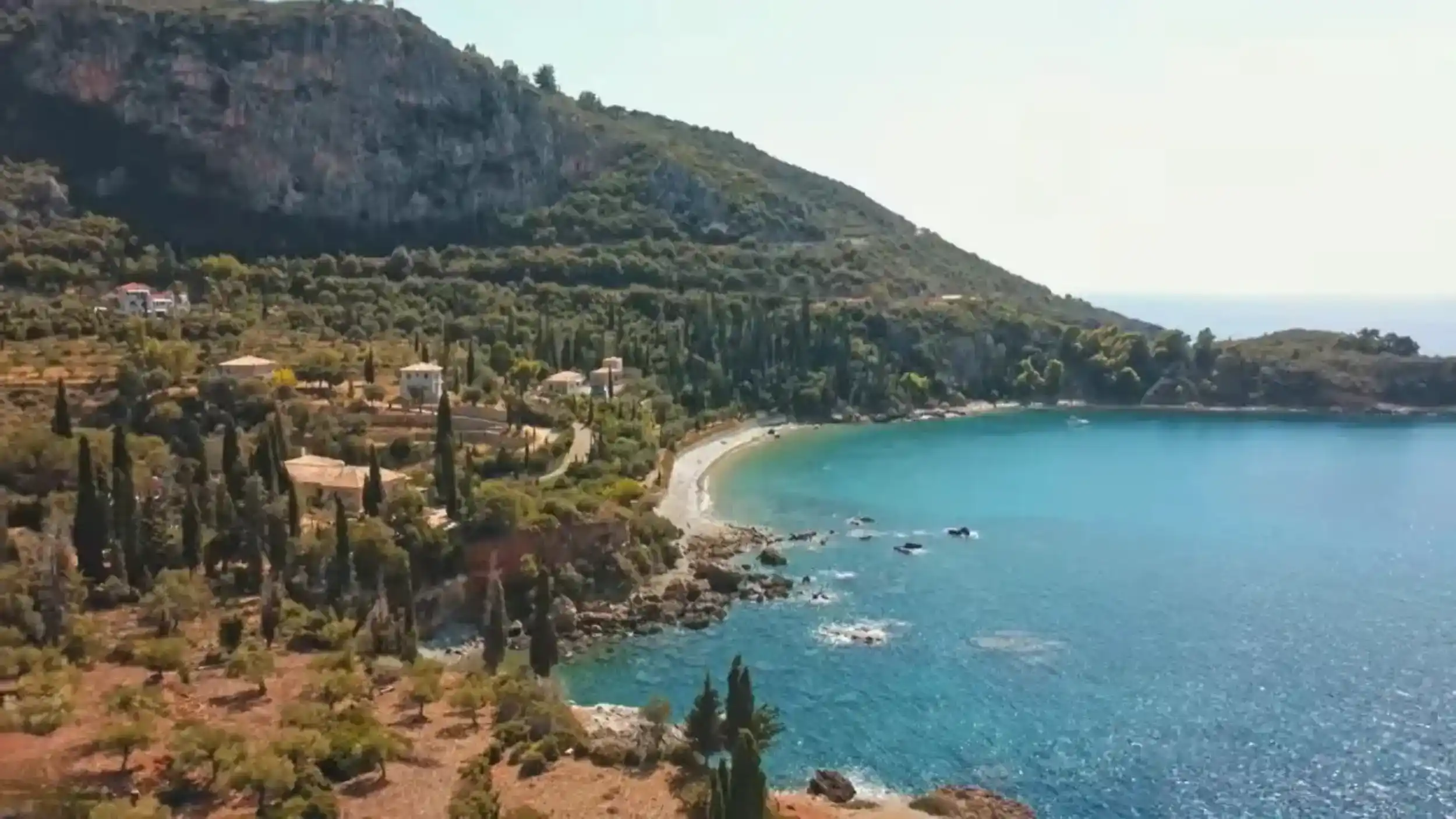
The Greek visitors who do come for leisure tend to do so in July and August, when the coast fills briefly and the beaches see actual crowds. International arrivals extend across a slightly broader window – May through September – though the peak compression is similar. The off-season is where the Mani’s true character shows most clearly, and where a different kind of visitor appears. In May, the roads are quiet. Tavernas are open but half-empty. A solo traveller in a rental car can drive the full length of the western coast and stop at a beach with no one else on it. The tourist infrastructure exists – hotels, restaurants, a working marina – but it operates at low volume, and there’s a feeling in towns like Areopoli that the season hasn’t quite decided to arrive yet.
Off-Season Visitors
This is not uncomfortable. For the traveller who finds the shoulder season appealing precisely because of its quietness, the Mani in May is about as good as it gets. Gytheio on a Wednesday evening in mid-May has restaurants with empty tables, accommodating staff, and a harbor lit well enough to make the choice of where to eat feel genuinely pleasant. The downside, if it is one, is that some things are closed, some castles are locked, and the caves – if caves were on the agenda – may require a detour that nothing else in the area quite justifies.
Winter brings a smaller and more specific cohort: Greek visitors, some long-stay Europeans, people who’ve been before and know what they’re getting. The archaeological sites that waive fees on the first and third Sundays of the month see a bump, though modest. The Mani in December is cold enough that swimming is a point of pride rather than pleasure.
Who the Mani Isn’t Right For
There are travellers for whom the Mani is simply not the right place, and they tend to find this out fairly quickly. Anyone expecting beach resort infrastructure – sun loungers, cocktail bars, organised water sports, a reliable evening social scene – will be disappointed. Stoupa has some of this. Nowhere else really does, and even Stoupa, busy by Mani standards, feels subdued compared to what that type of visitor likely had in mind.
The Mani also doesn’t perform. It doesn’t orient itself around the visitor experience in the way that more developed destinations do. Churches are sometimes locked. Castles are sometimes just walls in a field with sheep. Roads marked on maps occasionally stop being roads – something first-time drivers here discover without warning. A traveller who needs the logistics to work smoothly and predictably will find the peninsula grating rather than charming. The flexibility required isn’t enormous, but it’s real. If a locked gate is a problem rather than a mild inconvenience, the Mani will produce several of them in a single day.
Repeat Visitors
Repeat visitors are common, which says something. The Mani has a way of leaving things unfinished – a road not taken, a village passed through too quickly, a stretch of interior that was always going to be tomorrow’s detour and then wasn’t. People come back because the peninsula is large enough and varied enough that a week doesn’t cover it, and because what they found the first time was good enough to warrant another attempt at the rest.
Some return to slow down. A first visit to the Mani tends to involve movement – the peninsula is best understood at road-trip pace, and the instinct is to keep driving south. Subsequent visits often involve less of that. A few days in one village, longer meals, a hike to a lighthouse rather than a drive past it. The place accommodates both modes without particularly privileging either.
What the repeat visitor almost universally reports is that the Mani remains consistent. It doesn’t change quickly. The tower villages look the same. The cats are still everywhere. The Byzantine churches still have their doors open or locked with no discernible logic. That consistency, in a country where the more popular islands can shift significantly from season to season and year to year, is part of what brings people back. The Mani isn’t trying to become something else. For a certain kind of traveller, that’s the whole point.