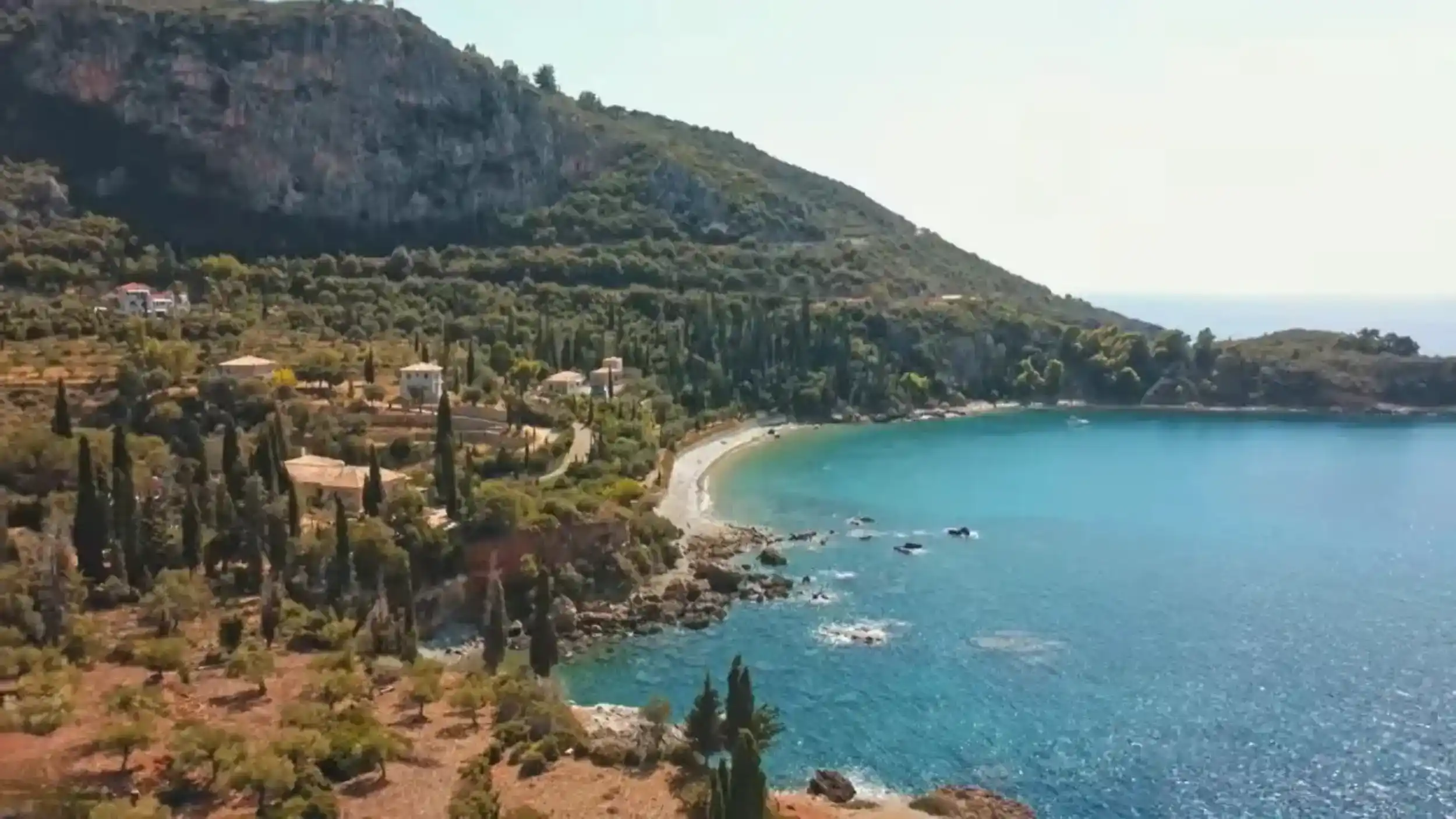
Discover why the Mani Peninsula feels unlike anywhere else in Greece, from its tower villages and Byzantine churches to rugged landscapes, quiet roads and a history that still shapes everyday life.
That difference accumulates as you drive further south. The towns thin out. The landscape becomes harder and more spare. The olive trees along the road give way to scrub and exposed limestone.
🏛️ What You Notice Before You Can Explain It
Most visitors sense the difference before they understand it.
Nothing dramatic announces your arrival. There isn’t a spectacular gateway or a sudden change in scenery. Instead, the feeling builds gradually as the road heads south and familiar ideas about Greece begin to slip quietly into the background.
The Stone Comes First
The first thing people usually notice is the stone.
Not just in the villages, but everywhere.
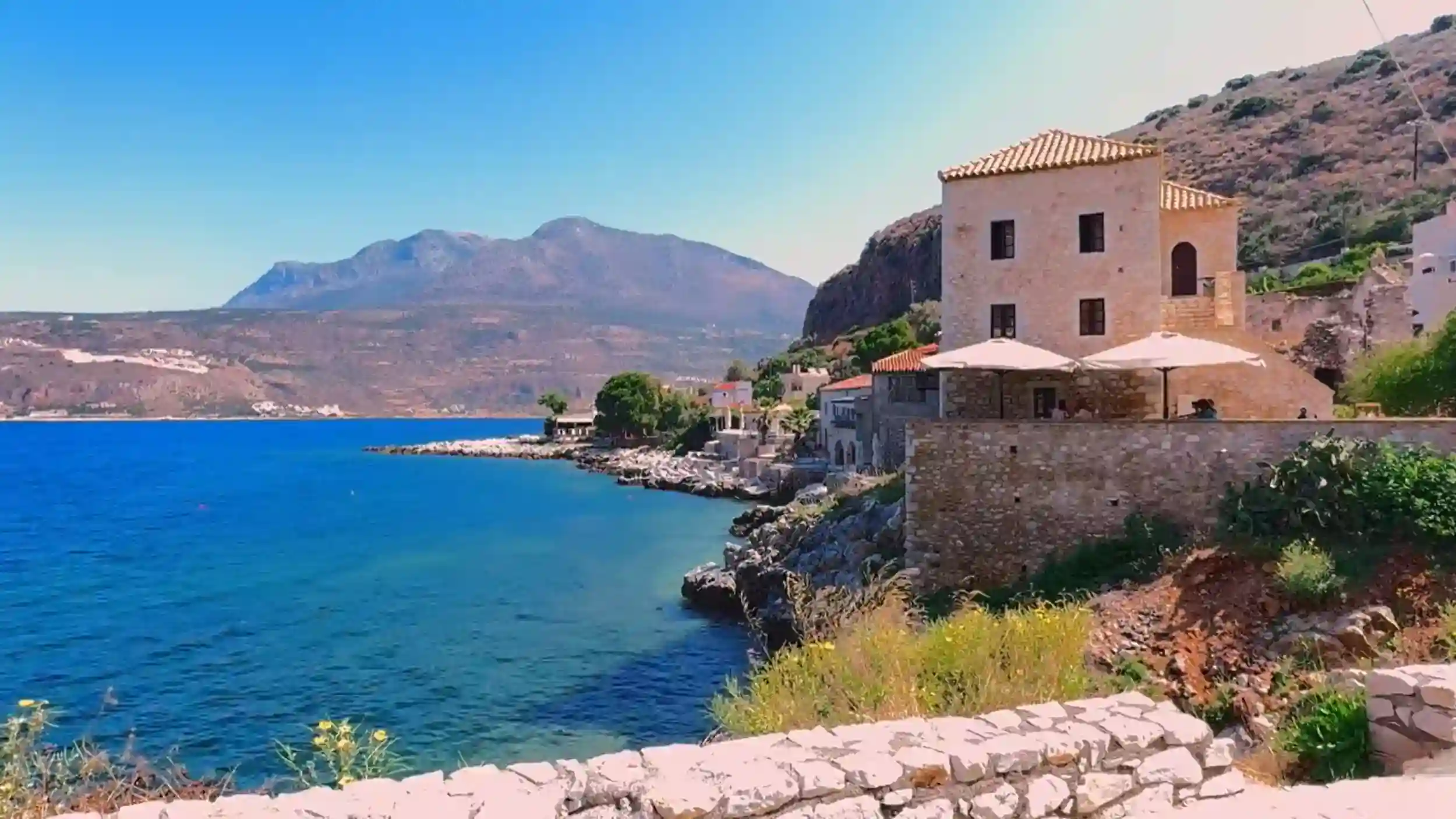
Dry-stone walls divide ancient terraces, tower houses rise above rooftops and even the smallest churches seem to grow naturally from the surrounding landscape. The architecture feels purposeful rather than decorative, reflecting centuries when buildings were designed for protection instead of appearance.
That atmosphere becomes even clearer once you understand the peninsula’s history. A Complete Guide to the Mani Peninsula: Untouched Greece explains how geography, family rivalries and isolation shaped the settlements visitors see today.
It Feels Lived In Rather Than Preserved
Many historic destinations feel carefully presented.
The Mani rarely does.
Villages remain places where people live rather than outdoor museums. Doors stay closed, washing hangs from balconies and everyday life continues without adapting itself to visitors. That quiet confidence gives the peninsula a character that’s difficult to describe but easy to recognise.
The Mani doesn’t feel different because it’s trying to stand out.
It feels different because very little about it has been altered to meet tourist expectations.
The result is a destination that rewards observation more than sightseeing. Long before most visitors can explain why the peninsula feels unique, they’ve already started experiencing exactly what makes it so memorable.
⛪ The Byzantine Layer
The Mani’s history didn’t end with the tower houses.
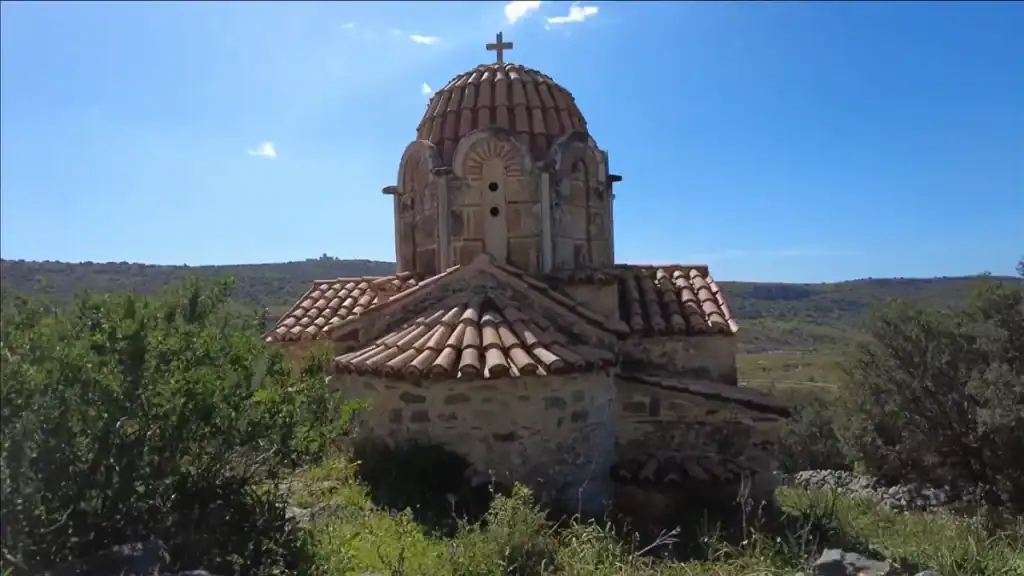
Long before many of the famous stone villages took their present form, the peninsula had already become an important centre of Byzantine Christianity. Today, that legacy survives in hundreds of small churches, many hidden among olive groves or tucked into quiet hillsides where they’re discovered almost by accident.
Churches That Still Feel Undiscovered
Unlike major archaeological attractions, most Byzantine churches in the Mani remain remarkably understated.
There are rarely ticket offices, visitor centres or explanatory displays. Instead, you simply arrive, open an old wooden door if it’s unlocked and step inside a building that has quietly stood for centuries.
Many visitors find these encounters more memorable than larger, better-known historical sites because they feel completely unfiltered.
If you’re planning a broader journey through the peninsula, A Complete Guide to the Mani Peninsula: Untouched Greece explains where these churches naturally fit into a first-time itinerary.
Frescoes That Tell Their Own Story
The interiors are often even more striking than the buildings themselves.
Walls covered with faded saints, fragments of medieval frescoes and centuries of candle smoke create an atmosphere that feels deeply authentic rather than carefully restored. Some paintings remain remarkably well preserved, while others survive only in fragments, reminding visitors that history here has unfolded naturally rather than being frozen for display.
The Byzantine churches aren’t attractions that happen to be old.
They’re historic places that still exist for the communities around them.
That’s what makes them so distinctive. Instead of feeling separated from modern life, they remain woven into the landscape, quietly preserving one of the Mani Peninsula’s richest historical layers.
🏖️ What the Mani Doesn’t Have
Sometimes what makes a destination special isn’t what it offers.
It’s what it never tried to become.
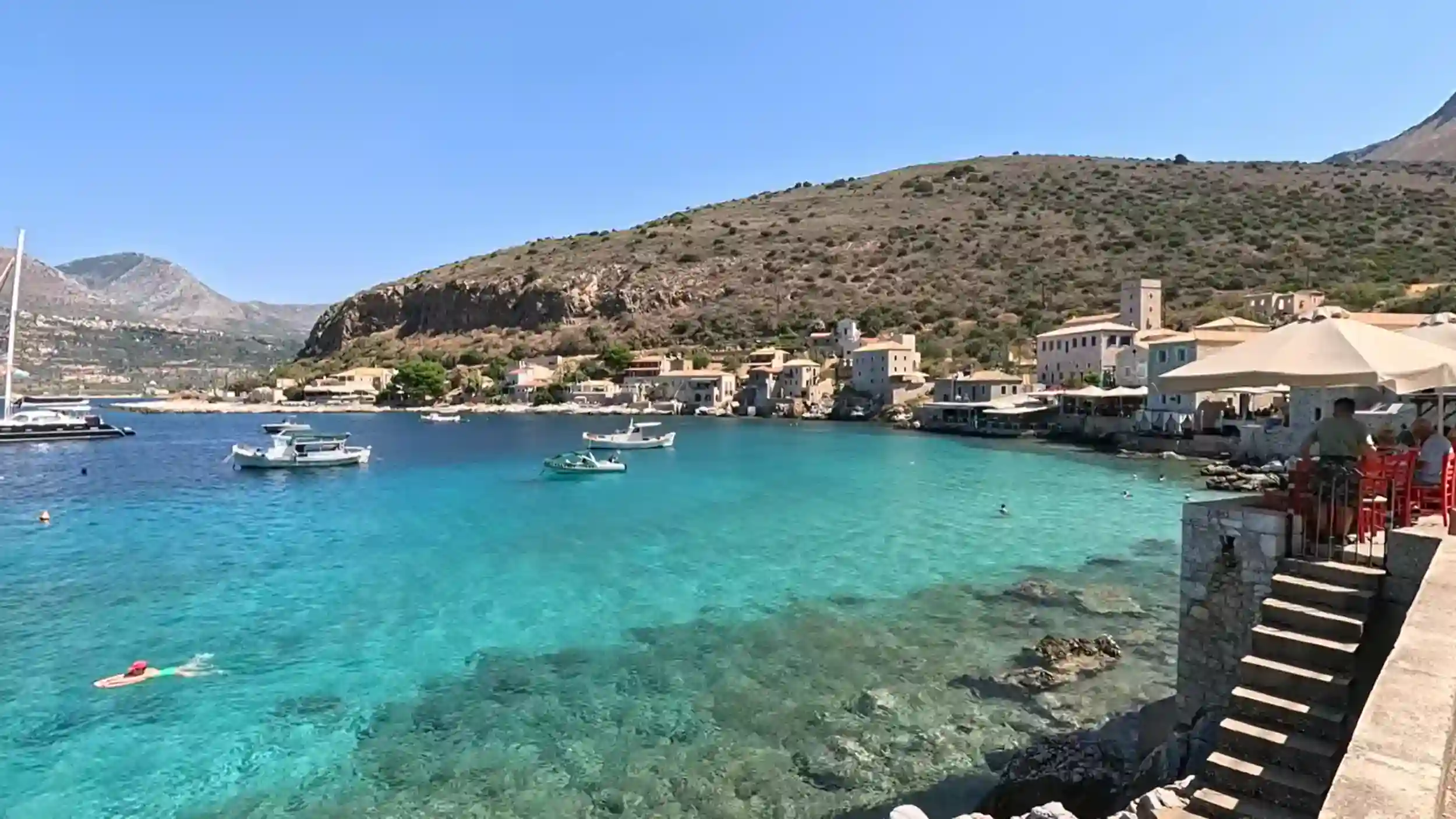
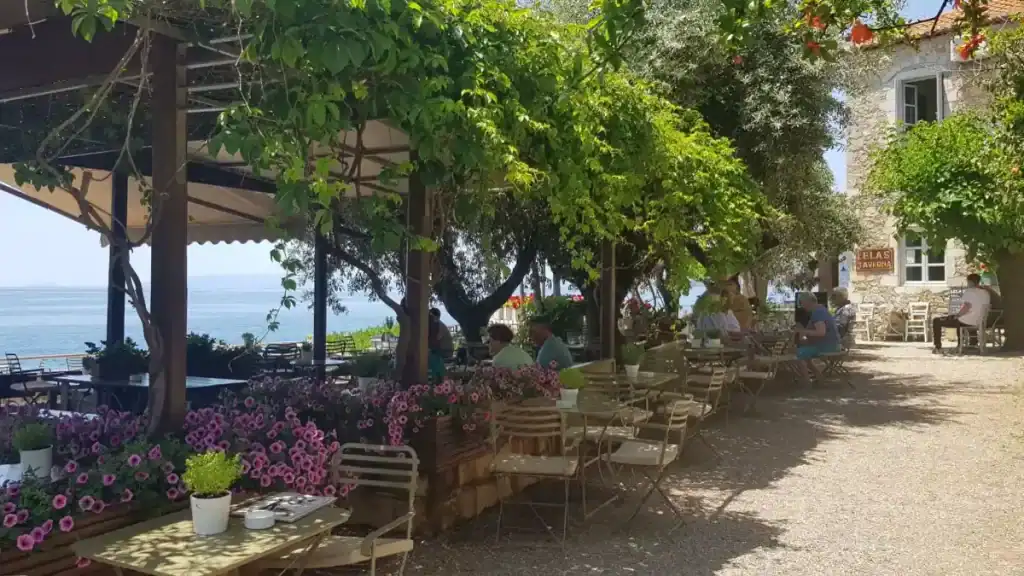
The Mani has resisted many of the changes that transformed large parts of the Mediterranean coastline. Rather than rows of modern resorts, you’ll find traditional villages, independent guesthouses and small harbours that still feel connected to everyday local life.
No Large-Scale Resort Development
Visitors expecting long promenades lined with international hotels may be surprised.
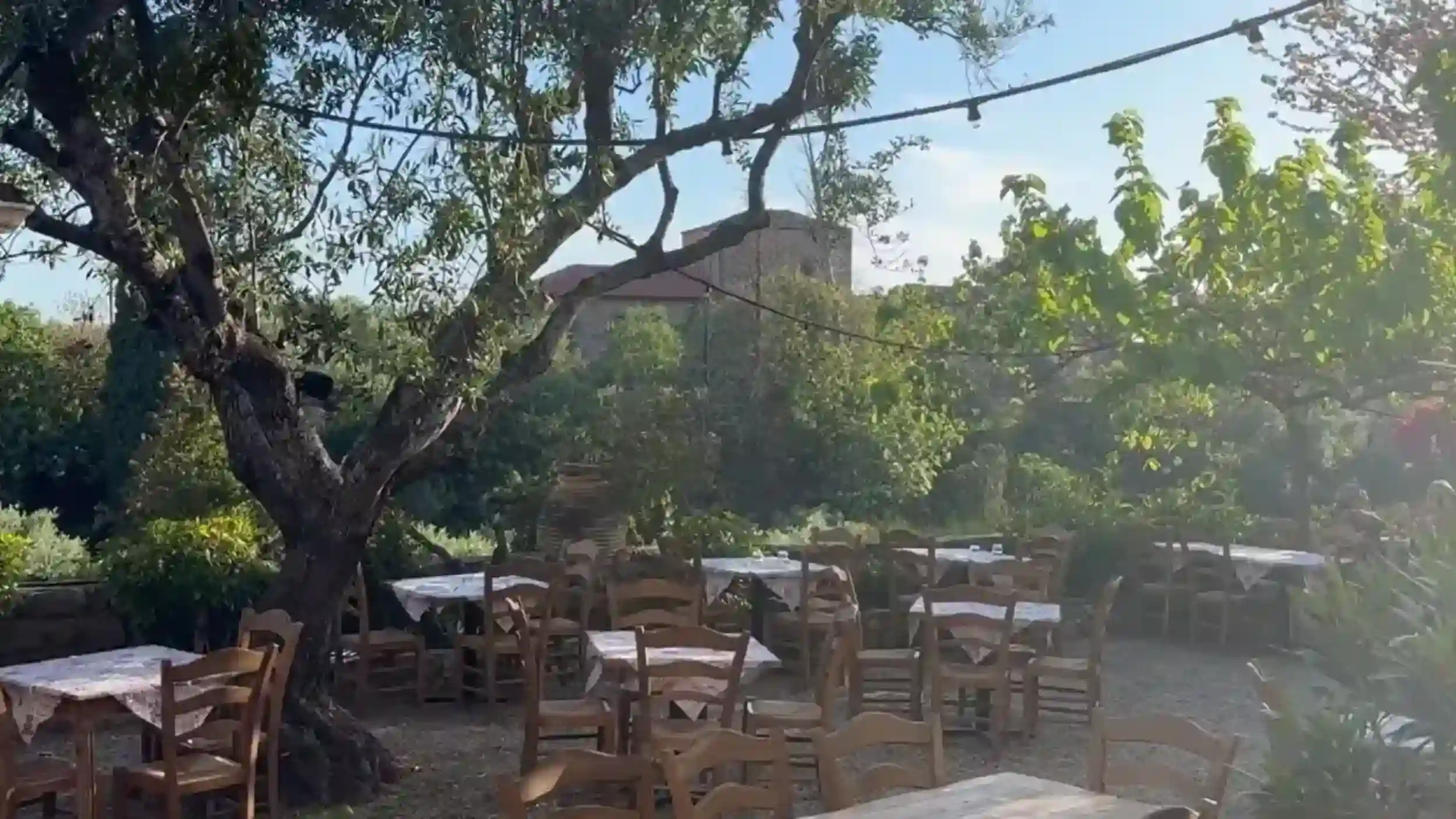
Accommodation is generally small in scale, often converted from historic stone buildings or family-run properties that blend naturally into the villages. Even the most popular coastal locations feel understated compared with many Greek holiday destinations.
That slower style of development is one reason so many travellers searching for an authentic experience choose the peninsula instead.
Beaches Without the Resort Atmosphere
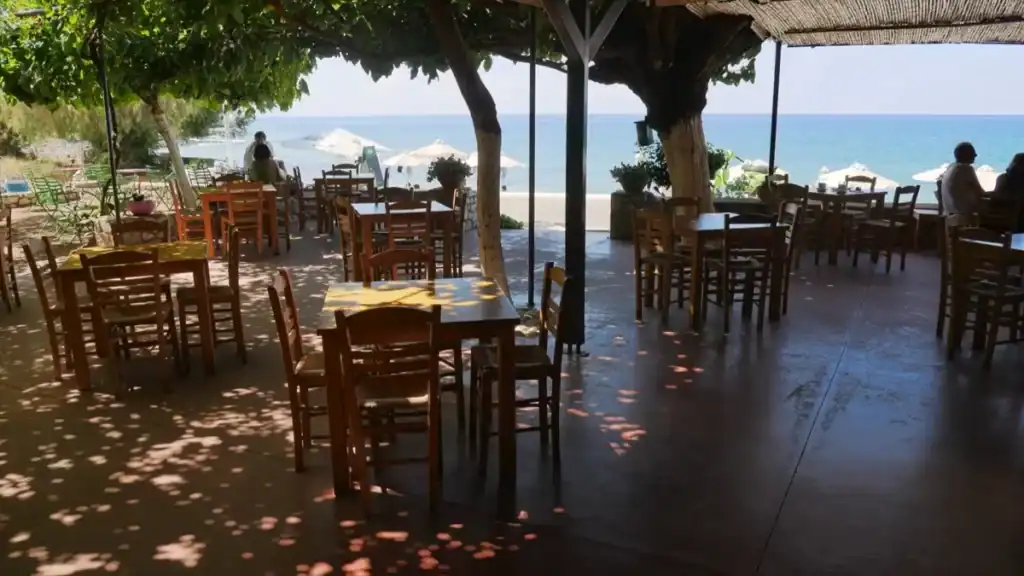
The coastline is beautiful, but it rarely feels commercial.
Pebble beaches, rocky coves and crystal-clear water dominate much of the shoreline, while organised beach facilities remain relatively limited outside the busiest villages. The focus stays firmly on the landscape rather than entertainment.
Travellers hoping to choose between the peninsula’s different swimming areas will find Mani Peninsula Beaches: Where People Actually Go useful, particularly when comparing the quieter southern coastline with the better-known western beaches.
| You’ll Find… | You Won’t Often Find… |
|---|---|
| 🪨 Historic stone villages | 🏨 Large resort complexes |
| 🍽️ Family-run tavernas | 🎡 Tourist entertainment districts |
| 🌊 Quiet coves | 🚤 Extensive water sports |
| 🚗 Scenic roads | 🚌 Large coach tours |
The Mani never feels unfinished.
It simply developed according to its own landscape rather than the expectations of mass tourism.
For many visitors, those absences become the very reasons the peninsula feels so refreshingly different from the rest of Greece.
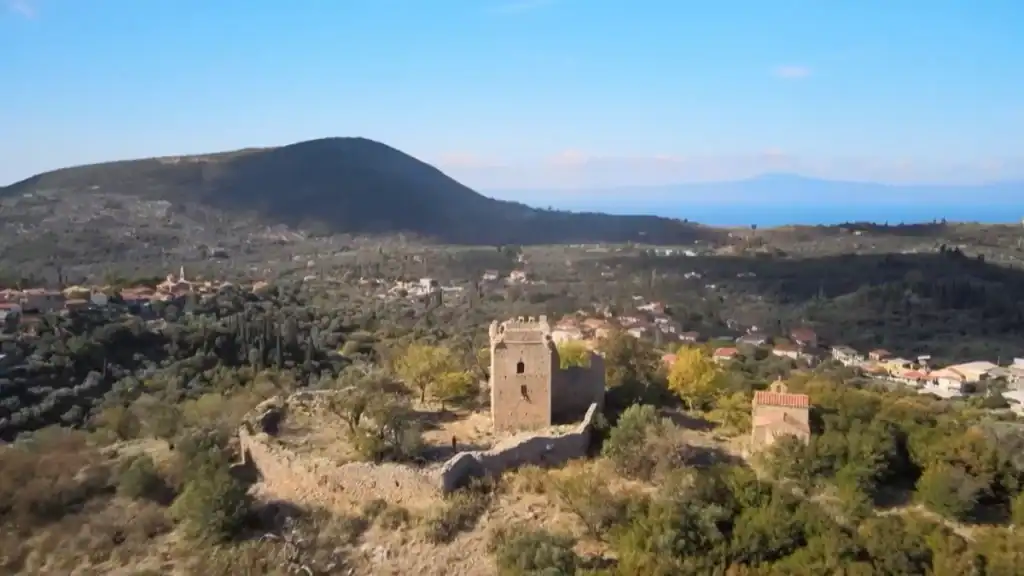
⛰️ The Landscape and What It Enforces
The Mani isn’t simply dramatic.
It shapes the way you travel.
Steep mountains, rocky slopes and a deeply indented coastline mean the landscape constantly dictates your speed, your route and often your plans. Instead of travelling across the peninsula quickly, you gradually move through it.
The Roads Follow the Terrain
Straight roads are rare.
Instead, routes climb over ridges, descend into fishing villages and weave between olive groves before suddenly revealing wide views across the sea. Distances that appear short on a map often take much longer than expected because the geography refuses to be hurried.
That’s why many visitors quickly discover that driving becomes one of the highlights rather than merely a way of getting around. Driving in the Mani Peninsula: Roads, Turns and What to Expect explains why journey times are best measured by scenery rather than kilometres.
The Landscape Encourages Slower Travel
The terrain changes your behaviour almost without you noticing.
Viewpoints appear unexpectedly. Quiet coves tempt you to stop for a swim. Small villages encourage an unplanned coffee or lunch. Before long, the itinerary matters less than whatever lies around the next bend.
The Mani doesn’t slow you down by accident.
The landscape quietly makes rushing feel like the wrong way to experience it.
| The Landscape Creates… | The Result |
|---|---|
| 🏔️ Mountain roads | Slower, more scenic journeys |
| 🌊 Hidden coves | Frequent unplanned stops |
| 🪨 Rugged terrain | Small traditional settlements |
| 🌿 Isolated valleys | A lasting sense of remoteness |
By the end of a few days, most visitors realise the peninsula hasn’t simply shown them different scenery. It has gently encouraged them to travel differently as well.
🏺 History That Hasn’t Been Curated
Many historic destinations carefully explain their past.
The Mani largely leaves you to discover it yourself.
Instead of visitor centres, interpretive displays and carefully managed routes, you’ll often find ruined towers, forgotten churches and historic sites that appear almost without warning beside quiet roads or hidden footpaths.
Discoveries Feel More Personal
History here isn’t packaged into a sequence of attractions.
You might arrive at a Byzantine church with no one else around, stumble across the remains of a hilltop castle or find an old tower house simply because you decided to explore a side road.
That sense of discovery is difficult to recreate once history has been heavily developed for tourism.
Travellers who enjoy exploring beyond the obvious often find Stone Paths and Silent Gorges: Hiking the Mani Peninsula especially rewarding, as many historic sites are reached by the same old routes local communities have used for centuries.
The Landscape Provides the Context
One reason these places feel so authentic is that they’re still surrounded by the landscapes that shaped them.
Castles overlook the same valleys they once defended. Churches remain among olive groves and stone terraces. Tower villages continue standing where family rivalries once determined where people lived and how they built.
The Mani doesn’t separate history from everyday life.
It allows both to exist together in the same landscape.
That approach won’t suit everyone. Visitors looking for detailed interpretation may prefer larger archaeological sites elsewhere in Greece. Those who enjoy piecing together the story for themselves often find the Mani considerably more rewarding.
It’s one of the few places where history still feels discovered rather than presented.
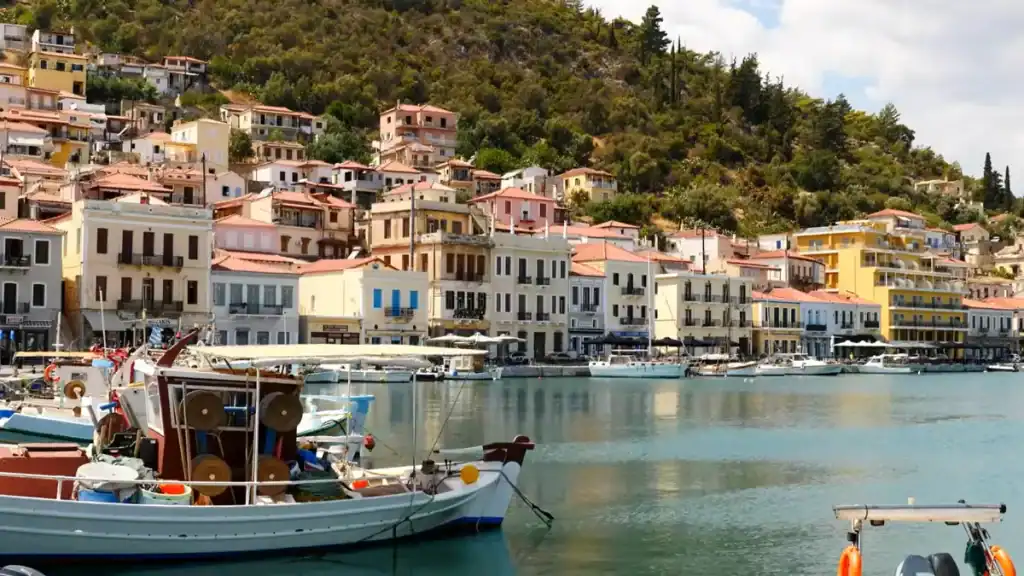
🌊 Gythio and the Return to Consensus Reality
After several days in the Deep Mani, Gythio feels surprisingly familiar.
Not because it lacks character, but because it reconnects you with a version of Greece that many travellers recognise more easily. The waterfront is livelier, the streets are broader and the pace feels slightly less remote than the villages further south.
A Gentle Transition Back
Gythio acts almost like a bridge between two worlds.
Fishing boats line the harbour, cafés spill onto the promenade and evenings revolve around the waterfront rather than isolated stone villages. It still feels authentically Greek, but the atmosphere is noticeably more conventional than the rugged interior of the Mani.
For many visitors, it’s the perfect place to pause before continuing north.
Understanding the Contrast
The real value of Gythio isn’t that it’s better.
It’s that it highlights what makes the Mani so distinctive.
After days spent driving narrow mountain roads, wandering through tower villages and discovering churches hidden among olive groves, returning to a busier harbour town makes you realise how unusual the peninsula really is.
Visitors planning their first journey often appreciate reading A Complete Guide to the Mani Peninsula: Untouched Greece alongside this article, as it places Gythio naturally within a complete itinerary through the region.
| Deep Mani | Gythio |
|---|---|
| 🪨 Tower villages | ⚓ Harbour town |
| 🤫 Quiet roads | 🚶 Bustling waterfront |
| ⛰️ Rugged landscapes | 🌊 Relaxed seaside atmosphere |
| 🏛️ Isolated history | 🍽️ More conventional visitor facilities |
You don’t fully appreciate the Mani until you leave it.
The contrast with Gythio makes the peninsula’s slower rhythm, rugged landscapes and independent character suddenly much easier to recognise.
That’s why so many travellers remember the Mani long after the details of their itinerary have faded. It isn’t simply another destination in Greece. It feels like a place that has quietly continued on its own path while much of the rest of the country evolved around it.