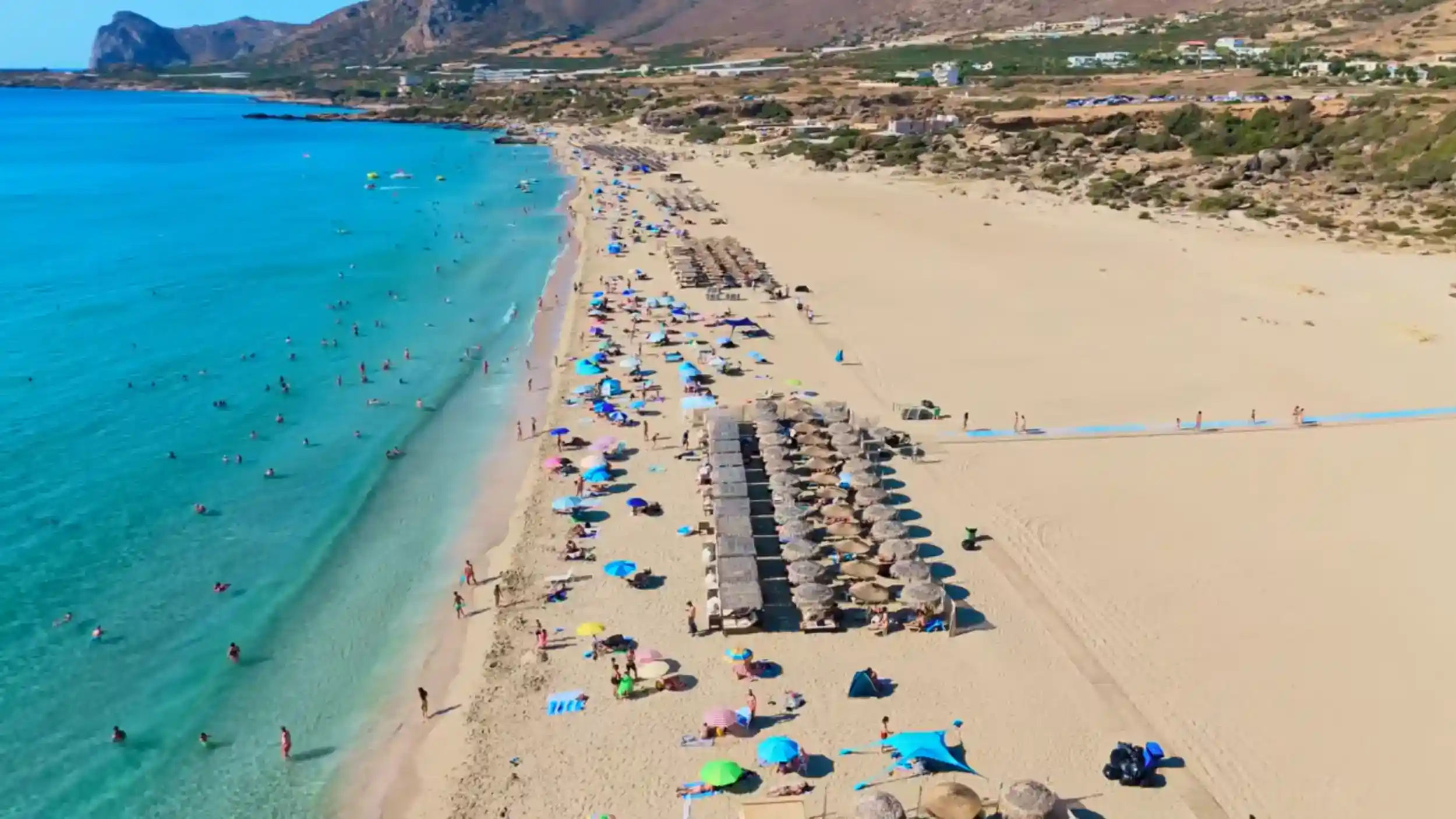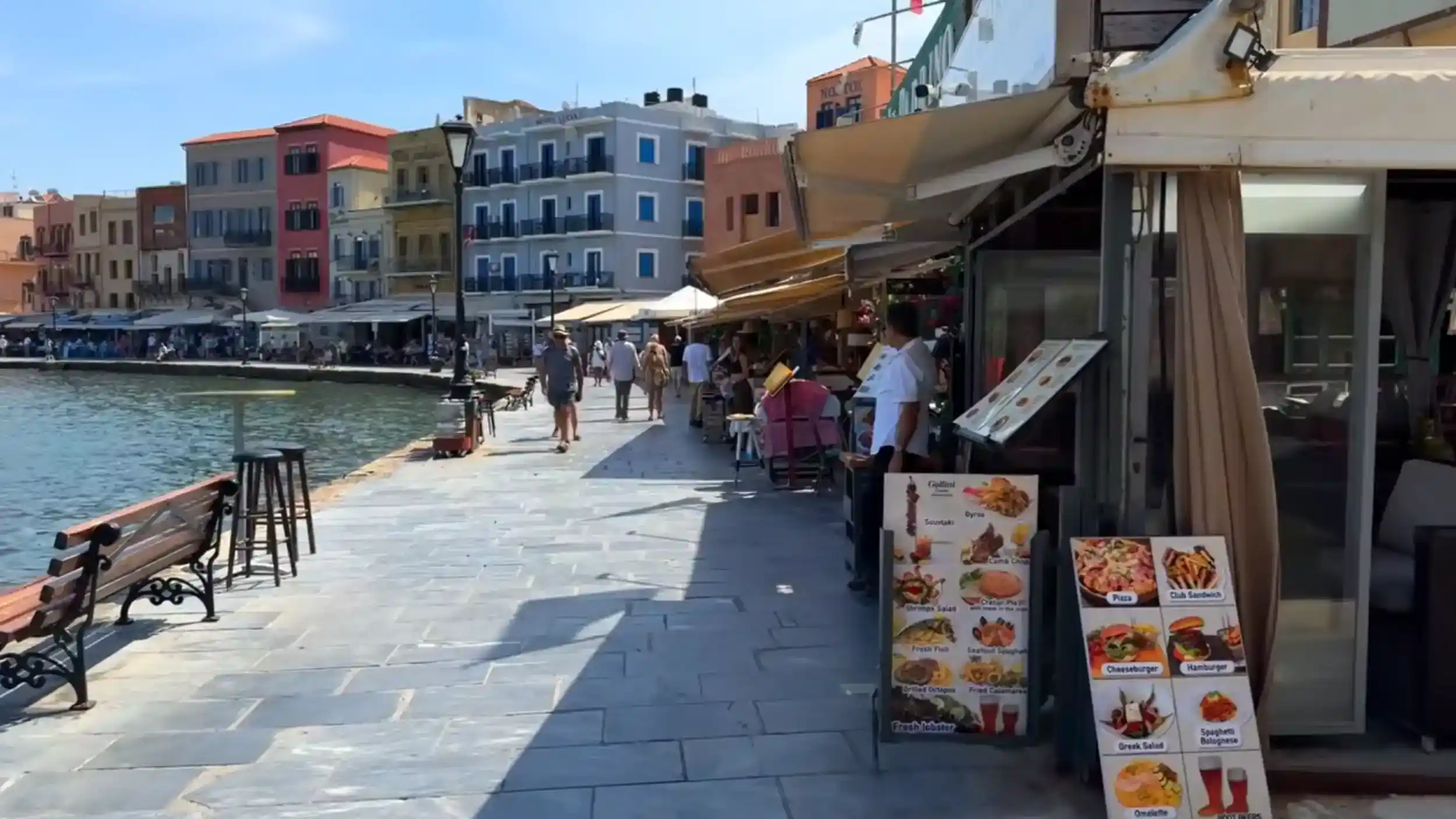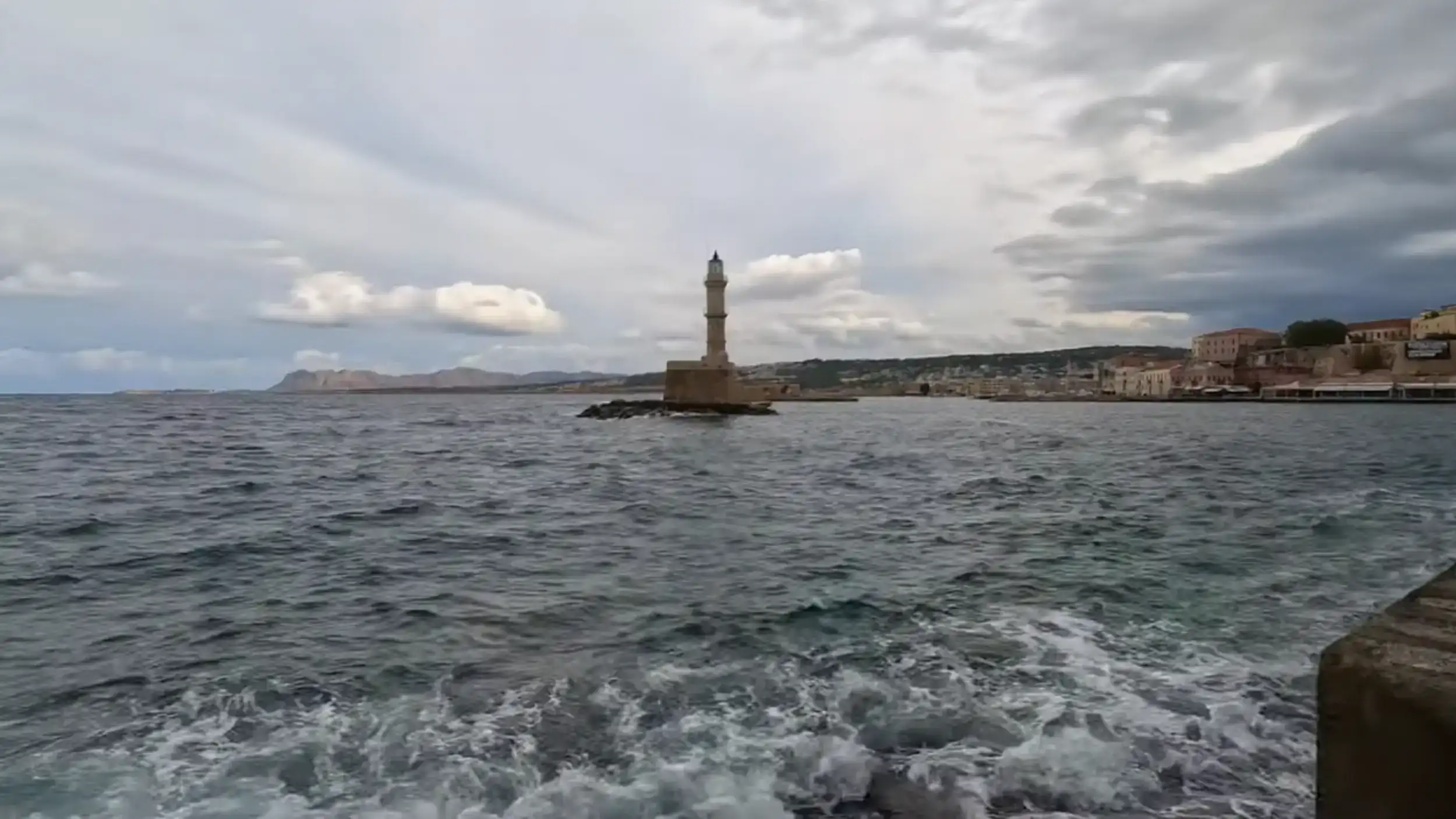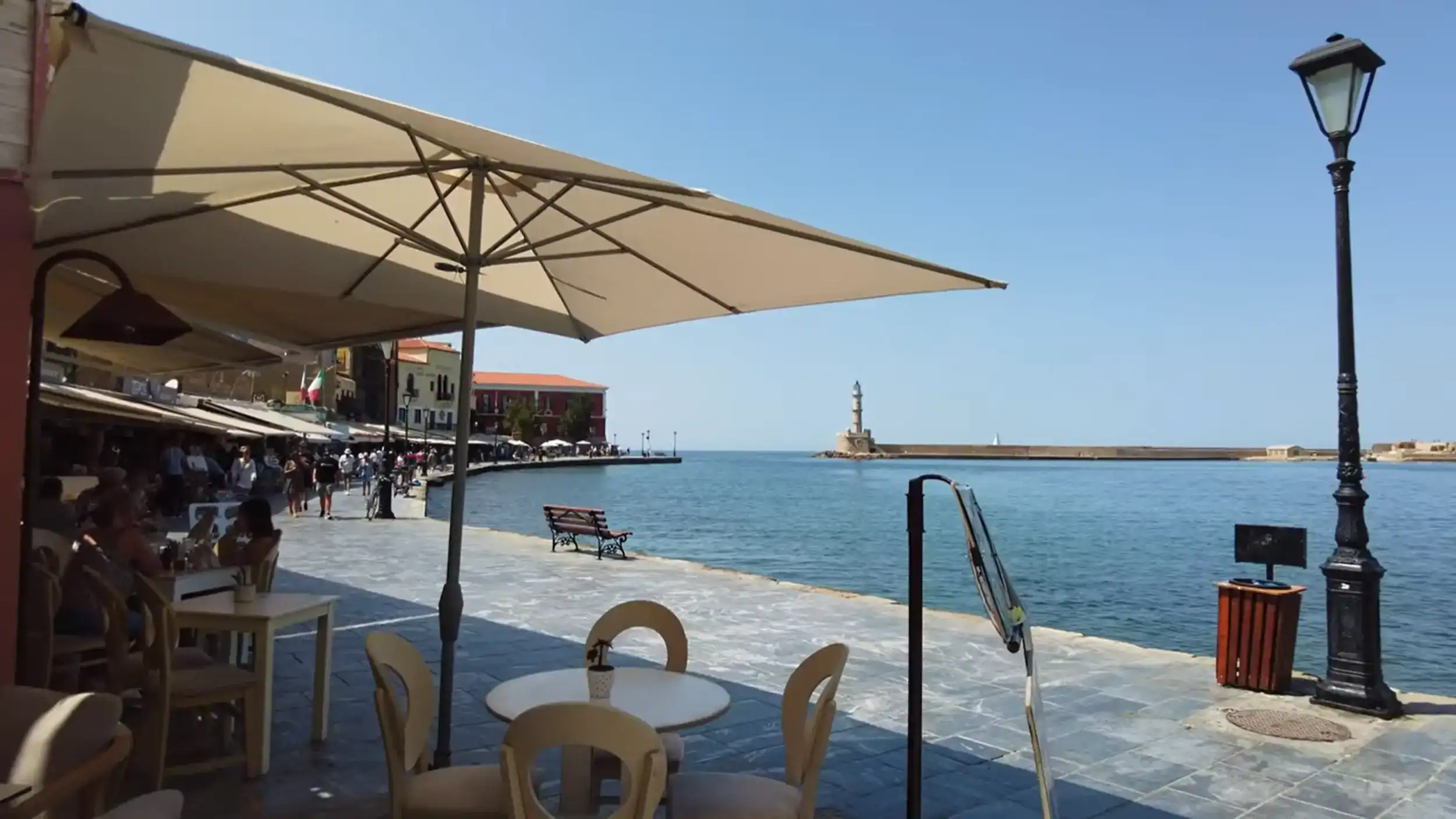
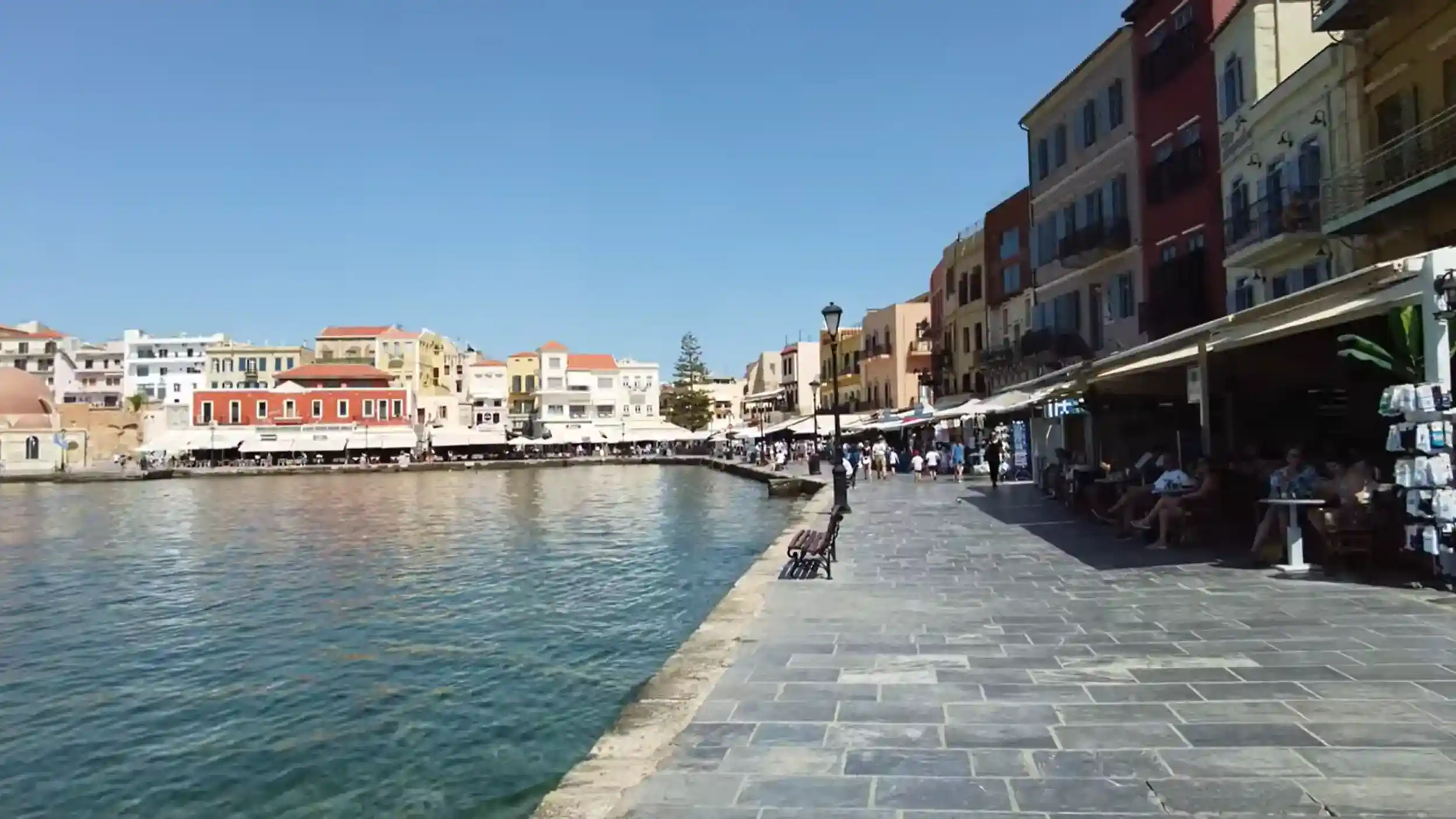
Chania harbour reveals a different side of itself each time you return. Light, weather, time of day and the changing rhythm of the Old Town transform the same waterfront into entirely different experiences, making it one of the few places in Crete that’s genuinely worth visiting more than once.
🔄 Why Chania Harbour Looks Different Every Visit
Most people think they’ve understood Chania harbour after a single walk.
In reality, they’ve only experienced one version of it.
The curved waterfront, Venetian buildings and lighthouse remain the same, but the atmosphere changes dramatically depending on the time of day, the weather and even the season. Returning isn’t about seeing something new. It’s about seeing the same place differently.
Experiencing Chania harbour at different times
Each visit reveals details that are easy to miss the first time.
The changing light alters the colour of the stone, the harbour becomes busier or quieter, and the waterfront shifts between being a working port and one of Crete’s busiest evening promenades.
| What changes | How it affects your visit |
|---|---|
| 🌅 Light | The Venetian stone changes colour throughout the day |
| 🌊 Water | Reflections and movement constantly reshape the harbour |
| 🚶 Atmosphere | From peaceful mornings to lively evenings |
| 🍂 Season | Crowds and pace vary dramatically across the year |
That’s why one visit rarely feels enough. The harbour isn’t defined by a single viewpoint or landmark, but by the way its character evolves from morning to night. The more often you return, the more obvious those changes become, gradually revealing why Chania’s waterfront has remained the city’s focal point for centuries.
🌅 Chania Harbour Before Nine
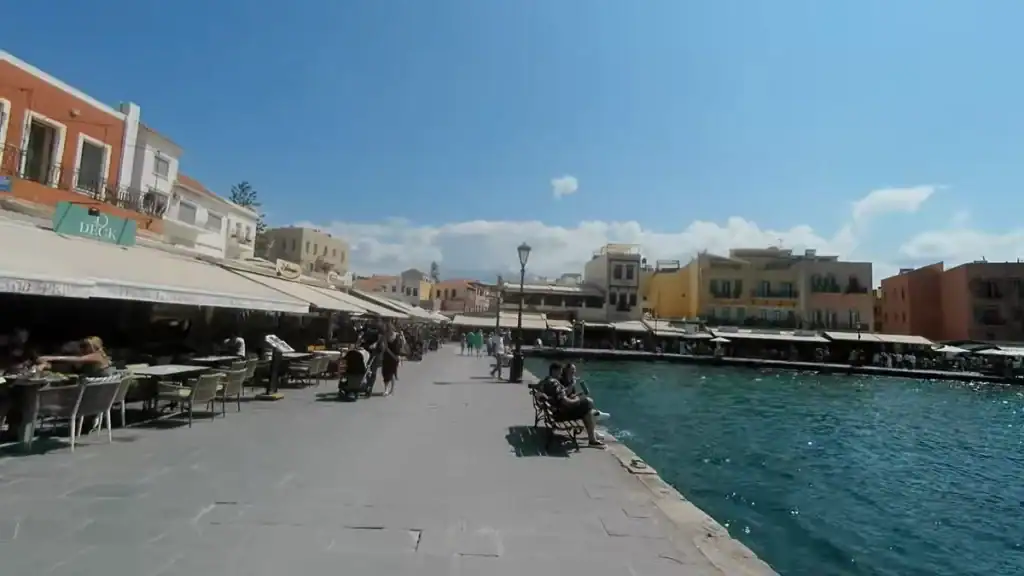
The harbour is at its quietest before most visitors arrive.
For a short time each morning, it belongs more to the city than to tourism.
Restaurant terraces are still being prepared, fishing boats return to the quayside and the waterfront feels noticeably calmer than it does just a few hours later.
Morning at Chania harbour
Early light changes the waterfront in subtle but important ways.
Long shadows reveal textures in the Venetian stonework, the water is usually calmer and the promenade becomes a place for local routines rather than sightseeing.
| Before 9am | What you’ll notice |
|---|---|
| 🌅 Soft morning light | Warmer colours across the harbour walls |
| 🎣 Fishing boats | Returning with the morning’s catch |
| 🚶 Promenade | Mostly locals rather than tour groups |
| ☕ Cafés | Quietly preparing for the day ahead |
There’s no need to arrive at sunrise.
Simply reaching the waterfront before the busiest hours lets you experience a side of Chania that’s easily missed by visitors who begin exploring later in the morning. It’s one of the simplest ways to understand why the harbour rewards repeat visits instead of just a single walk.
🕌 The Ottoman Mosque and What Changes Around It
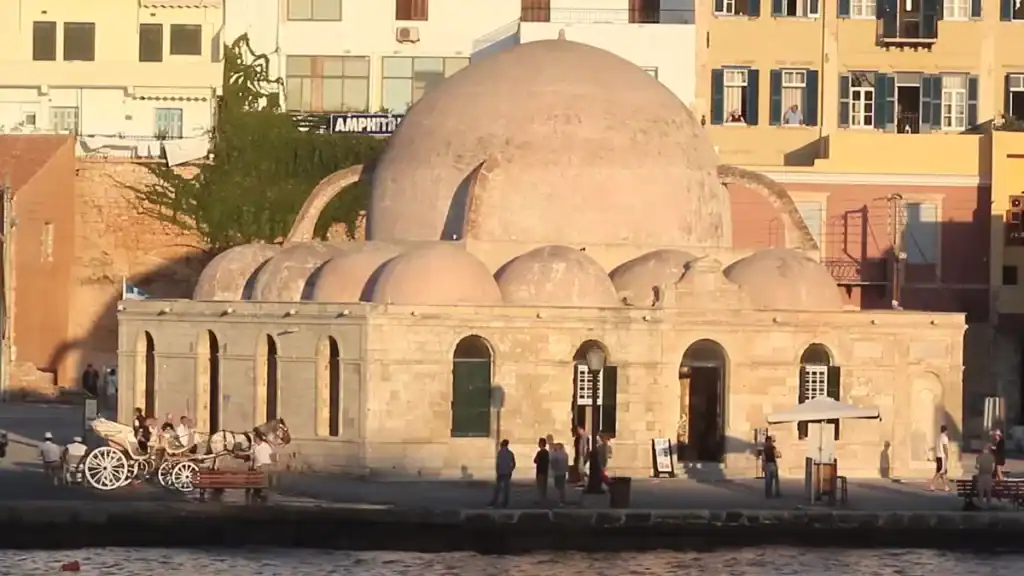
The mosque is one of the harbour’s most recognisable landmarks.
Most people photograph it.
Fewer notice how differently it feels as the day unfolds.
Standing at the edge of the waterfront, the former Küçük Hasan Mosque remains the visual centre of Chania harbour, yet the building itself hardly changes. It’s everything around it that does.
Watching the harbour around the mosque
The changing activity is as interesting as the architecture.
Morning brings photographers and walkers. By afternoon the square becomes a place to pause in the shade, while evening transforms it into one of the busiest meeting points on the waterfront.
| Time of day | What changes |
|---|---|
| 🌅 Morning | Soft light and quiet surroundings |
| ☀️ Midday | Bright stone and a busy square |
| 🌇 Late afternoon | Warmer colours begin to appear |
| 🌙 Evening | The mosque becomes part of the illuminated waterfront |
The building has survived Venetian, Ottoman and modern Greek Chania, quietly adapting to each new era. Today it serves as a reminder that the harbour’s history extends far beyond its cafés and waterfront views, rewarding anyone who pauses long enough to look beyond the obvious landmark itself.
🚶 Walking to the Chania Harbour Lighthouse
The lighthouse is the harbour’s natural destination.
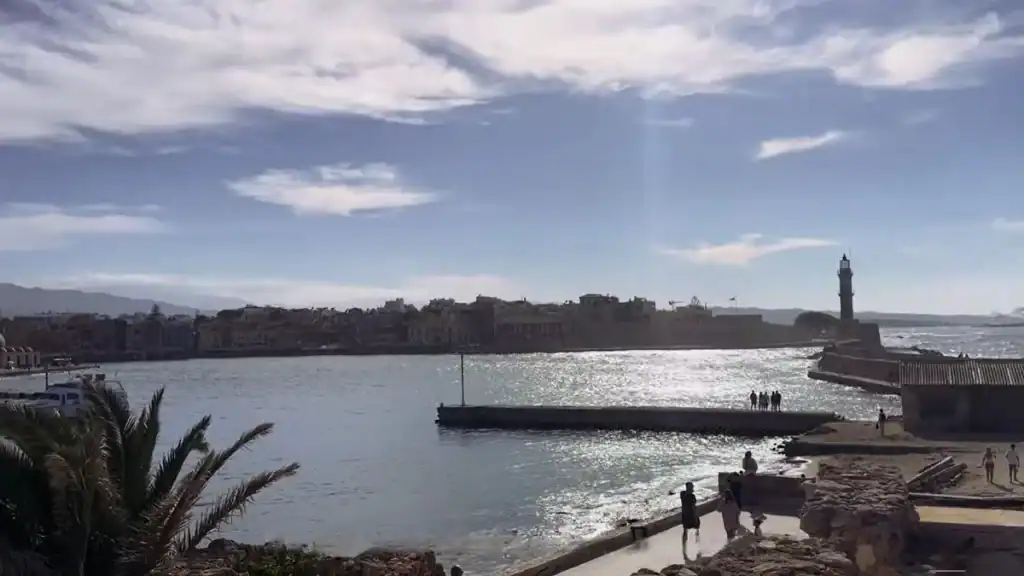
You can see it from almost every point along the waterfront, yet surprisingly few visitors make the walk.
The route follows the old harbour wall, gradually leaving behind the cafés and crowds until the open sea replaces the bustle of the promenade.
Views from Chania harbour lighthouse
The perspective changes completely once you reach the end.
Instead of looking out to sea, you’re looking back towards the Old Town, where centuries of Venetian, Ottoman and Greek architecture rise in layered rows above the waterfront.
| Along the walk | What you’ll experience |
|---|---|
| 🚶 Harbour wall | Around 10 to 12 minutes on foot |
| 🌊 Open sea | Clear views beyond the harbour entrance |
| 🗼 Venetian lighthouse | Chania’s best-known landmark |
| 🏛️ Old Town panorama | One of the city’s finest viewpoints |
Looking back from the lighthouse explains the harbour’s layout far better than any map. The curve of the waterfront, the position of the mosque and the tightly packed streets behind them all become easier to understand from this single viewpoint.
If you’re only spending one day in Chania, this short walk is one of the easiest ways to appreciate both the harbour and the Old Town from a completely different perspective.
🌊 What the Water Actually Does
The water is never just a backdrop.
It quietly changes the entire character of Chania harbour.
On calm mornings, the surface reflects the waterfront almost perfectly, doubling the colours of the Venetian buildings and making the harbour feel larger than it really is. Later in the day, the breeze reshapes those reflections into constantly shifting patterns.
Watching Chania harbour from the waterfront
The harbour rewards slowing down.
Rather than walking continuously, spend a few minutes sitting beside the water and watching how boats, light and wind interact throughout the day.
| Water conditions | What you’ll notice |
|---|---|
| 🌅 Calm mornings | Clear reflections across the harbour |
| ⛵ Fishing boats | Gentle movement around the quayside |
| 🌬️ Afternoon breeze | Rippling water and changing light |
| 🌙 Evening | Reflections of the illuminated waterfront |
The harbour was designed to shelter boats, and it still performs that role today. Fishing vessels, sailing yachts and excursion boats move through the same protected water that has served Chania for centuries, giving the waterfront a sense of continuity that’s easy to overlook when you’re focused only on the views.
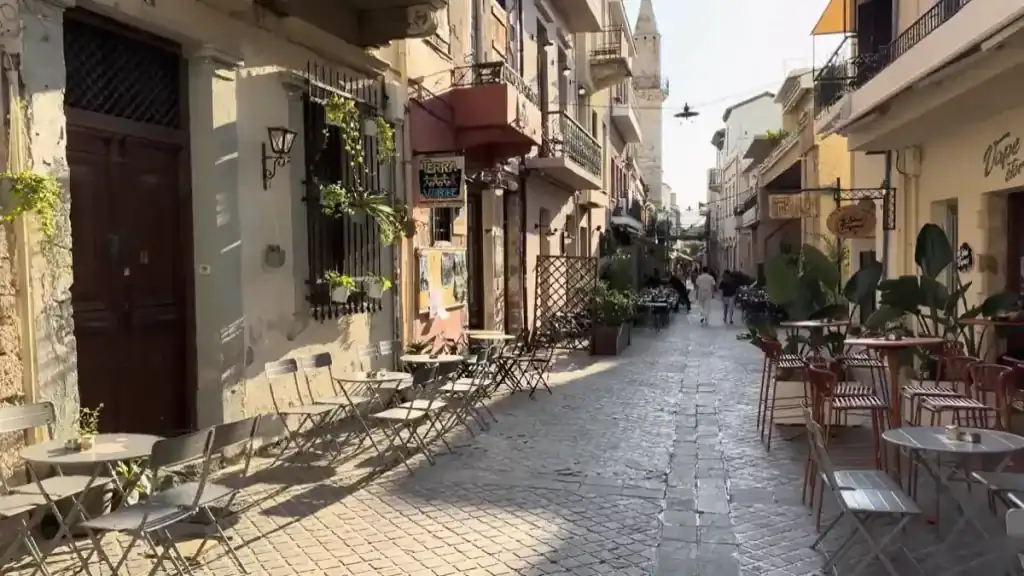
🏘️ The Old Town Behind the Waterfront
The harbour is only the beginning.
Step away from the waterfront and Chania changes within minutes.
The lively promenade gives way to narrow lanes, shaded courtyards and quieter neighbourhoods where the city’s Venetian, Ottoman and Greek influences become much easier to appreciate without the constant flow of people beside the sea.
Exploring beyond Chania harbour
The streets behind the waterfront reward curiosity more than planning.
Turning into a side street often leads to artisan workshops, small cafés or peaceful squares that many visitors never notice because they remain focused on the harbour itself.
| Behind the waterfront | What you’ll discover |
|---|---|
| 🛍️ Side streets | Independent shops and local crafts |
| ☕ Hidden cafés | Quieter places away from the promenade |
| 🏛️ Historic buildings | Layers of Venetian and Ottoman architecture |
| 🌳 Small squares | Peaceful corners to pause and explore |
The harbour gives Chania its first impression, but the Old Town gives it depth. Wandering without a fixed route often becomes the most rewarding part of the visit, revealing details that simply can’t be appreciated from the waterfront alone.
If you’d like to explore these quieter streets in more detail, Wandering Chania’s Old Town highlights many of the hidden corners that visitors frequently walk straight past.
🌆 Chania Harbour After Dark
As daylight fades, the harbour changes once again.
The working waterfront becomes one of Crete’s most atmospheric evening settings.
Lights begin to reflect across the water, restaurants fill with conversation and the Venetian buildings take on a warm glow that’s completely different from the bright colours of the afternoon.
Evening in Chania harbour
The atmosphere evolves gradually rather than all at once.
Many visitors arrive after dinner, but the hour before the busiest evening period often feels the most balanced, with enough activity to create a lively atmosphere without the waterfront becoming crowded.
| After sunset | What you’ll experience |
|---|---|
| ✨ Illuminated waterfront | Reflections shimmering across the harbour |
| 🍽️ Busy restaurants | The harbour at its liveliest |
| 🌊 Gentle evening breeze | Cooler temperatures beside the water |
| 📸 Night photography | Warm lighting and dramatic reflections |
The harbour is at its most photogenic after dark, but that’s only part of its appeal. Returning in the evening lets you experience a completely different rhythm from the calm mornings, reinforcing why so many visitors find themselves walking the same waterfront several times during a stay in Chania.
📝 Planning a Visit to Chania Harbour
You don’t need a detailed itinerary to enjoy the harbour.
A little planning simply helps you experience more than one version of it.
Most of the waterfront and Old Town can be explored on foot, making it easy to return several times throughout the day without feeling that you’re repeating the same walk.
Making the most of Chania harbour
Different times of day suit different experiences.
| Best time | Why visit then? |
|---|---|
| 🌅 Early morning | Quiet promenade and soft light |
| ☀️ Late morning | Walking to the lighthouse and exploring the Old Town |
| 🌇 Early evening | Comfortable temperatures before the busiest period |
| 🌙 After dark | Illuminated waterfront and lively atmosphere |
Allowing two or three visits during your stay reveals far more than trying to fit everything into a single afternoon. The harbour works best as a place you return to between exploring other parts of the city rather than as a one-time attraction.
If you’re planning to spend more time beyond the waterfront, Chania Beyond the Old Town explores the quieter neighbourhoods, beaches and hidden corners that many visitors never discover.
🔁 What Will Make You Return
Some places are impressive once.
Chania harbour is different because it never quite feels finished.
Even after you’ve walked to the lighthouse, explored the Old Town and watched the waterfront come alive after sunset, there’s a sense that another visit would reveal something slightly different.
Returning to Chania harbour
The harbour rewards repetition rather than completion.
Each return happens under different light, with different weather, at a different pace or after you’ve explored more of the city beyond the waterfront.
| Return visit | What feels different |
|---|---|
| 🌅 Morning | A quieter working harbour |
| ☀️ Afternoon | Changing light and slower moments beside the water |
| 🌇 Sunset | Warm colours across the Venetian buildings |
| 🌙 Evening | A lively waterfront with shimmering reflections |
Perhaps that’s the harbour’s greatest strength. Nothing dramatic changes from one visit to the next, yet the experience rarely feels identical. The combination of history, light, water and daily life continually reshapes the waterfront, making it somewhere that’s worth revisiting rather than simply ticking off.
Once you’ve experienced the harbour from several different perspectives, it’s worth continuing into Chania Beyond the Old Town, where quieter neighbourhoods and lesser-known corners reveal another side of the city that many visitors never discover.