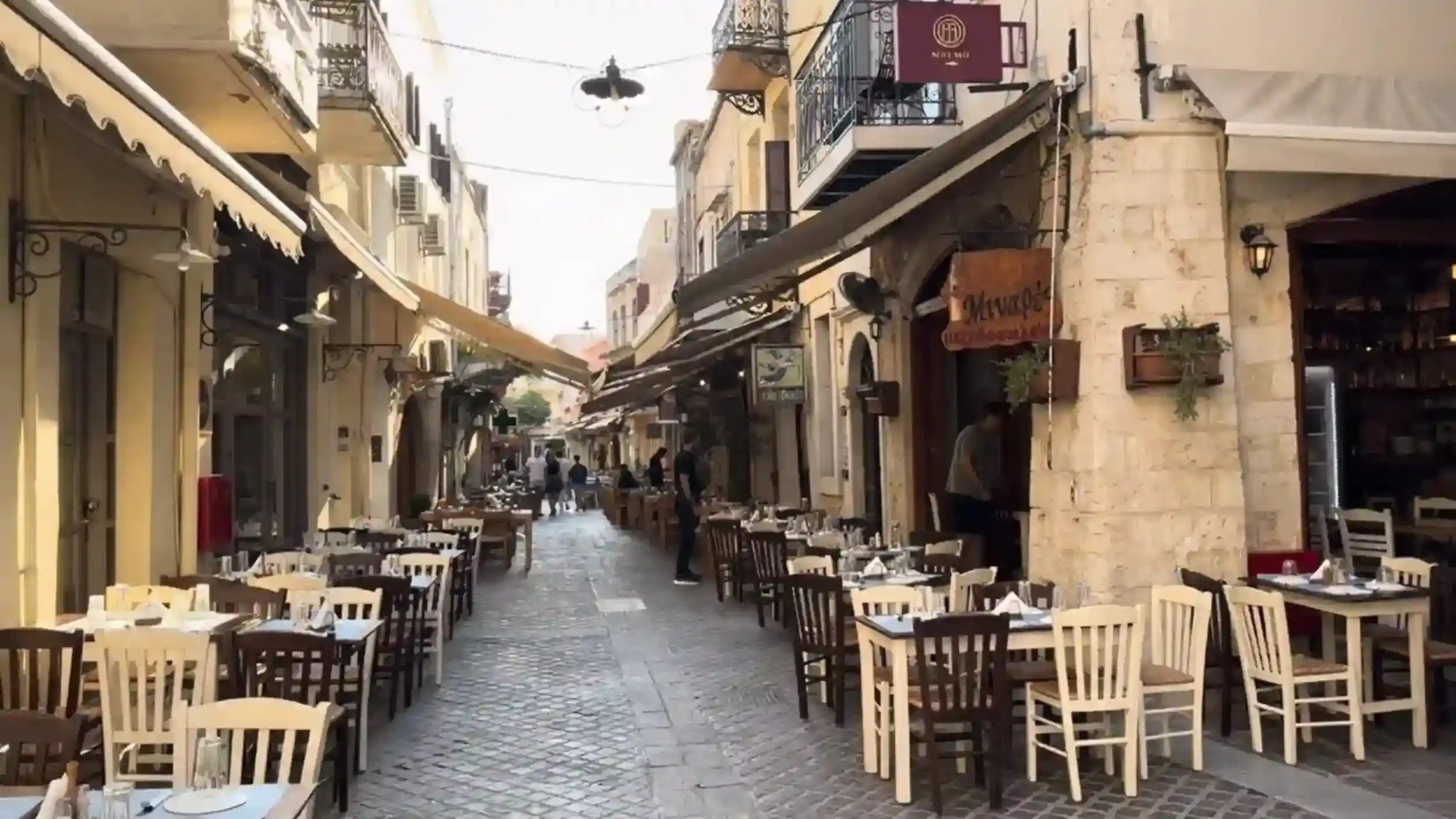
Chania Old Town isn’t somewhere to navigate efficiently. It’s a place where getting distracted is often the best part of the experience. Venetian streets, Ottoman courtyards and hidden squares blend together in ways that reward curiosity far more than careful planning, making every walk feel slightly different from the last.
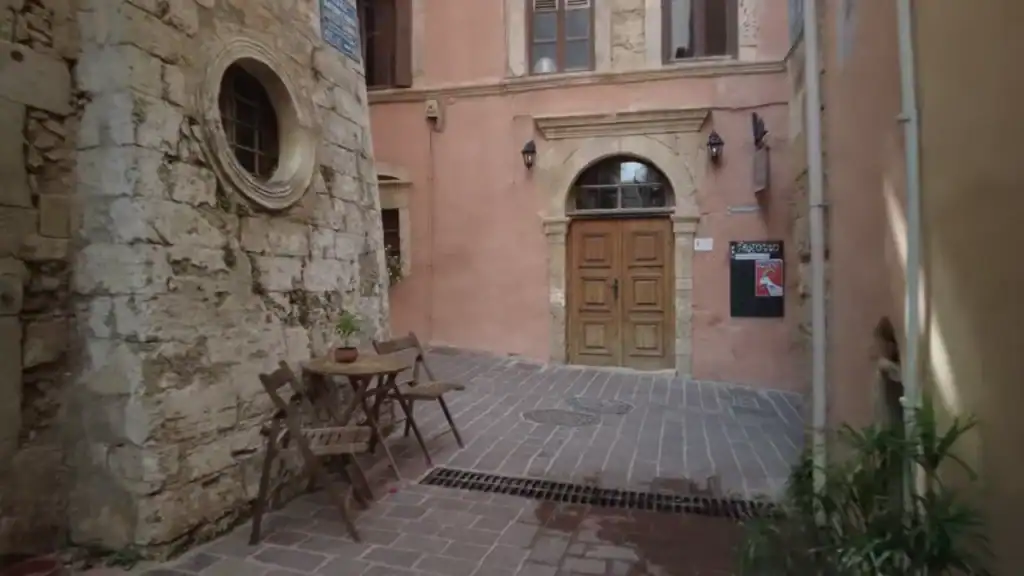
🏛️ How Chania Old Town Was Built
Every street in Chania Old Town reflects a different period of the city’s history.
Rather than replacing what came before, each civilisation left another layer behind.
The Venetians shaped the harbour, defensive walls and street layout. The Ottomans added mosques, hammams and courtyards, while later generations adapted many of those buildings for modern life. The result is a town where centuries of history sit side by side within a remarkably compact area.
Walking through Chania Old Town
The layout makes much more sense on foot than it does on a map.
Narrow lanes branch unexpectedly, small squares appear without warning and the streets rarely follow the straight lines that modern towns tend to favour.
| Historical layer | What remains today |
|---|---|
| 🏰 Venetian period | Harbour walls, fortifications and elegant stone buildings |
| 🕌 Ottoman period | Mosques, courtyards and distinctive architectural details |
| ⛪ Modern Greece | Restored churches, museums and lively public squares |
| 🚶 Medieval street plan | A maze of pedestrian lanes built long before cars |
That mixture explains why wandering feels so natural here. Every turn reveals another architectural detail or hidden courtyard, making exploration feel less like sightseeing and more like gradually uncovering the city’s story.

🥐 The Market, Bougatsa and Midday in Chania Old Town
Midday reveals a different side of Chania Old Town.
The harbour remains busy, but the market streets become the centre of everyday life.
This is where local shoppers browse produce, cafés fill with residents rather than day-trippers and the aromas of fresh bread, herbs and olive oil replace the salty air drifting in from the waterfront.
Eating bougatsa in Chania Old Town
Bougatsa is one of the foods visitors should try at least once.
Unlike the sweet custard version found elsewhere in Greece, the Cretan variation is filled with myzithra cheese and finished with cinnamon and sugar, creating a combination that’s both savoury and subtly sweet.
| Market experience | What to expect |
|---|---|
| 🧀 Local produce | Cheese, olives, herbs and seasonal fruit |
| 🥐 Fresh bougatsa | Warm filo pastry with myzithra cheese |
| ☕ Small cafés | Busy with local customers at lunchtime |
| 🍷 Traditional tavernas | Simple Cretan dishes away from the harbour |
The market sits only a short walk from the waterfront, yet the atmosphere feels completely different. Instead of people pausing to admire the harbour views, life revolves around shopping, eating and everyday routines, offering a glimpse of Chania that’s just as memorable as its famous Venetian streets.
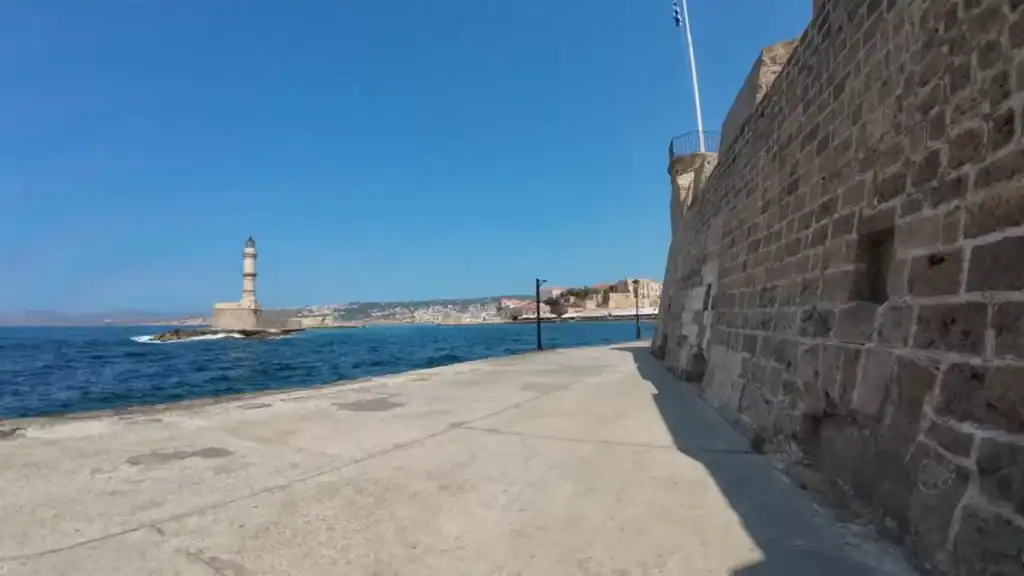
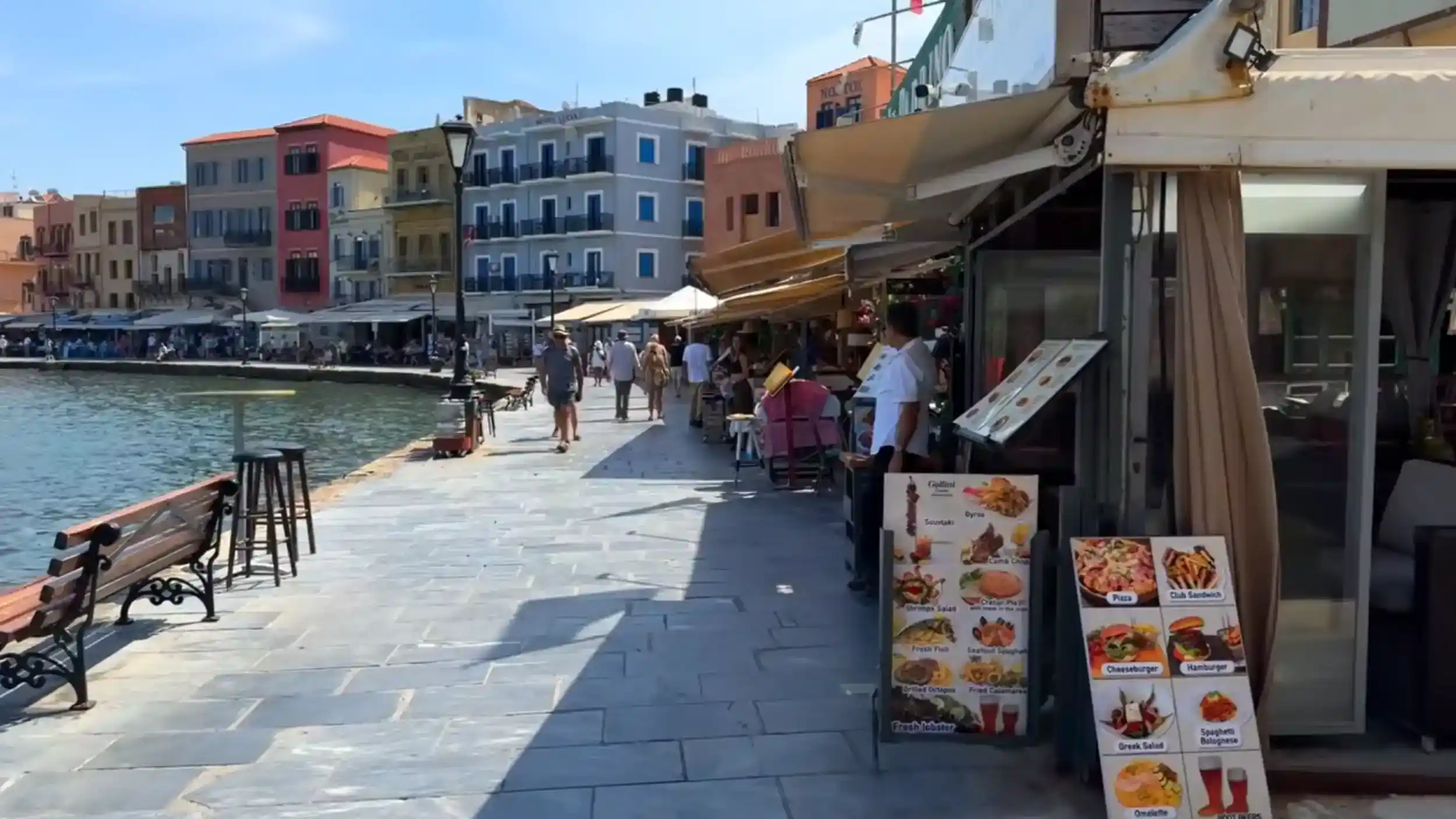
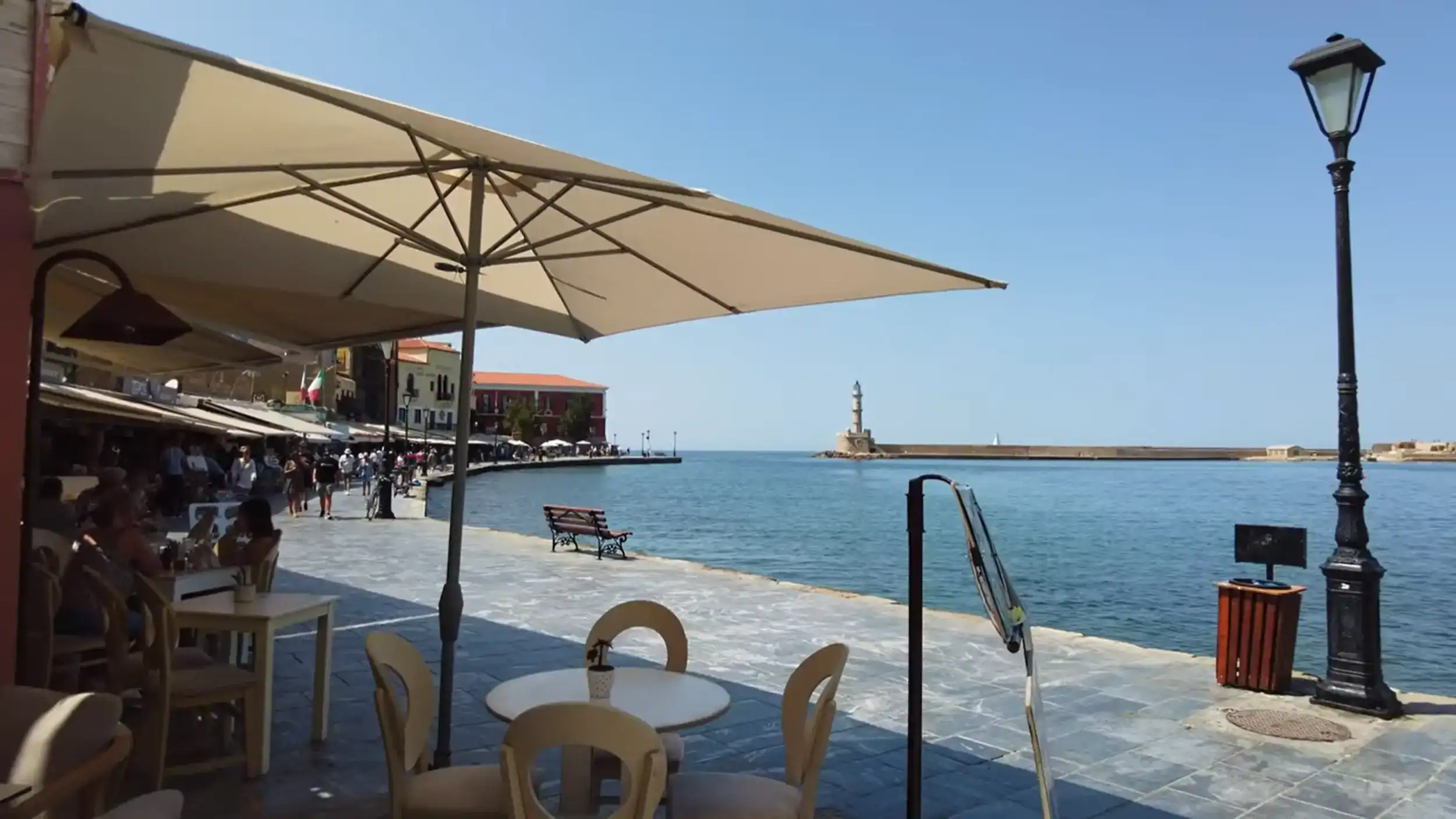
⚓ Chania Harbour: It Depends Where You Stand
The harbour changes with every few hundred metres.
Standing beside the cafés gives you one impression. Walking to the lighthouse gives you another entirely.
Most visitors experience Chania harbour from the waterfront promenade, but the views become far more interesting once you begin looking back towards the Old Town instead of out across the sea.
Seeing Chania harbour from different viewpoints
Changing your position changes the story the harbour tells.
| Viewpoint | What you’ll see |
|---|---|
| 🌊 Waterfront promenade | Colourful Venetian buildings and the curved harbour |
| 🚶 Harbour wall | Open sea and the lighthouse drawing closer |
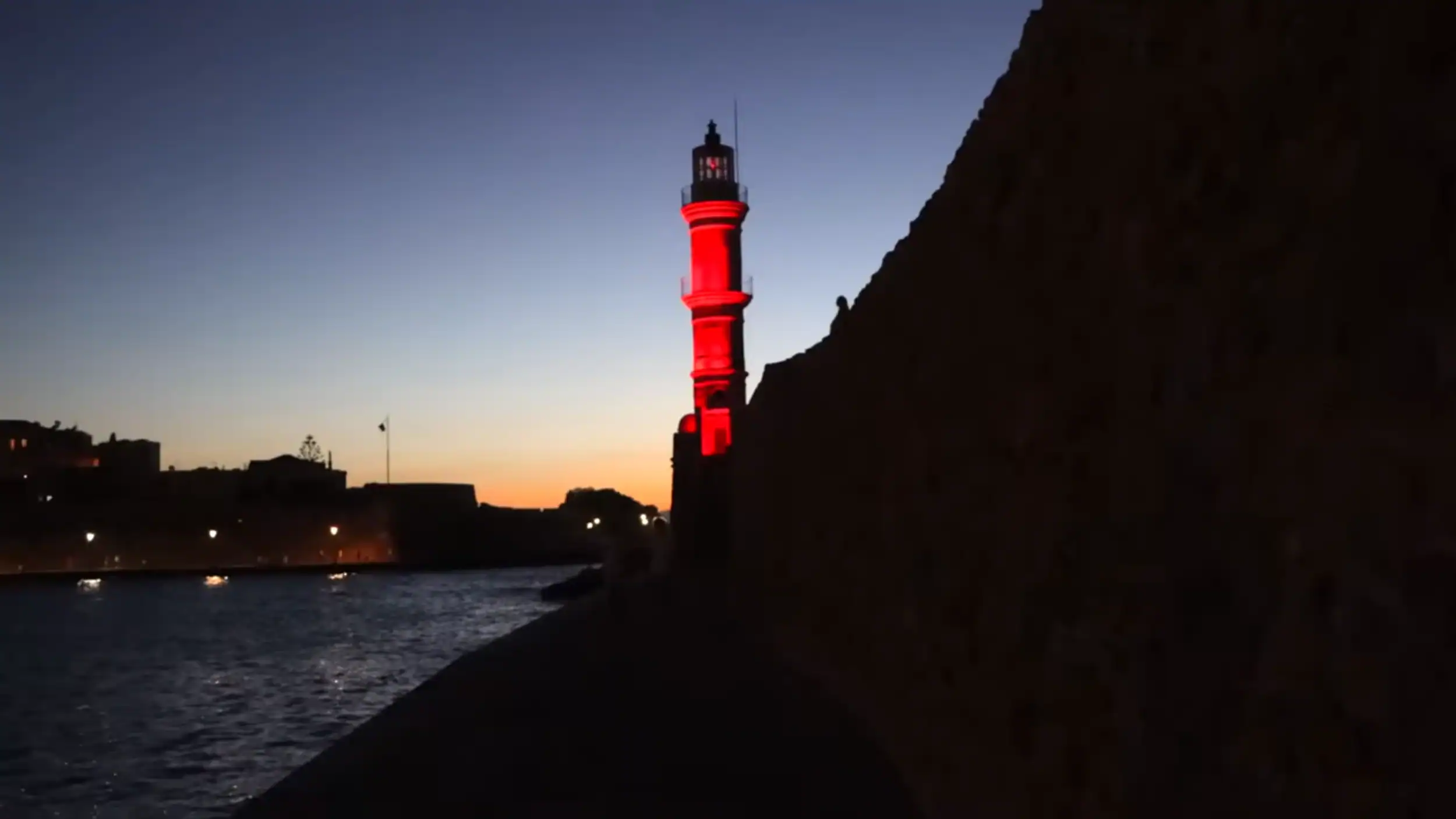
| 🗼 Lighthouse | The Old Town rising in layers behind the waterfront |
| 🏰 Firkas Fortress | A broader view across the harbour entrance |
Walking to the lighthouse is particularly worthwhile because it reverses the perspective. The harbour stops feeling like a collection of individual buildings and starts revealing itself as one connected landscape shaped by centuries of Venetian and Ottoman influence.
For a closer look at how the waterfront changes throughout the day, What Makes Chania’s Harbour Worth Multiple Visits explores why returning at different times creates completely different experiences.
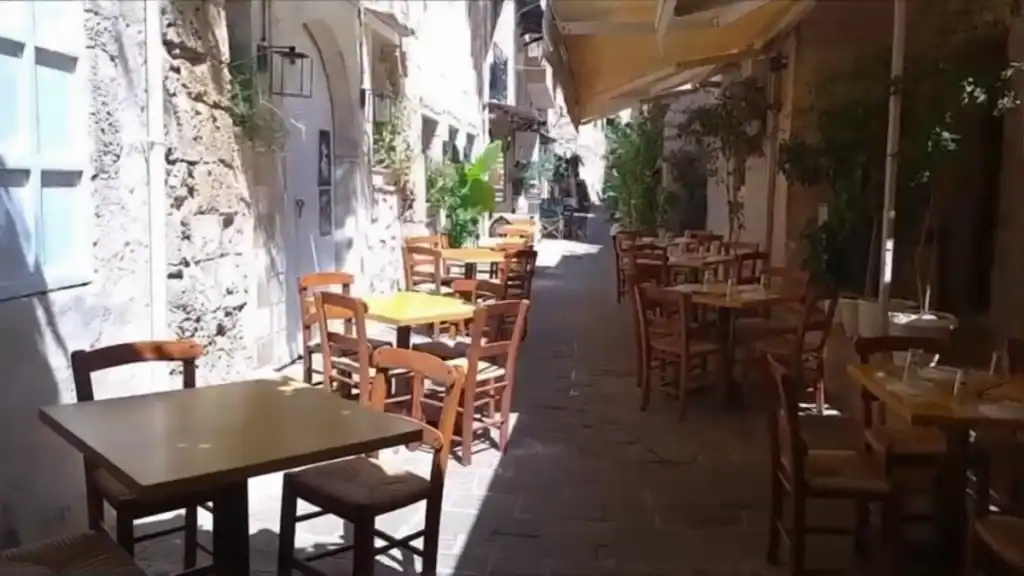
⛪ The Jewish Quarter and Splantzia
The atmosphere changes almost as soon as you leave the waterfront.
The streets become quieter, the buildings less polished and the crowds noticeably thinner.
These neighbouring districts reveal a slower, more reflective side of Chania Old Town, where history feels woven into everyday life rather than presented as a series of landmarks.
Exploring beyond the main streets
Both neighbourhoods reward visitors who wander without a fixed route.
Small courtyards, shaded cafés and historic buildings appear naturally between narrow lanes, making this one of the most enjoyable parts of the Old Town to explore on foot.
| Neighbourhood | Why visit |
|---|---|
| ✡️ Jewish Quarter | Quiet lanes, Etz Hayyim Synagogue and hidden courtyards |
| ⛪ Splantzia | Historic square, cafés and the Church of Agios Nikolaos |
| 🌳 Small squares | Peaceful places to pause away from the harbour |
| 🚶 Narrow alleys | A more authentic side of the Old Town |
Splantzia is particularly memorable because it reflects the city’s layered history so clearly. The Church of Agios Nikolaos still combines a bell tower with a minaret, quietly illustrating the Venetian, Ottoman and Greek influences that continue to shape Chania today. It’s one of those details that’s easy to miss unless you venture beyond the harbour promenade.
🍷 Eating Away from Chania Old Town’s Waterfront
The harbour has the views.
The backstreets have the atmosphere.
Walking just two or three minutes inland opens up a completely different dining scene, where quiet courtyards, family-run tavernas and hidden wine bars replace the busy restaurants lining the waterfront.
Finding local food in Chania Old Town
Some of the most memorable meals are found by wandering rather than searching.
The quieter streets encourage you to slow down, read a menu or simply follow whichever courtyard feels most inviting.
| Away from the harbour | What you’ll find |
|---|---|
| 🍽️ Traditional tavernas | Authentic Cretan cooking in quieter settings |
| 🍷 Small wine bars | Local wines and regional cheeses |
| 🌿 Courtyard restaurants | Peaceful dining hidden behind stone walls |
| ☕ Independent cafés | Relaxed places to escape the busiest streets |
The experience changes as much as the food. Conversations replace the constant flow of people, service feels less hurried and the setting often becomes just as memorable as the meal itself.
If you’re planning to explore more of the city after lunch, Chania Beyond the Old Town continues into the quieter neighbourhoods, beaches and lesser-known corners that many visitors never reach.
🗺️ Getting Around Chania Old Town
The best way to explore Chania Old Town is simply to walk.
Cars quickly become unnecessary once you enter the historic centre.
The narrow lanes, small squares and pedestrian streets were never designed for modern traffic, making walking both the easiest and the most rewarding way to experience the Old Town.
Walking through Chania Old Town
Most of the main sights sit within a surprisingly compact area.
That means you can move between the harbour, market, Jewish Quarter and Splantzia without long walks, while still leaving plenty of time to wander into quieter streets along the way.
| Getting around | What to expect |
|---|---|
| 🚶 On foot | The easiest way to explore every neighbourhood |
| 🚌 Bus station | A short walk from the Old Town entrance |
| 🚕 Taxis | Convenient for reaching the airport or ferry port |
| 🚗 Car hire | Useful for exploring western Crete, not the Old Town itself |
Distances can be deceptive. A route that appears short on a map often takes longer because interesting side streets constantly tempt you away from your original direction. That’s part of the charm rather than an inconvenience.
If you’re arriving for the first time, Getting to Chania explains the easiest ways to reach the city by air, ferry and road before you begin exploring the Old Town.
✨ What Chania Old Town Keeps Giving
Some destinations are easy to finish.
Chania Old Town never quite is.
You can spend an entire day exploring its streets and still leave with the feeling that another courtyard, another café or another hidden lane is waiting around the next corner.
Returning to Chania Old Town
The Old Town rewards curiosity more than careful planning.
Each visit uncovers details that seemed invisible before, not because they were hidden, but because your attention naturally shifts from one walk to the next.
| Return visit | What you’ll notice |
|---|---|
| 🏛️ Architecture | New Venetian and Ottoman details in familiar streets |
| ☕ Hidden cafés | Places missed on previous walks |
| 🌅 Changing light | Different moods from morning to evening |
| 🚶 Side streets | New routes leading to quiet squares and courtyards |
Perhaps that’s why so many visitors return more than once during the same trip. The landmarks remain unchanged, yet the experience rarely feels repetitive. The Old Town quietly rewards slower exploration, proving that its greatest attraction isn’t a single building or viewpoint, but the atmosphere created by centuries of history layered into every street.
Once you’ve explored the historic centre, Chania Beyond the Old Town reveals another side of the city, from quieter waterfronts and local neighbourhoods to places that many visitors never think to include in their itinerary.