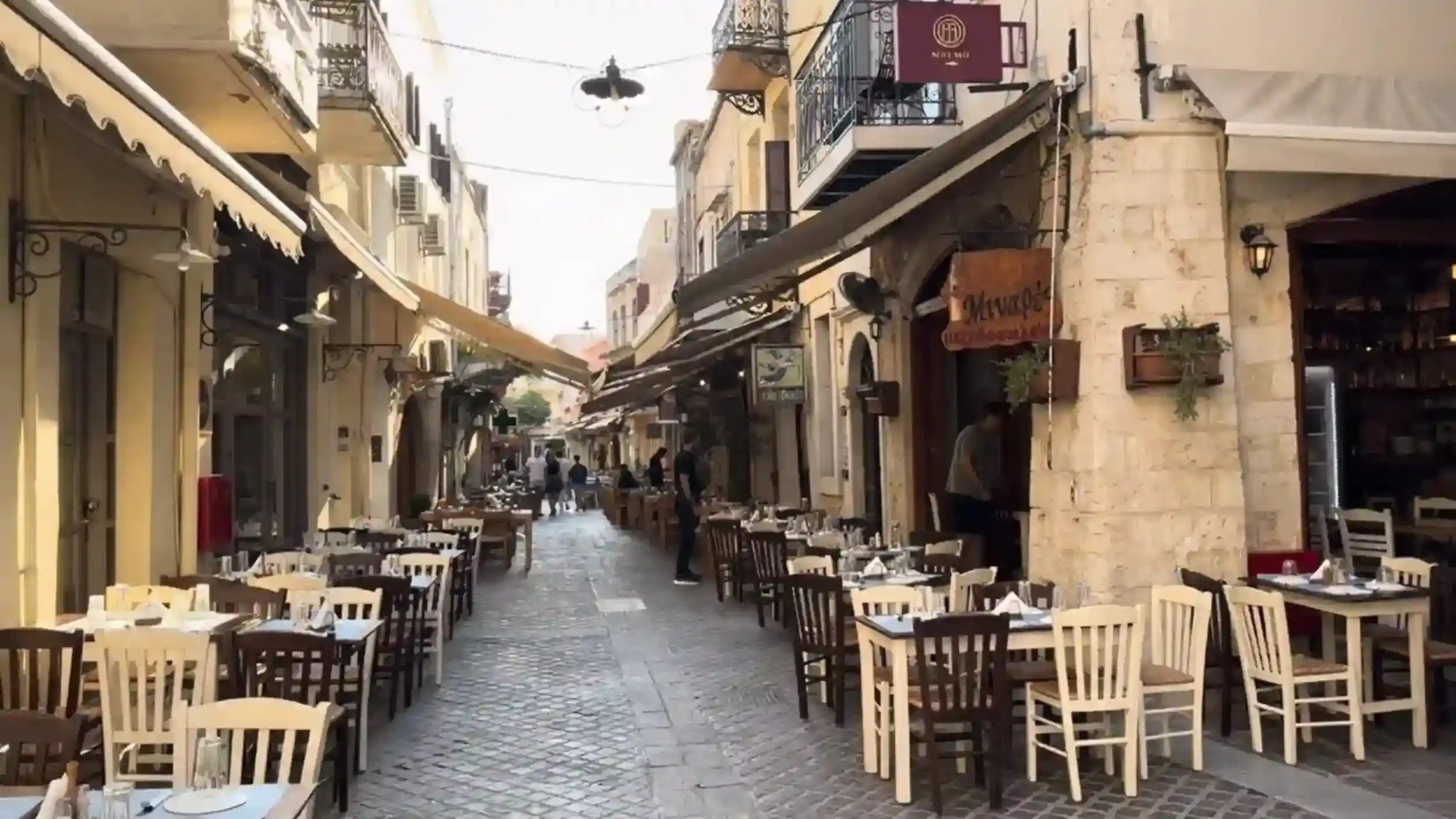
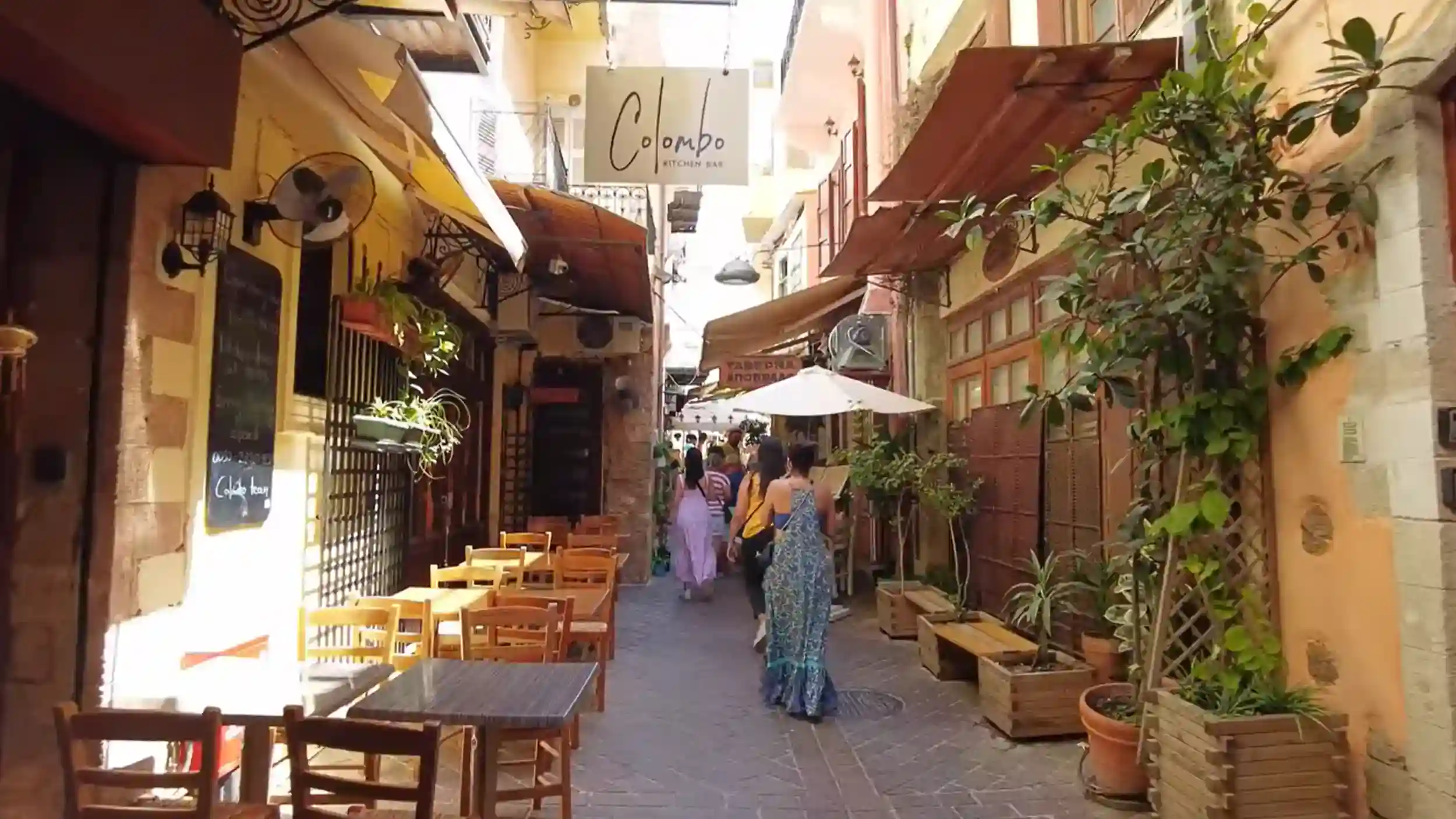
Walking in Chania worked best for us when we stopped trying to follow a sightseeing route. The Old Town is compact enough to wander, and some of our most interesting discoveries came from choosing a narrow alley or courtyard simply because it looked worth exploring.
Some turnings led us nowhere particularly important. I would still take them again.
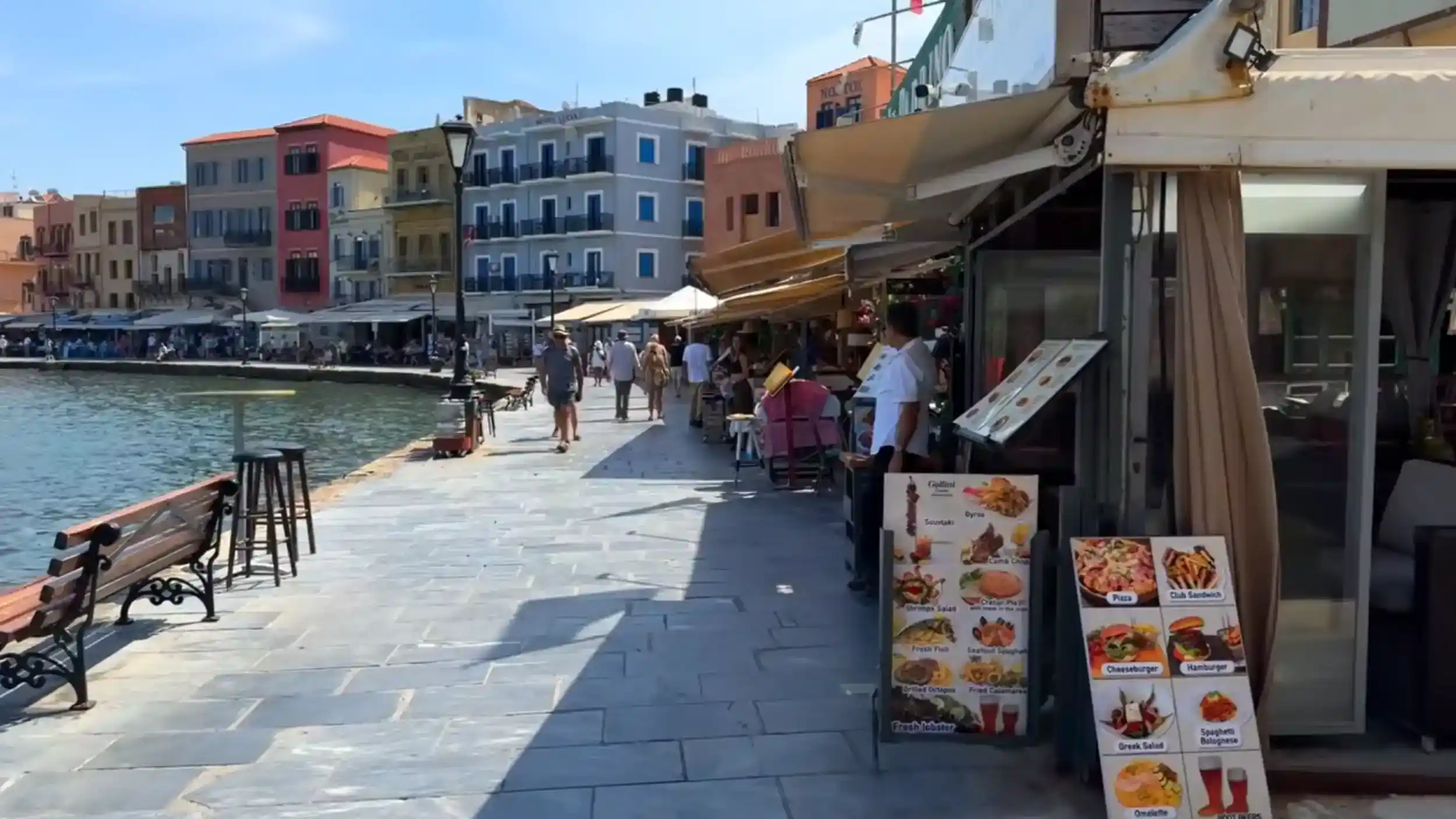
What surprised us was how quickly the atmosphere changed. Around the harbour the crowds returned almost immediately, yet several streets back Chania could feel remarkably different.
🧭 Why We Kept Walking the Same Chania Streets
I often feel I understand the basic shape of a historic centre after one long afternoon.
Chania did not work like that for us.
The Old Town kept changing as we moved through it. A busy shopping street could become a quiet courtyard within a few steps, while routes we had already walked revealed cafés, workshops and architectural details we had somehow missed before.
Why Did Familiar Chania Streets Keep Feeling Different?
We got far more from the city when we stopped treating the shortest route as the best one.
Within a few minutes of leaving the waterfront, we repeatedly found ourselves in quieter neighbourhoods where everyday life felt far less shaped by the crowds gathering around the harbour.
| One walk | What you’ll discover |
|---|---|
| 🏛️ Venetian streets | Layers of architecture spanning centuries |
| ☕ Hidden cafés | Quiet courtyards away from the busiest areas |
| 🛍️ Independent shops | Local crafts, ceramics and traditional goods |
| 🌳 Small squares | Peaceful places that rarely appear on itineraries |
I do not think there is a perfect route through Chania. The city grew over centuries rather than around a sightseeing circuit, and that is exactly why wandering suits it. Whenever we followed an interesting side street instead of the map, the walk usually became more memorable rather than less efficient.
🏘️ Where We Found Chania’s Most Interesting Streets
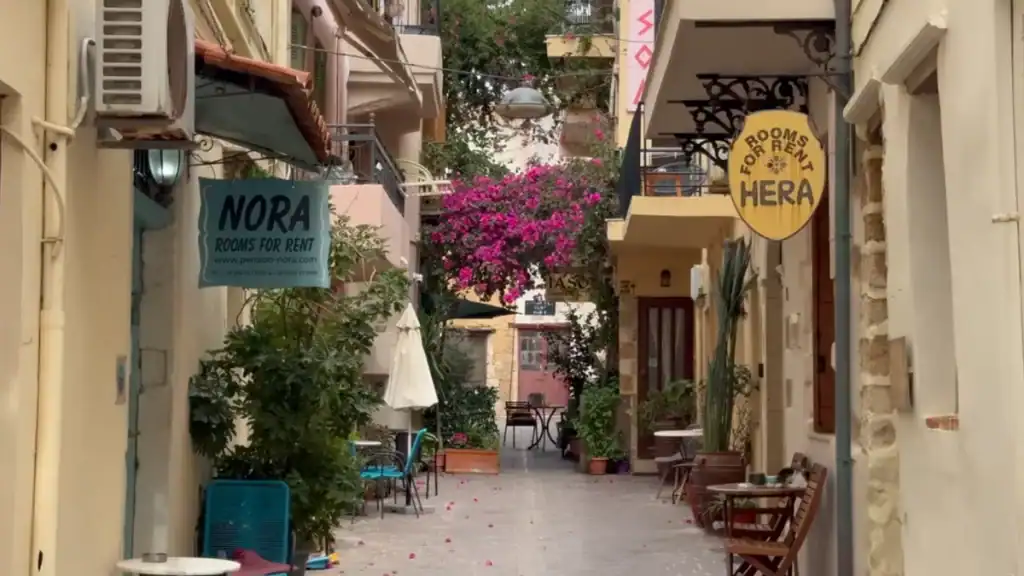
Not every street in Chania stayed with us in the same way.
Some made us want to keep walking; others made us stop almost immediately.
For us, the busiest routes were rarely the most memorable. The quieter lanes branching away from them were where old stone buildings, flowering balconies and family-run businesses began replacing souvenir shops and busy cafés.
Which Chania Neighbourhoods Were Best for Wandering?
Our best discoveries usually came just after we turned away from the obvious route.
| Area | Why explore it |
|---|---|
| 🛍️ Halidon Street | The main route linking the harbour and market |
| 🌿 Side alleys | Hidden courtyards, artisan shops and quieter cafés |
| ⛪ Splantzia | Historic square with a slower local atmosphere |
| 🕌 Topanas | Narrow Ottoman-era streets near the harbour |
We noticed a different rhythm in each area. Halidon felt lively, while Splantzia made us slow down beneath the shade of its trees. Topanas was the biggest contrast: its narrow lanes and weathered stone buildings could feel surprisingly removed from the bustle only a few minutes away on the waterfront.
If you’d like to explore these districts in greater depth, Why Wandering Chania Old Town Feels Unlike Anywhere Else looks at the history and hidden corners that make each neighbourhood distinct.
🧺 Where Walking in Chania Starts to Feel More Local
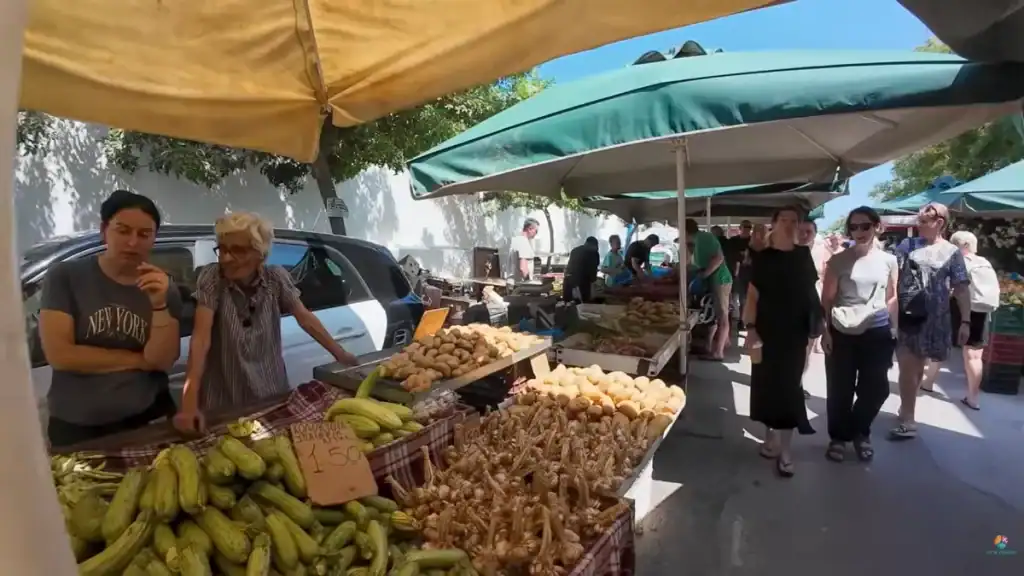
The market was where walking through Chania began to show us a more everyday side of the city.
Here, we stopped feeling quite so much like we were moving between sights.
The Saturday market and covered hall revolve around shopping rather than historic buildings. We liked that contrast with the harbour because it made the city feel lived in rather than arranged around visitors.
What Did Chania Market Add to Our Walk?
We found the market an easy way to let a walk drift naturally from the Old Town into one of the city’s busier local areas.
| Market stop | What you’ll find |
|---|---|
| 🥕 Saturday market | Seasonal fruit, vegetables, herbs and local produce |
| 🧀 Covered hall | Cheese, olive oil, spices and traditional delicacies |
| ☕ Market cafés | Informal coffee stops used by local residents |
| 🛍️ Surrounding streets | Independent food shops and bakeries |
I would not treat the market as another attraction to tick off. What we enjoyed was the change of atmosphere: conversations, food aromas and the steady rhythm of people actually shopping. After the polished waterfront, it was a useful reminder that Chania is a living city rather than an open-air museum.
⚓ Why We Walked Beyond Chania’s Harbour Cafés
Many of our Chania walks naturally began around the harbour.
We found it much more rewarding when they did not end there.
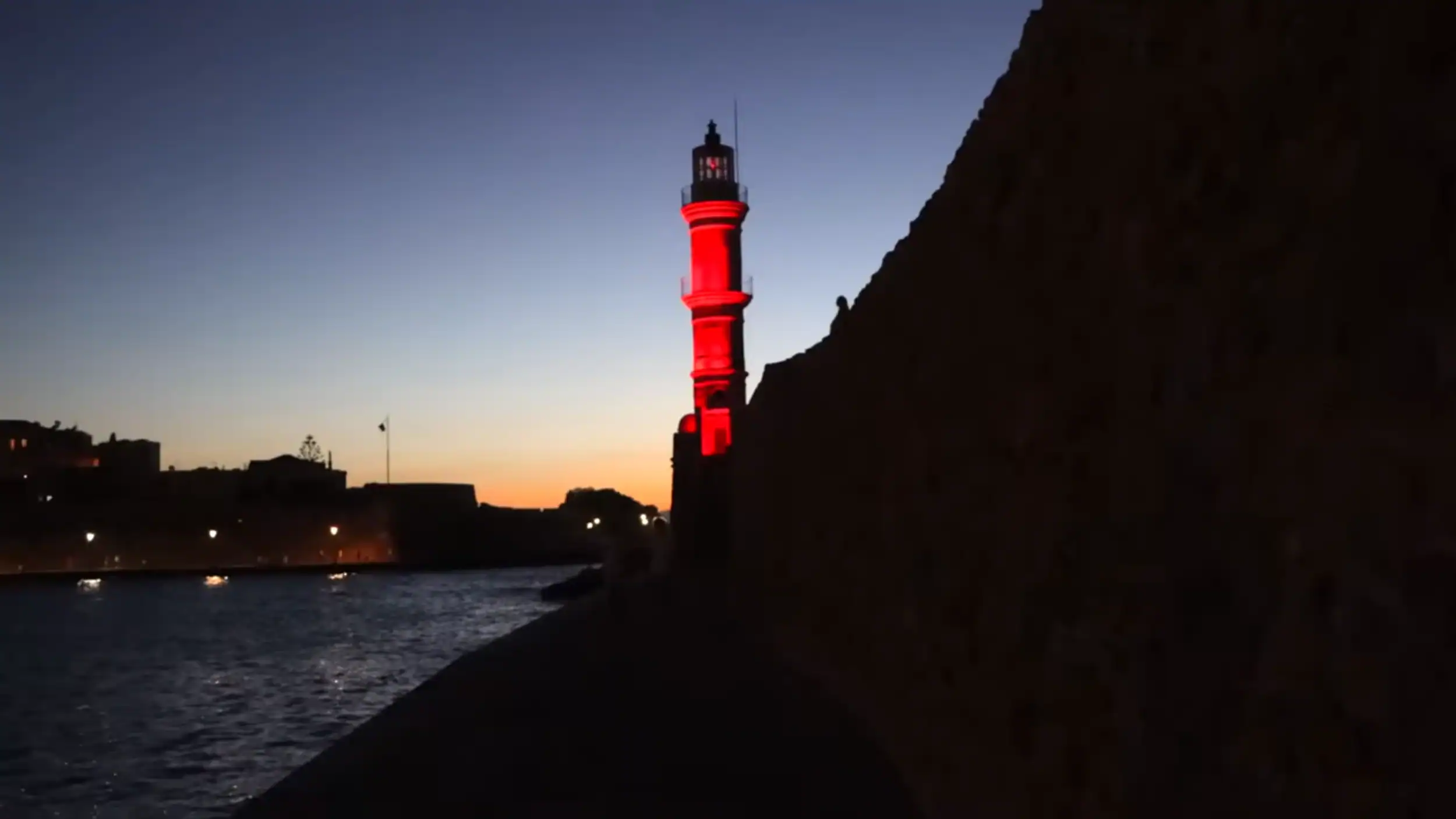
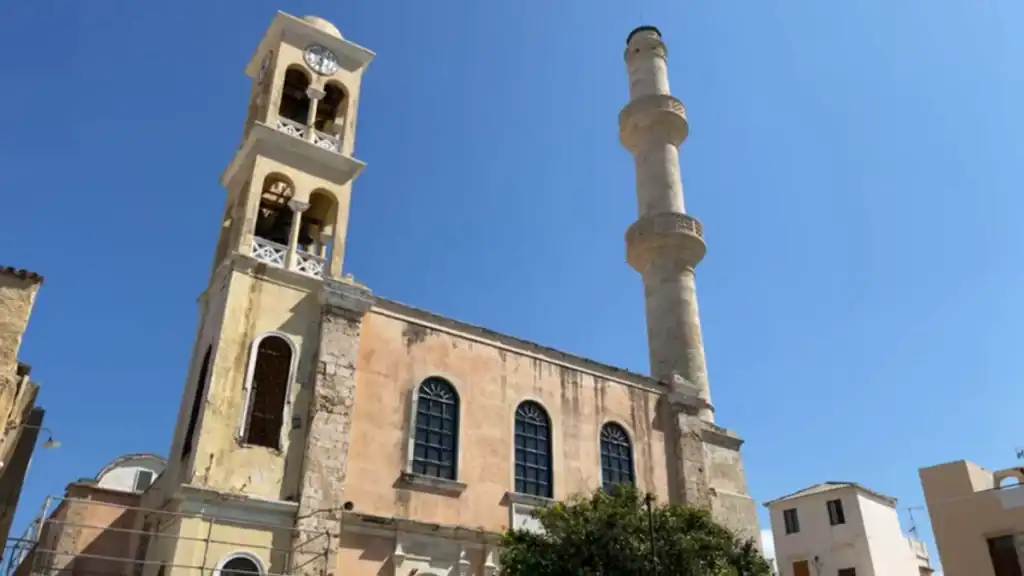
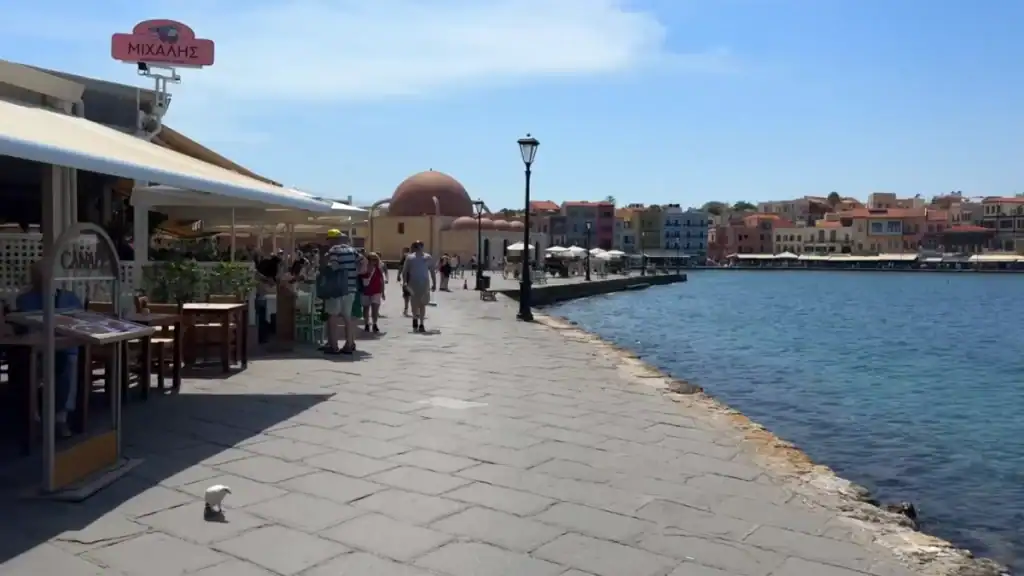
As we followed the waterfront towards the lighthouse, the perspective changed more than I expected. Moving away from the cafés eventually turned the Old Town itself into the view as we began looking back across the harbour.
Is the Walk to Chania Lighthouse Worth It?
For us, this was one of the simplest walks in Chania and one of the easiest to recommend.
| Harbour walk | What you’ll experience |
|---|---|
| 🚶 Waterfront promenade | The heart of Chania’s harbour life |
| 🕌 Ottoman Mosque | One of the harbour’s defining landmarks |
| 🏰 Firkas Fortress | Historic harbour entrance and sea views |
| 🗼 Lighthouse | Panoramic views back across the Old Town |
The walk itself is only around two kilometres, but we barely noticed the distance because the viewpoint kept changing. Looking back from the lighthouse was the moment the harbour made most sense to me: Venetian buildings, the mosque and the White Mountains suddenly fitted together as one landscape in a way they never quite did from the promenade.
For a deeper look at how the waterfront changes throughout the day, What Makes Chania’s Harbour Worth Multiple Visits explores why it’s worth returning more than once during your stay.
🗺️ How We Would Plan a Walk Through Chania
I would not plan a Chania walk as a strict itinerary.
What worked for us was combining a loose direction with enough spare time to wander whenever something caught our attention.
We used one or two anchor points, such as the harbour, market or Splantzia, to give the walk some direction without removing the freedom to explore whatever looked interesting along the way.
What Would We Do Differently on Another Chania Walk?
On another visit, I would keep the preparation simple and protect more time for unplanned detours.
| Planning tip | Why it helps |
|---|---|
| 🌅 Start early | Cooler temperatures and quieter streets |
| 👟 Wear comfortable shoes | Uneven cobbles are part of almost every route |
| 💧 Carry water | Especially during summer afternoons |
| ⏱️ Leave spare time | The best streets are often the unplanned ones |
Walking through Chania never felt like a question of covering the greatest distance. Our best moments came when we had enough time to pause, change direction and follow a street without worrying about what came next. That is when the city’s character revealed itself most naturally, and why I would treat the walk itself as the attraction rather than simply the way between sights.
If you’re ready to explore beyond the historic centre, Chania Beyond the Old Town continues the experience through quieter neighbourhoods, local seafronts and hidden corners that many visitors never reach.