Souda Bay to Chania is a straightforward transfer of around 20 minutes, with public buses, taxis and cruise shuttles connecting the cruise port with the edge of Chania Old Town. For most independent visitors, the public bus offers the best balance of cost, convenience and reliability.
A taxi is the more direct option if you want to remove the wait, but the short distance means transport from Souda Bay need not take a significant chunk out of a day ashore.
The useful thing to know before arriving is that the port itself is not Chania. Once that is clear, the transfer is simple and most of your time can still be spent exploring the city.
⚓ What Should You Expect at Souda Bay Port?
Souda Bay is a working harbour rather than a tourist waterfront, and that distinction matters when you first step off a cruise ship.
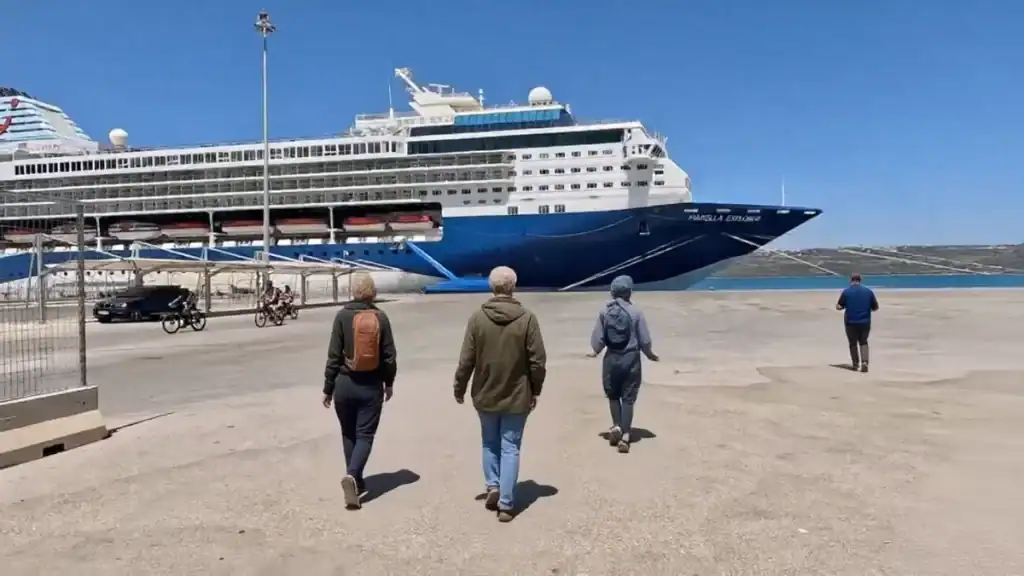
Cruise ships share the harbour with ferries, cargo vessels and naval activity, so the immediate surroundings are functional rather than somewhere most visitors will want to spend their limited time ashore.
The main surprise for first-time passengers is distance. Chania Old Town is around seven kilometres away, which makes understanding the Souda Bay to Chania transfer more useful than trying to explore the port itself.
How Far Is Souda Bay from Chania Old Town?
The distance sounds more inconvenient than it is because the road transfer is usually only around 20 minutes.
| About the port | What to expect |
|---|---|
| 🚢 Cruise terminal | Large ships dock here rather than in Chania |
| ⚓ Working harbour | Ferries, cargo vessels and naval activity |
| 📍 Distance to Chania | Around 7 km from the Old Town |
| ⏱️ Transfer time | Approximately 20 minutes by bus or taxi |
That makes Souda Bay a practical arrival point rather than part of the sightseeing day. With the Old Town close enough to reach quickly, most visitors can concentrate on Chania’s harbour, historic streets and waterfront instead of allowing the port transfer to dictate the itinerary.
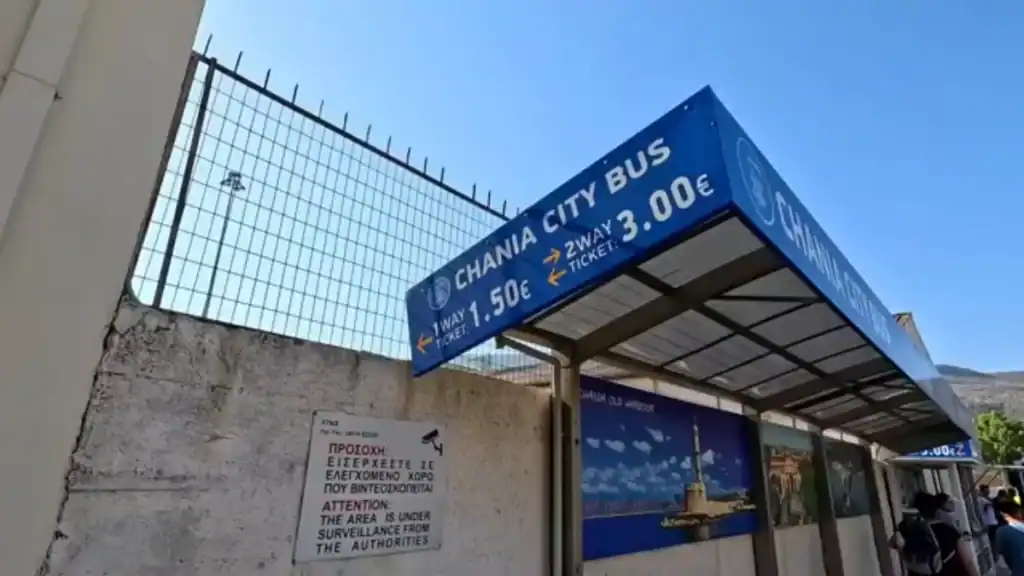
🚌 What Is the Best Way to Get from Souda Bay to Chania?
For most cruise passengers, getting from Souda Bay to Chania comes down to three realistic choices: public bus, taxi or cruise shuttle.
All three cover the short journey quickly, so the decision is less about travel time and more about whether you prioritise price, directness or the convenience of a ship-organised transfer.
For independent travellers, the public bus is usually the strongest option because it combines regular departures with a low fare and a useful arrival point near the Old Town.
Is the Bus from Souda Bay to Chania Easy to Use?
The bus is particularly practical on cruise days because services leave from just outside the terminal while ships are in port.
| Transport option | What to expect |
|---|---|
| 🚌 Public bus | Frequent departures and low fares |
| 🚖 Taxi | Direct service to the Old Town |
| 🚢 Cruise shuttle | Convenient but usually more expensive |
| 🚶 Arrival point | Market Square, around 8 minutes from the harbour |
The route runs through the outskirts of Chania before stopping beside the Municipal Market. From there, the historic centre is an easy downhill walk. A taxi gives you a door-to-door journey and removes any waiting, but the bus already places you close enough to the Old Town that the extra cost may offer little practical advantage for many independent visitors.
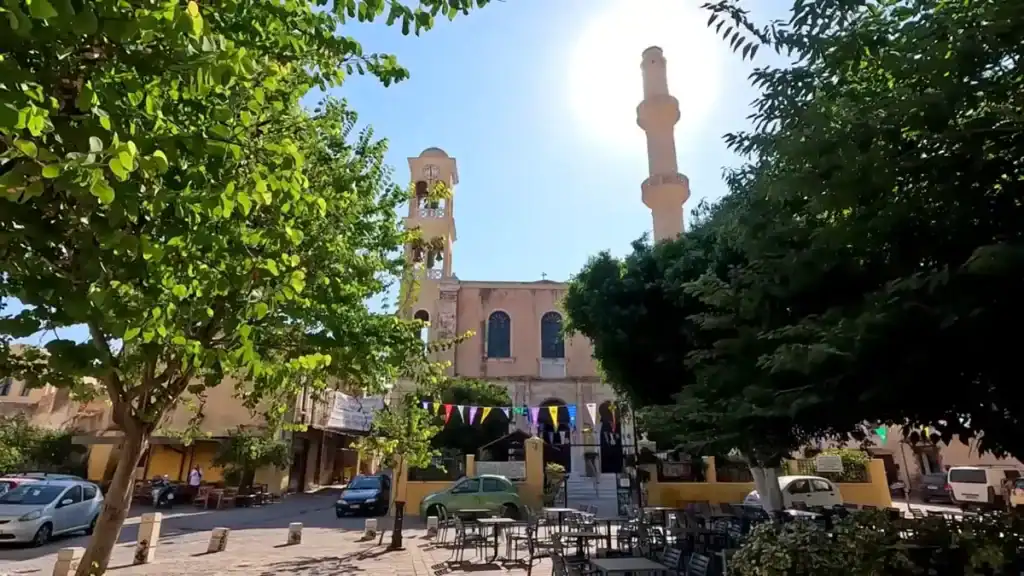
🏛️ Where Do You Arrive in Chania from Souda Bay?
The character of the day changes quickly once you leave the working harbour behind.
Industrial surroundings give way to the streets around central Chania, and the usual bus arrival point leaves you close enough to continue on foot.
From Market Square, the Venetian harbour, Old Town lanes and several of Chania’s best-known landmarks are all within a short walk. That compact layout is particularly useful when your time ashore is fixed by a cruise schedule.
How Quickly Can You Reach Chania Old Town?
Once you reach the centre, further transport is rarely necessary for the main historic sights.
| After arrival | What you’ll find |
|---|---|
| 🛍️ Municipal Market | Local produce, cafés and traditional shops |
| 🚶 Old Town | Historic lanes, squares and Venetian architecture |
| ⚓ Venetian Harbour | The city’s main waterfront and cafés |
| 📸 Easy walking | Most highlights are within 10 minutes |
The harbour, historic neighbourhoods and waterfront connect naturally on foot. For a cruise visitor, that is one of Chania’s biggest advantages: after the initial transfer, very little of the remaining day needs to be spent travelling between attractions.
🏰 What Should You See After Travelling from Souda Bay to Chania?
A first cruise stop does not need an ambitious itinerary because Chania’s strongest sights are concentrated around the Old Town and harbour.
The Venetian harbour, Old Town streets and nearby historic landmarks can be combined comfortably on foot, leaving more time to look around rather than treating the visit as a race between disconnected attractions.
Is the Chania Lighthouse Walk Worth Your Cruise Time?
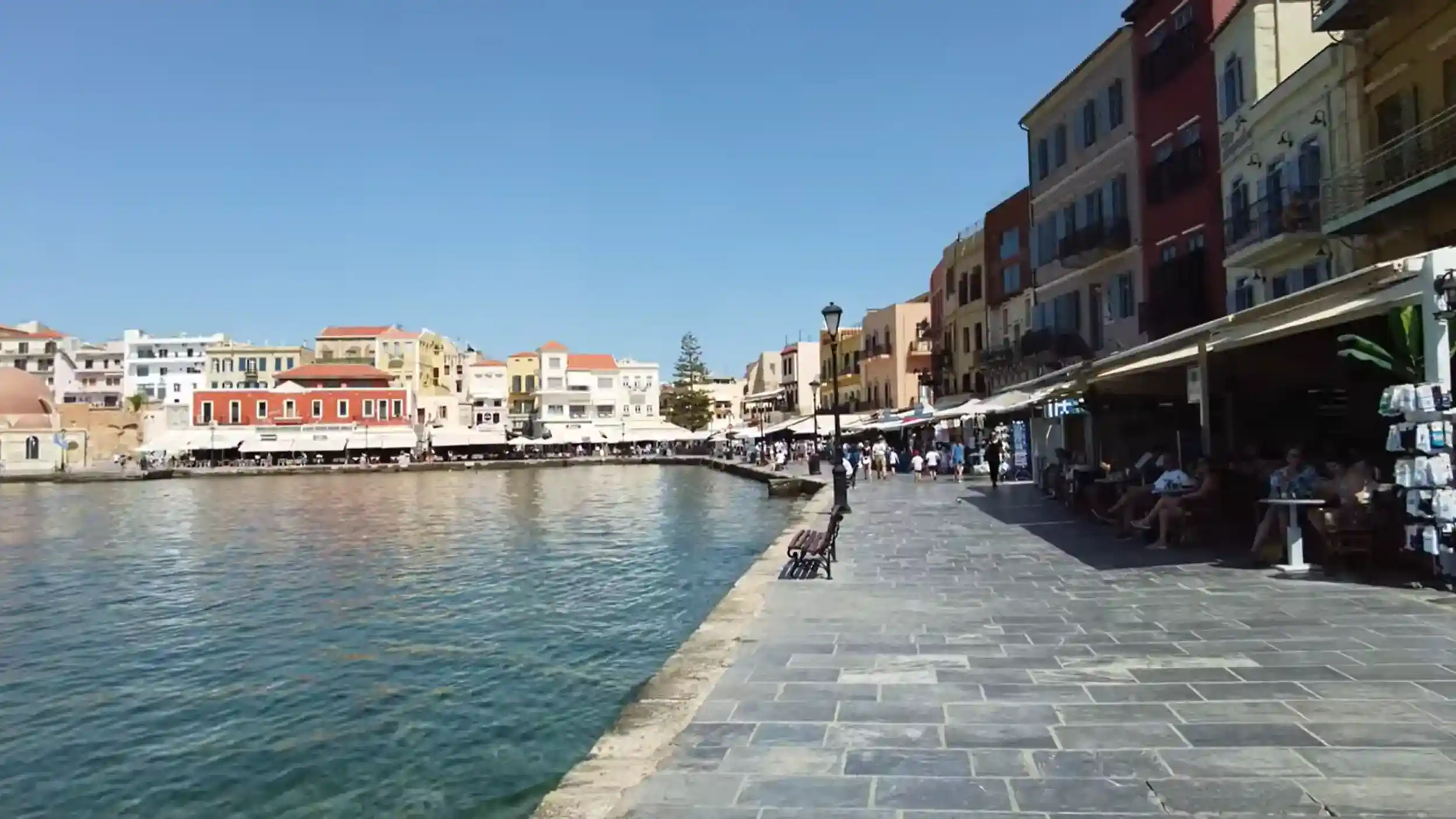
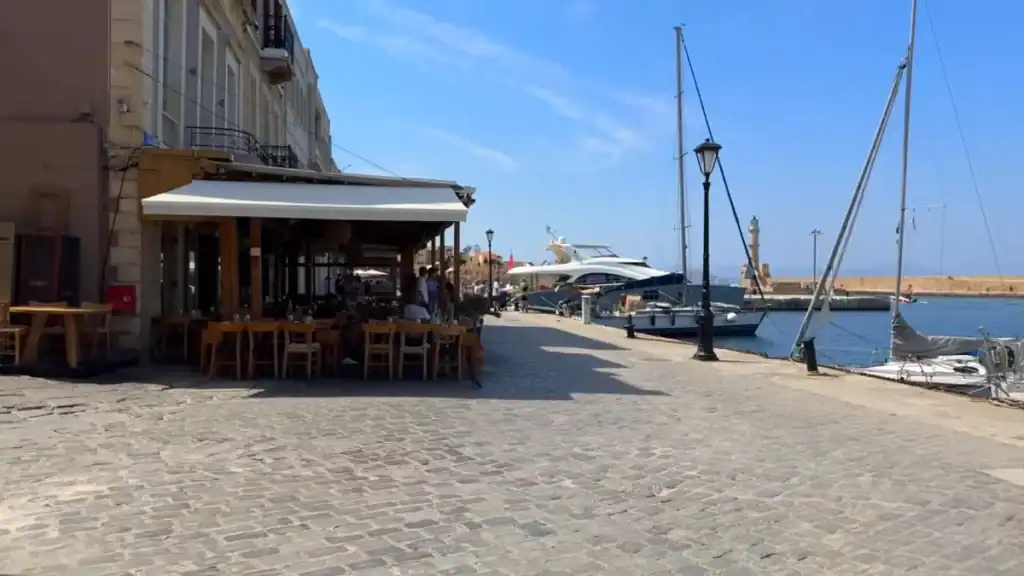
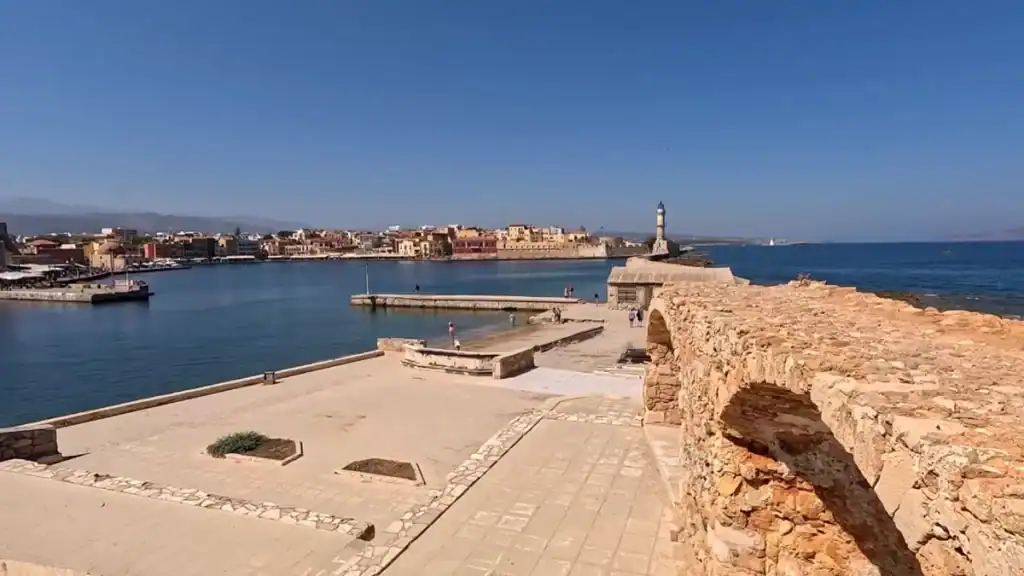
The Venetian harbour is the natural starting point, and the lighthouse gives the waterfront walk a clear destination.
| Highlight | Why visit |
|---|---|
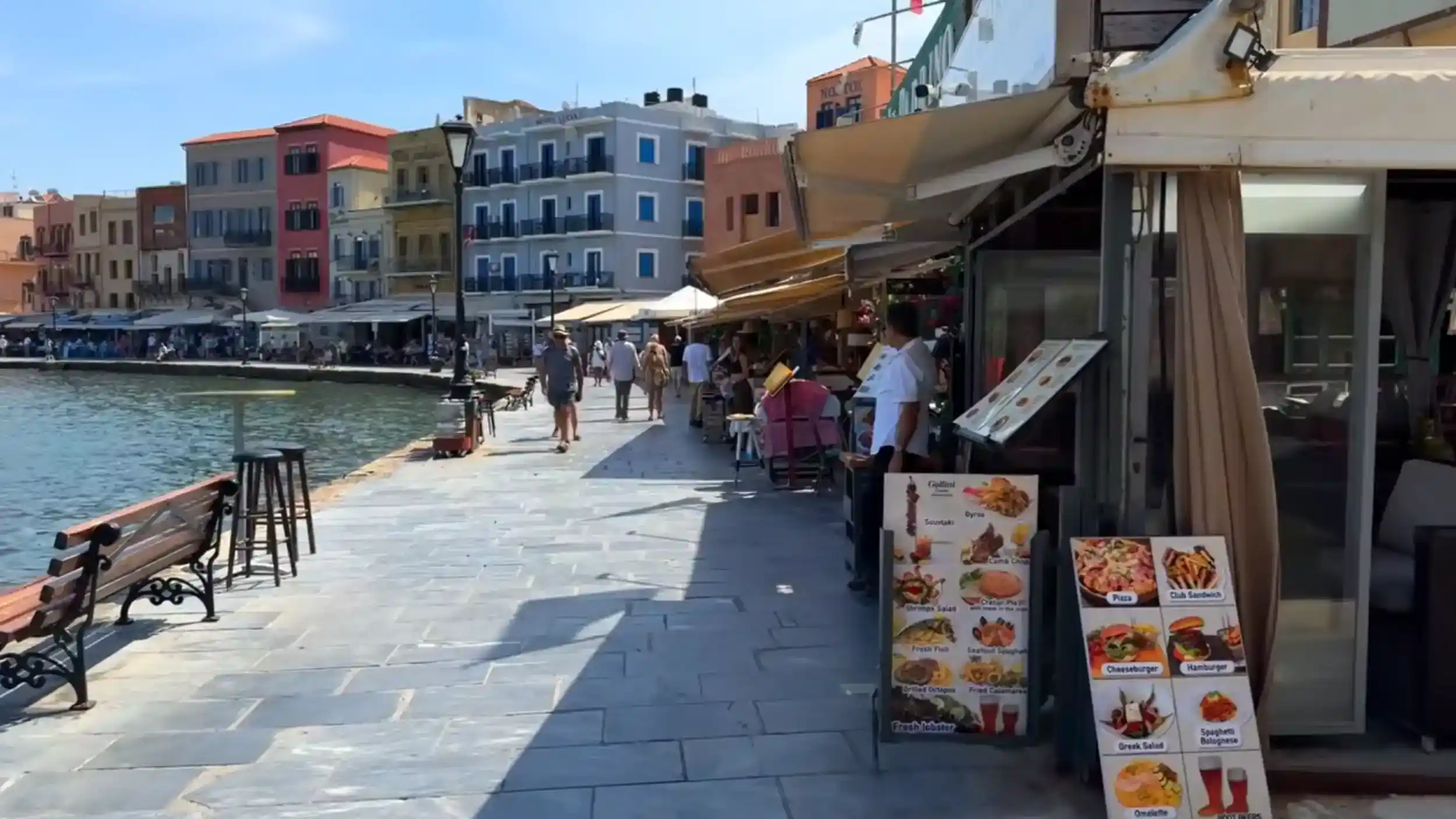
| ⚓ Venetian Harbour | Chania’s iconic waterfront lined with cafés and tavernas |
| 🗼 Lighthouse | Around a 15-minute walk along the harbour wall |
| 🏛️ Firkas Fortress | Harbour views and the Maritime Museum |
| 📷 Waterfront promenade | One of the city’s best places for photographs |
The value of the lighthouse walk is the changing view rather than simply reaching the end of the harbour wall. Looking back brings the colourful waterfront, historic buildings and surrounding hills into one panorama, giving you a perspective that is difficult to appreciate while standing among the harbour cafés.
Why Leave Time to Walk Chania Old Town?
The harbour may be Chania’s obvious focal point, but staying on the waterfront for the whole visit misses much of the Old Town’s character.
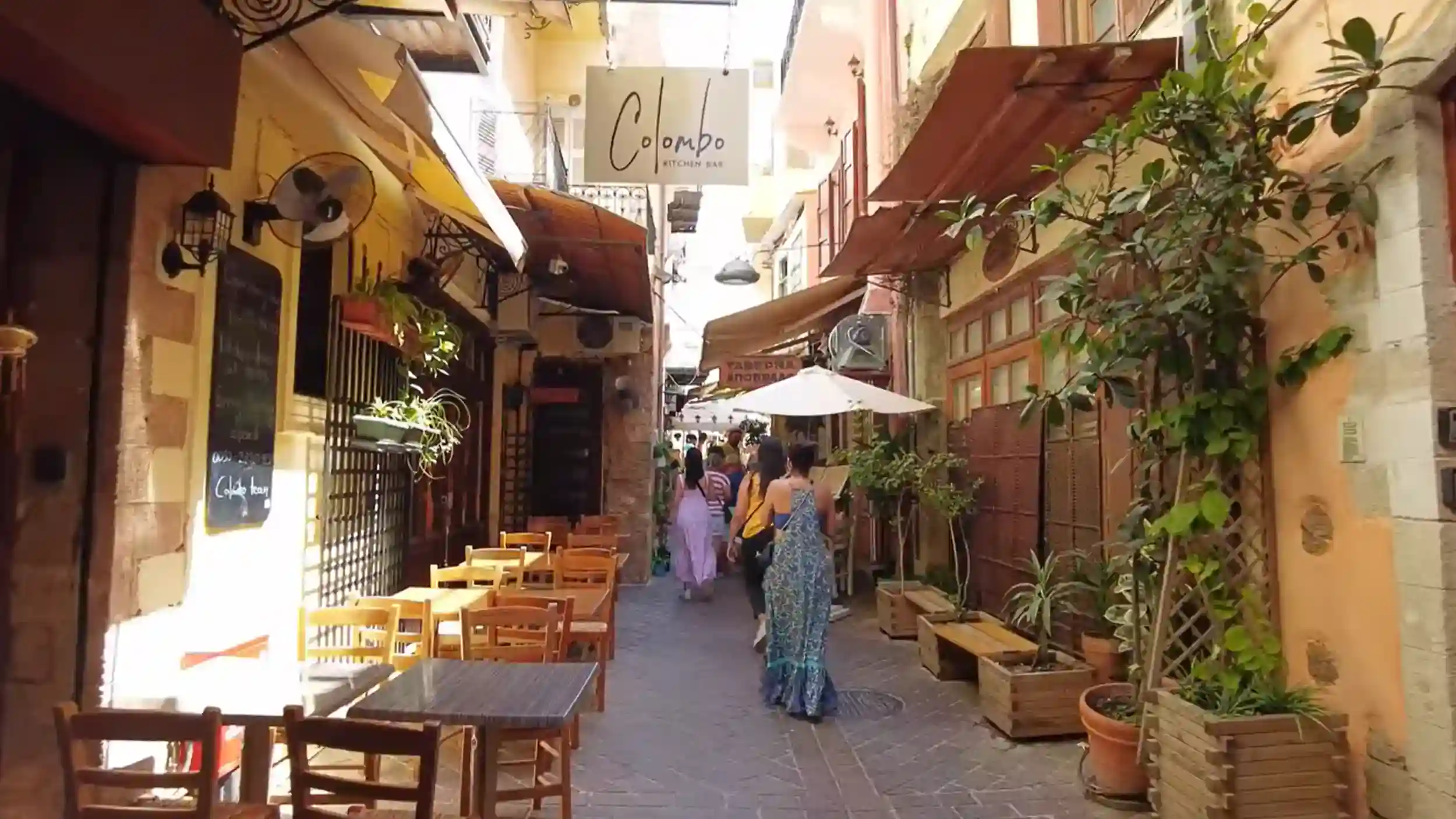
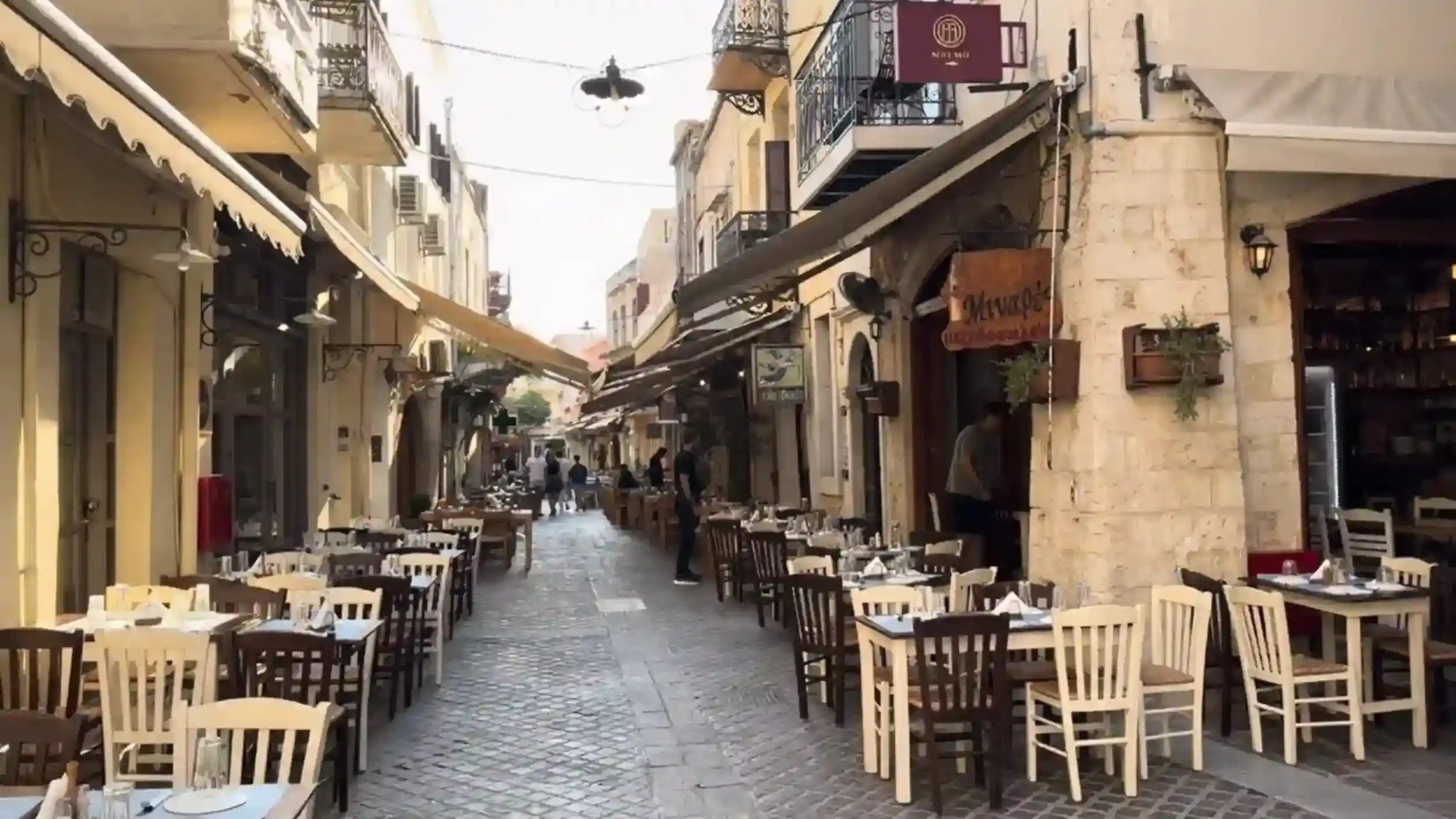
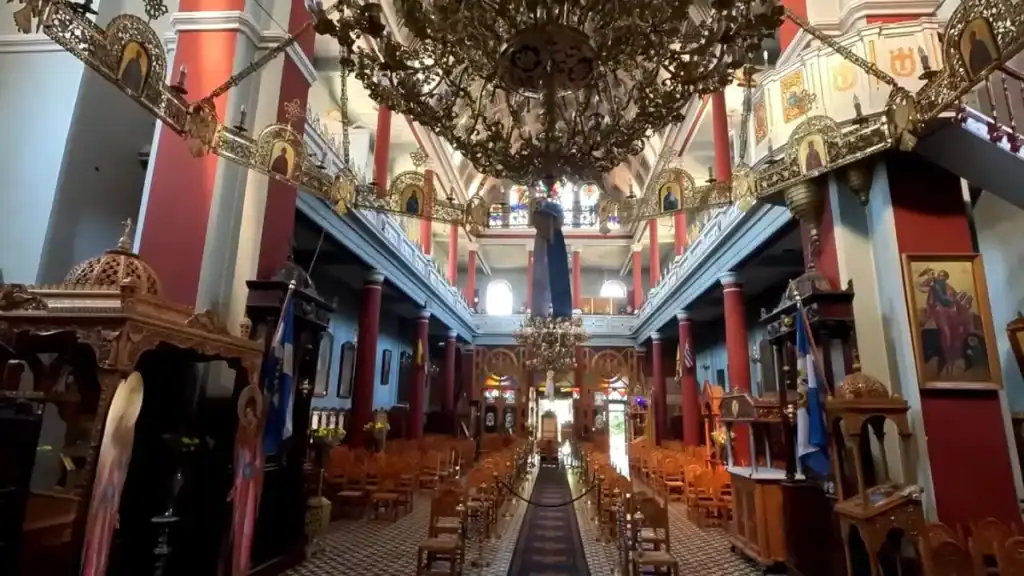
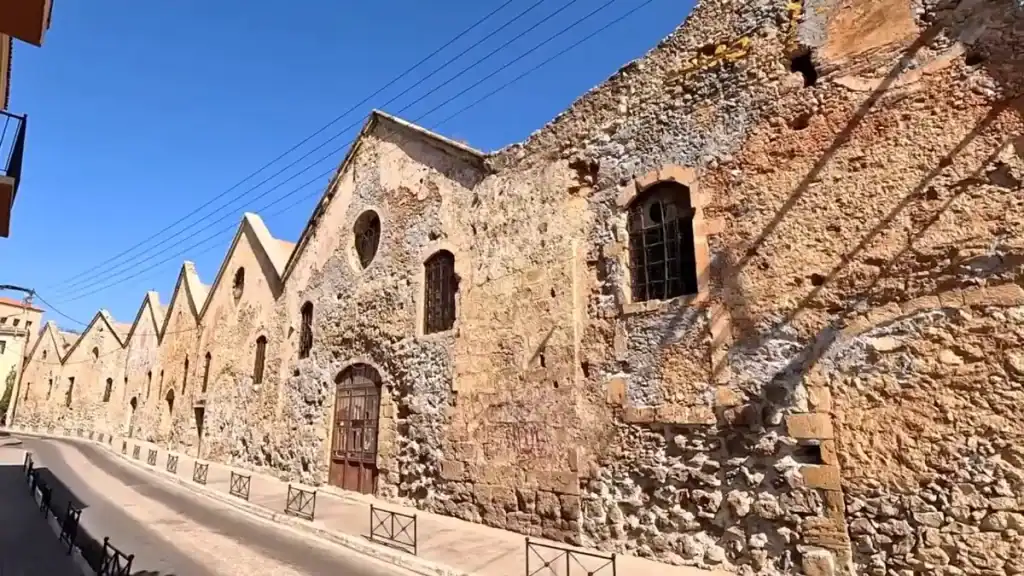
Just behind it, narrow streets run between Venetian and Ottoman buildings, shaded squares and small independent cafés. This part of Chania suits unstructured wandering, especially when you have enough time to follow side streets without worrying about a fixed sightseeing route.
If you want to spend more of the stop away from the obvious waterfront route, our guide to walking in Chania explores the neighbourhoods and hidden lanes that are still close enough for a comfortable return to Souda Bay.
🏖️ Can You Add a Beach to a Chania Cruise Stop?
A beach can fit into a cruise stop, but it makes most sense after you have allowed enough time for the Old Town and harbour.
Nea Chora is the easiest option from central Chania, while Marathi is closer to Souda Bay but generally requires a taxi.
Both can work as additions rather than the main focus of the day, which is important when your return to the ship remains fixed.
Is Nea Chora the Easiest Beach from Chania Old Town?
Nea Chora is the simpler choice if you want to keep the entire central part of the day walkable.
| Beach | What to expect |
|---|---|
| 🏖️ Nea Chora | Sandy beach around 10 minutes west of the harbour |
| 🌊 Marathi | Quieter beach closer to Souda Bay |
| 🍽️ Seafront tavernas | Fresh seafood and relaxed waterfront dining |
| 🚕 Easy return | Straightforward taxi or bus back to the port |
Nea Chora works well for an hour or two beside the sea before heading back towards the ship. Marathi offers a quieter alternative nearer the cruise terminal, but the need for a taxi makes it a more deliberate detour. On a first visit with limited time, the Old Town and harbour remain the stronger priorities.
📍 What Else Can You See Near Souda Bay?
Places closer to Souda Bay become more useful if you already know Chania or want a quieter alternative to spending the entire stop in the Old Town.
They do not replace central Chania on a first visit, but they can add historical context or a different view of the bay without requiring a long excursion away from the ship.
Is Souda Bay War Cemetery Worth Visiting?
For visitors interested in the Battle of Crete, the Souda Bay War Cemetery is the most significant stop close to the port.
| Place | Why visit |
|---|---|
| ⚪ Souda Bay War Cemetery | Peaceful memorial to Commonwealth servicemen |
| ⛪ Local villages | Everyday Cretan life away from the tourist centre |
| 🚢 Souda waterfront | Working harbour with views across the bay |
| 🚖 Short transfers | Easily reached by taxi from the cruise terminal |
The cemetery is beautifully maintained and provides a quiet reminder of the Commonwealth servicemen who died during the Battle of Crete. It is a worthwhile historical detour, but with limited time on a first visit, Chania Old Town still concentrates more of the city’s history, architecture and atmosphere into one walkable area.
If a cruise stop leaves you wanting to explore farther, Chania beyond the Old Town shows what becomes possible when you return with more time than a single day ashore allows.
🚢 How Much Time Should You Allow to Return to Souda Bay?
The return from Chania to Souda Bay is normally as straightforward as the outward journey, but this is where leaving a sensible time margin matters.
A final attraction is rarely worth turning the end of the day into a rushed journey back to the cruise terminal.
Although the road journey is normally around 20 minutes, allow for the walk back to your departure point, possible queues and heavier traffic when several passengers are returning at once.
Is the Return from Chania to Souda Bay Straightforward?
The public bus and taxis provide the same basic choices for the journey back to the cruise terminal.
| Return option | What to expect |
|---|---|
| 🚌 Public bus | Frequent departures from Market Square |
| 🚖 Taxi | Direct journey back to the cruise terminal |
| ⏱️ Travel time | Around 20 minutes in normal conditions |
| ✅ Recommended | Aim to arrive back at the port at least 30 minutes early |
Public buses continue operating while ships are in port, and taxis are available around the Old Town and harbour. Building in a comfortable margin before the ship’s all-aboard time lets you finish the day without turning the last walk through Chania into a constant check of the clock.
If you return without a cruise timetable, our one day in Chania guide shows how much more of the city can fit into a full day.