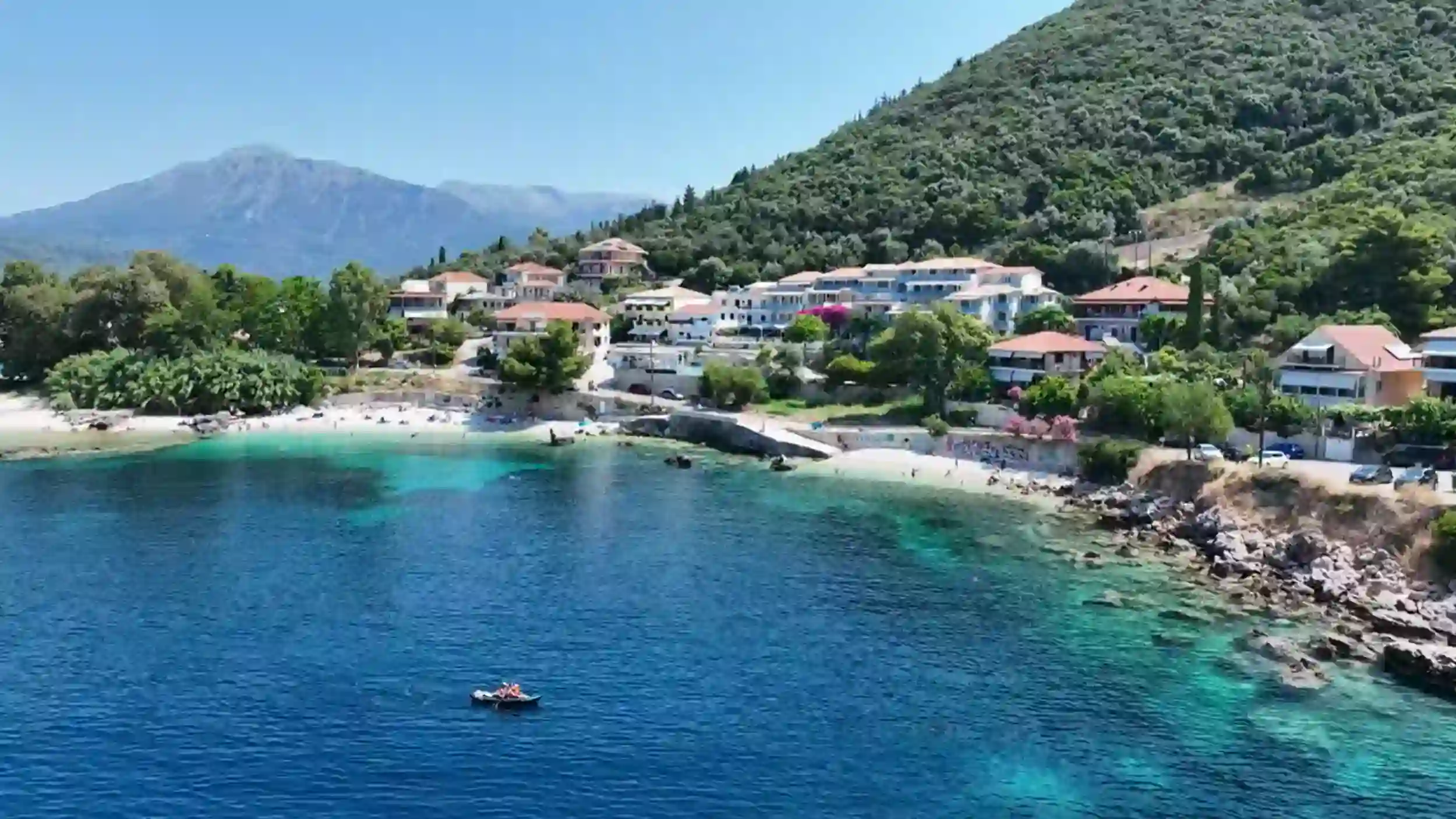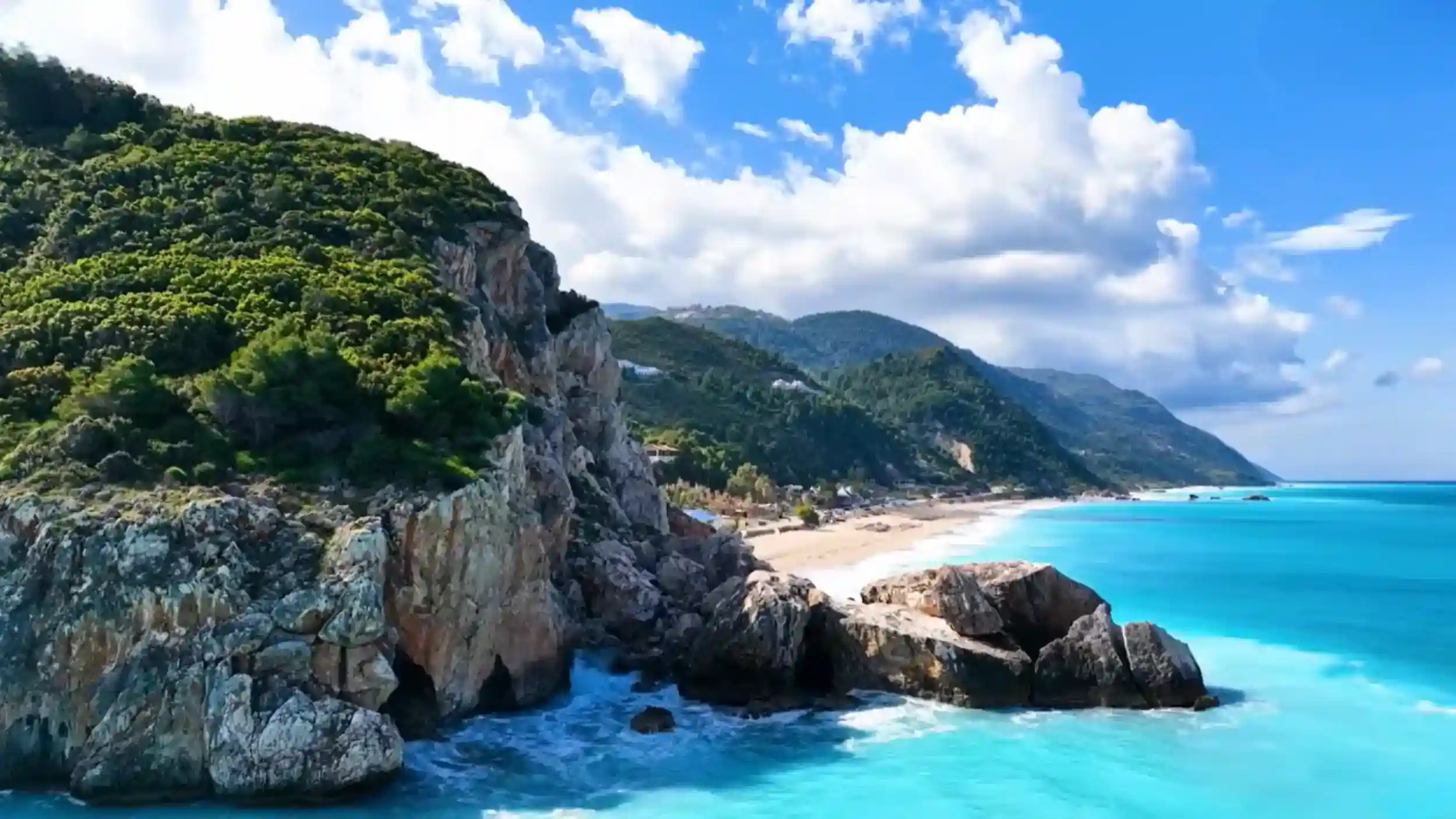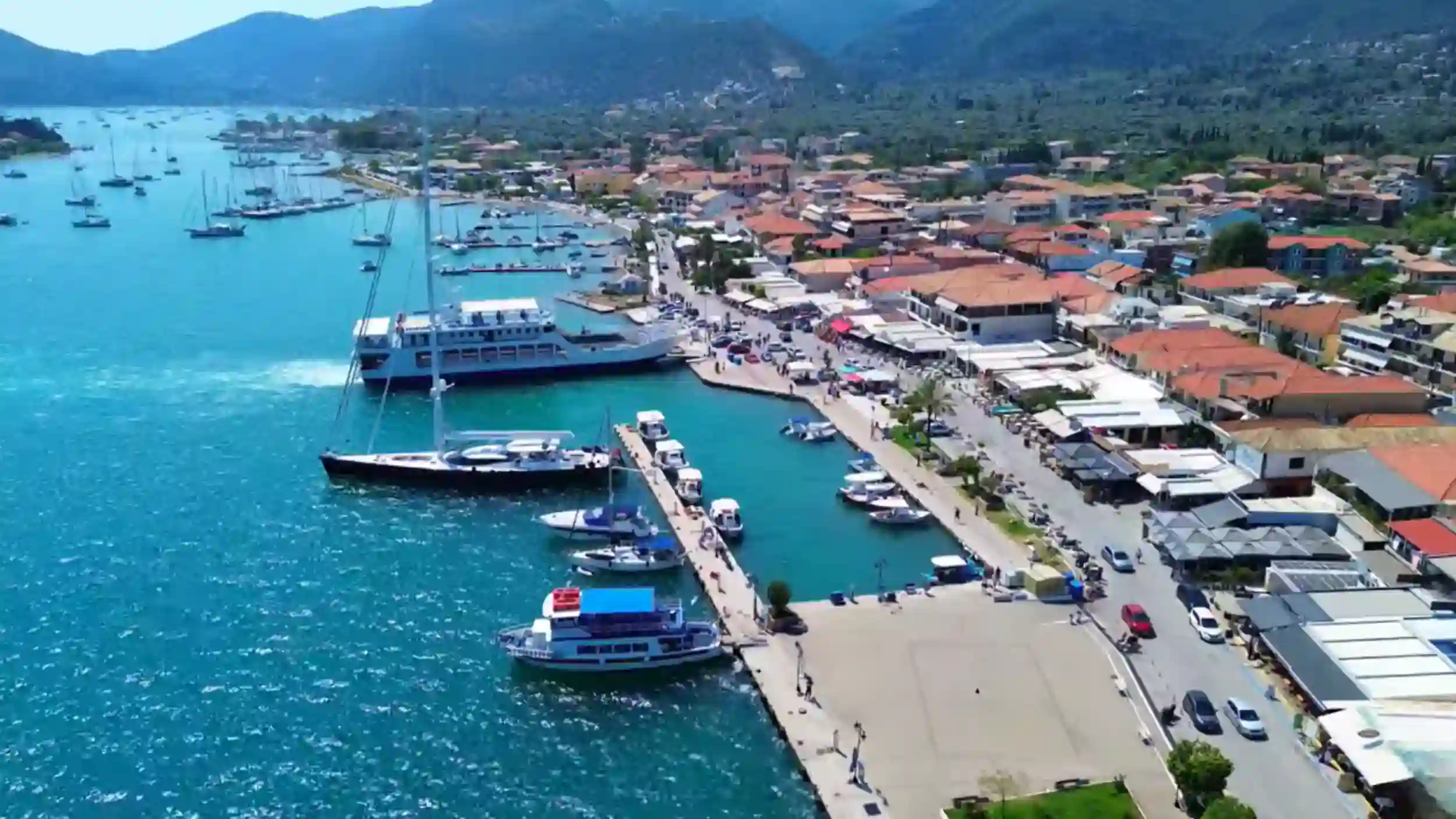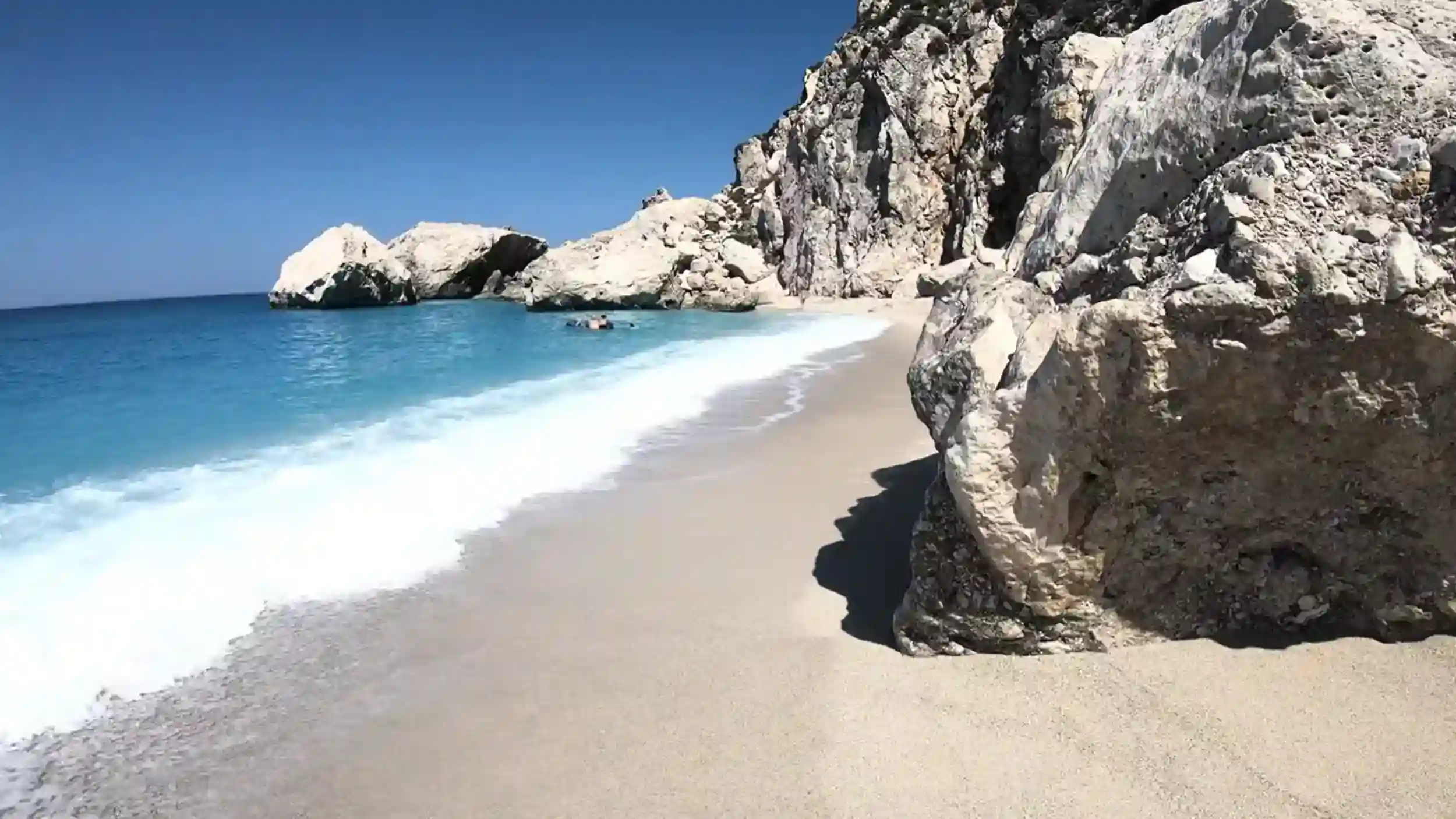
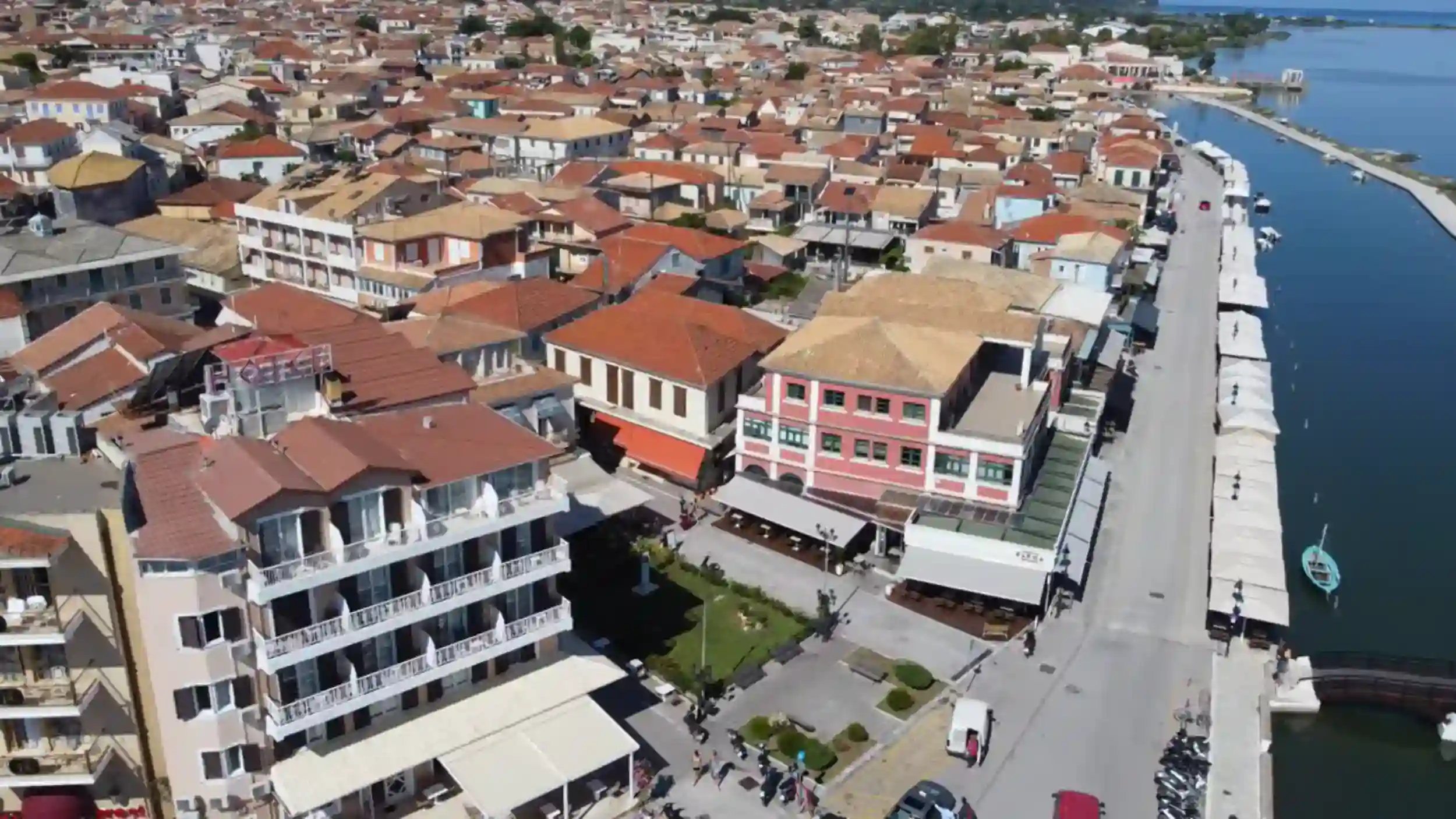
Lefkada Town is the island’s working capital rather than a beach resort. Sitting beside the causeway from mainland Greece, it combines a lively marina, pedestrian shopping streets, earthquake-shaped architecture and a relaxed evening atmosphere that many visitors overlook on their way to the coast.
🌉 The Causeway, the Castle, and How You Arrive
Your first impression of Lefkada isn’t a beach.
It’s water on both sides of the road.
The approach across the narrow causeway immediately feels different from arriving on most Greek islands. Before you even reach the town, another landmark appears beside the entrance: the imposing Castle of Agia Mavra, which has guarded this crossing for centuries.
Most visitors drive straight past it.
📍 A Different Kind of Arrival
| You’ll Pass | Why It’s Worth Noticing |
|---|---|
| 🌊 The causeway | Connects Lefkada directly to the mainland |
| 🏰 Agia Mavra Castle | One of the island’s best-preserved historic sites |
| 🌉 The floating swing bridge | Opens for passing boats throughout the day |
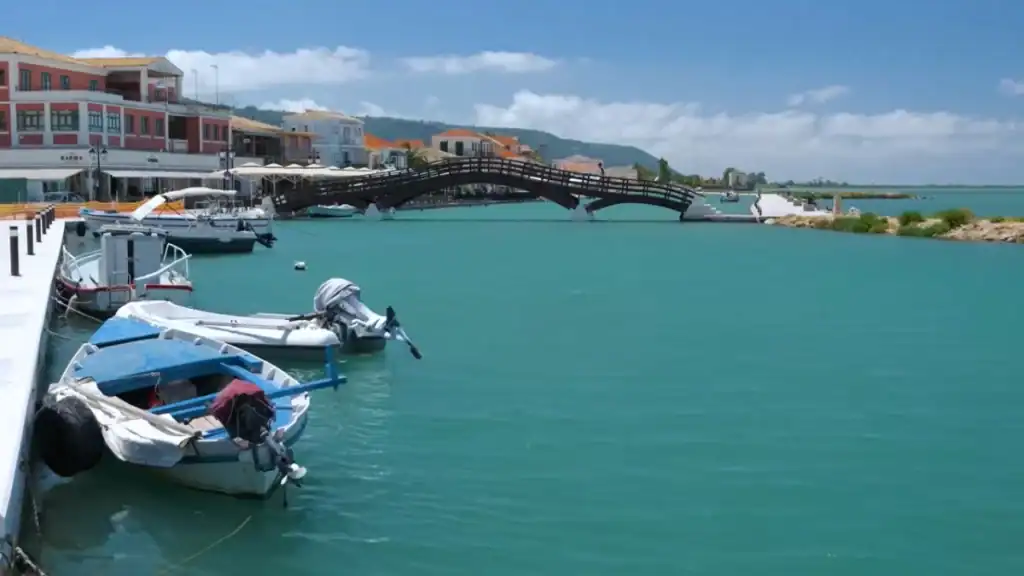
The bridge itself is part of the experience.
When boats need to pass, traffic simply waits while the floating bridge swings open. During July and August, this can create short queues, particularly around the middle of the day. Early mornings are usually much quieter.
If you’re continuing south after exploring the town, Lefkada Island: The Greek Island You Can Drive Straight To explains why having a car is one of the island’s biggest advantages.
Planning tip: If you’re arriving from Preveza Airport, consider stopping at Agia Mavra Castle before checking into your accommodation. It takes less than half an hour to explore and provides a fascinating introduction to Lefkada’s history before you reach the town itself.
🅿️ Getting Into the Centre and Parking
Driving into Lefkada Town is easy.
Finding the right place to leave your car takes a little more thought.
The historic centre is largely pedestrianised, so the best approach is to park around the edges and explore on foot. Once you’re walking, the town is compact enough that almost everything is within a few minutes.
🚶 Before You Park
| ✅ Do This | ❌ Avoid This |
|---|---|
| Park on the edge of the old town | Following sat nav into narrow pedestrian streets |
| Explore the centre on foot | Expecting to park outside cafés or shops |
| Allow extra time in summer | Driving through the busiest streets at lunchtime |
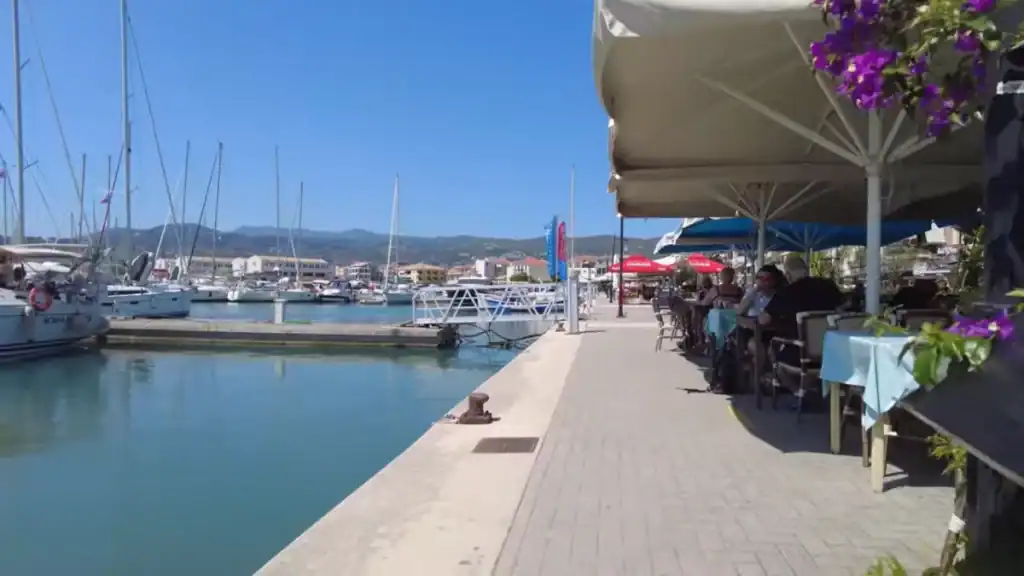
The marina forms the town’s eastern edge and is an excellent place to begin your walk.
From there it’s only a short stroll to the shopping streets, cafés and main square, while the waterfront itself is worth lingering beside. Charter yachts, fishing boats and passing sailboats give the harbour a lively atmosphere throughout the day without ever feeling hurried.
The small pedestrian footbridge near the marina is another pleasant stopping point, particularly if you enjoy watching boats manoeuvre through the harbour.
Local tip: Don’t worry about finding the closest parking space. A five-minute walk is often quicker than spending another twenty minutes circling the centre.
Unlike many resort towns, Lefkada Town rewards slowing down. Once you’ve left the car behind, the narrow streets, waterfront and cafés are all best experienced at walking pace.
🛍️ The Pedestrian Centre and Main Square
Lefkada Town isn’t somewhere you rush through.
It’s somewhere you wander.
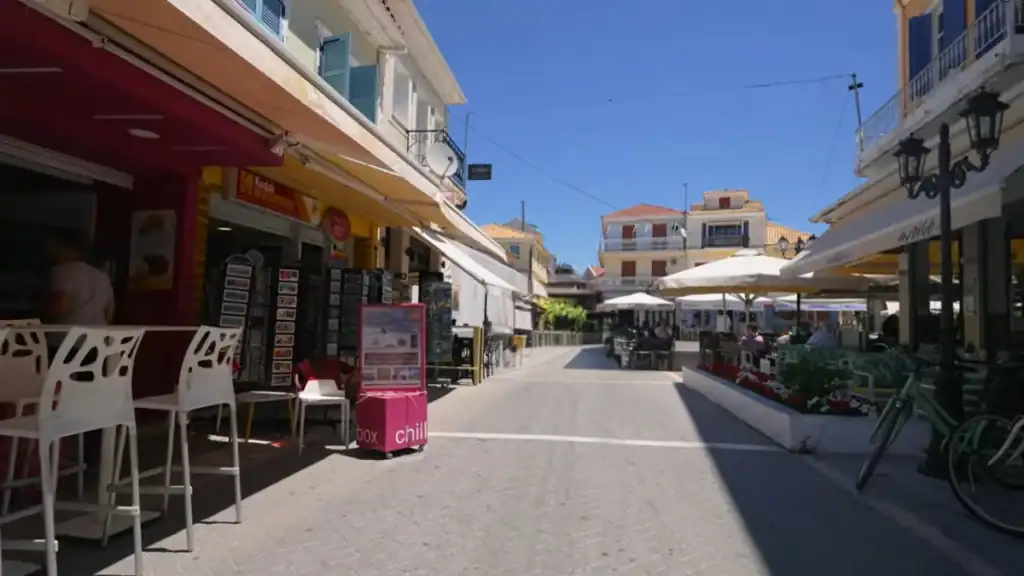
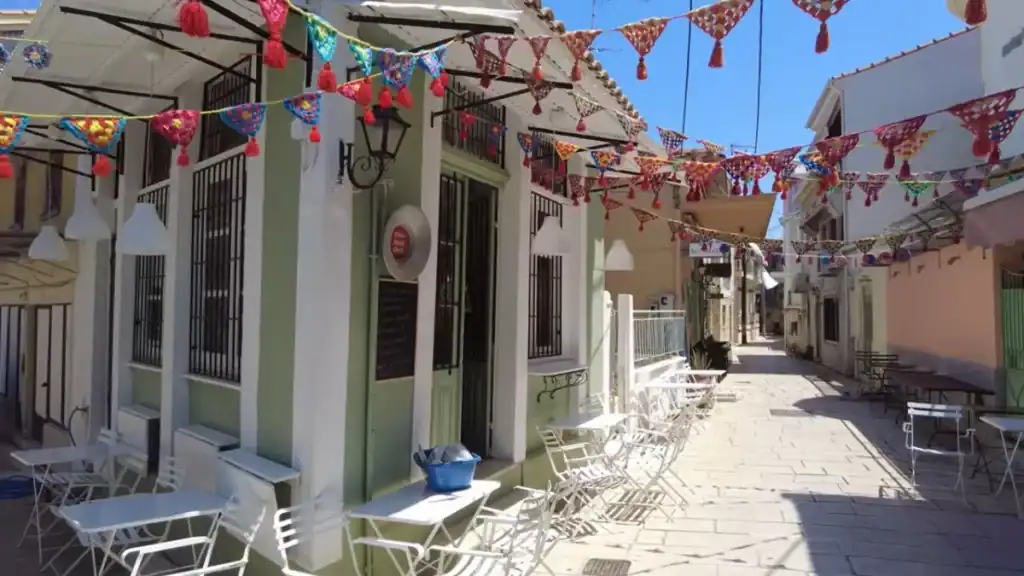
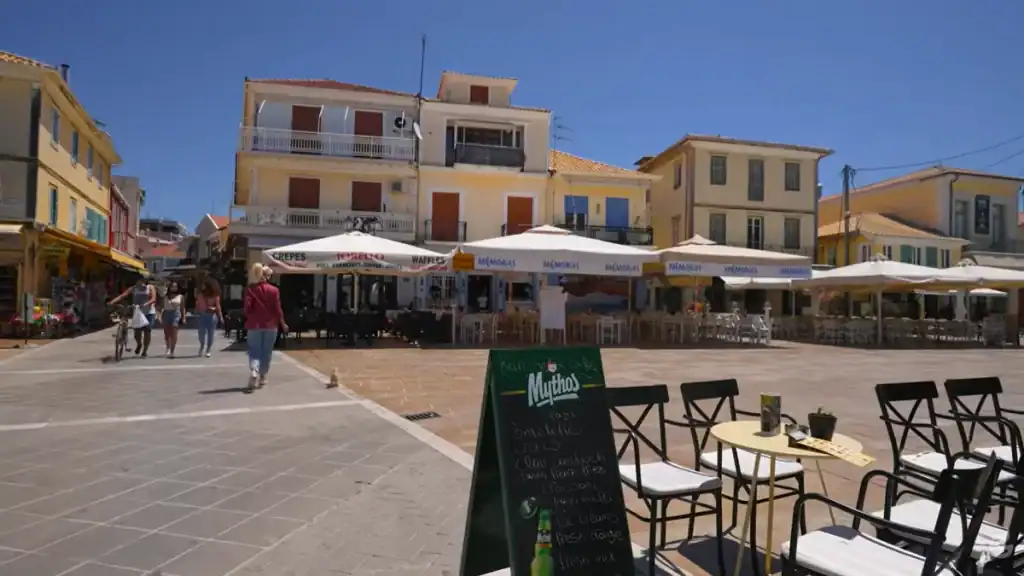
The heart of the town is a network of pedestrian streets lined with cafés, local shops and small restaurants where everyday life continues at an unhurried pace. Unlike many seaside resorts, the atmosphere feels local first and tourist second.
☕ A Town That Changes Through the Day
| Time | What You’ll Find |
|---|---|
| 🌅 Morning | Bakeries opening and locals shopping |
| ☕ Late morning | Outdoor cafés filling up |
| 🍽️ Afternoon | A relaxed pace beneath the shade |
| 🌙 Evening | The square comes alive with diners and conversation |
The main street naturally leads into the central square.
During the day it’s a pleasant place for coffee beneath the trees. By evening the atmosphere changes as restaurant terraces fill, lights appear and people linger long after dinner has finished. It’s one of the best places on the island simply to sit and watch Lefkada’s evening life unfold.
Visitors staying in Nidri or Vasiliki are often surprised by how much more authentic and affordable the cafés and restaurants here feel.
Don’t just pass through.
Stay until after sunset and you’ll experience a completely different side of Lefkada Town, when the working day ends and the town settles into its evening rhythm.
🏛️ What the Town Reveals About the Island’s Past
Lefkada Town tells its history quietly.
You notice it in the buildings, the streets and the people who shaped the island, rather than through grand monuments or archaeological sites.
The town has been rebuilt more than once after powerful earthquakes, and that history is still visible today. Many upper floors are constructed with lighter materials designed to flex rather than collapse, giving Lefkada Town an architectural style that’s unlike almost anywhere else in Greece.
👀 Look Out For…
| Feature | Why It Matters |
|---|---|
| 🏚️ Timber-framed upper floors | Designed to withstand earthquakes |
| ⛪ Historic churches | Reflect centuries of local religious life |
| 📚 Angelos Sikelianos Museum | Celebrates one of Greece’s best-known poets |
| 🏰 Agia Mavra Castle | Guards the island’s historic entrance |
The town also has deeper historical roots than many visitors realise.
Archaeologist Wilhelm Dörpfeld carried out important excavations here while investigating whether Lefkada could have been Homer’s Ithaca, adding another fascinating layer to the island’s story.
History in Lefkada Town isn’t concentrated in one attraction.
It’s woven into the streets themselves, making a slow walk through the quieter neighbourhoods just as rewarding as visiting the better-known landmarks.
Take a detour: Leave the main shopping street for a few minutes and the atmosphere changes quickly, with peaceful residential lanes revealing a more authentic side of the town that’s easy to miss if you only stay around the square.
🧳 Using Lefkada Town as a Base
Lefkada Town works best for travellers who want to explore the whole island.
Rather than staying beside one beach, you’ll have easy access to the causeway, supermarkets, restaurants and the main road heading south, making day trips straightforward in every direction.
🎯 Is It the Right Base?
| Stay in Lefkada Town if… | Choose another base if… |
|---|---|
| 🚗 You plan to explore the whole island | 🏖️ You want to walk to the beach every day |
| 🍽️ You enjoy plenty of restaurant choice | 🌅 You’d rather stay beside the west coast cliffs |
| ⛵ You like marinas and evening walks | 🏄 You’re focused on windsurfing in Vasiliki |
| ✈️ You’re arriving or departing via the causeway | 🌊 Most of your holiday will be at Porto Katsiki or Egremni |
The biggest advantage is flexibility.
From here, you can spend one day exploring the west coast, another around Nidri or Vasiliki, then return each evening to a town that stays lively long after the beaches have emptied.
The compromise is driving time.
The island’s famous southwest beaches, including Porto Katsiki and Egremni, take around an hour or more to reach, so visitors planning consecutive beach days may prefer to stay further south.
Best for: First-time visitors, road trips and anyone wanting to experience more than just Lefkada’s beaches.
If you’re planning to see the island rather than simply relax in one resort, Lefkada Town is one of the most practical and rewarding places to base yourself.