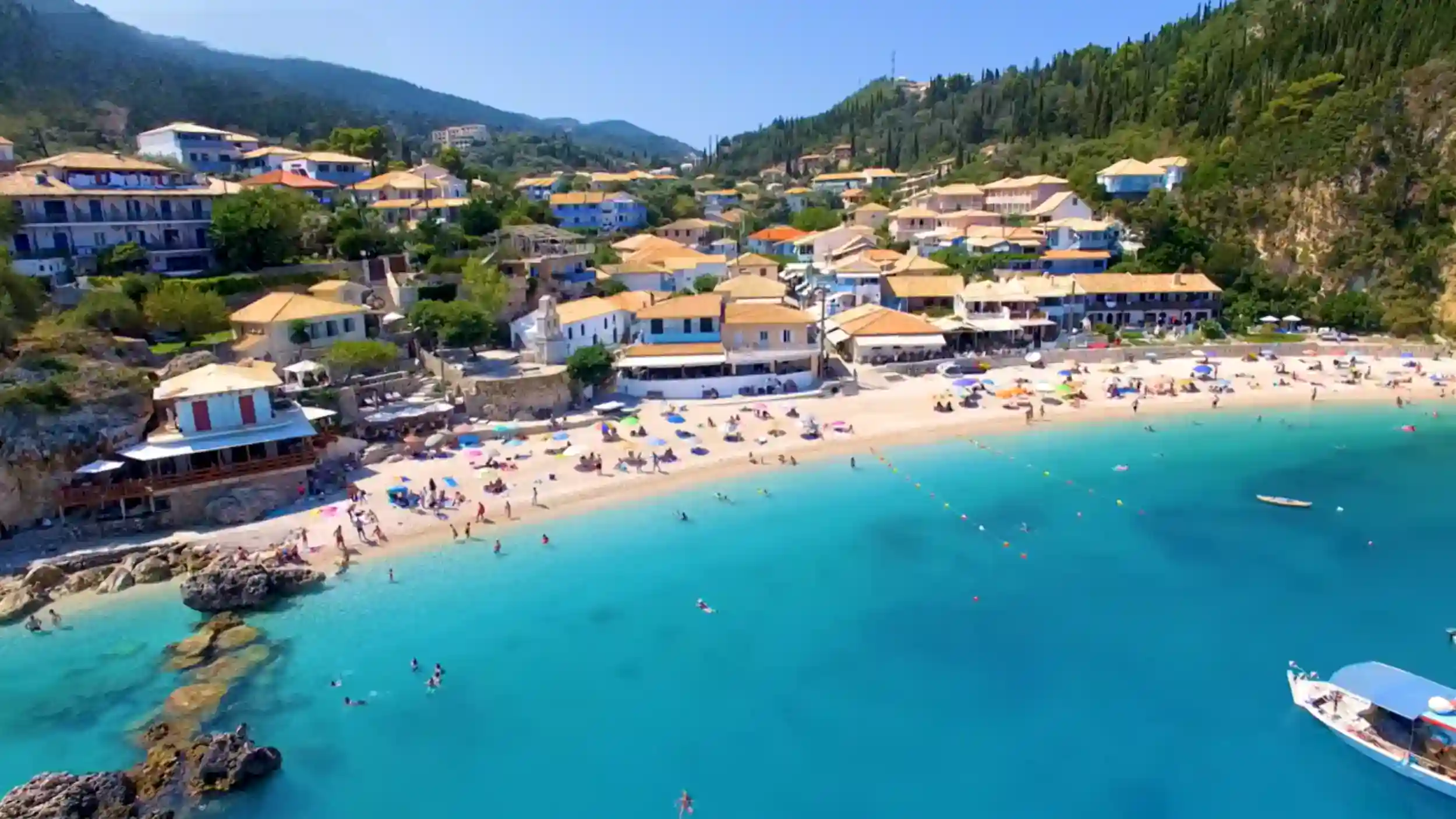
Agios Nikitas is different from many Lefkada villages because its compact pedestrian centre runs directly down to a sheltered west-coast beach. We could leave the car outside, walk everywhere, reach Mylos Beach on foot or by seasonal water taxi and still use the village as a practical base for exploring the wider coast.
What won us over was the lack of friction. Beach, tavernas and evening walks fitted together naturally, yet we were still close to wilder beaches when we wanted a completely different day.
🌿 What Makes Agios Nikitas Different From Other Lefkada Villages?
Agios Nikitas never really felt like a resort to us.
It felt more like a village that had managed to resist becoming one.
Unlike many west-coast settlements perched above the sea, Agios Nikitas sits in a small valley opening onto a sheltered bay. Once we walked through it, the compact scale made sense. Its geography and protection as a traditional settlement have helped preserve that character.
Traffic-Free Streets Changed the Village Completely
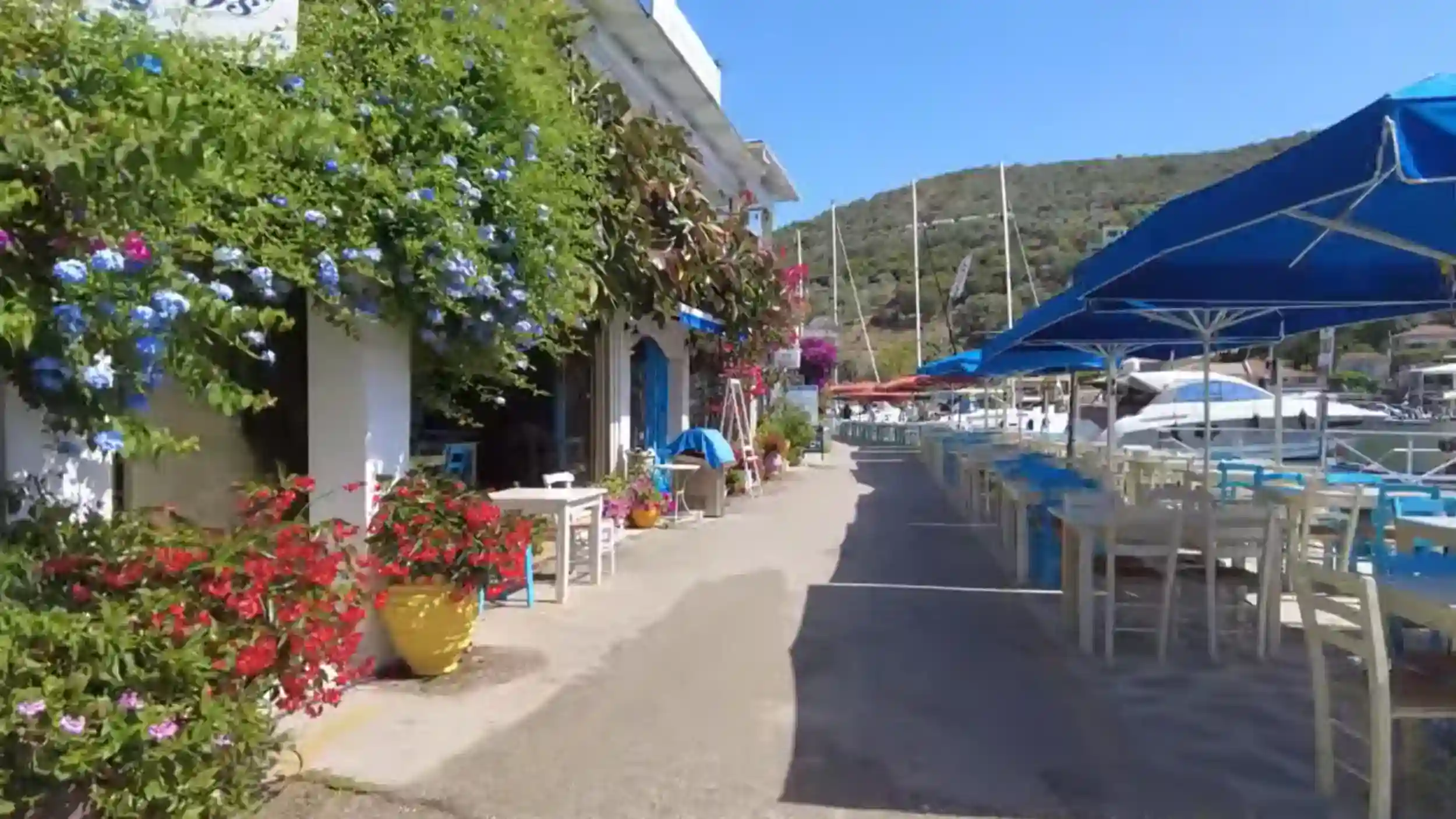
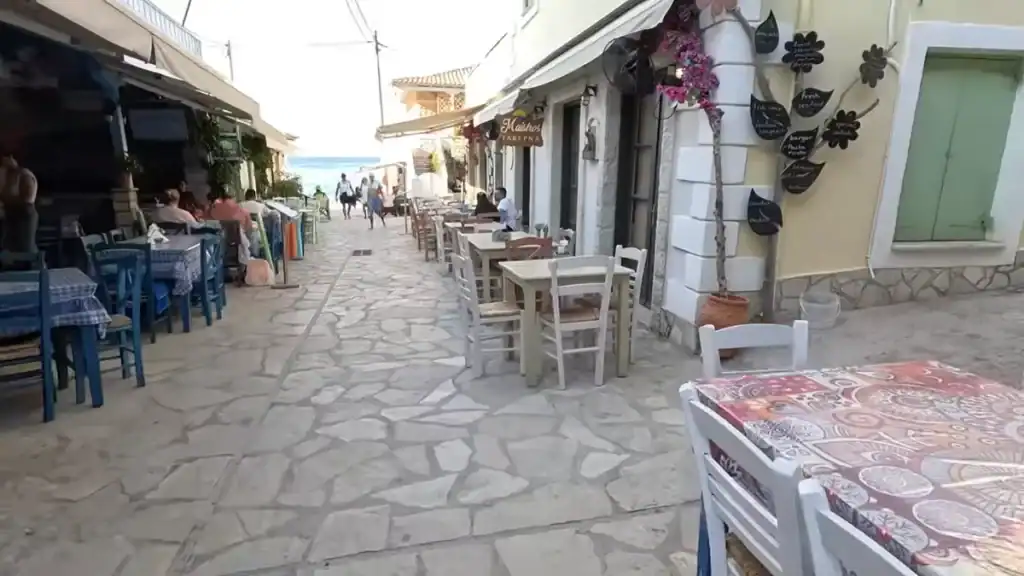
We found the whole village remarkably easy to understand: one pedestrian street led gently downhill towards the beach.
Without traffic cutting through the centre, we noticed far more of the stone houses, flowering balconies and shaded tavernas. The absence of cars did more than make walking convenient. It slowed us down and made us want to wander.
| What makes Agios Nikitas different? | Why it matters |
|---|---|
| 🚶 Pedestrian-only centre | Quiet, relaxed atmosphere without traffic |
| 🏡 Traditional settlement status | Historic character has been preserved |
| 🌊 Village built beside the sea | Easy access to the beach on foot |
| 🌿 Compact layout | Everything is reached within a few minutes |
Its compact size became one of the things we liked most.
Within about twenty minutes, we understood the entire layout. Yet it never struck us as artificial or designed purely for tourism. Limited space for large-scale development seemed to have helped the village retain its identity.
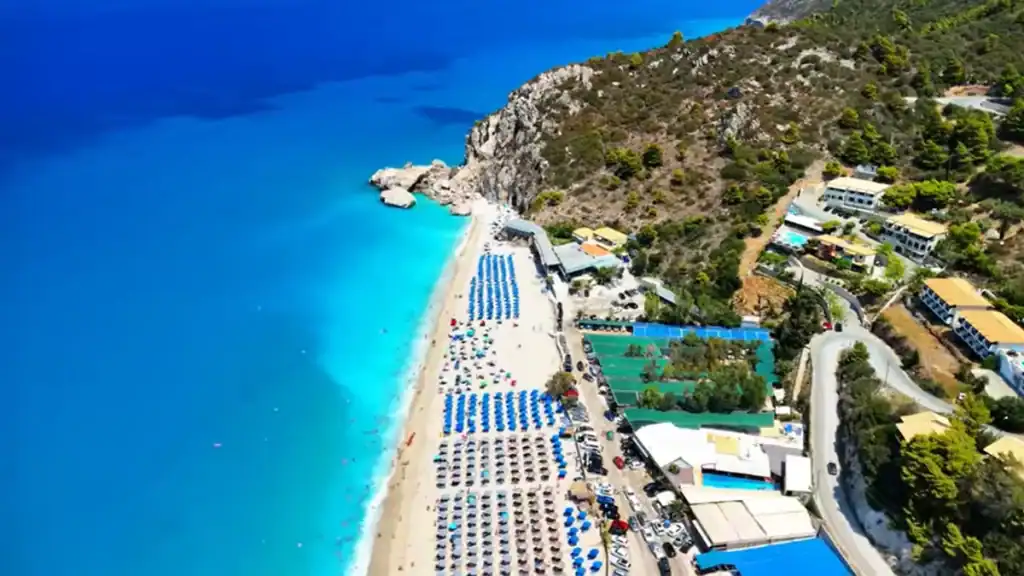
When we wanted a livelier west coast beach with more facilities, Kathisma Beach was only a few kilometres away. Visiting both made the contrast obvious: Kathisma gave us scale and convenience, while Agios Nikitas gave us the village atmosphere we preferred in the evening.
Our first impression: Agios Nikitas did not win us over through size or spectacle. Its appeal came from simplicity, atmosphere and the sense that the village still had an identity beyond serving visitors.
🚶 Is Agios Nikitas Walkable?
Arriving in Agios Nikitas immediately changed the pace for us.
We could not simply drive into the centre and park outside our destination.
We left the car at the top and walked the final few minutes downhill towards the sea. That small inconvenience became one of the village’s strengths. Without through traffic, the centre felt completely different.
The Walk Down Revealed the Village Gradually
The pedestrian street became our natural route through the village.
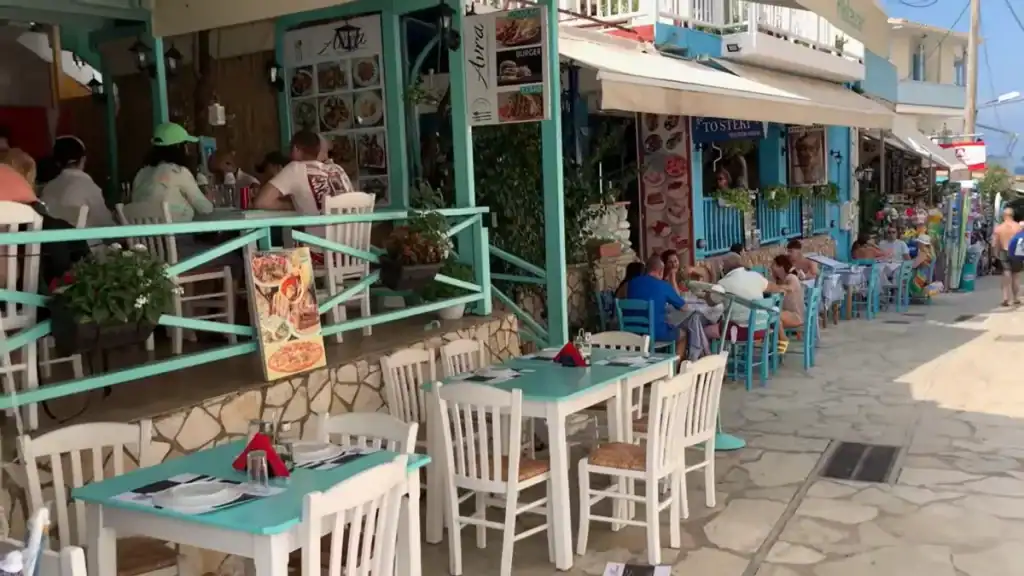
We passed small supermarkets, cafés and souvenir shops first. Traditional stone houses appeared as the street became quieter. Glimpses of turquoise water between the buildings kept pulling us downhill until the street opened onto the bay.
| Along the walk | What you’ll find |
|---|---|
| 🛍️ Upper village | Small shops, cafés, supermarkets and an ATM |
| 🏡 Middle section | Traditional houses and shaded tavernas |
| 🌊 Village centre | Beachfront cafés and the sheltered cove |
The downhill walk took us only around five minutes, but we quickly learned that it was worth taking everything we needed.
Going back uphill for something forgotten would have been far less appealing in the afternoon heat, so we treated the walk down as the point at which the car stopped being part of the day.
We also liked that a car was not essential for every visitor. Seasonal buses connect with Lefkada Town, making Agios Nikitas one of the more practical west coast villages if you do not want to drive.
When we would arrive: Early. Parking is easier, but more importantly, we preferred seeing the pedestrian street and beach before the village became noticeably busier later in the day.
🏖️ What Is Agios Nikitas Beach Like?
We have often found that small beaches can have more character than larger ones.
Agios Nikitas reinforced that feeling for us.
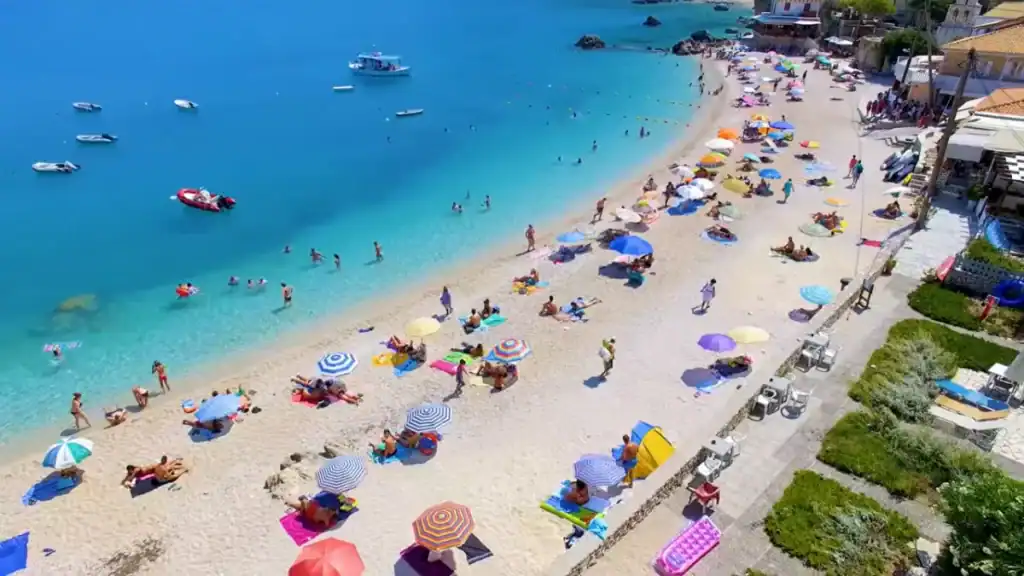
At the end of the village, we found a sheltered cove beneath green hills. Fine pebbles mixed with patches of soft sand beside remarkably clear water. It was not Lefkada’s most dramatic beach, but it was one of the easiest for us to enjoy.
Sheltered Water Made Swimming Much Easier
We found the bay noticeably calmer than Lefkada’s exposed west coast beaches because it is protected from the open Ionian.
That shelter made swimming feel more relaxed for us. We could see why the cove appealed to families and casual swimmers. There were no steep paths or long staircases before reaching the water.
| Feature | What to expect |
|---|---|
| 🌊 Water | Calm, clear and usually excellent for swimming |
| 🏖️ Beach | Fine pebbles mixed with sand |
| 👨👩👧 Atmosphere | Sheltered and family-friendly |
| ☀️ Facilities | No organised sunbeds on the beach |
The small size did mean that timing mattered more than we first expected.
In July and August, we would aim to be there before mid-morning. By lunchtime, a cove this small can feel crowded, particularly at weekends, and the relaxed atmosphere is much easier to appreciate before every comfortable patch has been claimed.
We would not come here expecting Lefkada’s towering cliff scenery. For that, we preferred the much wilder setting of Egremni Beach. Agios Nikitas worked for us for almost the opposite reasons: shelter, convenience and the ability to combine a beach with village life.
Who we think it suits: We would choose the village beach for relaxed swimming, families and days when stepping straight from a traditional village onto the shore mattered more than dramatic scenery.
🥾 How Do You Get From Agios Nikitas to Mylos Beach?
One place kept coming up whenever we looked at why people visit Agios Nikitas.
Mylos Beach was the obvious answer.
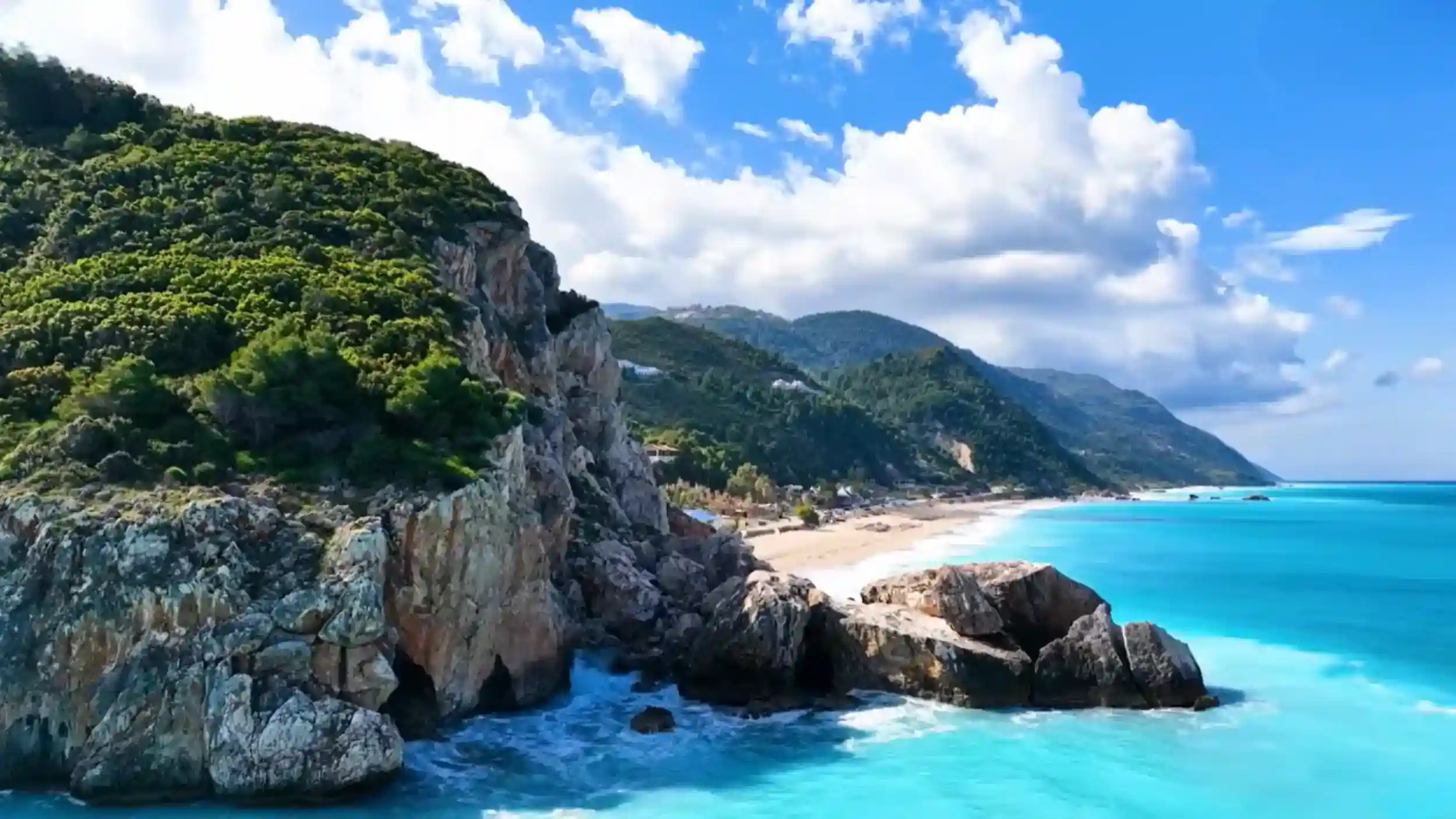
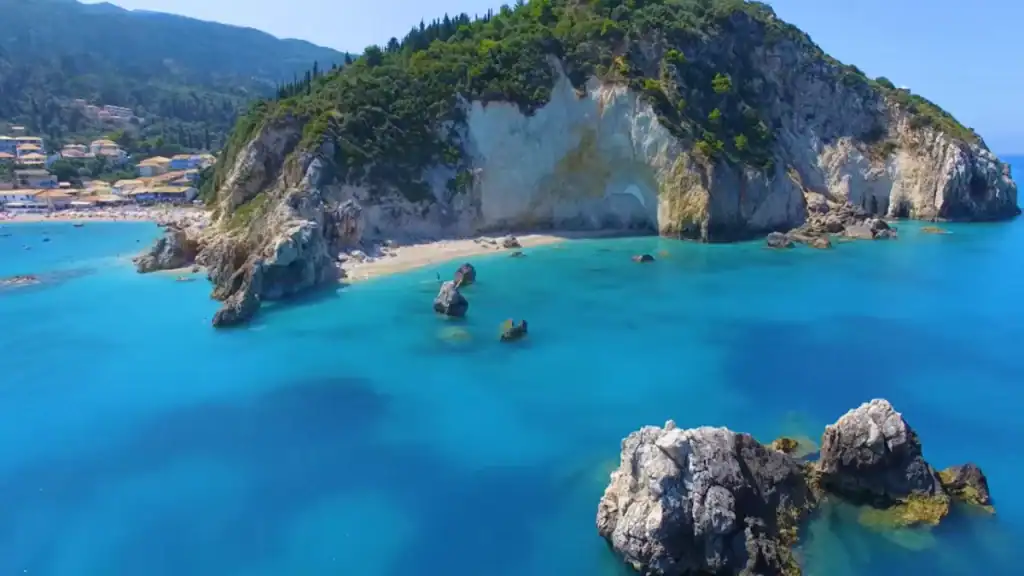
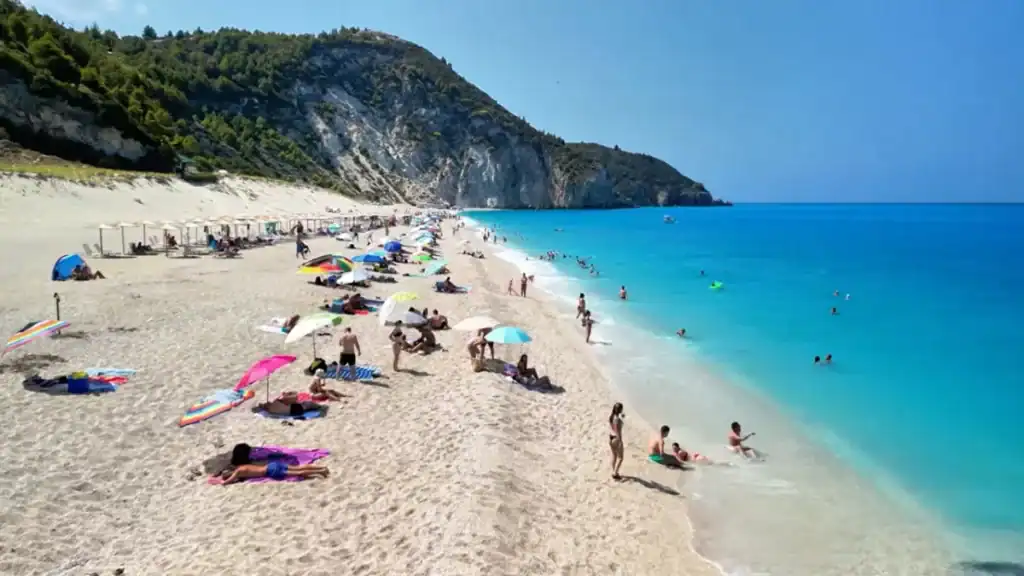
Hidden around the headland, it felt much wilder than the village cove despite being surprisingly close. We thought the extra effort required to reach it was part of the reason the atmosphere changed so noticeably.
Two Routes Give You a Very Different Journey
We had two realistic ways to get there.
| Option | What to expect |
|---|---|
| 🥾 Walking trail | Around 20 minutes with a moderate climb before descending to the beach |
| 🚤 Water taxi | Seasonal service from Agios Nikitas beach, weather permitting |
We preferred the walking option because much of the marked path is shaded, although the climb still requires reasonable fitness. The water taxi removes that effort. We would still check conditions first because rough Ionian seas can stop the service.
The difference from the village beach was obvious to us as soon as we arrived.
Mylos felt broader, quieter and far more exposed to the open sea. The sand, white pebbles and vivid turquoise water gave us the wilder west coast experience that the sheltered village beach could not, yet it was still close enough for an easy half-day outing.
For a longer visit, our Mylos Beach guide covers the walking route, water taxis and the practical details we would want to know before setting off.
How we would do it: We would walk early in summer before the path heats up. If choosing the water taxi instead, we would check that it was operating before heading down to the harbour.
🧭 Is Agios Nikitas a Good Base for Lefkada’s West Coast?
Choosing a west coast base on Lefkada felt like a series of compromises to us.
Agios Nikitas came closer than most places to giving us a bit of everything.
We could stay in a traditional-feeling village while keeping several excellent beaches close enough to reach easily. Every outing did not become a long drive. That balance was the strongest argument for using Agios Nikitas as a base.
| Destination | 📌 Typical journey from Agios Nikitas |
|---|---|
| 🏖️ Mylos Beach | 20-minute walk or seasonal water taxi |
| 🌊 Kathisma Beach | Around 5 minutes by car |
| 🏞️ Porto Katsiki | Around 40 minutes by car |
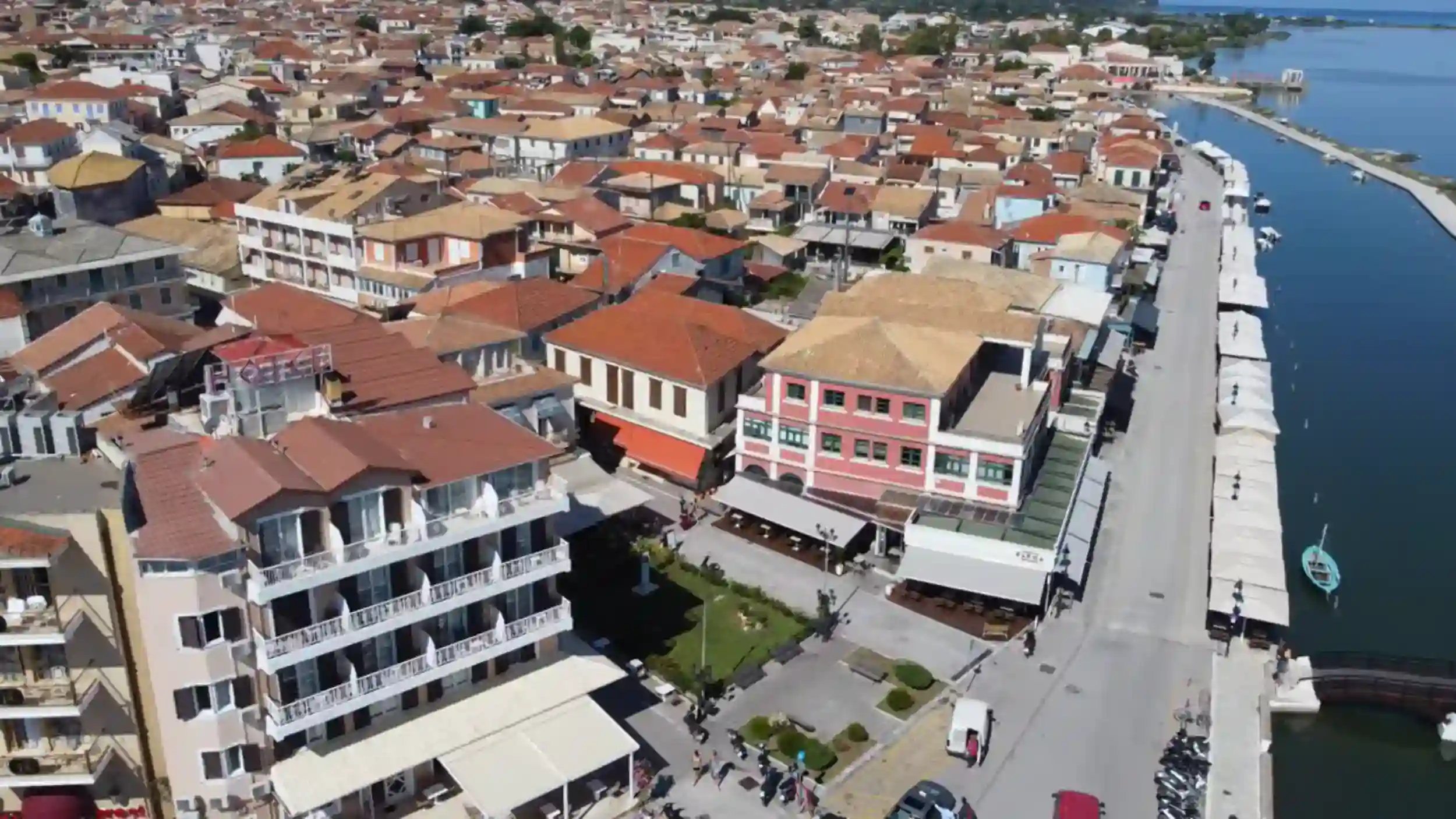
| 🏙️ Lefkada Town | Around 20 minutes by road or seasonal bus |
Several Beaches Were Within Easy Reach
We thought the village worked best when we wanted variety rather than spending every day on the same beach.
We could swim in the sheltered cove in the morning, walk to Mylos later or drive a few minutes south to Kathisma, then return to pedestrian streets and dinner without needing another evening journey.
We were also surprised by how workable the village could be without using a car every day.
Seasonal buses connect Agios Nikitas with Lefkada Town, while the Mylos water taxi runs when conditions allow. We would still want a car for wider exploration, but we liked not needing to use it for every outing.
Agios Nikitas did not give us the widest choice of facilities, but that was never its strongest argument. What mattered was being able to experience several very different west coast beaches and still return each evening to somewhere that felt more like a village than a resort.
🌅 Is Agios Nikitas Quiet or Busy, and What Are Sunsets Like?
We noticed Agios Nikitas changing considerably over the course of a day.
Morning, afternoon and evening almost gave us three different versions of the village.
The pedestrian street, sheltered cove and west-facing coastline all changed as the hours passed. A quick beach stop would have missed much of that. Staying longer showed us why the village deserved more time.
| Time of day | What you’ll experience |
|---|---|
| 🌅 Morning | Peaceful streets, calm sea and cafés setting up for the day |
| ☀️ Afternoon | Busy beach, lively tavernas and the village at its busiest |
| 🌇 Evening | Relaxed dining, quieter lanes and beautiful west coast sunsets |
Early Morning Showed Us the Quieter Village
Early morning was when we liked the village most.
We watched cafés opening while the sea was still calm and the stone-paved street had only a handful of people heading towards the beach. The easier summer parking was useful, but the quietness itself was the better reason for us to arrive early.
After Sunset the Day-Trip Atmosphere Disappeared
By evening, we felt the village slowing down for a second time.
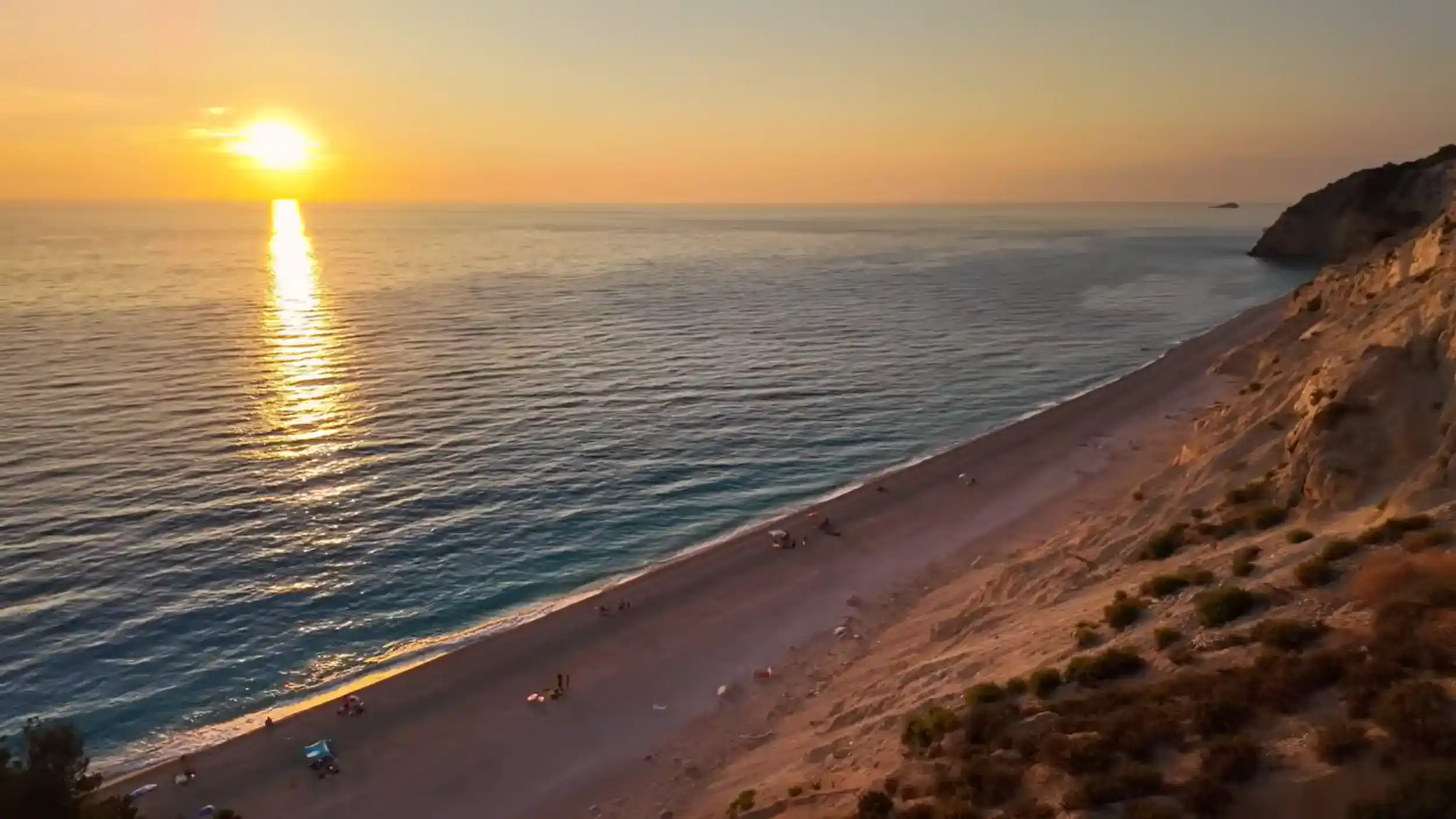
As the beach emptied, conversations took over from the daytime foot traffic and the waterfront tavernas became the natural gathering point. We would stay through sunset rather than leave after the beach, then walk back through the softly lit pedestrian street once the daytime visitors had thinned.
Unlike larger resorts built around nightlife, Agios Nikitas ended the day much as we had first enjoyed it: quietly. For us, that return to a slower atmosphere was one of the strongest reasons to stay here rather than simply visit for the beach.
💙 Is Agios Nikitas Worth Staying In?
For us, yes. We would stay in Agios Nikitas when we wanted a west-coast base with genuine village atmosphere, a beach on foot and easy access to Mylos and Kathisma. Being able to leave the car behind for part of the day was a bigger advantage than we expected.
We would look elsewhere if nightlife, large-resort facilities or guaranteed solitude mattered more. In summer the village can become busy during the day, but staying overnight let us enjoy its quieter mornings, sunset and the slower atmosphere after day visitors had thinned.