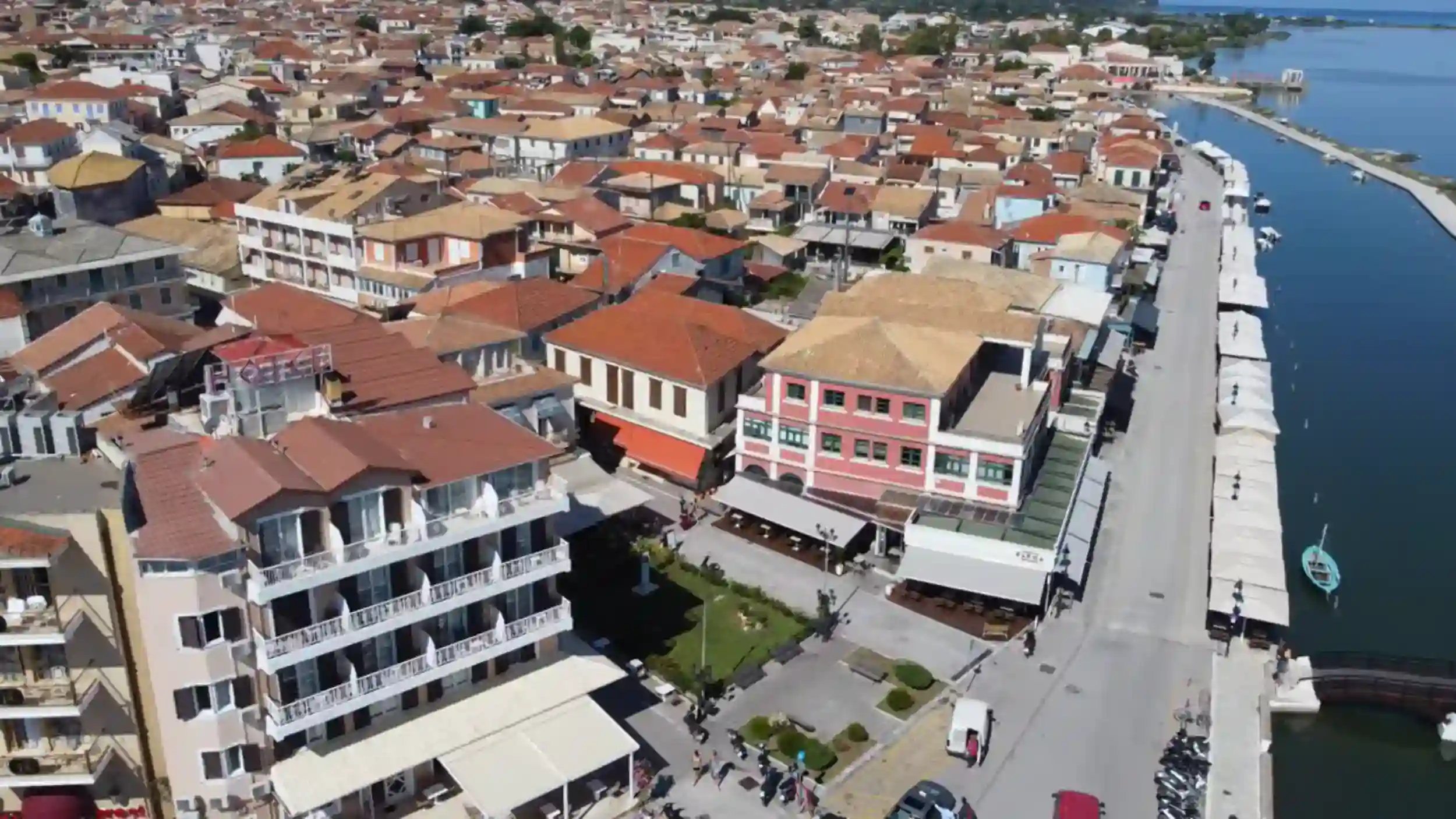
Lefkada Town is the island’s compact capital, reached directly from mainland Greece by a causeway and floating swing bridge. We found the largely pedestrianised centre easy to explore on foot, with the marina, shops, cafés, historic streets and main square close together. It also worked well as a road-trip base, although Lefkada’s southwest beaches require much longer drives.
We nearly treated it as somewhere to drive through. Staying changed that. The town gave us something the beach resorts could not: ordinary island life, evening atmosphere and a useful place to return to after exploring elsewhere.
🌉 Is Lefkada Town Connected to the Mainland by a Bridge?
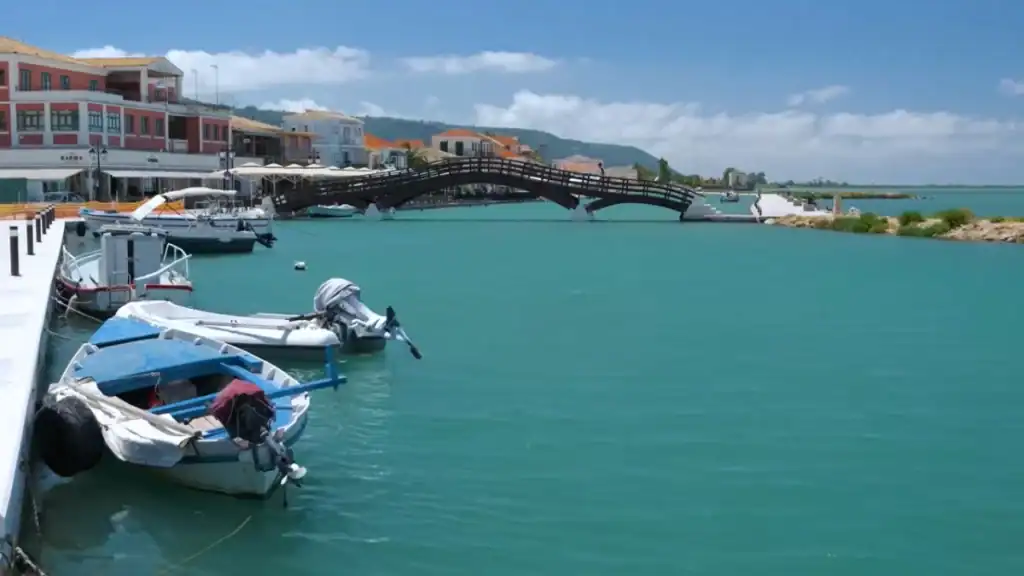
Yes. Reaching Lefkada Town by road was one of the more unusual Greek-island arrivals we have experienced. The route crosses the narrow causeway and floating swing bridge, so there was no ferry journey separating the island from the mainland.
Water appeared on both sides of us before the Castle of Agia Mavra came into view beside the entrance. That made the approach feel like part of the visit rather than simply the final few minutes of a drive.
🌉 WHAT HAPPENS AT THE BRIDGE?
The floating bridge opens for passing boats. We simply waited when that happened. It was a minor delay rather than a problem, although we would expect short queues to be more likely in July and August.
Once we continued south, having our own car became one of the biggest advantages of the trip. Our guide to Lefkada Island: The Greek Island You Can Drive Straight To explains how that freedom changed the way we explored beyond the capital.
If arriving from Preveza Airport, we would stop at Agia Mavra Castle before checking in. We found it a much more memorable introduction than driving straight past into town.
🅿️ Is Parking Easy to Find in Lefkada Town?
Driving into Lefkada Town was straightforward enough for us. Parking required a little more thought, especially because trying to get as close as possible to the pedestrian centre was rarely worth the effort.
We had better results leaving the car around the edge and walking in. Once we stopped chasing the nearest possible space, the whole process became simpler.
🅿️ OUR PARKING APPROACH
✓ Park around the edge of the old town.
✓ Allow more time during busy summer periods.
✓ Walk the final few minutes.
✗ Don’t follow sat nav blindly into narrow pedestrian streets.
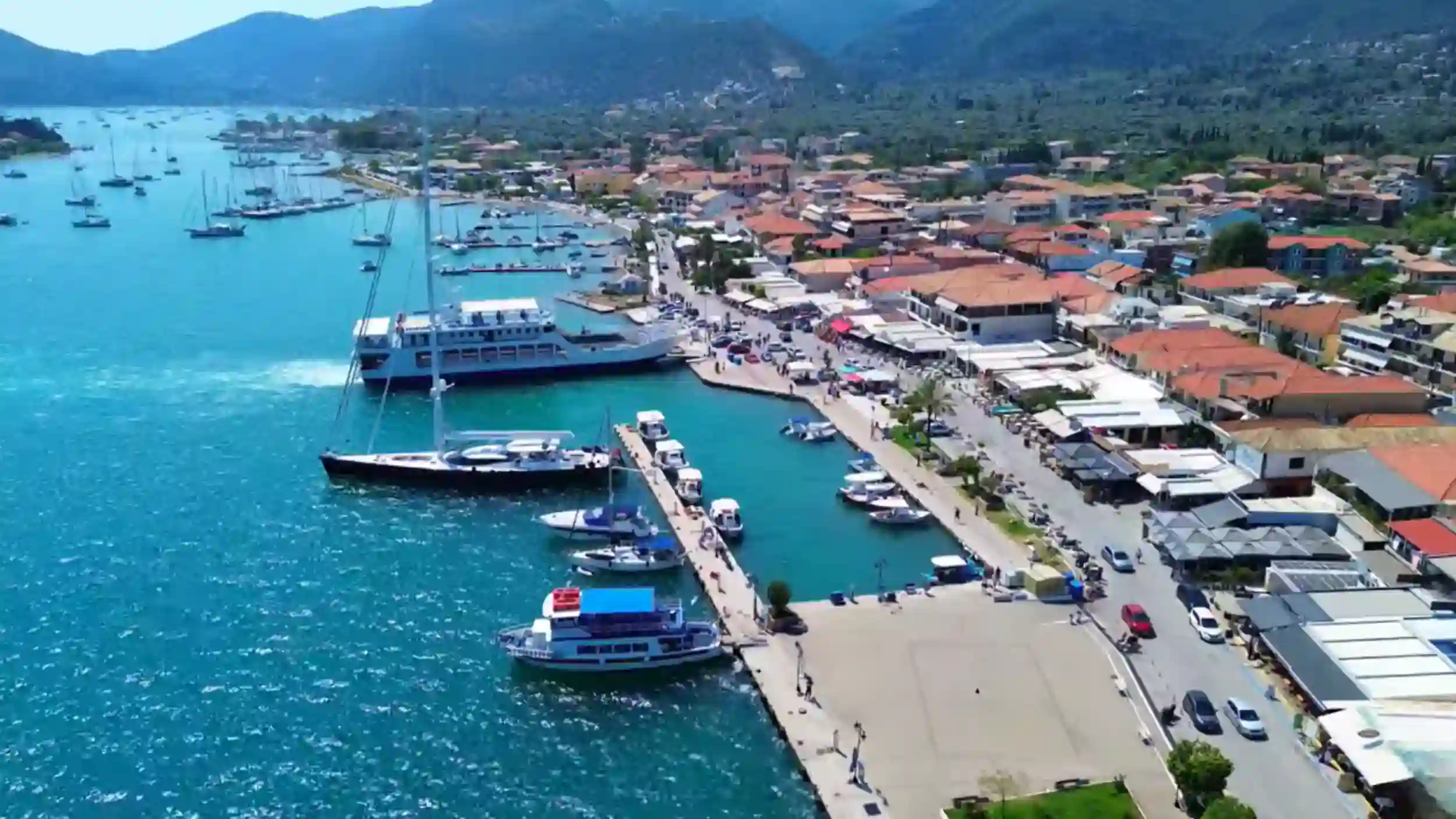
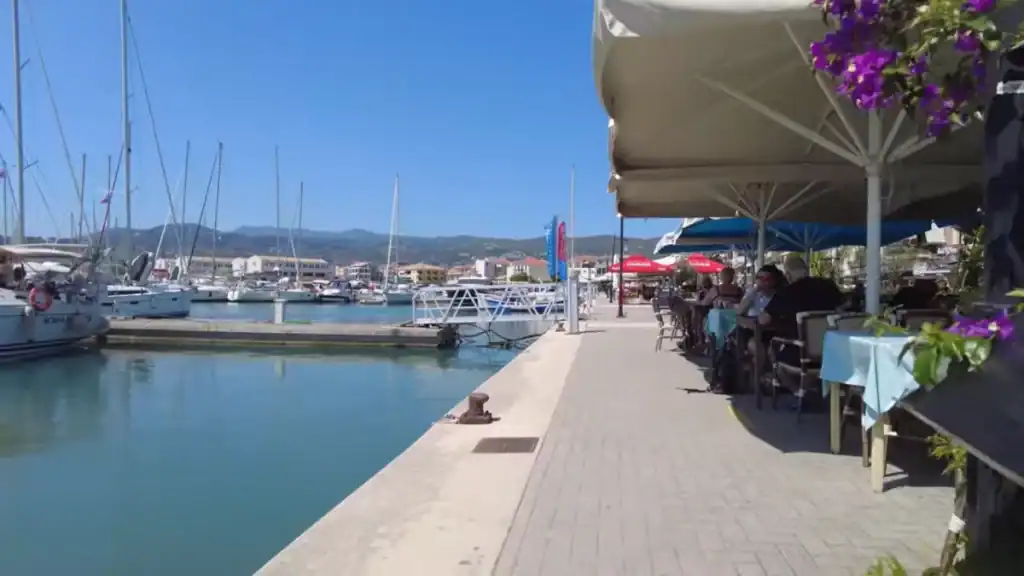
The marina also gave us an easy reference point. From there, the shopping streets, cafés and central square were only a short stroll away.
🚶 Is Lefkada Town Walkable and What Is There to See?
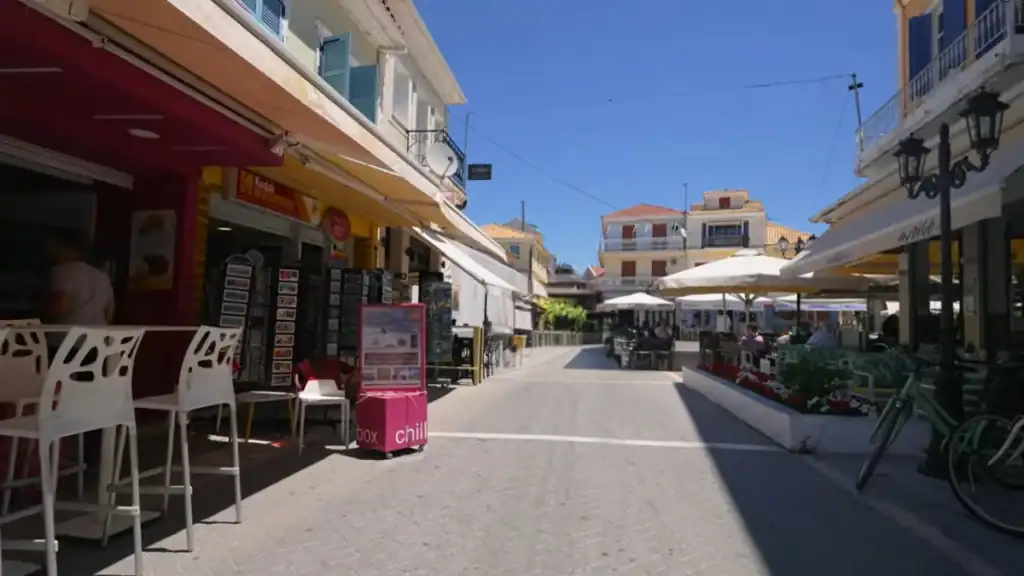
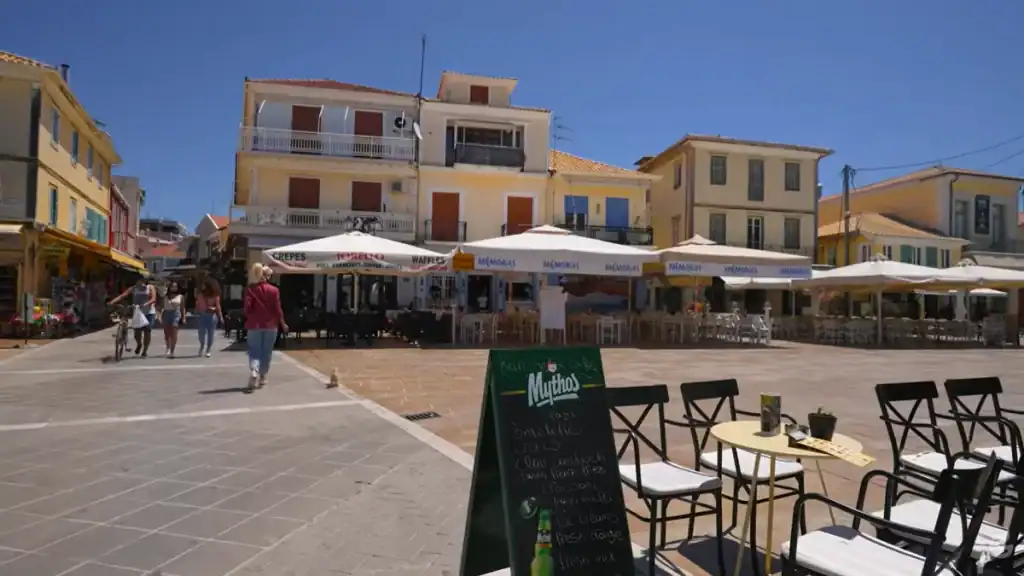
Lefkada Town made far more sense to us on foot. The centre is compact and largely pedestrianised, so we could move between the marina, waterfront, shopping streets, cafés and main square without needing the car again.
We rarely hurried away from the water. Charter yachts, fishing boats and passing sailboats kept the marina interesting without making it feel like a rushed working port.
The Centre Was More About Wandering Than Sightseeing
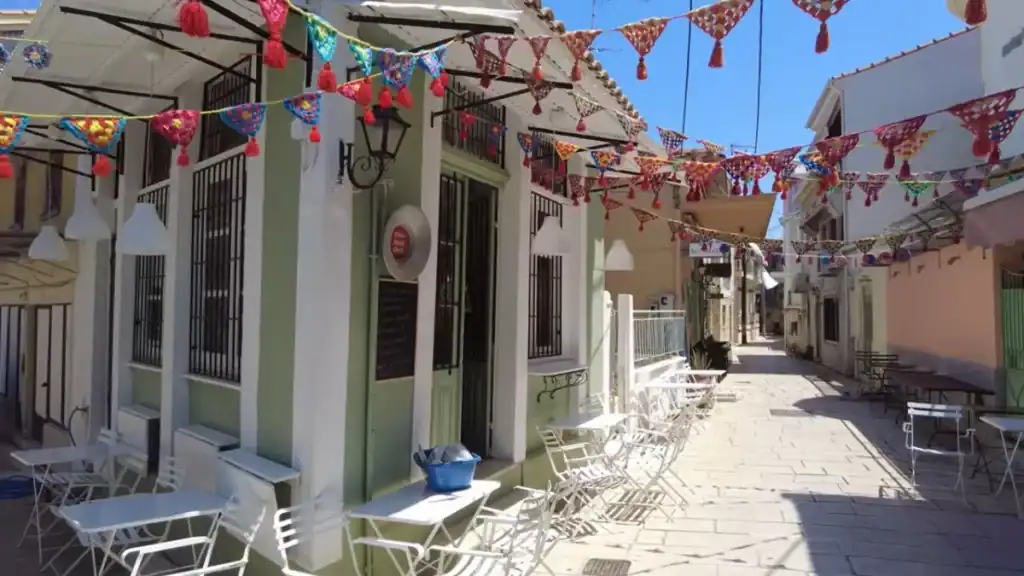
There was no single attraction that defined our walk. We liked the mixture instead: narrow streets, colourful buildings, local shops, café tables and the small pedestrian footbridge near the marina.
The main pedestrian street naturally led us towards the central square. During the day we stopped there for coffee beneath the trees. By evening, restaurant terraces filled and the atmosphere became noticeably more sociable.
🌙 WHEN THE TOWN CLICKED FOR US
Staying after sunset changed our impression. Shopping faded into dinner and conversation, and the centre became somewhere we wanted to linger rather than somewhere we felt obliged to sightsee.
Compared with the busier resort atmosphere we found around Nidri or Vasiliki, the cafés and restaurants here felt more rooted in everyday town life.
🏛️ What Does Lefkada Town’s History Add to a Visit?
The town’s history became more interesting once we stopped searching for one grand historic centrepiece. Repeated rebuilding after powerful earthquakes has shaped the streets themselves, so much of what caught our attention was architectural rather than monumental.
We started noticing lighter upper floors designed to flex rather than collapse. That gave ordinary streets a character we had not seen elsewhere in Greece and made the colourful buildings feel more meaningful once we understood why they looked that way.
History Appeared in Several Different Forms
| Look for | Why we noticed it |
|---|---|
| 🏚️ Timber-framed upper floors | A response to earthquake risk |
| ⛪ Historic churches | Part of the town’s religious history |
| 📚 Angelos Sikelianos Museum | Connected with one of Greece’s best-known poets |
| 🏰 Agia Mavra Castle | Marks the island’s historic entrance |
We were also intrigued by archaeologist Wilhelm Dörpfeld’s excavations while investigating whether Lefkada could have been Homer’s Ithaca. It was another historical layer we would have missed if we had treated the capital simply as a place for shopping and dinner.
Some of our favourite detours were less formal. Leaving the main shopping street for quieter residential lanes showed us a less polished side of town and made the history feel woven into everyday Lefkada.
🚗 Is Lefkada Town a Good Base for Exploring the Island?
For us, yes, particularly for a first exploratory trip with a car. We had quick access to the causeway, supermarkets, restaurants and the main road south, while still returning to somewhere with plenty happening after the beaches emptied.
That flexibility mattered. One day could take us towards the west coast, another towards Nidri or Vasiliki, without committing the whole holiday to one corner of Lefkada.
The Southwest Beaches Are the Main Compromise
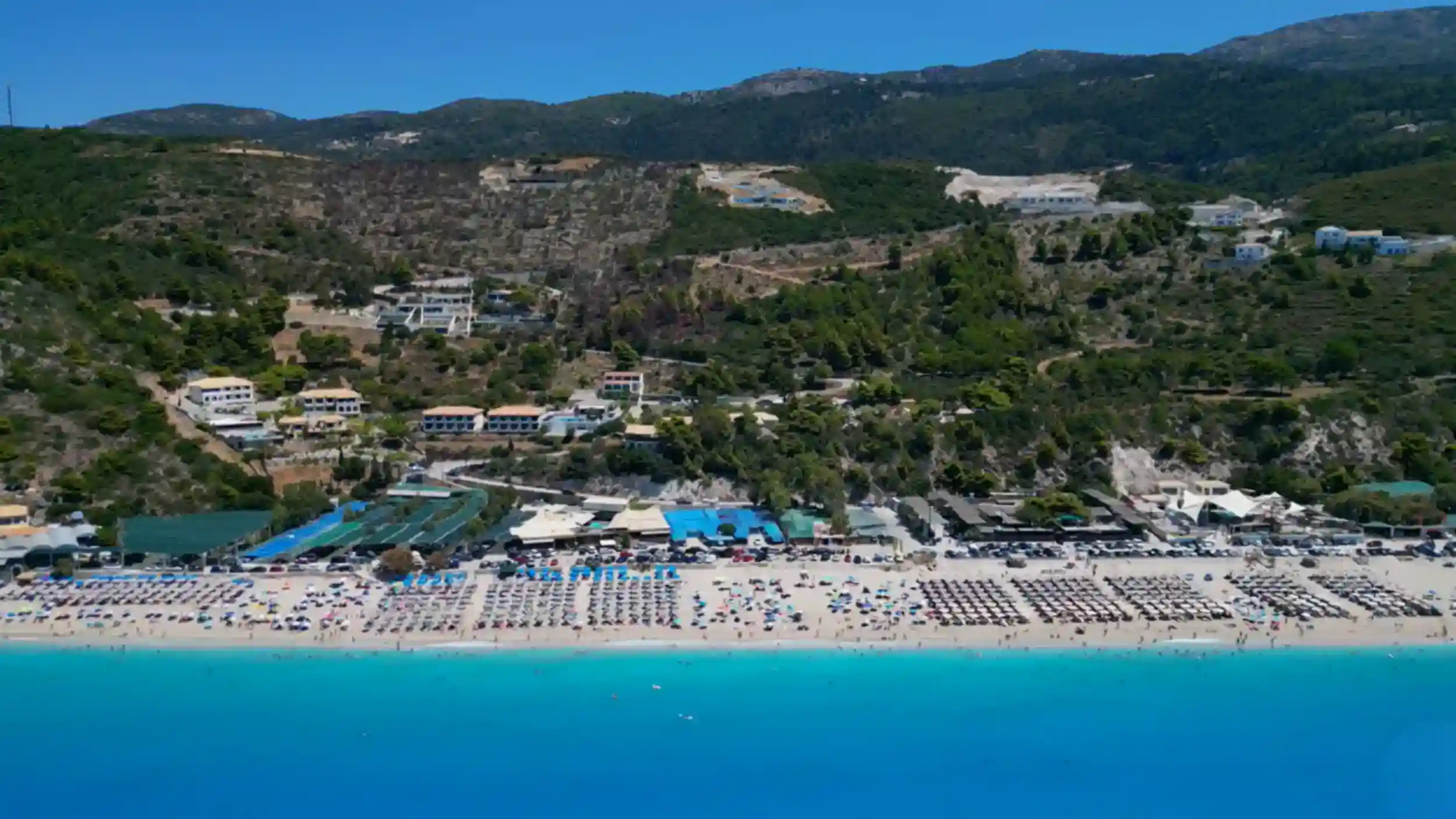
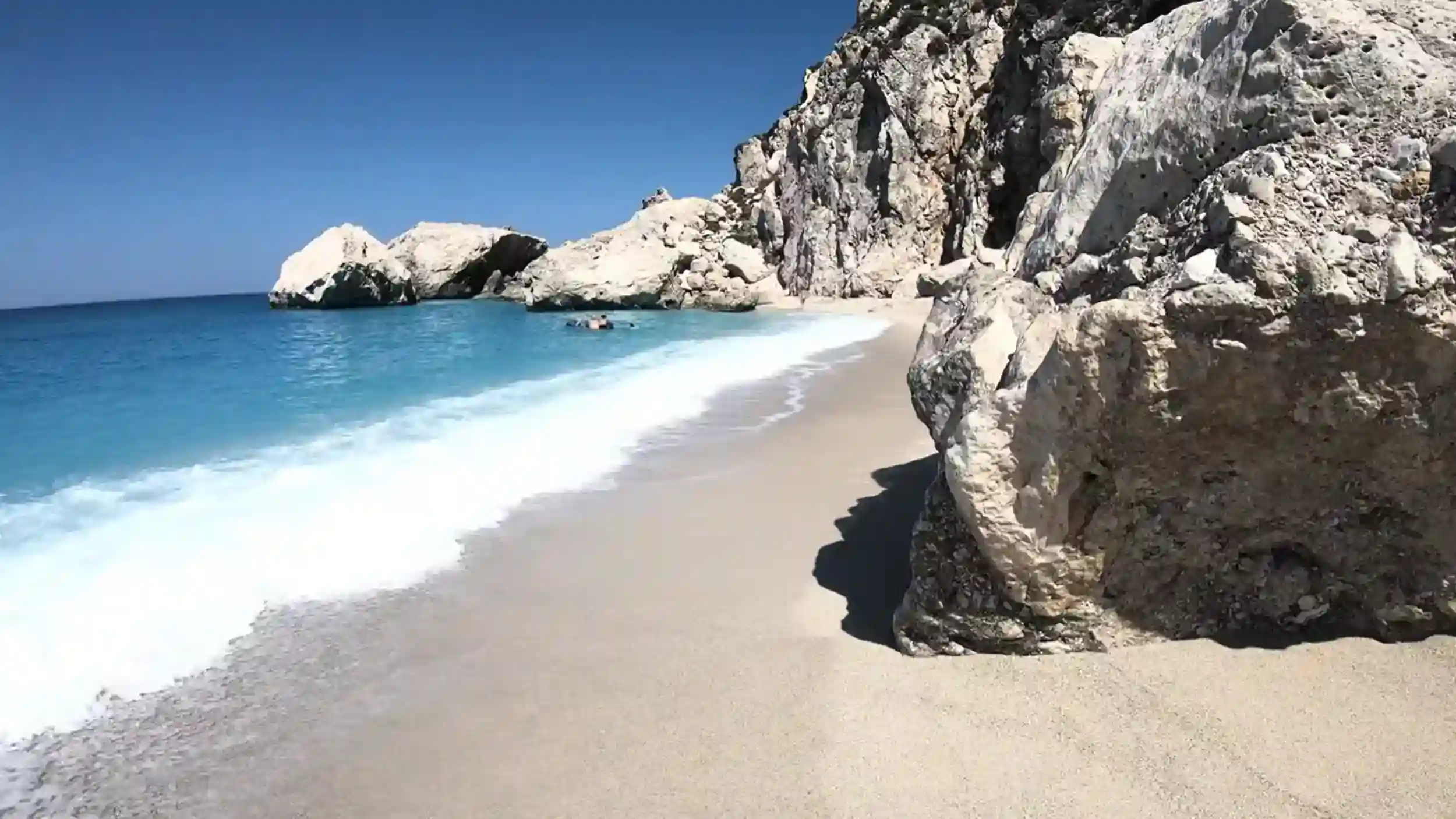
The trade-off became obvious whenever we headed for Porto Katsiki or Egremni. From town, those southwest beaches took around an hour or more to reach in our experience. We would not choose this base for consecutive days focused almost entirely on that end of the island.
WHO WE THINK IT SUITS
🚗 Good fit: first-time visitors, road trips and travellers exploring several parts of Lefkada.
🍽️ Also strong for: restaurant choice and evening walks.
🏖️ Less convincing for: anyone wanting to walk straight onto a beach every morning.
🌅 Think farther south: if Porto Katsiki and Egremni dominate the itinerary.
💙 Is Lefkada Town Worth Visiting?
We think it is, but not because it competes with Lefkada’s famous beaches. Its appeal is different. This is where we found the island’s marina life, pedestrian streets, earthquake-shaped architecture, shops, restaurants and one of our easiest evening strolls.
We would choose Lefkada Town again for an exploratory holiday rather than a conventional resort stay. Being able to drive elsewhere during the day and return to a genuinely enjoyable town in the evening mattered more to us than having a beach outside the door.