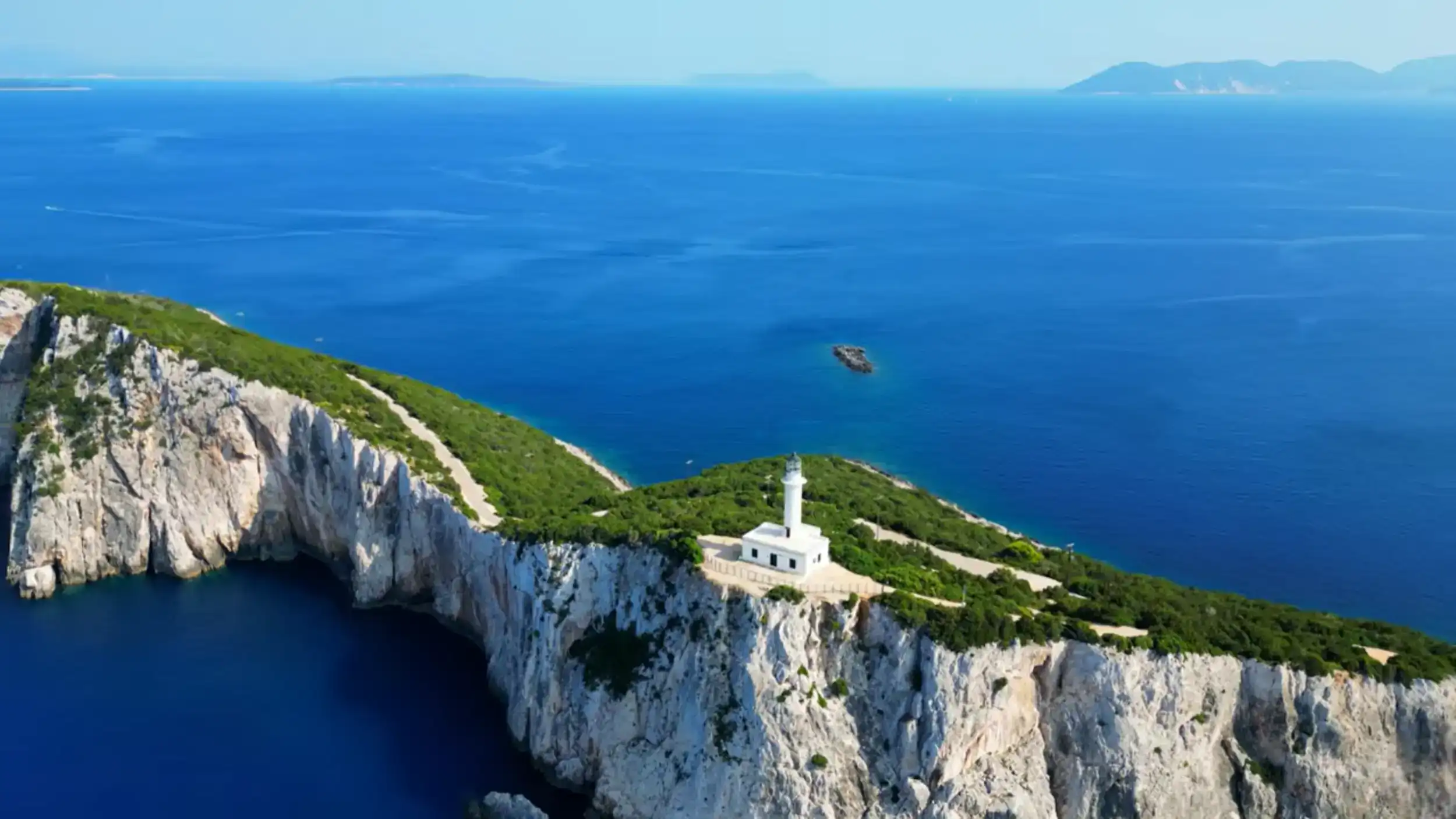
Cape Lefkatas is Lefkada’s dramatic southern tip, reached by road from Vasiliki and finished with a short walk from the parking area. The exposed headland combines near-vertical white limestone cliffs, an 1890 lighthouse, open Ionian views and ancient legends linked with Apollo and Sappho. We found that under an hour was enough for the cape itself.
The road quite literally ran out for us here. With almost nothing around the lighthouse, the wind, cliffs and open sea became the experience rather than a backdrop to it.
🚗 How Do You Get to Cape Lefkatas?
We found that reaching Cape Lefkatas was part of the experience.
The final stretch did not feel like driving to another attraction. It felt like travelling towards the physical end of the island.
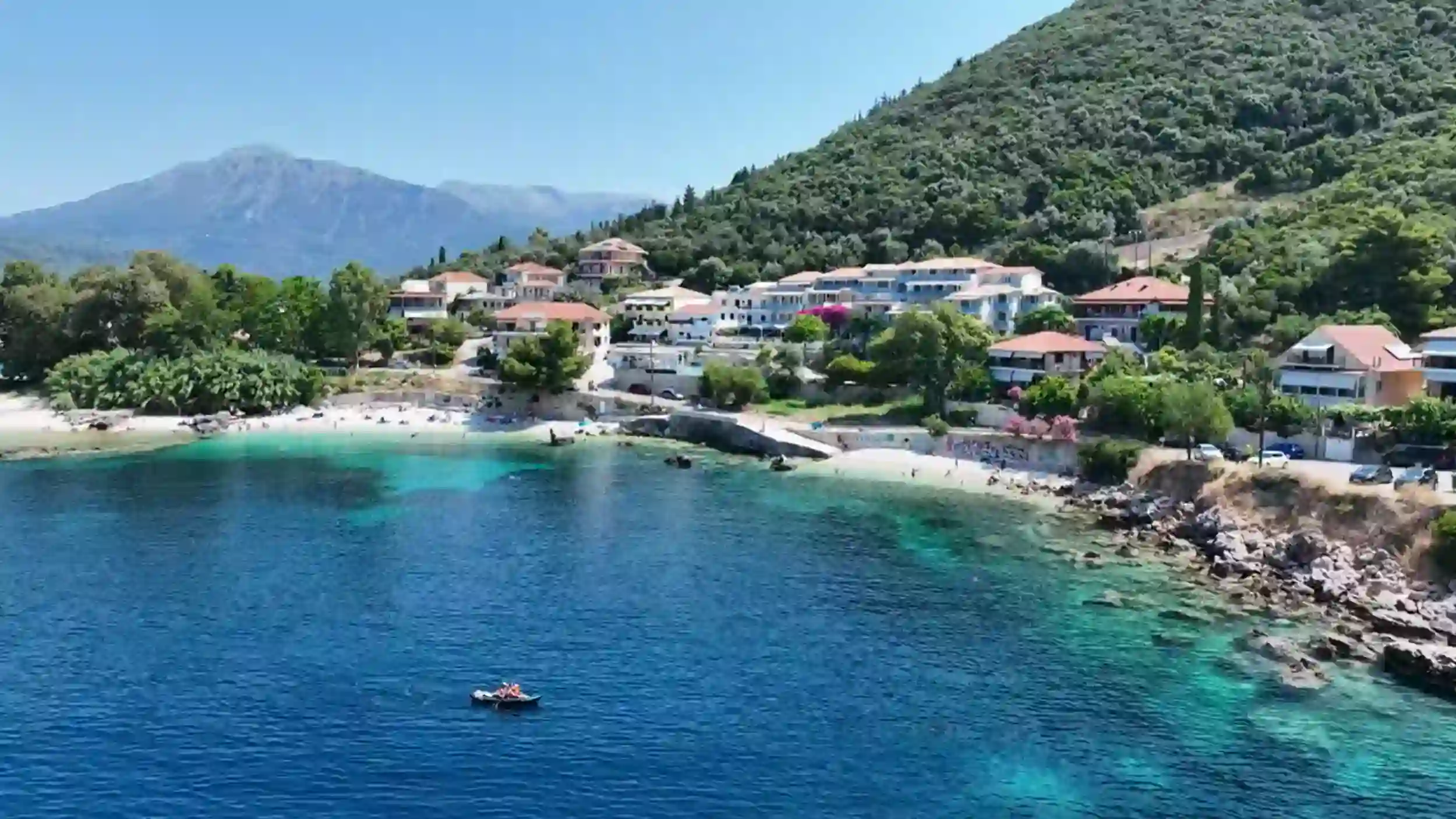
Leaving Vasiliki Lefkada, we watched olive trees give way to low scrub and exposed limestone. Each bend made the landscape feel rougher. Brief flashes of sea appeared between the hills.
The Landscape Became Wilder With Every Bend
What surprised us was how quickly the scenery changed after leaving Vasiliki.
Vegetation thinned and the ground became paler as we approached the headland. The wind strengthened too. Long before reaching the lighthouse, we already felt much more exposed.
| Along the drive | What you’ll notice |
|---|---|
| 🌿 Leaving Vasiliki | Olive groves and sheltered hills |
| 🪨 Midway | Rockier slopes and wider sea views |
| 🌬️ Final approach | Stronger winds and open limestone landscape |
| 🅿️ Arrival | Small parking area at the island’s southern tip |
We were pleased to find almost nothing had been overdeveloped for tourism.
The modest car park, dirt path and open landscape reinforced that impression. By the time we stepped out, Cape Lefkatas already felt defined by landscape rather than visitor facilities.
🏔️ How High Are the Cliffs at Cape Lefkatas?
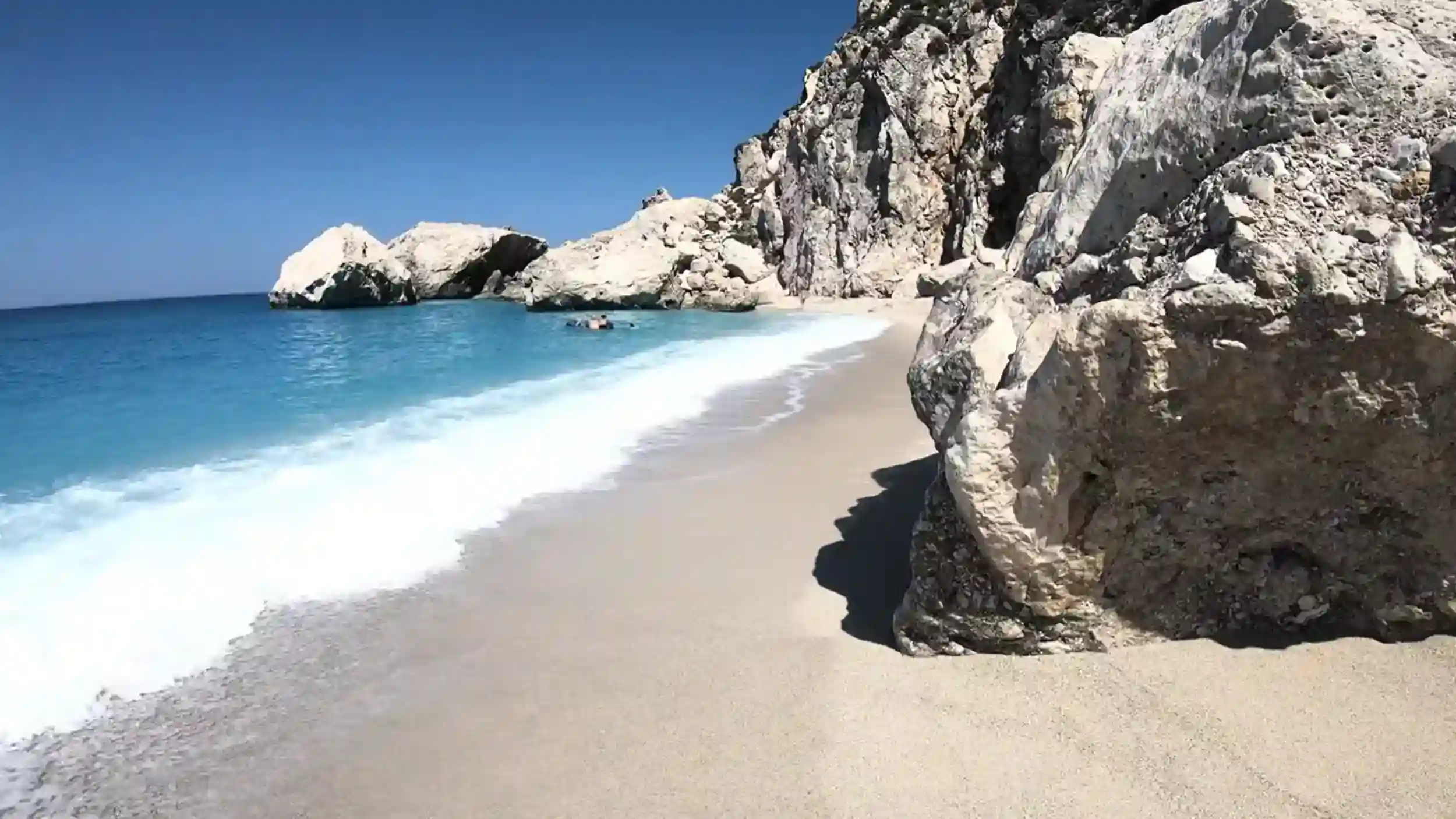
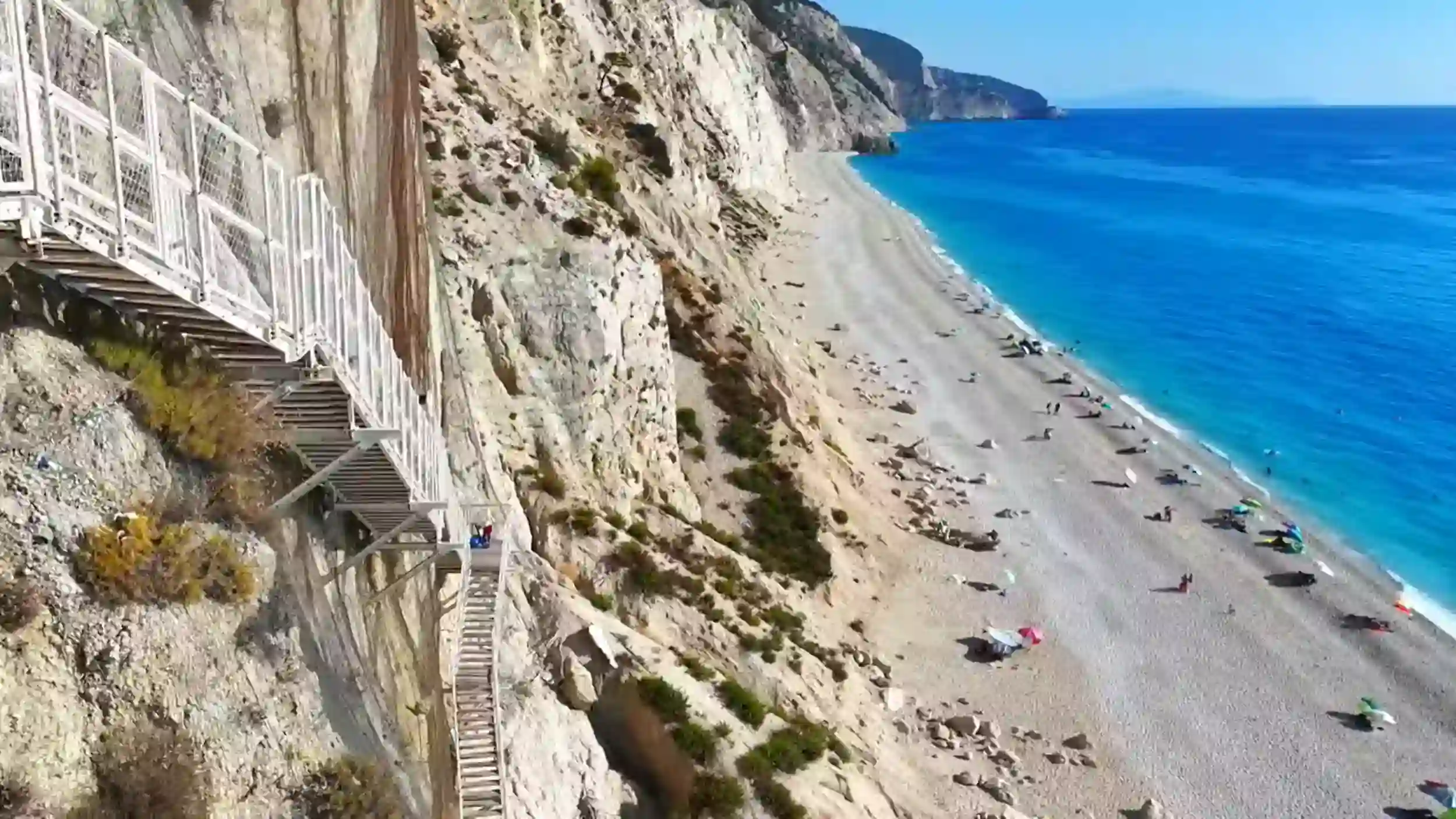
The Cape Lefkatas cliffs rise approximately 60 to 70 meters above the Ionian Sea. From our visit the limestone appears to fall almost vertically into the Ionian, creating one of the most exposed viewpoints we found on Lefkada.
Unlike beaches farther north, the rock face here seemed to drop almost vertically into the Ionian. Standing above it, we found the landscape rawer and more exposed than anywhere else we had stopped on Lefkada.
Bright Limestone Made the Sea Look Even Bluer
We noticed how little vegetation interrupted the limestone, allowing the pale rock to dominate almost everything we could see.
In bright sunshine, the cliffs looked almost white against the deep blue water. The contrast was stronger in person than we expected. Suddenly, Lefkada’s association with pale cliffs made complete sense.
| Cliff feature | What makes it memorable |
|---|---|
| ⛰️ Near-vertical limestone | Creates a dramatic sense of height |
| 🤍 Pale rock | Brilliant contrast with the Ionian Sea |
| 🌊 Deep water below | Intensifies the colour of the sea |
| 📷 Open viewpoints | Panoramic photography in every direction |
We found the cliffs changed more with the light than we expected.
Midday light emphasised the brilliant white rock, while the lower afternoon sun revealed layers and textures we had barely noticed earlier. The cliffs themselves were static, but our impression of them kept changing.
🗼 Is There a Lighthouse at Cape Lefkatas?
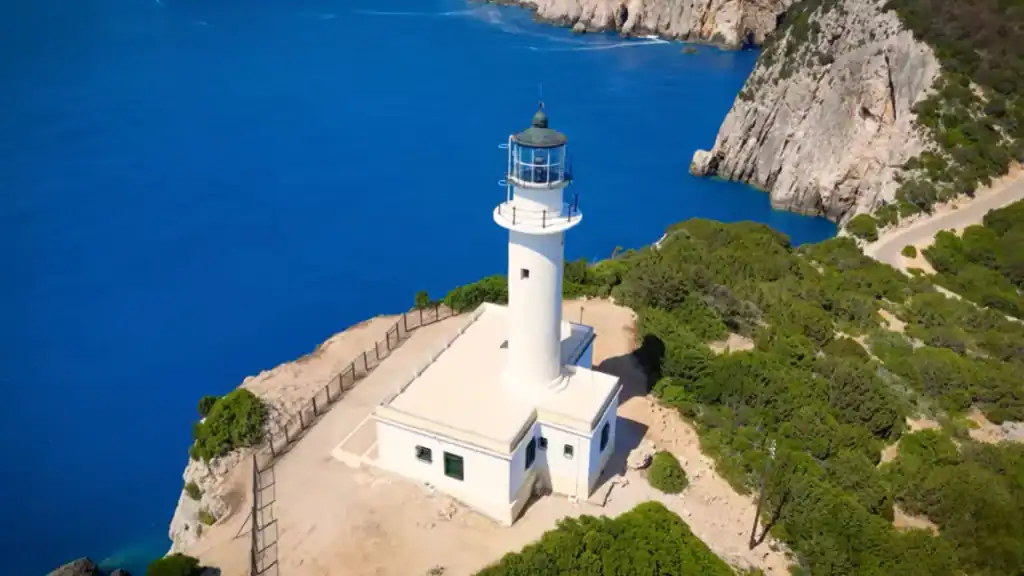
The lighthouse gave us a focal point in an otherwise very open landscape.
We thought the cape would still be worth visiting without it, but the white tower added history and purpose to a headland otherwise dominated by rock, sea and sky.
Knowing the lighthouse was built in 1890 on the site of an ancient sanctuary dedicated to Apollo added context. It has guided ships through the southern Ionian for well over a century.
A Short Walk Took Us to the Island’s Edge
From the parking area, we only had a short walk along the dirt path.
The walk took us less than five minutes. The uneven final section and strong wind still made us pay attention. We could not enter the lighthouse, but that hardly mattered once we reached the views.
| Visitor information | Details |
|---|---|
| 🗼 Lighthouse built | 1890 |
| 🚶 Walk from parking | Around 5 minutes |
| 🚫 Interior access | Not open to visitors |
| 🌬️ Conditions | Often windy throughout the year |
Standing beside the lighthouse, we understood why this exposed point has remained important for centuries. The building itself was modest, but its position above the cliffs made the viewpoint far more memorable than the structure alone.
📖 What Is the Myth Associated With Cape Lefkatas?
Cape Lefkatas became more interesting to us once we looked beyond the viewpoint.
Its history of myth, ritual and storytelling gave the landscape another layer.
Long before the lighthouse appeared, the headland was associated with Apollo and ancient legend. Knowing that changed the way we looked at what initially seemed like an empty, remote cliff.
Apollo Gives the Headland a Much Older Story
We learned that ancient sources place a temple dedicated to Apollo on the headland.
The site became associated with purification ceremonies, while archaeological discoveries near the lighthouse support its religious importance long before the modern landmark was constructed. For us, that history made the cape feel less empty and far more layered.
| Legend or history | Why it matters |
|---|---|
| ❤️ Sappho’s Leap | One of Greece’s best-known romantic legends |
| 🏛️ Temple of Apollo | Shows the cape’s ancient religious significance |
| ⛪ Lighthouse site | Built where the ancient sanctuary once stood |
| ⛏️ Archaeological finds | Evidence supporting the site’s long history |
The most famous story tells of the poet Sappho throwing herself from the cliffs after unrequited love. Whether it happened remains uncertain. The legend nevertheless became inseparable from the headland. Standing there, we understood why such dramatic stories became attached to it.
👀 What Can You See From Cape Lefkatas?
Standing at Cape Lefkatas changed the way we saw Lefkada.
Instead of thinking about individual beaches and bays, we started seeing the island as one long limestone ridge surrounded by open sea.
The view stretched across the southern Ionian in almost every direction. It was one of the few places on Lefkada where we felt the landscape itself mattered more than any named attraction.
Turning Around Completely Changed the View
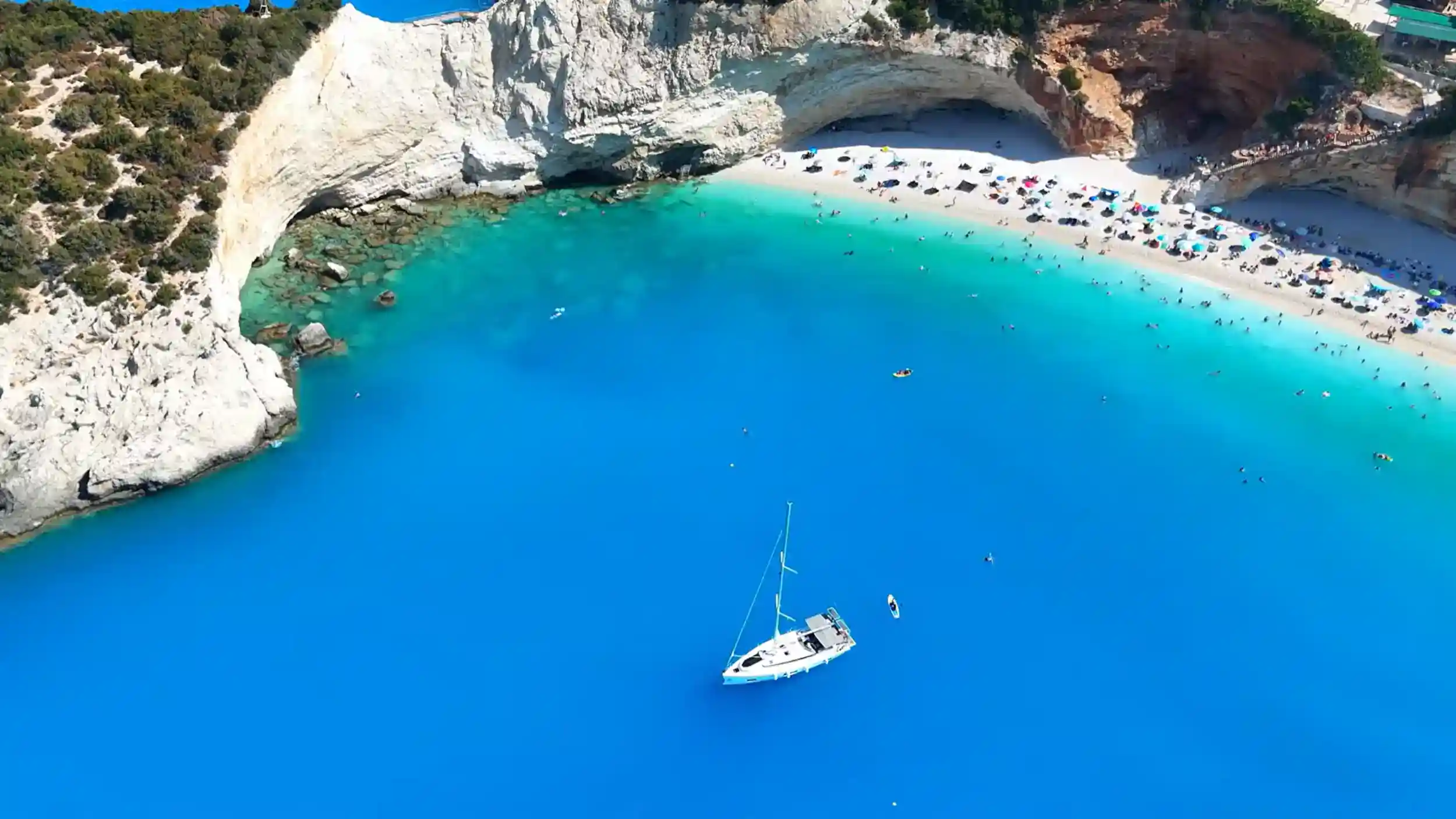
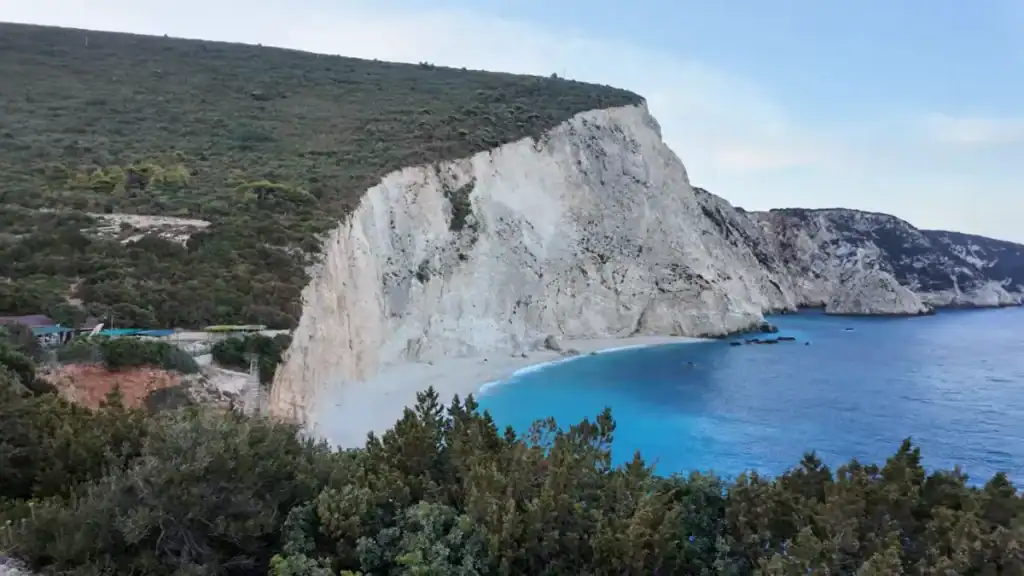
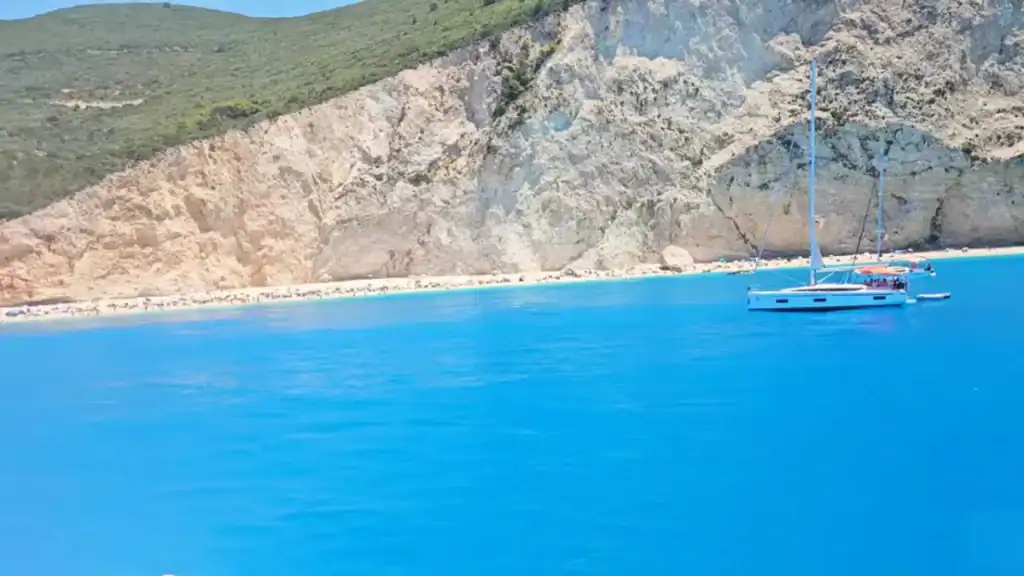
Looking north, we saw an almost continuous wall of white cliffs interrupted by beaches such as Porto Katsiki. From this angle, the west coast finally made sense as one connected landscape.
Turning south gave us an entirely different view.
Beyond the cliffs lay open Ionian Sea. On clear days, Ithaca and Kefalonia appeared as distant silhouettes. The emptiness was part of what made the viewpoint feel so exposed.
| Direction | What you’ll see |
|---|---|
| 🧭 North | White limestone coastline and Porto Katsiki |
| 🌊 South | Open Ionian Sea stretching to the horizon |
| 🏝️ Southwest | Kefalonia on clear days |
| ⛰️ Southeast | Ithaca rising beyond the sea |
Compared with Lefkada’s sheltered harbours and resort villages, the viewpoint made the island feel unexpectedly isolated. We felt much more connected to the open Ionian here than to the Greek mainland.
💙 Is Cape Lefkatas Worth Visiting?
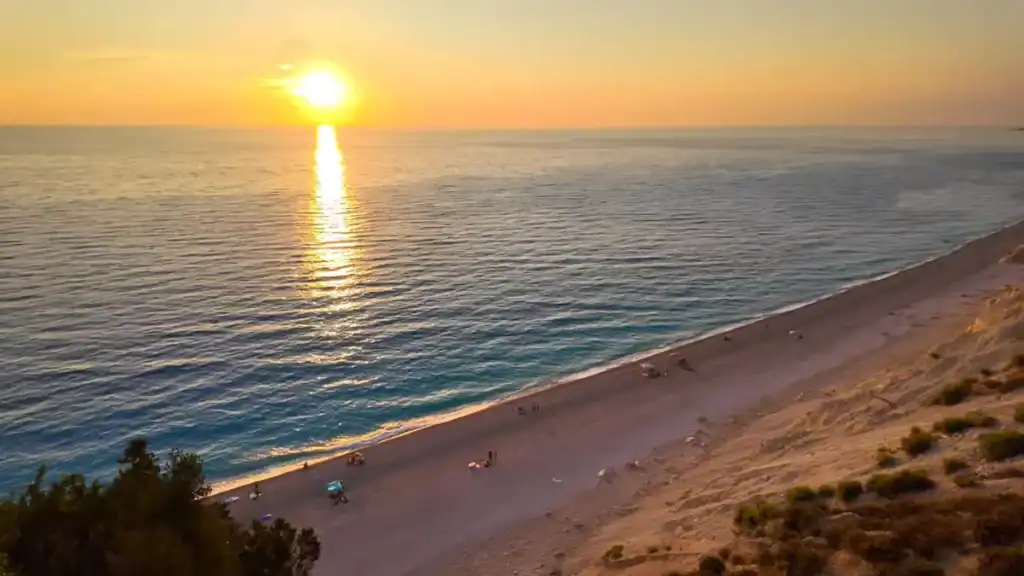
For us, yes, but for a different reason from Lefkada’s beaches. We came for the lighthouse and views, then found the remoteness and exposed landscape more memorable than either individual attraction.
We would not give the cape an entire day. It worked better as a powerful stop within southern Lefkada, particularly if we were already visiting Vasiliki, Porto Katsiki or Agiofili.
🗺️ How Long Do You Need, and How Should Cape Lefkatas Fit Into a Lefkada Trip?
We would not treat Cape Lefkatas as somewhere to simply pass through.
We thought it worked best when combined with other places in southern Lefkada. It did not need an entire day of its own.
We could comfortably explore the lighthouse, cliffs and viewpoints in under an hour, leaving plenty of time to continue elsewhere.
| Combine with… | 📌 Why it works |
|---|---|
| 🌊 Vasiliki Lefkada | Harbour lunch before or after visiting the cape |
| 🏖️ Porto Katsiki | Dramatic cliffs followed by Lefkada’s most famous beach |
| 🤿 Agiofili Beach | Scenic viewpoint paired with one of the island’s best swimming spots |
Our Half-Day Route Would Continue Beyond the Cape
We would begin in Vasiliki and drive south to the cape while visibility was good. Afterwards, we would continue to Porto Katsiki or swim at Agiofili. That gave the cape a natural place in the day.
Unlike Lefkada’s beaches, Cape Lefkatas rewarded us for stopping and looking rather than relaxing. We left with a much clearer sense of how dramatically the island changes once the resorts and sheltered bays disappear.