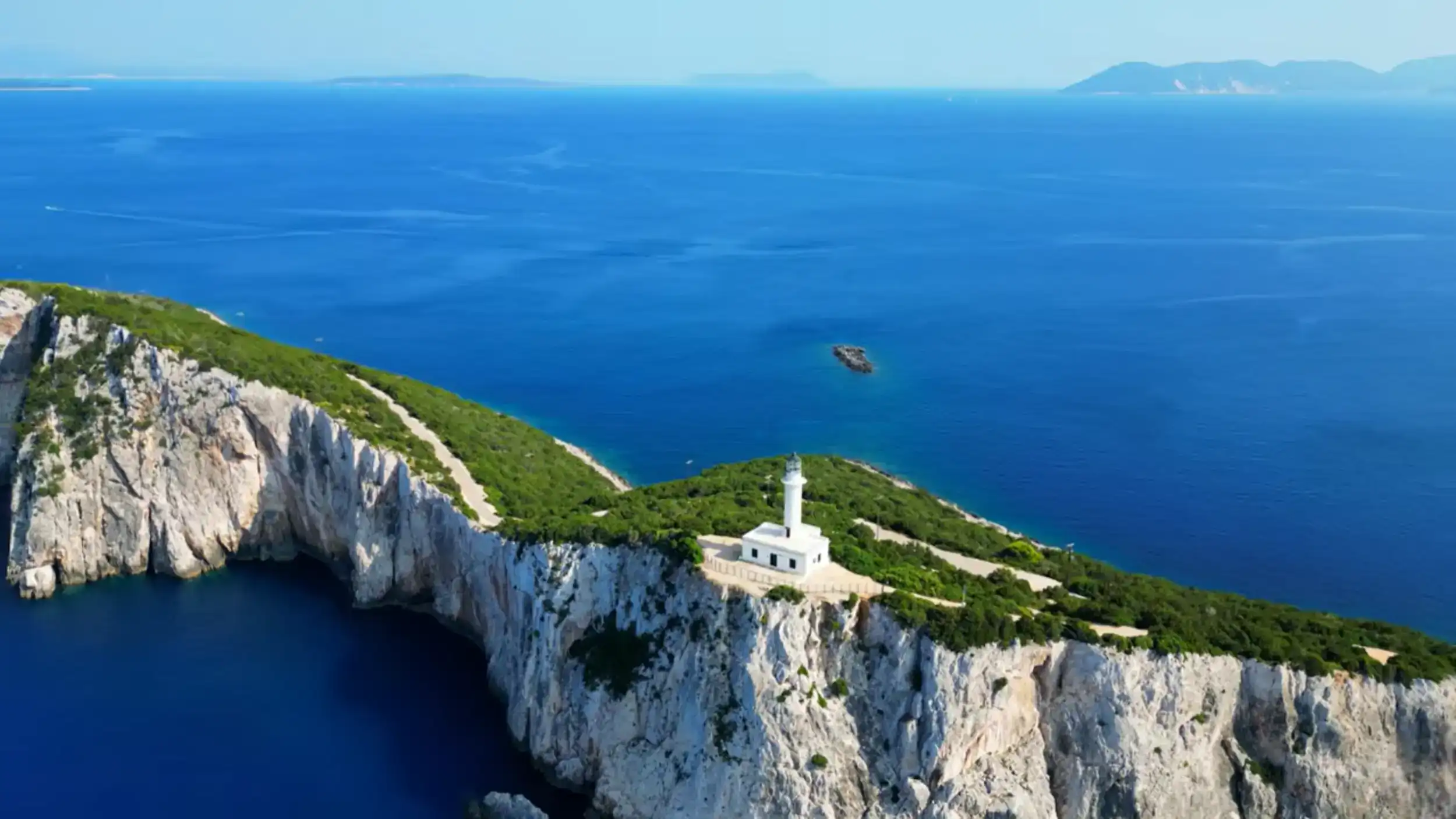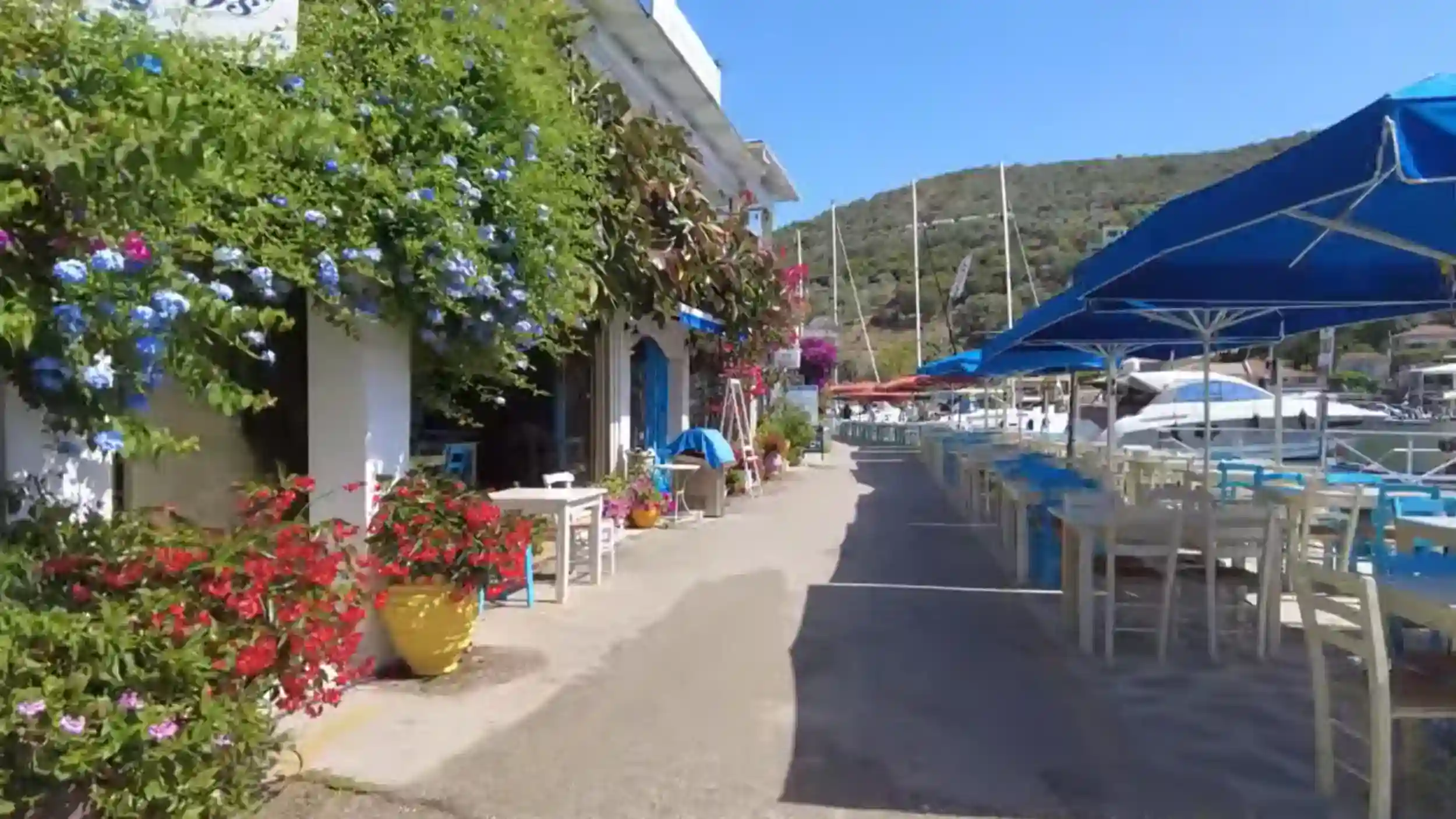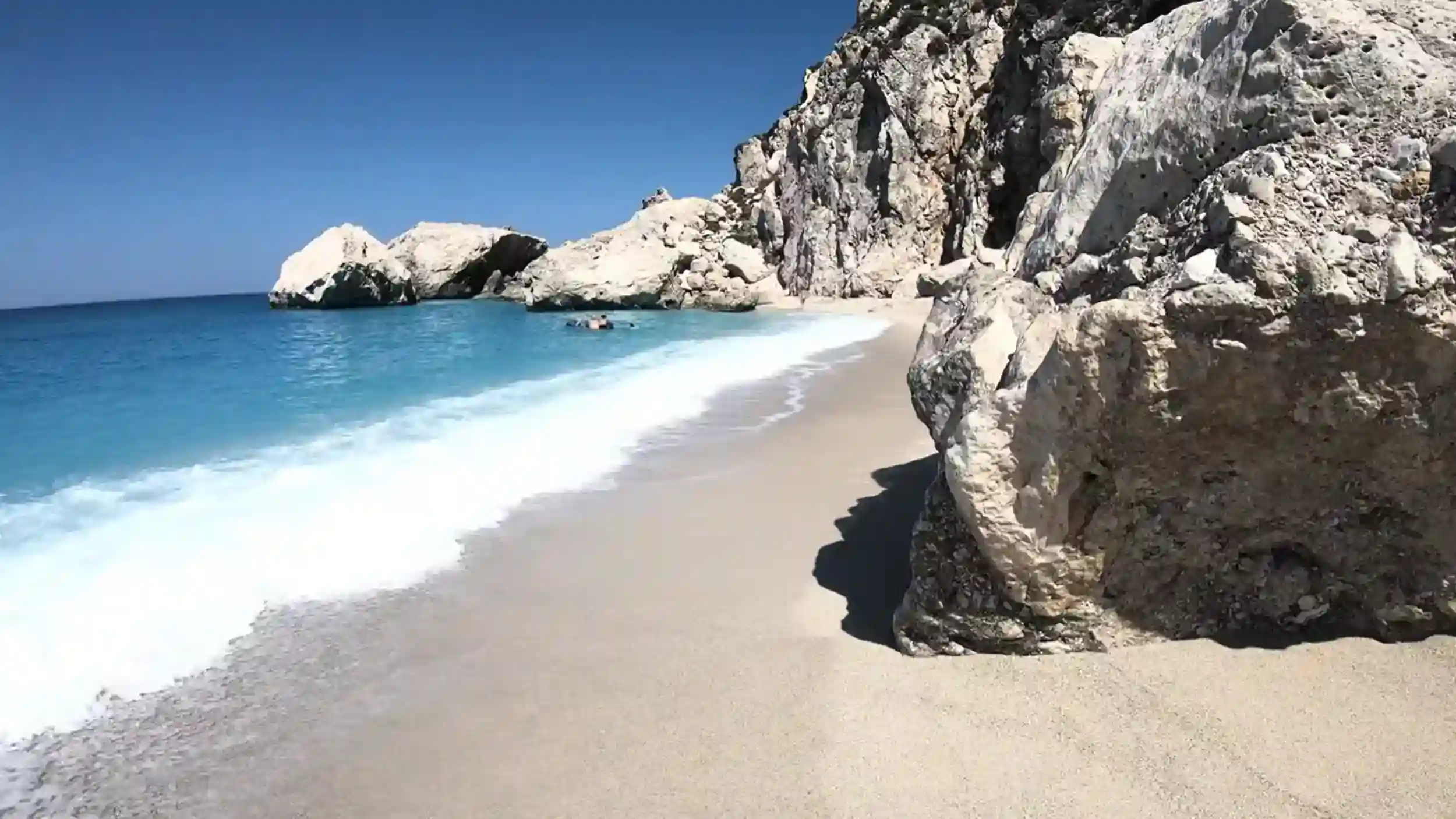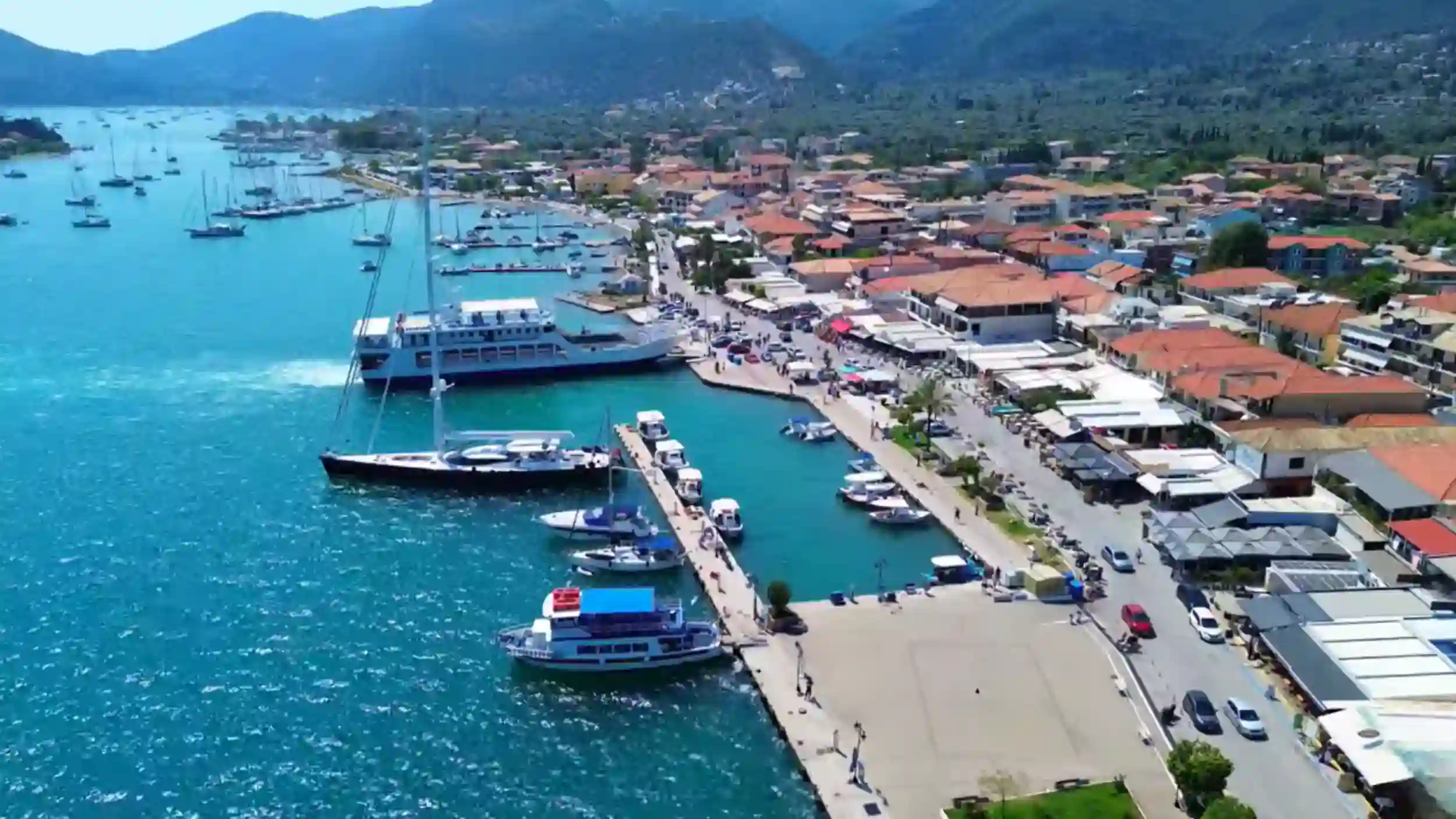
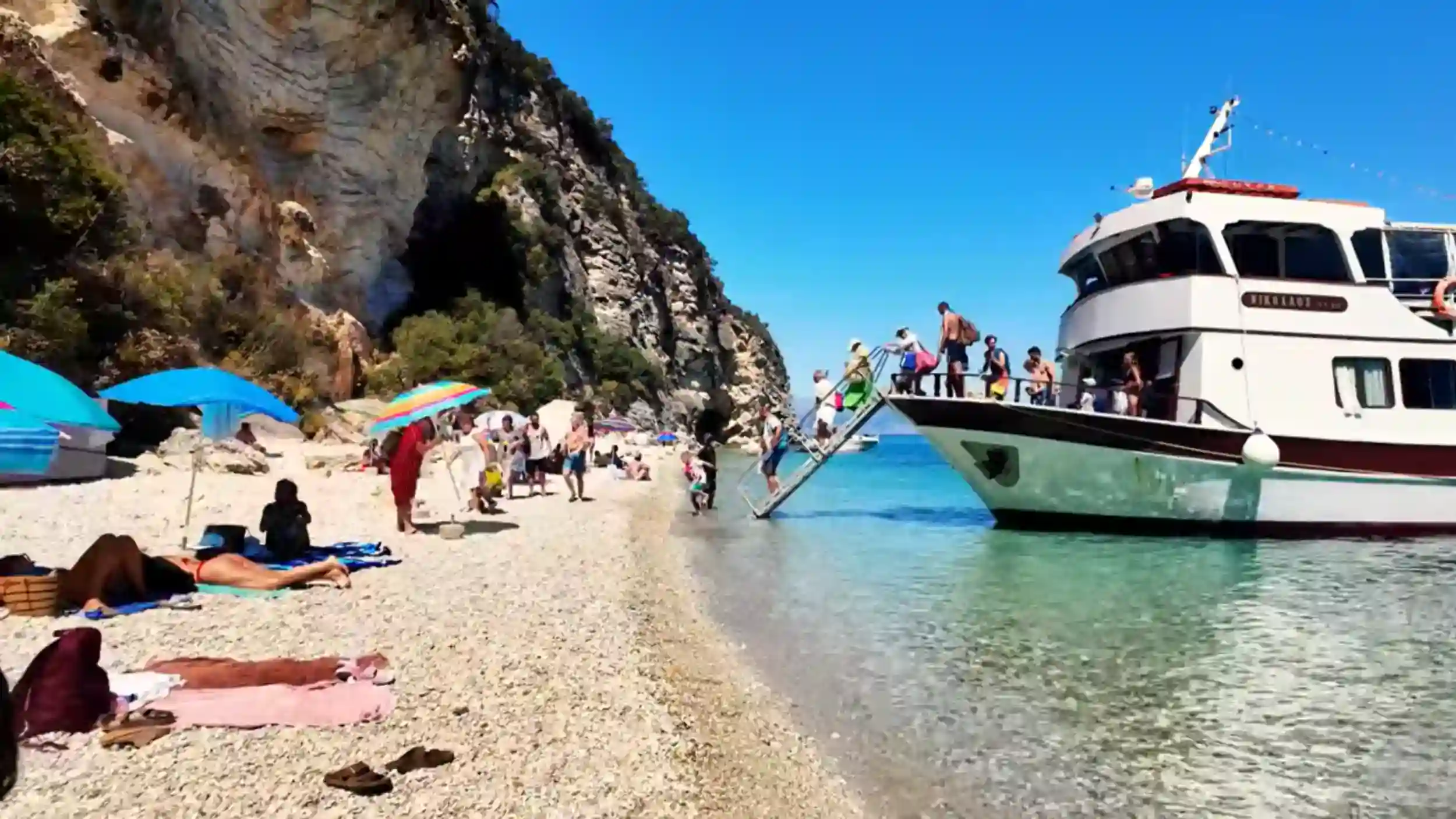
Agiofili Beach is a small sheltered cove near Vasiliki with exceptionally clear water, white pebbles and easier access than Lefkada’s famous west-coast beaches. We could reach it by car or seasonal taxi boat, and its calm water and rocky edges made swimming and snorkelling the strongest reasons for us to visit.
Porto Katsiki and Egremni impressed us more through scale. Agiofili offered something gentler: a beach where we wanted to spend most of our time in the water rather than looking at it.
🚤 How Do You Get to Agiofili Beach, and Can You Go by Boat?
One of Agiofili Beach’s biggest advantages for us was how little effort it took to reach.
Unlike Lefkada’s famous west coast beaches, we did not have an exhausting staircase waiting at the end of the journey.
Whether we arrived by road or considered the taxi boat, the final approach was refreshingly straightforward.
| Travel option | 📌 What to expect |
|---|---|
| 🚗 By car | Around 10 minutes from Vasiliki Lefkada, followed by a short walk from the paid car park |
| 🚤 Taxi boat | Around 20 minutes from Vasiliki harbour with scenic coastal views |
Driving Left Us With Only a Short Final Walk
Driving out of Vasiliki, we found the road climbed gently to the parking area above the cove. From there, a short path and only a handful of steps separated us from the shoreline. It felt dramatically easier than reaching Porto Katsiki or Egremni.
The Taxi Boat Avoided the Parking Problem
The taxi boat appealed to us for a completely different reason.
Approaching from the sea reveals the limestone cliffs enclosing the cove before you step ashore. It also removes the parking problem during busy summer weeks. We would still check conditions first because the seasonal boats depend on suitable weather.
What mattered to us was that neither option turned Agiofili into an expedition. That easy access made it particularly useful as a half-day trip from Vasiliki or something we could combine with a wider day exploring southern Lefkada.
🏖️ What Is Agiofili Beach Actually Like?
Some Lefkada beaches impressed us through sheer scale.
Agiofili won us over in almost the opposite way.
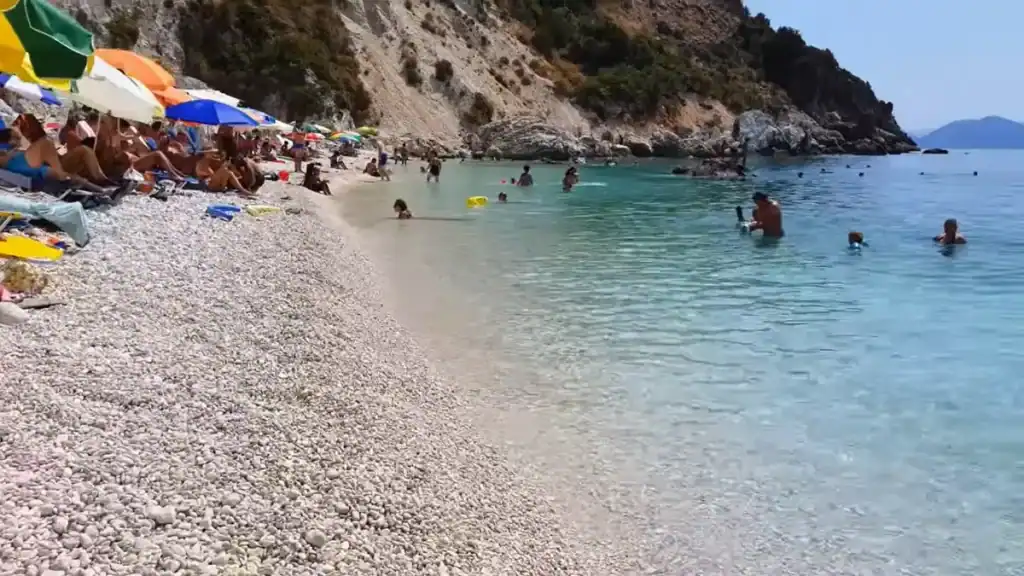
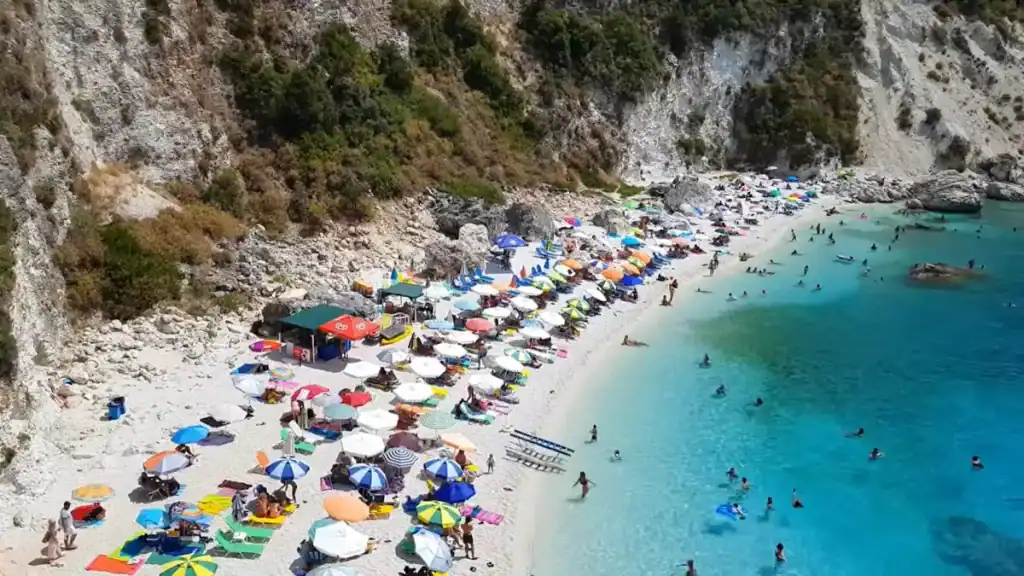
Inside the narrow limestone cove, we felt enclosed rather than overwhelmed by the scenery. The cliffs rose close to the shoreline. They gave us noticeably more shelter than we experienced on exposed stretches of the Ionian coast.
| What makes Agiofili Beach different? | Why it matters |
|---|---|
| 🪨 Enclosed limestone cove | Sheltered from stronger winds |
| 💎 Crystal-clear water | Outstanding underwater visibility |
| 🏖️ White pebble beach | Clean, bright shoreline |
| 🌊 Faster drop into deep water | Excellent for confident swimmers and snorkellers |
Sheltered Water Was Agiofili’s Biggest Strength
The protection from the surrounding cliffs was obvious once we were in the water.
Even when the open coast was breezier, Agiofili’s water could remain remarkably calm. For us, that mattered more than the cove’s popularity because it made swimming the focus rather than simply finding somewhere to sit.
The small size meant we noticed the atmosphere changing quickly as more people arrived. Early on, the cove could feel surprisingly secluded; by early afternoon, taxi boats and day-trippers from Vasiliki Lefkada gave it a much livelier character.
We would not compare Agiofili with Lefkada’s iconic cliff beaches purely on scenery. Its advantage was different: the sheltered water became as memorable to us as the setting around it.
🤿 Is Agiofili Beach Good for Swimming and Snorkelling?
The water was the reason Agiofili stood out most for us.
Its clarity changed what we wanted to do once we arrived.
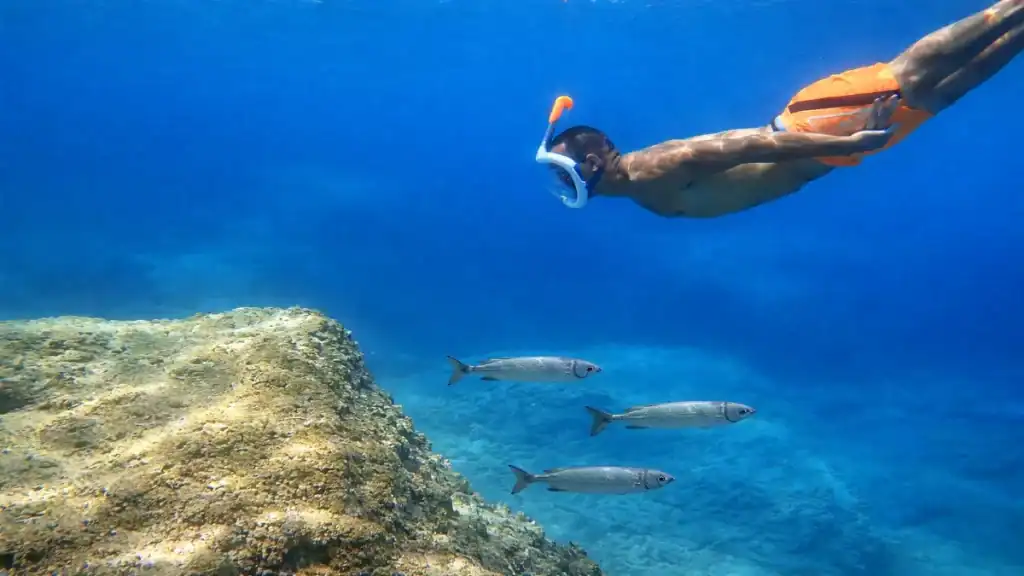
Even without a mask, we could appreciate how far visibility extended below the surface. Around the rocky edges, the clear water made us want to explore. Simply swimming across the centre suddenly seemed less interesting.
Rocky Edges Gave Us the Best Snorkelling
We found the rocky edges beside the limestone cliffs far more interesting than the centre of the beach for snorkelling.
The underwater rocks gave small fish places to gather. A simple mask and snorkel were enough to turn a swim here into a much longer exploration.
| Activity | What to expect |
|---|---|
| 🤿 Snorkelling | Excellent visibility around the rocky edges |
| 🏊 Swimming | Calm, clear water with a fairly quick drop into depth |
| 👟 Entering the sea | White pebbles make water shoes worthwhile |
| 🪨 Cliff jumping | Attempted by some visitors but requires great caution |
The beach shelves more quickly than many first-time visitors expect.
We liked the quicker transition into deeper water, but we would keep younger children much closer to the shoreline where the entry remains more gradual.
We saw no reason to treat the cliffs as a jumping attraction. Conditions vary and submerged rocks are difficult to judge from above; for us, the cove was far more rewarding at water level.
When swimming mattered as much as sightseeing, we preferred what Agiofili offered to Porto Katsiki. Porto Katsiki gave us the bigger visual impact; Agiofili made us want to spend far more of the visit actually in the sea.
🌤️ What Is the Best Time of Day to Visit Agiofili Beach?
We found Agiofili surprisingly sensitive to the time of day.
As the light moved across the cove, both the water colour and the atmosphere changed with it.
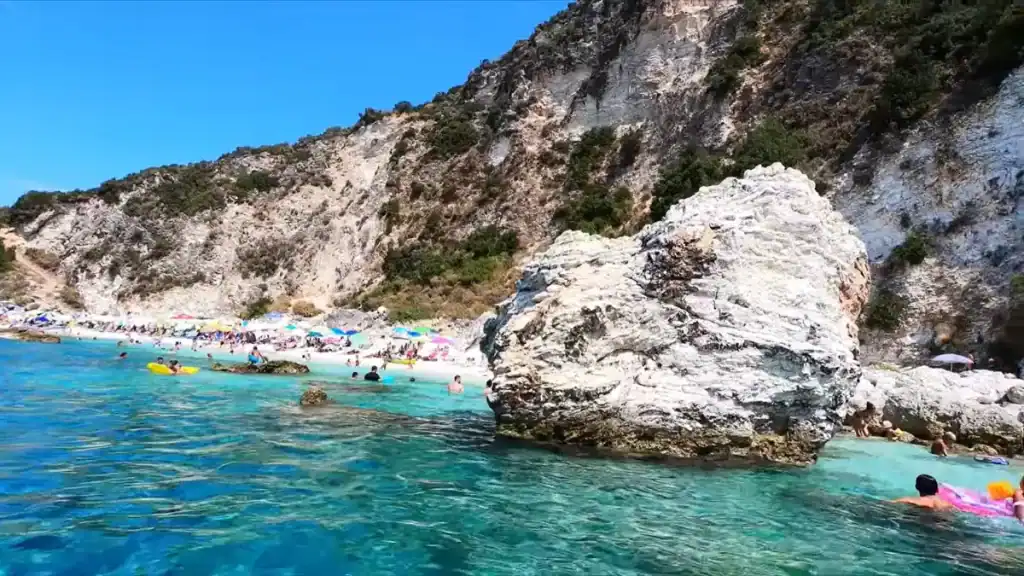
The steep limestone cliffs meant sunshine reached different parts of the shoreline at different times. Morning, midday and late afternoon each gave us a noticeably different beach.
| Time of day | How Agiofili Beach changes |
|---|---|
| 🌅 Early morning | Partial shade, fewer visitors and cooler colours |
| ☀️ Late morning | Bright sunshine with vivid turquoise water |
| 🏖️ Early afternoon | Warmest temperatures and the busiest period |
| 🌇 Late afternoon | Softer light, quieter beach and richer sea colours |
Afternoon Brought More People but Better Light
The beach became livelier, sunbeds filled and the quieter morning atmosphere disappeared. It never felt like a large resort beach to us, but the difference was obvious.
If we could choose freely, we would favour the final few hours. Organised boat traffic reduced and people began leaving. The cove calmed again while lower sun brought deeper blues into the water and warmer tones onto the cliffs.
🎒 What Should You Bring to Agiofili Beach?
We found enough facilities at Agiofili for a comfortable visit.
We would not, however, arrive expecting a full beach resort.
Most services were concentrated near the top of the access path rather than directly beside the shoreline. We preferred that arrangement because the beach itself retained more of its natural feel.
| Available | Not available |
|---|---|
| ☂️ Sunbeds and umbrellas (seasonal) | 🍽️ Full-service beachfront restaurants |
| 🥤 Small canteen for drinks and snacks | 🚻 Toilets beside the beach |
| 🚗 Paid parking | 🛍️ Shops on the shoreline |
Water Shoes and a Mask Would Be Our Priorities
A little preparation would have made our beach time even easier.
We would bring water shoes for the white pebbles and rocky sections. Enough drinking water also mattered. We did not want another walk towards the parking area during the hottest part of the day.
A snorkel mask would be near the top of our list. The exceptional visibility was one of Agiofili’s defining features. We found the water too inviting to spend most of the visit lying on the shore.
The low-key facilities suited the cove for us. There was enough infrastructure to make the visit comfortable without turning the shoreline into an overdeveloped beach strip.
👥 Is Agiofili Beach Crowded?
Agiofili can feel crowded quickly because the cove is small. We noticed the biggest change around lunchtime, when taxi boats and day-trippers from Vasiliki arrived and the quieter morning atmosphere disappeared.
Timing mattered more here than on a long beach where we could simply walk away from the busiest section. Early morning gave us more space; later afternoon became appealing again as organised boat traffic reduced.
⚖️ Is Agiofili Better Than Porto Katsiki or Egremni?
After seeing Lefkada’s best-known beaches, we would not rank them using scenery alone.
For us, the better question was what kind of beach day we actually wanted.
| Beach | 📌 Best known for | 📌 Main trade-off |
|---|---|---|
| 🩵 Agiofili Beach | Calm swimming, snorkelling and easy access | Smaller cove with fewer facilities |
| 🏞️ Porto Katsiki | Iconic white cliffs and dramatic scenery | Steep staircase and larger crowds |
| 🌊 Egremni Beach | Long, wild shoreline and open Ionian views | Long staircase and more remote location |
Our Choice Would Depend on the Beach Day
For sheer visual impact, we would still put Porto Katsiki and Egremni ahead. Their towering limestone cliffs delivered the Lefkada we had seen in photographs before arriving.
Agiofili gave us a different reason to remember it.
Its sheltered cove, exceptionally clear water and straightforward access encouraged us to spend more time swimming than admiring the beach from shore. It lacked the scale of the famous west coast beaches, but as an actual swimming stop, we found it easier to enjoy.
Because Vasiliki Lefkada sits only a few minutes away, we would happily combine Agiofili with a west coast beach on the same day. That gave us the best of both experiences: Lefkada’s dramatic scenery and a cove where swimming itself was the main attraction.
💙 Is Agiofili Beach Worth Visiting?
For us, yes, especially if swimming and snorkelling matter more than collecting Lefkada’s biggest viewpoints. The sheltered cove, clear water and straightforward access made Agiofili unusually easy to enjoy.
We would not choose it instead of Porto Katsiki or Egremni if this were our only west-coast beach day. We would combine them. The famous beaches gave us the drama; Agiofili gave us the water experience we preferred.