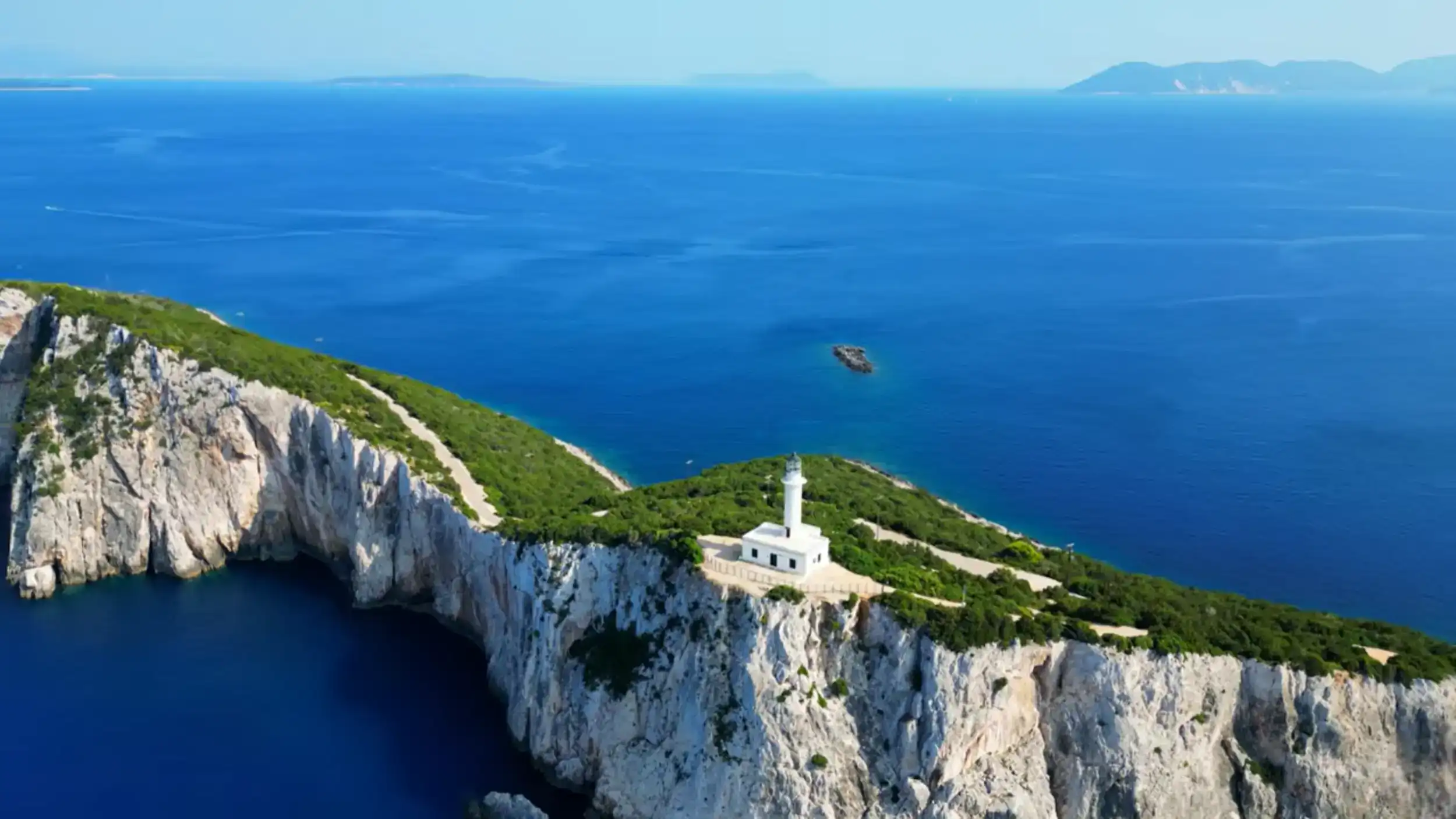
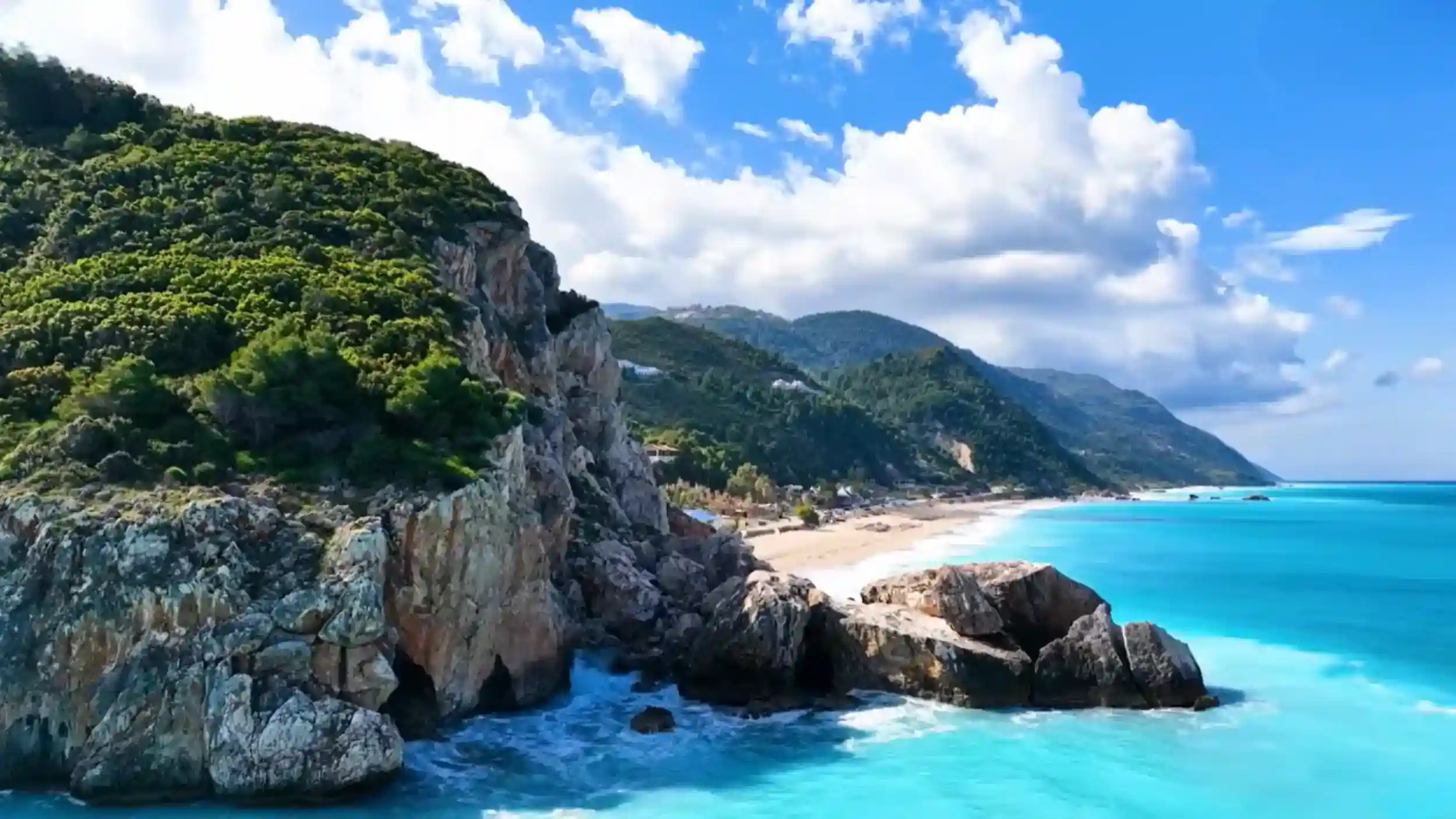
Porto Katsiki was worth visiting for us, but the cliffs rather than the beach itself made it exceptional. That first view explained the reputation immediately.
Once we reached the shore, the trade-off became clearer. Roughly 100 steps, summer heat and arrival time all affected the day. After seeing other west-coast beaches, we would still choose Porto Katsiki for sheer spectacle, but not automatically for an easy swim.
🚗 Getting to Porto Katsiki and Where to Park
The drive became part of the day rather than simply a way of reaching the beach.
Southwest Lefkada became more dramatic as the road wound through the mountains and dropped towards the clifftop. Traffic built with it. That was enough to convince us that a summer visit should start early.
From Lefkada Town, allow around 1 to 1½ hours depending on traffic. The route through villages such as Athani is straightforward. The final approach is slow enough that this never felt like a quick beach stop.
🚙 DRIVE OR ARRIVE BY BOAT?
Drive: best for an early start, your own timetable and staying as long as you want. Parking usually carries a fee.
Boat: gives you the dramatic sea approach and avoids the staircase, but your visit is tied to departure times.
The car park was larger than expected, yet its summer problem was obvious. Our early arrival meant easier parking and a calmer beach before excursion boats began adding noticeably more people.
Boat trips from Vasiliki and Nidri offer a completely different arrival beneath the cliffs. We preferred having our own timetable, but the boat makes obvious sense if you want the sea approach and would rather avoid the staircase.
Our summer target: before 9:00am when driving. It gives you a better chance of easier parking and some breathing room before the busiest part of the day.
🪜 What the 100-Step Descent Is Really Like
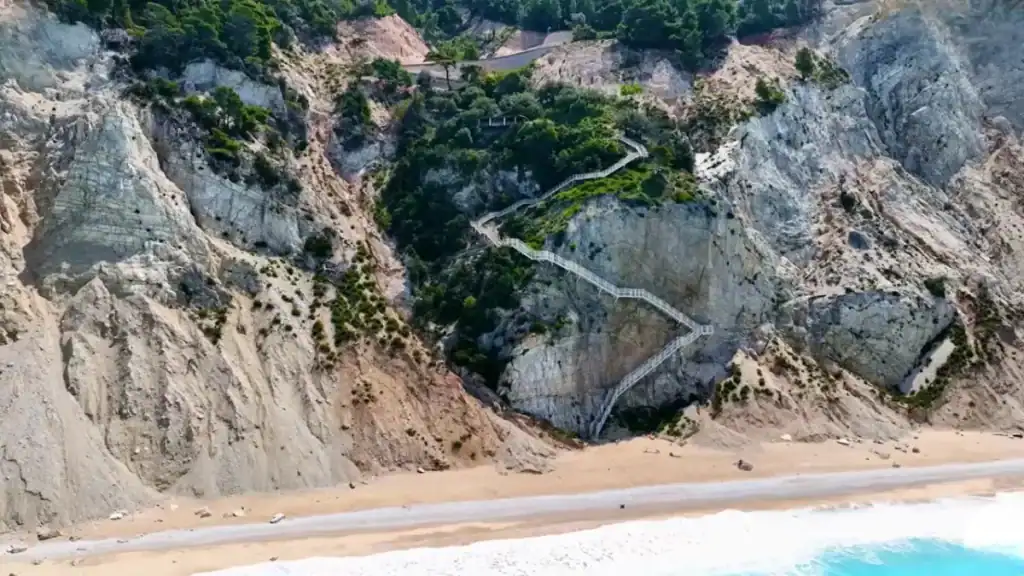
Looking down from the top, we thought the staircase appeared more intimidating than it actually felt once we started descending.
The descent itself was not the difficult part for us. The wide zigzags made the roughly five-to-eight-minute walk down manageable; climbing back up in the heat was where those same steps became much more noticeable.
What Helped Once We Were on the Steps
- 👟 Wear shoes with reasonable grip.
- 💧 Carry water if you’re staying for several hours.
- ☀️ Consider leaving before the hottest part of the afternoon.
- 🩴 Water shoes make the pebbles much more comfortable.
What surprised us was how much the perspective changed before we even reached the shore.
About halfway down, we finally appreciated the scale properly. The limestone rose almost vertically behind the beach while the Ionian Sea opened out ahead of us. That combination of cliff and water felt much more imposing from the staircase than it had from the viewpoint above.
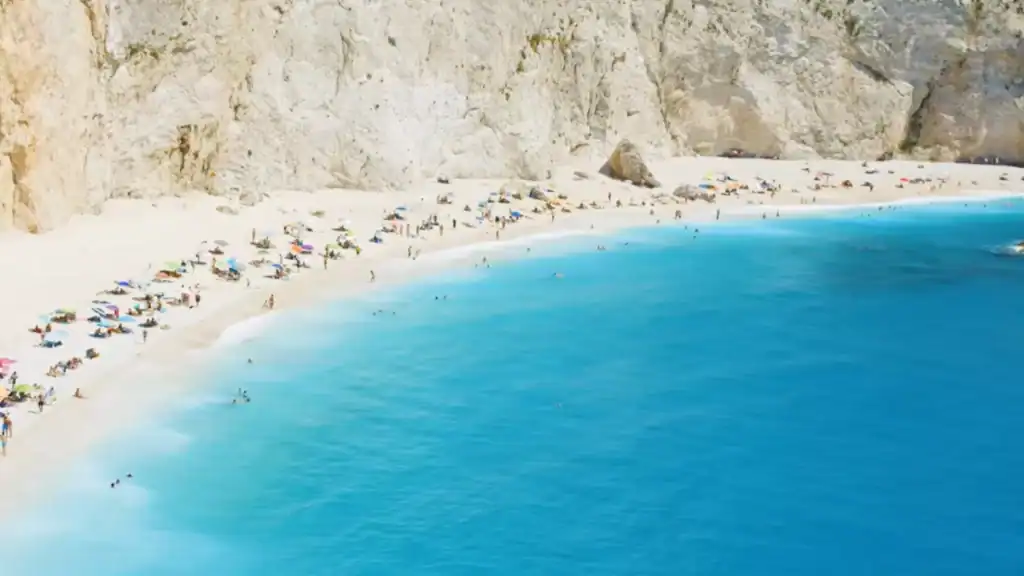
At beach level we found smooth white pebbles rather than soft sand. Sunbeds and umbrellas are available in the main season, and refreshments can be ordered from the café above, so once we had made the descent there was little reason to rush back up.
What caught us out: The climb back up felt considerably harder than the descent. We would avoid leaving it until the hottest part of the afternoon, particularly after several hours in the sun.
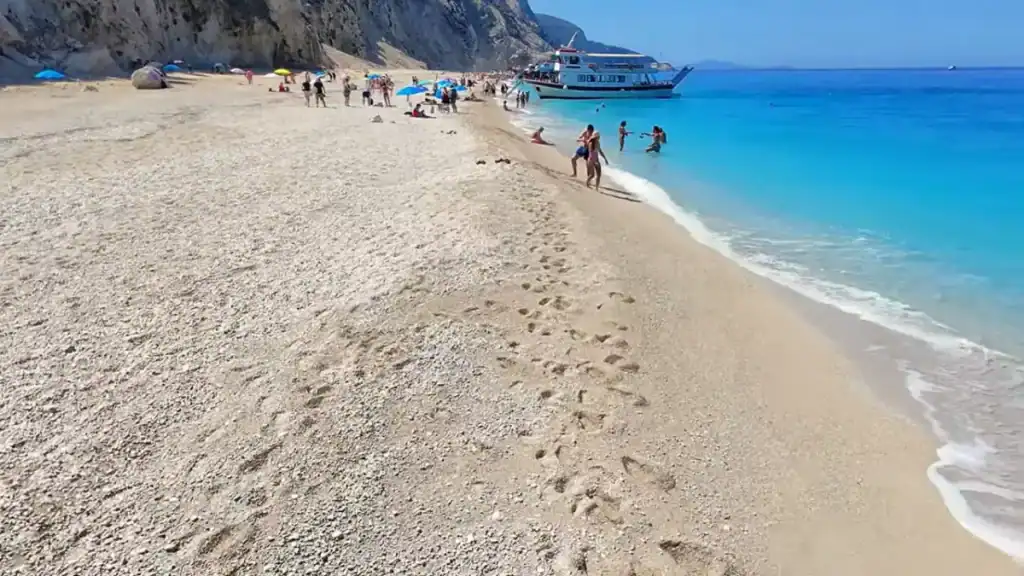
☀️ When We Would Visit Porto Katsiki
Porto Katsiki changed more through the day than we expected.
The turquoise water never stopped being the visual focus, but changing light altered both the cliffs and the atmosphere. Our quieter morning view felt very different from the brighter, busier version of the beach later in the day.
🌅 Morning, Midday or Later in the Day?
| Time | Best for |
|---|---|
| 🌄 Morning | Cooler, quieter arrival |
| ☀️ Midday | Brightest sea colour |
| 🌇 Later | Softer light, fewer crowds |
Midday gave us the classic postcard colours.
Direct sunlight bouncing from the white limestone intensified both the cliffs and the sea. This was Porto Katsiki at its most vivid, but it also came with stronger heat and the point in the day when the beach felt busiest.
Later on, we preferred the softer atmosphere.
As excursion boats began leaving and the light softened, we noticed the beach settling again. Longer shadows spread from the cliffs, taking some intensity out of the scene and giving the shoreline a calmer feel than it had around lunchtime.
Photography tip: Early morning and late afternoon usually produce the most flattering light, while the middle of the day delivers the island’s brightest turquoise water.
If we returned, we would plan around both light and crowds rather than simply choosing the most convenient time. Porto Katsiki is impressive throughout the day, but watching the cliffs and atmosphere change gave us more than the single famous view we had come for.
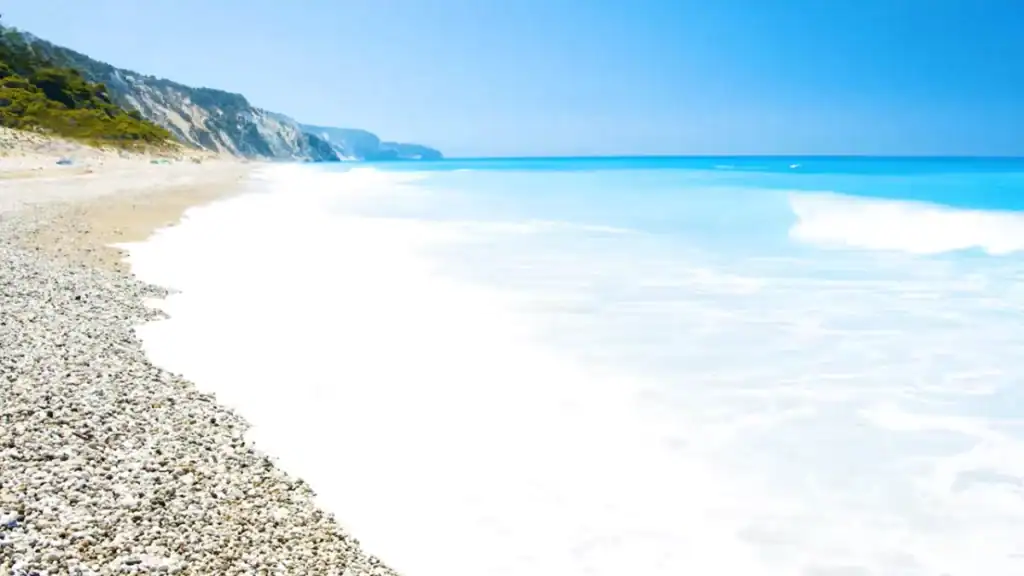
🏖️ Is Porto Katsiki Really Lefkada’s Best Beach?
Porto Katsiki earned its place on our Lefkada itinerary, but we would not automatically choose it over every other beach on the island.
Once we had explored more of the west coast, the differences became clearer. Porto Katsiki suited us when scenery was the priority, while other beaches made more sense when we wanted easier access, more space or a quieter swim.
🏖️ WHICH BEACH FITS YOUR DAY?
📸 Porto Katsiki: the iconic setting
🌊 Egremni: more space
🚗 Kathisma: easiest access
🤫 Agiofili: smaller-scale swimming
For us, Porto Katsiki occupied a useful middle ground.
The staircase was manageable, the scenery was exceptional and there were enough facilities for us to stay several hours. It demanded more effort than Kathisma without asking as much as Egremni, which is why we think it works particularly well for a first visit.
🗺️ How Porto Katsiki Fits Into a Lefkada Beach Day
Porto Katsiki sits in southwest Lefkada, so we would treat it as the main event rather than try to race between beaches. Egremni is the most natural nearby comparison, while Kathisma lies much farther north on the west coast. Island roads make those gaps feel longer than the map suggests.
If we wanted more space, we would choose Egremni Beach, accepting its much longer descent. When easy access mattered more, we would head for Kathisma Beach, where striking west coast water comes without the same staircase.
If we were combining beaches, we would keep the plan loose. Porto Katsiki and Egremni make sense as alternatives rather than two demanding descents to force into the same hot day. Kathisma works better on a separate west-coast day, especially if easier access is the priority.
⭐ Was Porto Katsiki Worth It for Us?
First visit to Lefkada?
Start with Porto Katsiki. It has earned its reputation, and it remains the beach that best captures why Lefkada’s west coast is considered one of Greece’s most spectacular stretches of coastline.
Yes, Porto Katsiki was worth visiting for us, but mainly because of the complete setting rather than the beach in isolation. The drive, first clifftop view, descent and moment we stood beneath that enormous wall of limestone made the effort feel justified.
We came away understanding why Porto Katsiki is used as the benchmark for Lefkada’s beaches. It was not our automatic choice for every beach day. For that combination of immense cliffs, turquoise water and a memorable arrival, though, it is the one we would tell a first-time visitor to experience.