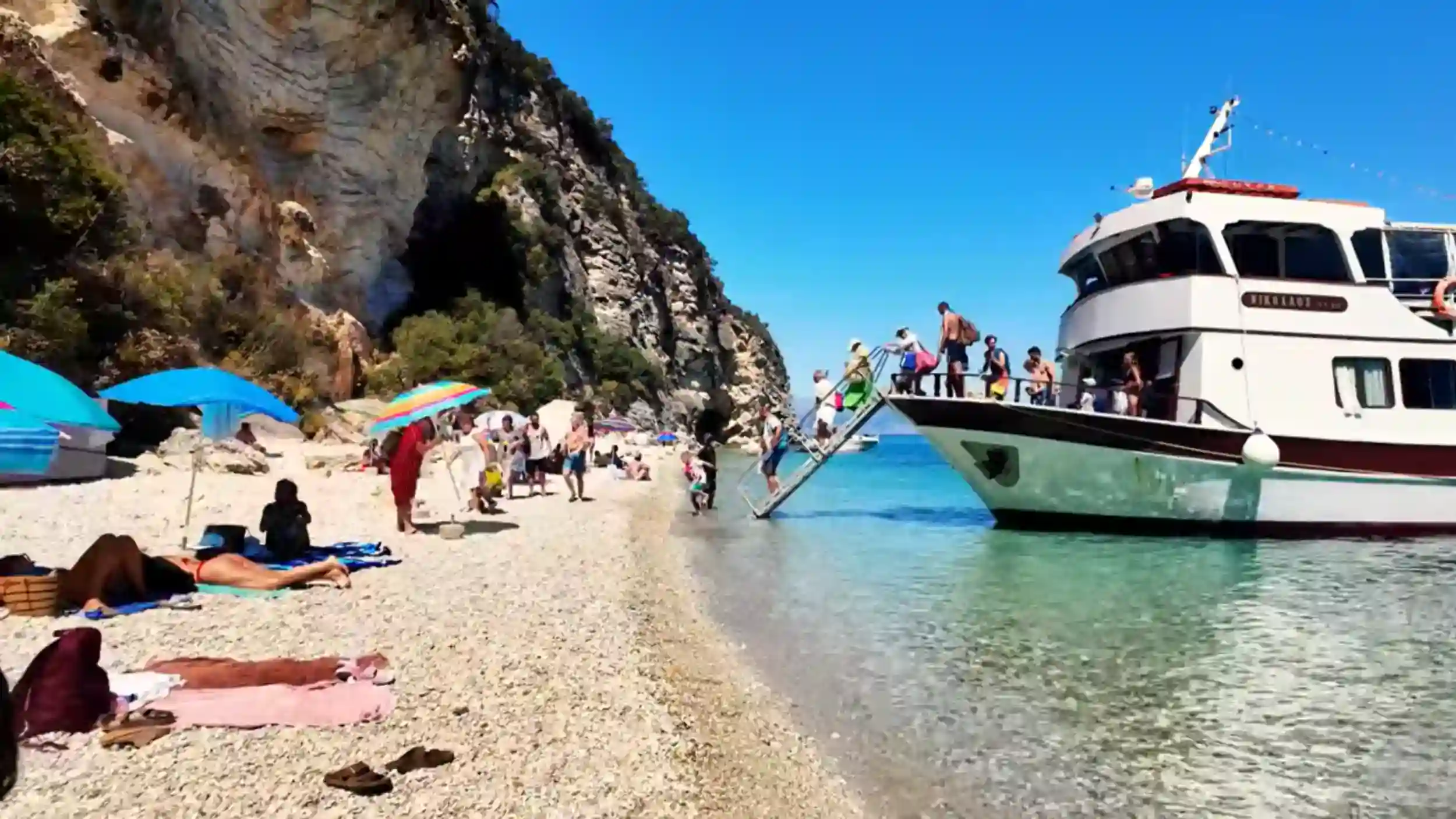
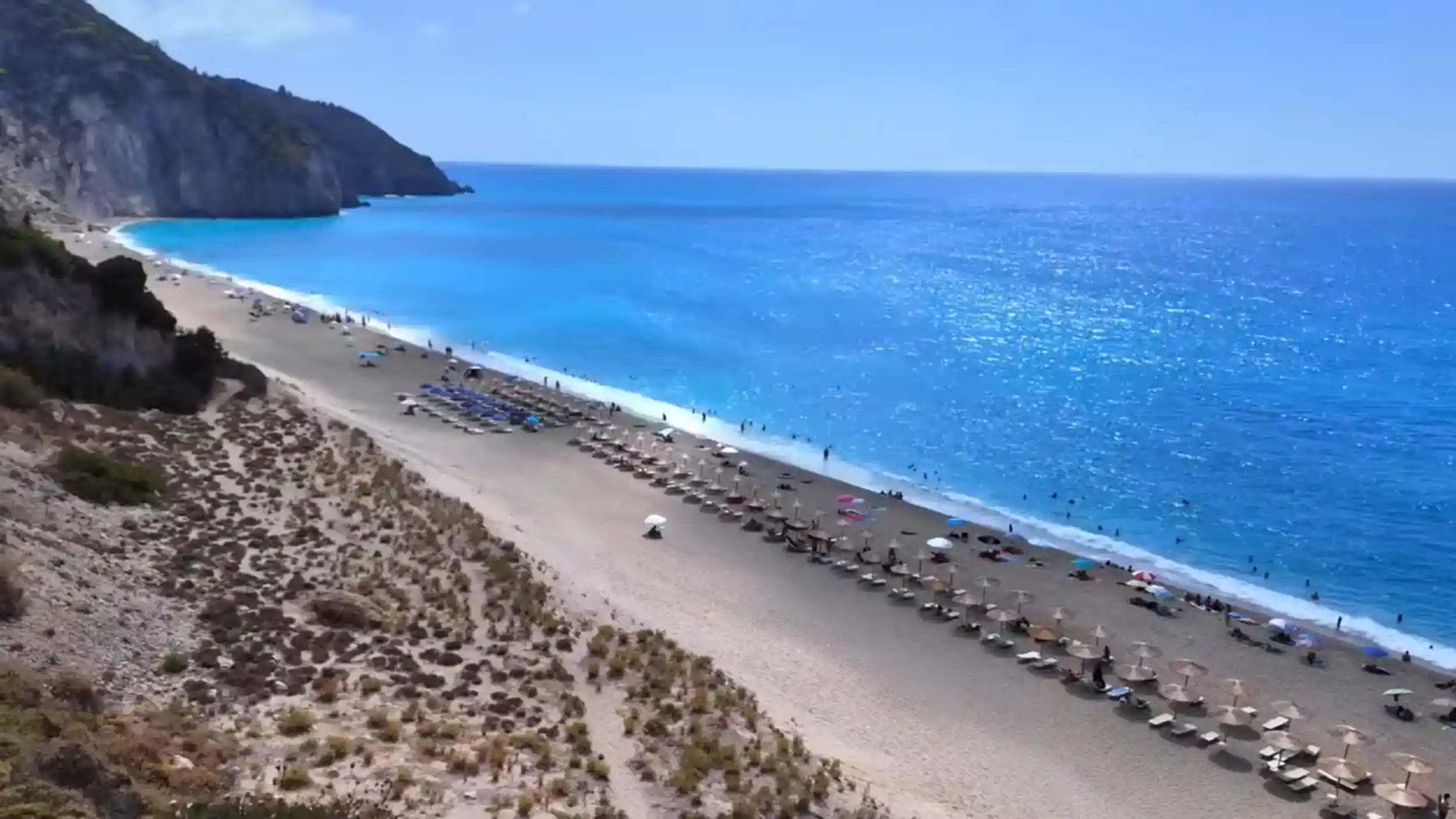
Milos Beach is reached from Agios Nikitas by a signed footpath over the headland, taking us around 20 minutes at a comfortable pace. The route uses stone steps, pine trails and uneven rocky sections before descending to a broad white-pebble beach with exceptionally clear water. A seasonal water taxi provides an easier alternative when conditions allow.
We preferred walking there. The beach stayed hidden for much of the route, so that first view of turquoise water on the descent felt like part of the reward.
🚶 How Do You Walk to Milos Beach From Agios Nikitas?
We found Milos Beach straightforward once we knew where the path began.
Navigation was never the issue for us. The real decision was whether to walk or use the seasonal water taxi.
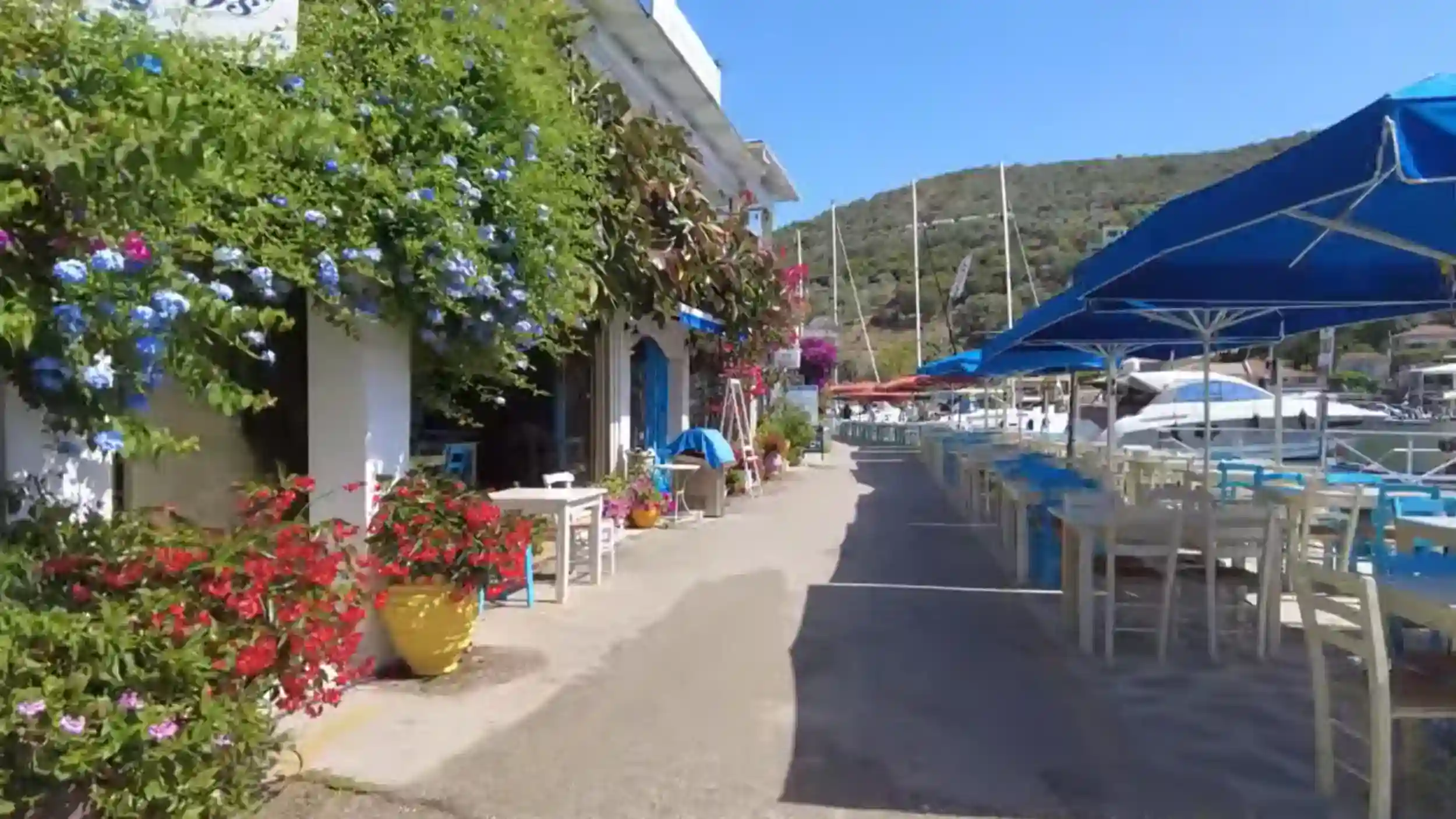
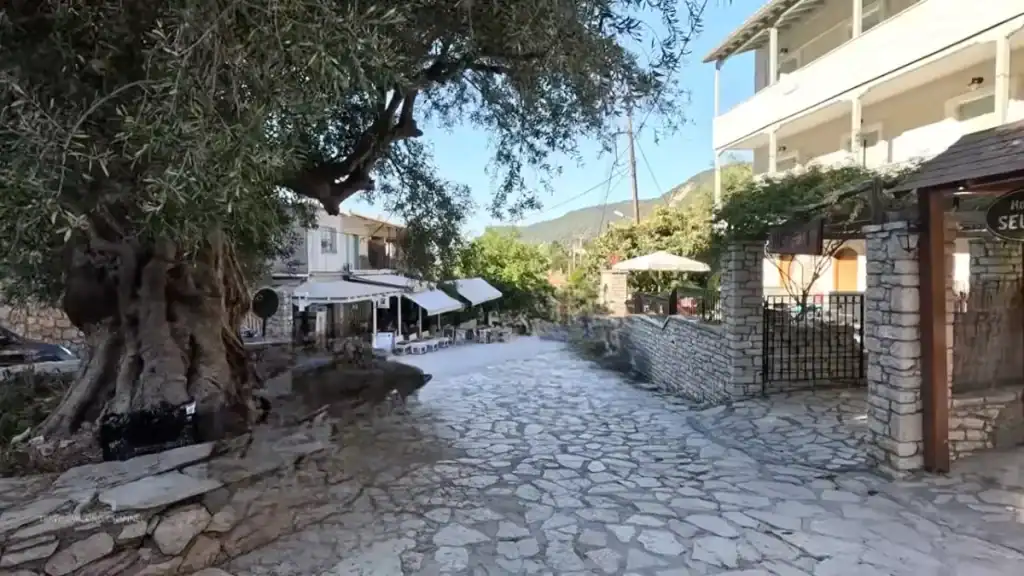
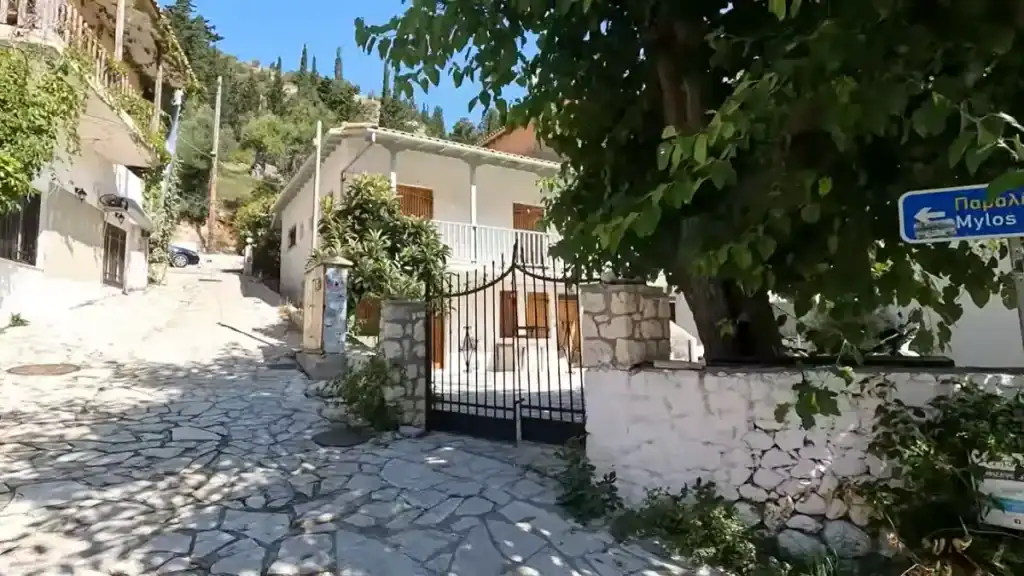
We began in Agios Nikitas and followed the signed footpath out of the pedestrian village. The route crossed the headland before descending towards the beach.
How Long Does the Walk to Milos Beach Take?
At a comfortable pace, the route took us around 20 minutes.
We started on stone steps before the route became a woodland trail beneath pine trees. The distance was not long. Uneven ground and a steady climb made us glad we had proper footwear rather than flip-flops.
| Route | What to expect |
|---|---|
| 🚶 Walking trail | Around 20 minutes with moderate climbs and descents |
| 🌲 Terrain | Stone steps, pine woodland and rocky footpaths |
| 👟 Footwear | Trainers or walking shoes recommended |
| 🚤 Water taxi | Seasonal service from Agios Nikitas, weather permitting |
At the highest point, we stopped for wide coastal views. Then the path began dropping towards the beach. The ruined windmill was a useful marker because the hardest climbing was behind us.
If we did not want to walk, we would use the seasonal water taxi. It reaches the beach in only a few minutes. We would still check conditions because the service can stop when the west coast becomes rough.
🏖️ What Is Milos Beach Like Once You Get There?
The effort of reaching Milos Beach felt worthwhile almost immediately.
We were surprised by how open and peaceful the beach felt despite sitting just beyond Agios Nikitas.
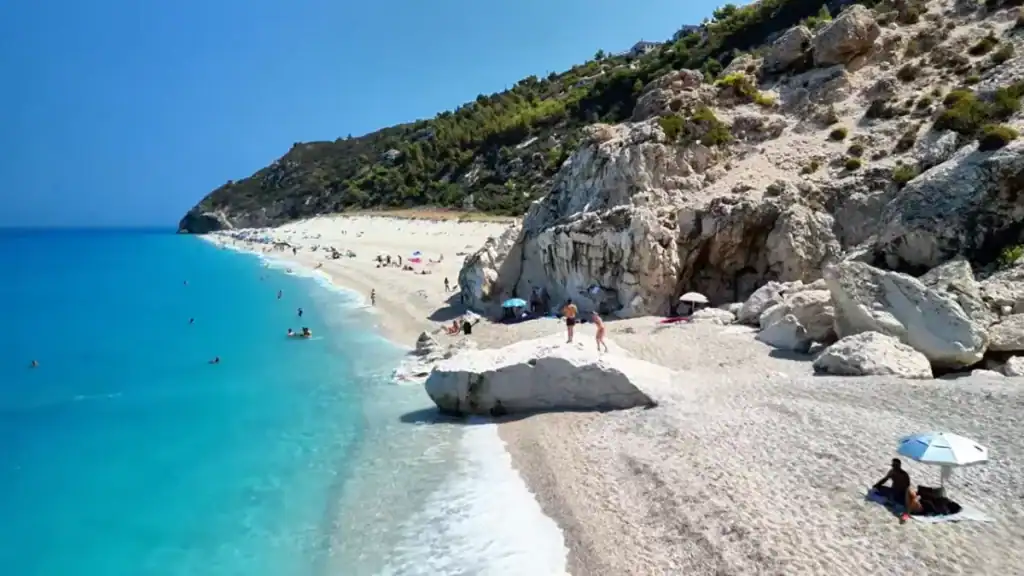
We found a broad sweep of smooth white pebbles beneath steep limestone slopes. Remarkably clear water changed from pale turquoise at the shoreline to deep blue farther out.
Morning Gave Us the Best Swimming Conditions
We noticed the beach shelving quite quickly, which suited us as confident swimmers.
We preferred the calmer morning conditions. Later, the prevailing north-westerly wind could build stronger waves and make the same beach feel considerably more energetic.
| Feature | What to expect |
|---|---|
| 🪨 Beach surface | Smooth white pebbles |
| 💎 Water clarity | Exceptionally clear |
| 🏊 Swimming | Quick drop into deeper water |
| 🪨 Northern cliffs | Sea caves visible on calm days |
At the northern end, limestone cliffs enclosed small sea caves that strong swimmers could reach in calm conditions. Looking back from the water changed our perspective. The surrounding landscape suddenly felt much larger.
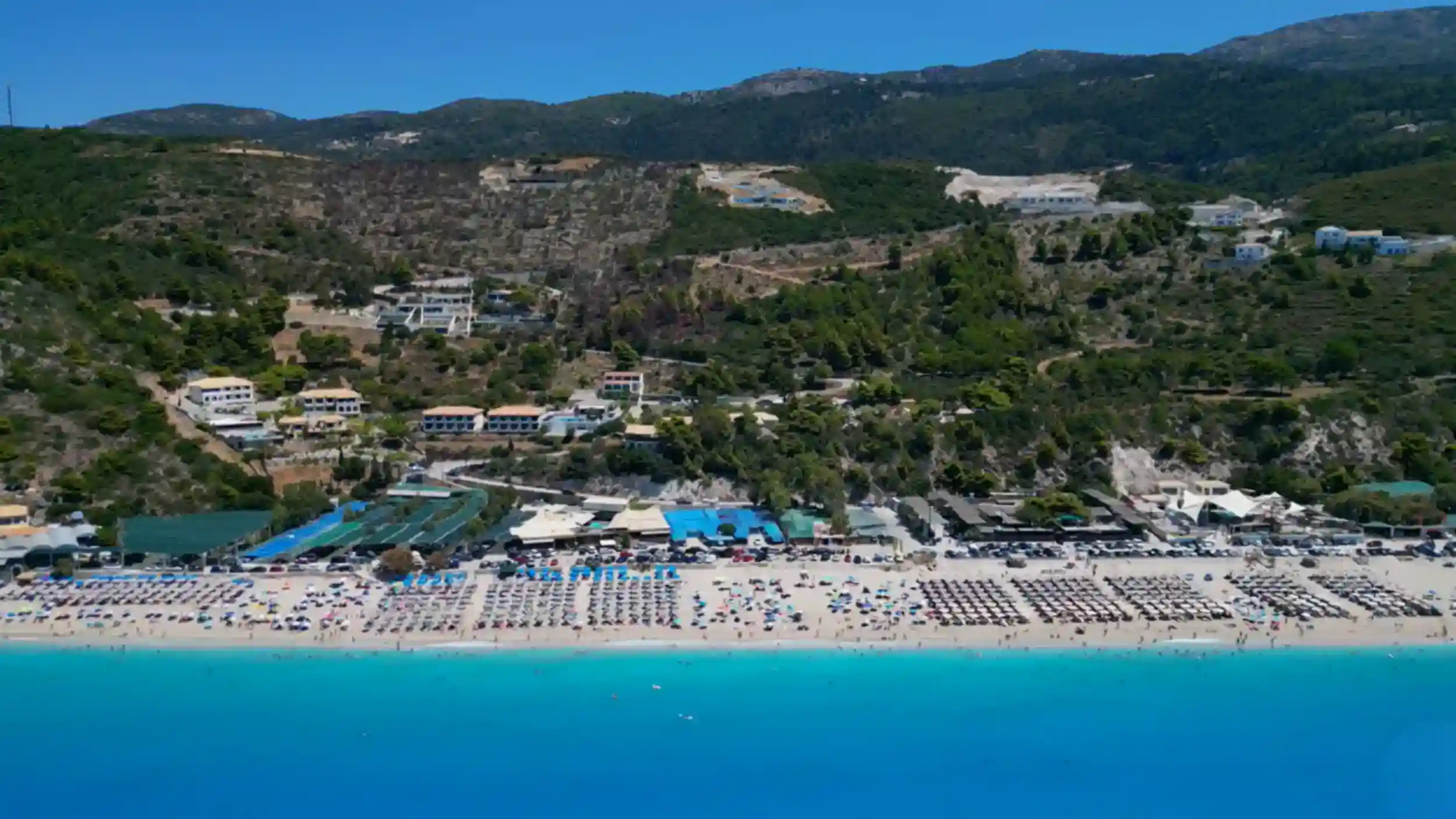
Although Kathisma Beach gave us more facilities and easier access, Milos gave us something we valued more on this occasion: a quieter atmosphere that felt earned rather than simply discovered.
⬇️ How Difficult Is the Walk to Milos Beach?
The final descent gave us our first proper reveal of Milos Beach.
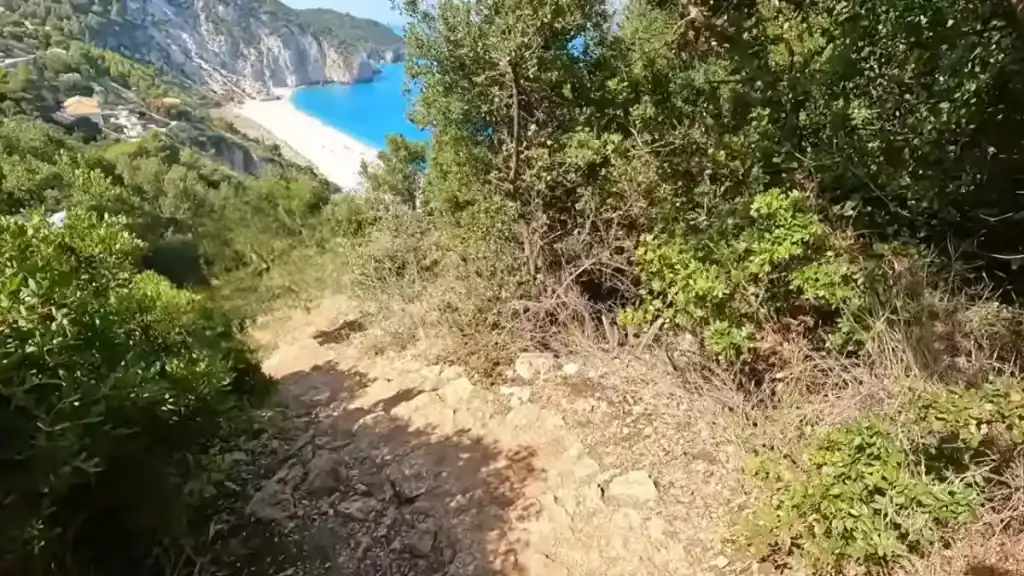
After climbing over the headland, we followed the path steadily downhill. Flashes of vivid turquoise water appeared between the trees. Those partial views made the final approach more exciting.
Loose Stones Made the Descent Slower
We found the downhill section narrower and more uneven than the climb.
Loose stones, exposed roots and worn steps made us take our time, particularly when passing people already making the return journey uphill.
| Descent | What to expect |
|---|---|
| ⏱️ Time | Around 10 minutes from the summit |
| 🪨 Surface | Loose stones and uneven steps |
| 🌿 Gradient | Steady downhill with some steeper sections |
| 👀 Best moment | First full view of the beach below |
The final bend gave us the most dramatic moment of the walk. One minute we were surrounded by scrub and pine trees. The next, we were standing beside a broad, bright stretch of coastline.
We would not insist everyone walk both ways. When sea conditions allow, the seasonal water taxi provides an easier return. In hotter weather, we would walk out and come back by boat.
🌿 Is Milos Beach Quiet or Crowded?
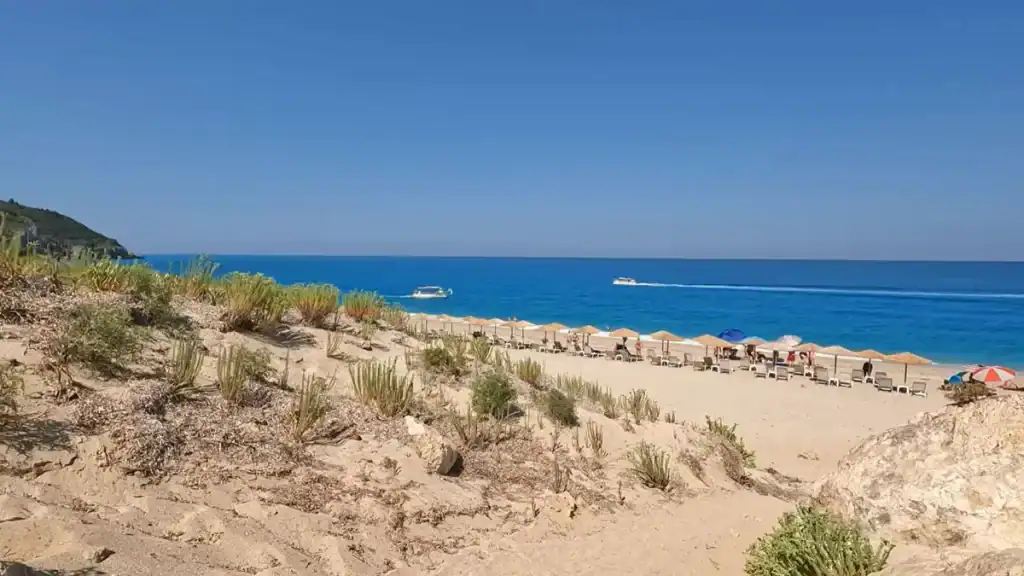
Milos felt noticeably quieter to us than Lefkada’s road-access beaches. The headland walk filters out some casual visitors, while the broad shoreline gives people more room to spread out once they arrive.
Morning worked best when we wanted the calmest version of the beach. We found cooler walking conditions, gentler water and fewer people before the day became busier.
🎒 What Should You Bring to Milos Beach?
We found Milos Beach had just enough facilities for a comfortable visit.
What mattered more to us was knowing what would not be available before setting off.
With no road access, everything from drinks to sunbeds had to arrive by foot or boat. Once we understood that, the limited facilities made sense.
| Available | Worth bringing |
|---|---|
| ☂️ Seasonal sunbeds and umbrellas | 💧 Plenty of drinking water |
| 🥤 Small snack and drinks kiosk | 👟 Walking shoes or trainers |
| 🚤 Seasonal water taxi | 🩴 Water shoes for the pebbles |
| 🌞 Limited shade | 🧴 High-factor sunscreen |
No Toilets Changed What We Packed
When we were coming from Lefkada Town, we found it sensible to pick up supplies before driving west because shopping options became more limited around Agios Nikitas and the coastal villages.
We expected food and drinks to cost more because everything had to arrive without vehicle access. We accepted that in return for relatively simple facilities.
One practical detail would have caught us out without planning.
There were no public toilets on the beach, so we planned around that before committing to several hours. Carrying what we needed also meant we could stay put rather than make an unnecessary trip back over the headland.
🗓️ How Do You Fit Milos Beach Into a Lefkada West Coast Day?
We would rarely make Milos Beach our only destination for the day.
Its position beside Agios Nikitas made it easy to combine with other west-coast stops. The day never needed to feel rushed.
Rather than spending our entire day on one beach, we preferred an itinerary that balanced the walk, swimming and time back in the village.
| Combine Milos with… | 📌 Why it works |
|---|---|
| 🏡 Agios Nikitas | Breakfast or dinner before and after the walk |
| 🌊 Kathisma Beach | A livelier beach with easy road access |
| 🏙️ Lefkada Town | Explore the capital before heading west |
Our Day Would Continue South After Lunch
An early start made the biggest difference for us.
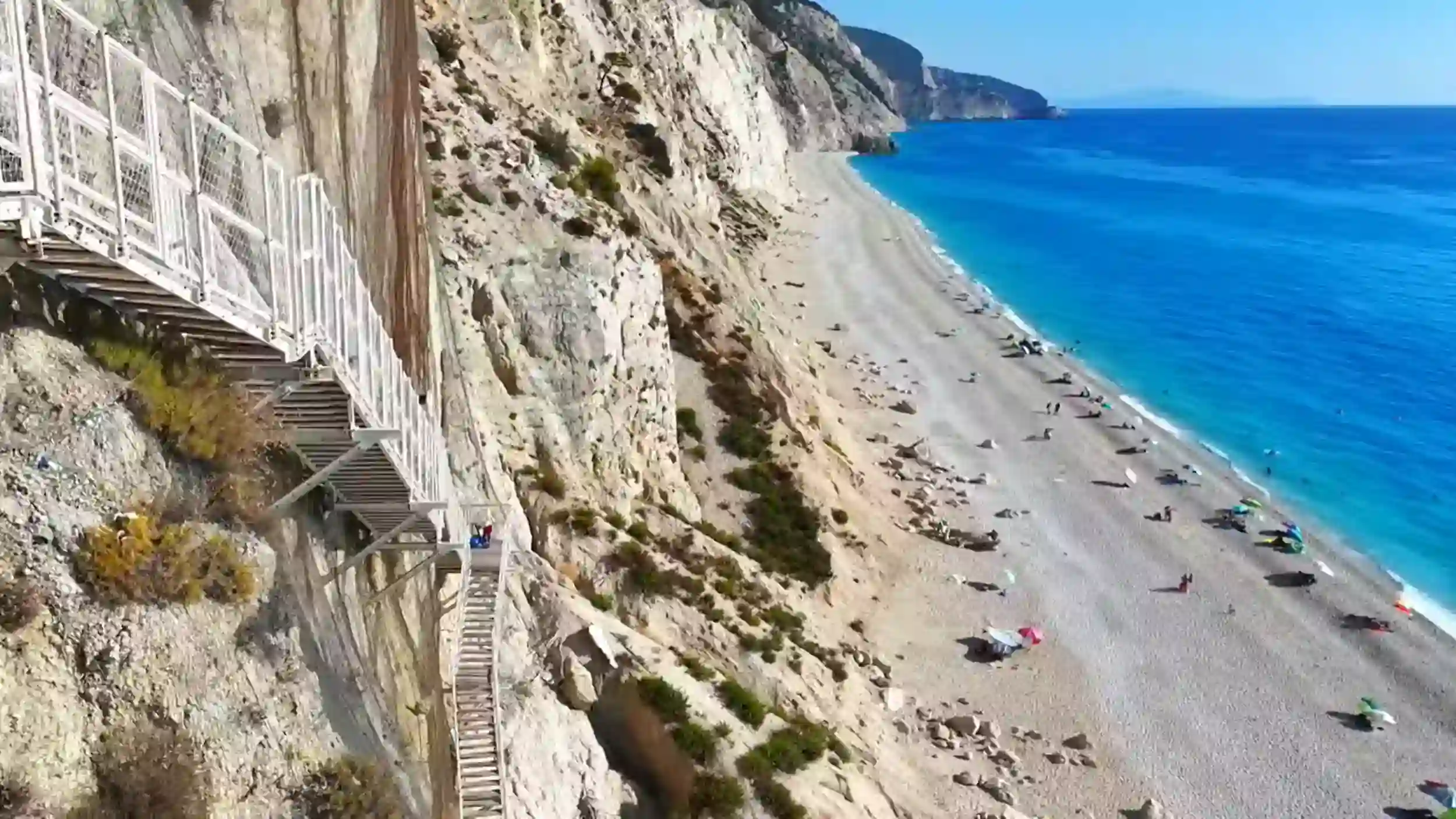
Walking to Milos in the morning gave us cooler temperatures, calmer water and a quieter beach. We would return to Agios Nikitas for lunch. Afterwards, we could continue south towards Egremni Beach or another west-coast viewpoint.
Milos worked best for us because reaching it felt like discovering somewhere rather than simply arriving. We remember the headland path, the first view on the descent and the quieter shoreline as one experience, which is why the journey mattered almost as much as the beach itself.